Jury Instruction - Escape
Overview of this form
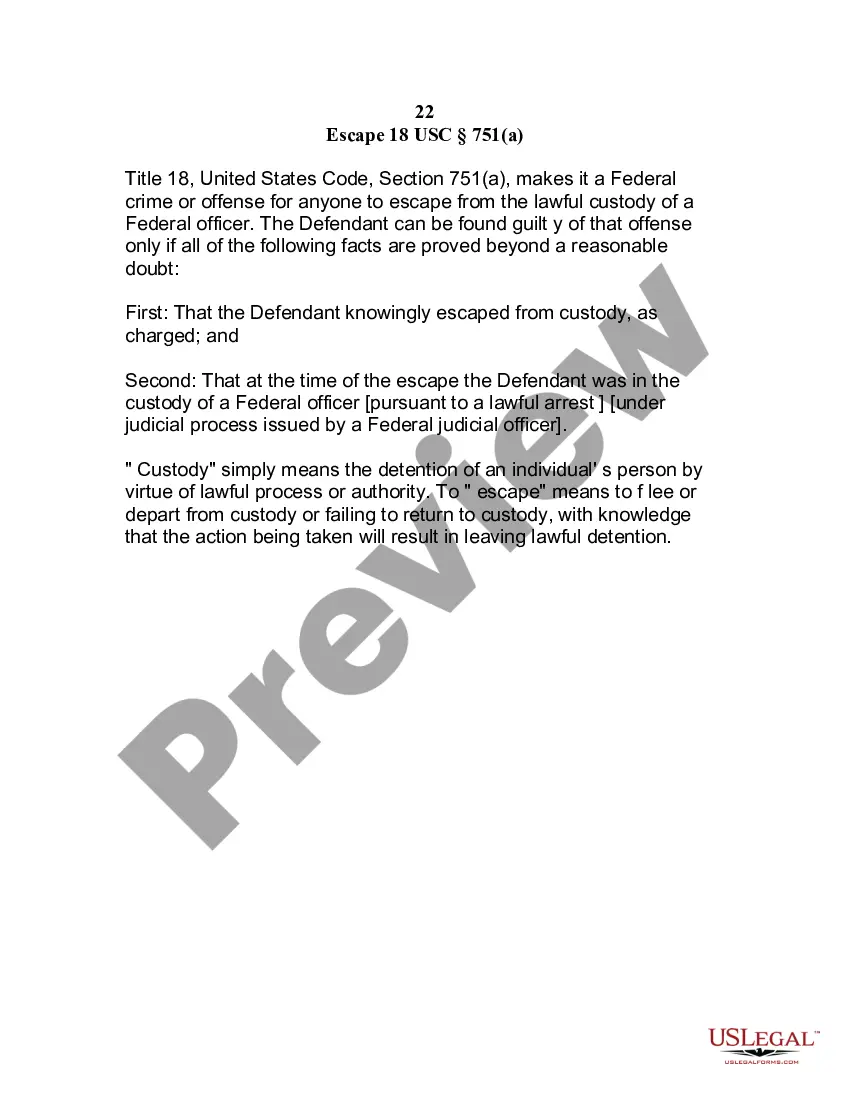
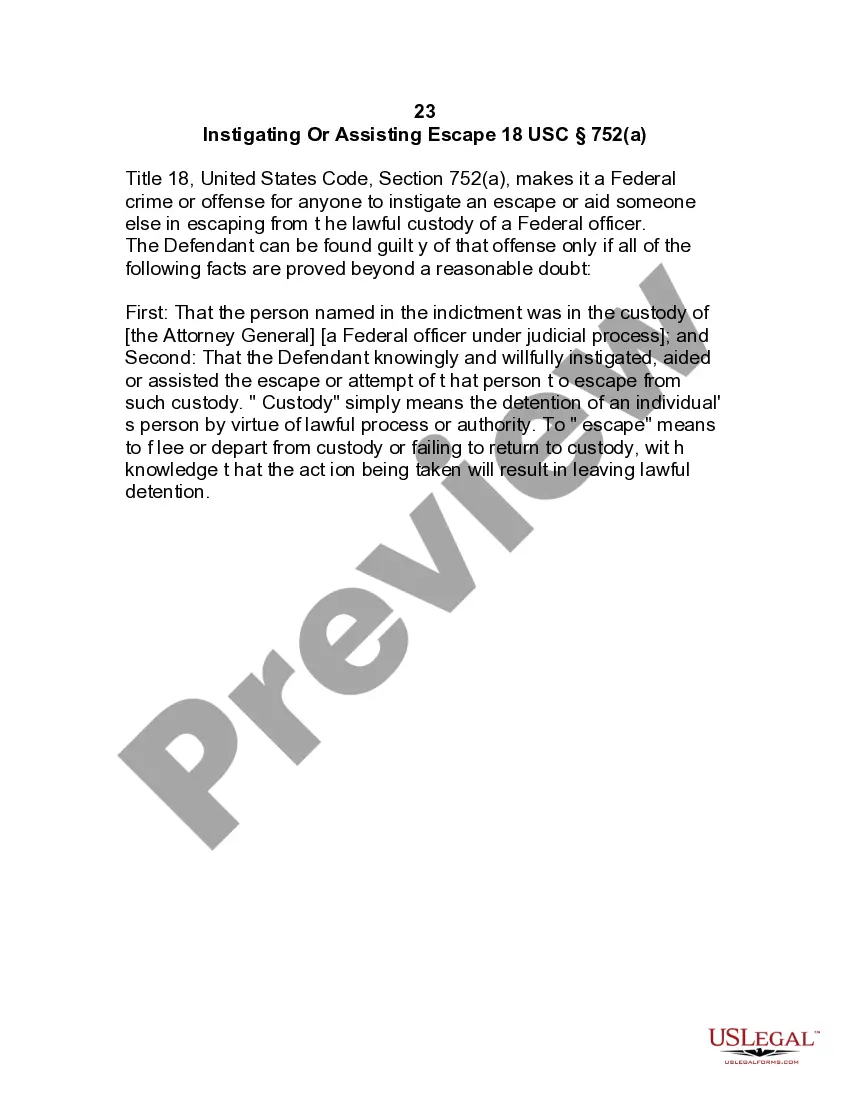
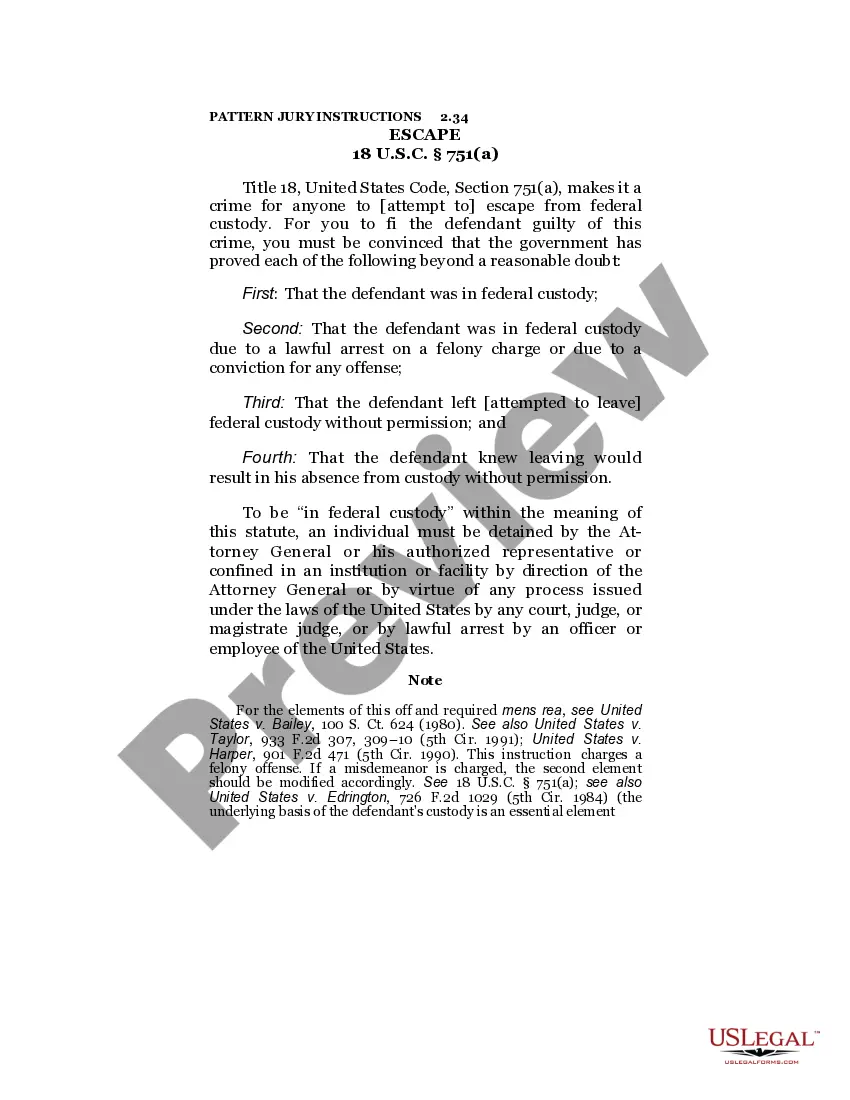
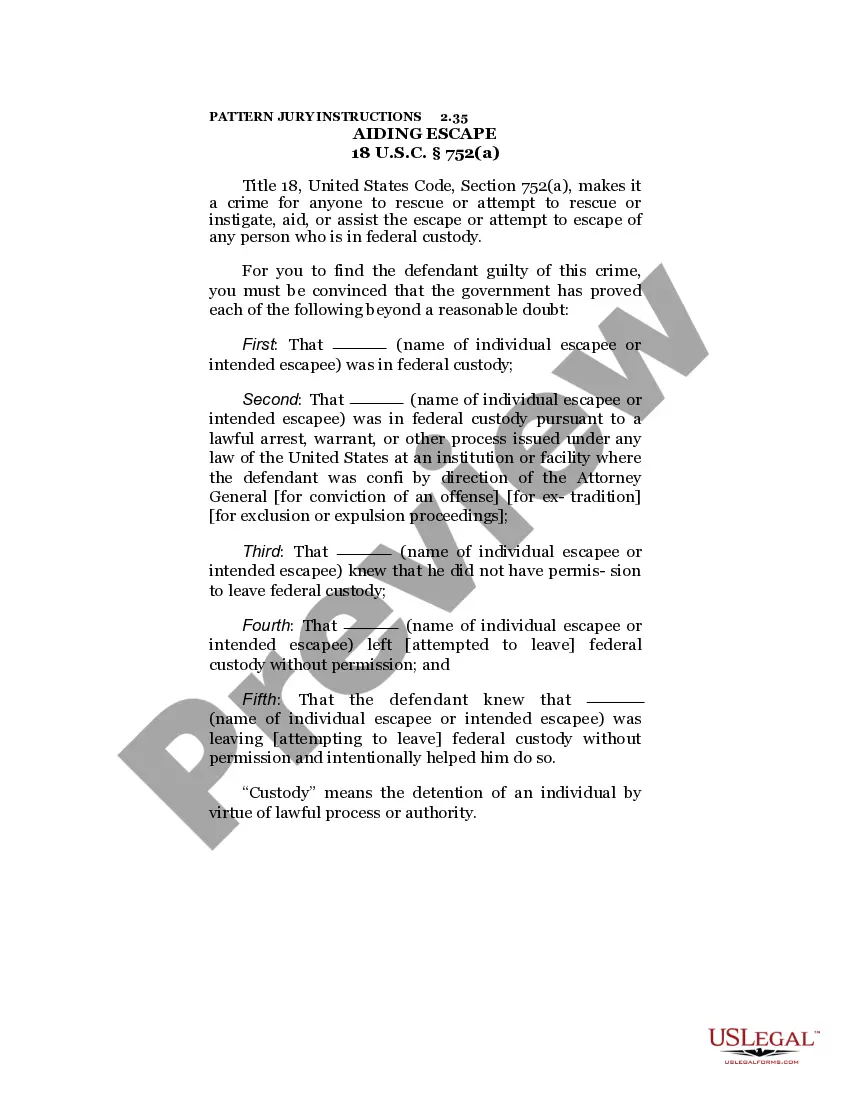
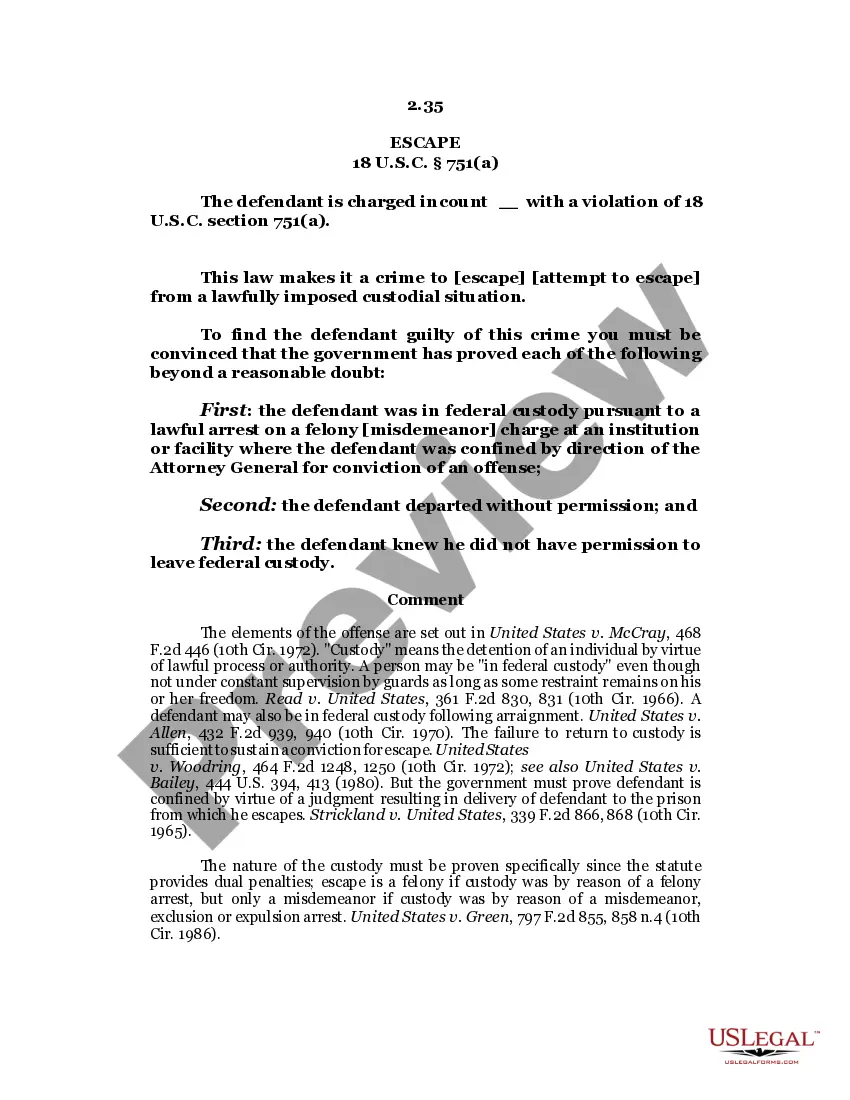
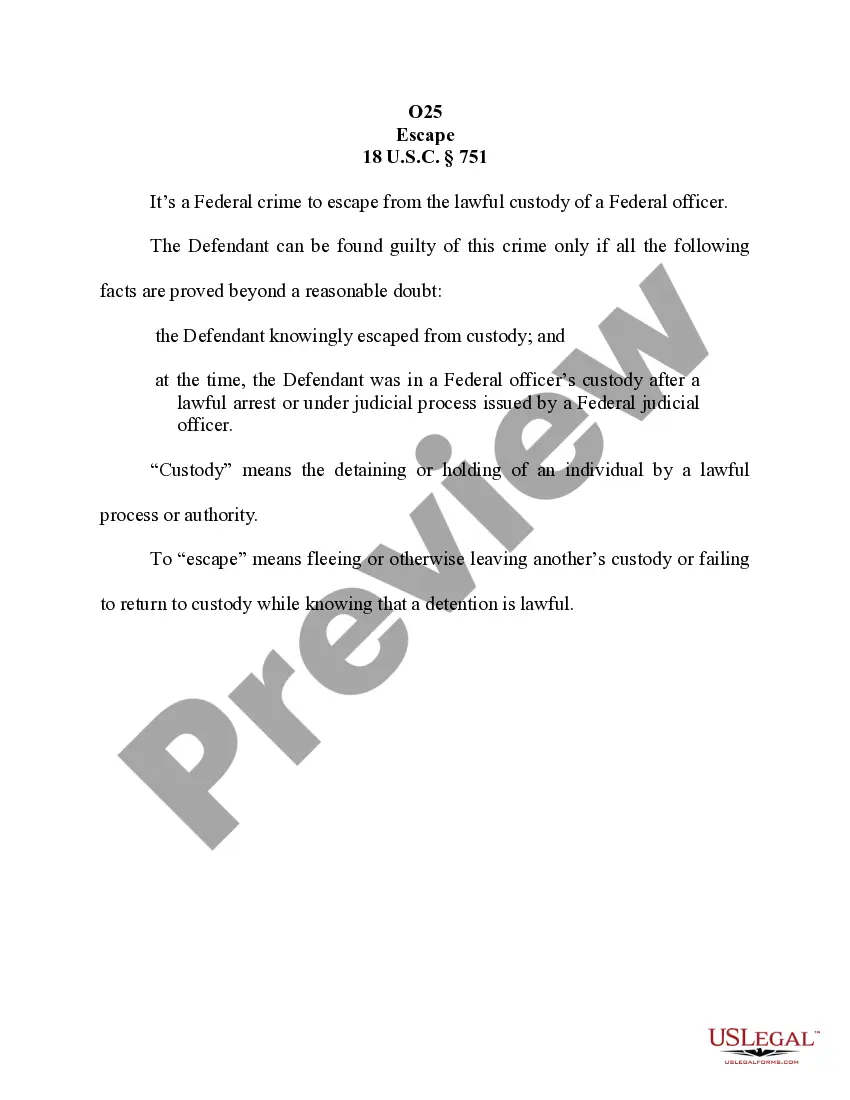
The Jury Instruction - Escape form provides sample jury instructions related to the federal crime of escape, as defined under 18 USC 751(a). This form serves as a template for legal practitioners and can be adjusted to meet specific case requirements. It outlines the elements needed to prove the offense, distinguishing it from other legal forms by focusing specifically on jury guidance in escape cases.
Key parts of this document
- Definition of Escape: Clarifies what constitutes lawful custody and the actions considered as escape.
- Elements of the Offense: Specifies the key facts that must be proven beyond a reasonable doubt to secure a conviction.
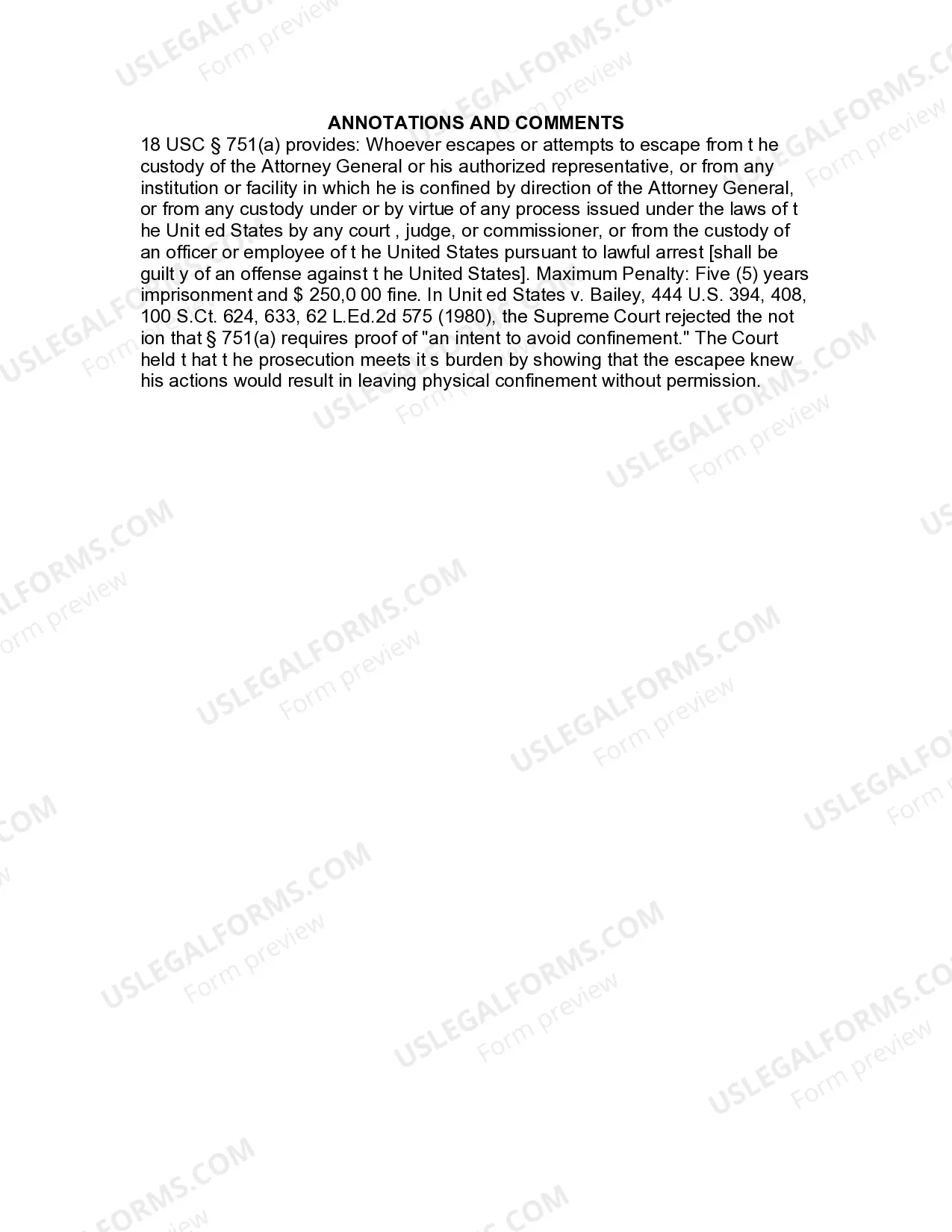
- Maximum Penalty Information: Details the possible repercussions for those found guilty of escaping federal custody.
- Legal Precedents: References important court rulings that shape the interpretation of the escape statute.
- Annotations and Comments: Provides additional context and insights for legal practitioners using the form.
Situations where this form applies
This form is useful in federal criminal trials and jury instructions where a defendant is charged with the crime of escape from lawful federal custody. It is necessary when preparing for jury deliberations to ensure that the jury understands the legal standards they must apply, especially in cases involving an escape from confinement or custody.
Who can use this document
- Attorneys representing clients charged with escape under federal law.
- Judges drafting jury instructions for federal cases involving escape charges.
- Legal clerks and assistants involved in the preparation of court documents for such cases.
- Legal educators teaching about criminal law and jury instructions.
How to prepare this document
- Review the elements of the crime: Familiarize yourself with the key facts that need to be proven.
- Tailor the instructions: Modify the sample jury instructions to fit the specific case and jurisdiction.
- Incorporate relevant legal precedents: Reference applicable court rulings that impact the case at hand.
- Ensure clarity: Make sure the language used is understandable for jurors without a legal background.
- Finalize the document: After review, ensure all necessary signatures and formatting are included before submission to the court.
Notarization guidance
This form does not typically require notarization unless specified by local law. However, always verify any jurisdictional requirements before finalizing.
Get your form ready online
Our built-in tools help you complete, sign, share, and store your documents in one place.
Make edits, fill in missing information, and update formatting in US Legal Forms—just like you would in MS Word.
Download a copy, print it, send it by email, or mail it via USPS—whatever works best for your next step.
Sign and collect signatures with our SignNow integration. Send to multiple recipients, set reminders, and more. Go Premium to unlock E-Sign.
If this form requires notarization, complete it online through a secure video call—no need to meet a notary in person or wait for an appointment.
We protect your documents and personal data by following strict security and privacy standards.

Make edits, fill in missing information, and update formatting in US Legal Forms—just like you would in MS Word.

Download a copy, print it, send it by email, or mail it via USPS—whatever works best for your next step.

Sign and collect signatures with our SignNow integration. Send to multiple recipients, set reminders, and more. Go Premium to unlock E-Sign.

If this form requires notarization, complete it online through a secure video call—no need to meet a notary in person or wait for an appointment.

We protect your documents and personal data by following strict security and privacy standards.
Mistakes to watch out for
- Failing to adapt jury instructions to the specific facts of the case.
- Omitting important legal precedents that could impact the juryâs understanding.
- Using overly complex legal language that may confuse jurors.
Advantages of online completion
- Convenience of obtaining legal forms instantly without the need for in-person visits.
- Editability allows for customization according to specific case details.
- Access to professionally drafted forms, ensuring accuracy and legal compliance.
Legal use & context
- This form is based on federal law and is applicable in federal court proceedings.
- It serves as a model for jury instructions but must be adapted to the specific facts of the case.
- Instructions must be clear and concise to ensure effective communication with jurors.
Looking for another form?

Form popularity
FAQ
To confirm if you'll be needed for jury duty, call the Juror Line listed on your Reminder Notice after 3 p.m. or log in to the Massachusetts Juror Service Website after 4 p.m. on the day before you're scheduled to serve.
A curative instruction is given to a jury by the judge in a case to negate the prejudicial effect of an erroneous instruction or tainted evidence.
A judgment notwithstanding the verdict (or JNOV) is an order by a judge after a jury has returned its verdict. The judge can overturn the jury's verdict if he or she feels it cannot reasonably be supported by the evidence or if it contradicts itself.
The judge instructs the jury about the relevant laws that should guide its deliberations. (In some jurisdictions, the court may instruct the jury at any time after the close of evidence.The judge reads the instructions to the jury. This is commonly referred to as the judge's charge to the jury.
Jury instructions, directions to the jury, or judge's charge are legal rules that jurors should follow when deciding a case.
These are civil or criminal jury instructions approved by a state court, bench committee, or bar association. They are commonly used by courts in the relevant jurisdiction, as they ease the process of drafting fair jury instructions and theoretically do not have errors.
Jury lists are compiled from voter registrations and driver license or ID renewals. From those lists, summonses are mailed. A panel of jurors is then assigned to a courtroom.
A jury instruction is given by the judge to the jury to explain what is happening in the court, to explain the points of law relevant to the case, to explain certain aspects of the evidence presented and to assist the jurors in understanding their duties in reaching a verdict.