Sample Letter to Judge concerning Order for Seizure of a Mobile
Understanding this form
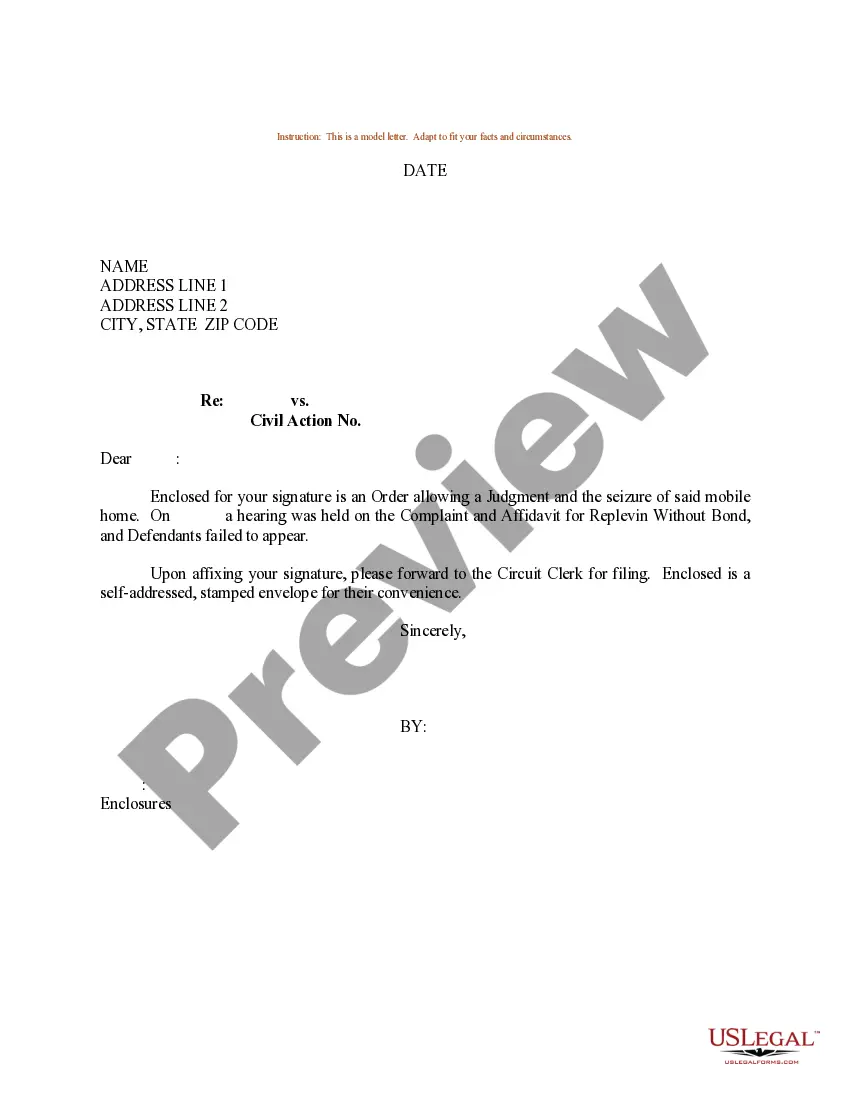
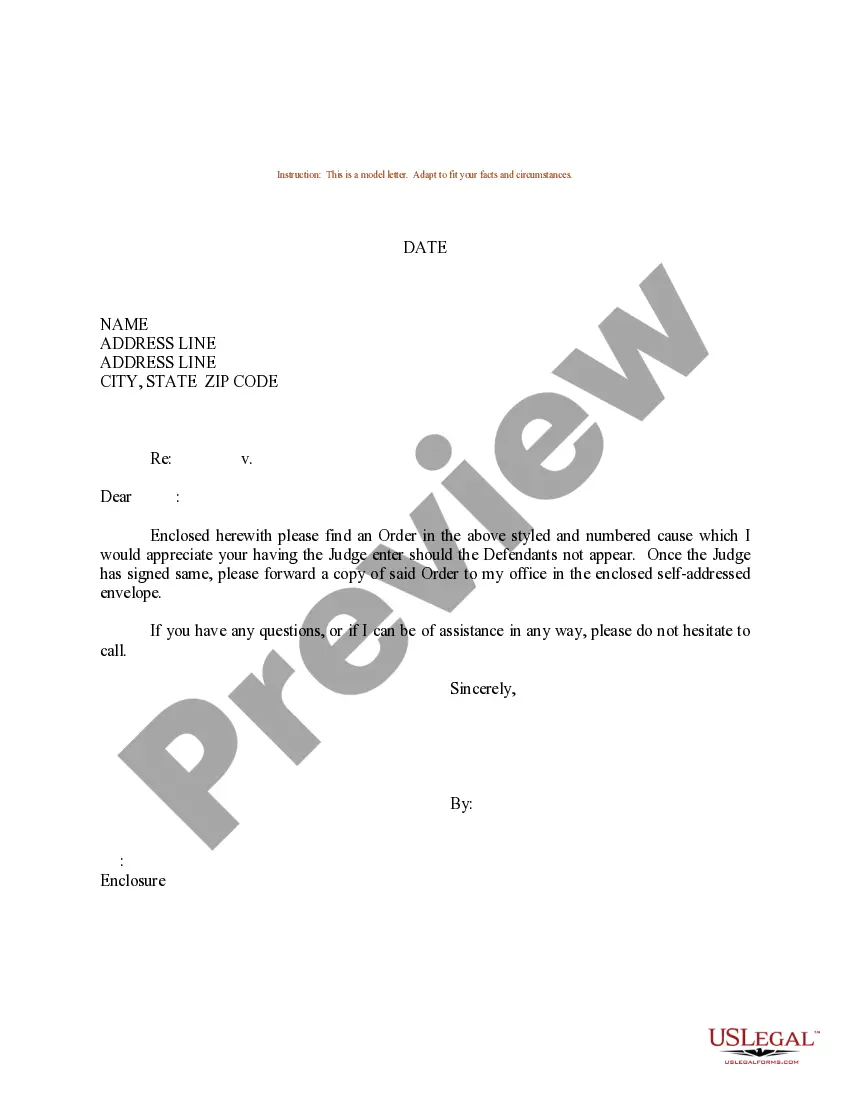
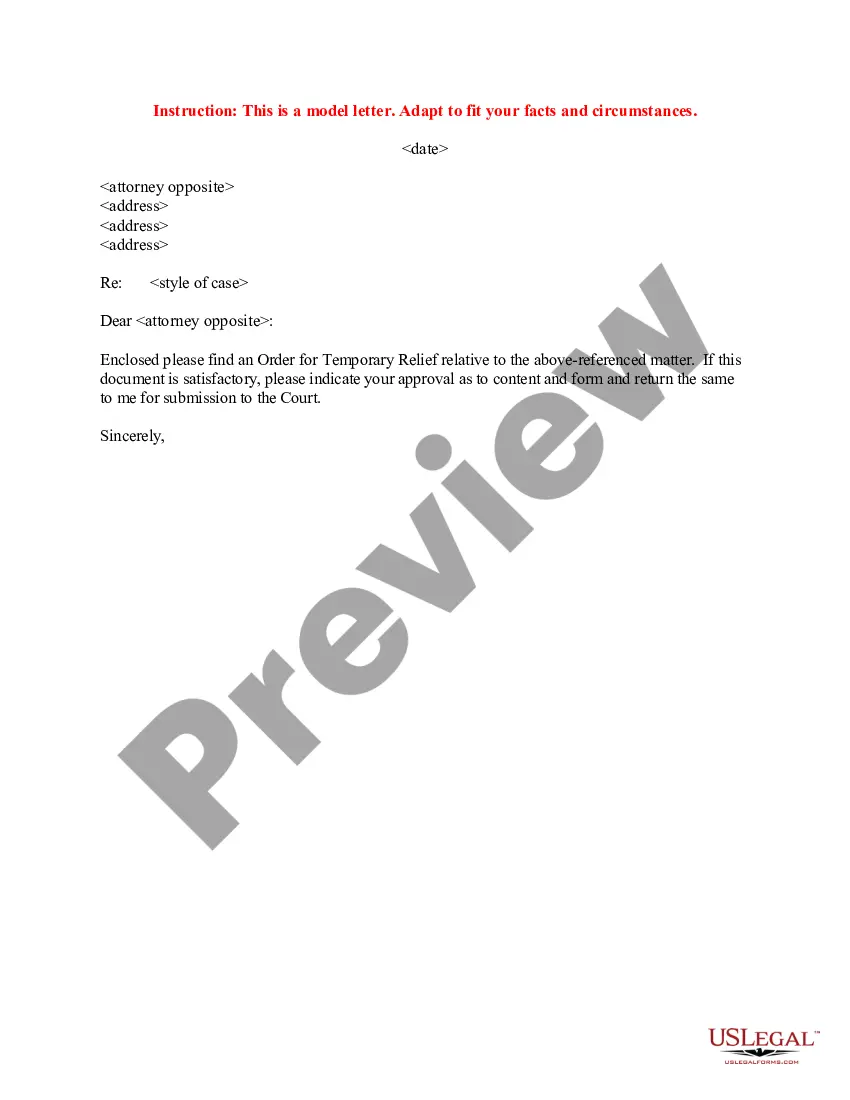
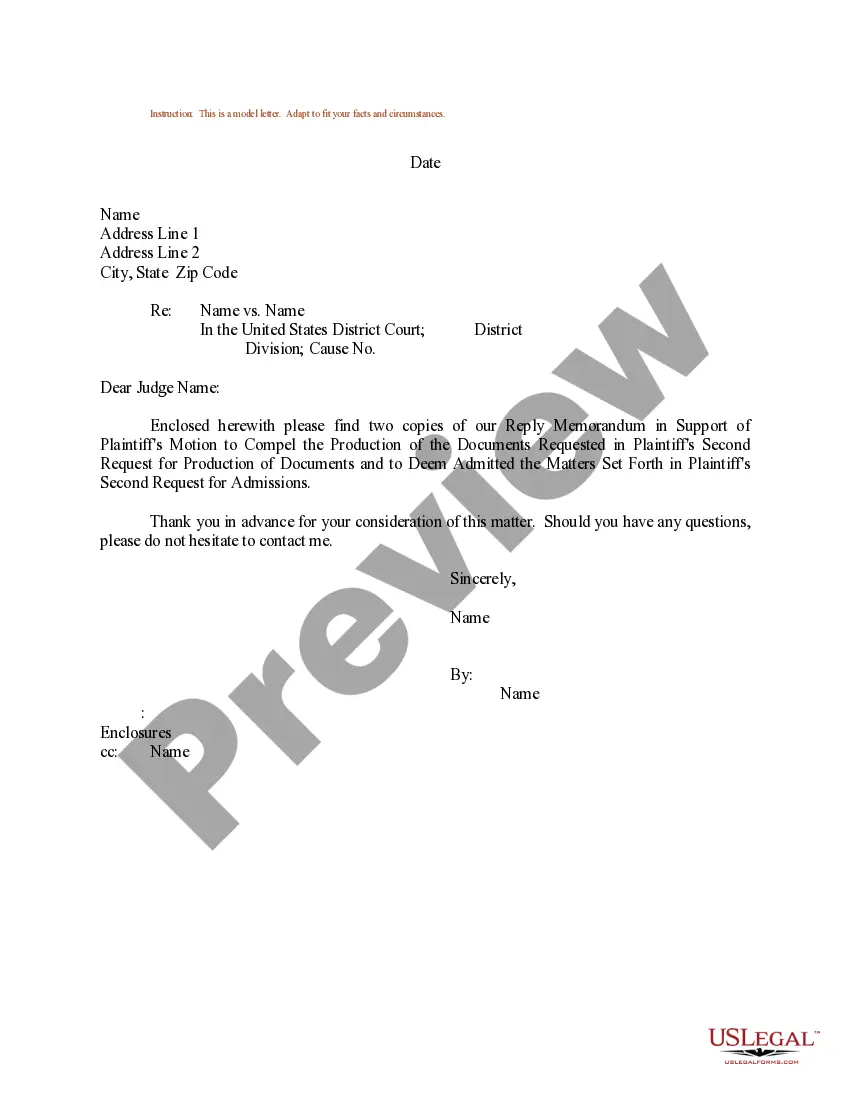
This form is a sample letter to a judge concerning an order for the seizure of a mobile device. It serves as a template for individuals seeking to formally communicate with the court regarding matters related to mobile device seizures. Unlike other legal forms, this sample letter is designed for direct communication with a judge, ensuring that the context and purpose are clearly stated.
Key components of this form
- Date: To indicate when the letter is being sent.
- Name and Address: The sender's personal information for court records.
- Signature: To authenticate the letter upon submission.
- Circuit Clerk instructions: Directing the letter to the appropriate court office.
- Self-addressed, stamped envelope: For the courtâs convenience in responding.


When to use this form
This letter should be used when you need to communicate with a judge regarding the seizure of a mobile device. Situations might include contesting the seizure, requesting clarification about legal procedures, or providing additional information related to the case. It ensures that your concerns are officially submitted and considered by the court.
Who this form is for
- Individuals involved in a legal case concerning the seizure of a mobile device.
- Legal representatives or attorneys acting on behalf of clients.
- Anyone needing to formally address the court regarding this specific matter.
Completing this form step by step
- Identify the date at the top of the letter.
- Enter your name and address on the specified lines.
- Clearly articulate your requests or concerns in the body of the letter.
- Sign the letter to validate your submission.
- Include a self-addressed, stamped envelope for the clerk's convenience.
Does this document require notarization?
This form does not typically require notarization unless specified by local law. Always check the specific regulations in your jurisdiction to confirm whether notarization is needed for your submission.
Get your form ready online
Our built-in tools help you complete, sign, share, and store your documents in one place.
Make edits, fill in missing information, and update formatting in US Legal Forms—just like you would in MS Word.
Download a copy, print it, send it by email, or mail it via USPS—whatever works best for your next step.
Sign and collect signatures with our SignNow integration. Send to multiple recipients, set reminders, and more. Go Premium to unlock E-Sign.
If this form requires notarization, complete it online through a secure video call—no need to meet a notary in person or wait for an appointment.
We protect your documents and personal data by following strict security and privacy standards.

Make edits, fill in missing information, and update formatting in US Legal Forms—just like you would in MS Word.

Download a copy, print it, send it by email, or mail it via USPS—whatever works best for your next step.

Sign and collect signatures with our SignNow integration. Send to multiple recipients, set reminders, and more. Go Premium to unlock E-Sign.

If this form requires notarization, complete it online through a secure video call—no need to meet a notary in person or wait for an appointment.

We protect your documents and personal data by following strict security and privacy standards.
Avoid these common issues
- Failing to include the date, which can delay processing.
- Omitting your name and address, making it difficult for the court to respond.
- Not following the specific submission instructions for your jurisdiction.
- Sending the letter without a signature.
Why complete this form online
- Immediate access to professionally drafted legal templates.
- Ability to customize the letter to your specific needs and circumstances.
- Convenient download options, allowing for easy printing and submission.
- Time-saving format that provides clear guidance on completion.
Looking for another form?
Form popularity
FAQ
In law, a judgment, also spelled judgement, is a decision of a court regarding the rights and liabilities of parties in a legal action or proceeding. Judgments also generally provide the court's explanation of why it has chosen to make a particular court order.
An order is a direction by the court or judge entered into the record for a variety of matters. Whereas a Judgment is the written final determination/outcome of the lawsuit. For example, an order may be entered in a dog bite lawsuit to exclude evidence from being presented to the jury.
A legally binding command or decision entered on the court record (as if issued by a court or judge); "a friend in New Mexico said that the order caused no trouble out there"
Judgment - The official decision of a court finally determining the respective rights and claims of the parties to a suit. jurisdiction - (1) The legal authority of a court to hear and decide a case.
Injunction. noun. an order from a court that prevents someone from doing something or orders them to do something.
A court order is an official proclamation by a judge (or panel of judges) that defines the legal relationships between the parties to a hearing, a trial, an appeal or other court proceedings.A court order must be signed by a judge; some jurisdictions may also require it to be notarized.
Introduction To The Federal Court System. The federal court system has three main levels: district courts (the trial court), circuit courts which are the first level of appeal, and the Supreme Court of the United States, the final level of appeal in the federal system.
It's when all the testimony has finished. It's after the attorneys have given their closing arguments. It is after the judge has given his legal instructions to the jury. It is after the jury leaves the courtroom to go back and deliberate.
An order is the recording of the master or judge's decision. It is filed at the court registry. The most common orders that separating couples going to court will face are orders they receive after their interim application hearing.