Testamentary Trust Provision in Will with Spouse to Receive a Life Estate in Farm Land with Remainder Interest in Land to Pass to Trust for the Benefit of Children
What this document covers
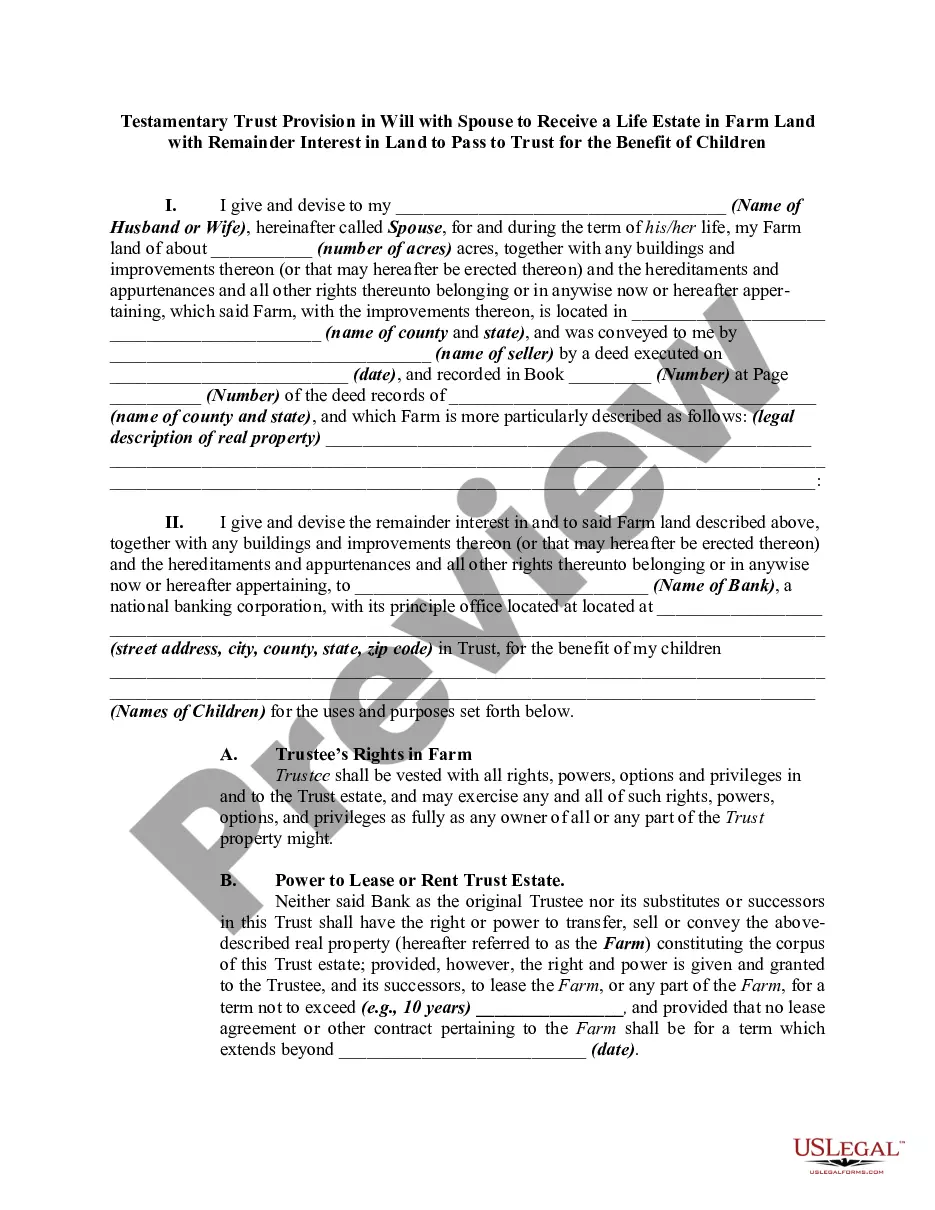
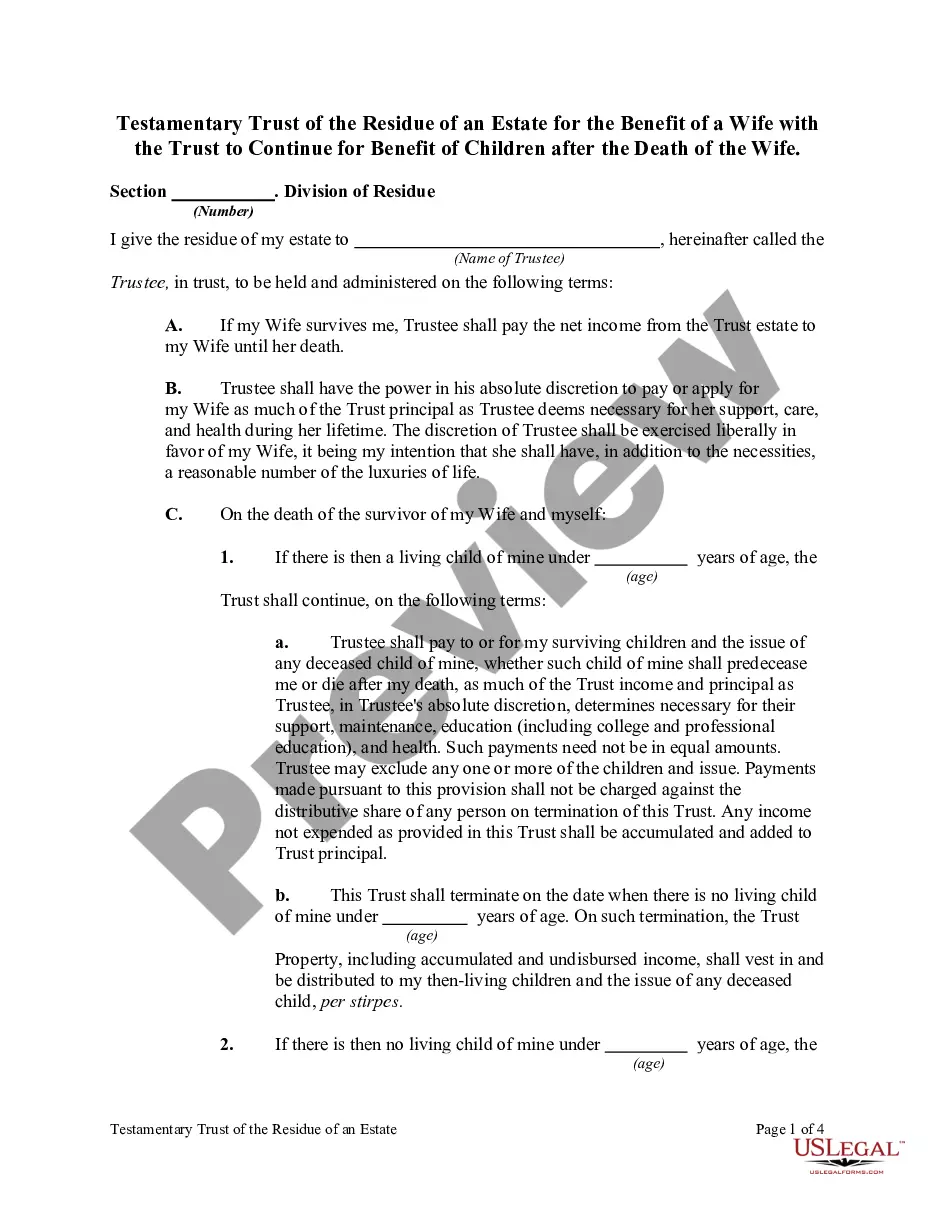
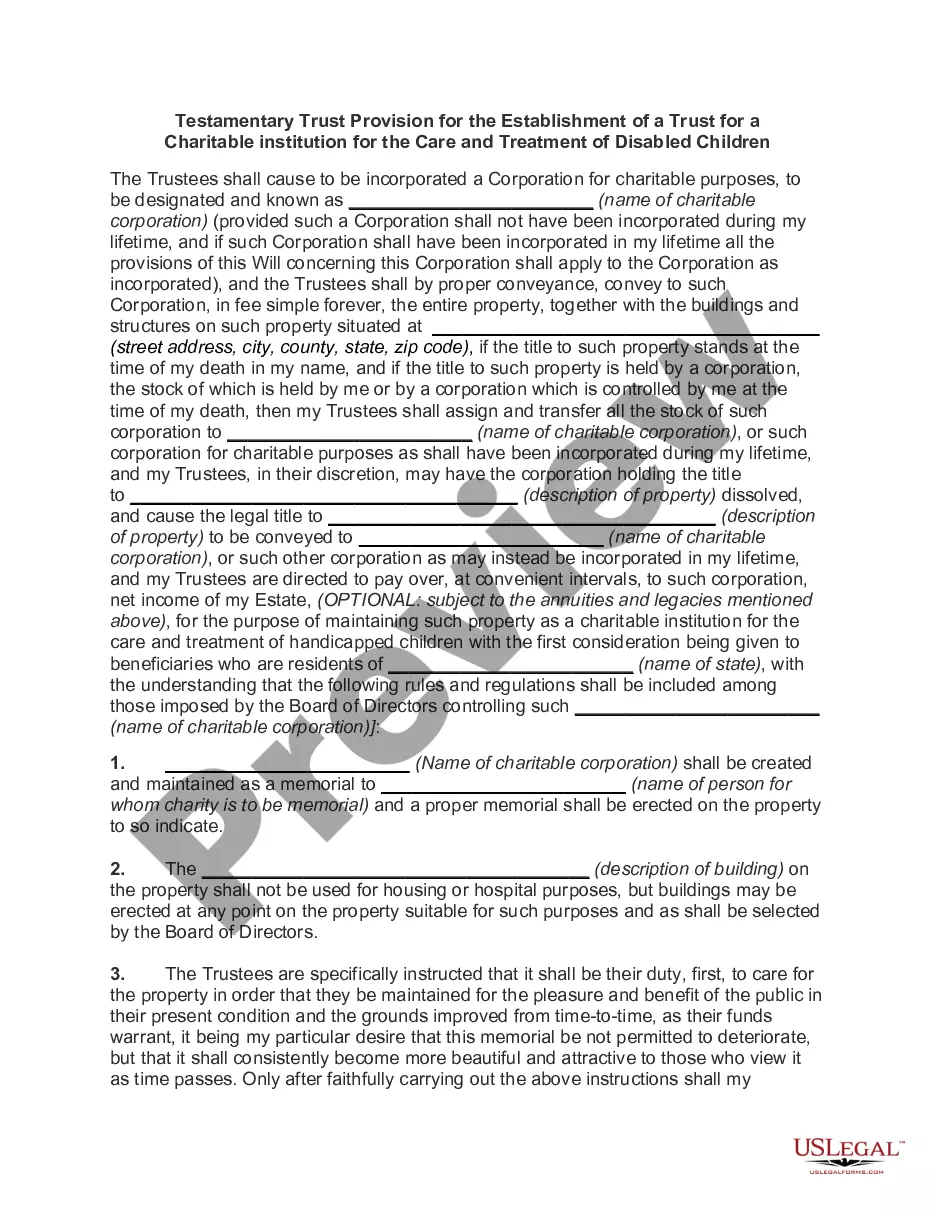
The Testamentary Trust Provision in Will with Spouse to Receive a Life Estate in Farm Land with Remainder Interest in Land to Pass to Trust for the Benefit of Children is a legal document that establishes a trust intended to manage farm property for the benefit of children after the death of a spouse. This form allows one spouse to receive a life estate in the property while ensuring that the remainder interest passes into a trust created for the children. It differs from basic wills by incorporating specific provisions for property management and the disposition of assets within a trust framework, combining elements of a will and a trust in one document.
Form components explained
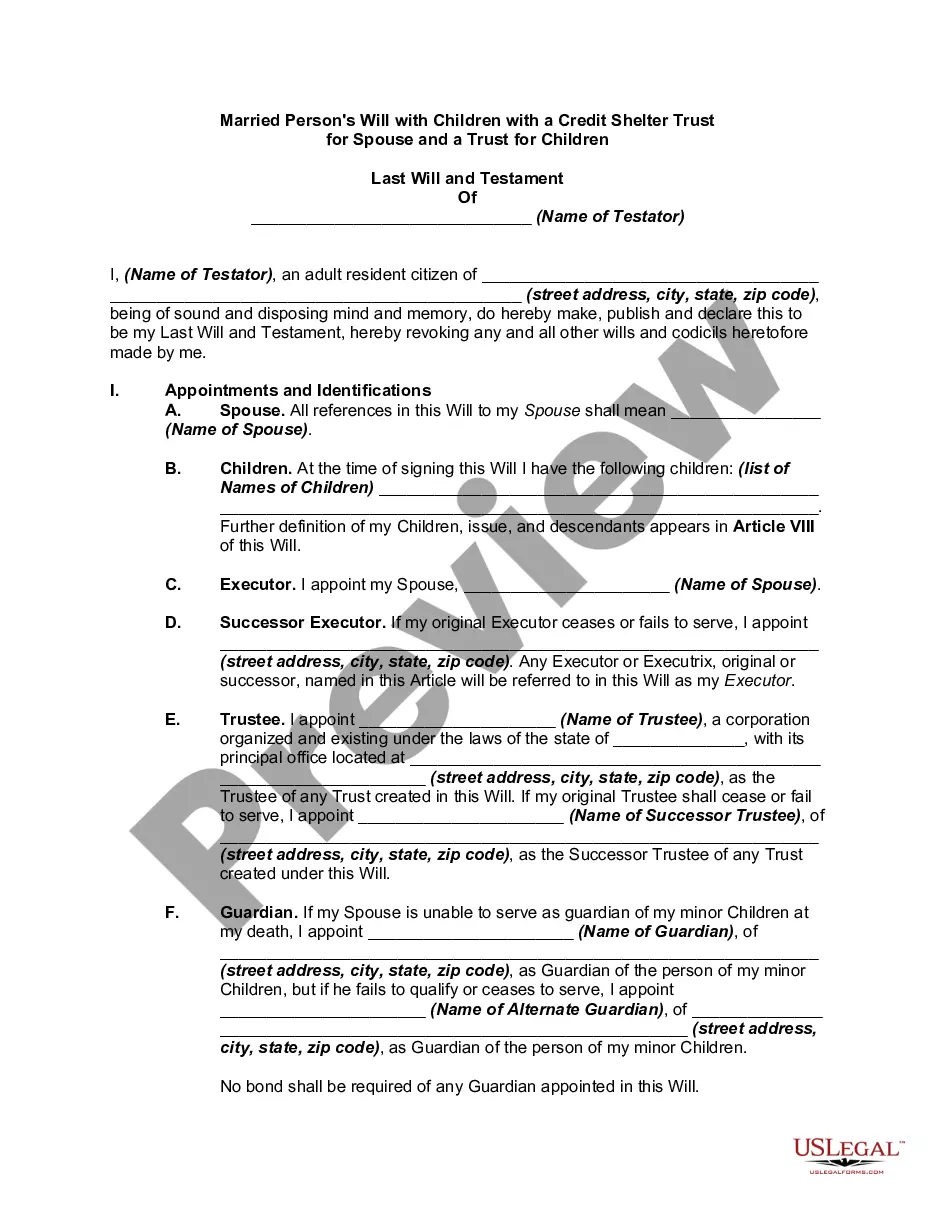
- Name and identification of the spouse receiving the life estate.
- Details of the farm land being transferred, including legal descriptions and location.
- Establishment of a trust for the benefit of children, including trustee details.
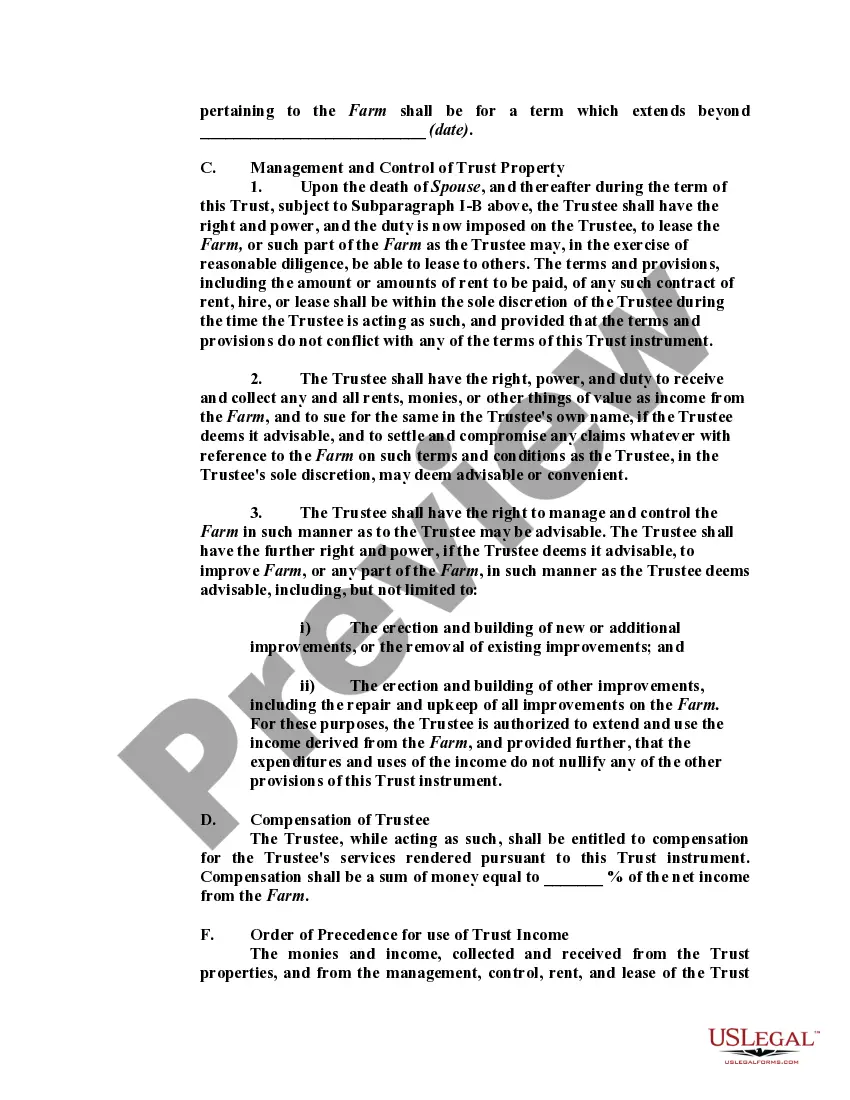
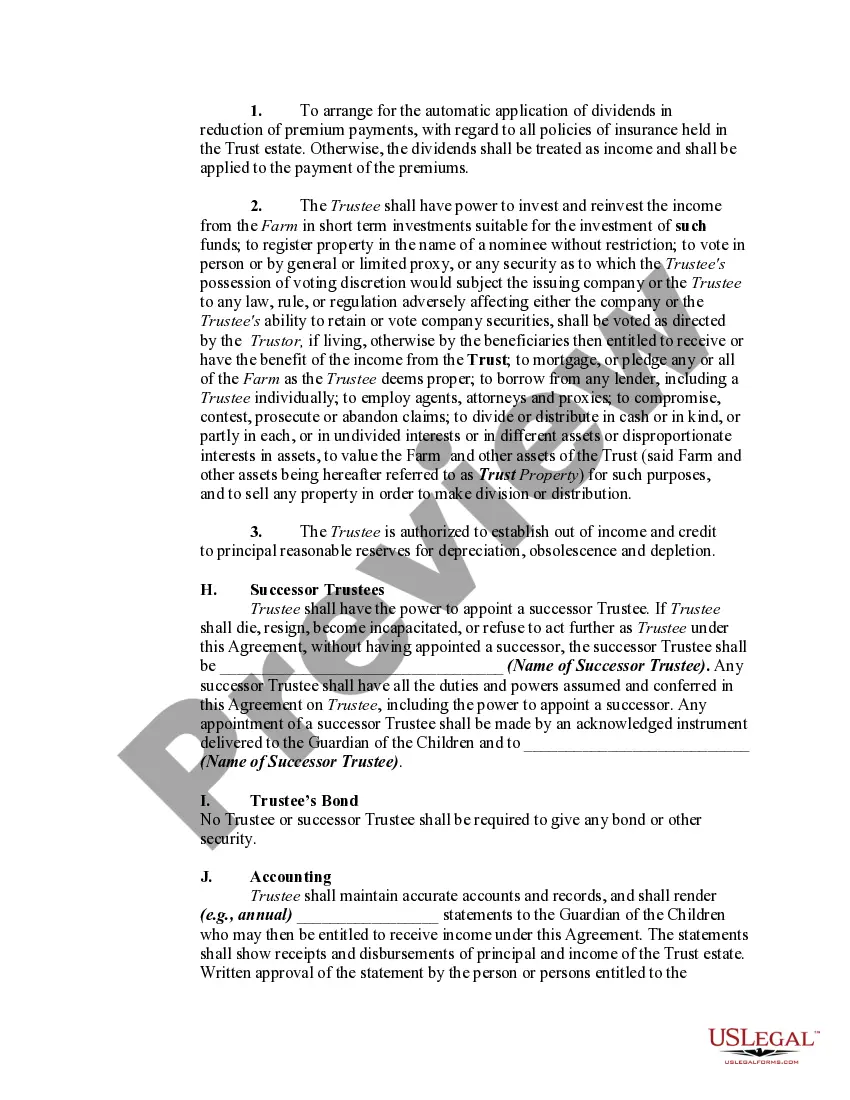
- Rights and powers of the trustee regarding rental and management of the property.
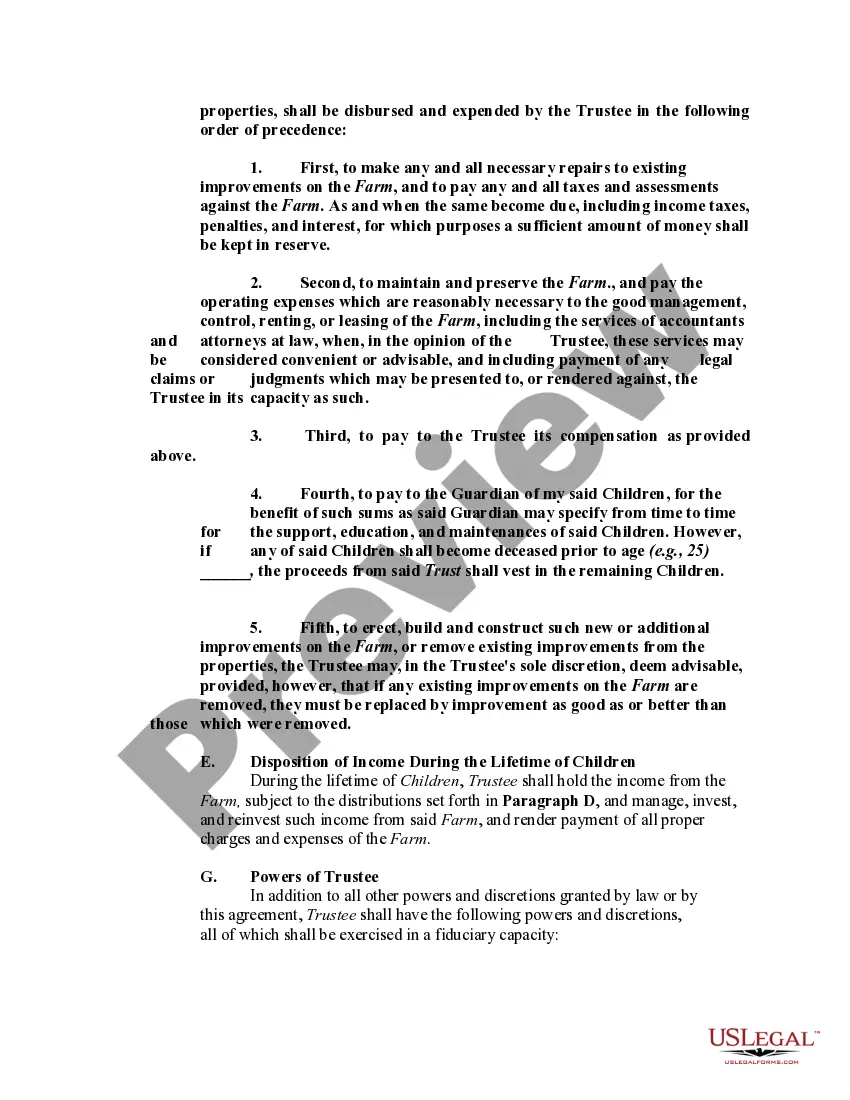
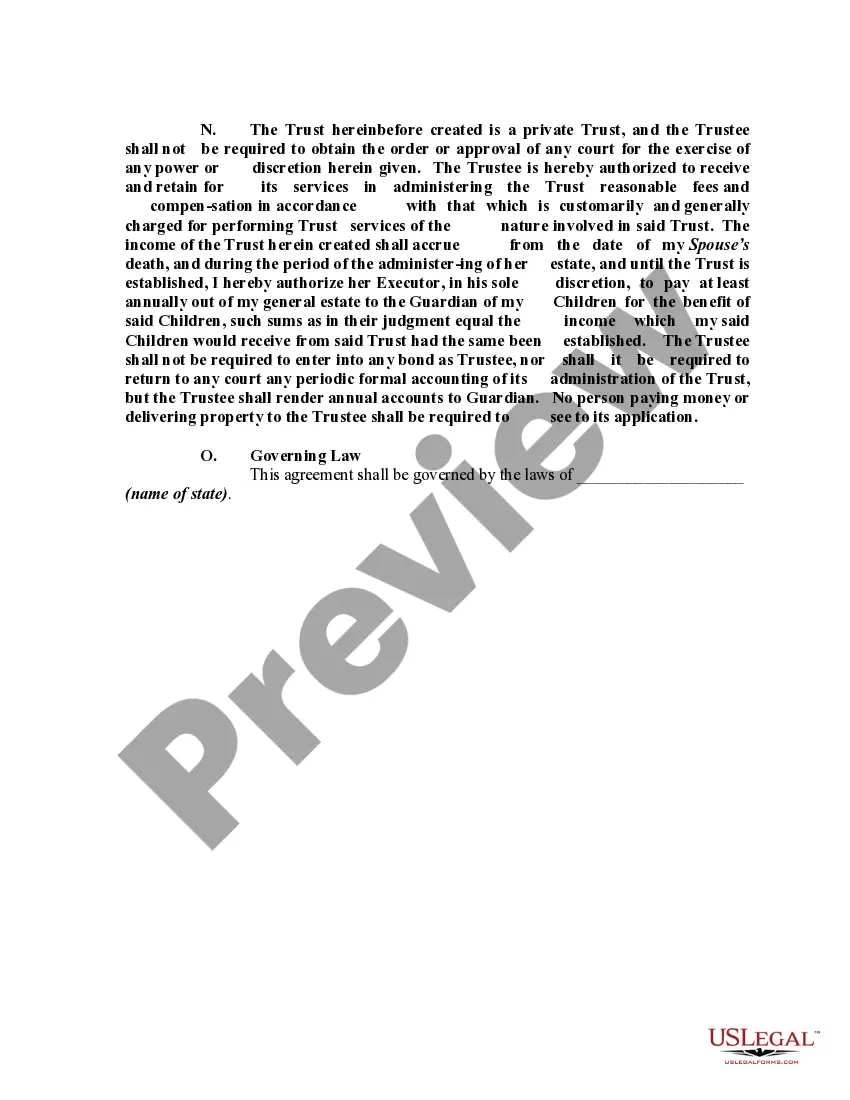
- Instructions on how income and expenses from the farm should be handled.
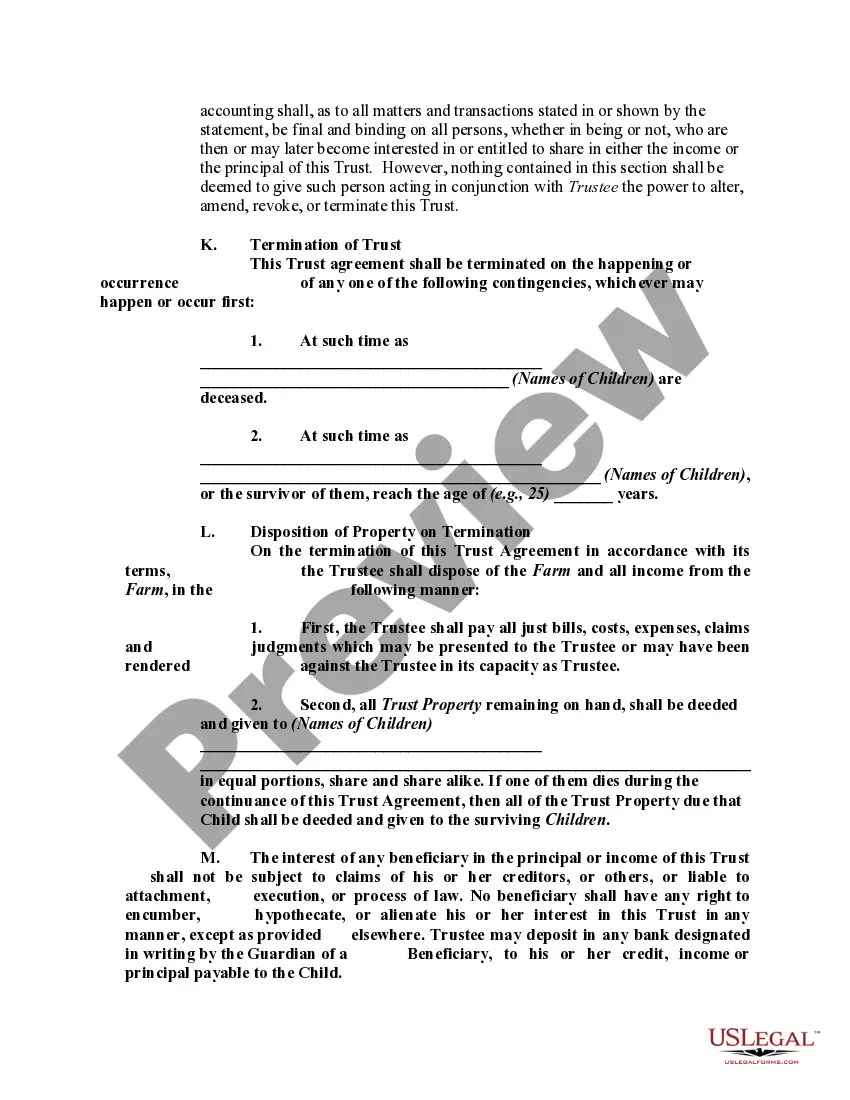
- Conditions for terminating the trust and distributing assets to beneficiaries.

Common use cases
This form is ideal for individuals who wish to ensure that their farm property is preserved and managed effectively after their passing. It is particularly useful when you want to provide a spouse with the right to use the property for their lifetime while also ensuring that the property ultimately benefits your children. Common scenarios include estate planning for families where agricultural land is a significant asset, or in cases where parents wish to protect their children's inheritance from potential claims by creditors.
Who needs this form
This form is appropriate for:
- Married individuals who own farm land and want to set up provisions for their spouse and children in their estate plan.
- Individuals looking to combine elements of a will and a trust to secure their familyâs financial future.
- Parents wanting to ensure that their children benefit from family property while providing for the surviving spouse.
How to complete this form
- Identify the spouse by entering their full name where indicated.
- Specify the details of the farm land, including size, location, and legal description.
- Designate the bank or organization that will serve as the trustee for the trust.
- Outline the rights and powers of the trustee regarding property management and income handling.
- Indicate any conditions concerning the termination of the trust and how assets will be distributed.
Does this form need to be notarized?
This form does not typically require notarization unless specified by local law. However, it is advisable to check local regulations based on your jurisdiction to ensure the document is executed properly for legal validity.
Get your form ready online
Our built-in tools help you complete, sign, share, and store your documents in one place.
Make edits, fill in missing information, and update formatting in US Legal Forms—just like you would in MS Word.
Download a copy, print it, send it by email, or mail it via USPS—whatever works best for your next step.
Sign and collect signatures with our SignNow integration. Send to multiple recipients, set reminders, and more. Go Premium to unlock E-Sign.
If this form requires notarization, complete it online through a secure video call—no need to meet a notary in person or wait for an appointment.
We protect your documents and personal data by following strict security and privacy standards.

Make edits, fill in missing information, and update formatting in US Legal Forms—just like you would in MS Word.

Download a copy, print it, send it by email, or mail it via USPS—whatever works best for your next step.

Sign and collect signatures with our SignNow integration. Send to multiple recipients, set reminders, and more. Go Premium to unlock E-Sign.

If this form requires notarization, complete it online through a secure video call—no need to meet a notary in person or wait for an appointment.

We protect your documents and personal data by following strict security and privacy standards.
Common mistakes to avoid
- Failing to provide a complete legal description of the property.
- Not specifying the trustee or failing to provide their contact details.
- Omitting crucial information about the rights of the trustee, leading to confusion regarding management.
- Neglecting to comply with state-specific execution requirements, which may lead to validity issues.
Why use this form online
- Convenience of downloading and completing the form at your leisure.
- Easy editing capabilities to ensure all details are accurate.
- Access to templates drafted by licensed attorneys to ensure compliance with legal standards.
Key takeaways
- This form allows the owner to create a testamentary trust for farmland, providing benefits to both a spouse and children.
- It includes provisions for the management and distribution of assets, offering flexibility in estate planning.
- Consulting local laws is crucial to remain compliant with state-specific requirements.
Looking for another form?


Form popularity
FAQ
The surviving spouse can serve as the sole trustee, but cannot have any power to direct the beneficial enjoyment of the disclaimed property unless the power is limited by an "ascertainable standard." This is necessary both to qualify the disclaimer and to avoid any taxable general power of appointment.
23. For testamentary trusts established for adult children, the beneficiaries are usually the child, their children and their grandchildren. The spouses of these people are usually potential income beneficiaries. This means that income can be distributed to them to reduce the tax that the child's family group will pay.
Distribute trust assets outright The grantor can opt to have the beneficiaries receive trust property directly without any restrictions. The trustee can write the beneficiary a check, give them cash, and transfer real estate by drawing up a new deed or selling the house and giving them the proceeds.
You can put something into an irrevocable trust (like a residence) and retain a life estate, she said. You are 'irrevocably' transferring ownership of your house to the trust, but you still retain control.
Most likely you will need an attorney to obtain letters testamentary. Many attorneys offer a free consultation. At least meet with an attorney to make sure letters testamentary is what you need.
There are two components of letter of testamentary cost: the court fee and the attorney's fees. The court fee ranges from $45 to $1,250, depending on the gross value of the estate. The attorney's fees start at about $2,500 and can go up depending on the complexity of the case.
1Find the local probate court or surrogate's court, as it's sometimes called.2File the will and a certified copy of the testator's death certificate .3Fill out the necessary paperwork , like a petition form, and provide any additional documents.
A testamentary will is a traditional will, aka last will and testament. It is a legal document that is used to transfer an estate to beneficiaries after the death of the person who makes the will, or the testator.
The purpose of a letter of testamentary is to show you have the legal right to act as an executor of a particular person's estate. This letter gives you permission to pay an estate's debts, take inventory of the estate's assets and distribute those assets on behalf of the decedent.