Sale of Goods, Buyer Inspects
Understanding this form
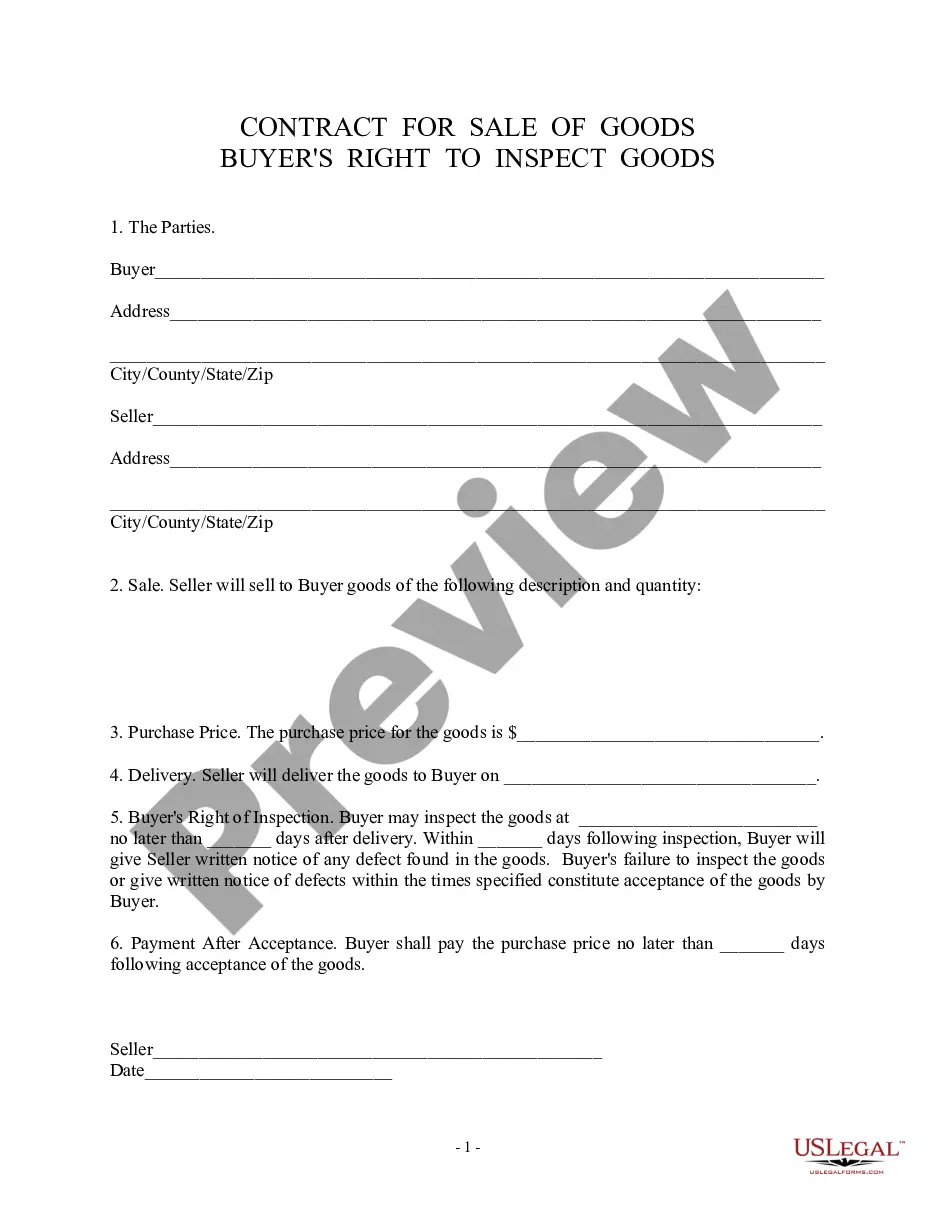
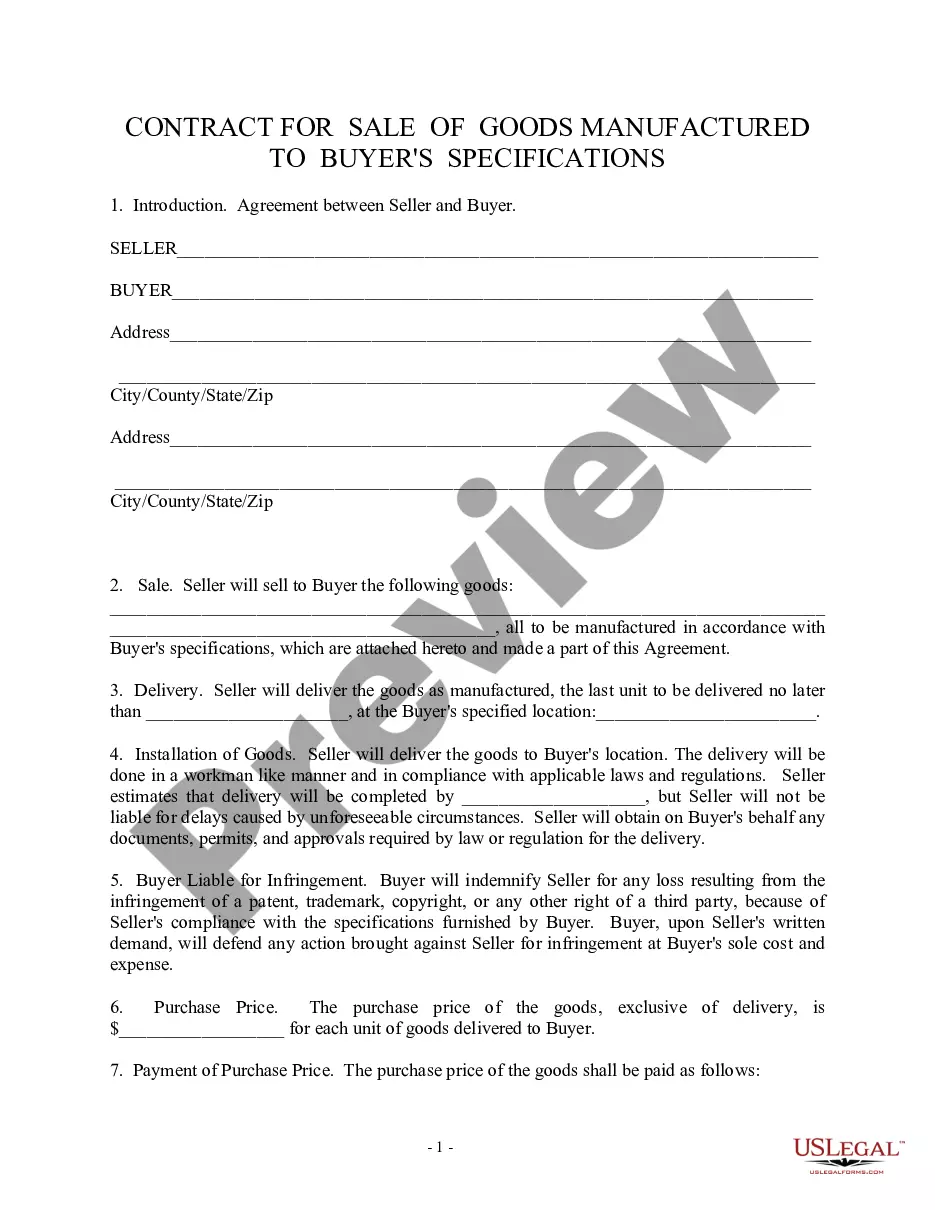
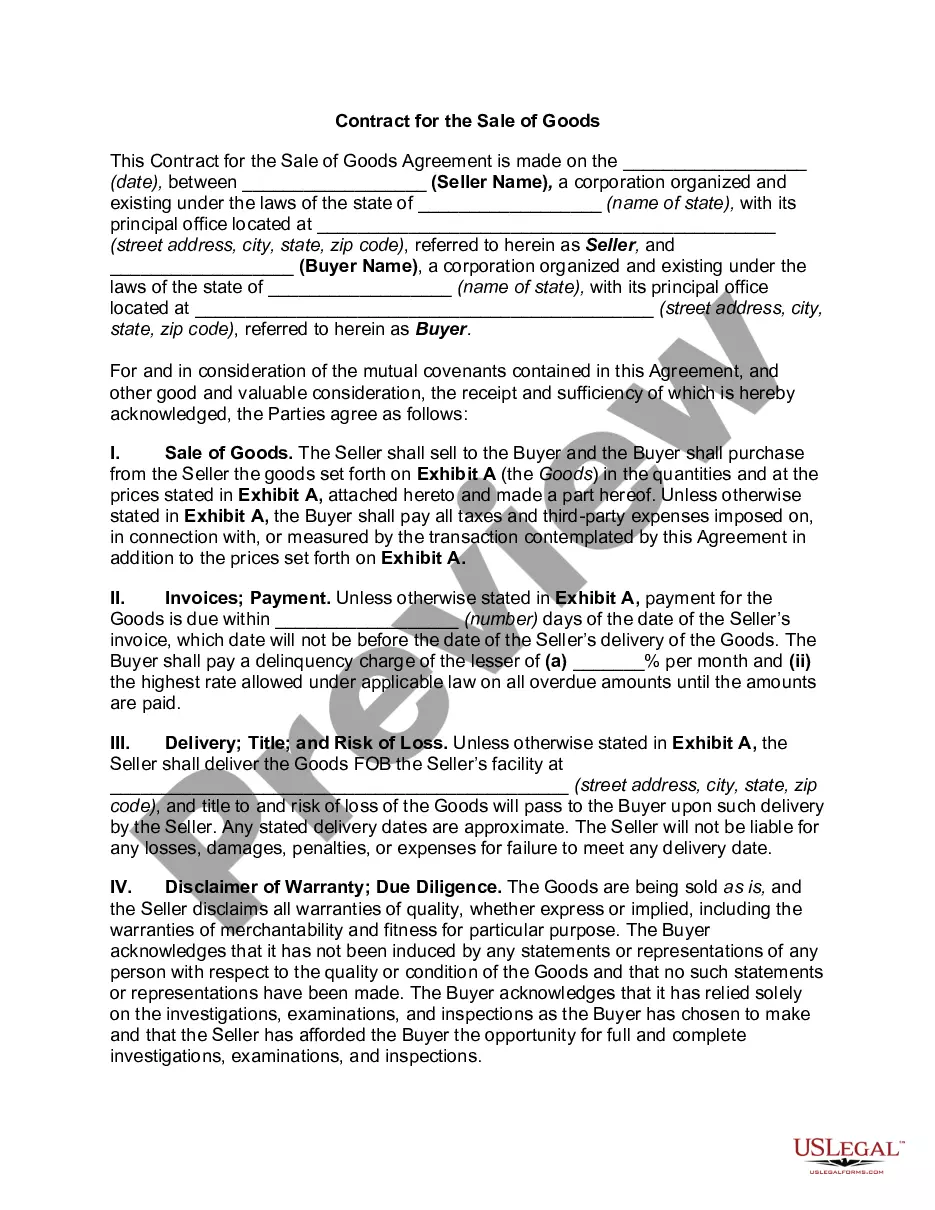
The Sale of Goods, Buyer Inspects form is a contract that allows a buyer to purchase goods from a seller while reserving the right to inspect those goods before finalizing the purchase. This form is particularly useful as it provides a mechanism for the buyer to ensure that the goods meet their expectations or contractual requirements before accepting them. Unlike other sales agreements, this specific form emphasizes the buyer's right to inspect the goods and the process for addressing any defects identified during the inspection.
Main sections of this form
- Identification of the parties involved in the transaction (buyer and seller).
- Description of the goods being sold, including their quantity.
- Established purchase price for the goods.
- Delivery details, including the delivery date.
- Provision for the buyer's right to inspect the goods and timeline for reporting defects.
- Payment terms following acceptance of the goods.
When to use this document
This form should be used when a buyer is purchasing goods and wishes to ensure that they have the opportunity to inspect the goods before final acceptance. It is ideal for scenarios involving high-value items, custom goods, or any situation where the condition of goods is critical to the buyerâs decision-making process. Additionally, it provides a clear process for addressing any issues that may arise during the inspection phase to protect the buyerâs interests.
Who should use this form
- Individual buyers or consumers purchasing goods from a seller.
- Businesses engaging in sales transactions where inspection of goods is necessary.
- Any seller who wishes to formalize the sale process with a provision for buyer inspection.
How to complete this form
- Identify the buyer and seller by entering their names and addresses.
- Describe the goods being purchased, including the type and quantity.
- Specify the purchase price agreed upon for the goods.
- Indicate the delivery date for when the seller will provide the goods.
- Detail the location and timeframe for the buyer to inspect the goods.
- Provide the payment timeline post-acceptance of the goods.
Notarization requirements for this form
This form does not typically require notarization unless specified by local law. It is recommended to check state regulations to confirm if notarization is necessary for your specific transaction.
Get your form ready online
Our built-in tools help you complete, sign, share, and store your documents in one place.
Make edits, fill in missing information, and update formatting in US Legal Forms—just like you would in MS Word.
Download a copy, print it, send it by email, or mail it via USPS—whatever works best for your next step.
Sign and collect signatures with our SignNow integration. Send to multiple recipients, set reminders, and more. Go Premium to unlock E-Sign.
If this form requires notarization, complete it online through a secure video call—no need to meet a notary in person or wait for an appointment.
We protect your documents and personal data by following strict security and privacy standards.

Make edits, fill in missing information, and update formatting in US Legal Forms—just like you would in MS Word.

Download a copy, print it, send it by email, or mail it via USPS—whatever works best for your next step.

Sign and collect signatures with our SignNow integration. Send to multiple recipients, set reminders, and more. Go Premium to unlock E-Sign.

If this form requires notarization, complete it online through a secure video call—no need to meet a notary in person or wait for an appointment.

We protect your documents and personal data by following strict security and privacy standards.
Typical mistakes to avoid
- Failing to specify the inspection date, leading to misunderstandings.
- Not including adequate descriptions of the goods to avoid disputes.
- Neglecting to document any defects found during inspection.
- Forgetting to sign and date the agreement by both parties.
Why complete this form online
- Convenience of downloading and completing the form at your own pace.
- Editability, allowing you to customize the form to fit your specific transaction needs.
- Reliability of having a legally vetted document prepared by licensed attorneys.
What to keep in mind
- The Sale of Goods, Buyer Inspects form allows for an inspection period before final acceptance of the goods.
- It is essential for buyers to document any defects identified during inspection to maintain their rights.
- This form is adaptable for use in different statesâalways ensure compliance with local laws.
Looking for another form?



Form popularity
FAQ
A buyers contract is a legal agreement between a real estate broker and a person interested in buying a home. With this contract in place, the real estate broker will represent the home buyer and will receive compensation for their services.
Real estate agents typically don't like to sign nonexclusive agreements, but as a buyer looking out for your own best interests, it may be preferable to have multiple people working on your behalf until you've decided whether you can fully trust just one.
To be perfectly clear, you can always back out of a real estate purchase contract at any time before closing. There's no way the seller can force you to actually purchase the home. However, if there's no valid reason for backing out as defined in the contract, you'll likely lose your earnest deposit.
A buyer's agent agreement is a contract between a home buyer and a real estate agent that defines how the two agree to work together.Well, if the right conditions are outlined in a buyer's agent agreement, that's exactly what it empowers home buyers to do.
In most cases, you should be able to terminate the agreement with a letter of cancellation or termination," says Beverley Hourlier, a Realtor with Hilltop Chateau Realty, in San Diego. "Usually either side can terminate this way." But because this is a legal contract, don't just part ways with a handshake.
To be perfectly clear, you can always back out of a real estate purchase contract at any time before closing. There's no way the seller can force you to actually purchase the home. However, if there's no valid reason for backing out as defined in the contract, you'll likely lose your earnest deposit.
While a buyer can legally back out of a home contract, there can be consequences for doing so. For example, you can lose your earnest money, which could amount to thousands of dollars or more. That is unless your reason for pulling out of the deal is stipulated in your contract.
What are the three types of Buyer's Agreements? -Exclusive purchase, exclusive seller, and closed buyer agency.