Alabama Intro Letter to Client
Overview of this form
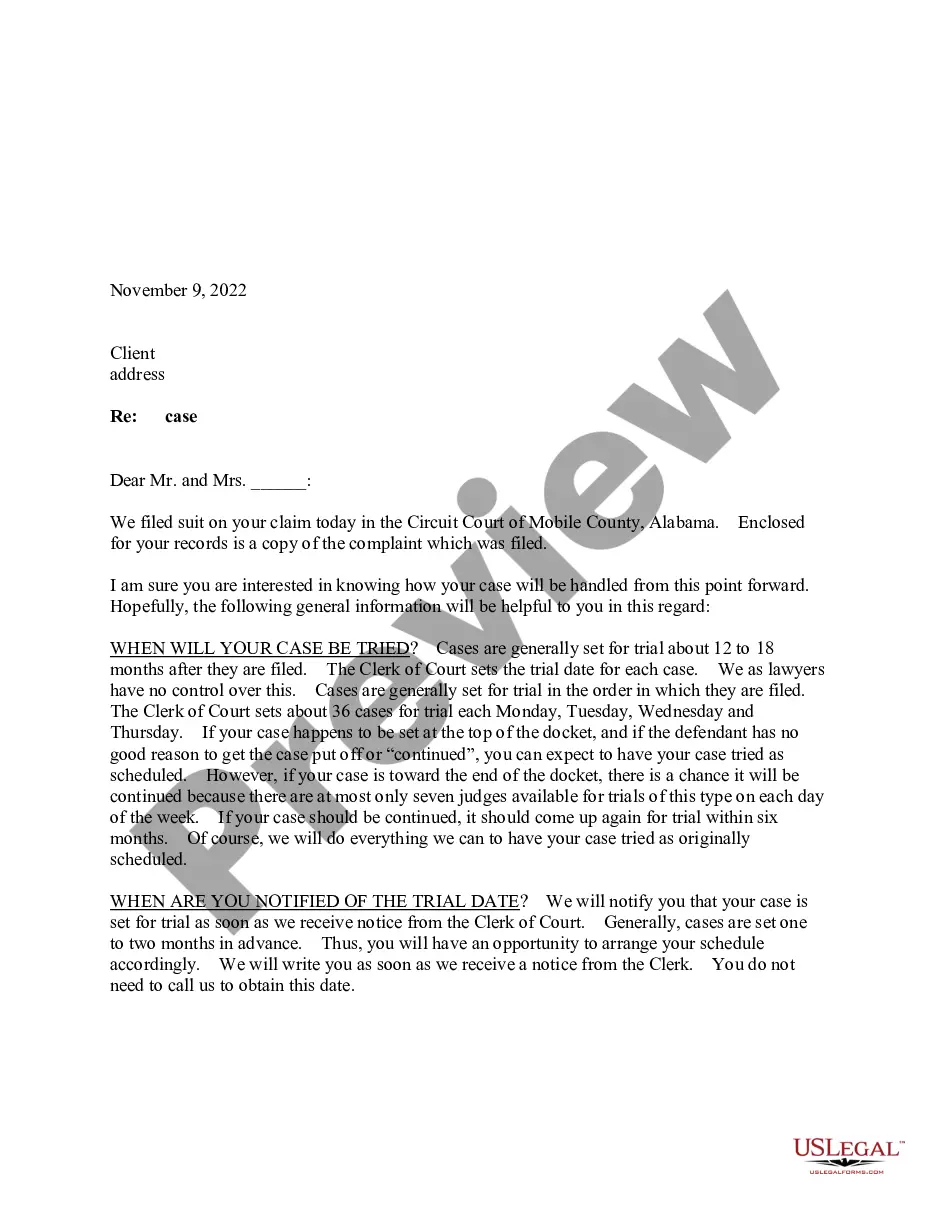
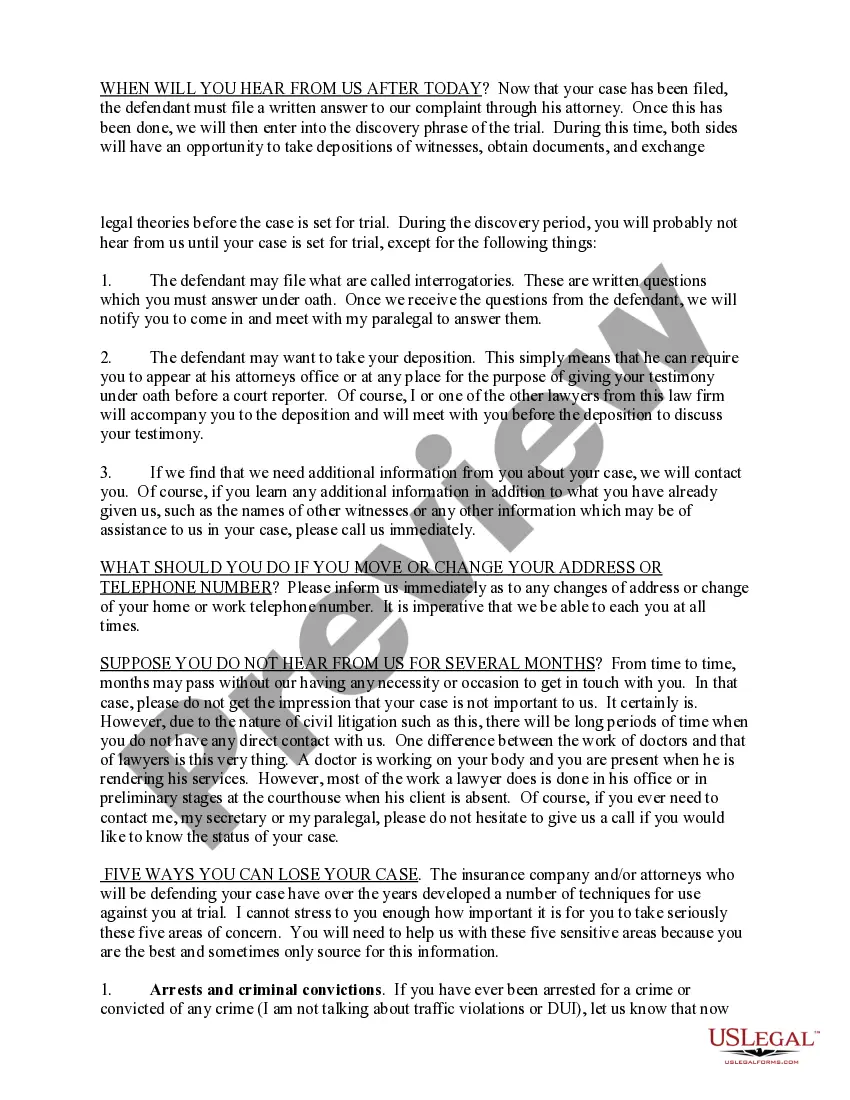
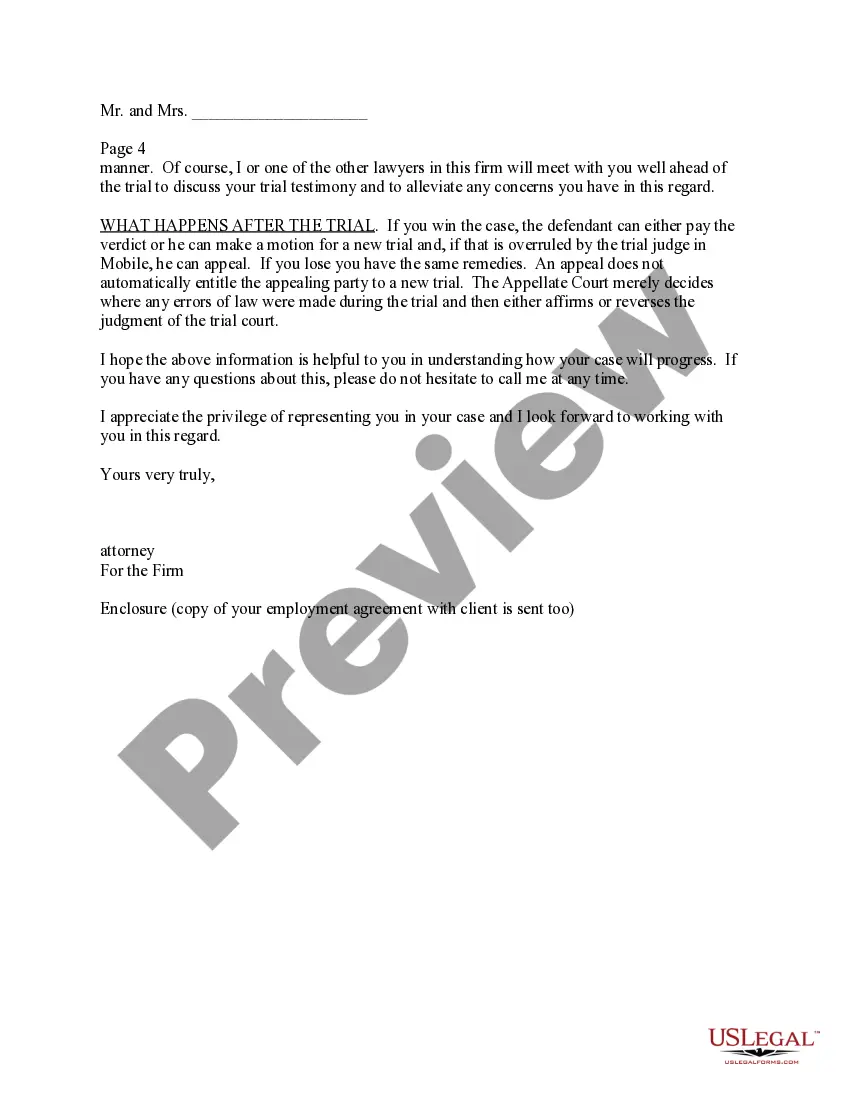
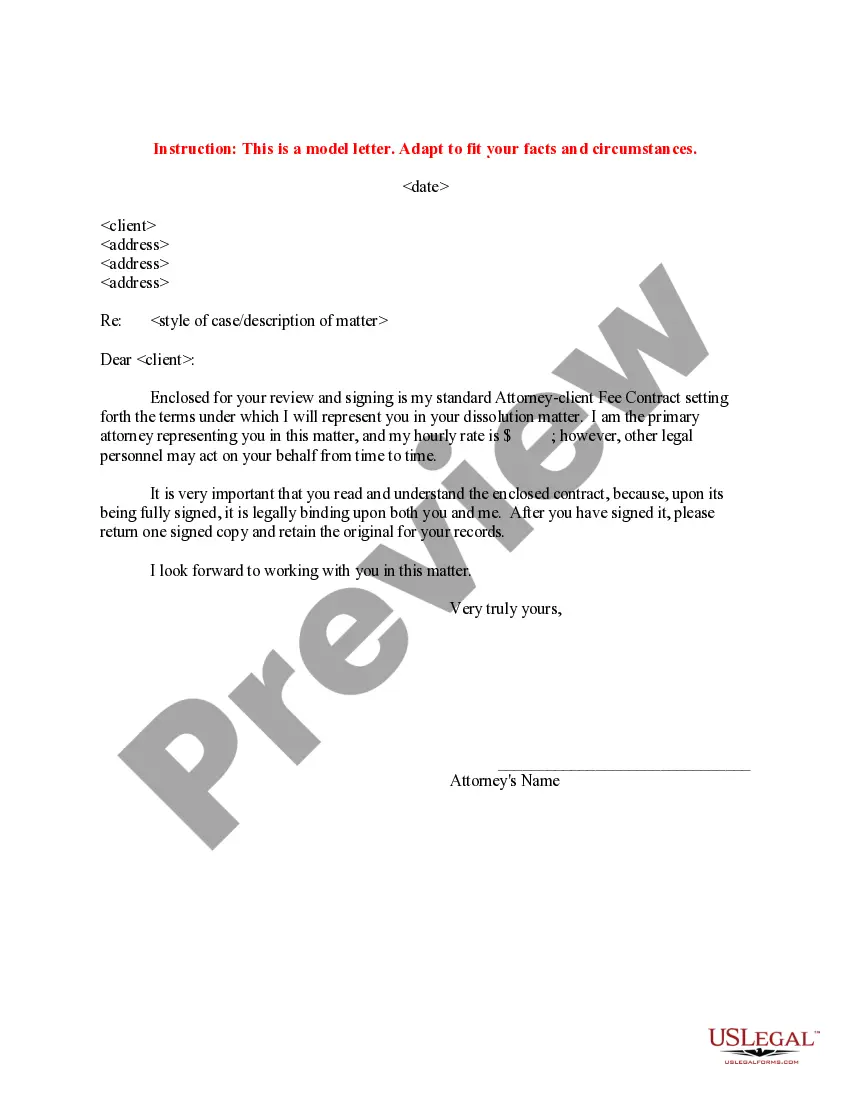
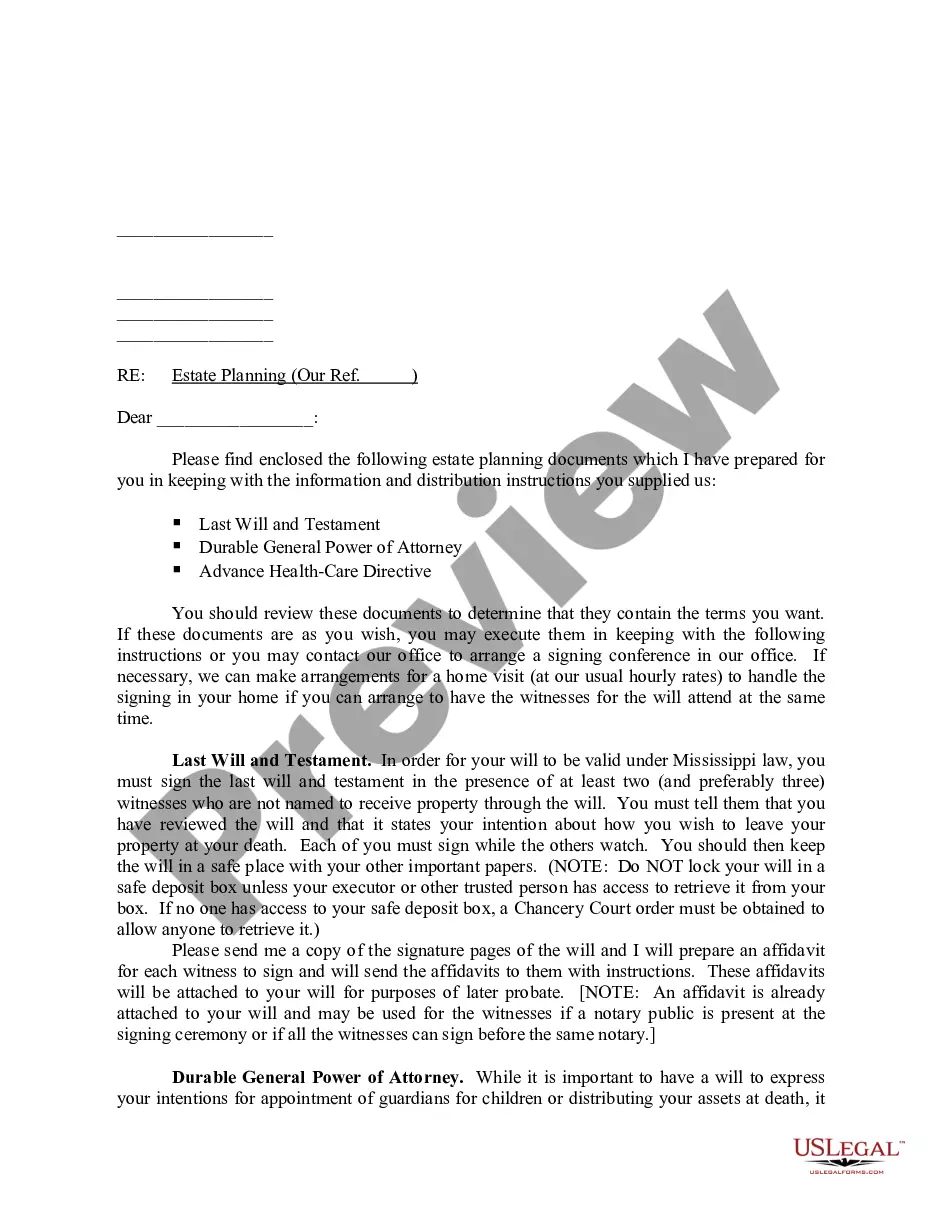
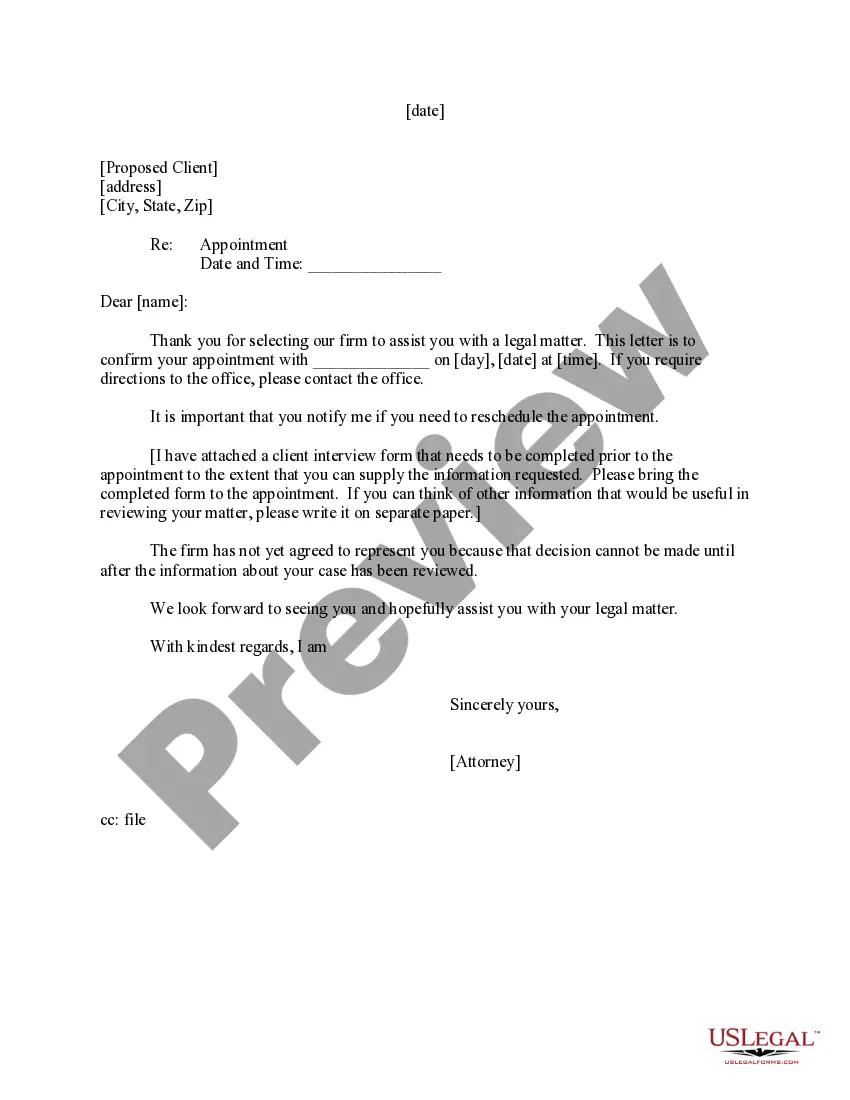
The Intro Letter to Client is a formal communication from an attorney to a client at the start of their professional relationship. This letter outlines what the client can expect as their case progresses, detailing the legal process and key milestones in their litigation.
What’s included in this form
- Date of letter
- Client address
- Case details and context
- Information about trial timelines and notifications
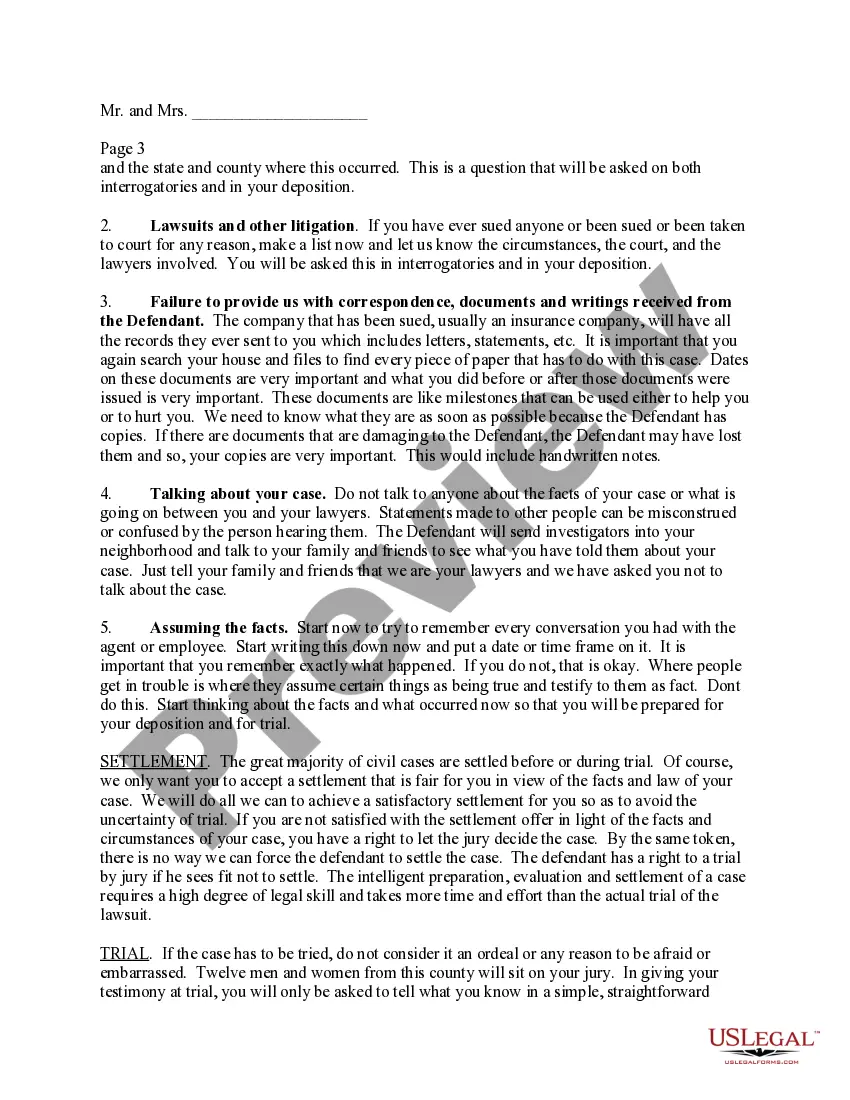
- Client responsibilities during the litigation process
- Settlement and trial expectations
Situations where this form applies
This form is used at the beginning of an attorney-client relationship. It is ideal for attorneys who need to establish clear communication regarding case expectations, responsibilities, and next steps. By using this letter, attorneys ensure that clients are informed about the legal process and are prepared for developments that may arise during their case.
Who this form is for
- Attorneys establishing a new client relationship
- Law firms managing client communications
- Clients who want to understand the legal process that they are entering
How to prepare this document
- Insert the current date at the top of the letter.
- Clearly state the clientâs address.
- Provide specific details regarding the case such as the filed suit and court information.
- Address key points of the litigation process, including timelines and what to expect.
- Include a call-to-action for the client to reach out with any updates or questions.
Notarization requirements for this form
This form usually doesn’t need to be notarized. However, local laws or specific transactions may require it. Our online notarization service, powered by Notarize, lets you complete it remotely through a secure video session, available 24/7.
Get your form ready online
Our built-in tools help you complete, sign, share, and store your documents in one place.
Make edits, fill in missing information, and update formatting in US Legal Forms—just like you would in MS Word.
Download a copy, print it, send it by email, or mail it via USPS—whatever works best for your next step.
Sign and collect signatures with our SignNow integration. Send to multiple recipients, set reminders, and more. Go Premium to unlock E-Sign.
If this form requires notarization, complete it online through a secure video call—no need to meet a notary in person or wait for an appointment.
We protect your documents and personal data by following strict security and privacy standards.

Make edits, fill in missing information, and update formatting in US Legal Forms—just like you would in MS Word.

Download a copy, print it, send it by email, or mail it via USPS—whatever works best for your next step.

Sign and collect signatures with our SignNow integration. Send to multiple recipients, set reminders, and more. Go Premium to unlock E-Sign.

If this form requires notarization, complete it online through a secure video call—no need to meet a notary in person or wait for an appointment.

We protect your documents and personal data by following strict security and privacy standards.
Common mistakes
- Failing to personalize the letter with the clientâs correct name and address.
- Neglecting to include the date the letter was issued.
- Omitting critical information regarding case timelines and client expectations.
- Using legal jargon without clear explanations for the client.
Why complete this form online
- Conveniently access and download the form at any time.
- Edit the letter to customize the contents to your specific case.
- Ensure that the form is drafted according to current legal standards and practices.
Key takeaways
- The Intro Letter to Client is essential for setting clear expectations at the beginning of a legal case.
- Attorneys should provide detailed information to help clients understand their roles and responsibilities.
- Adapting the form for state-specific requirements can enhance compliance and clarity.
Looking for another form?
Form popularity
FAQ
The following points can be quite valuable when writing the marketing letter for a potential client: It is important to follow the correct format when writing the marketing letter. Introduce the business in a humble and polite tone. Tell about the business in a manner that it is valuable to the client.
Write a greeting. Include a sentence on why you're writing. Present the full name of the person you're introducing. Explain their role and how it is relevant to the reader. Provide information on how they might work together or be helpful for each other.
Connect through people. You may not be able to use your connections all the time. Write an irresistible subject line. Subject lines are very important. Nail the opener. Explain why you are reaching out. Include a CTA.
Write a compelling subject line. Tailor your greeting to the industry and situation. Make your first line about them. Explain why you're reaching out. Provide value for them. Include a call-to-action. Say "thanks" and sign off. Follow up with them.
Dear Mr./Ms. Last Name: The first paragraph of your letter should include information on why you are writing (you would like an interview, you would like a job at their company, you would like more information about the job, etc.). Mention the position you are applying for.
Introduce yourself in a professional way In the reception area, introduce yourself. Hi, I'm Jill Jackson. I'm here for my interview with Jane Smith. When you meet the person who'll be interviewing you, extend a hand, say hello, and introduce yourself again.
Determine the intent. Research the company or market. Identify a need. Open with a strong statement. Include relevant details. Keep it short and concise. Create a call to action. Close your letter.
Opening Use a formal salutation. Paragraph 1 Introduce yourself by telling the recipient who you are and what you do. Paragraph 2 Explain why you're getting in touch. Paragraph 3 Give your contact details.
Include an informative subject line. Use an appropriate greeting. Mention how you got this person's contact information. Compliment the recipient or organization. State why you are contacting them. Tell the recipient you look forward to hearing back from them.