Petition or Application for Writ of Mandamus or Mandate for Refusal of Administrative Agency to Act on Petition
Understanding this form
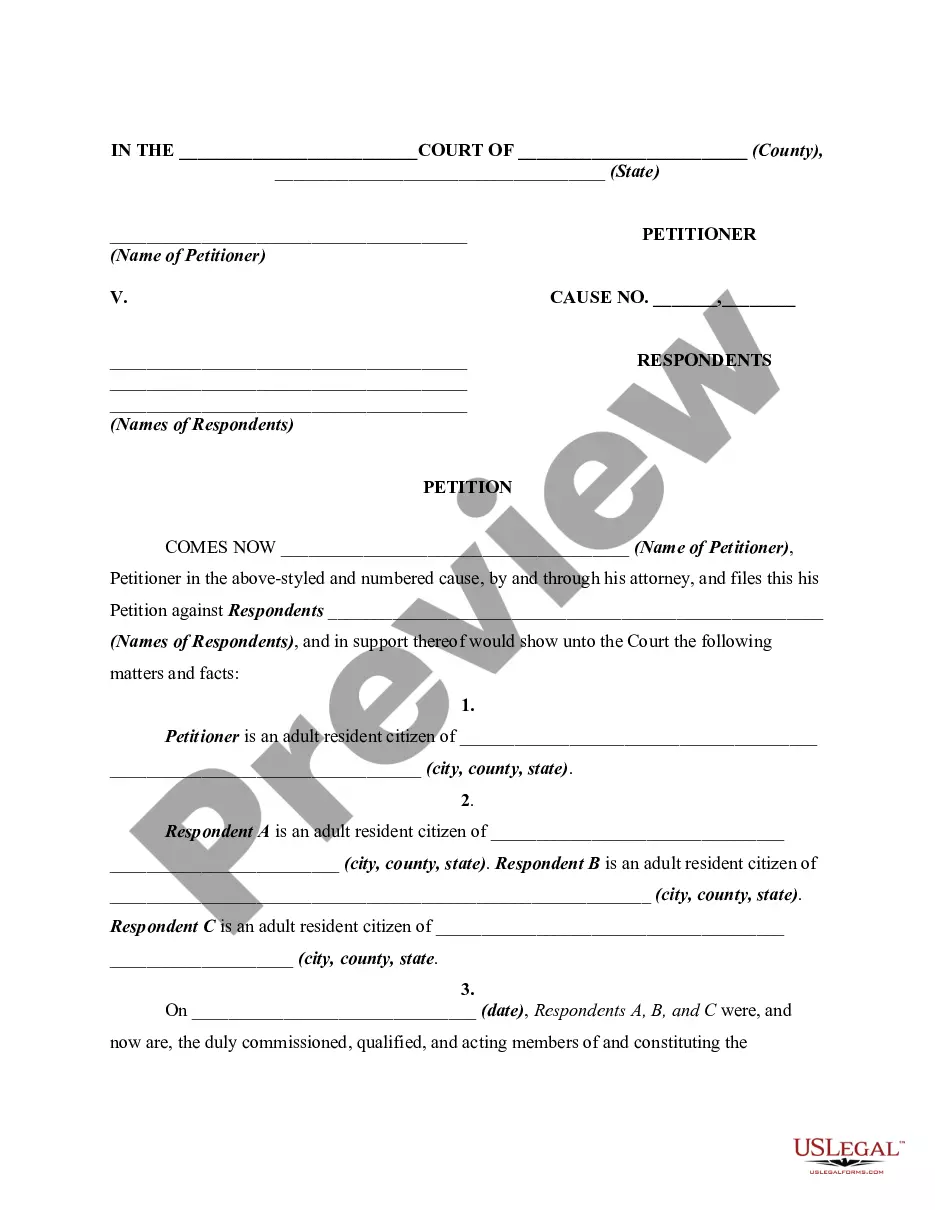
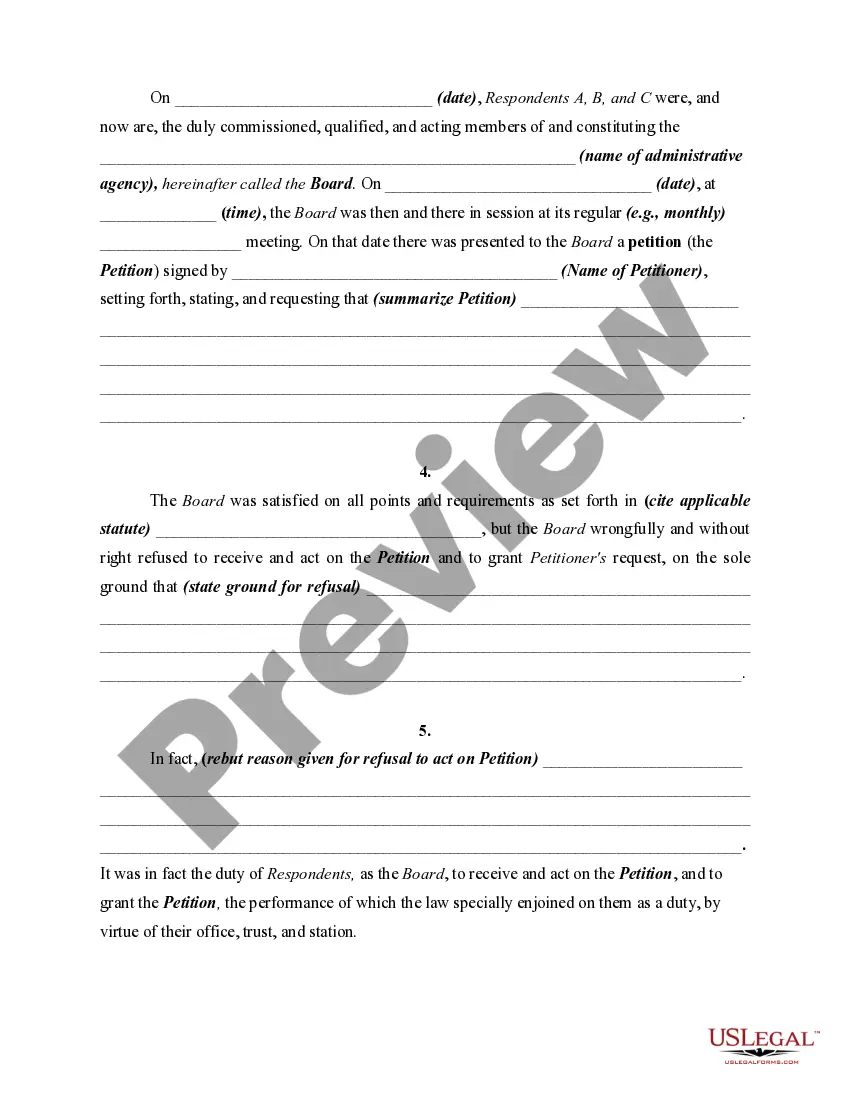
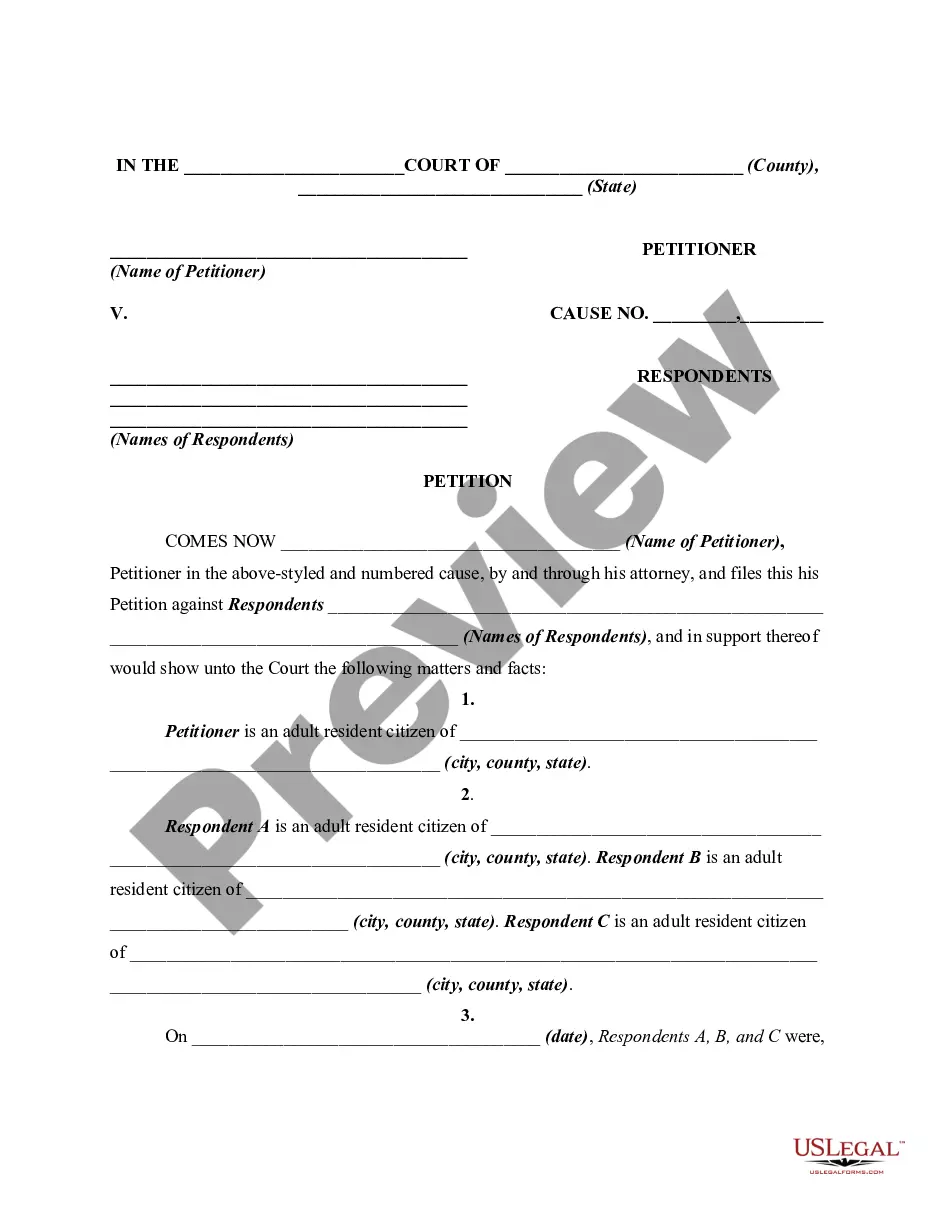
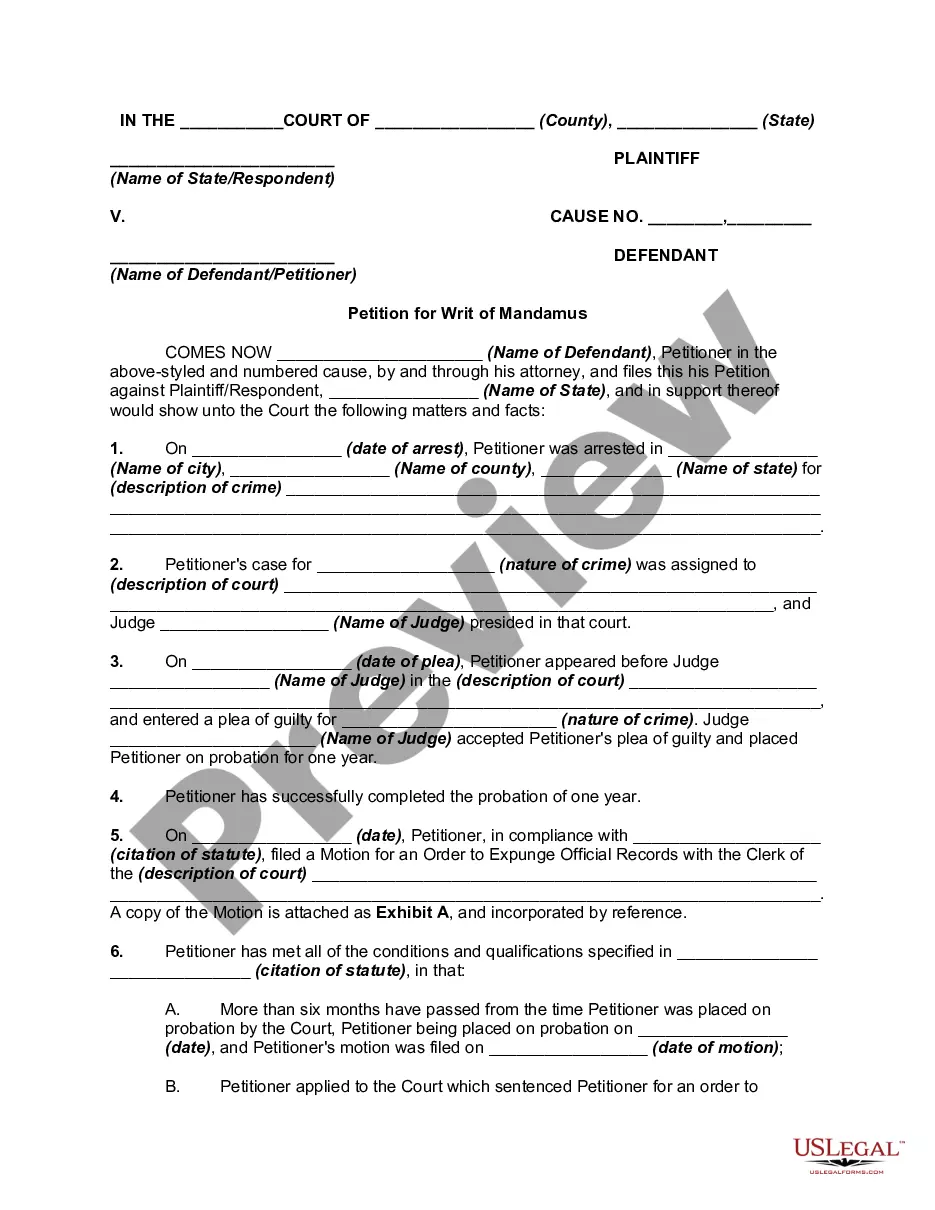
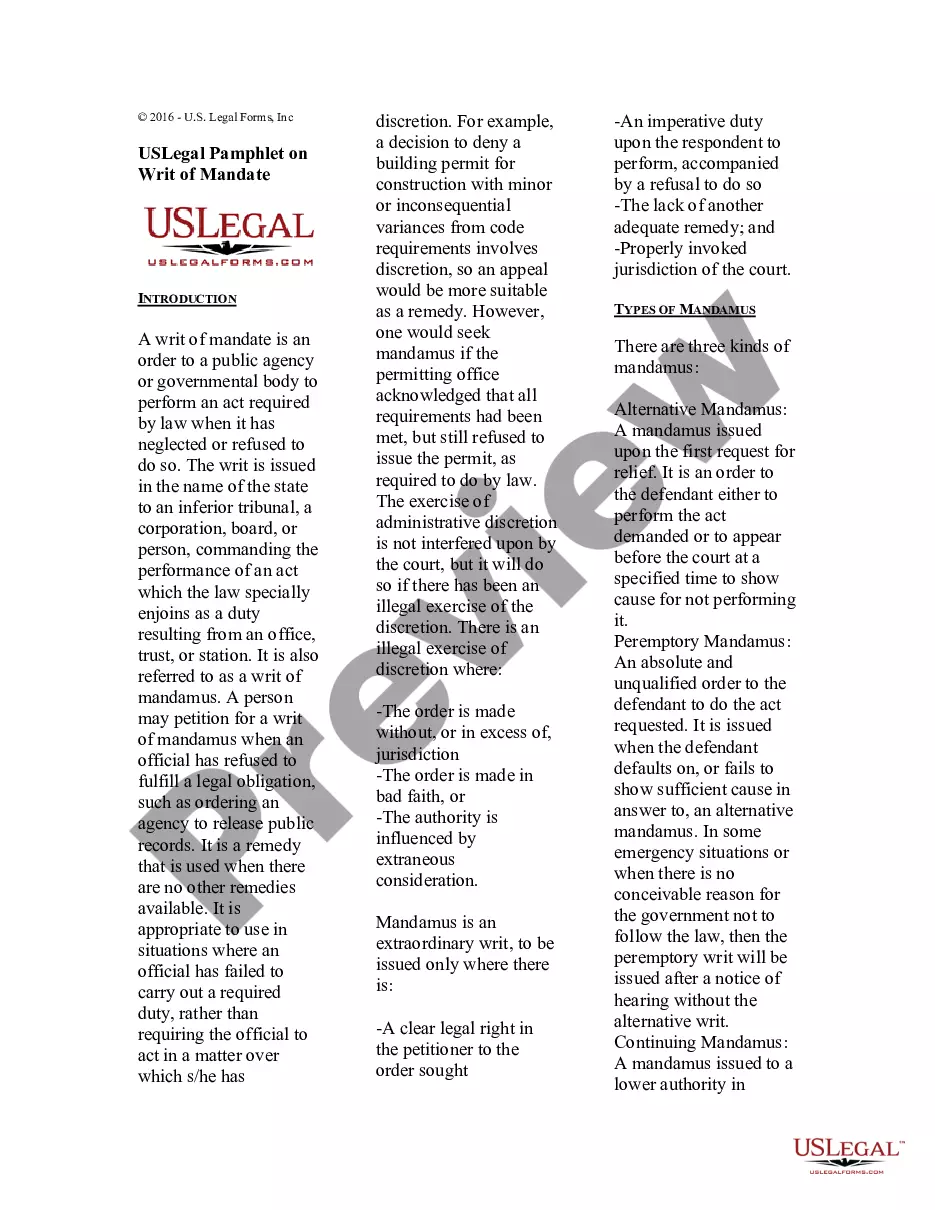
The Petition or Application for Writ of Mandamus or Mandate is a legal request made to compel a public agency or governmental body to perform a duty required by law. This form is utilized when an official neglects or refuses to act on a legal obligation, such as the release of public records. Unlike other legal petitions, a writ of mandamus specifically requires the agency to carry out a mandatory action, moving beyond simple requests for information or action.
Main sections of this form
- Petitioner's information, including name and address.
- Respondents' details, identifying the agency or officials being petitioned.
- Specific allegations outlining the circumstances of the refusal to act.
- Citation of relevant statutes authorizing the request.
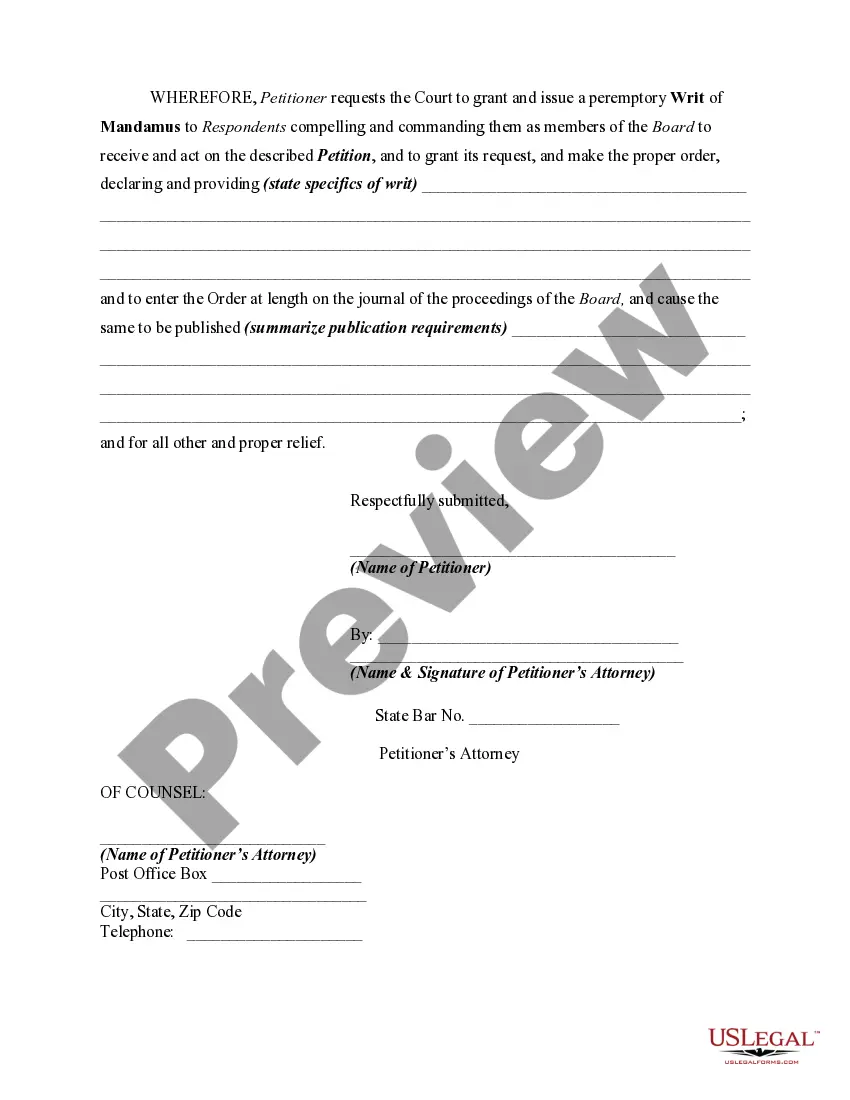
- Request for the court to issue the writ and provide specific relief.
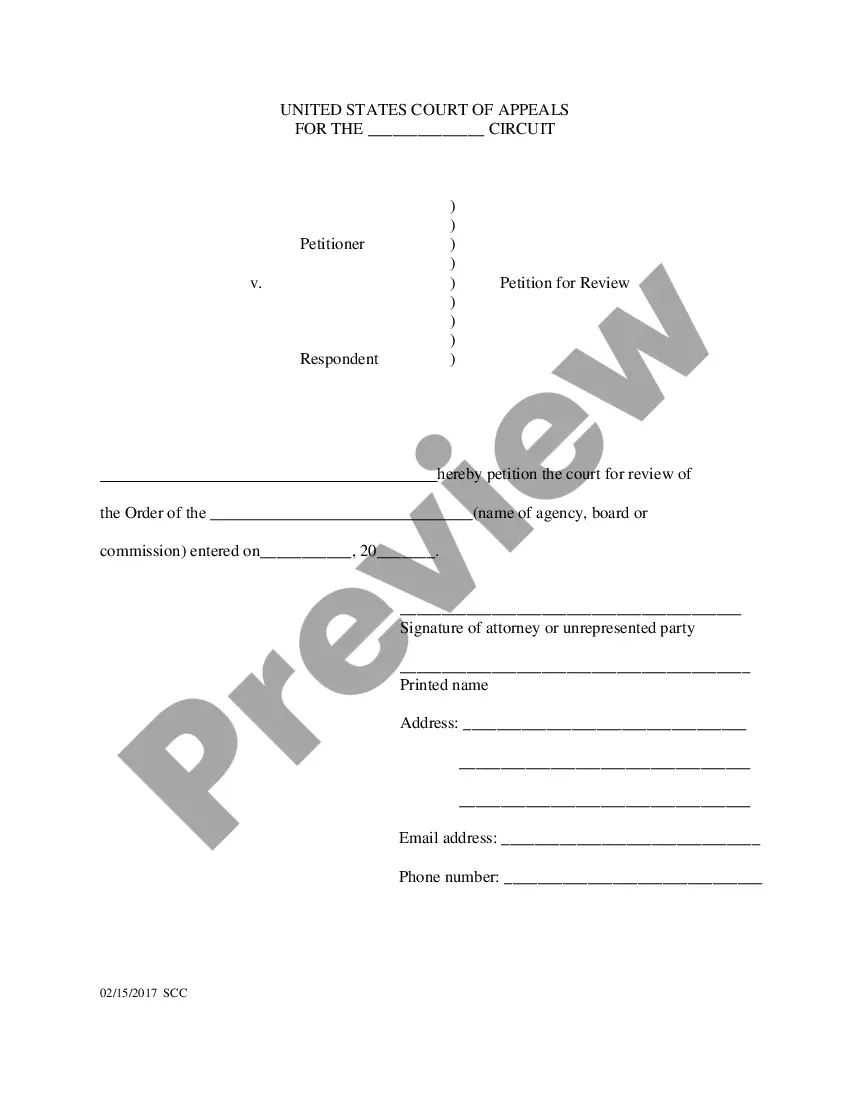
- Signature block for the petitioner's attorney and details of legal counsel.
When this form is needed
This form is appropriate in situations where a public agency or administrative body has failed to act on a petition or request that it is legally obligated to consider. Common scenarios include situations where an agency denies access to public records, fails to make mandatory decisions within a statutory timeframe, or overlooks legal duties mandated by law. If you have exhausted other avenues and need judicial intervention to compel action, this form is essential.
Who this form is for
This form is intended for:
- Individuals or entities seeking to enforce compliance from public agencies.
- Attorneys representing clients who have been affected by an agencyâs inaction.
- Citizens wanting to ensure their rights to public access and information are upheld.
- Anyone with a legitimate legal claim against a government body for failure to act.
Completing this form step by step
- Identify and enter the names and addresses of the petitioner and respondents.
- State the relevant facts and circumstances surrounding the refusal of the agency.
- Cite the appropriate laws or regulations that support your request for action.
- Clearly articulate the specific relief or action you are seeking from the court.
- Ensure the form is signed by the petitioner and their attorney, if applicable.
Does this form need to be notarized?
This form does not typically require notarization unless specified by local law. Ensure that you check specific state regulations regarding notarization requirements for legal documents.
Get your form ready online
Our built-in tools help you complete, sign, share, and store your documents in one place.
Make edits, fill in missing information, and update formatting in US Legal Forms—just like you would in MS Word.
Download a copy, print it, send it by email, or mail it via USPS—whatever works best for your next step.
Sign and collect signatures with our SignNow integration. Send to multiple recipients, set reminders, and more. Go Premium to unlock E-Sign.
If this form requires notarization, complete it online through a secure video call—no need to meet a notary in person or wait for an appointment.
We protect your documents and personal data by following strict security and privacy standards.

Make edits, fill in missing information, and update formatting in US Legal Forms—just like you would in MS Word.

Download a copy, print it, send it by email, or mail it via USPS—whatever works best for your next step.

Sign and collect signatures with our SignNow integration. Send to multiple recipients, set reminders, and more. Go Premium to unlock E-Sign.

If this form requires notarization, complete it online through a secure video call—no need to meet a notary in person or wait for an appointment.

We protect your documents and personal data by following strict security and privacy standards.
Avoid these common issues
- Failing to provide complete and accurate information for the petitioner and respondents.
- Not citing the correct statutes or failing to include all relevant laws.
- Omitting signatures or forgetting to have the document notarized if required by state law.
- Filing the form in the wrong court or incorrectly formatting the document.
- Not clearly stating the specific action that is being requested from the court.
Why complete this form online
- Easy access to legally compliant form templates drafted by licensed attorneys.
- Convenient download options allow for quick preparation and filing.
- Editability enables users to tailor content to their specific legal situation.
- Up-to-date forms ensure compliance with current legal standards and state laws.
Looking for another form?








Form popularity
FAQ
A Petition or Application for Writ of Mandamus or Mandate for Refusal of Administrative Agency to Act on Petition is a civil action to compel a public agency to perform a legally required duty. Use it when an agency declines or delays acting on a petition that the law requires the agency to consider. The form guides filing petitioner and respondent details, allegations, statute citations, relief sought, and attorney information.
When granted, the court issues an order directing the agency to perform the mandated act. The order will specify the action and any deadlines, and the agency must comply to avoid further court action. This form supports obtaining that relief by outlining the petitioner's request and the relief sought.
Timing for a writ of mandamus varies by jurisdiction and court schedule, with no universal timeline. Some cases move quickly; others can take months. The form helps prepare the record and relief sought, but actual timing depends on the court’s docket and rulings.
The purpose is to obtain a court order directing a public agency to perform a mandated duty when it has refused or failed to act on a petition as required by law. This aligns with the form’s use to compel agency action and seek specified relief.
There is no fixed timeline for processing a writ of mandamus with USCIS or similar federal agencies; timelines vary by court, docket, and circumstances. The form is designed to seek timely relief by filing with the appropriate court to compel agency action.
In many jurisdictions, a writ of mandate and a writ of mandamus are used to compel government action, sometimes interchangeably. Some places distinguish mandamus for discretionary duties and mandate for ministerial duties. The exact difference depends on governing law, so consult an attorney for jurisdiction-specific guidance.