Alabama Amendment to Postnuptial Property Agreement
What is this form?
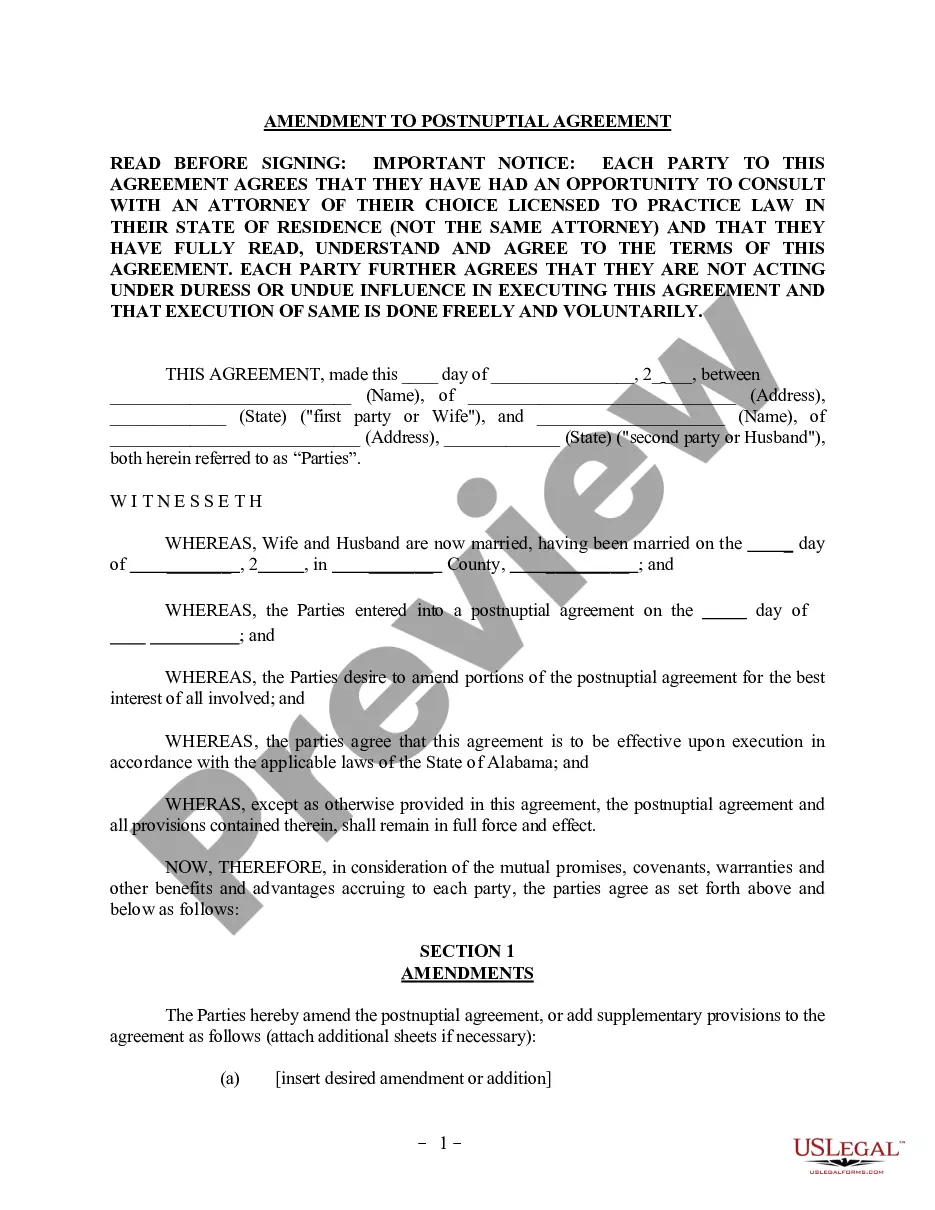
The Amendment to Postnuptial Property Agreement allows spouses to make changes or additions to an existing postnuptial property agreement. This form is essential for ensuring that both parties have a clear and updated understanding of their property rights post-marriage. Unlike a postnuptial agreement, which establishes property rights, the amendment modifies the terms of an existing agreement, making it vital for couples wishing to adjust their arrangements as circumstances change.
What’s included in this form
- Date of agreement execution
- Identification of parties involved
- Insertions for amendments or additional terms
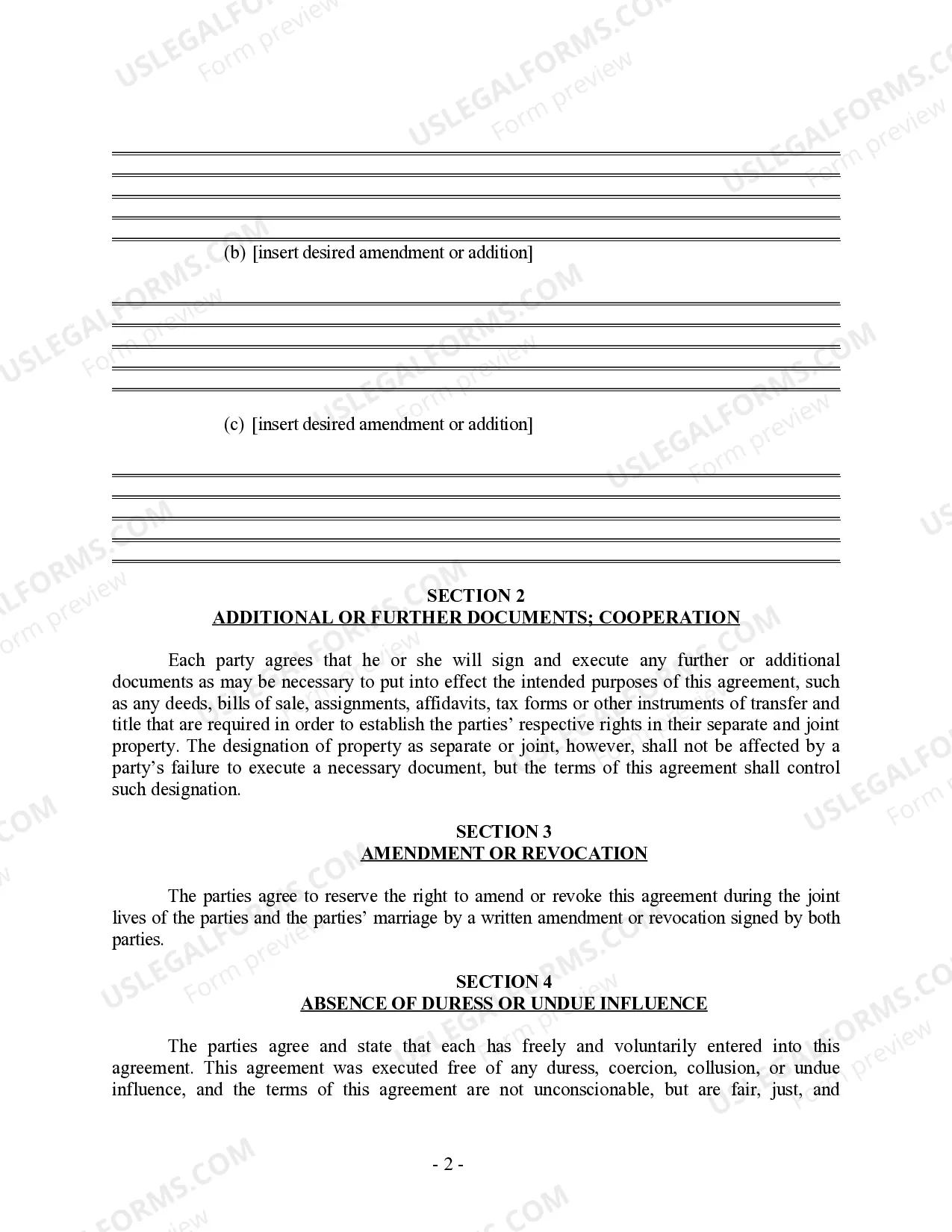
- Cooperation clause for further documentation
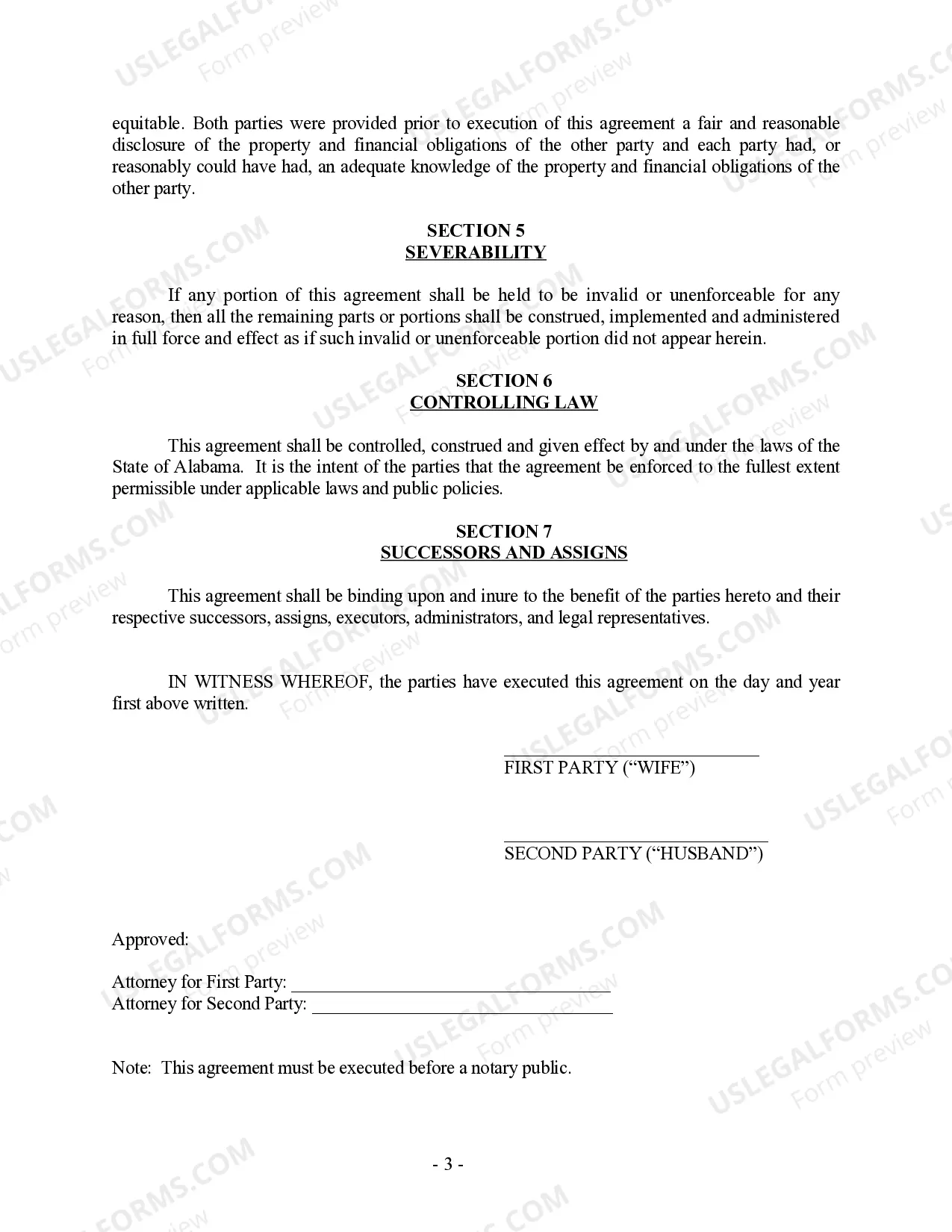
- Provisions regarding amendment or revocation
- Statement of absence of duress or undue influence
- Severability clause for enforceability of the remaining sections
- Governing law declaration (State of Alabama)
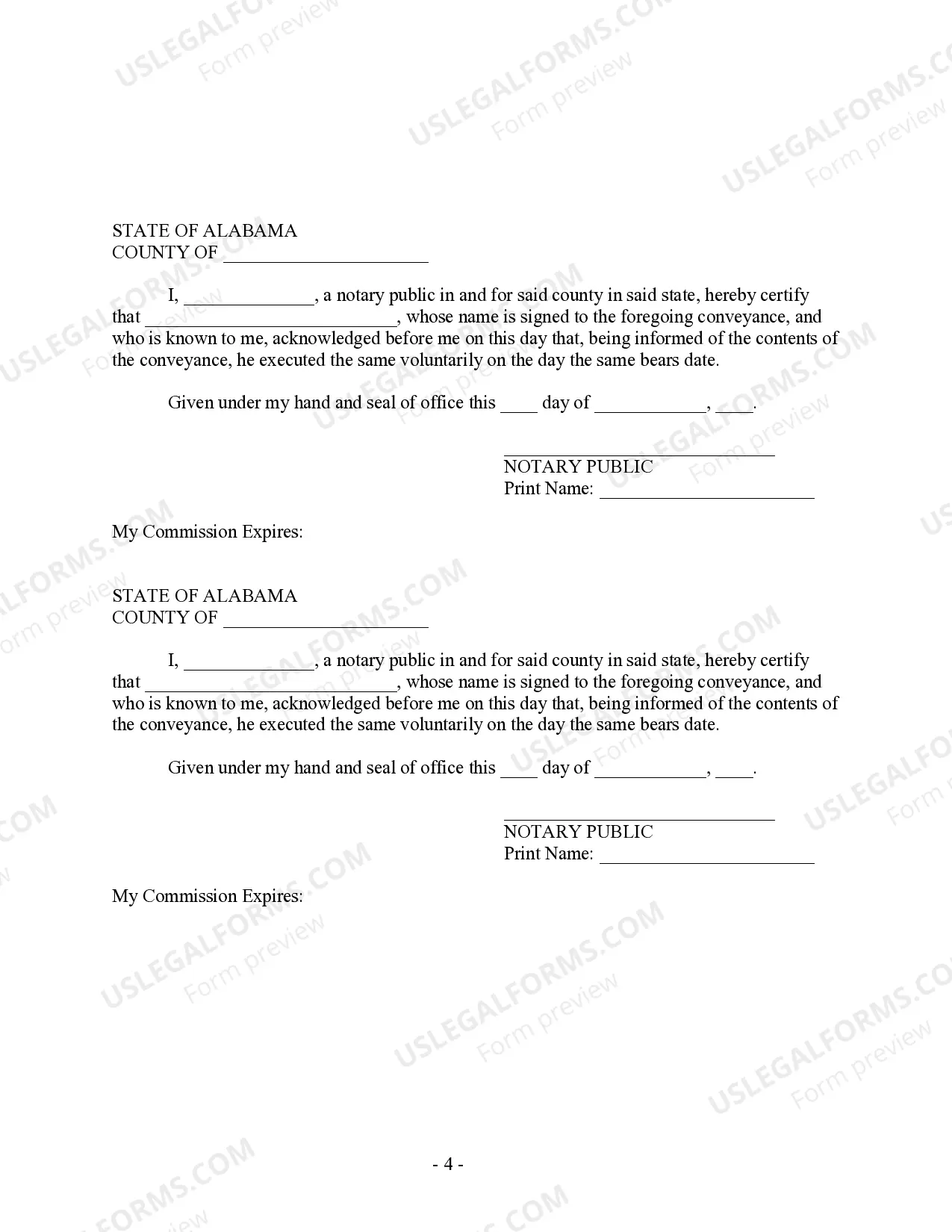
- Signatures of both parties and notarization section

When to use this document
This amendment form is useful in situations where couples want to update their postnuptial agreement due to changes in financial circumstances, the acquisition of new property, or other significant life events. For example, if one spouse starts a new business or receives an inheritance, the couple may want to define how these assets will be treated in relation to their existing property agreement.
Who should use this form
- Married couples with an existing postnuptial agreement
- Spouses seeking to modify their property rights
- Couples anticipating significant financial changes
- Individuals who want legal clarity in property matters
Instructions for completing this form
- Identify both parties and record the date of the agreement.
- Clearly detail the specific amendments or additional terms to the existing agreement.
- Ensure both parties read and understand the terms of the amendment.
- Both parties must sign the document in the presence of a notary public.
- Retain copies of the signed agreement for personal records.
Notarization guidance
This document requires notarization to meet legal standards. US Legal Forms provides secure online notarization powered by Notarize, allowing you to complete the process through a verified video call, available 24/7.
Get your form ready online
Our built-in tools help you complete, sign, share, and store your documents in one place.
Make edits, fill in missing information, and update formatting in US Legal Forms—just like you would in MS Word.
Download a copy, print it, send it by email, or mail it via USPS—whatever works best for your next step.
Sign and collect signatures with our SignNow integration. Send to multiple recipients, set reminders, and more. Go Premium to unlock E-Sign.
If this form requires notarization, complete it online through a secure video call—no need to meet a notary in person or wait for an appointment.
We protect your documents and personal data by following strict security and privacy standards.

Make edits, fill in missing information, and update formatting in US Legal Forms—just like you would in MS Word.

Download a copy, print it, send it by email, or mail it via USPS—whatever works best for your next step.

Sign and collect signatures with our SignNow integration. Send to multiple recipients, set reminders, and more. Go Premium to unlock E-Sign.

If this form requires notarization, complete it online through a secure video call—no need to meet a notary in person or wait for an appointment.

We protect your documents and personal data by following strict security and privacy standards.
Mistakes to watch out for
- Failing to have the document notarized as required by state law.
- Not clearly specifying the amendments, leading to ambiguity.
- One party not understanding the changes made before signing.
- Neglecting to retain copies of the amended agreement.
Advantages of online completion
- Immediate access to a professionally drafted template tailored to your needs.
- Customization options to ensure the specifics of your agreement are adequately addressed.
- The ability to review and edit the form at your convenience without needing to schedule an appointment with an attorney.
- Secure and straightforward digital download process for easy access and storage.
Main things to remember
- The Amendment to Postnuptial Property Agreement allows couples to adjust their existing agreements.
- Both parties must sign and notarize the amendment for it to be legally binding.
- Clear communication and understanding of the amendments are crucial.
- This form is vital for spouses who experience significant financial changes.
Looking for another form?
Form popularity
FAQ
Postnuptial agreements must be in writing. Voluntary Both parties to a postnuptial agreement must have signed the agreement voluntarily and intentionally.Generally speaking, to make a postnuptial agreement valid, both parties' signatures need to be notarized.
Postnuptial agreements are generally enforceable if the parties of the document adhere to all state laws regarding inheritance, child custody, visitation and monetary support if a divorce does occur.This may also come with a will or other legal document.
The three most common grounds for nullifying a prenup are unconscionability, failure to disclose, or duress and coercion.Duress and coercion can also invalidate a prenup. If the prenup was signed the day before your wedding, it may appear that the parties didn't have much time to fully review the agreement.
As long as both parties are in agreement to the terms of the post nuptial contract, and have the ability to put those terms into a legal document, most states don't make it a legal requirement to have an attorney.
Postnuptial agreements are generally enforceable if the parties of the document adhere to all state laws regarding inheritance, child custody, visitation and monetary support if a divorce does occur.If any state laws are in violation within the postnuptial, the judge may throw out the entire document.
If a spouse is able to prove non-disclosure of all previous assets or property, then the prenuptial agreement can be considered void. Second, if a spouse is able to prove that he or she was compelled to sign the prenuptial agreement under stressful circumstances, then the prenup can be invalidated.
The Separate Property Provision. Most marriages mingle the assets and property of each individual together, and they become marital property. Defining What Marital Property Encompasses. Maintenance for Each Spouse. Support for Children. Legal Help with Postnuptial Provisions.
Per , since postnuptial agreements generally handle the same issues that prenuptial agreements address, the same circumstances that can cause a court to void part or all of a prenuptial agreement also apply to a postnuptial. Like a prenuptial, a postnuptial agreement should be in written form.
Reasons a Judge Can Overturn a Prenuptial Agreement There are no specific rules that state what will overturn a prenup.Neither person should be in a state of duress or under any pressure to sign the prenup. Any indication of coercion or lack of willingness can give way for a divorce judge to overturn the agreement.