Indemnification of Purchaser of Personal Property from Estate
What is this form?
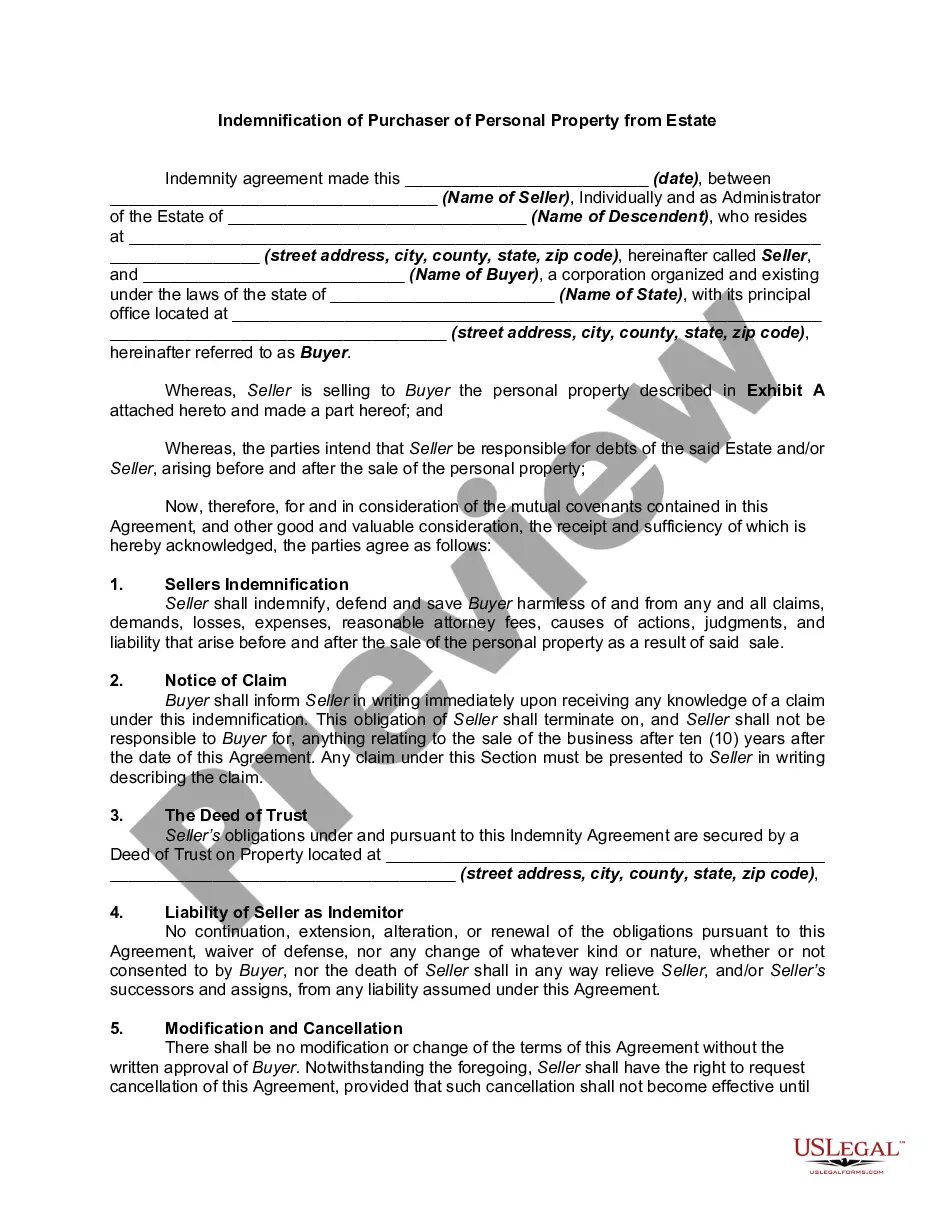
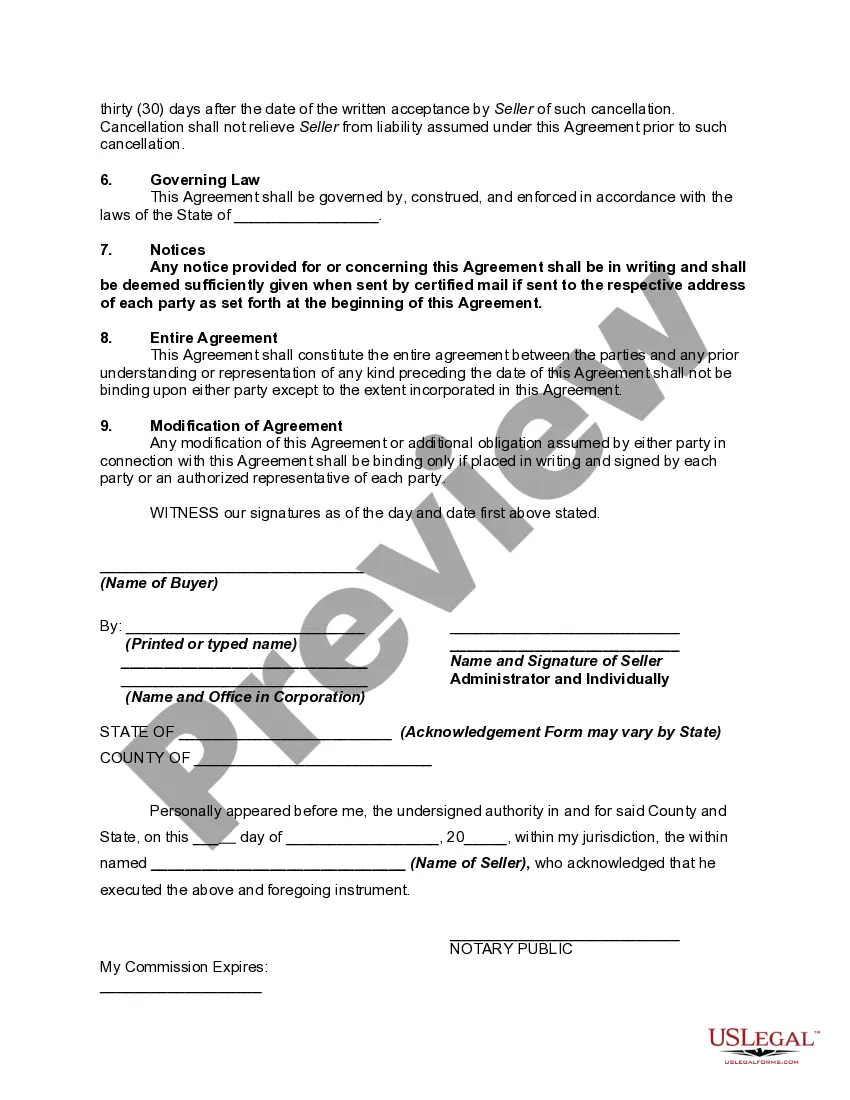
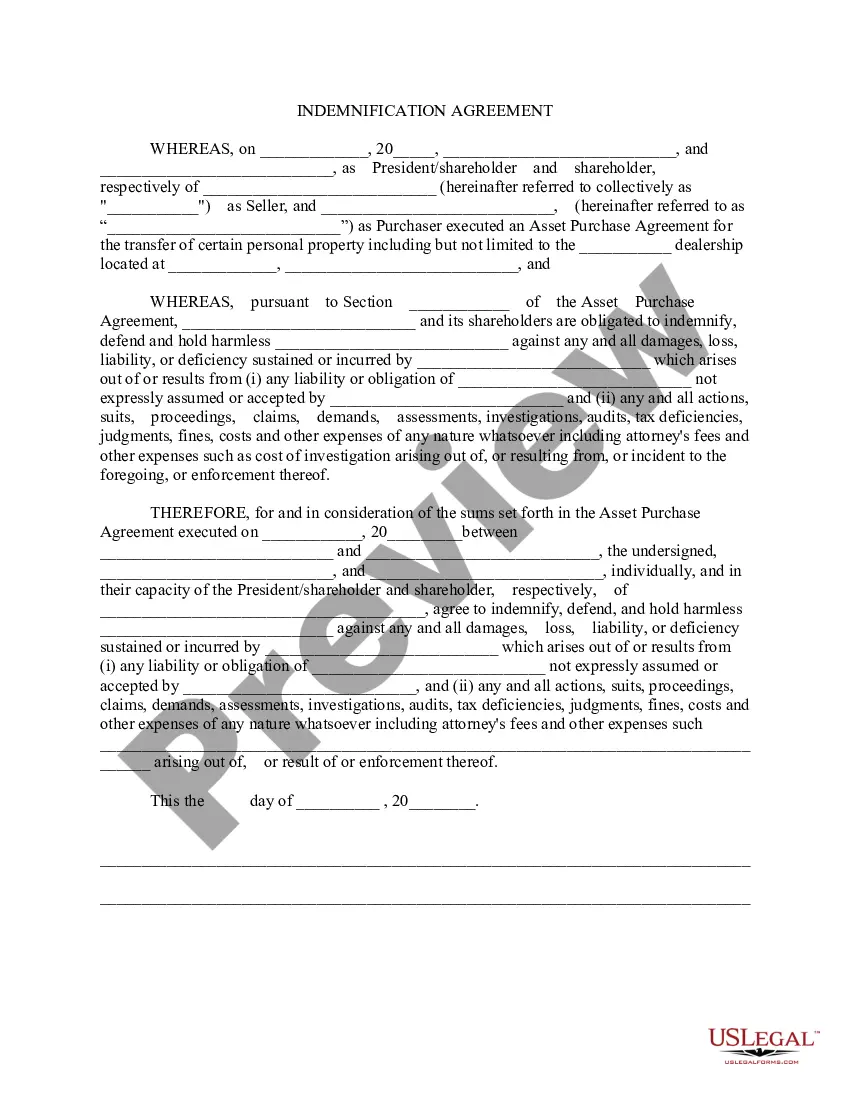
The Indemnification of Purchaser of Personal Property from Estate form is a legal agreement that ensures the buyer is protected against any losses arising from the seller's estate prior to and after the sale of personal property. This form specifically establishes the seller's responsibility to indemnify the buyer for any claims or liabilities associated with the estate, differentiating it from other purchase agreements that may not include such protections.
Main sections of this form
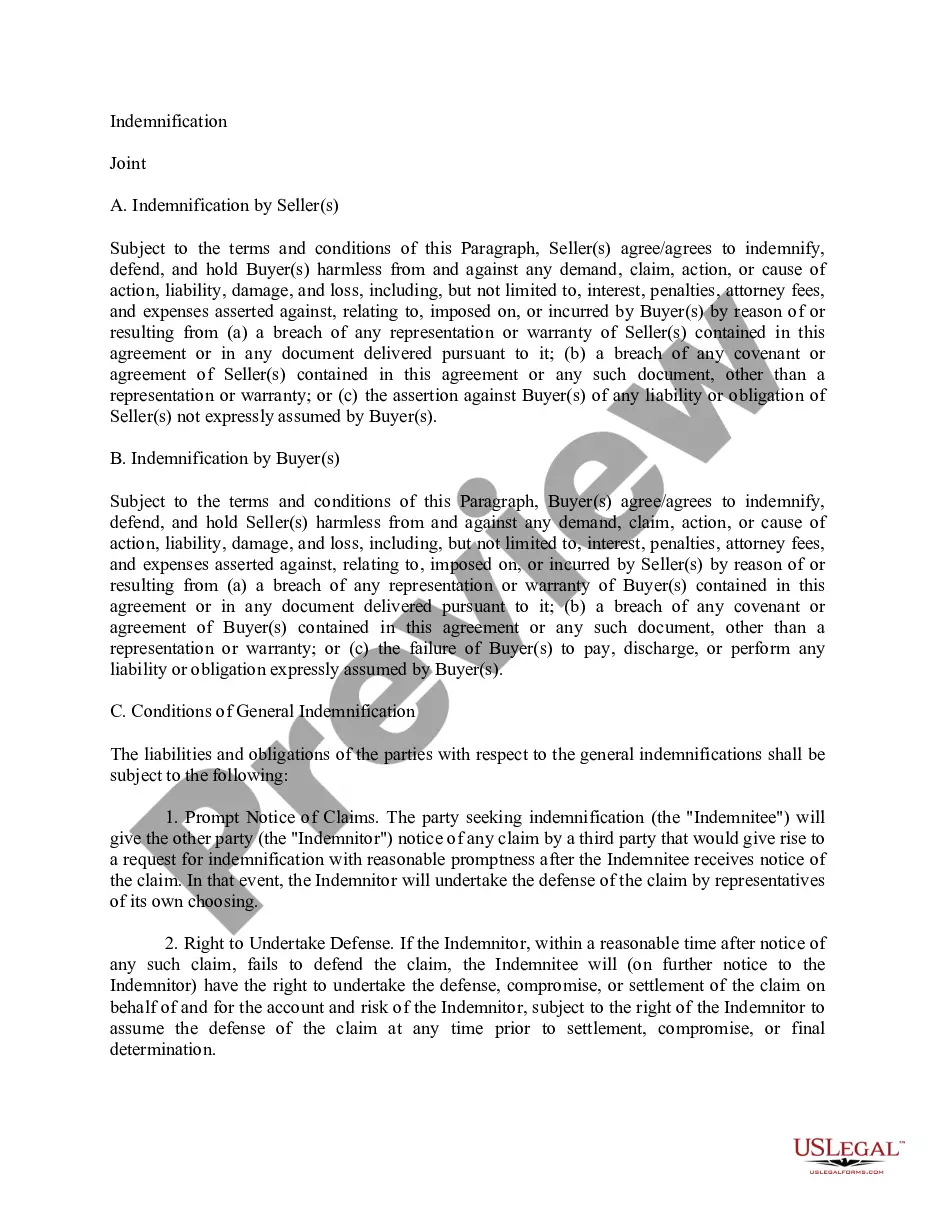
- Indemnification clause: Outlines the seller's obligation to indemnify the buyer against claims arising from the estate.
- Notice of claim: Requires the buyer to inform the seller of any claims promptly.
- Deed of Trust: Secures the seller's indemnity obligations with a deed of trust on certain property.
- Modification and cancellation: Specifies terms under which the agreement can be modified or canceled.
- Governing law: Defines the jurisdiction whose laws will govern the agreement.
Situations where this form applies
This form is used when a buyer is purchasing personal property from an estate and requires assurance against potential liabilities or claims arising from the estate. You might need this form if you are buying assets from an estate and want to ensure that any past debts or legal claims associated with that estate are not your responsibility after the sale.
Who can use this document
- Buyers of personal property from an estate who wish to secure protection against future claims.
- Administrators or executors of an estate involved in the sale of property.
- Individuals or organizations looking to minimize legal exposure when purchasing from an estate.
Steps to complete this form
- Identify the parties: Provide the names and addresses of the seller and buyer.
- Specify the property: Fill in the details of the personal property being sold as outlined in the attached Exhibit A.
- Enter the date: Write the date on which the indemnification agreement is made.
- Review indemnity clauses: Ensure both parties understand their obligations under the indemnity section.
- Sign and notarize: Both parties should sign the agreement, and if required by state law, have it notarized.
Does this document require notarization?
This form needs to be notarized to ensure legal validity. US Legal Forms provides secure online notarization powered by Notarize, allowing you to complete the process through a verified video call, available anytime.
Get your form ready online
Our built-in tools help you complete, sign, share, and store your documents in one place.
Make edits, fill in missing information, and update formatting in US Legal Forms—just like you would in MS Word.
Download a copy, print it, send it by email, or mail it via USPS—whatever works best for your next step.
Sign and collect signatures with our SignNow integration. Send to multiple recipients, set reminders, and more. Go Premium to unlock E-Sign.
If this form requires notarization, complete it online through a secure video call—no need to meet a notary in person or wait for an appointment.
We protect your documents and personal data by following strict security and privacy standards.

Make edits, fill in missing information, and update formatting in US Legal Forms—just like you would in MS Word.

Download a copy, print it, send it by email, or mail it via USPS—whatever works best for your next step.

Sign and collect signatures with our SignNow integration. Send to multiple recipients, set reminders, and more. Go Premium to unlock E-Sign.

If this form requires notarization, complete it online through a secure video call—no need to meet a notary in person or wait for an appointment.

We protect your documents and personal data by following strict security and privacy standards.
Common mistakes
- Failing to clearly identify the property or the parties involved in the transaction.
- Not including or misunderstanding the notice of claim requirement.
- Neglecting to secure the indemnity obligations with a deed of trust when necessary.
Why complete this form online
- Convenience: Easily download and fill out the form using any device.
- Editability: Customize the form to suit your specific transaction details.
- Reliability: Forms are drafted by licensed attorneys to ensure legal compliance.
Quick recap
- The form protects the buyer from potential claims against the seller's estate.
- Timely notice of claims is crucial for enforcement of the indemnity.
- Notarization may be required depending on local laws.
Looking for another form?

Form popularity
FAQ
Indemnify. hold harmless. defend.
Indemnity is compensation paid by one party to another to cover damages, injury or losses.An example of an indemnity would be an insurance contract, where the insurer agrees to compensate for any damages that the entity protected by the insurer experiences.
A letter of indemnity (LOI) is a contractual document that guarantees certain provisions will be met, between two parties.The concept of indemnity has to do with holding someone harmless, and a letter of indemnity outlines the specific measures that will be used to hold a party harmless.
Company/Business/Individual Name shall fully indemnify, hold harmless and defend _______ and its directors, officers, employees, agents, stockholders and Affiliates from and against all claims, demands, actions, suits, damages, liabilities, losses, settlements, judgments, costs and expenses (including but not
A buyer indemnity is a clause included in the purchase and sale agreement (PSA), which relates to the reps and warranties provided by the buyer.It basically releases the seller from any liability that may arise due to the buyer's failure to provide true and accurate reps and warranties.
When the term indemnity is used in the legal sense, it may also refer to an exemption from liability for damages. Indemnity is a contractual agreement between two parties. In this arrangement, one party agrees to pay for potential losses or damages caused by another party.
Indemnity is defined by Black's Law Dictionary as a duty to make good any loss, damage, or liability incurred by another. Indemnity has a general meaning of holding one harmless; that is to say, that one party holds the other harmless for some loss or damage.
With a real estate indemnity agreement, one party is pledging to protect another from any kind of financial loss or from a lawsuit of some kind.With a real estate indemnity agreement, one party, usually the buyer, agrees to take full responsibility for a mistake or a problem caused by the other.
Generally, indemnification is the buyer's remedy for a breach of any promises made in the purchase agreement or losses incurred relating to specific liabilities outlined in the purchase agreement. Indemnification allocates the risk of various post-closing losses between buyer and seller.