Disclaimer of Implied Warranties
What is this form?
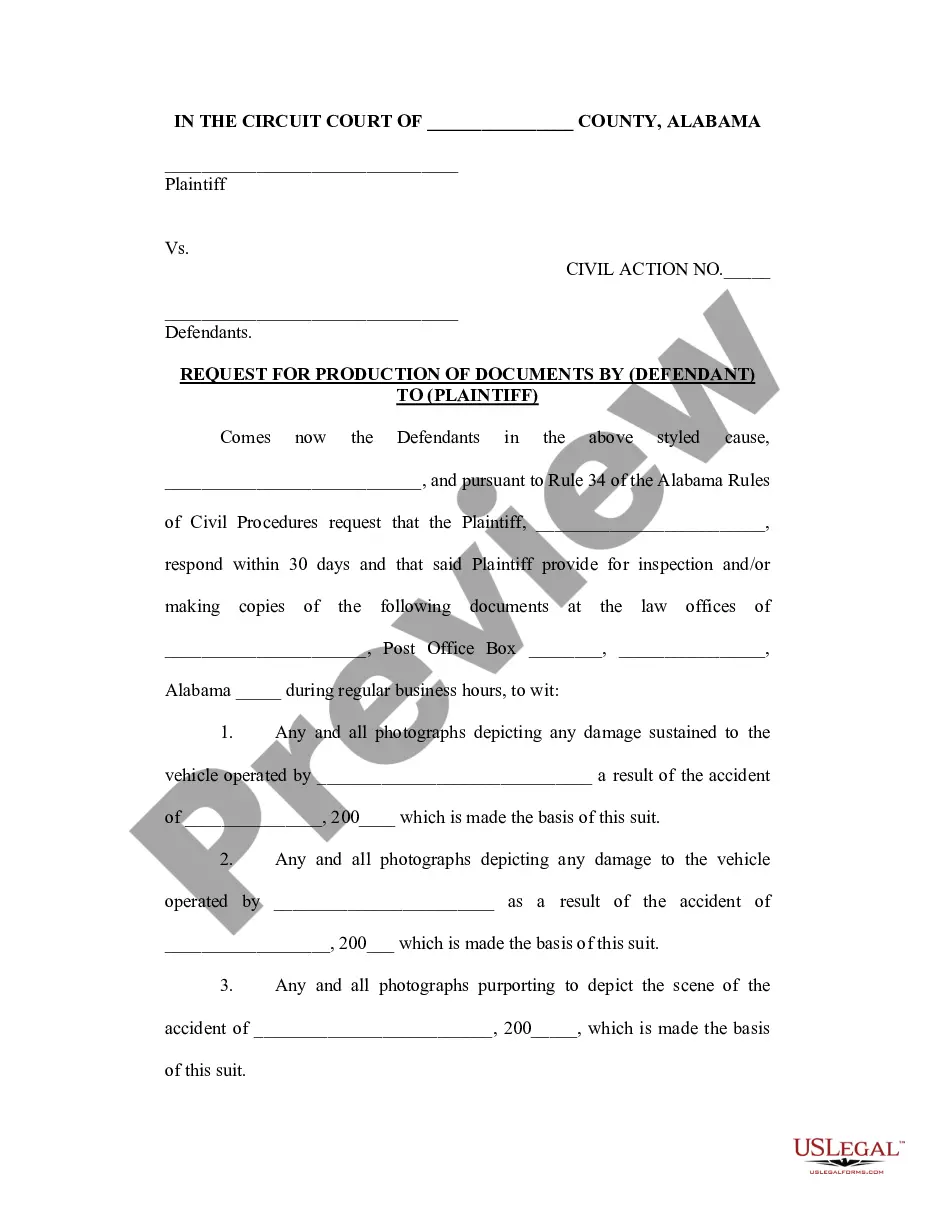
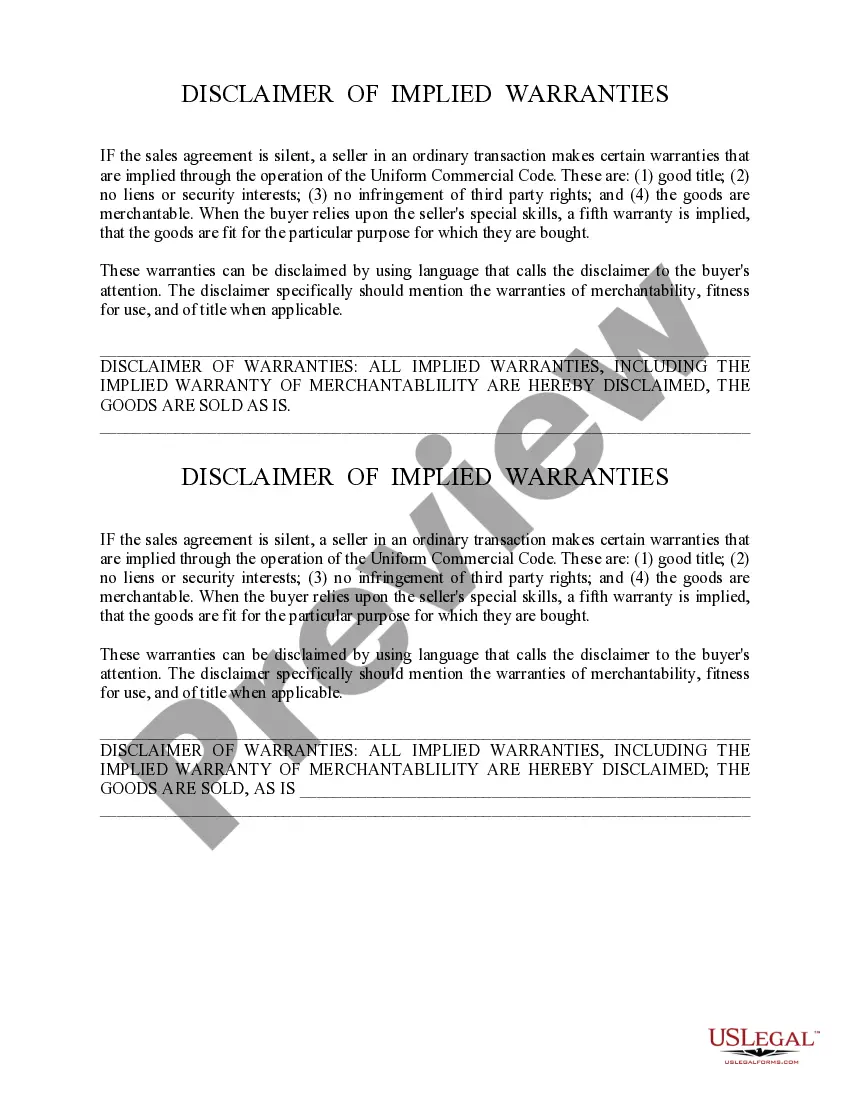
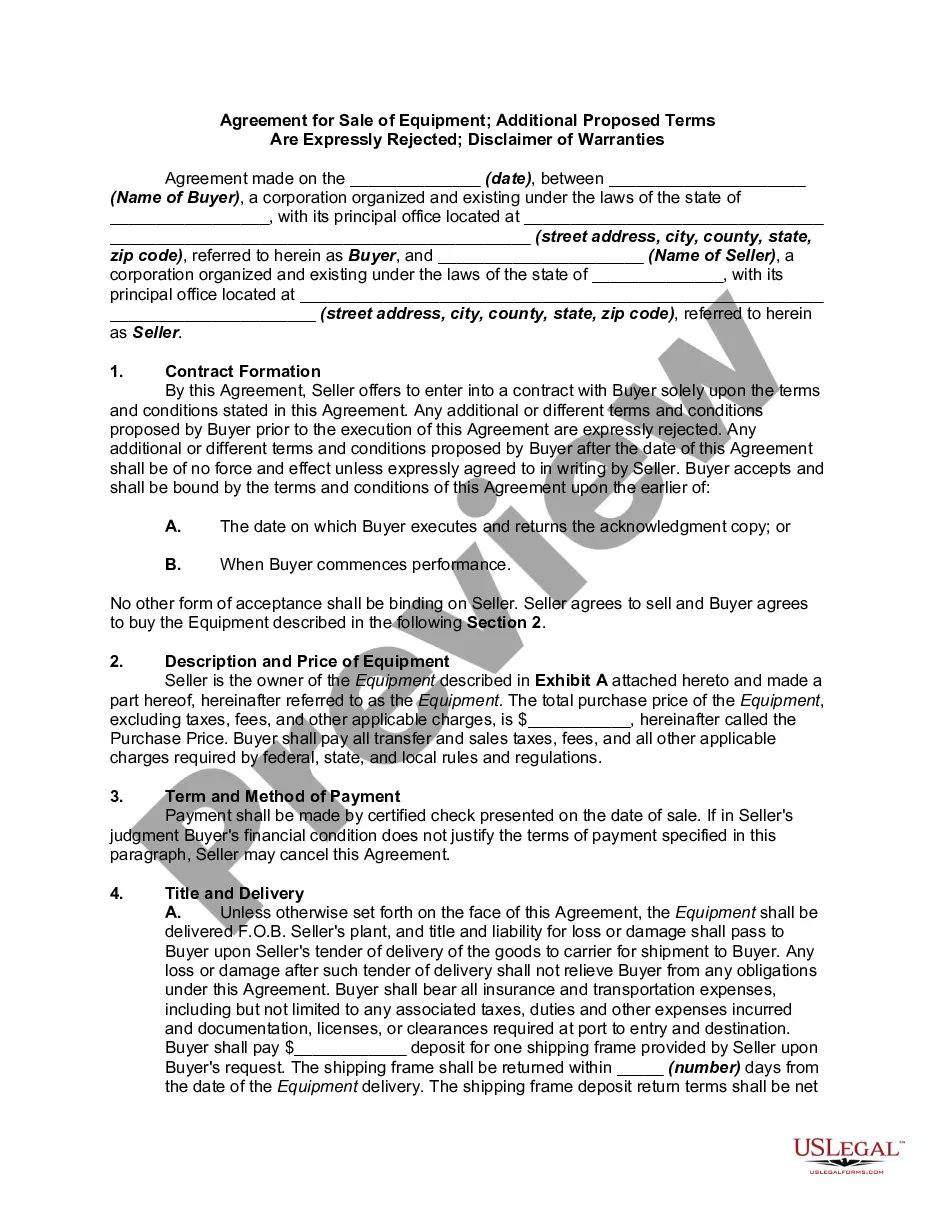
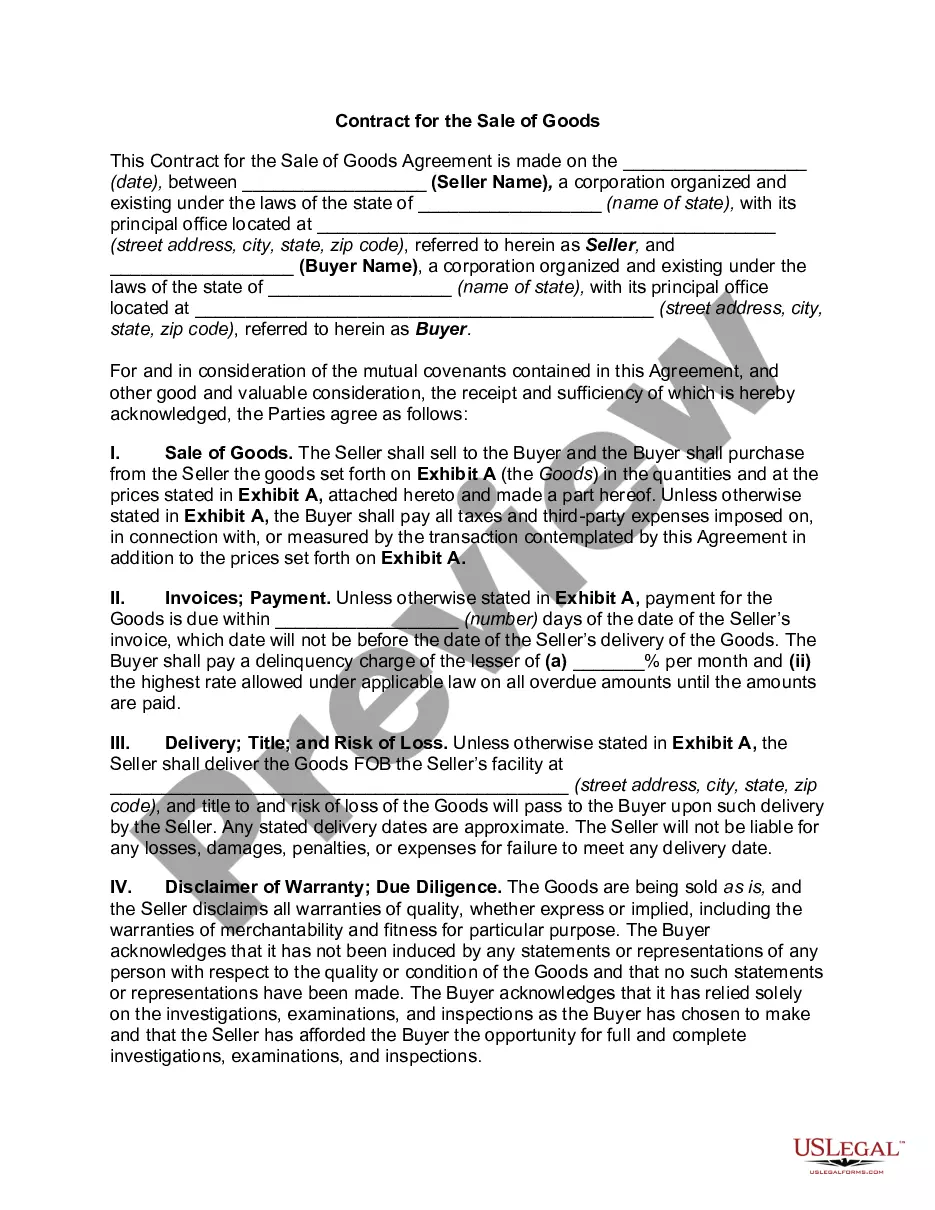
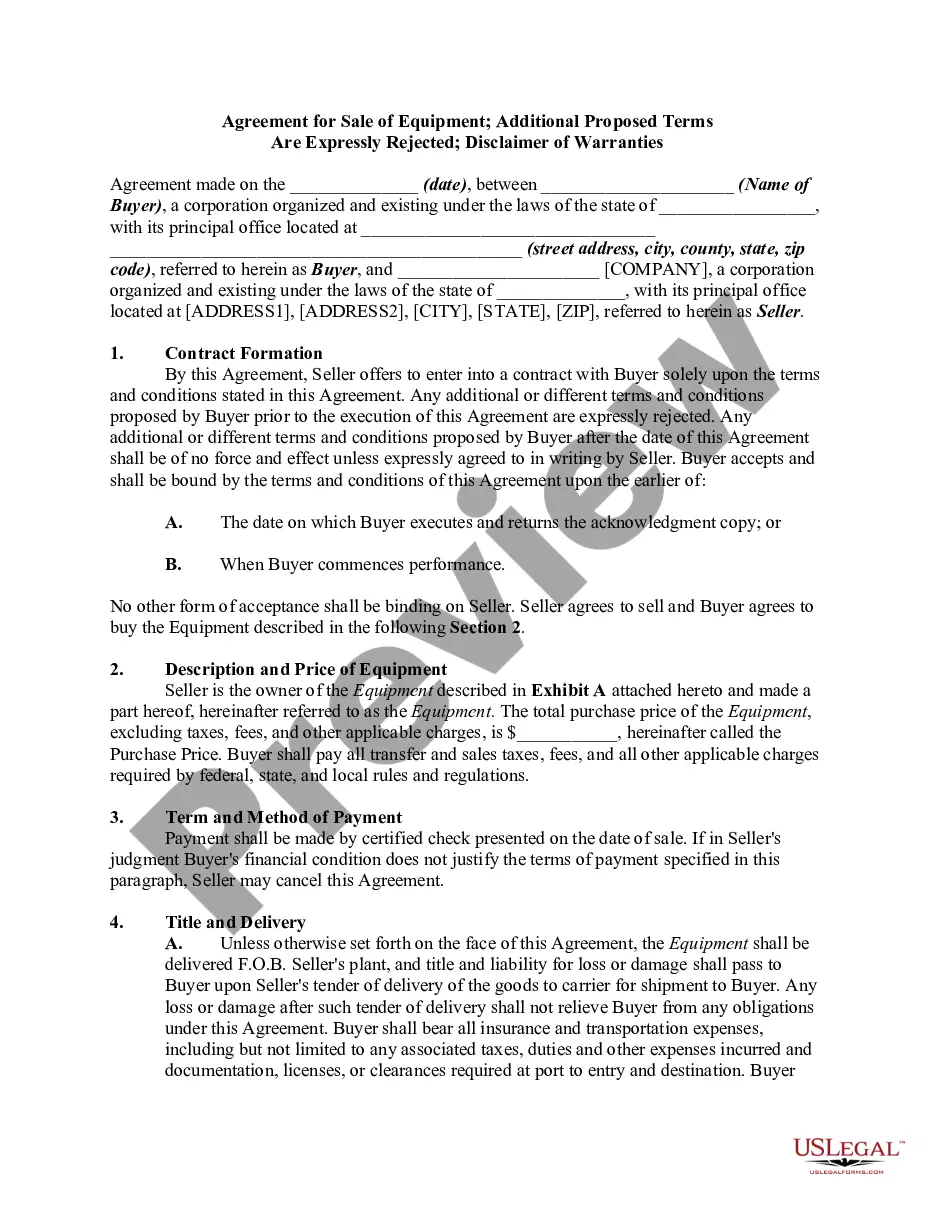
The Disclaimer of Implied Warranties is a legal document that safeguards sellers by explicitly stating that they are not providing any implied warranties for the goods sold. This form clarifies that the goods are sold "as is," meaning the buyer accepts them in their current condition. It differentiates from other sales agreements by removing certain reassurances that may typically be assumed when purchasing products.
Key parts of this document
- Disclaimer of all implied warranties, including implied warranty of merchantability.
- Statement that goods are sold as is.
- Clarification on limitations regarding good title and no liens or security interests.
- Details about the buyer's reliance on the sellerâs expertise.
Situations where this form applies
This form should be used in sales transactions where the seller wishes to limit their liability for the quality of goods being sold. It is particularly useful in situations where the goods are second-hand, defective, or when the seller is unsure about the merchandise's condition. It provides clarity for both parties regarding the absence of warranties and expectations for the transaction.
Who this form is for
This form is designed for:
- Sellers of goods who want to disclaim any implied warranties.
- Individuals and businesses engaging in informal or non-standard sales transactions.
- Parties involved in second-hand or as-is sales.
Completing this form step by step
- Identify all parties involved in the transaction.
- Clearly state the goods being sold and their condition.
- Include the explicit disclaimer of implied warranties.
- Ensure that the buyer acknowledges the no warranty clause.
- Both parties should date and sign the document to make it legally binding.
Notarization requirements for this form
This form does not typically require notarization unless specified by local law. It's important to ensure both parties' signatures are legitimate, but notarization is generally not necessary for a Disclaimer of Implied Warranties.
Get your form ready online
Our built-in tools help you complete, sign, share, and store your documents in one place.
Make edits, fill in missing information, and update formatting in US Legal Forms—just like you would in MS Word.
Download a copy, print it, send it by email, or mail it via USPS—whatever works best for your next step.
Sign and collect signatures with our SignNow integration. Send to multiple recipients, set reminders, and more. Go Premium to unlock E-Sign.
If this form requires notarization, complete it online through a secure video call—no need to meet a notary in person or wait for an appointment.
We protect your documents and personal data by following strict security and privacy standards.

Make edits, fill in missing information, and update formatting in US Legal Forms—just like you would in MS Word.

Download a copy, print it, send it by email, or mail it via USPS—whatever works best for your next step.

Sign and collect signatures with our SignNow integration. Send to multiple recipients, set reminders, and more. Go Premium to unlock E-Sign.

If this form requires notarization, complete it online through a secure video call—no need to meet a notary in person or wait for an appointment.

We protect your documents and personal data by following strict security and privacy standards.
Common mistakes
- Failing to clearly state the "as is" condition of the goods.
- Not mentioning any potential liens or security interests that may apply.
- Neglecting to have both parties sign and date the form.
Advantages of online completion
- Convenient access to a legally sound document drafted by licensed attorneys.
- Edit and customize the form easily to fit specific sale conditions.
- Immediate download options, which save time compared to traditional methods.
Legal use & context
- This form provides legal protection to sellers by limiting claims from buyers regarding the quality of the goods sold.
- Enforceable in accordance with the Uniform Commercial Code in applicable jurisdictions.
- Helps prevent misunderstandings between sellers and buyers about the condition of items sold.
Quick recap
- The Disclaimer of Implied Warranties clarifies the seller's limitations on liability.
- This form is essential for sellers who wish to sell goods "as is."
- Ensure all parties understand and acknowledge the terms before signing.
Looking for another form?

Form popularity
FAQ
Related Content. An assurance or promise in a contract, the breach of which may give rise to a claim for damages. It is essentially a minor term of a contract.
A warranty is a type of guarantee that a manufacturer or similar party makes regarding the condition of its product. It also refers to the terms and situations in which repairs or exchanges will be made in the event that the product does not function as originally described or intended.
Under the implied category are three major subtypes: the implied warranty of merchantability (only given by merchants), the implied warranty of fitness for a particular purpose, and the implied warranty of title.
Extended Warranty. The term used to describe the contract between the vehicle owner and the coverage provider. Deductible. Mechanical breakdown. Named component coverage. Power Train. Wear and Tear.
There are two types of warranties: express warranties and implied warranties.
When you buy a TV and you have a written promise that it will be repaired for free if it breaks within the first year, this is an example of a warranty.
Types of Warranty. 1) Implied Warranty. a) Warranty of Merchantability. b) Warranty of Fitness For A Particular Purpose. c) Warranty of Title. 2) Extended Warranty. Guaranteed Ability To Repair. More Comprehensive Coverage. Peace of Mind. Savings. Increased Resale Value.