Complaint or Petition to Enjoin Foreclosure Sale due to Misunderstanding as to Promissory Note's Terms of Payment upon Assumption of Note
What this document covers
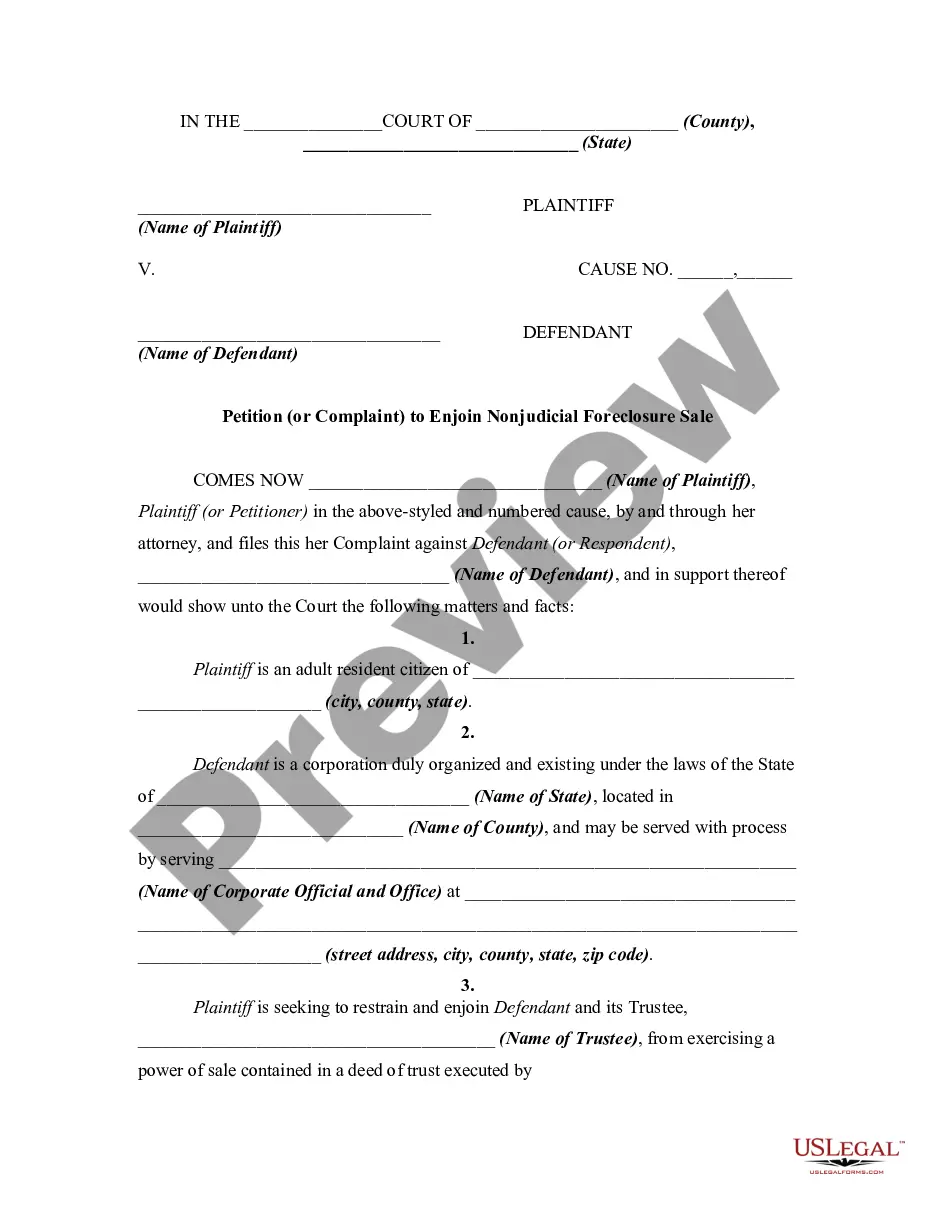
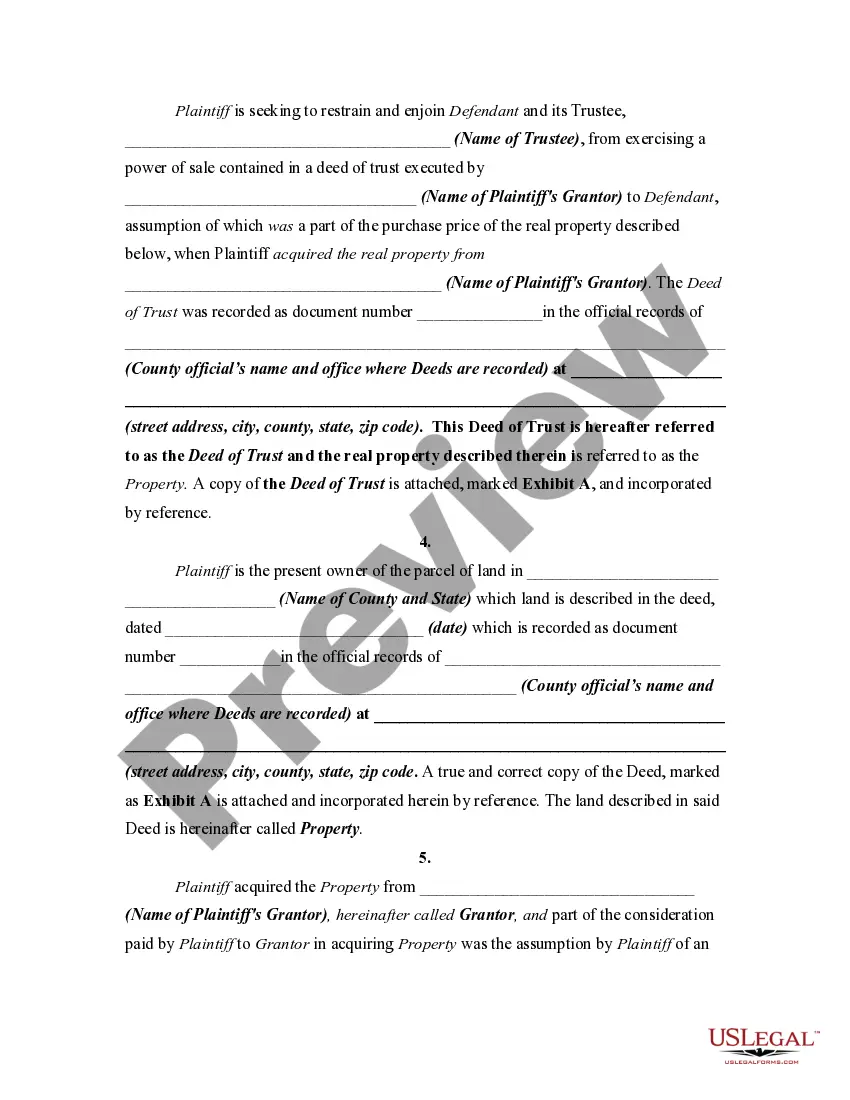
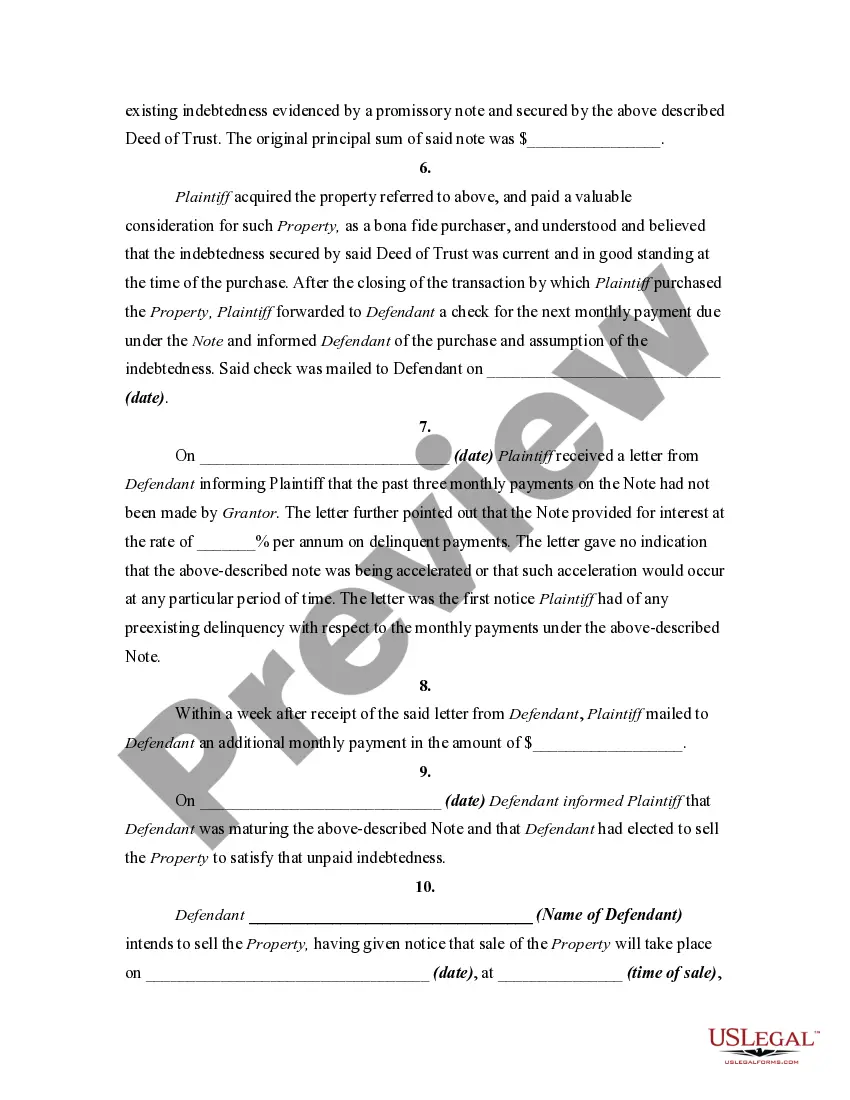
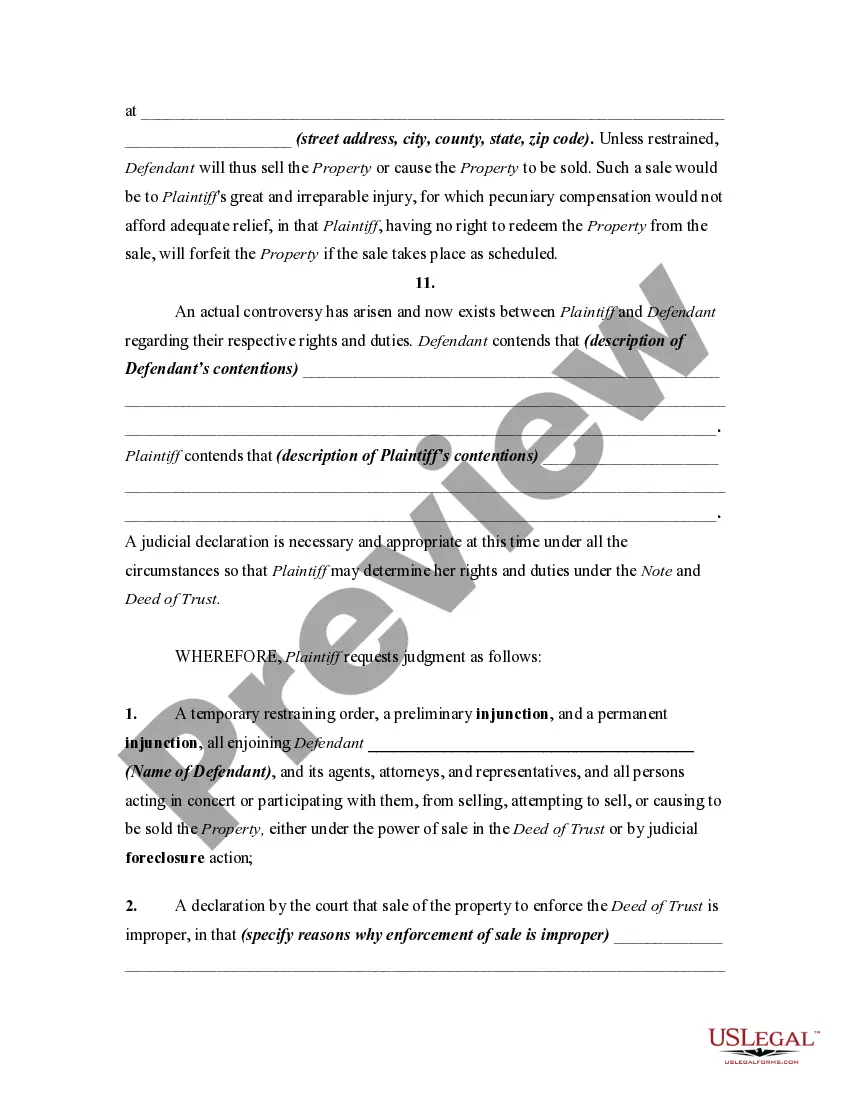
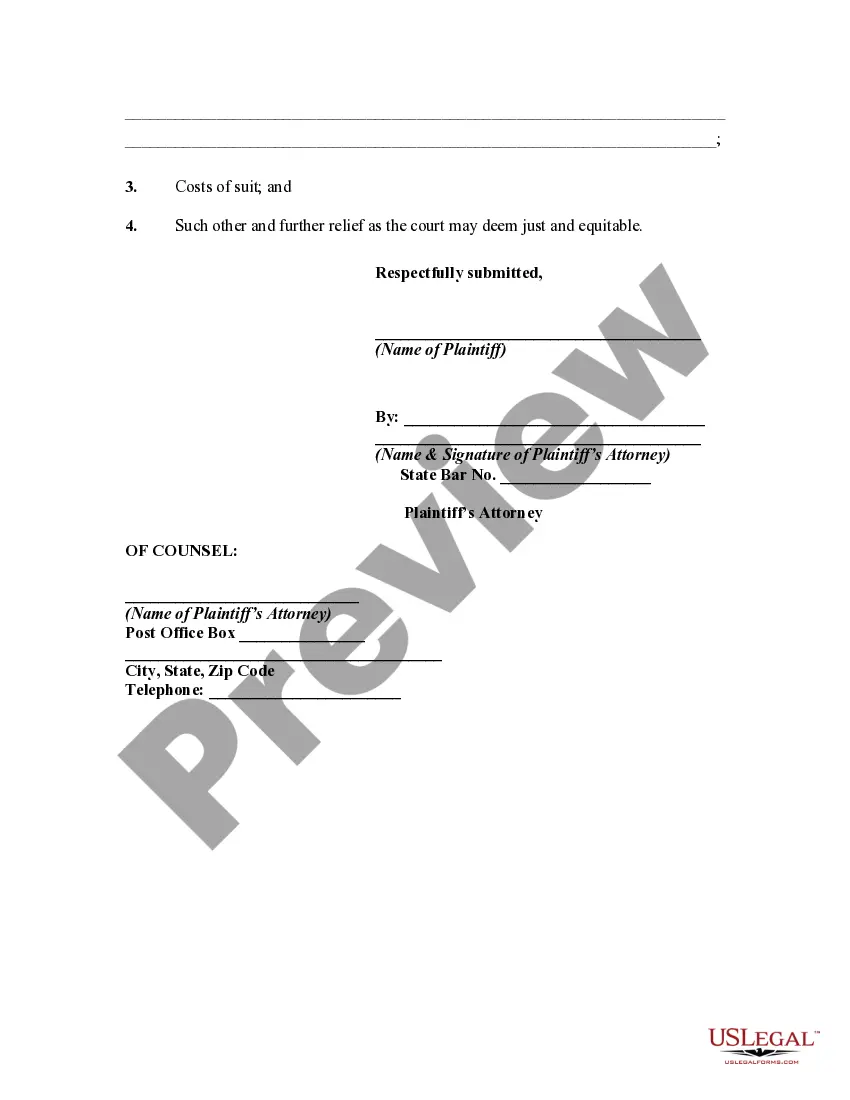
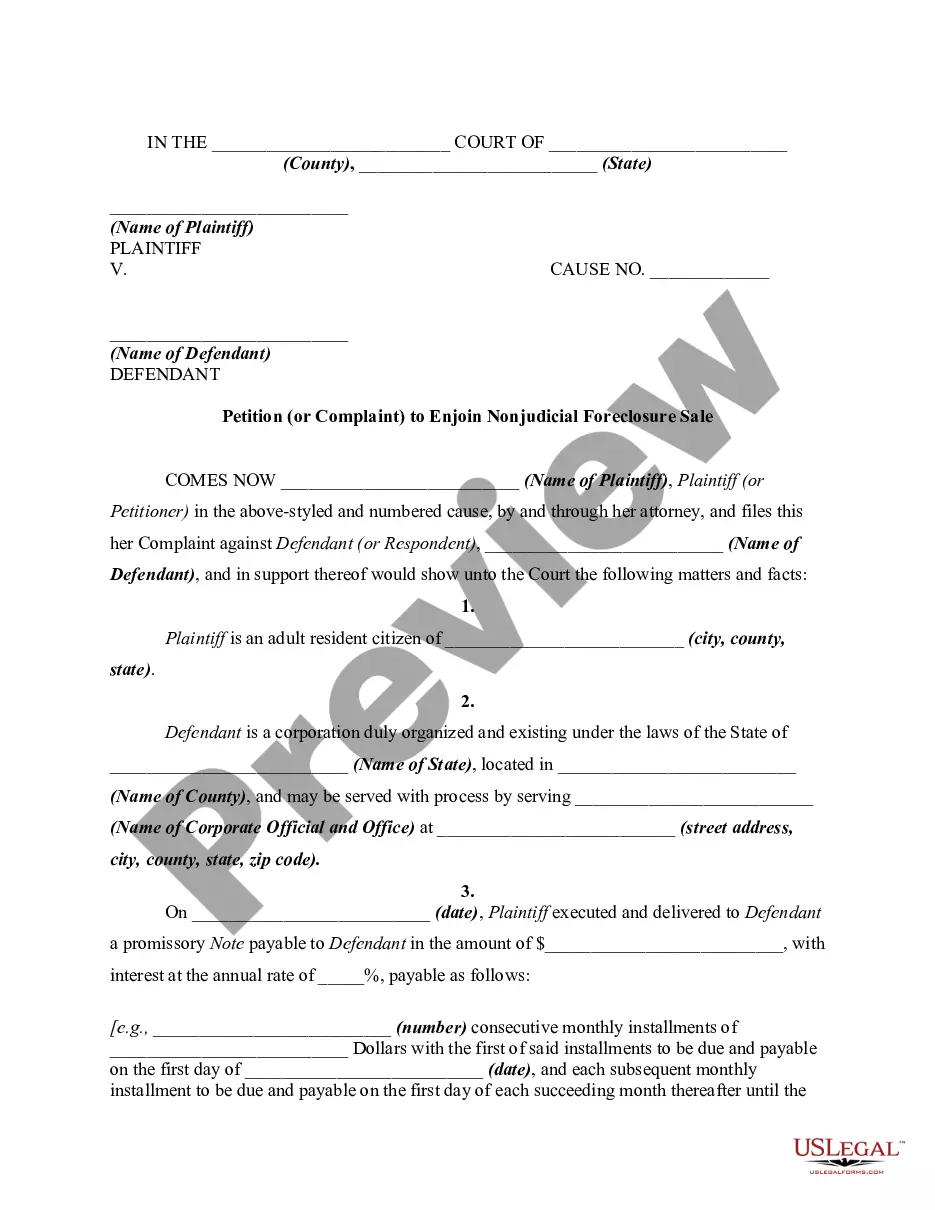
This form, titled Complaint or Petition to Enjoin Foreclosure Sale due to Misunderstanding as to Promissory Note's Terms of Payment upon Assumption of Note, is a legal document that allows a property owner to request a court to stop a foreclosure sale. This request is based on the assertion that there was a misunderstanding regarding the terms of the promissory note tied to the property. The form is specifically designed for situations where the homeowner believes that an unjust or misleading enforcement of the note could result in serious harm, and they seek judicial intervention before the sale occurs.
Key components of this form
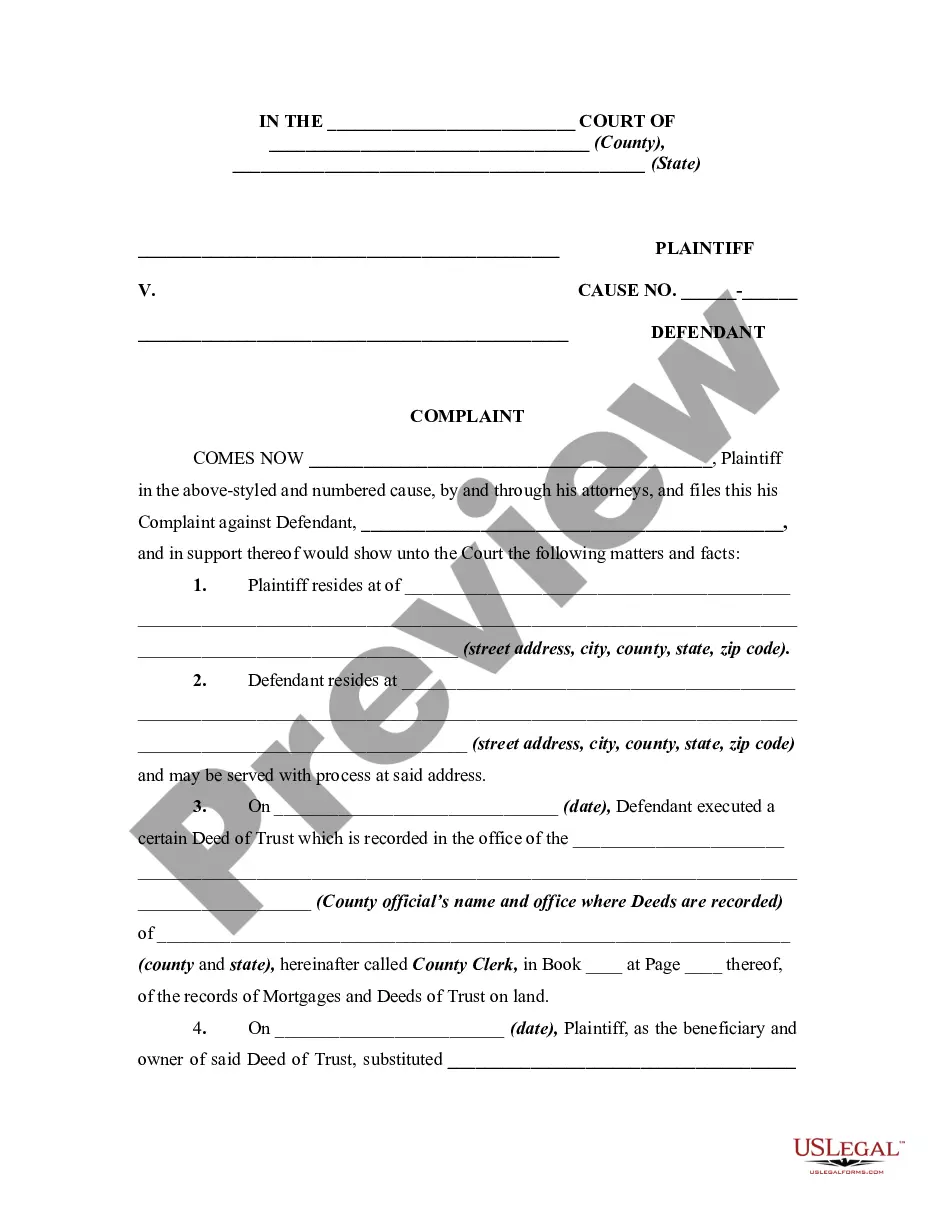
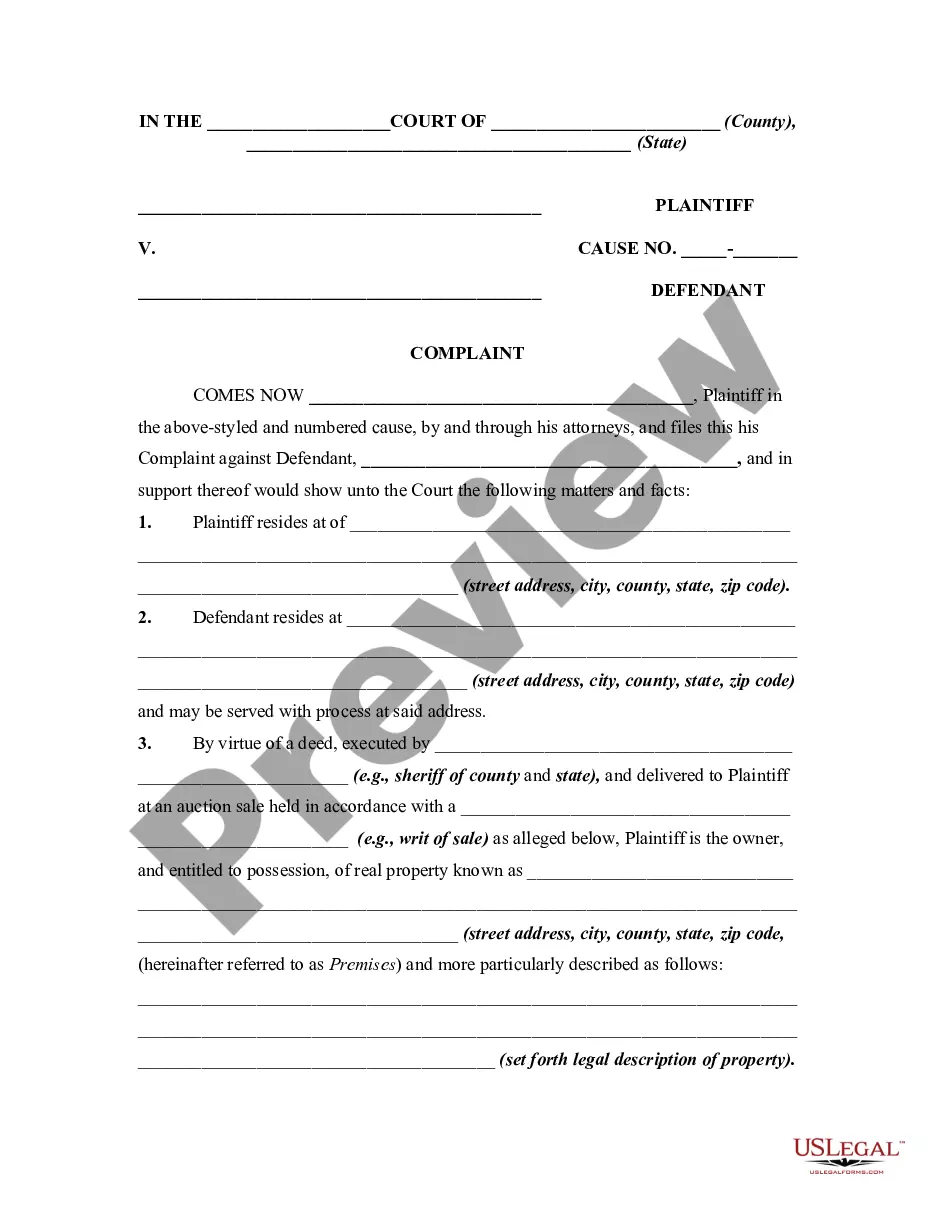
- Identifying information for the plaintiff and defendant.
- A detailed account of the property involved and the deed of trust related to the promissory note.
- Information about the circumstances leading to the foreclosure attempt.
- A request for a temporary and permanent injunction against the foreclosure sale.
- Declaration of rights to ensure proper legal resolution concerning the promissory note.

When to use this document
This form should be used when a property owner faces a nonjudicial foreclosure sale and believes that their rights are being violated based on misunderstandings related to the terms of the promissory note. It is particularly relevant when the homeowner was unaware of any delinquencies before acquiring the property and seeks to prevent the loss of their home due to a lack of clarity about payment obligations or notice from the lender.
Intended users of this form
- Homeowners confronting a foreclosure sale due to misunderstanding of mortgage terms.
- Individuals who have assumed a mortgage and are facing unexpected claims of delinquency.
- Any party looking to legally challenge the pending sale of property secured by a deed of trust.
Steps to complete this form
- Identify the plaintiff and defendant, including their names and contact information.
- Provide details about the property, including its legal description and the deed of trust.
- Clearly outline the history of the mortgage payments and any correspondence regarding delinquency.
- State the grounds for requesting the injunction, focusing on the misunderstandings regarding the terms of the promissory note.
- Sign and date the form in accordance with local legal requirements for submission to the court.
Does this document require notarization?
To make this form legally binding, it must be notarized. Our online notarization service, powered by Notarize, lets you verify and sign documents remotely through an encrypted video session.
Get your form ready online
Our built-in tools help you complete, sign, share, and store your documents in one place.
Make edits, fill in missing information, and update formatting in US Legal Forms—just like you would in MS Word.
Download a copy, print it, send it by email, or mail it via USPS—whatever works best for your next step.
Sign and collect signatures with our SignNow integration. Send to multiple recipients, set reminders, and more. Go Premium to unlock E-Sign.
If this form requires notarization, complete it online through a secure video call—no need to meet a notary in person or wait for an appointment.
We protect your documents and personal data by following strict security and privacy standards.

Make edits, fill in missing information, and update formatting in US Legal Forms—just like you would in MS Word.

Download a copy, print it, send it by email, or mail it via USPS—whatever works best for your next step.

Sign and collect signatures with our SignNow integration. Send to multiple recipients, set reminders, and more. Go Premium to unlock E-Sign.

If this form requires notarization, complete it online through a secure video call—no need to meet a notary in person or wait for an appointment.

We protect your documents and personal data by following strict security and privacy standards.
Common mistakes
- Failing to provide complete and accurate identifying information for parties involved.
- Neglecting to attach necessary documents, such as the deed of trust or notices received.
- Omitting crucial details about the circumstances of the misunderstanding and prior payments.
- Not adhering to local court rules regarding formatting or submission timelines.
Why complete this form online
- Convenience of filling out and downloading the form from home.
- Editability allows you to customize the document according to your specific situation.
- Reliability with forms drafted by licensed attorneys to ensure legal compliance.
Looking for another form?
Form popularity
FAQ
Proving Wrongful Foreclosure If you wish to sue the bank for wrongful foreclosure, you must prove the following: The lender owed you, the borrower, a legal duty. The lender breached that duty. The breach of duty caused your injury or loss (damages)
To contest a judicial foreclosure, you have to file a written answer to the complaint (the lawsuit). You'll need to present your defenses and explain the reasons why the lender shouldn't be able to foreclose. You might need to defend yourself against a motion for summary judgment and at trial.
To contest a judicial foreclosure, you have to file a written answer to the complaint (the lawsuit). You'll need to present your defenses and explain the reasons why the lender shouldn't be able to foreclose. You might need to defend yourself against a motion for summary judgment and at trial.
In situations where a foreclosure has already occurred, the California Supreme Court held that a borrower has standing to sue for wrongful foreclosure based on an allegedly void assignment of his or her mortgage.
Will I Get Money Back After a Foreclosure Sale? If a foreclosure sale results in excess proceeds, the lender doesn't get to keep that money. The lender is entitled to an amount that's sufficient to pay off the outstanding balance of the loan plus the costs associated with the foreclosure and salebut no more.
In rare circumstances, you can get a court to set aside (invalidate) a foreclosure sale.Generally, to set aside a foreclosure sale, the homeowner must show: irregularity in the foreclosure process that makes the sale void under state law. noncompliance with the terms of the mortgage (or deed of trust), or.
Negotiate With Your Lender. If you are having financial difficulties, the worst thing that you can do is bury your head in the sand. Request a Forbearance. Modify Your Loan. Make a Claim. Get a Housing Counselor. Declare Bankruptcy. Use A Foreclosure Defense Strategy. Make Them Produce The Not.
Wrongful foreclosure can occur when foreclosure processing companies submit documents to courts that have not actually been signed by homeowners and bear a forged signature. This practice not only gives rise to a cause of action for wrongful foreclosure, but can result in significant criminal penalties as well.