Quitclaim Assignment
Overview of this form
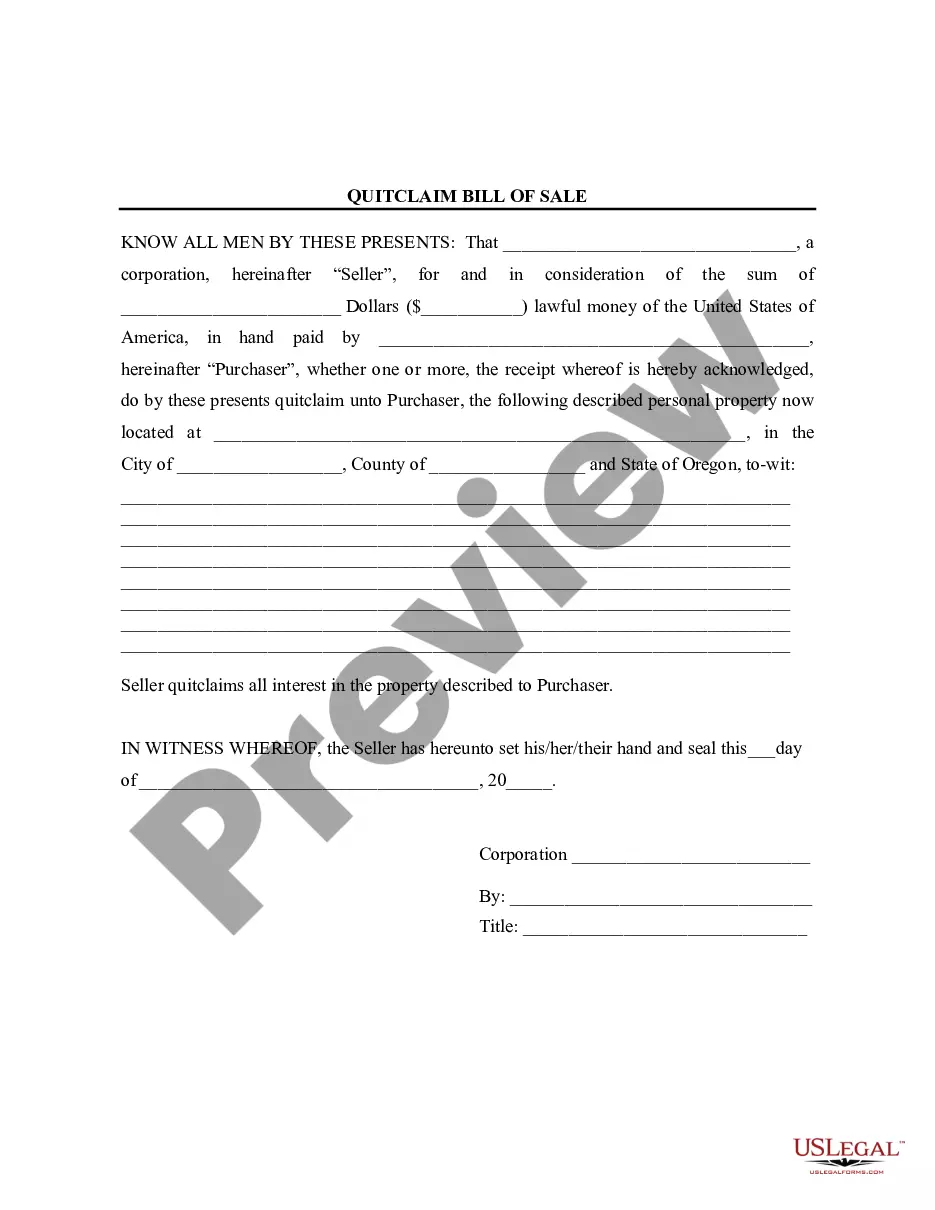
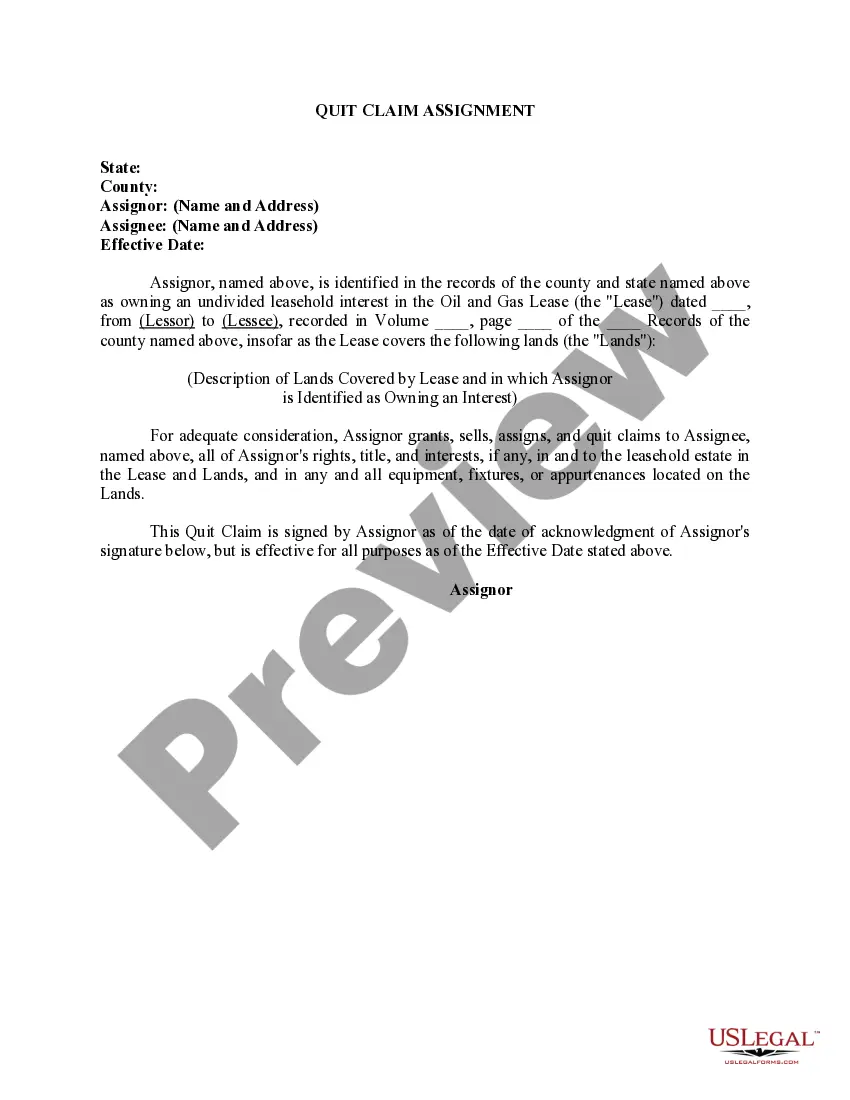
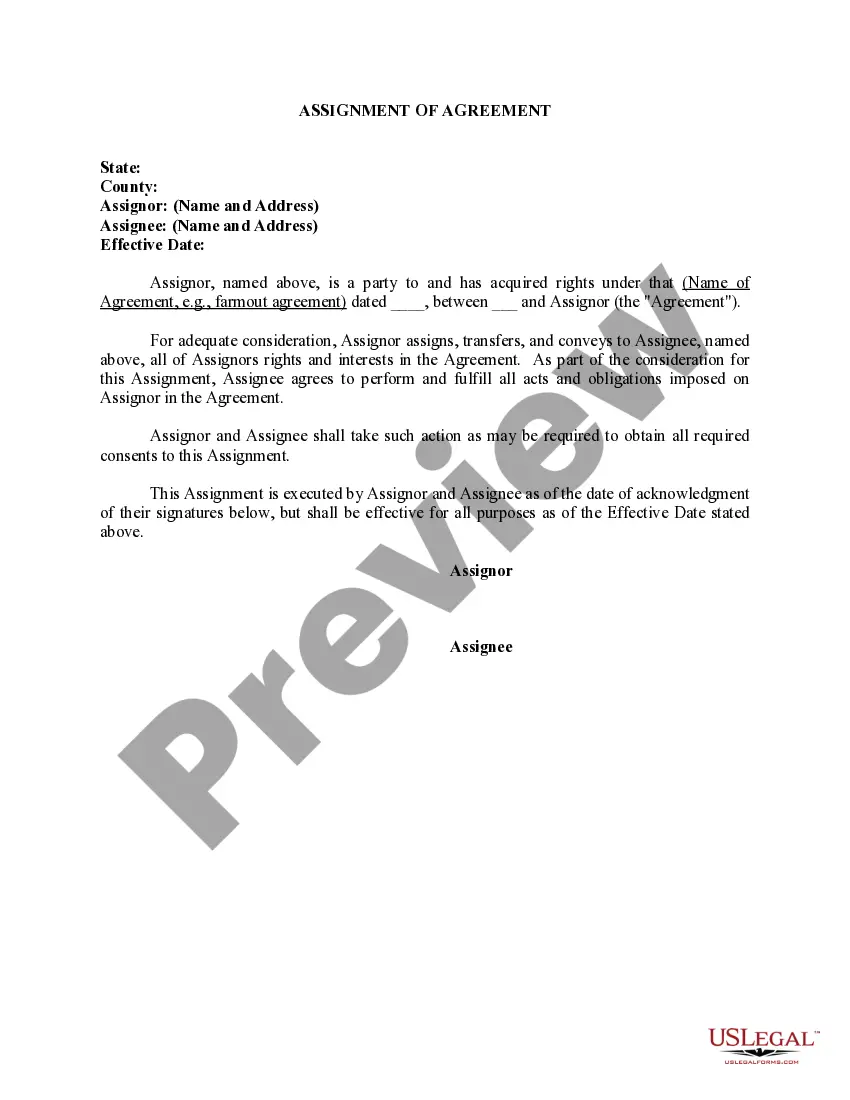
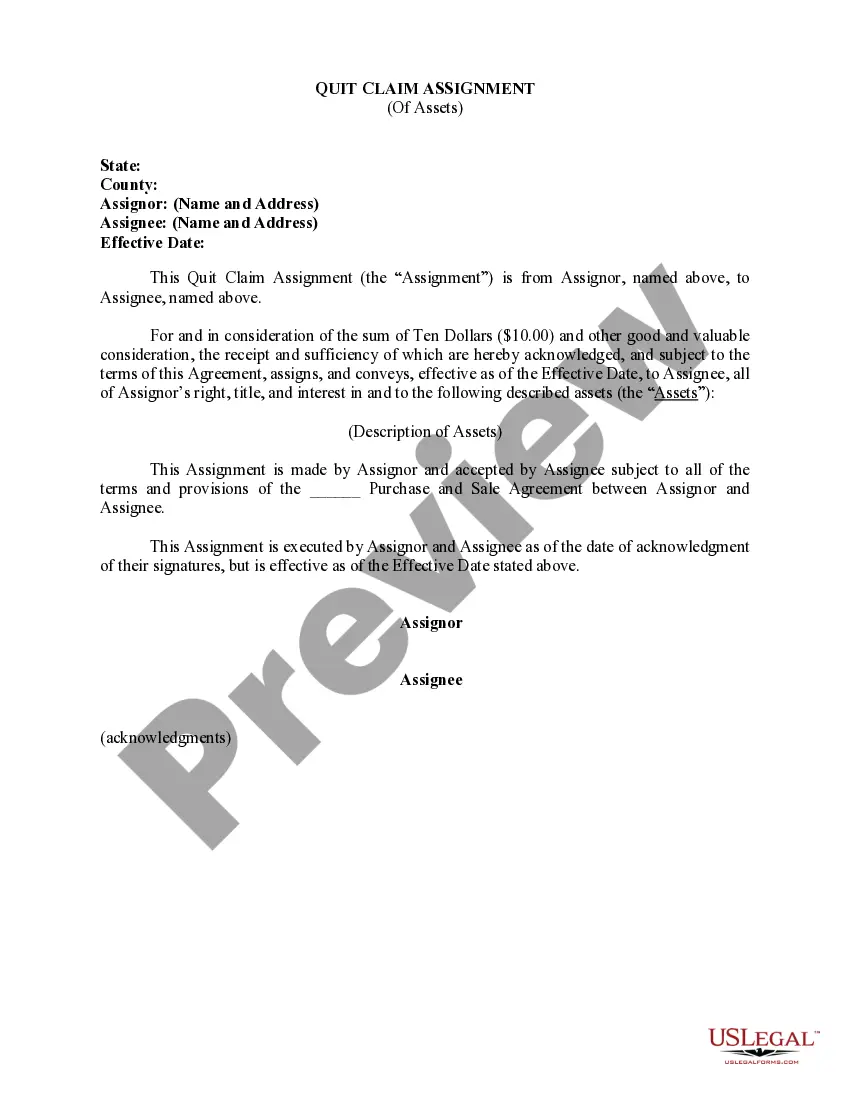
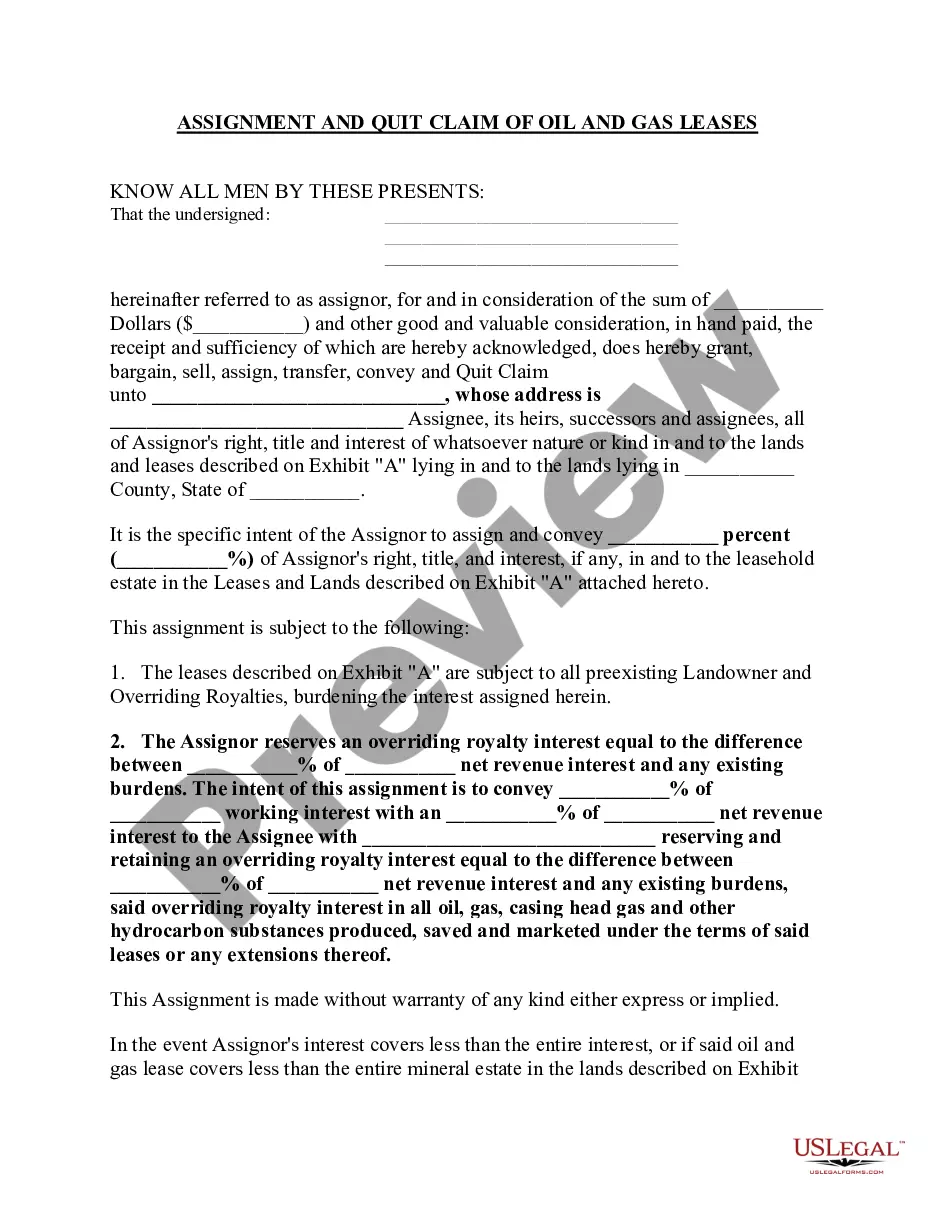
The Quitclaim Assignment is a legal form used to transfer an individual's rights, title, and interests in a leasehold estate, specifically related to oil and gas leases. Unlike a warranty deed, this form does not guarantee the validity of the claim, making it essential for situations where the assignor may not be sure of their complete legal standing. This form facilitates a straightforward assignment of rights from the assignor to the assignee.
Key components of this form
- Identifies the Assignor and Assignee with their names and addresses.
- Specifies the effective date of the assignment.
- Details the leasehold interest in the Oil and Gas Lease, including relevant records.
- Clearly defines the rights, title, and interests being quitclaimed.
- Includes space for the Assignor's signature and acknowledgment.
Common use cases
This form is necessary when an individual needs to transfer their interest in an oil and gas lease to another party. Common situations include the sale of lease rights to a different owner, transferring interests as part of an estate settlement, or simplifying ownership for a partnership or business entity. If you are not sure of your legal rights or the implications of the transfer, consulting a licensed attorney is advisable.
Intended users of this form
- Property owners wishing to assign leasehold rights to another party.
- Investors or companies involved in oil and gas operations.
- Individuals settling an estate that includes leasehold interests.
- Legal professionals handling conveyance of property rights.
Completing this form step by step
- Identify the parties involved by filling in the names and addresses of the Assignor and Assignee.
- Specify the effective date of the assignment.
- Provide details on the existing oil and gas lease, including the lease date and recording information.
- Enter a full description of the lands covered by the lease.
- Have the Assignor sign the form and ensure their signature is appropriately acknowledged.
Does this document require notarization?
This form does not typically require notarization unless specified by local law. However, having it notarized may provide additional legal assurance, especially in transactions involving significant interests. Always check your state's requirements to ensure compliance.
Get your form ready online
Our built-in tools help you complete, sign, share, and store your documents in one place.
Make edits, fill in missing information, and update formatting in US Legal Forms—just like you would in MS Word.
Download a copy, print it, send it by email, or mail it via USPS—whatever works best for your next step.
Sign and collect signatures with our SignNow integration. Send to multiple recipients, set reminders, and more. Go Premium to unlock E-Sign.
If this form requires notarization, complete it online through a secure video call—no need to meet a notary in person or wait for an appointment.
We protect your documents and personal data by following strict security and privacy standards.

Make edits, fill in missing information, and update formatting in US Legal Forms—just like you would in MS Word.

Download a copy, print it, send it by email, or mail it via USPS—whatever works best for your next step.

Sign and collect signatures with our SignNow integration. Send to multiple recipients, set reminders, and more. Go Premium to unlock E-Sign.

If this form requires notarization, complete it online through a secure video call—no need to meet a notary in person or wait for an appointment.

We protect your documents and personal data by following strict security and privacy standards.
Common mistakes
- Failing to accurately describe the lease or the lands covered.
- Not including the effective date, leading to confusion about when the rights transfer.
- Omitting signatures or not using proper acknowledgment procedures.
- Using outdated versions of the form that may not comply with current laws.
Why use this form online
- Quick access to a professionally drafted form that saves time and effort.
- Easy to download and edit according to your specific needs.
- Reduces potential errors with clear instructions and structured layout.
- Ensures compliance with legal standards to help protect your interests.
What to keep in mind
- The Quitclaim Assignment is used for transferring leasehold interests in oil and gas leases.
- The form should clearly identify both parties and the property involved.
- Understanding whether notarization is needed is crucial for legal validity.
- Common mistakes can be avoided by double-checking all details before submitting the form.
Looking for another form?
Form popularity
FAQ
A Quitclaim Deed must be notarized by a notary public or attorney in order to be valid.Consideration in a Quitclaim Deed is what the Grantee will pay to the Grantor for the interest in the property.
To use a Quitclaim Deed to add someone to a property deed or title, you would need to create a Quitclaim Deed and list all of the current owners in the grantor section. In the grantee section, you would list all of the current owners as well as the person you would like to add.
A quitclaim deed transfers all of the seller's rights to the property, but the quitclaim buyer has no guarantees that the seller has the right to transfer the property to her. If a third party appears and claims the property, the quitclaim buyer will be left to her own resources in defending against that claim.
Quitclaim deeds are most often used to transfer property between family members.Examples include when an owner gets married and wants to add a spouse's name to the title or deed, or when the owners divorce and one spouse's name is removed from the title or deed.
Fill out the form. Complete the form using a typewriter or by printing neatly using black ink. Sign in front of a notary. Get a Preliminary Change of Ownership Report (PCOR). File the forms. Give the deed to the grantee.
But you might be wondering if an owner can transfer a deed to another person without a real estate lawyer. The answer is yes. Parties to a transaction are always free to prepare their own deeds.A quitclaim deed, for example, is far simpler than a warranty deed.
The Quit Claim Deed form uses the terms of Grantor (Seller or Owner of said property) and Grantee (Buyer of said property) for the two parties involved. First, the parties must fill in the date. Then, write in the name of the county and state in which the property is located.
The drawback, quite simply, is that quitclaim deeds offer the grantee/recipient no protection or guarantees whatsoever about the property or their ownership of it. Maybe the grantor did not own the property at all, or maybe they only had partial ownership.
Fill out the quit claim deed form, which can be obtained online, or write your own using the form as a guide. The person giving up the interest in the property is the grantor, and the person receiving the interest is the grantee.