Mississippi Flood Zone Statement and Authorization
Overview of this form
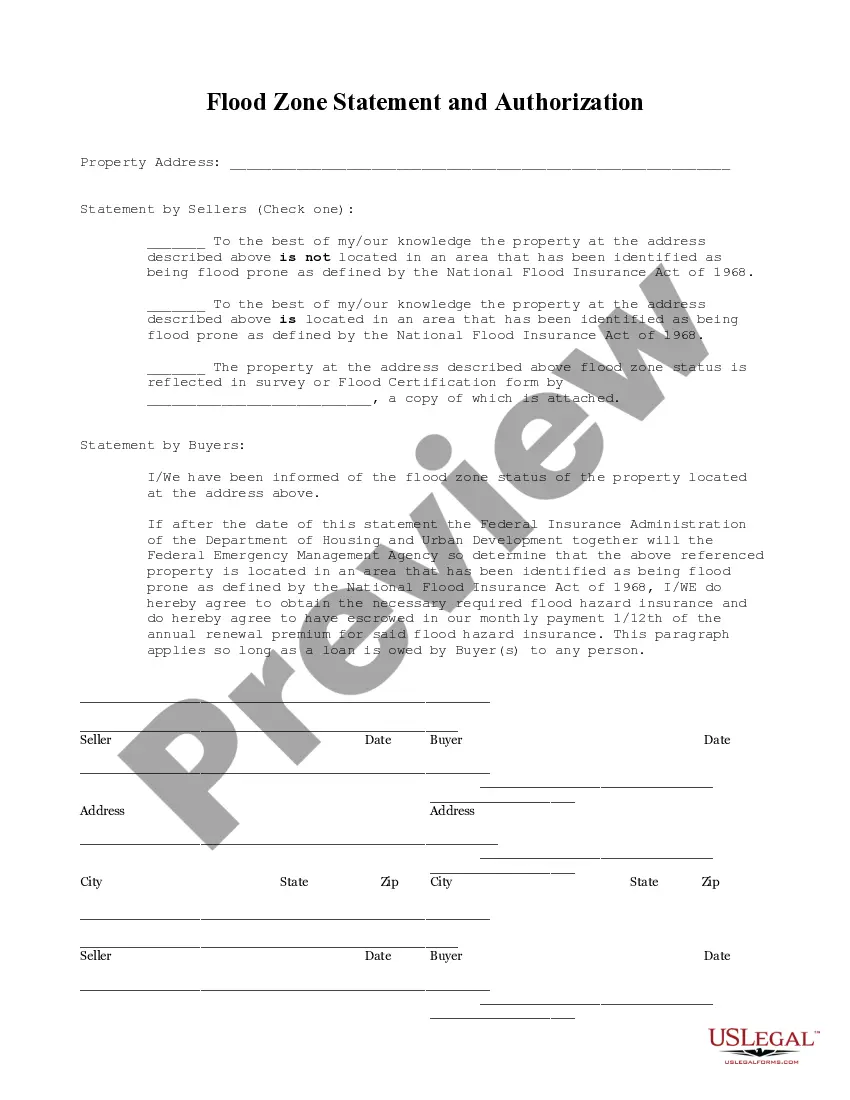
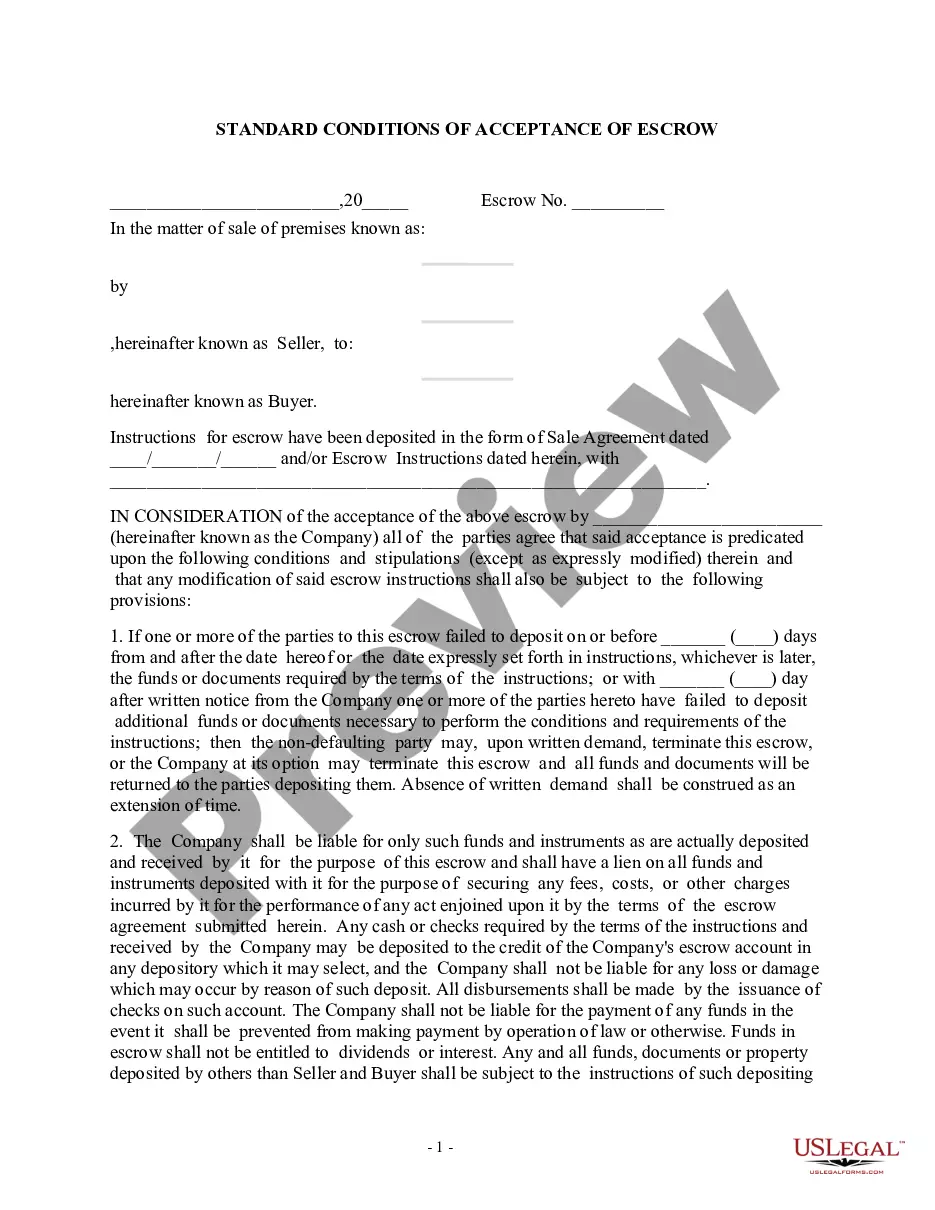
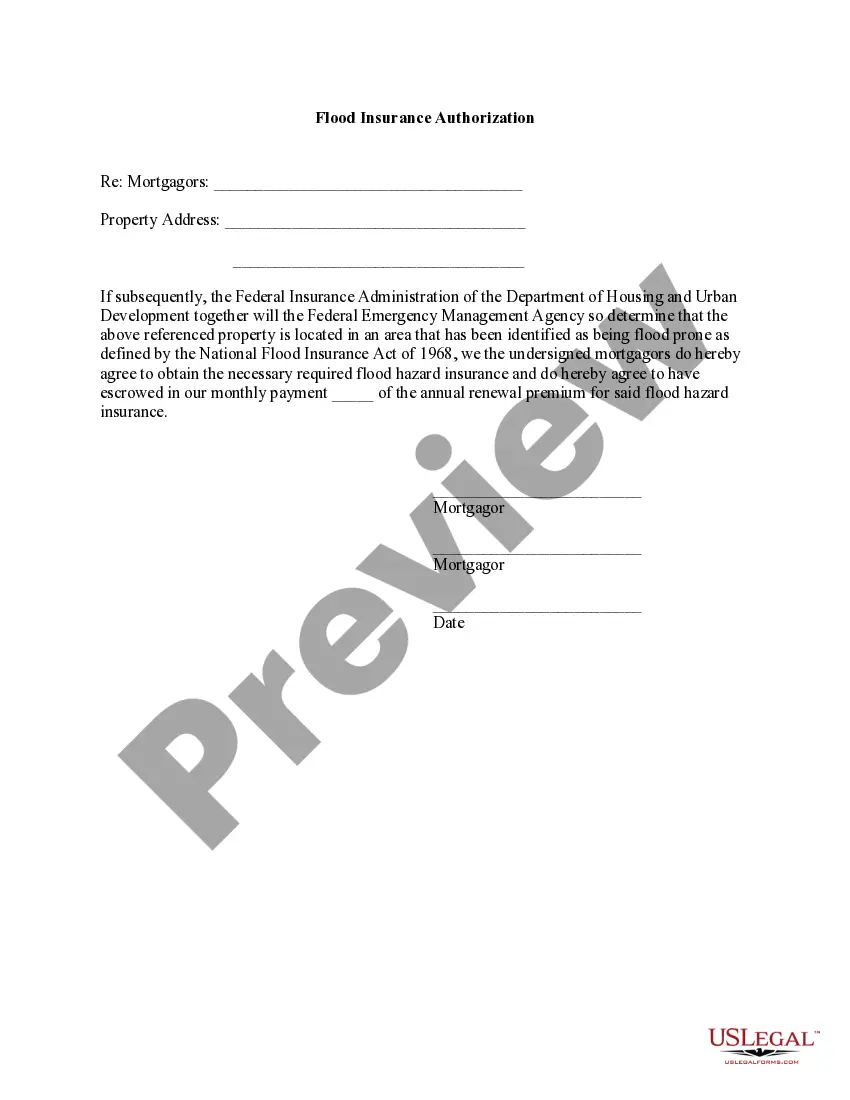
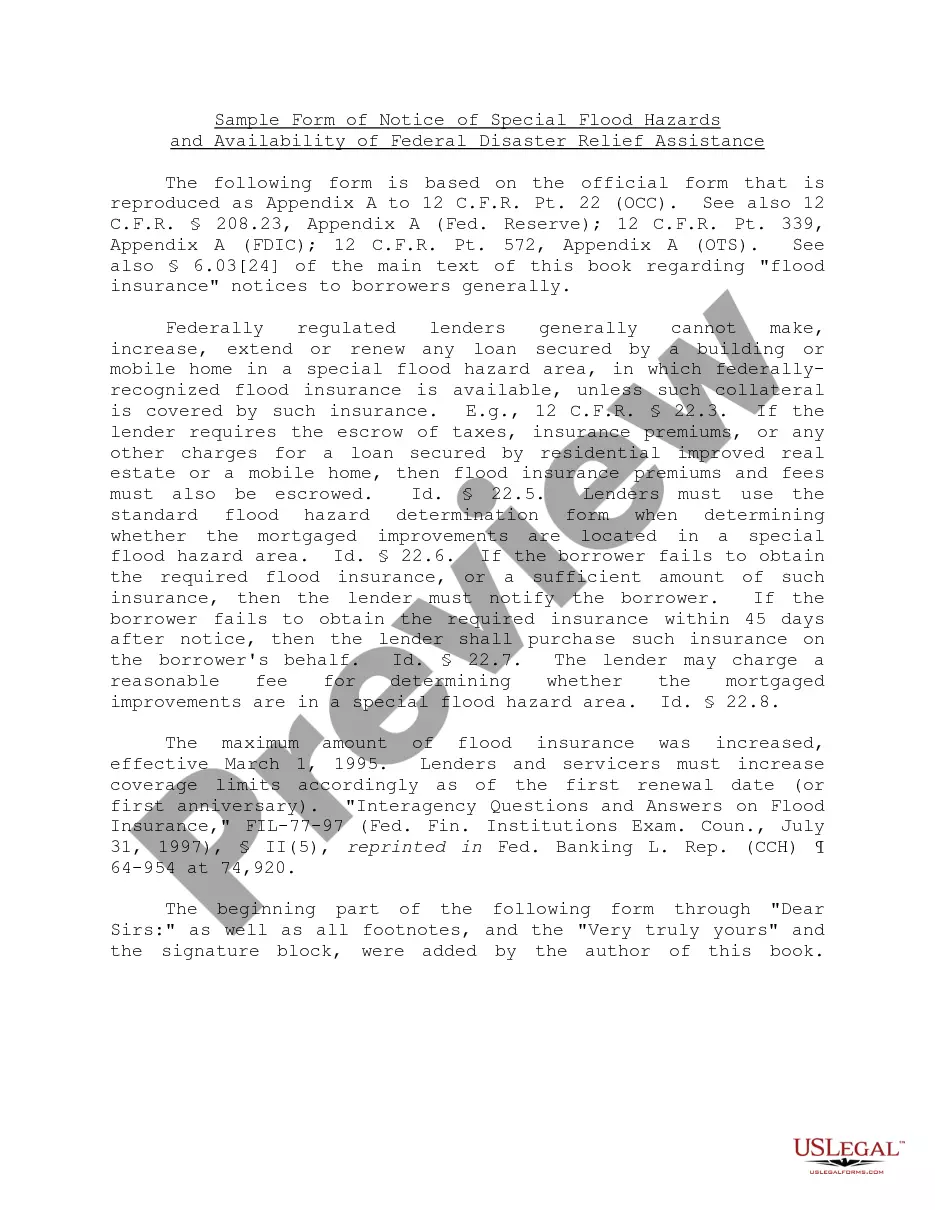
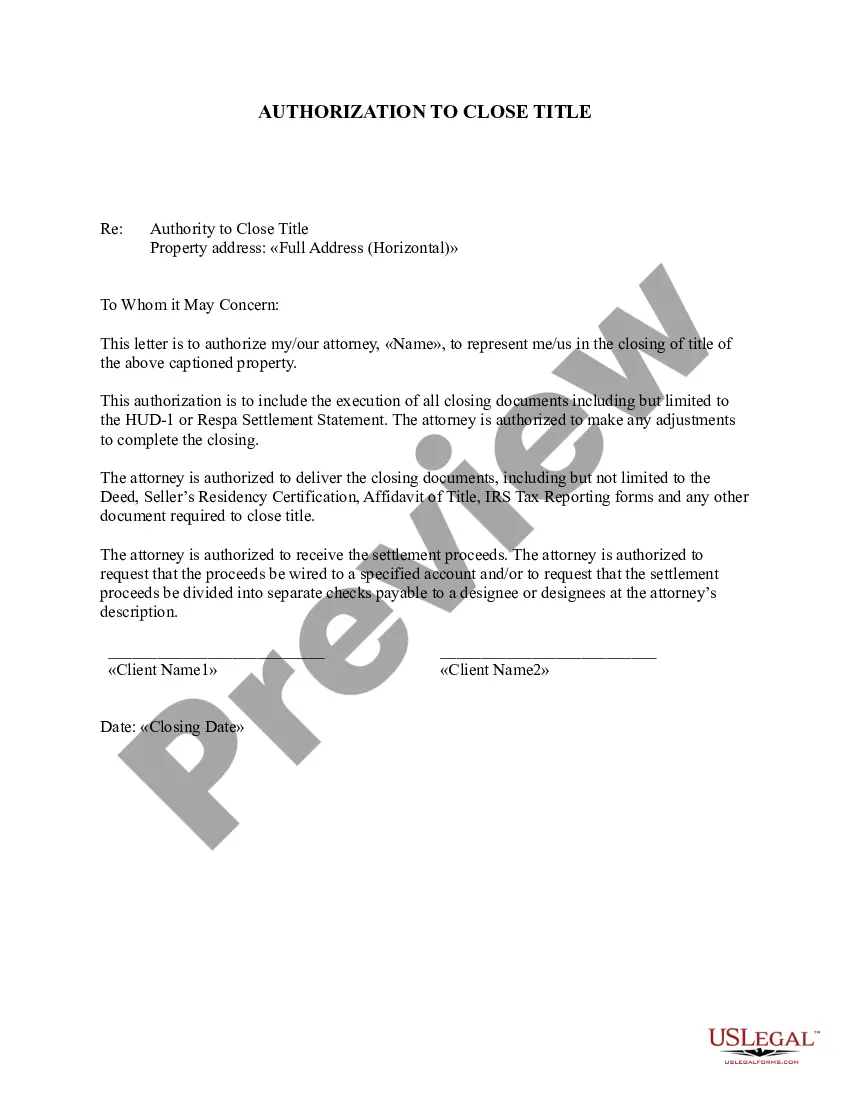
The Flood Zone Statement and Authorization form is a legal document used in real estate transactions to declare the flood zone status of a property. This form helps sellers affirm whether their property is located in a flood-prone area, as defined by the National Flood Insurance Act of 1968. Buyers must acknowledge this information and agree to acquire flood insurance if the property is determined to be in a flood zone after the closing. This is crucial for ensuring that all parties are informed about flood risks associated with the property, distinguishing it from general real estate disclosure forms.
Key components of this form
- Property address that specifies the location of the real estate in question.
- Seller's statement regarding the flood zone status of the property.
- Buyer's acknowledgment of the flood zone status and agreement to obtain flood insurance if required.
- Signature and date fields for both sellers and buyers.
- Provision for attaching a survey or flood certification for detailed verification.
Common use cases
This form should be used in any real estate transaction where the property may be subject to flooding. It is particularly important when selling or buying properties in areas with a history of flooding or where flood zone designations are in question. This form protects both sellers and buyers by ensuring clear communication regarding the property's risk and establishing insurance responsibilities if necessary.
Intended users of this form
- Property sellers needing to disclose flood zone information.
- Property buyers wanting to understand the flood risk before completing a transaction.
- Real estate agents facilitating transactions where flood considerations are important.
- Investors looking to manage risk in areas prone to flooding.
Instructions for completing this form
- Identify the property's address at the top of the form.
- Sellers must check the appropriate box to confirm their knowledge of the flood zone status.
- If applicable, attach any survey or Flood Certification documents that support the claims made about the property's flood status.
- Buyers should read and understand the implications of the flood zone status, then sign and date the form.
- Ensure that both sellers and buyers provide their complete addresses and additional signatures as needed.
Notarization requirements for this form
Notarization is not commonly needed for this form. However, certain documents or local rules may make it necessary. Our notarization service, powered by Notarize, allows you to finalize it securely online anytime, day or night.
Get your form ready online
Our built-in tools help you complete, sign, share, and store your documents in one place.
Make edits, fill in missing information, and update formatting in US Legal Forms—just like you would in MS Word.
Download a copy, print it, send it by email, or mail it via USPS—whatever works best for your next step.
Sign and collect signatures with our SignNow integration. Send to multiple recipients, set reminders, and more. Go Premium to unlock E-Sign.
If this form requires notarization, complete it online through a secure video call—no need to meet a notary in person or wait for an appointment.
We protect your documents and personal data by following strict security and privacy standards.

Make edits, fill in missing information, and update formatting in US Legal Forms—just like you would in MS Word.

Download a copy, print it, send it by email, or mail it via USPS—whatever works best for your next step.

Sign and collect signatures with our SignNow integration. Send to multiple recipients, set reminders, and more. Go Premium to unlock E-Sign.

If this form requires notarization, complete it online through a secure video call—no need to meet a notary in person or wait for an appointment.

We protect your documents and personal data by following strict security and privacy standards.
Typical mistakes to avoid
- Failing to check the correct box regarding the flood zone status.
- Not attaching the required survey or flood certification documents.
- Incomplete signatures or missing dates from either party.
- Assuming the form does not need to be discussed with a legal professional.
Why complete this form online
- Convenient access to legally compliant forms from home or office.
- Easy editing to customize the form to meet specific transaction needs.
- Reliable templates that have been drafted by licensed attorneys, ensuring legal soundness.
Looking for another form?

Form popularity
FAQ
Summary: Proximity to a flood zone lowers property values. By law, a property is considered in a flood zone if any part of the structure falls within a floodplain, an area that is adjacent to a stream or river that experiences periodic flooding.
The federal government offers coverage through the National Flood Insurance Program at an average cost of about $700 per year. But premiums vary depending on your property's flood risk.
Flood Zone A is a special flood hazard area designation by the Federal Emergency Management Agency (FEMA). Zone A areas have a 1 percent annual chance of flooding. This flood is also called the 100-year flood.
Areas in flood zone A have a 1 percent chance of flooding per year and a 25 percent chance of flooding at least once during a 30-year mortgage. Since there haven't been detailed hydraulic analysis in these areas, the base flood elevation and depths have not been determined.
Flood Zone A. Areas subject to inundation by the 1-percent-annual-chance flood event generally determined using approximate methodologies. Flood Zone AE, A1-30. Flood Zone AH. Flood Zone AO. Flood Zone AR. Flood Zone A99. Flood Zone V. Flood Zone VE, V1-30.
Zone A. Zone A is the flood insurance rate zone that corresponds to the I-percent annual chance floodplains that are determined in the Flood Insurance Study by approximate methods of analysis.
Evidence of flood insurance Completed and executed NFIP Flood Insurance Application PLUS a copy of the Borrower's premium check or agent's paid receipt.
1Your local floodplain manager: Your local floodplain manager may already have a certificate on file.2The seller of your property: If you're buying a property, the sellers may already have the certificate, and you can ask them for it before purchasing.What Is An Elevation Certificate for Flood Insurance? - ValuePenguin\nwww.valuepenguin.com > elevation-certificate-flood-insurance