General Form of Irrevocable Trust Agreement
What is this form?
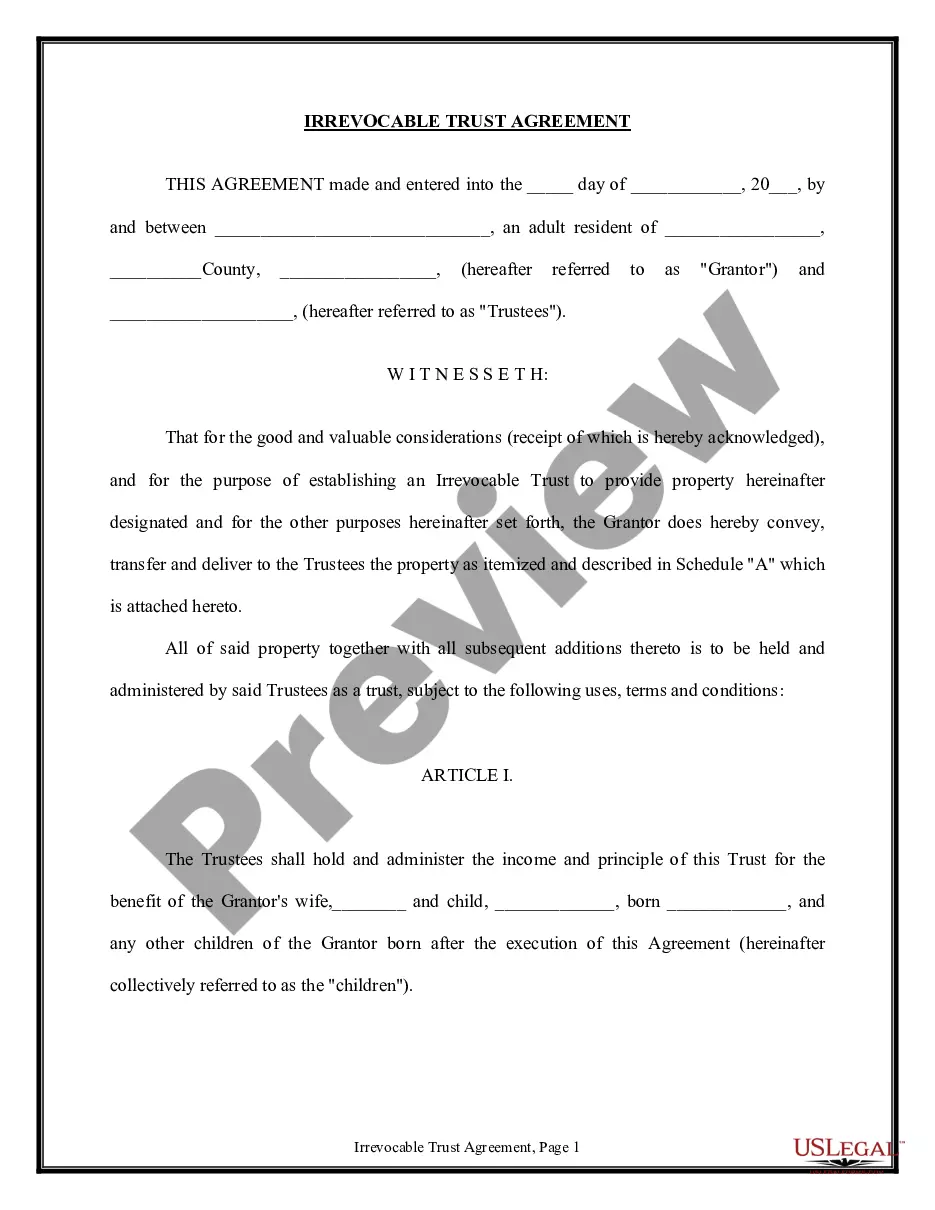
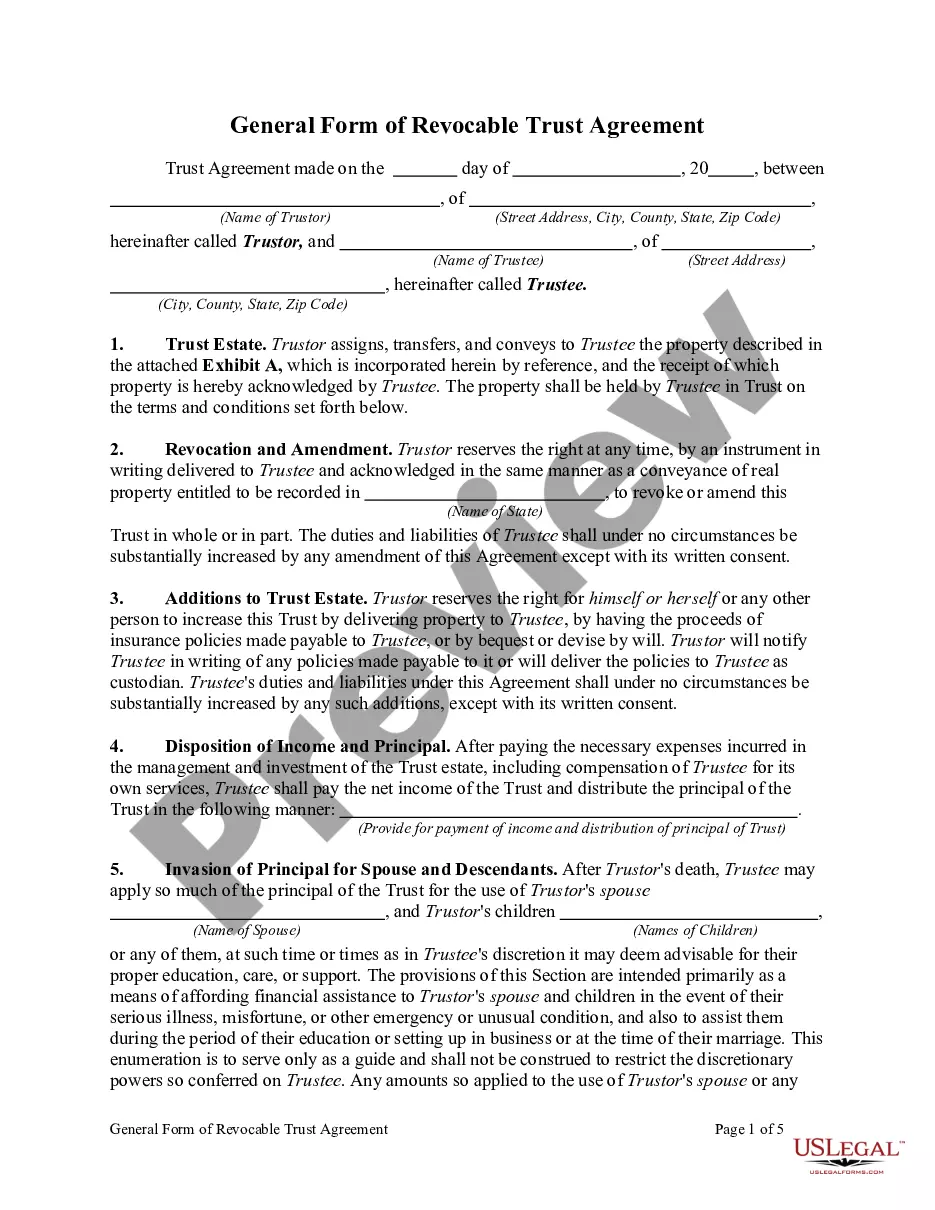
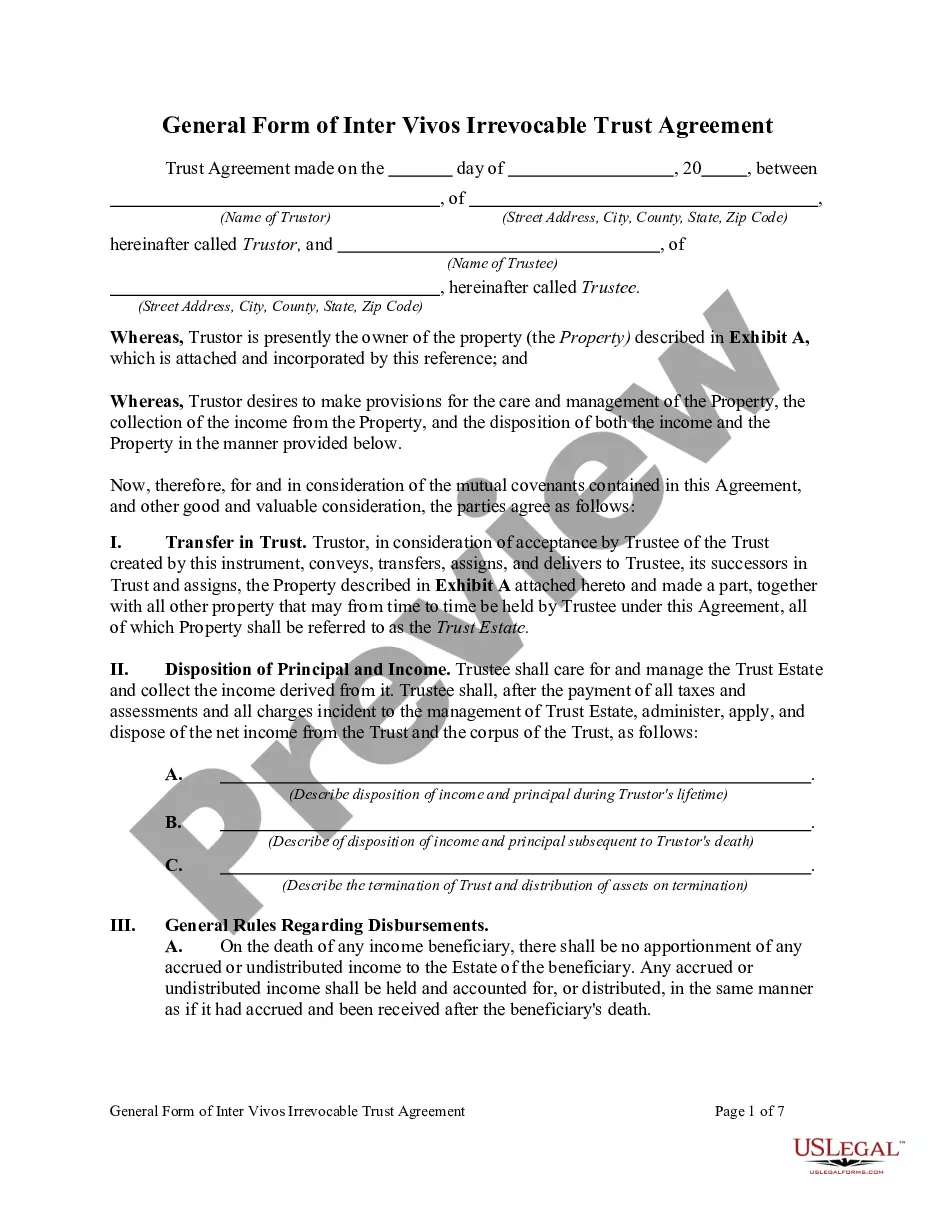
The General Form of Irrevocable Trust Agreement creates a trust that cannot be altered or revoked without the beneficiary's consent. This type of trust is particularly useful for estate planning, allowing individuals to manage how their assets are handled and distributed after their death. Unlike a revocable trust, once established, the terms of an irrevocable trust are fixed, making it an essential tool for securing financial and tax benefits.
Main sections of this form
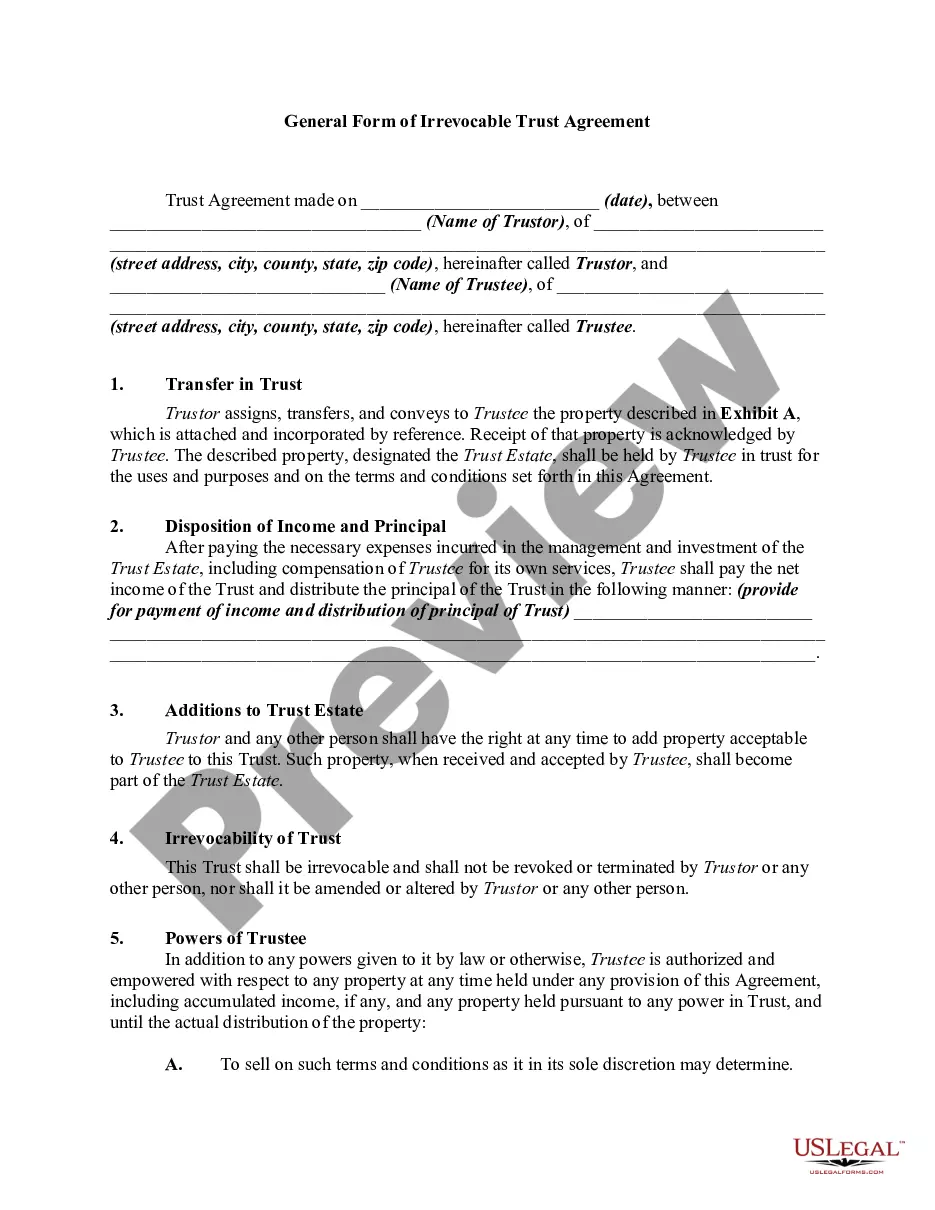
- Transfer in Trust: Details property being transferred into the trust.
- Disposition of Income and Principal: Outlines how the trust income and principal will be distributed.
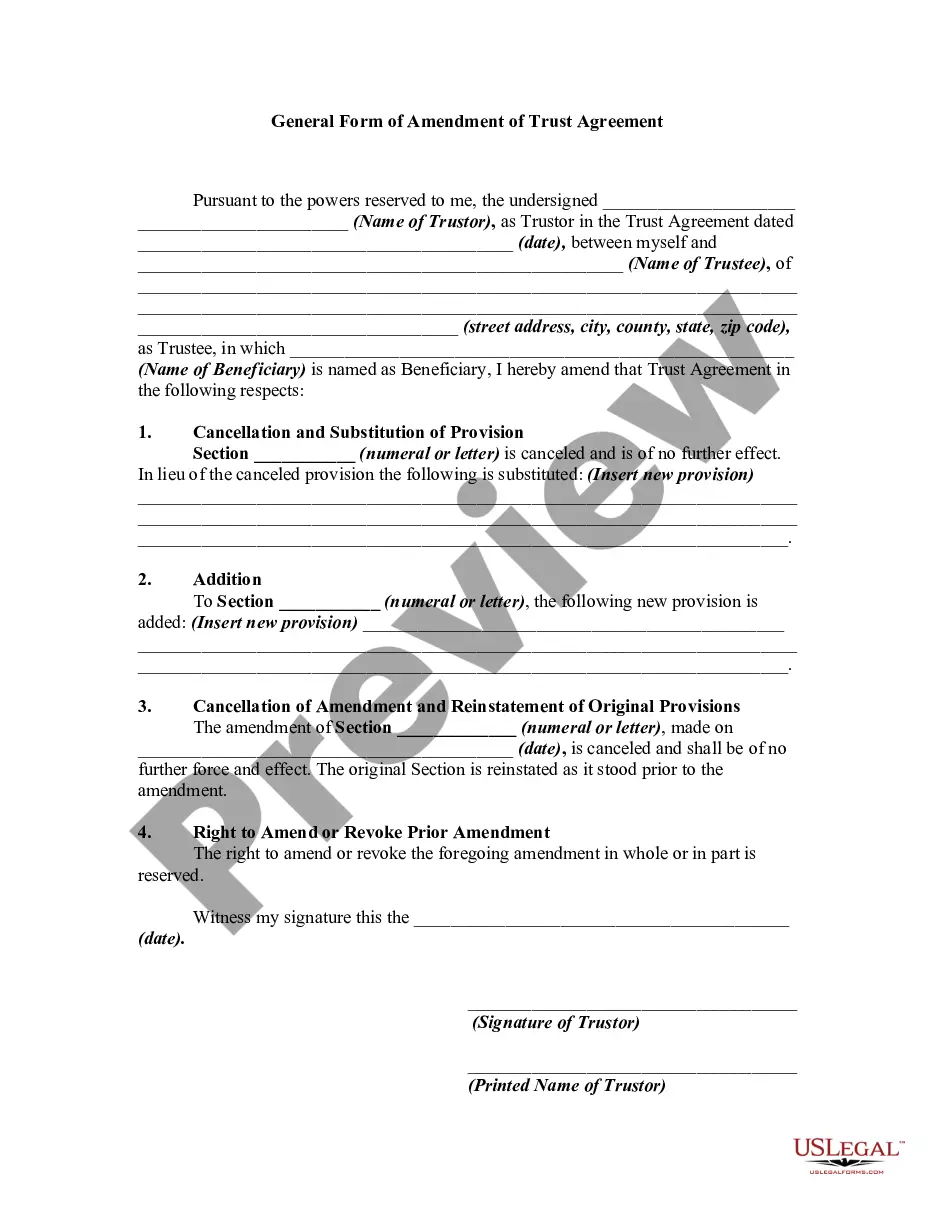
- Irrevocability of Trust: States that the trust cannot be revoked or modified by the trustor.
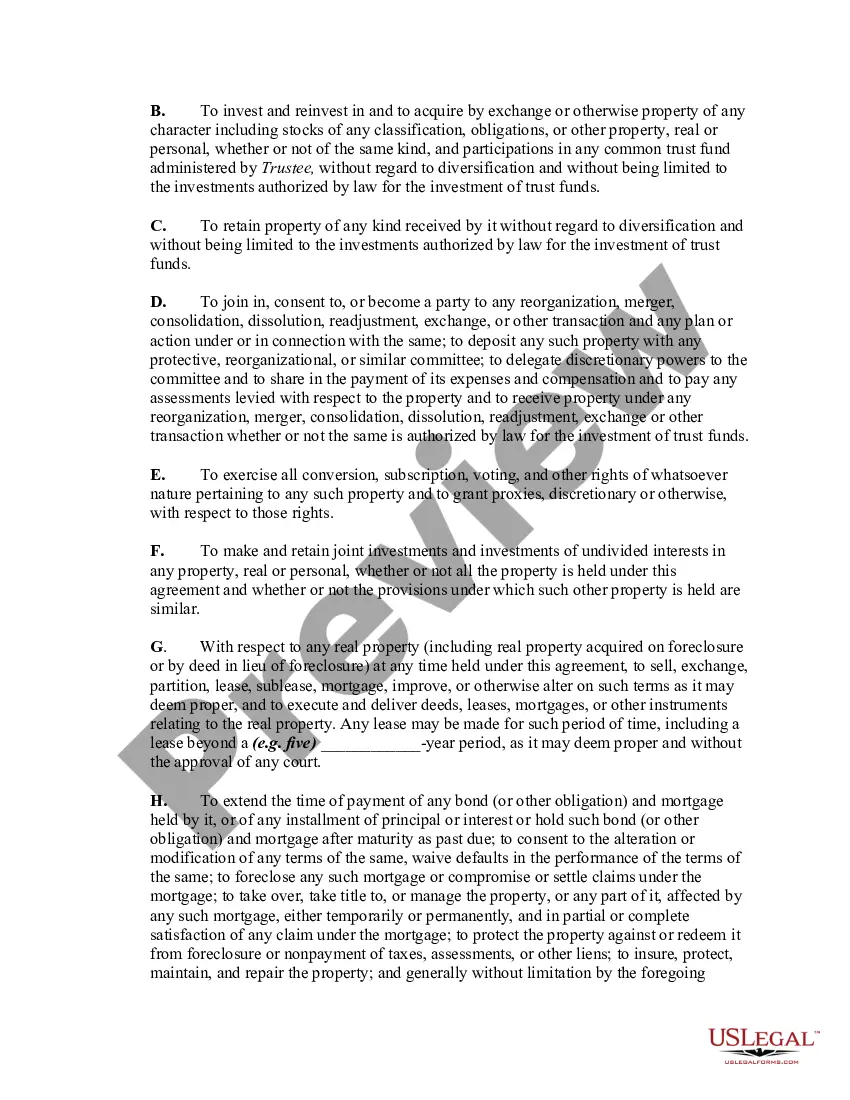
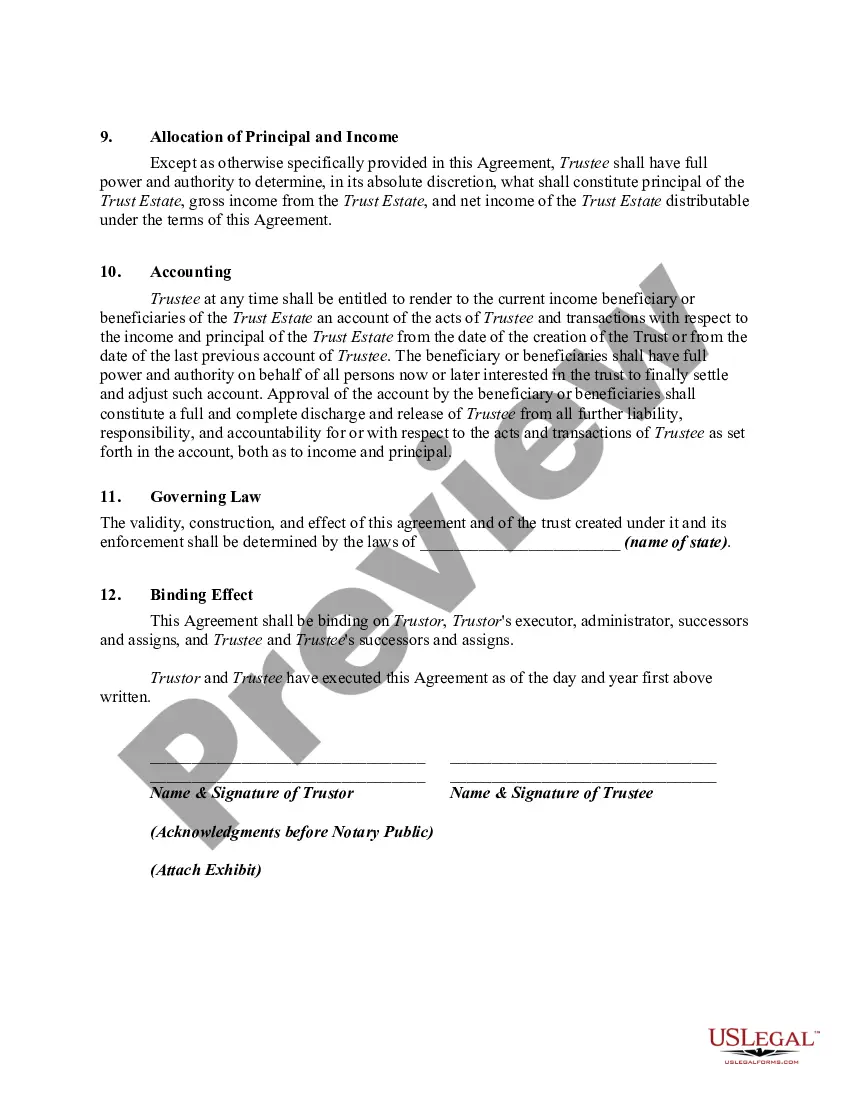
- Powers of Trustee: Describes the authority the trustee has over the trust assets.
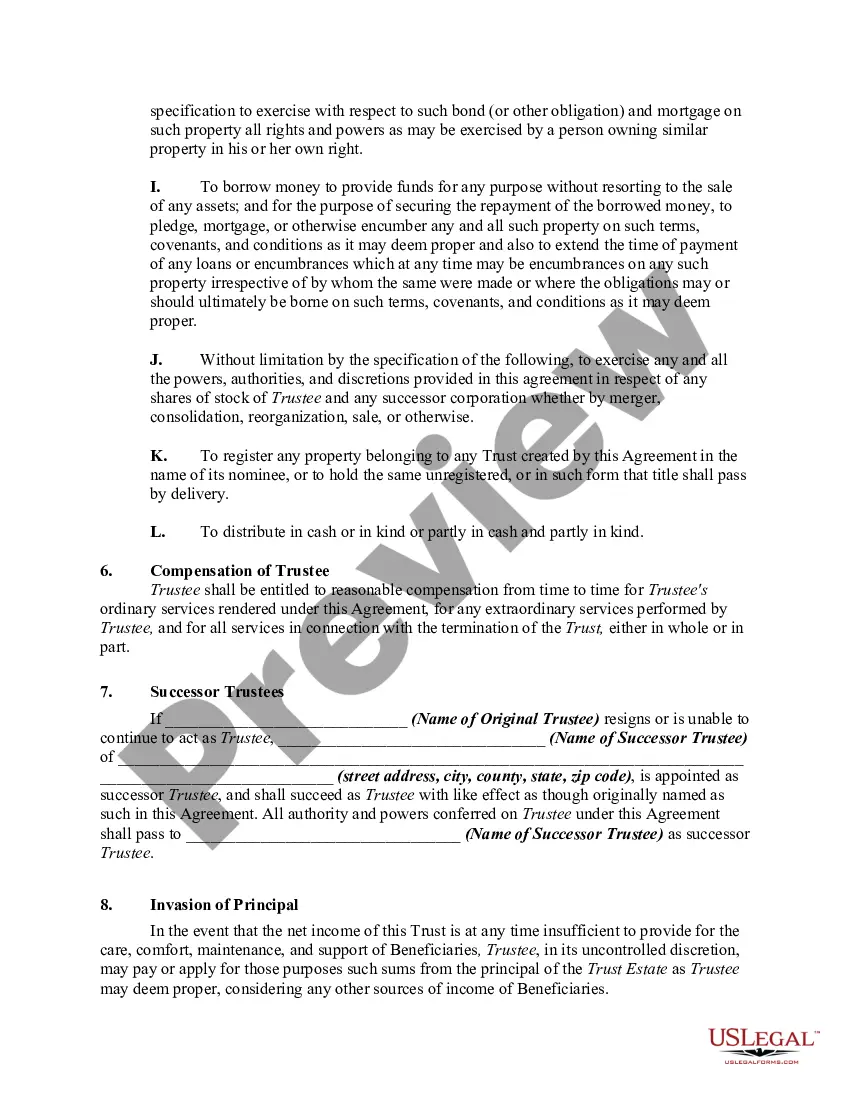
- Successor Trustees: Identifies a successor if the original trustee can no longer serve.
- Allocation of Principal and Income: Grants the trustee discretion over the trust's income and principal.
Common use cases
This form is typically used when an individual wants to create a trust that secures their assets and designates how they should be managed and distributed, especially in estate planning scenarios. It is ideal when the trustor wishes to limit access to the trust assets during their lifetime and ensure financial stability for beneficiaries after their death.
Intended users of this form
- Individuals looking to create an irrevocable trust for estate planning.
- Anyone wanting to establish a trust that protects assets from creditors.
- People who wish to provide for beneficiaries in a controlled manner after their passing.
How to prepare this document
- Identify the parties: Enter the trustor's and trustee's names and addresses.
- Specify the property: List all assets being transferred into the trust.
- Outline distribution methods: Describe how income and principal will be distributed.
- Detail the trustee's powers: Indicate the roles and responsibilities of the trustee.
- Include successor trustee information: Name a successor if the original trustee can no longer serve.
Does this form need to be notarized?
This form does not typically require notarization unless specified by local law. If notarization is needed, it is essential to follow your state's guidelines to ensure the trust agreement is legally binding.
Get your form ready online
Our built-in tools help you complete, sign, share, and store your documents in one place.
Make edits, fill in missing information, and update formatting in US Legal Forms—just like you would in MS Word.
Download a copy, print it, send it by email, or mail it via USPS—whatever works best for your next step.
Sign and collect signatures with our SignNow integration. Send to multiple recipients, set reminders, and more. Go Premium to unlock E-Sign.
If this form requires notarization, complete it online through a secure video call—no need to meet a notary in person or wait for an appointment.
We protect your documents and personal data by following strict security and privacy standards.

Make edits, fill in missing information, and update formatting in US Legal Forms—just like you would in MS Word.

Download a copy, print it, send it by email, or mail it via USPS—whatever works best for your next step.

Sign and collect signatures with our SignNow integration. Send to multiple recipients, set reminders, and more. Go Premium to unlock E-Sign.

If this form requires notarization, complete it online through a secure video call—no need to meet a notary in person or wait for an appointment.

We protect your documents and personal data by following strict security and privacy standards.
Avoid these common issues
- Failing to properly identify the trustor and trustee can lead to confusion.
- Not clearly defining how income and principal will be distributed can cause disputes later.
- Omitting details regarding successor trustees can complicate the trust management if the original trustee resigns.
Why complete this form online
- Convenience: Download and complete the form from anywhere.
- Editability: Easily customize the template to fit specific needs.
- Reliability: Access professionally drafted documents created by licensed attorneys.
Key takeaways
- An irrevocable trust cannot be altered once established, providing certainty in asset management.
- This form is essential for effective estate planning and protecting assets for beneficiaries.
- Consult local laws to verify compliance requirements based on your jurisdiction.
- Complete the form carefully to ensure all necessary details and provisions are included.
Looking for another form?

Form popularity
FAQ
Plan the purpose and scope of the irrevocable trust. Choose a trustee. Prepare an irrevocable trust agreement. Obtain a taxpayer identification number for the trust from the Internal Revenue Service.
What assets can I transfer to an irrevocable trust? Frankly, just about any asset can be transferred to an irrevocable trust, assuming the grantor is willing to give it away. This includes cash, stock portfolios, real estate, life insurance policies, and business interests.
When you transfer your assets into an irrevocable trust, you relinquish control of them. The trust is now the owner of the assets, which you'll retitle or register in the trust's name. The assets are no longer yours, and have no bearing on your wealth, the value of your estate, or your tax liability .
Irrevocable trust: The purpose of the trust is outlined by an attorney in the trust document. Once established, an irrevocable trust usually cannot be changed. As soon as assets are transferred in, the trust becomes the asset owner. Grantor: This individual transfers ownership of property to the trust.
The main downside to an irrevocable trust is simple: It's not revocable or changeable. You no longer own the assets you've placed into the trust. In other words, if you place a million dollars in an irrevocable trust for your child and want to change your mind a few years later, you're out of luck.