Lease of Unfurnished House
What is this form?
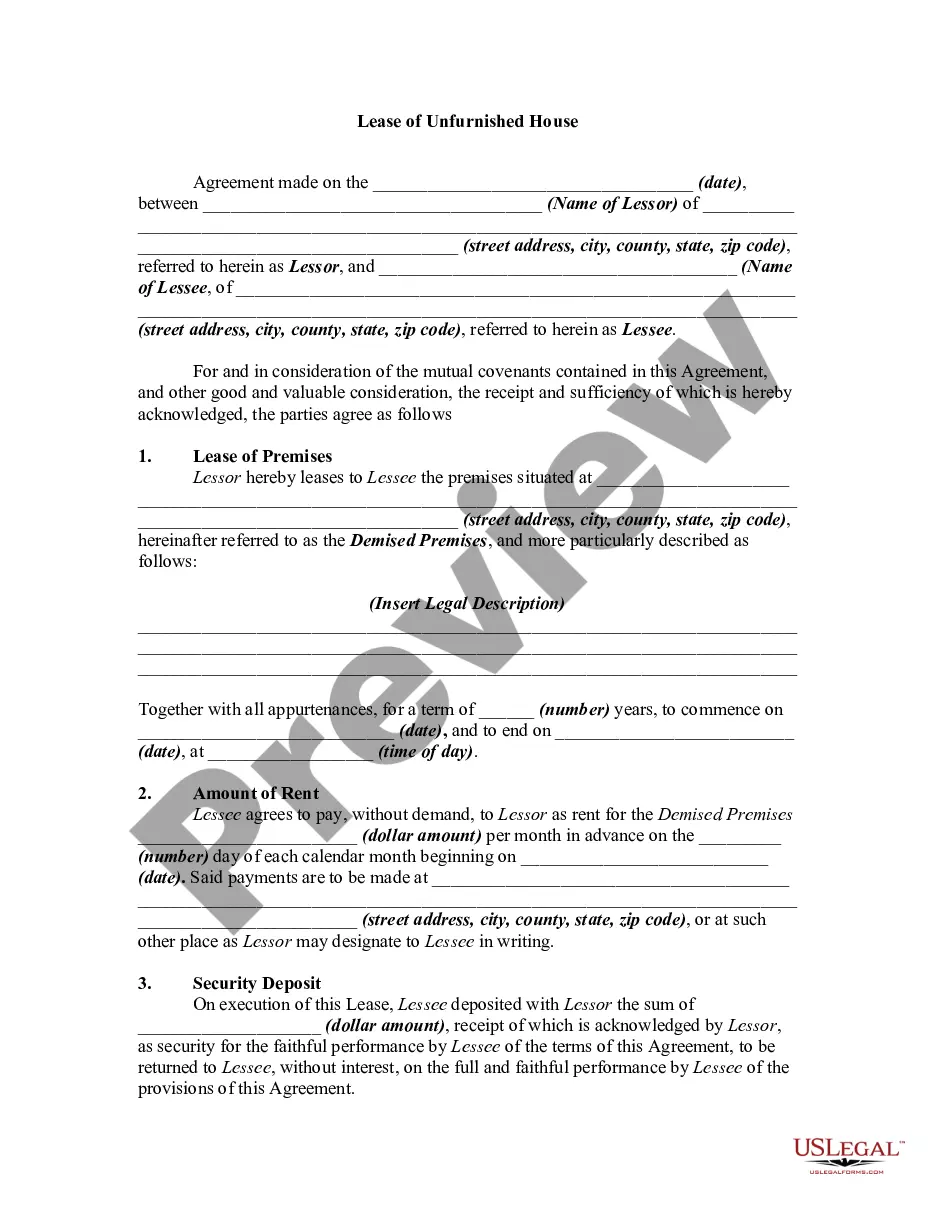
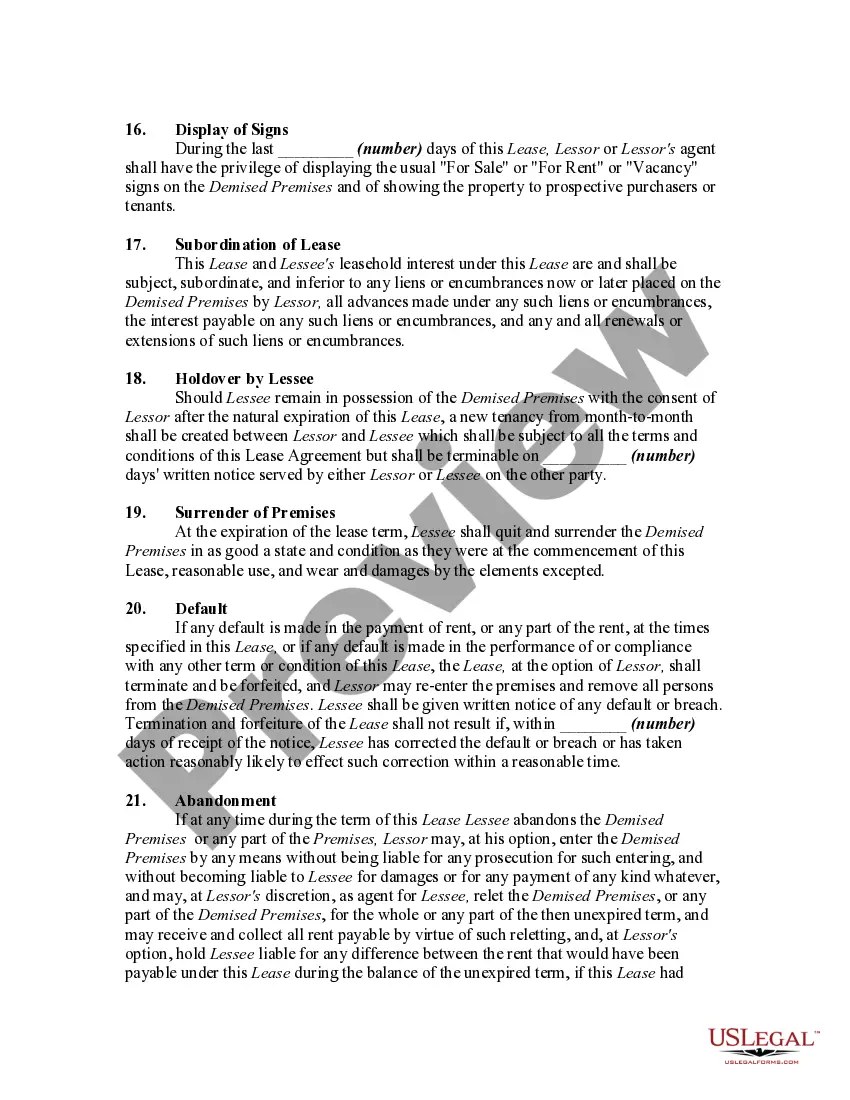
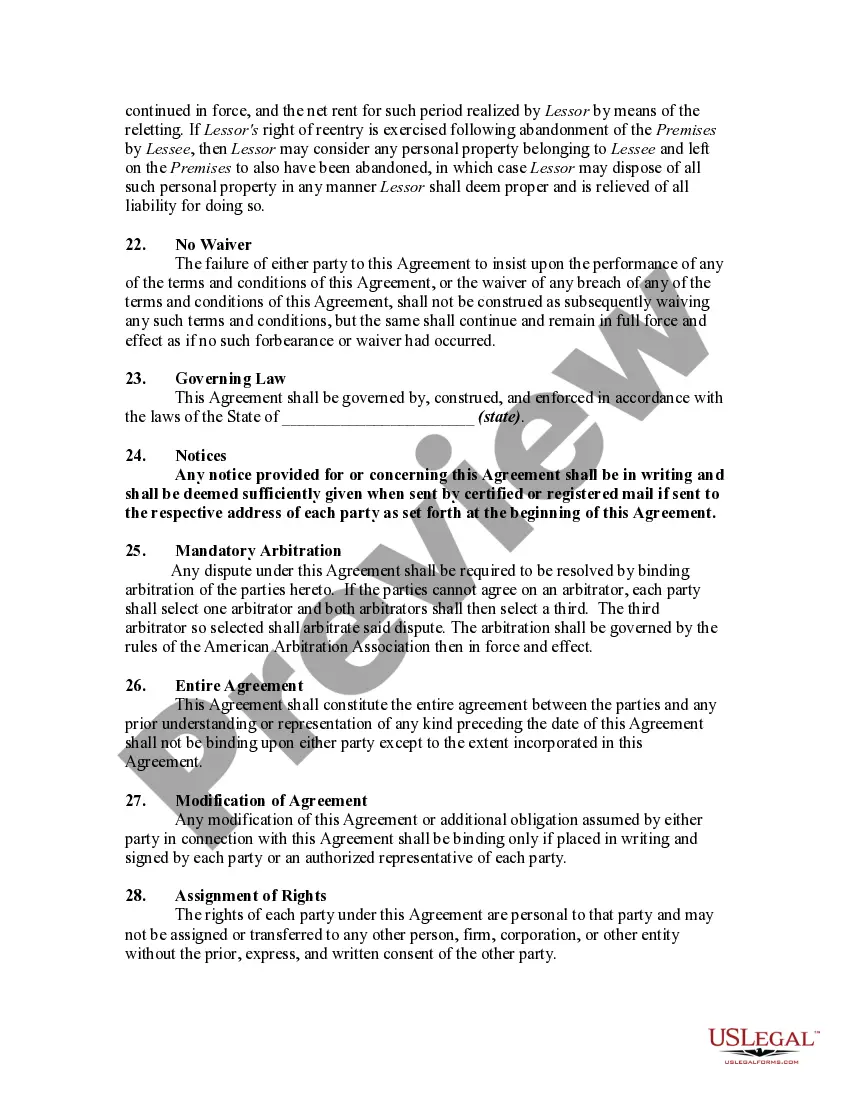
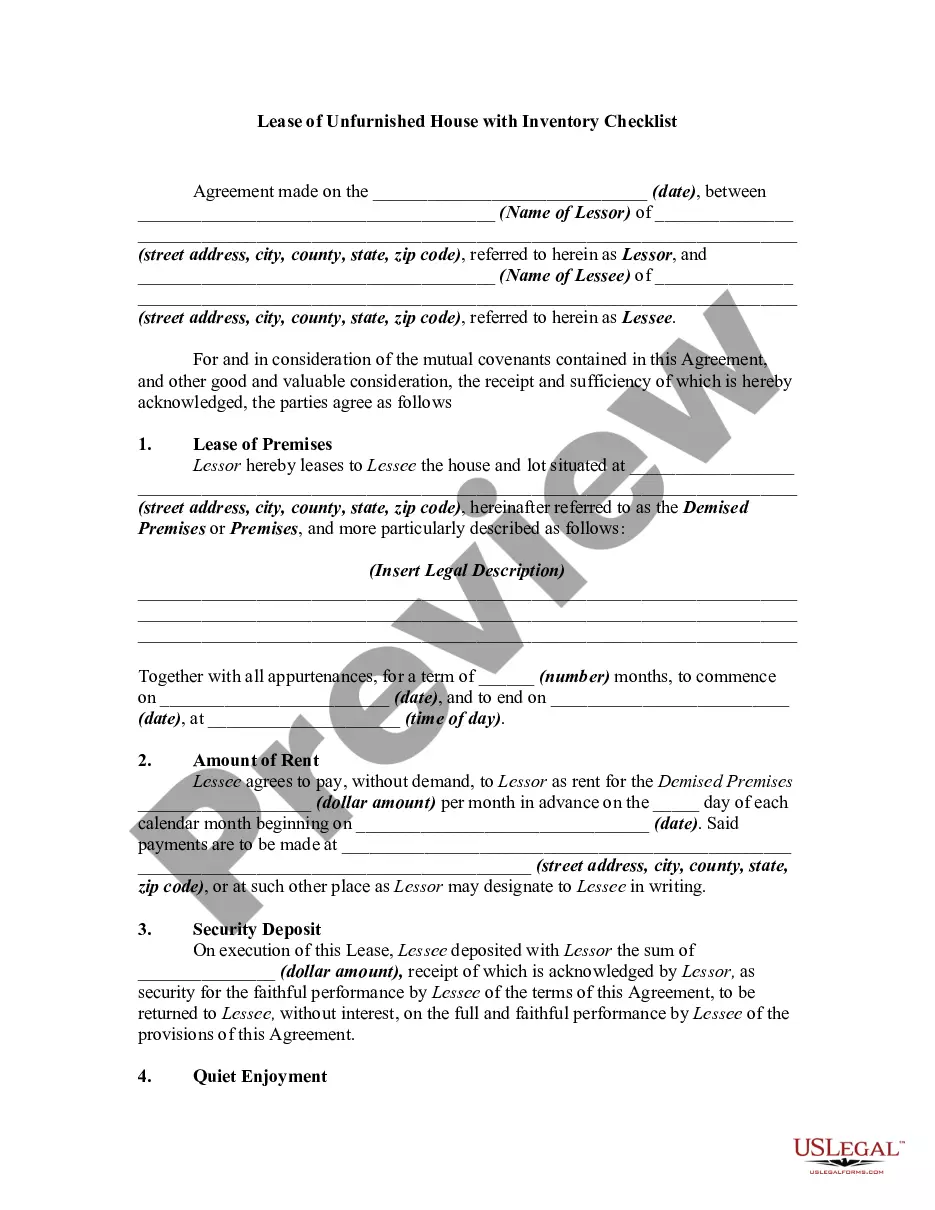
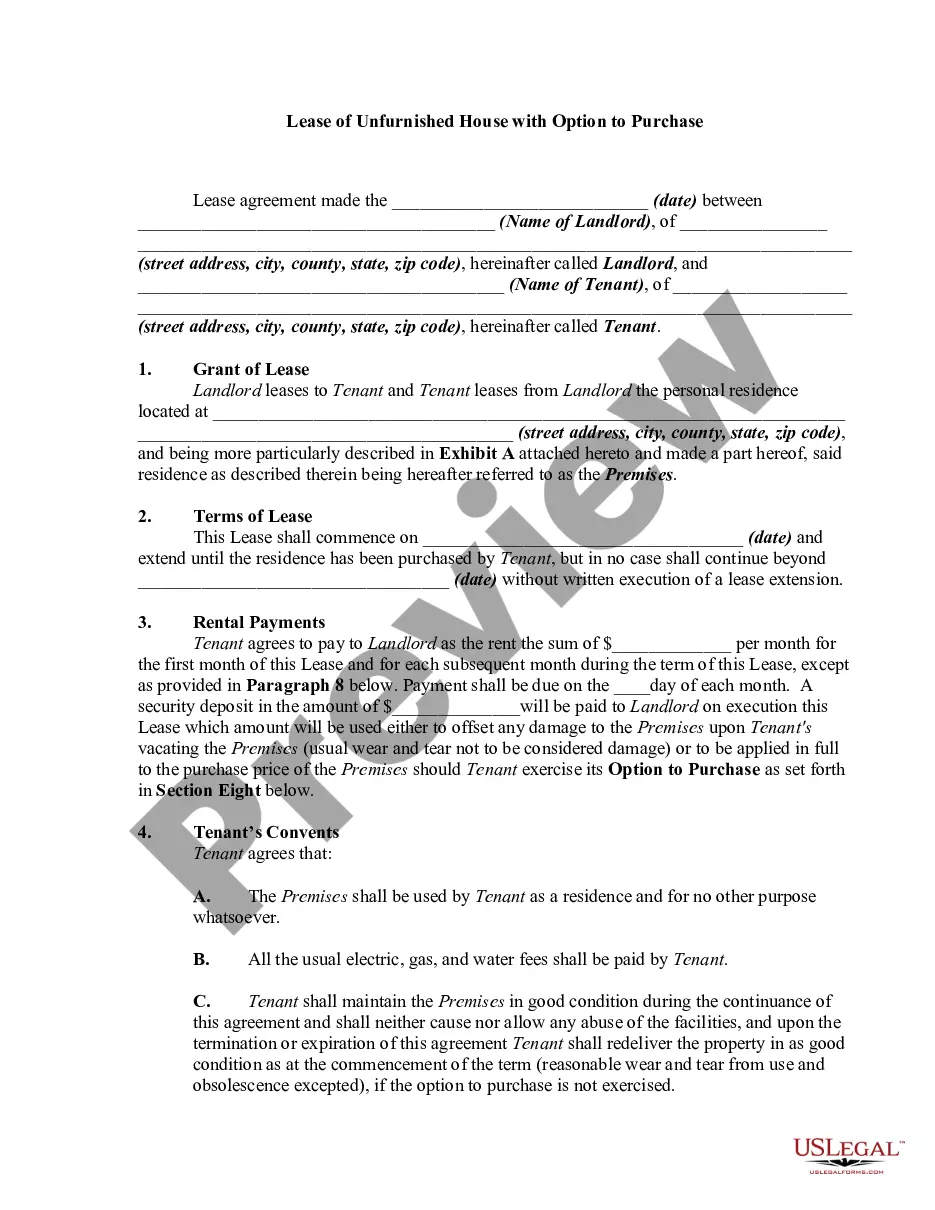
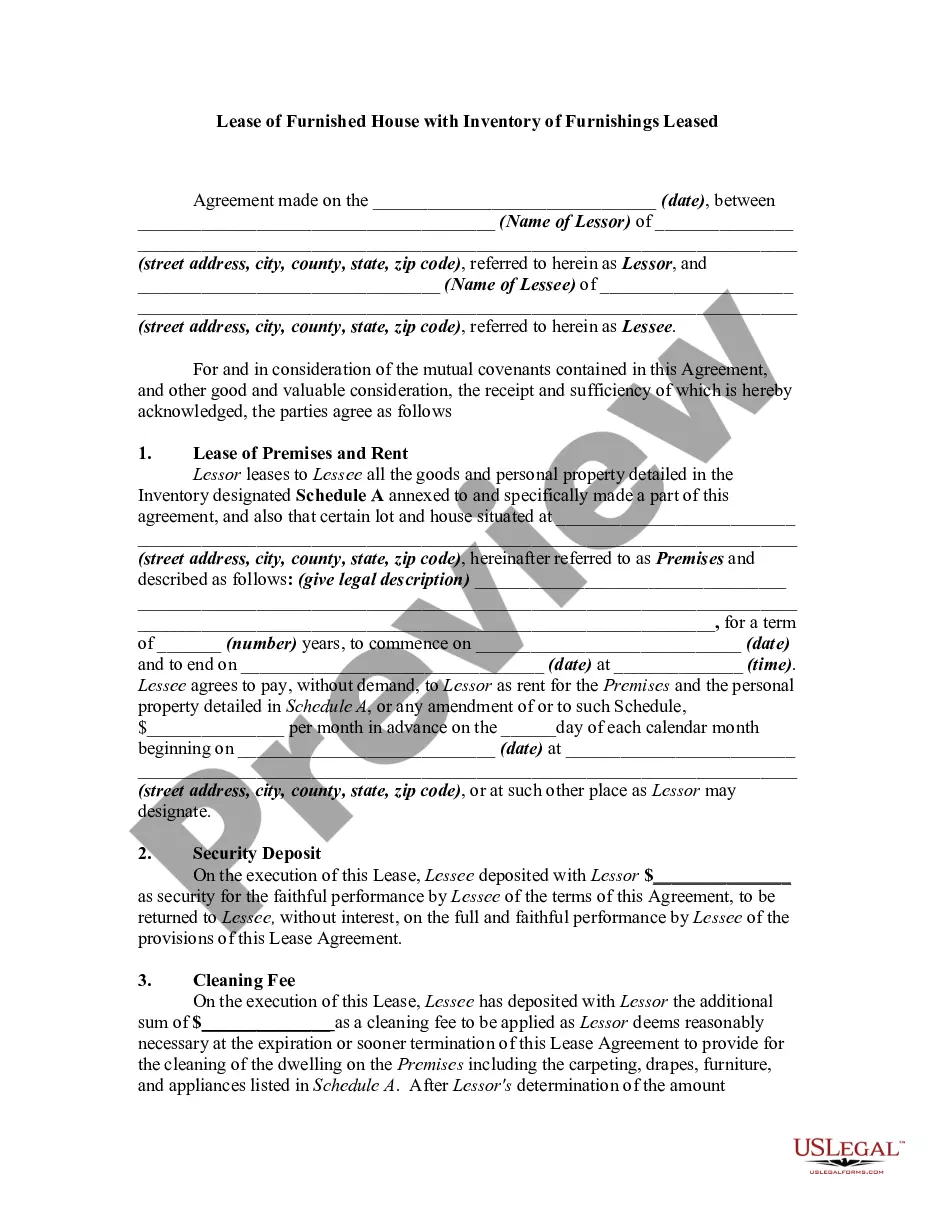
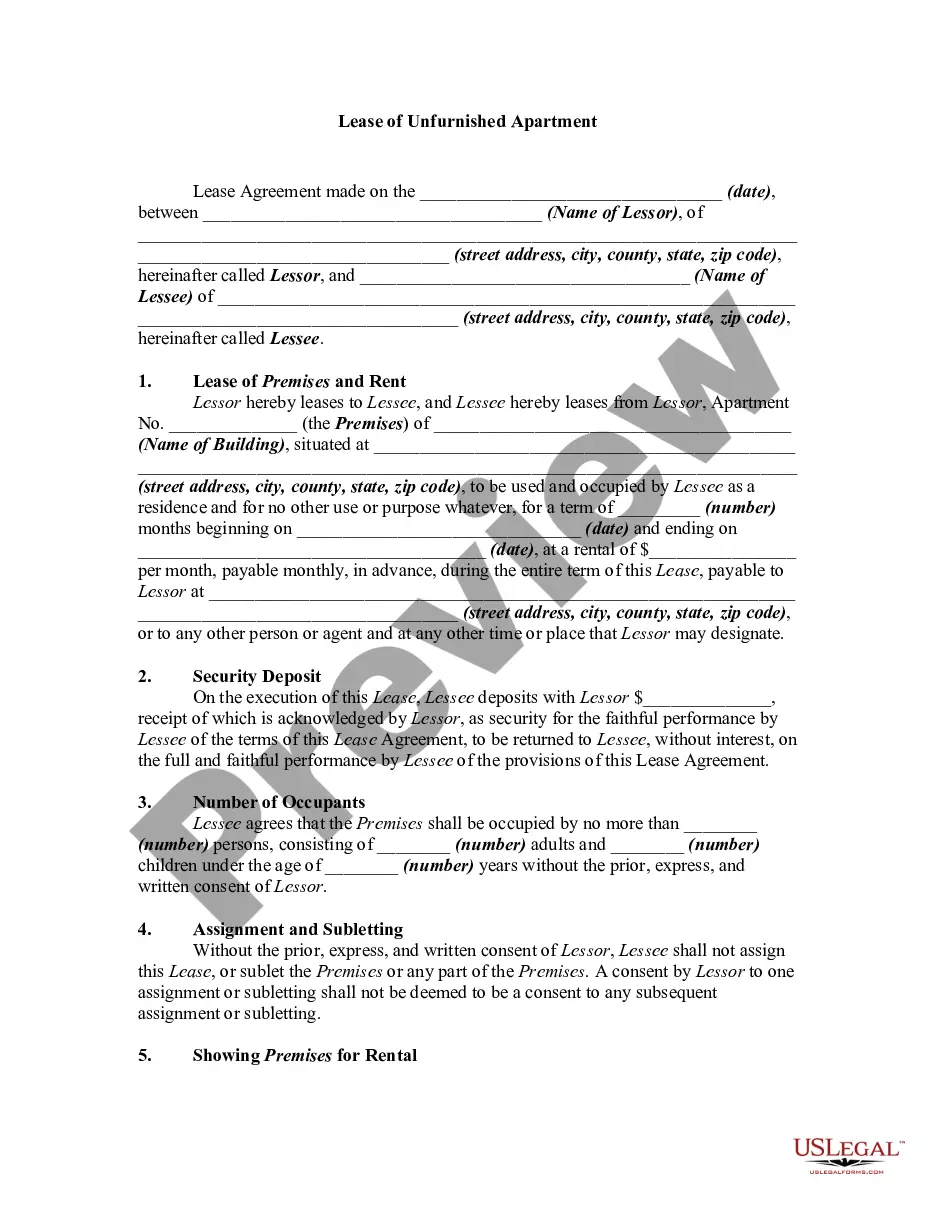
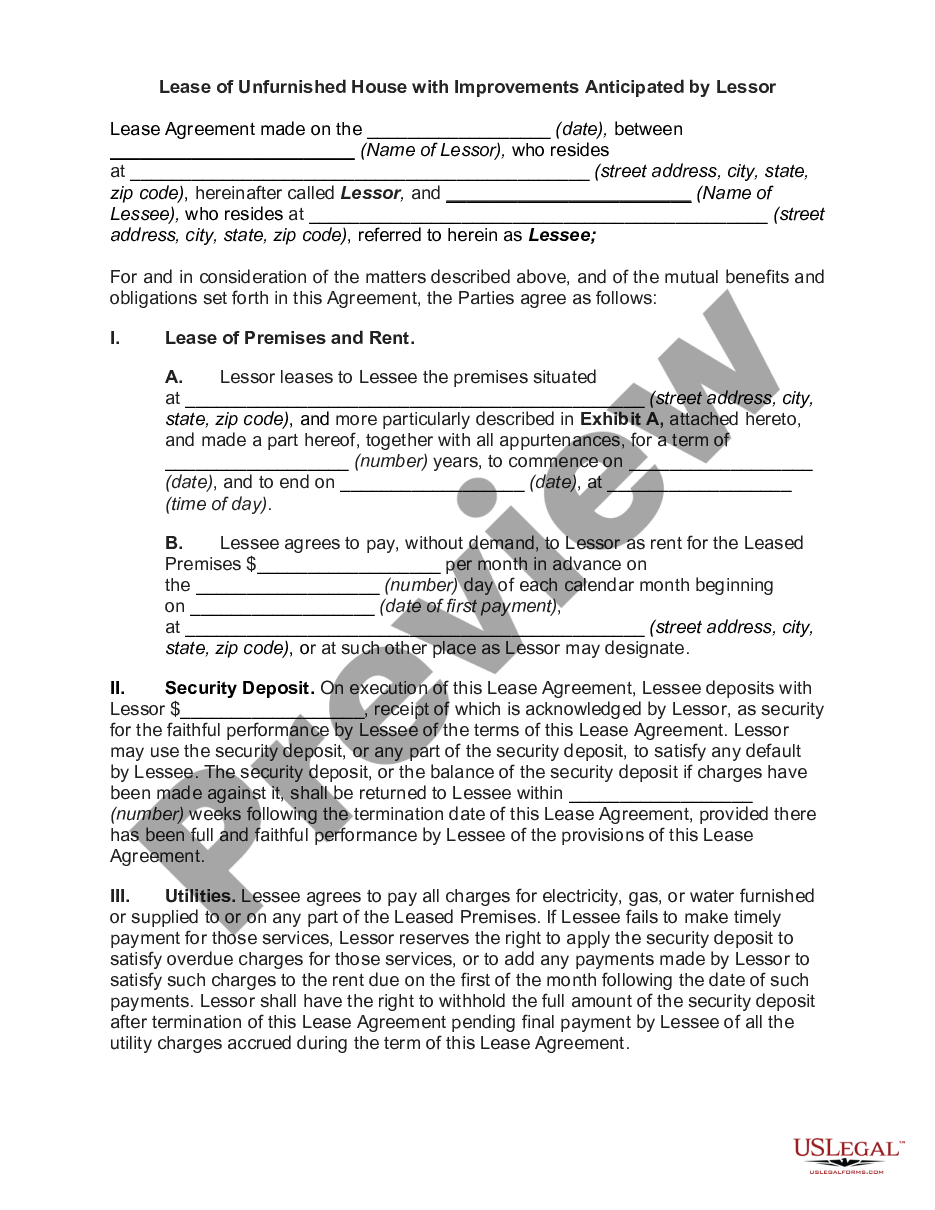
The Lease of Unfurnished House is a legal agreement between a landlord and a tenant outlining the terms for renting a residential property without furniture. This form establishes the rights and responsibilities of both parties and specifies essential details such as rent, duration, and property usage. It differs from similar forms, like furnished leases, by focusing solely on the rental of an unfurnished home.
Key parts of this document
- Identification of the landlord (Lessor) and tenant (Lessee).
- Description of the leased property, including its legal address.
- Terms of the lease duration, including start and end dates.
- Amount of rent and payment terms.
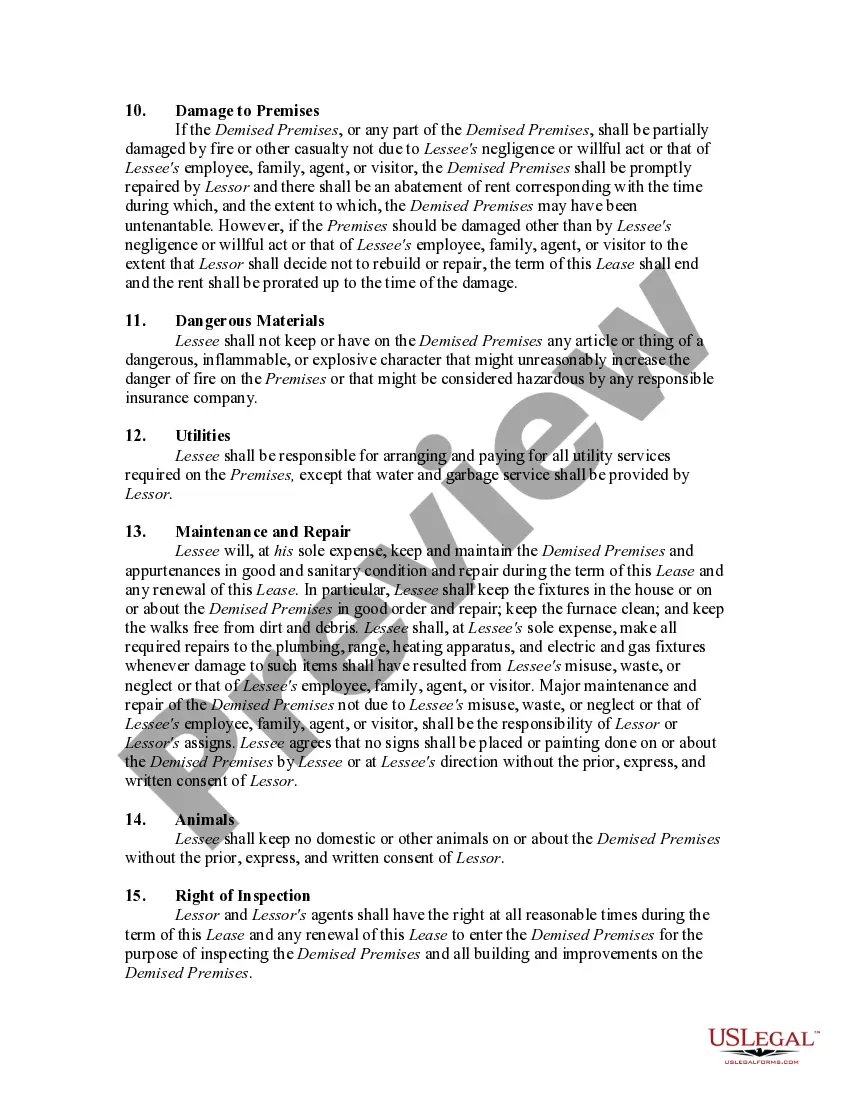
- Clauses regarding security deposits and maintenance responsibilities.
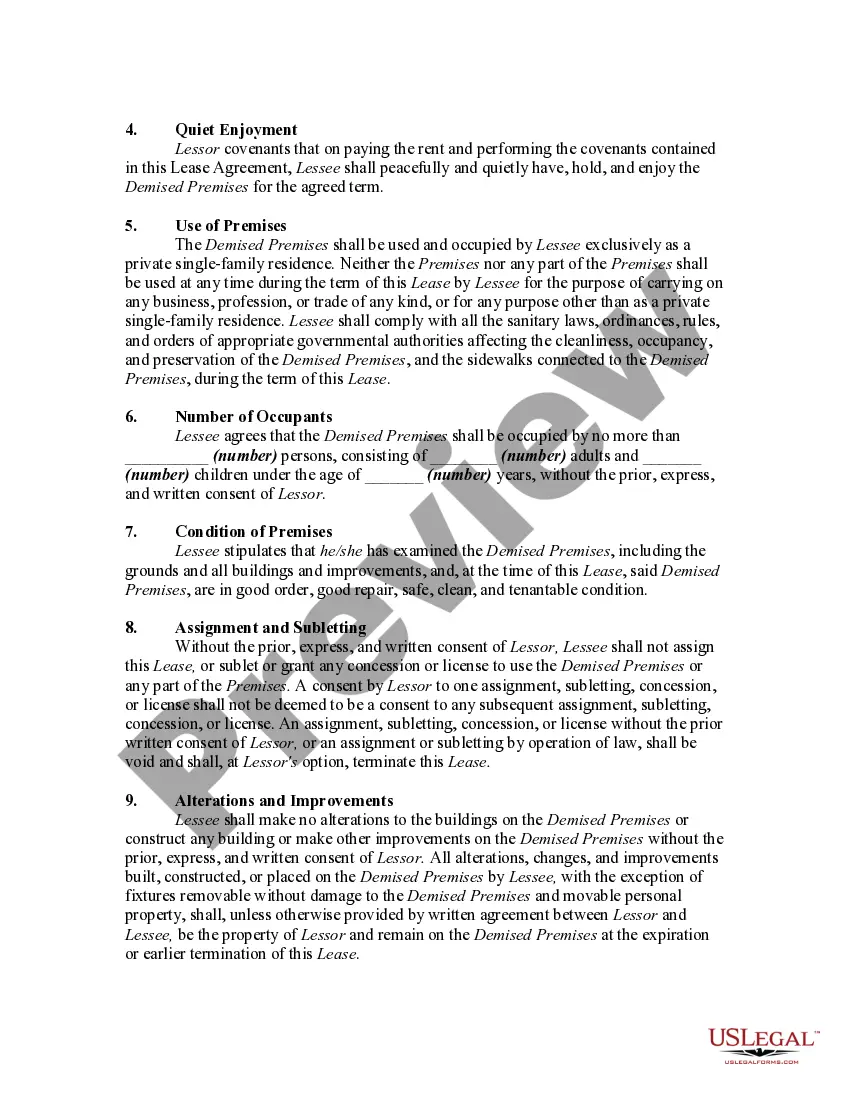
- Conditions for use of the premises and rules about alterations or subletting.
When to use this document
This form should be used when a landlord wants to lease an unfurnished house to a tenant. It's appropriate for both short- and long-term rentals. If you are a landlord looking to protect your property and ensure a clear understanding of rental terms, or if you are a tenant wanting to formalize your rental agreement, this form is essential.
Who this form is for
- Landlords seeking to lease their unfurnished properties.
- Tenants looking for a formal rental agreement for an unfurnished home.
- Real estate professionals managing rental properties.
Instructions for completing this form
- Identify the parties involved by filling out the names and addresses of the landlord and tenant.
- Specify the property address and include any necessary legal property descriptions.
- Enter the duration of the lease, including start and end dates.
- Detail the rental amount and payment due dates.
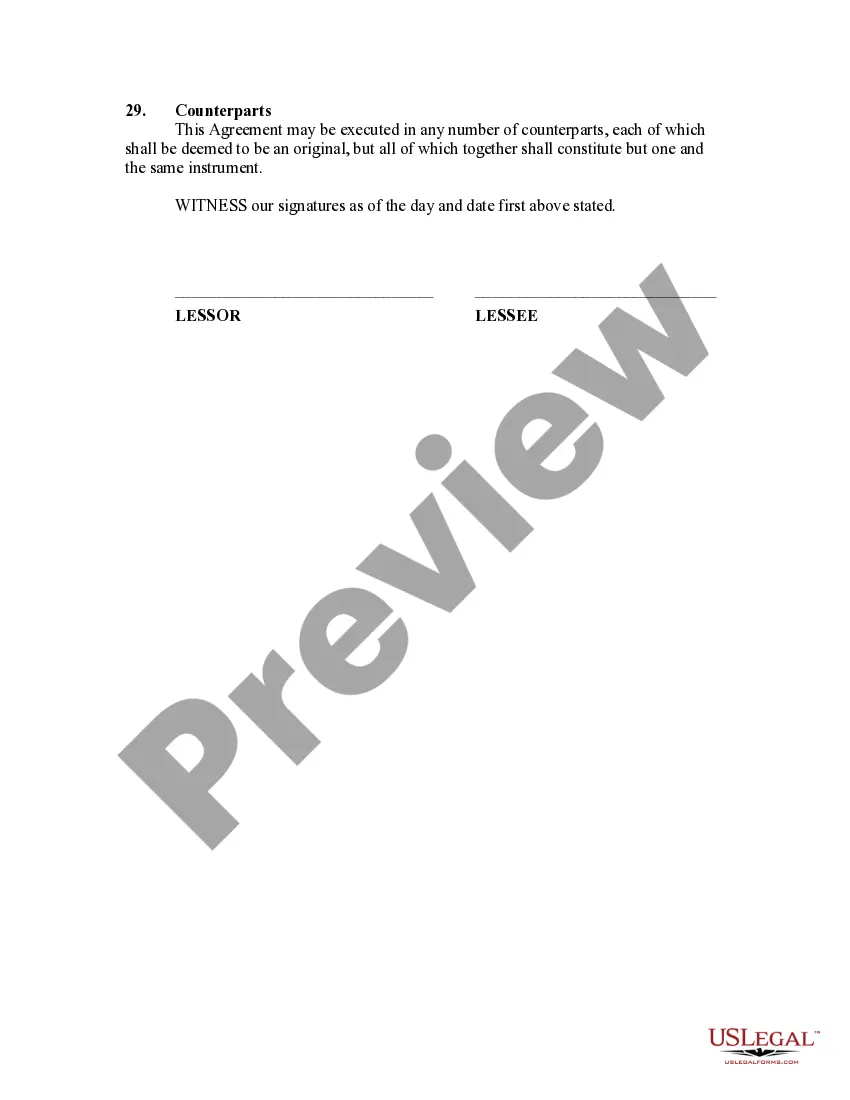
- Review and sign the agreement by both parties to formally complete the lease.
Does this form need to be notarized?
Notarization is generally not required for this form. However, certain states or situations might demand it. You can complete notarization online through US Legal Forms, powered by Notarize, using a verified video call available anytime.
Get your form ready online
Our built-in tools help you complete, sign, share, and store your documents in one place.
Make edits, fill in missing information, and update formatting in US Legal Forms—just like you would in MS Word.
Download a copy, print it, send it by email, or mail it via USPS—whatever works best for your next step.
Sign and collect signatures with our SignNow integration. Send to multiple recipients, set reminders, and more. Go Premium to unlock E-Sign.
If this form requires notarization, complete it online through a secure video call—no need to meet a notary in person or wait for an appointment.
We protect your documents and personal data by following strict security and privacy standards.

Make edits, fill in missing information, and update formatting in US Legal Forms—just like you would in MS Word.

Download a copy, print it, send it by email, or mail it via USPS—whatever works best for your next step.

Sign and collect signatures with our SignNow integration. Send to multiple recipients, set reminders, and more. Go Premium to unlock E-Sign.

If this form requires notarization, complete it online through a secure video call—no need to meet a notary in person or wait for an appointment.

We protect your documents and personal data by following strict security and privacy standards.
Avoid these common issues
- Failing to specify the exact address of the property.
- Neglecting to include the rent amount or payment schedule.
- Overlooking tenant screening and approval before signing.
- Not detailing responsibilities for maintenance and repairs.
- Exceeding occupancy limits without specifying consent terms.
Why complete this form online
- Convenience of downloading and printing the form at your convenience.
- Editability allows customization based on specific rental agreements.
- Access to templates drafted by licensed attorneys to ensure legal compliance.
- Quick retrieval and storage of electronic documents for easy management.
Looking for another form?
Form popularity
FAQ
Collect each party's information. Include specifics about your property. Consider all of the property's utilities and services. Know the terms of your lease. Set the monthly rent amount and due date. Calculate any additional fees. Determine a payment method. Consider your rights and obligations.
The Lease Must be in Writing It does not matter if the lease is handwritten or typed.
A written agreement can act as a roadmap for the landlord-tenant relationship, especially if a dispute arises. Also, real estate (land) leases for more than one year must be in writing. If a lease for over one year is not in writing, it will generally not be enforceable in court.
Unfurnished many tenants prefer unfurnished (or part furnished) as, being quite mobile, they bring their own furniture and prefer to use their own items, particularly beds. Even unfurnished generally means that carpets, curtains and some white goods (i.e. fridge, cooker) are included.
The Lease Must be in Writing It does not matter if the lease is handwritten or typed. If the lease is for more than one year, it must be in written form and contain the following terms.
As long as the contract spells out specific details and both parties have signed that they agree to the contract's terms, a handwritten contract is legally binding and enforceable in court.
The lease becomes legally binding when all parties have signed: the landlord and all tenants living in the unit who are 18 and older. If you're worried about situations where a lease needs to end early, learn about breaking a lease and grounds for eviction.
Collect each party's information. Include specifics about your property. Consider all of the property's utilities and services. Know the terms of your lease. Set the monthly rent amount and due date. Calculate any additional fees. Determine a payment method. Consider your rights and obligations.
If you're thinking of renting out your property, or you're a tenant, and the current owner doesn't already have an agreement drawn up, it's possible to create your own rental contract.