Bailment Contract between Owner of Equipment - Bailor and Prospective Purchaser - Bailee in Order to Allow Prospective Purchaser to Test Property
Overview of this form
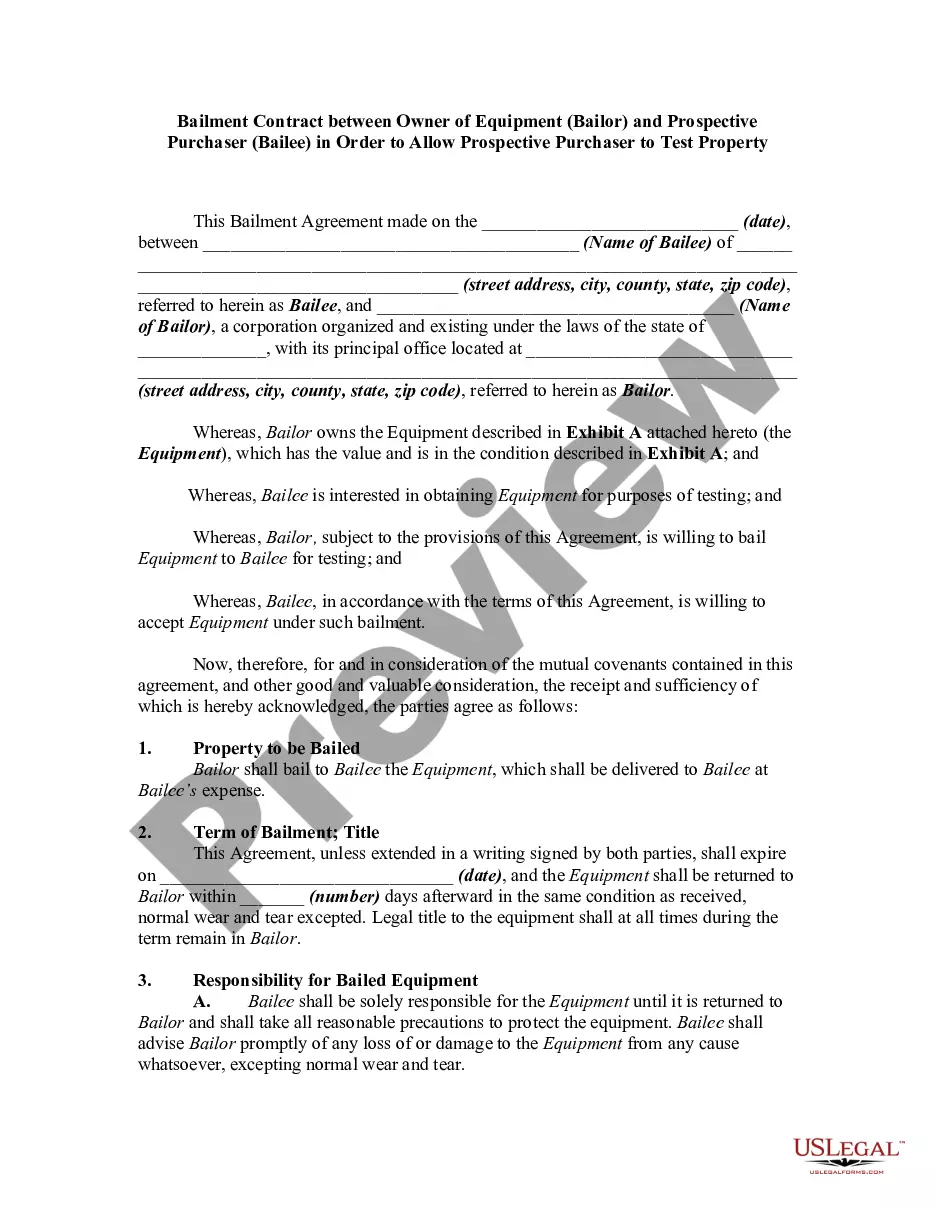
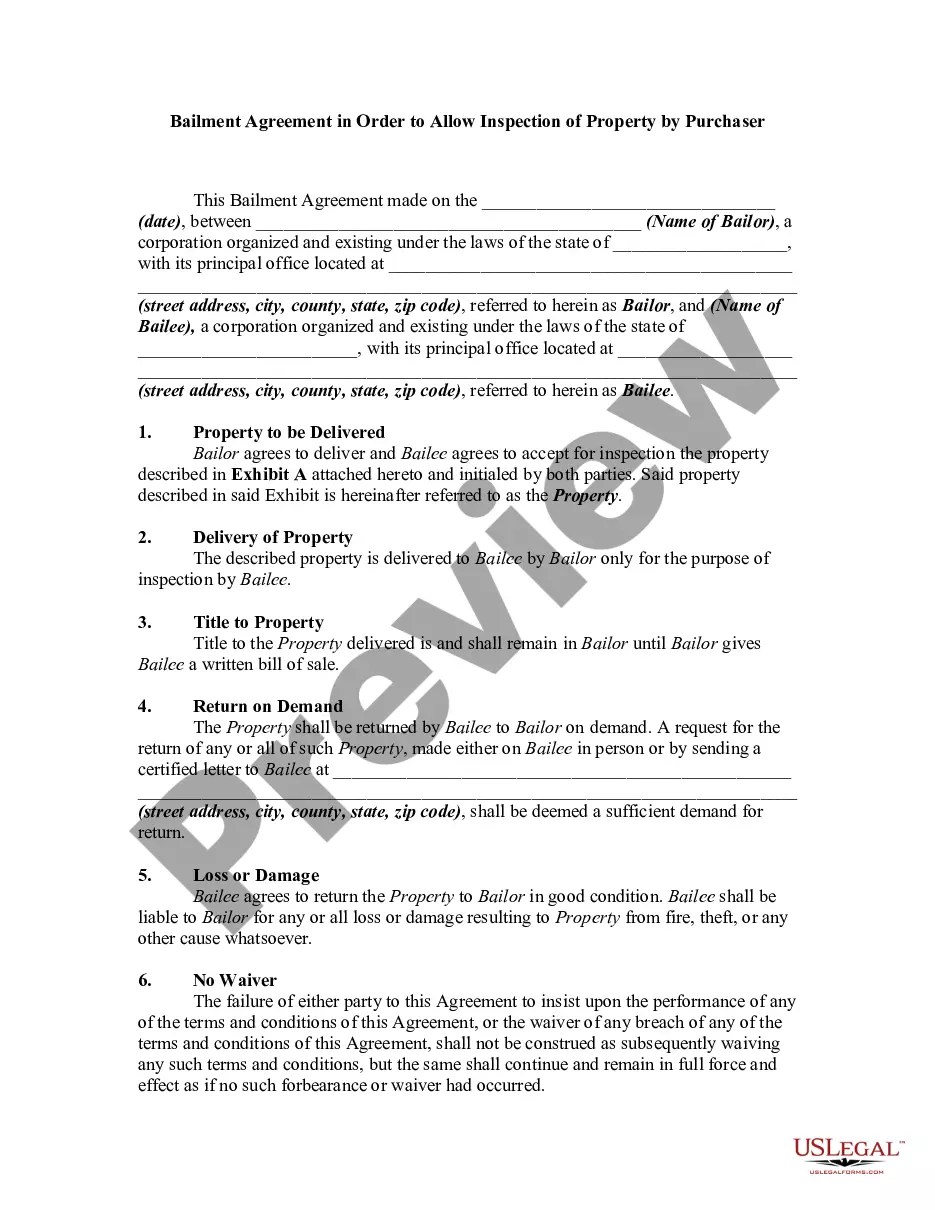
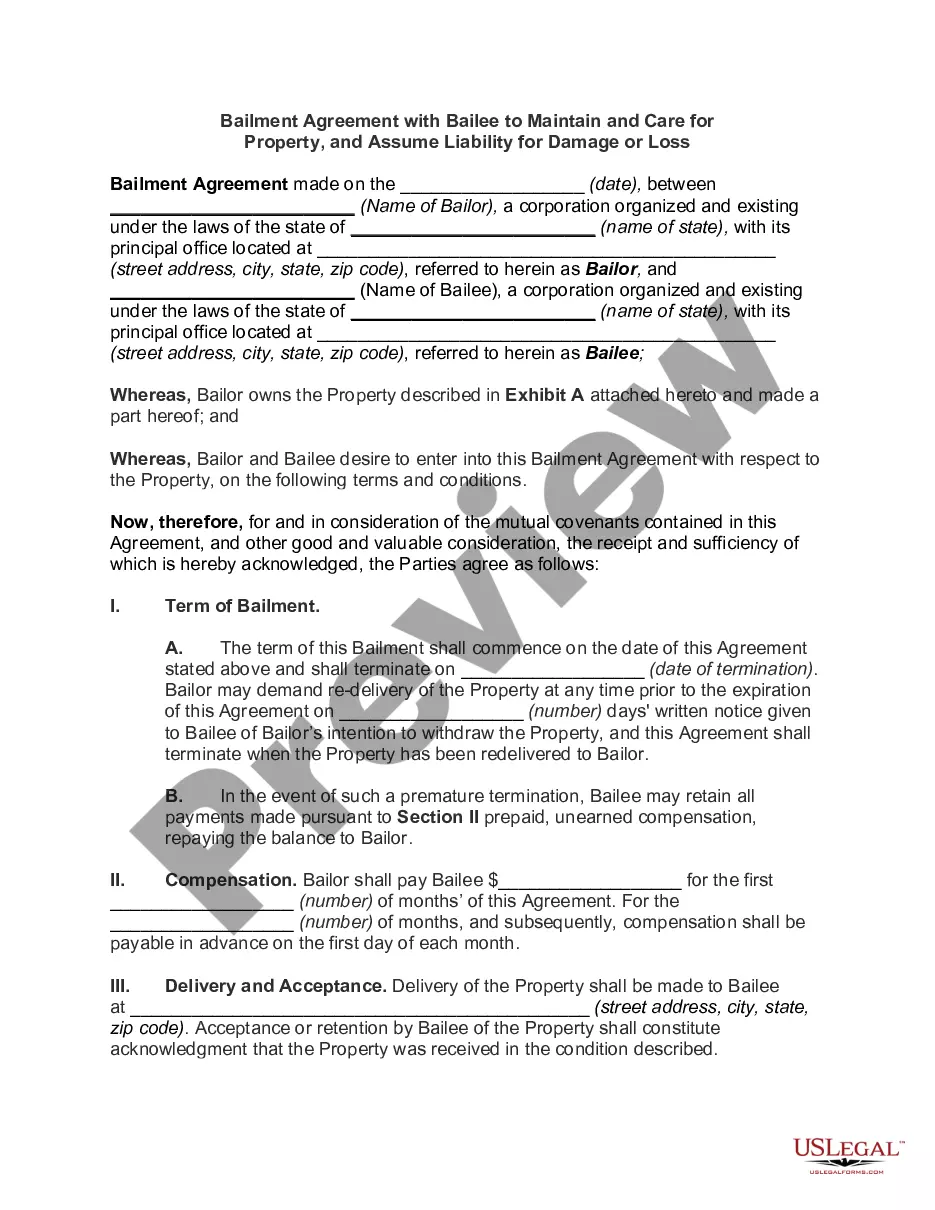
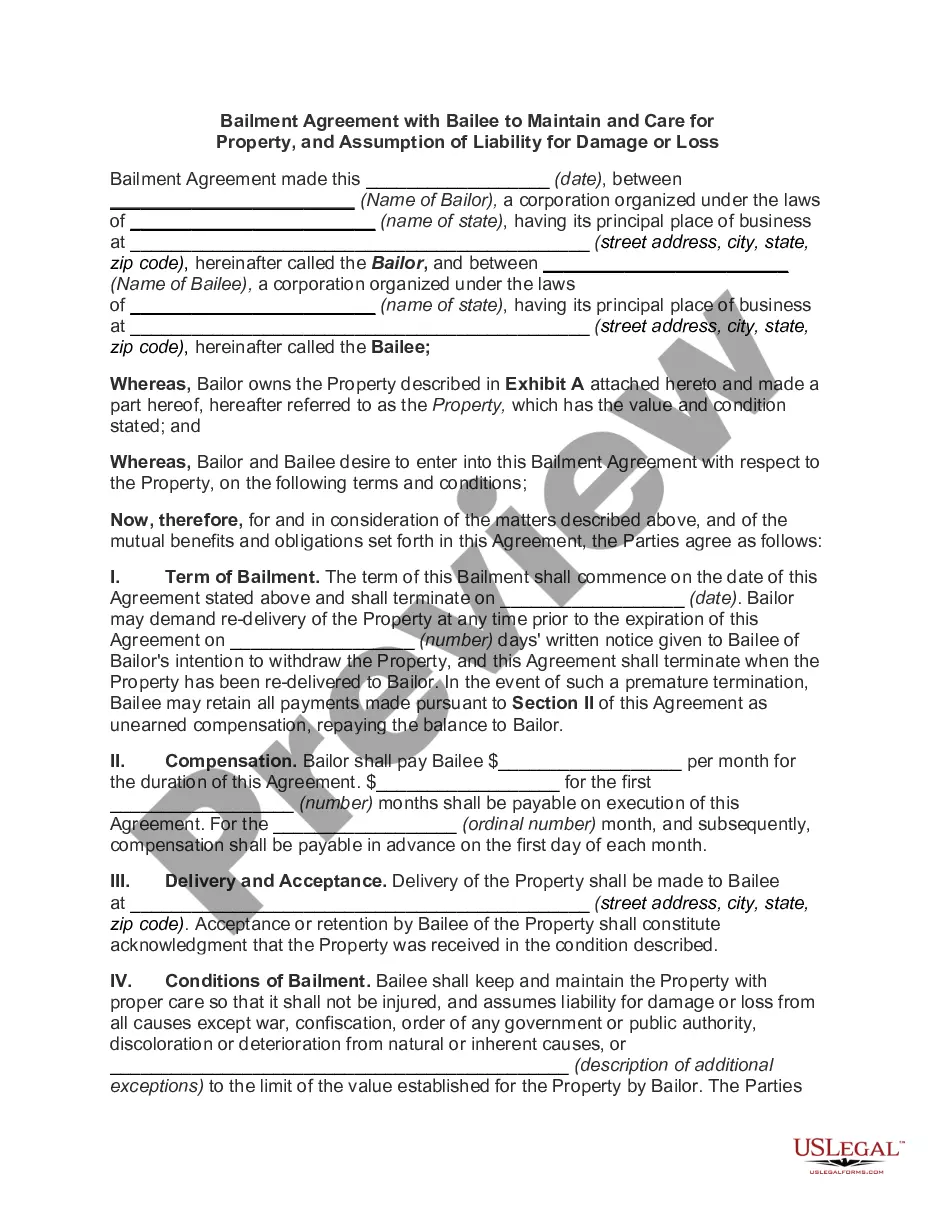
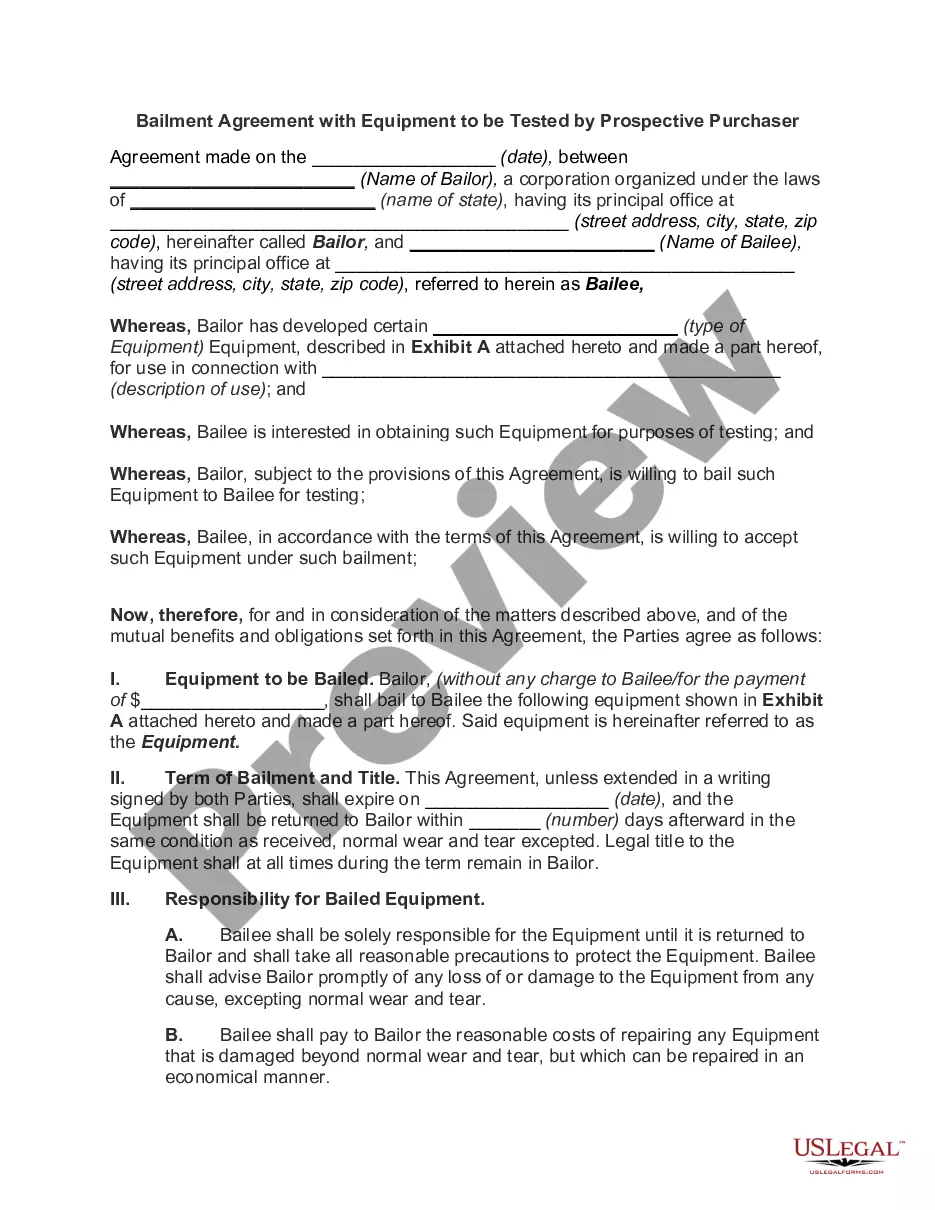
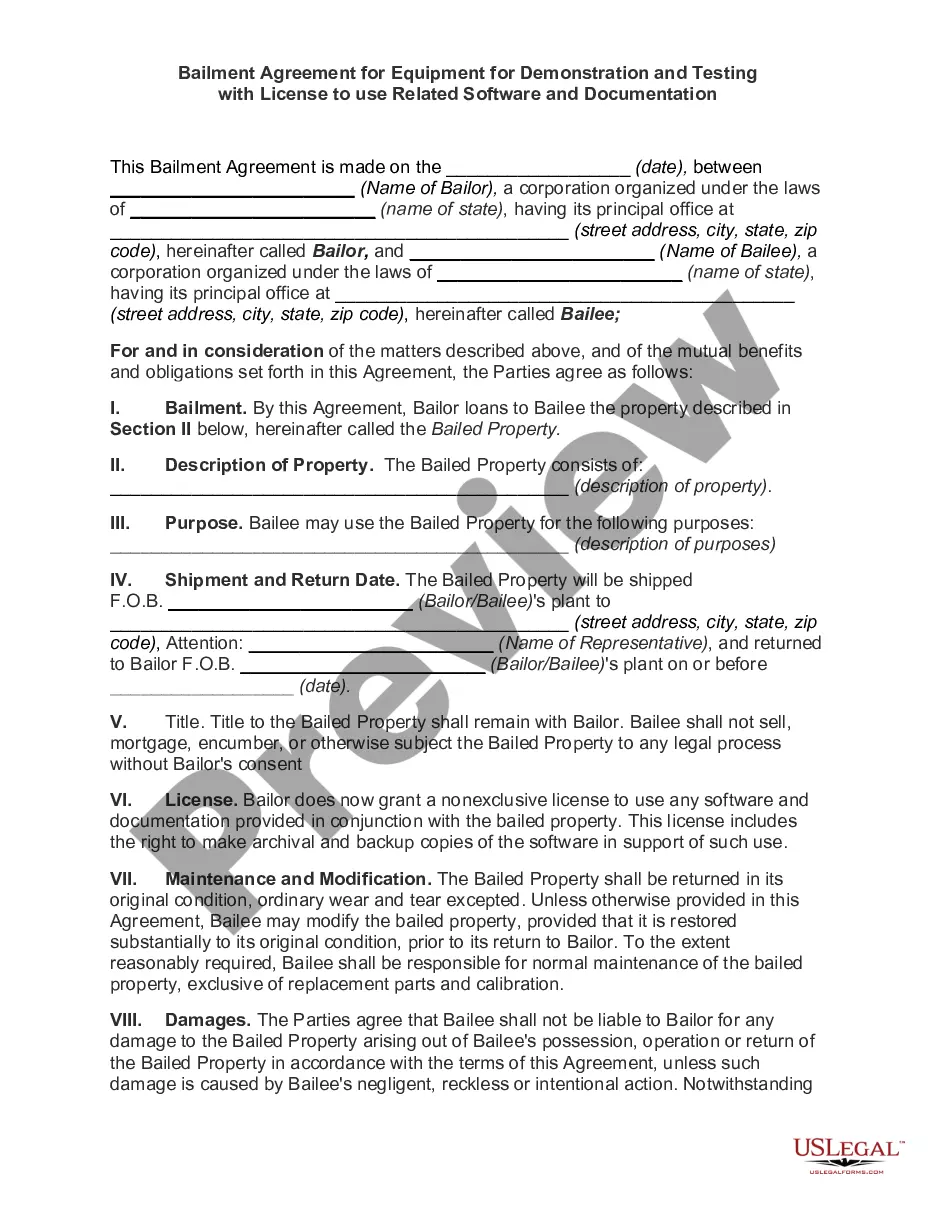
The Bailment Contract between Owner of Equipment (Bailor) and Prospective Purchaser (Bailee) is a legal agreement that governs the temporary transfer of equipment from the owner to a prospective buyer for testing purposes. Unlike a sale, this agreement ensures that ownership remains with the Bailor while the Bailee is responsible for the equipment's safekeeping during the testing period. This form is essential for clearly defining the responsibilities and liabilities of both parties involved in the bailment process.
Key parts of this document
- Date of the agreement.
- Identification of the Bailor and Bailee, including their addresses.
- Description of the equipment to be bailed, detailed in an attached exhibit.
- Term of the bailment and conditions for returning the equipment.
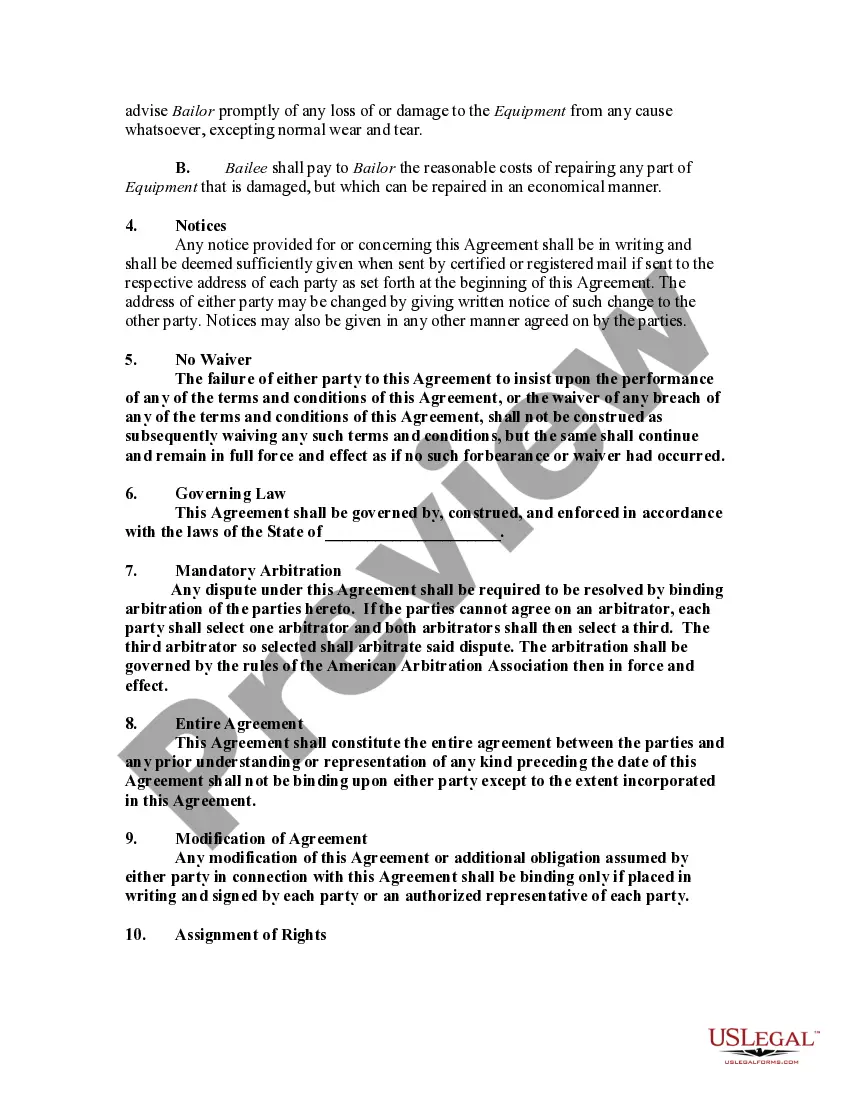
- Responsibilities of the Bailee for maintaining and returning the equipment.
- Governing law and dispute resolution through mandatory arbitration.
When this form is needed
This bailment contract should be used when an equipment owner wants to allow a potential buyer to test the equipment before purchase. It protects the interests of both parties by clearly outlining the terms of the bailment, including how the equipment should be maintained and the obligation to return it after testing is complete.
Who this form is for
- Equipment owners looking to provide their equipment for testing.
- Potential buyers who want to ensure proper terms are in place before testing equipment.
- Bailors and bailees involved in industrial or commercial transactions.
How to complete this form
- Identify and enter the full names and addresses of both the Bailor and Bailee.
- Provide the date on which the agreement is made.
- Detail the equipment being bailed in the attached Exhibit A.
- Specify the term of bailment and the return conditions of the equipment.
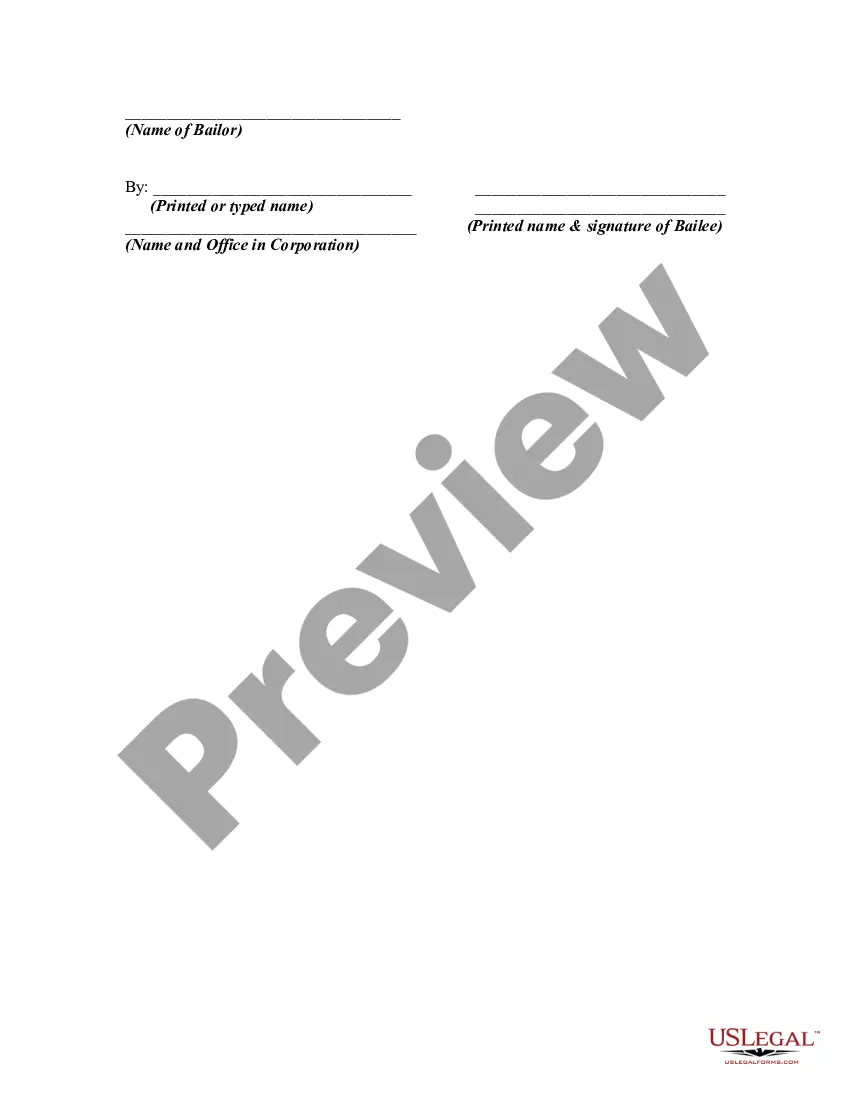
- Have both parties sign the agreement to execute the terms legally.
Notarization guidance
Notarization is not commonly needed for this form. However, certain documents or local rules may make it necessary. Our notarization service, powered by Notarize, allows you to finalize it securely online anytime, day or night.
Get your form ready online
Our built-in tools help you complete, sign, share, and store your documents in one place.
Make edits, fill in missing information, and update formatting in US Legal Forms—just like you would in MS Word.
Download a copy, print it, send it by email, or mail it via USPS—whatever works best for your next step.
Sign and collect signatures with our SignNow integration. Send to multiple recipients, set reminders, and more. Go Premium to unlock E-Sign.
If this form requires notarization, complete it online through a secure video call—no need to meet a notary in person or wait for an appointment.
We protect your documents and personal data by following strict security and privacy standards.

Make edits, fill in missing information, and update formatting in US Legal Forms—just like you would in MS Word.

Download a copy, print it, send it by email, or mail it via USPS—whatever works best for your next step.

Sign and collect signatures with our SignNow integration. Send to multiple recipients, set reminders, and more. Go Premium to unlock E-Sign.

If this form requires notarization, complete it online through a secure video call—no need to meet a notary in person or wait for an appointment.

We protect your documents and personal data by following strict security and privacy standards.
Mistakes to watch out for
- Failing to specify the condition and details of the equipment.
- Omitting the term of bailment before the return deadline.
- Not properly executing the signature lines for both parties.
Benefits of completing this form online
- Convenient access to a professionally drafted bailment contract.
- Easy download and editing to suit specific needs.
- Ensures compliance with legal standards to protect both parties.
Legal use & context
- Establishes a formal relationship between the Bailor and Bailee.
- Holds the Bailee accountable for the care of the equipment.
- Provides a legal framework for resolving disputes between parties.
Summary of main points
- The Bailment Contract outlines terms for temporarily transferring equipment ownership for testing.
- Specifies the duties of the Bailee in maintaining and returning the equipment.
- Essential for both equipment owners and prospective buyers to protect their interests.
Looking for another form?
Form popularity
FAQ
A 'bailment' is the delivery of goods by one person to another for some purpose, upon a contract that they shall, when the purpose is accomplished, be returned or otherwise disposed of according to the directions of the person delivering them. The person delivering the goods is called the 'bailor'.
There are three types of bailments: (1) for the benefit of the bailor and bailee; (2) for the sole benefit of the bailor; and (3) for the sole benefit of the bailee. A bailment for the mutual benefit of the parties is created when there is an exchange of performances between the parties.
In general, the purpose of a bailment agreement is to establish the relationship and responsibilities of the parties, both the person temporarily handing over possession of his property and the person receiving it.
A bailment is created when a parking garage attendant, the bailee, is given the keys to a motor vehicle by its owner, the bailor. The owner, in addition to renting the space, has transferred possession and control of the vehicle by relinquishing its keys to the attendant.
In general, Bailment means the delivery of goods of a person to whom permission is given to have the goods of another person. The contracts of bailment come under a special class of contract and are dealt under Sections 148 to 181 of the Indian Contract Act, 1872.
Bailment represents a legal relationship wherein the physical possession of a chattel or personal property is transferred from one individual to another individual who will subsequently get the property's possession but not the entire ownership.
A Bailment that Benefits Both the Bailor and Bailee: An example of this would be parking your car in a paid parking lot. You would get the benefit of parking your car and the owner of the lot would get the benefit of the fee that is paid. A bailee can face liability for damaging the bailed items if they were negligent.
Gratuitous Bailment. Non-Gratuitous Bailment: Bailment for the Benefit of the Bailor. Bailment for the exclusive Benefit of the Bailee. Bailment for the Benefit of the Bailor and Bailee.