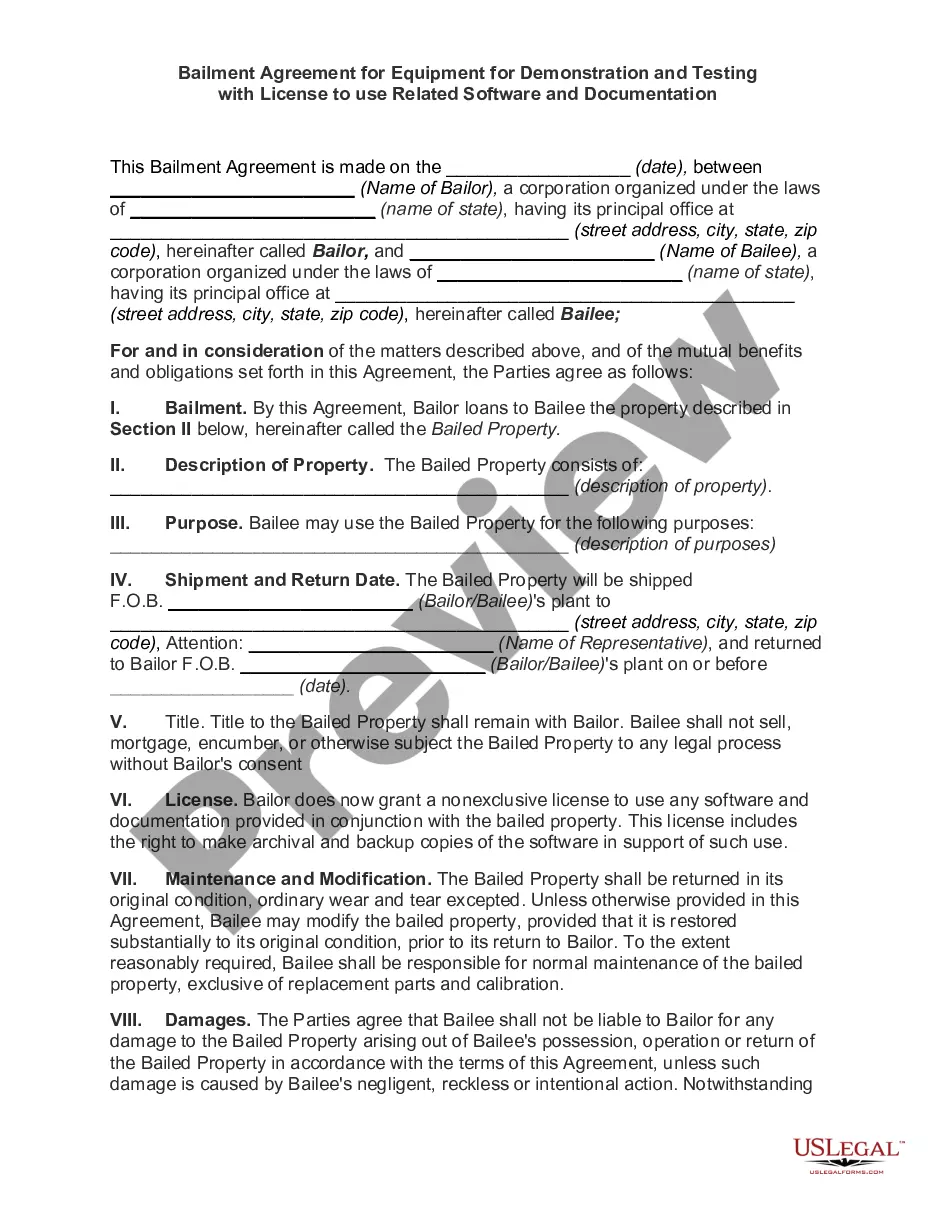
Bailment Agreement for Equipment for Demonstration and Testing with License to use Related Software and Documentation
Understanding this form
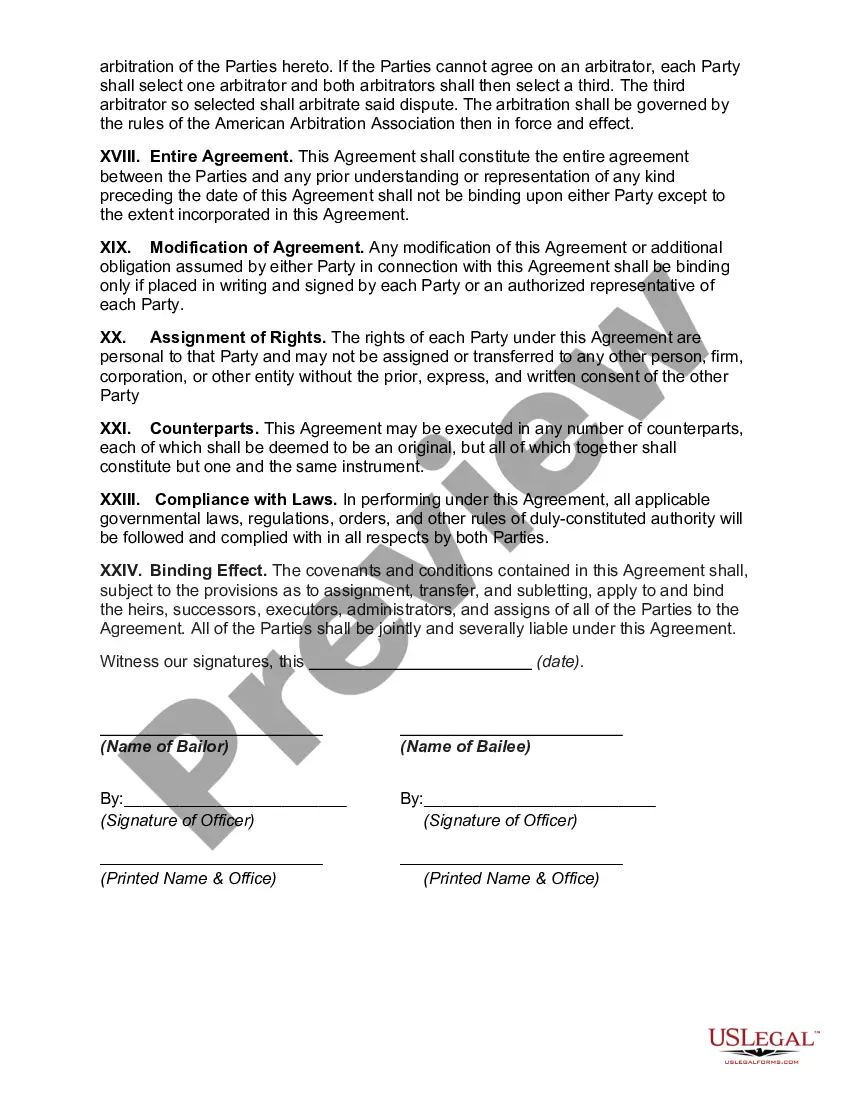
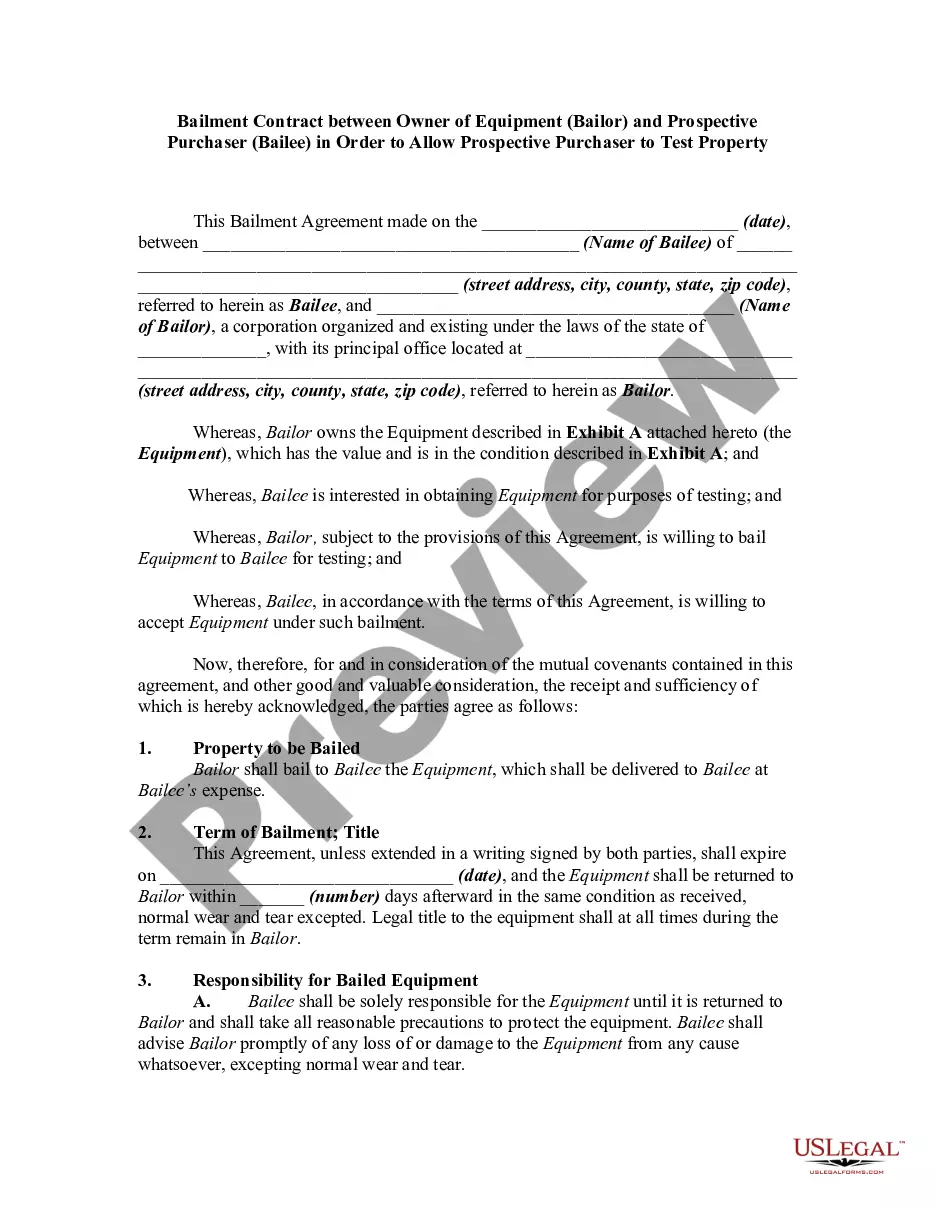
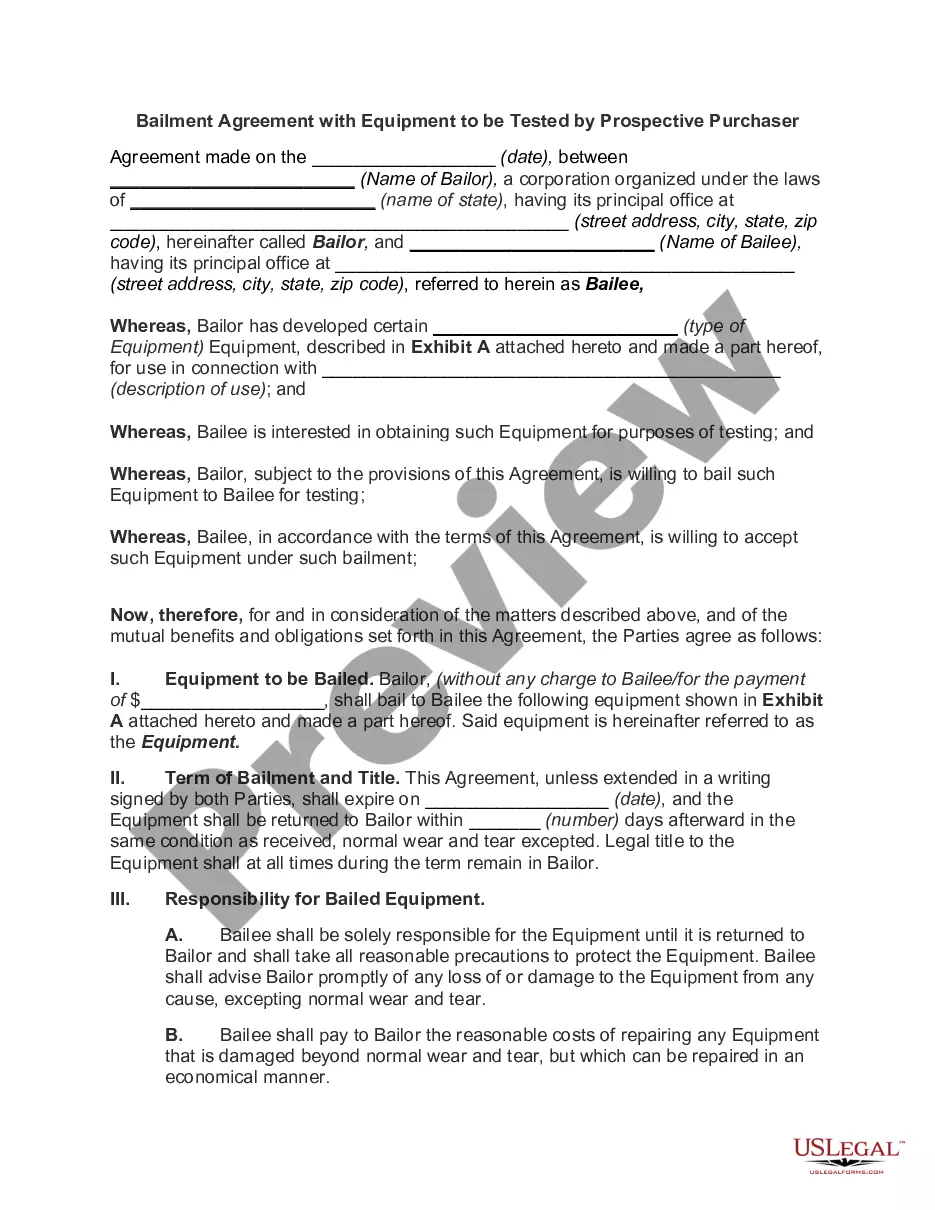
The Bailment Agreement for Equipment for Demonstration and Testing with License to Use Related Software and Documentation is a legal document that formalizes the temporary transfer of possession of equipment from one party, known as the bailor, to another, known as the bailee. This agreement outlines the rights and responsibilities of both parties regarding the use, maintenance, and return of the equipment, as well as any associated software and documentation. Unlike general lease agreements, a bailment specifically addresses the non-ownership transfer of property for a designated purpose, often in a context where the equipment is tested or demonstrated.
Form components explained
- Bailment clause outlining the agreement to loan the property.
- Description of the bailed property including the type and condition of equipment.
- Purpose of use specifying how the bailee may use the equipment.
- Shipment and return details, including the timeline and location for returning the property.
- License provision granting rights to use related software and documentation.
- Maintenance responsibilities and conditions upon returning the property.
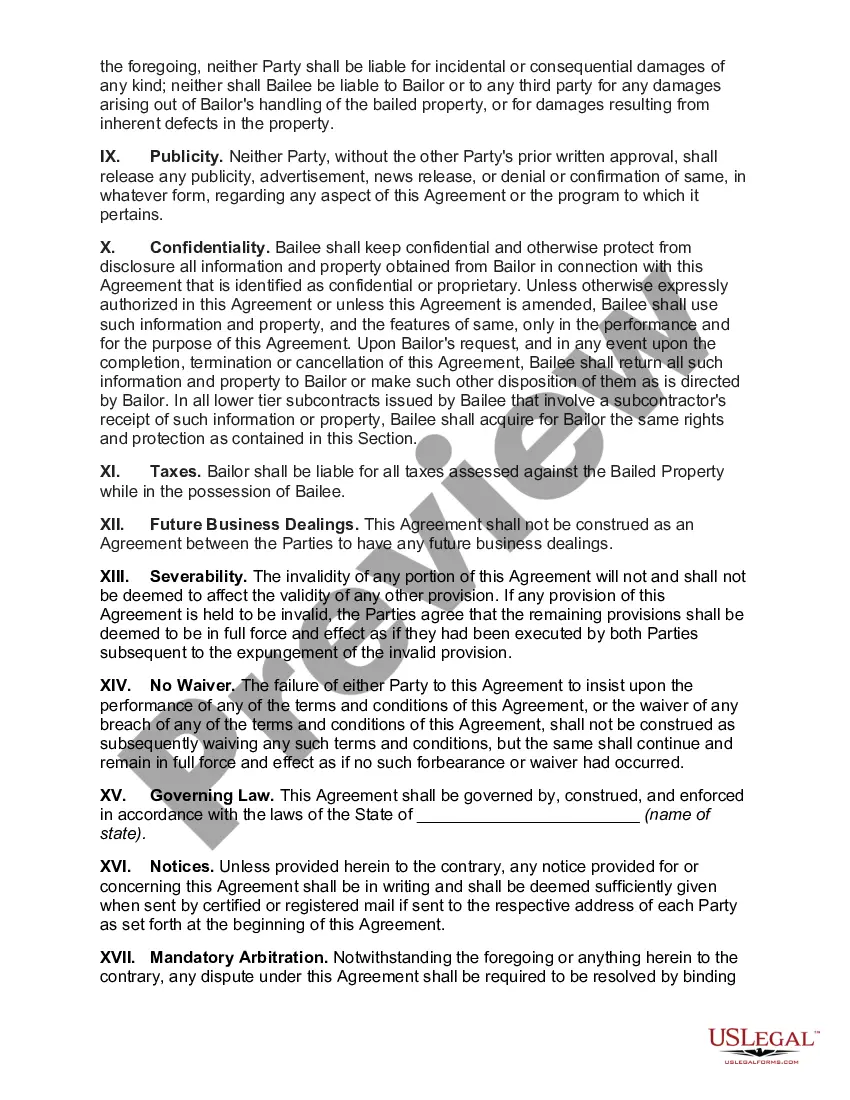
- Confidentiality clause regarding the protection of proprietary information.
- Governing law stipulating jurisdiction for any disputes.
When to use this form
This Bailment Agreement is useful in scenarios where a business or individual wants to provide equipment for testing, demonstration, or evaluation without transferring ownership. It is commonly used in industries such as technology, manufacturing, and research, where companies may need to share equipment for limited periods, ensuring clarity on usage rights, responsibility for maintenance, and protection of proprietary software.
Who can use this document
Those who may benefit from this agreement include:
- Businesses providing equipment for testing or demonstration purposes.
- Companies requesting equipment from another entity for evaluation or trial.
- Organizations needing to document the terms of a temporary equipment loan.
- Parties involved in transactions where software or related documentation is included with physical equipment.
How to prepare this document
- Identify the parties: Enter the names and addresses of the bailor and bailee at the start of the agreement.
- Describe the property: Clearly indicate the type and any specifications of the equipment being bailed.
- Specify the purpose: Outline how the bailee intends to use the equipment.
- Detail shipping information: Provide shipping instructions and the return date for the equipment.
- Include signatures: Ensure that authorized representatives from both parties sign the agreement to validate it.
Is notarization required?
This form does not typically require notarization unless specified by local law. However, it's always advisable to check with legal counsel or local legislation to confirm compliance.
Get your form ready online
Our built-in tools help you complete, sign, share, and store your documents in one place.
Make edits, fill in missing information, and update formatting in US Legal Forms—just like you would in MS Word.
Download a copy, print it, send it by email, or mail it via USPS—whatever works best for your next step.
Sign and collect signatures with our SignNow integration. Send to multiple recipients, set reminders, and more. Go Premium to unlock E-Sign.
If this form requires notarization, complete it online through a secure video call—no need to meet a notary in person or wait for an appointment.
We protect your documents and personal data by following strict security and privacy standards.

Make edits, fill in missing information, and update formatting in US Legal Forms—just like you would in MS Word.

Download a copy, print it, send it by email, or mail it via USPS—whatever works best for your next step.

Sign and collect signatures with our SignNow integration. Send to multiple recipients, set reminders, and more. Go Premium to unlock E-Sign.

If this form requires notarization, complete it online through a secure video call—no need to meet a notary in person or wait for an appointment.

We protect your documents and personal data by following strict security and privacy standards.
Typical mistakes to avoid
- Failing to specify the intended purpose for which the equipment will be used.
- Not providing adequate descriptions of the equipment being loaned.
- Omitting the return date or shipping instructions, leading to potential disputes.
- Neglecting to include signatures from both parties, making the document unenforceable.
Why use this form online
- Convenience: Access and fill out the form anytime and from anywhere.
- Editability: Easily make changes to the form as needed before finalizing.
- Reliability: Templates are created by licensed attorneys, ensuring they meet legal standards.
- Time-saving: Download and print the form immediately after completion.
Summary of main points
- The Bailment Agreement protects both parties by clearly outlining the terms of equipment usage and responsibilities.
- It is critical for ensuring that both parties understand their rights, particularly regarding the software and documentation associated with the equipment.
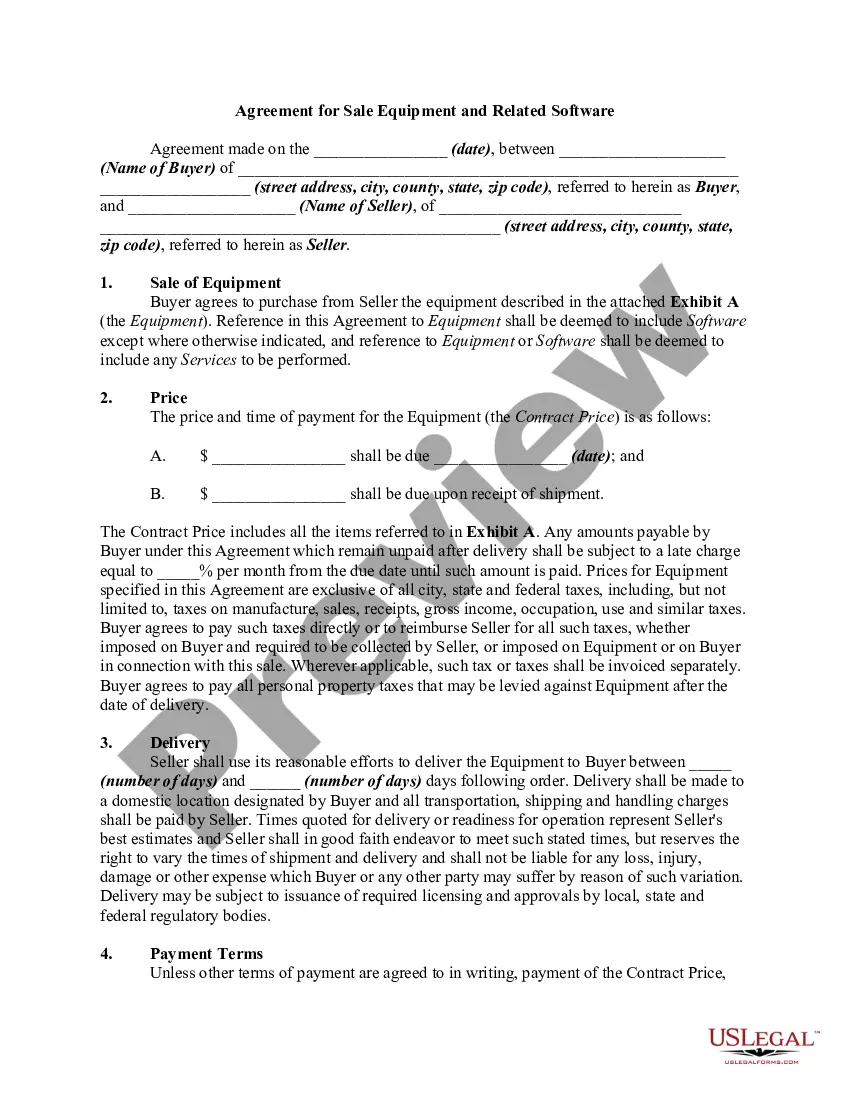
- Using this form can prevent disputes by establishing documented expectations around the temporary transfer of equipment.
Looking for another form?
Form popularity
FAQ
There are three types of bailments: those that benefit both parties, those that benefit only the bailor, and those that benefit only the bailee. Although the burden depends on the type of bailment, the bailee must always treat the bailor's property with a reasonable amount of care.
Definition of Bailment In a bailment agreement, the bailee voluntarily assumes possession of goods from the bailor for a period with an obligation to return the personal property. The bailee attains control of the assets for that term but is then required to return the goods to the owner afterwards.
The essential elements such as offer, consideration, contractual capacity, intention, etc. must be a part of the bailment. Without the presence of these essential elements , the contract cannot be enforceable in a court of law. However, out of these, a contract of bailment can be valid without consideration.
The most common example is availing locker services from banks, i.e., banks are the bailee, and the person keeping his belongings in such lockers is the bailor. They both agreed upon some consideration, i.e., bailor uses the locker, and in turn, bailee charges the consideration for providing such services.
There are three types of bailments: those that benefit both parties, those that benefit only the bailor, and those that benefit only the bailee.
In the contract of bailment, the ownership of the goods remains with the Bailor and only the possession transfers to the bailee. Such delivery of goods may be actual or constructive. For example, when A hands over the keys of a godown to B, it amounts to the delivery of goods in the godown.
A "bailment" is the delivery of goods by one person to another for some purpose, upon a contract that they shall, when the purpose is accomplished, be returned or otherwise disposed of ing to the directions of the person delivering them. The person delivering the goods is called the "bailor".
Gratuitous bailment is a type of bailment in which the bailee receives no compensation. For example, borrowing a friend's car. A gratuitous bailee is liable for loss of the property only if the loss is caused by the bailee's gross negligence.