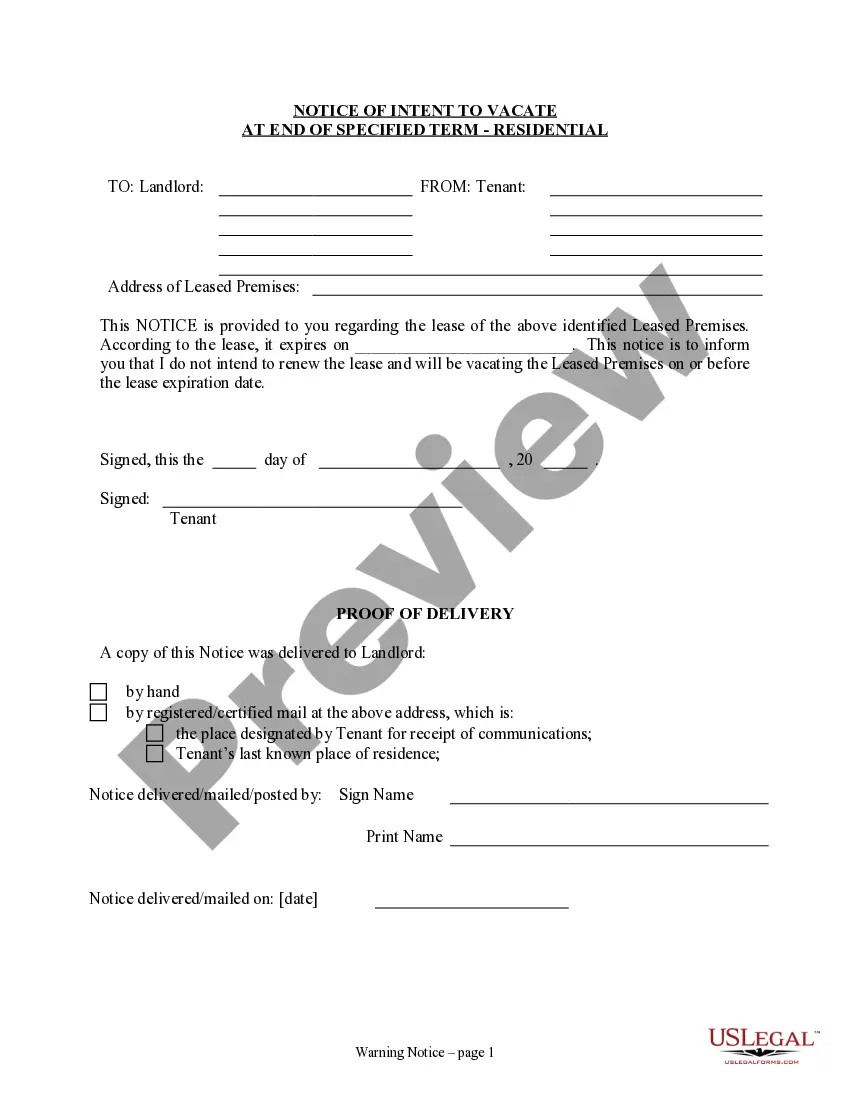
Louisiana Notice of Intent to Vacate at End of Specified Lease Term from Tenant to Landlord for Residential Property
Description
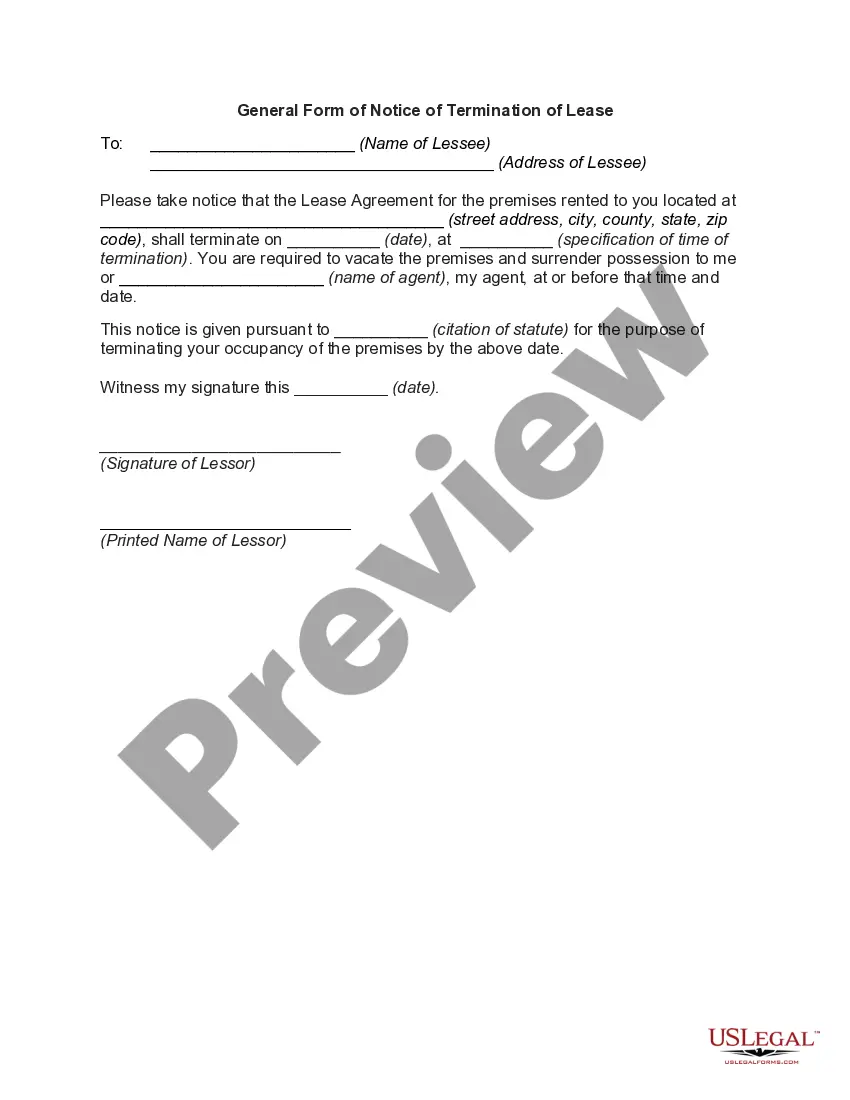
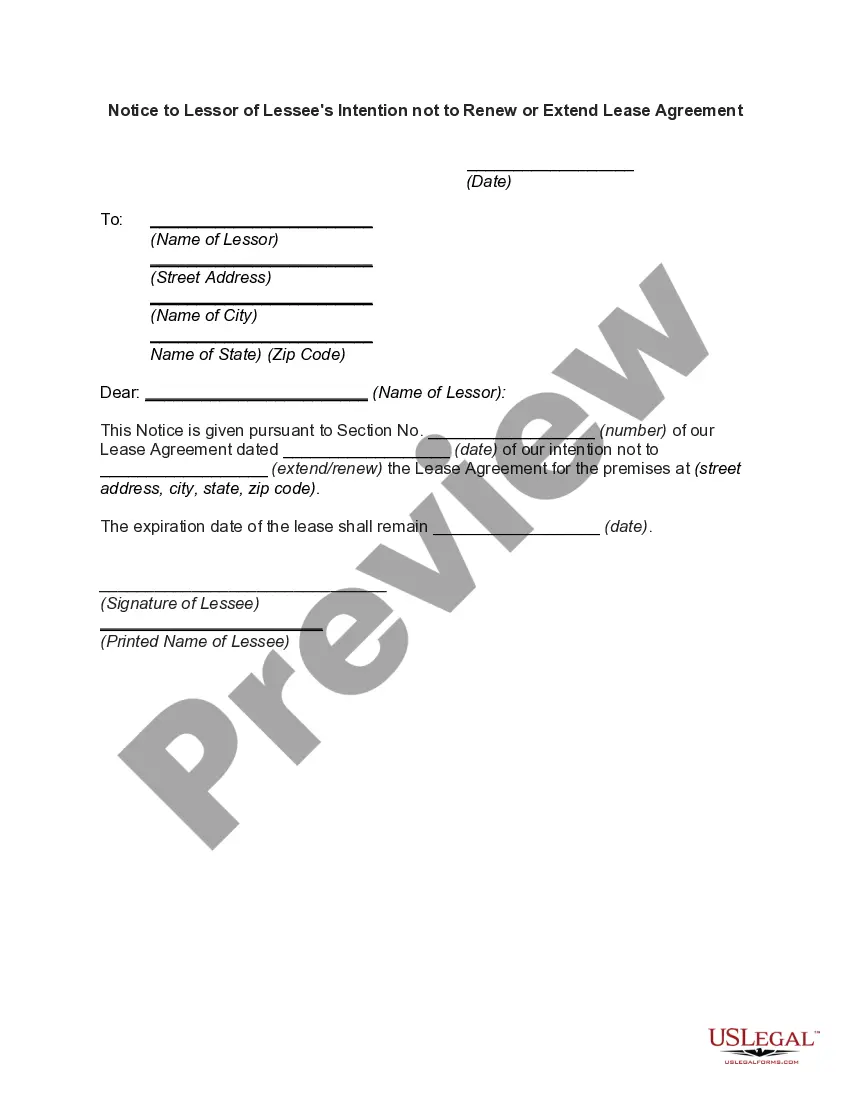
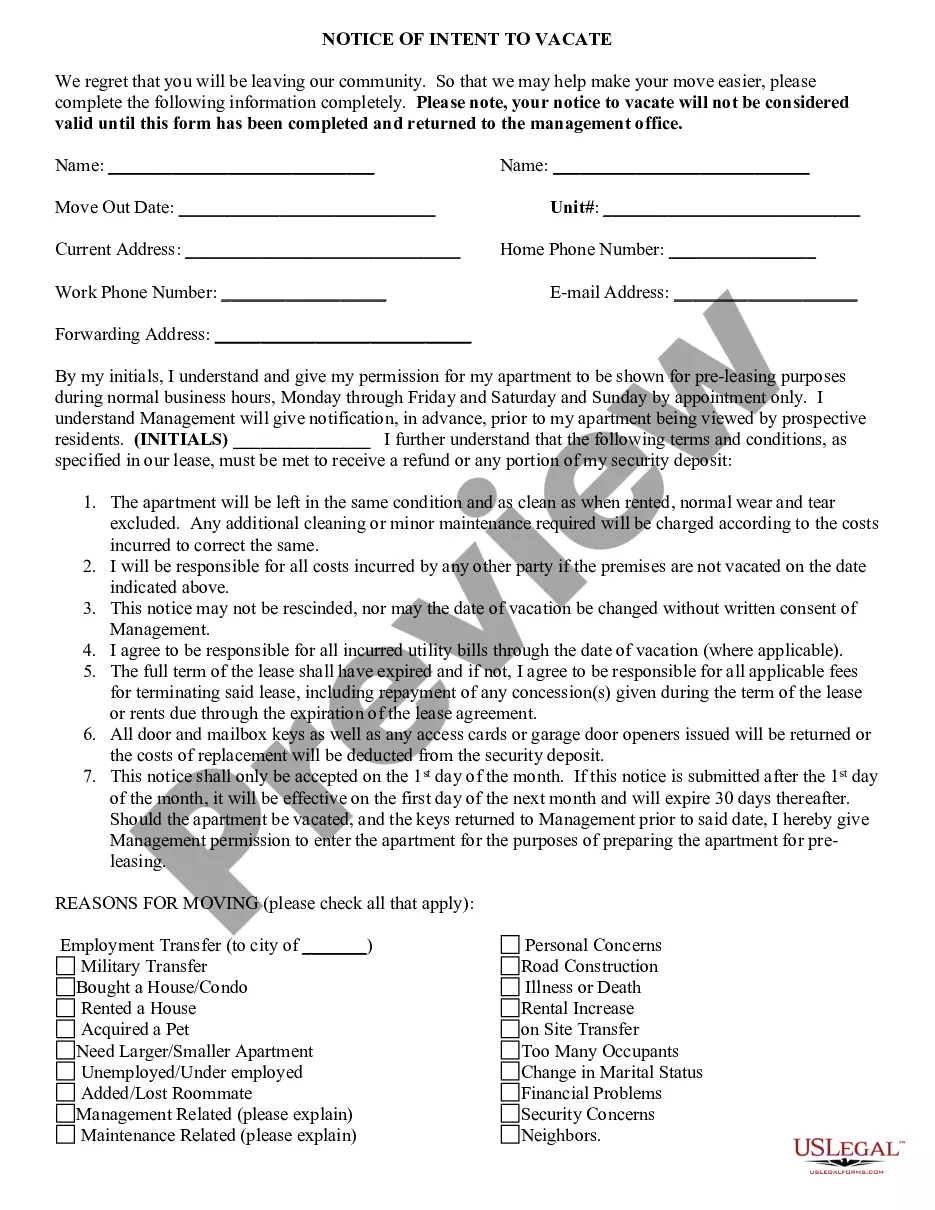
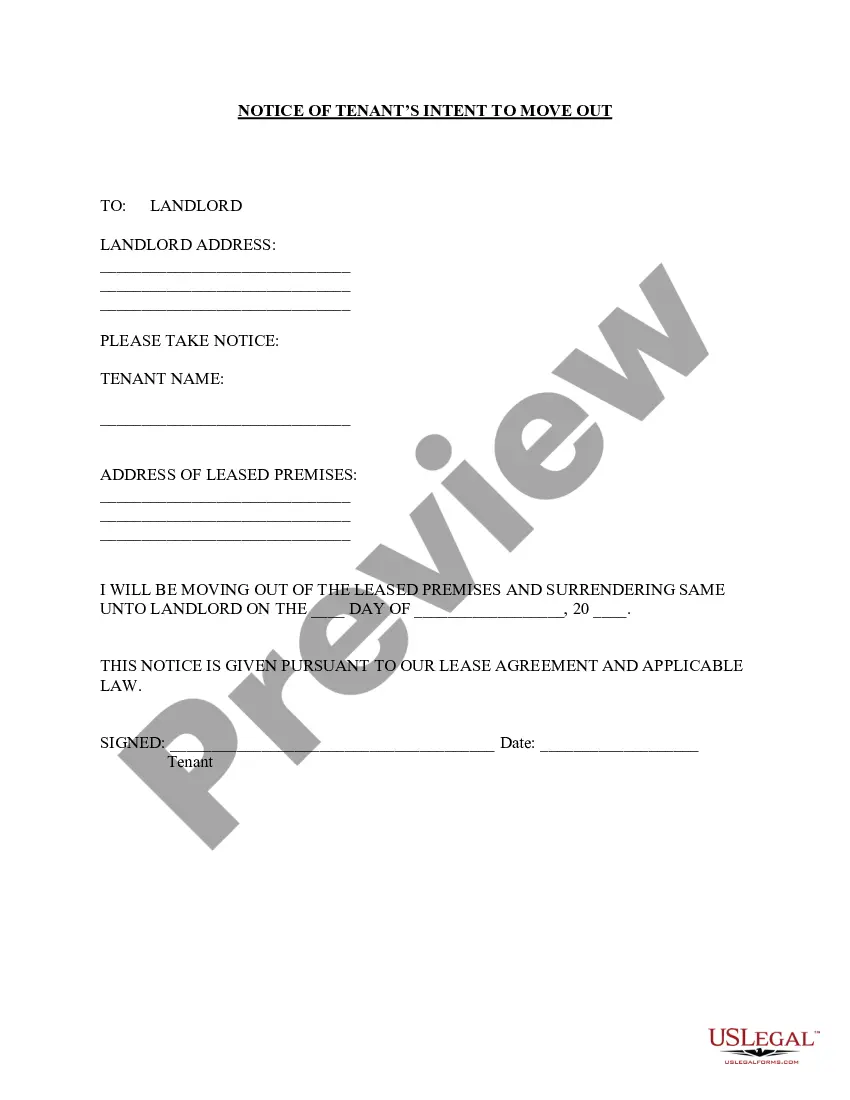



How to fill out Louisiana Notice Of Intent To Vacate At End Of Specified Lease Term From Tenant To Landlord For Residential Property?
Searching for the Louisiana Notice of Intent to Vacate at the Conclusion of Defined Lease Duration from Tenant to Landlord for Residential Property example and completing it can pose a challenge.
To conserve significant time, expenses, and effort, utilize US Legal Forms to locate the appropriate example specifically for your state in just a few clicks.
Our attorneys prepare all documents, allowing you to only focus on filling them out. It's truly that straightforward.
Choose your pricing plan and set up your account. Indicate whether you wish to pay via a card or PayPal. Download the document in your selected file format. You can now print the Louisiana Notice of Intent to Vacate at the Conclusion of Defined Lease Duration from Tenant to Landlord for Residential Property form or complete it using any online editor. There's no need to worry about making errors, as your form can be utilized, submitted, and printed as often as necessary. Explore US Legal Forms and gain access to over 85,000 state-specific legal and tax documents.
- Log in to your account and revisit the form's webpage to save the example.
- Your saved examples are kept in My documents and are accessible at any time for future use.
- If you haven't subscribed yet, consider registering.
- Review our comprehensive instructions on how to obtain your Louisiana Notice of Intent to Vacate at the Conclusion of Defined Lease Duration from Tenant to Landlord for Residential Property example in just a few minutes.
- To acquire a titled form, verify its applicability to your state.
- Examine the form using the Preview feature (if available).
- If there’s a description, read it to understand the details.
- Click Buy Now if you found what you're looking for.
Form popularity
FAQ
A termination notice has to give the tenant 14 clear days before the tenant has to leave the residential premises. The day the notice is served on the tenant and the day the tenant moves out do not count as part of the 14 days.
Dear Landlord, This letter will constitute written notice of my intention to vacate my apartment on date, the end of my current lease. I am doing so because explain the reason if you desire, such as a large increase in rent. Please recall that I made a security deposit of $______ on date.
Dear (Name of landlord or manager), This letter constitutes my written (number of days' notice that you need to give based on your lease agreement)-day notice that I will be moving out of my apartment on (date), the end of my current lease. I am leaving because (new job, rent increase, etc.)
Weekly tenancyThe tenant or landlord must give one week of notice.
A landlord can simply give you a written notice to move, allowing you 30 days (60 days if you've lived in the rental a year or more) as required by California law and specifying the date on which your tenancy will end.
A holdover tenant is a tenant who stays in the rental unit after the lease expires. If the tenant continues to pay rent, the tenancy essentially becomes a month-to-month tenancy. A holdover tenant is legally allowed to stay in the rental unit as long as the landlord takes no action to remove them.
In Colorado, evictions are sometimes referred to as forcible entry & detainer (FED). Before you can file for eviction, you must generally provide 10 days' notice (increased from 3 days prior) for tenants to correct a deficiency or leave the property, except in certain circumstances.
At-will tenancy is subject to the will of both the tenant and the landlord (hence the name). In other words, the tenant can choose to leave and stop paying rent at any time, and the landlord can choose to stop accepting rent and ask the tenant to leave at any time.
Explain the Situation Tell your tenant in straightforward terms what the problem is, and explain that they cannot stay on the property any longer. Describe the Consequences Calmly explain that they will be evicted with necessary court orders if they remain on the property.