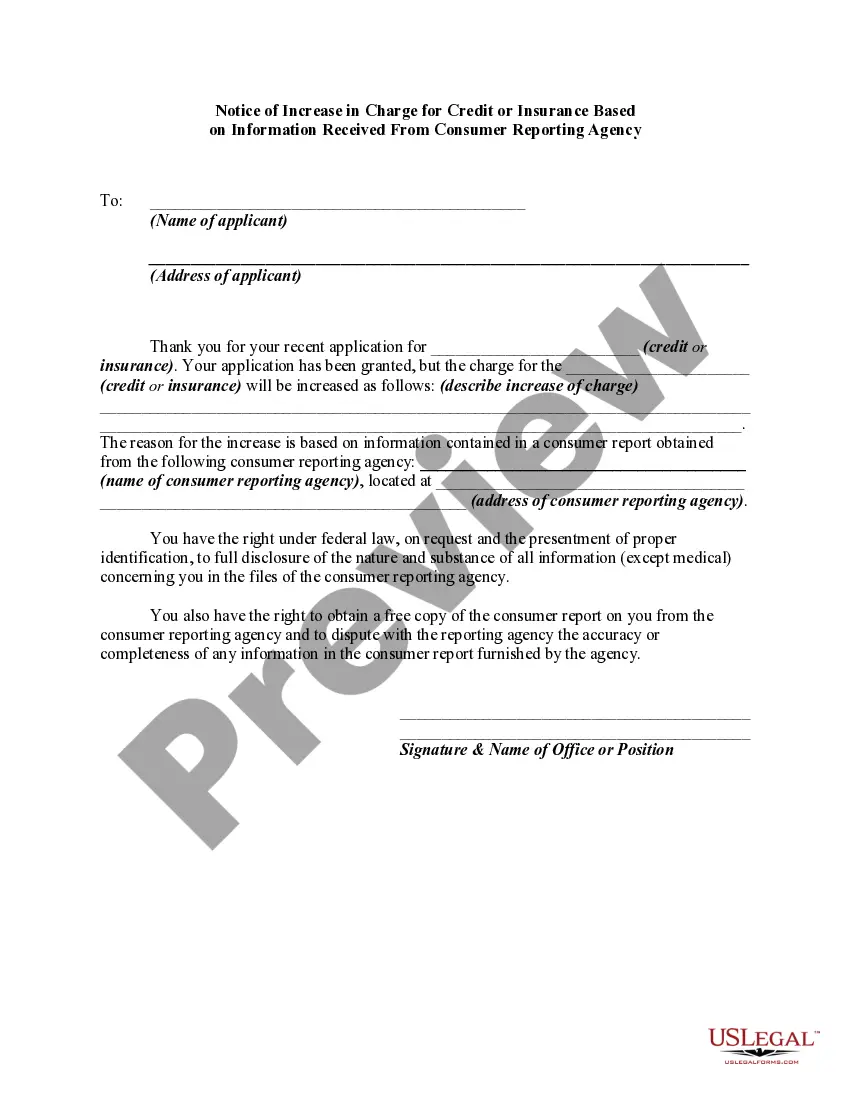
Notice of Increase in Charge for Credit or Insurance Based on Information Received From Consumer Reporting Agency
Understanding this form
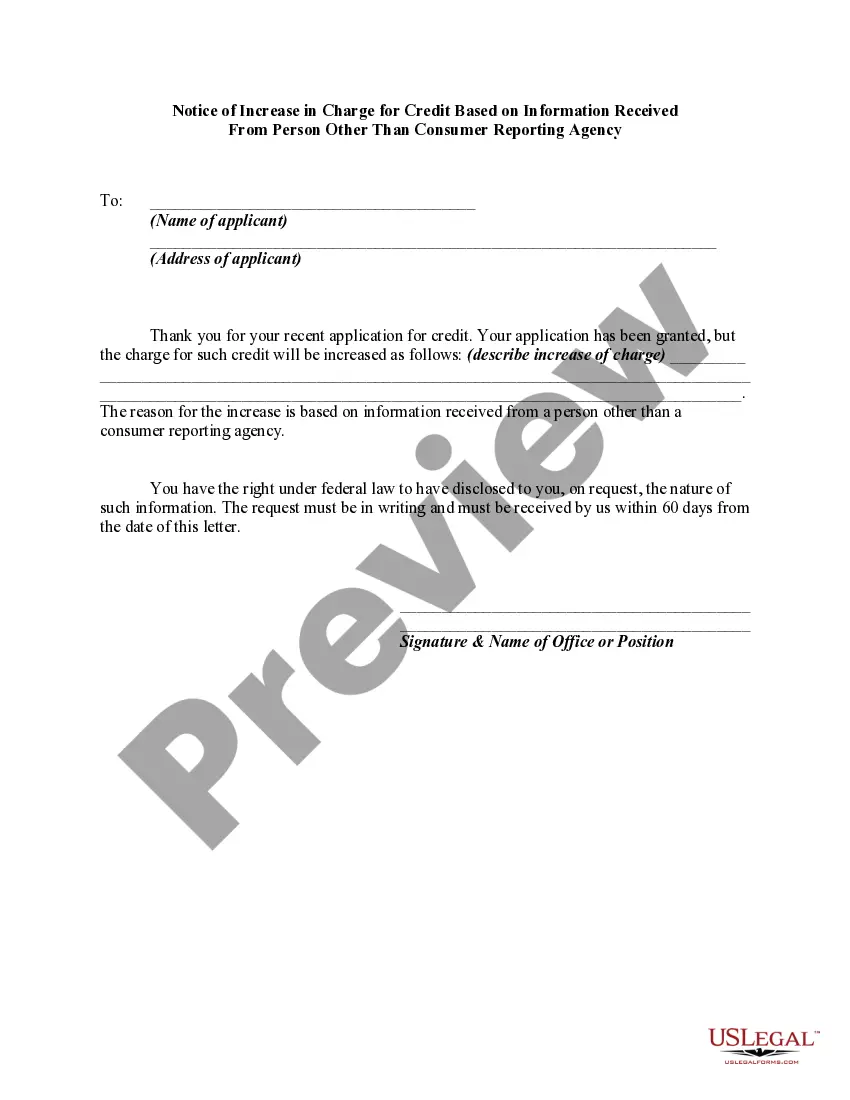
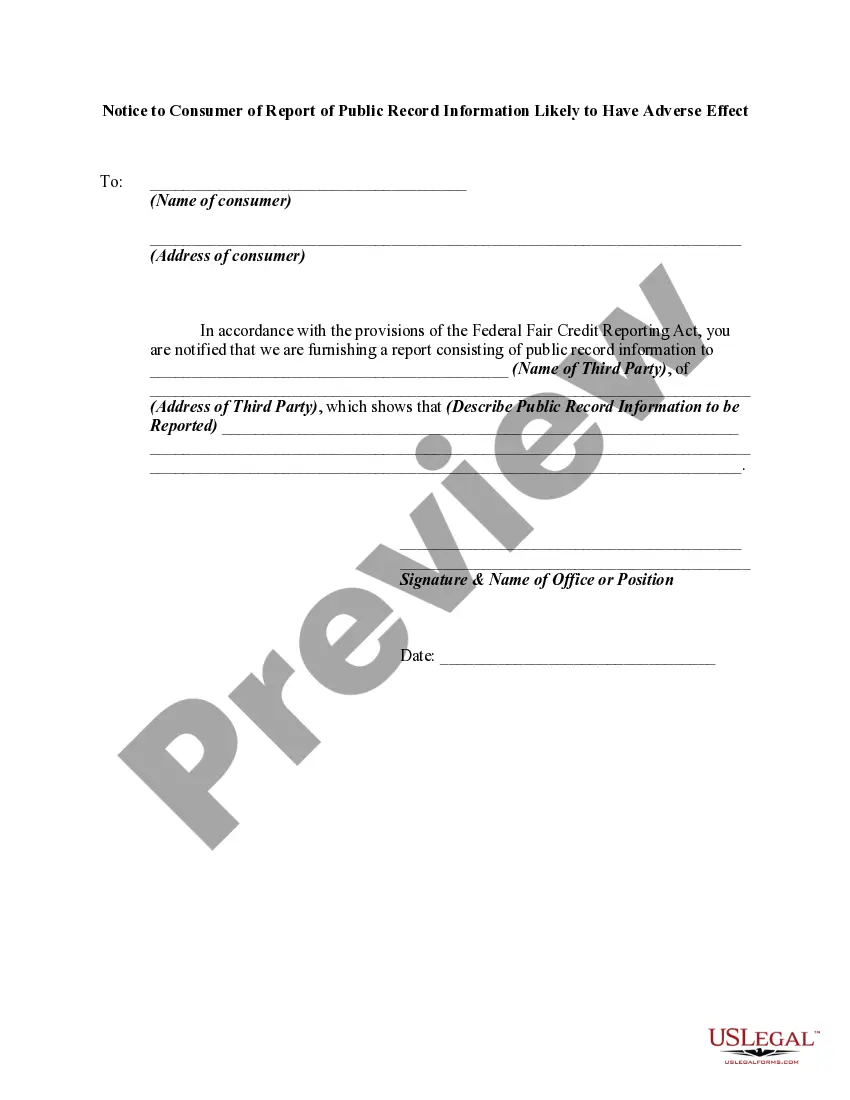
The Notice of Increase in Charge for Credit or Insurance Based on Information Received From Consumer Reporting Agency is a legal document used to inform consumers when the cost of credit or insurance has been increased due to information obtained from a consumer reporting agency. This form outlines the consumer's rights regarding their credit report, including the right to obtain a free copy and dispute inaccuracies. It serves as a crucial notification under the Fair Credit Reporting Act, distinguishing it from other notification forms by its specific focus on increases in charges related to consumer reports.
What’s included in this form
- Applicant's name and address
- Details of the credit or insurance granted
- Specifics of the increase in charge
- Name and address of the consumer reporting agency
- Information about the consumer's rights under the Fair Credit Reporting Act
- Signature of the person issuing the notice

When to use this form
This form should be used when a consumer applies for credit or insurance and is granted approval; however, the charges are increased due to information from a consumer reporting agency. Situations may include a credit card application that was approved but came with higher interest rates, or an insurance policy where the premium is increased based on the consumer's credit report. It ensures transparency and compliance with federal law regarding consumer rights.
Intended users of this form
- Financial institutions that issue credit
- Insurance companies processing personal insurance applications
- Employers considering credit reports for employment purposes
- Any entity that has increased charges for credit or insurance based on credit reports
How to prepare this document
- Identify the applicant's full name and address.
- State the type of credit or insurance that was approved.
- Clearly describe the nature of the increase in charges.
- Include the name and address of the consumer reporting agency that provided the report.
- Provide information on the applicant's rights regarding their consumer report.
- Sign the document and include your title or position.
Notarization requirements for this form
This form does not typically require notarization unless specified by local law. It is important to ensure compliance with any state-specific regulations that may apply.
Get your form ready online
Our built-in tools help you complete, sign, share, and store your documents in one place.
Make edits, fill in missing information, and update formatting in US Legal Forms—just like you would in MS Word.
Download a copy, print it, send it by email, or mail it via USPS—whatever works best for your next step.
Sign and collect signatures with our SignNow integration. Send to multiple recipients, set reminders, and more. Go Premium to unlock E-Sign.
If this form requires notarization, complete it online through a secure video call—no need to meet a notary in person or wait for an appointment.
We protect your documents and personal data by following strict security and privacy standards.

Make edits, fill in missing information, and update formatting in US Legal Forms—just like you would in MS Word.

Download a copy, print it, send it by email, or mail it via USPS—whatever works best for your next step.

Sign and collect signatures with our SignNow integration. Send to multiple recipients, set reminders, and more. Go Premium to unlock E-Sign.

If this form requires notarization, complete it online through a secure video call—no need to meet a notary in person or wait for an appointment.

We protect your documents and personal data by following strict security and privacy standards.
Typical mistakes to avoid
- Failing to include the name of the consumer reporting agency.
- Not providing a clear description of the charge increase.
- Omitting the consumer's rights regarding obtaining their credit report.
- Not signing the document before sending it.
Why use this form online
- Immediate access to legally vetted templates.
- Easy customization to fit specific circumstances and legal requirements.
- Increased convenience with downloadable and printable formats.
- Ensures compliance with federal regulations effortlessly.
Legal use & context
- This form is utilized to comply with the Fair Credit Reporting Act, which mandates disclosures when adverse actions are taken based on consumer reports.
- Proper use of this form can help protect against legal liabilities related to credit reporting practices.
Quick recap
- The form serves to notify consumers of increased charges based on credit report information.
- It is crucial for maintaining transparency and compliance with federal regulations.
- Consumers have specific rights that must be communicated in this notice.
Looking for another form?





Form popularity
FAQ
A 613 Letter is the notice the CRA sends to the applicant if a potentially negative item was discovered in their background screening report.In essence, this letter serves as a "heads-up" notification to the applicant / consumer.
FCRA compliance is designed to protect consumers.The FCRA applies anytime an employer obtains a background check for employment purposes from a third party. These reports could include criminal history, employment and education verifications, motor vehicle reports, health care sanctions and professional licenses.
The federal Fair Credit Reporting Act (FCRA) promotes the accuracy, fairness, and privacy of information in the files of. consumer reporting agencies.
A creditor must disclose a consumer's credit score and information relating to a credit score on a risk-based pricing notice when the score of the consumer to whom the creditor extends credit or whose extension of credit is under review is used in setting the material terms of credit.
Two federal laws the Equal Credit Opportunity Act (ECOA), as implemented by Regulation B, and the Fair Credit Reporting Act (FCRA) reflect Congress's determination that consumers and businesses applying for credit should receive notice of the reasons a creditor took adverse action on the application or on an
The Fair Credit Reporting Act (FCRA) is a federal law that helps to ensure the accuracy, fairness and privacy of the information in consumer credit bureau files. The law regulates the way credit reporting agencies can collect, access, use and share the data they collect in your consumer reports.
Common violations of the FCRA include: Creditors give reporting agencies inaccurate financial information about you. Reporting agencies mixing up one person's information with another's because of similar (or same) last name or social security number. Agencies fail to follow guidelines for handling disputes.
An adverse action notice is to inform you that you have been denied credit, employment, insurance, or other benefits based on information in a credit report. The notice should indicate which credit reporting agency was used, and how to contact them.
The statement that a dispute meets the requirements of the FCRA means both that the consumer filed a formal dispute, and that the CRA has issued a formal Notice of Results of Reinvestigation finding the asserted inaccuracy has been verified as accurate.