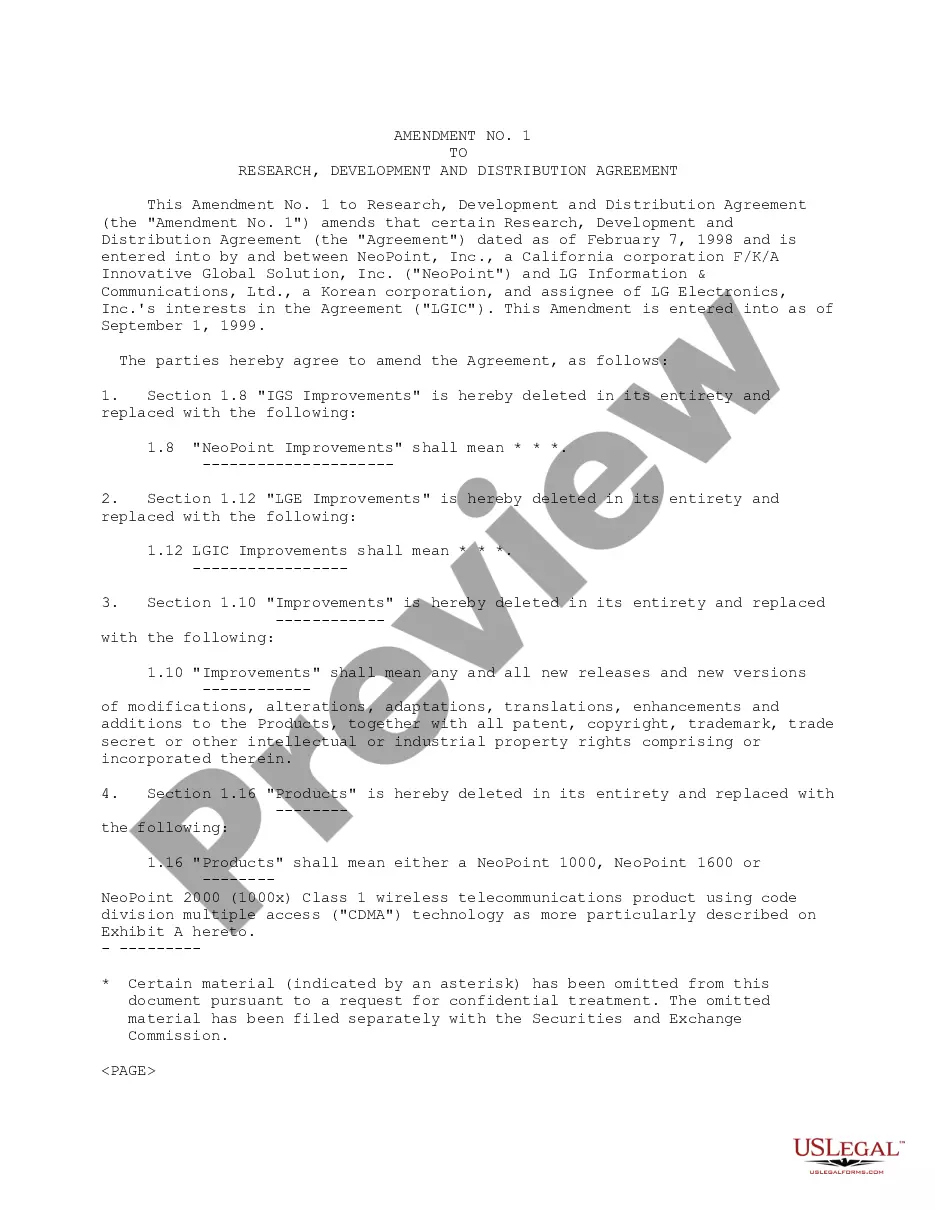
Research, Development and Distribution Agreement regarding the Development, Marketing and Servicing of Wireless Telecommunications Products
What is this form?
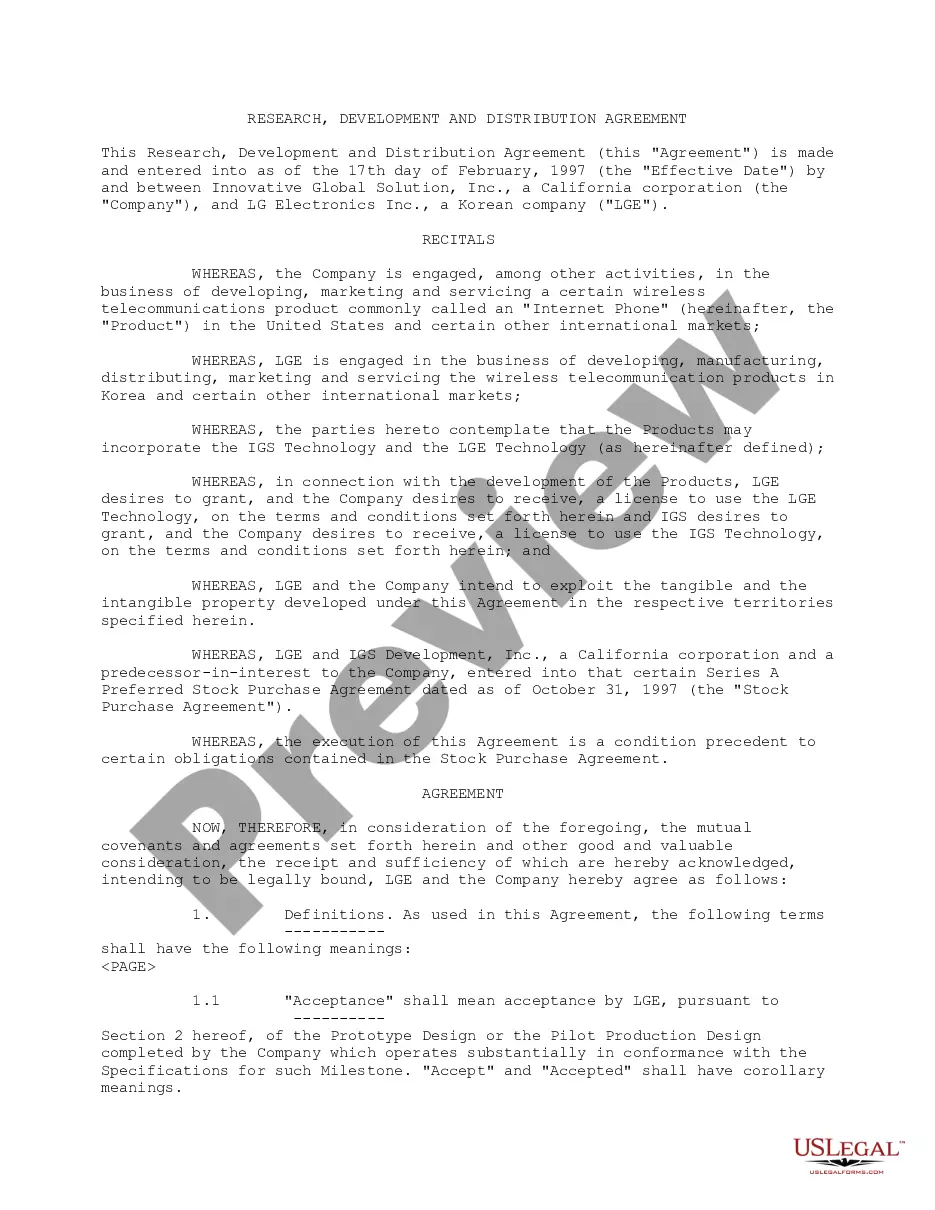
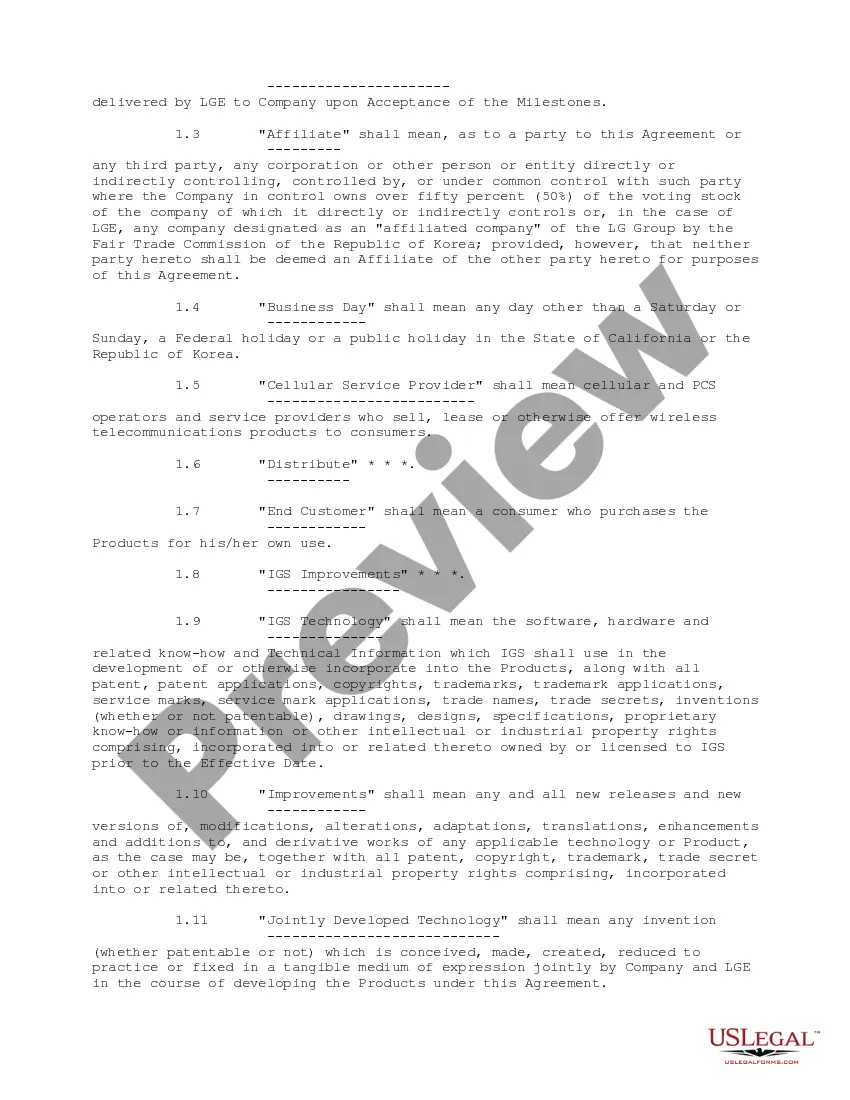
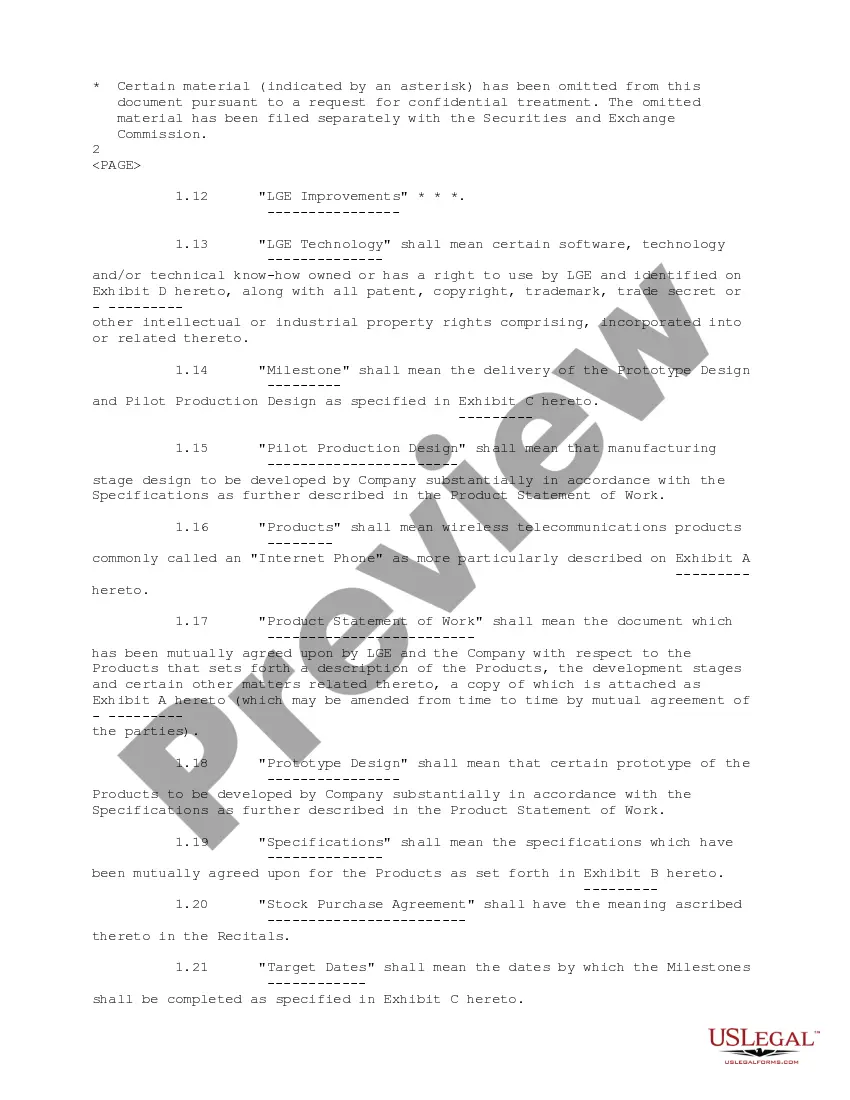
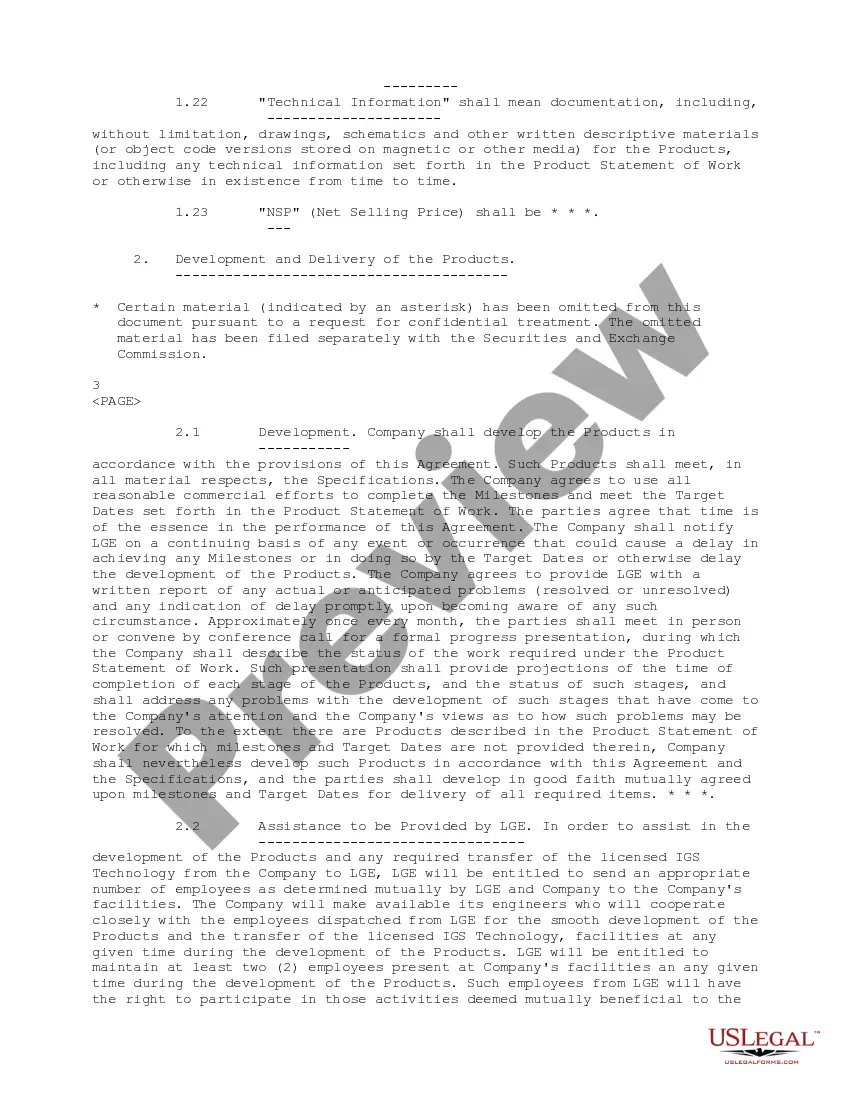
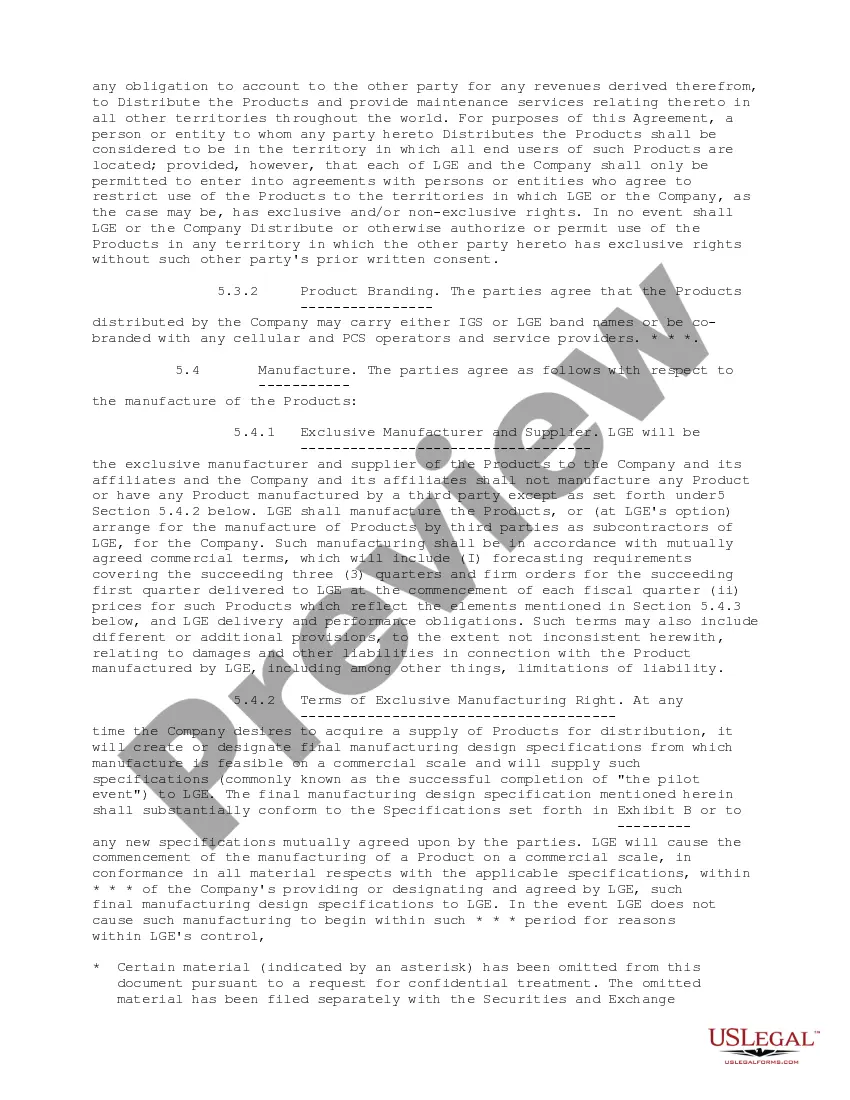
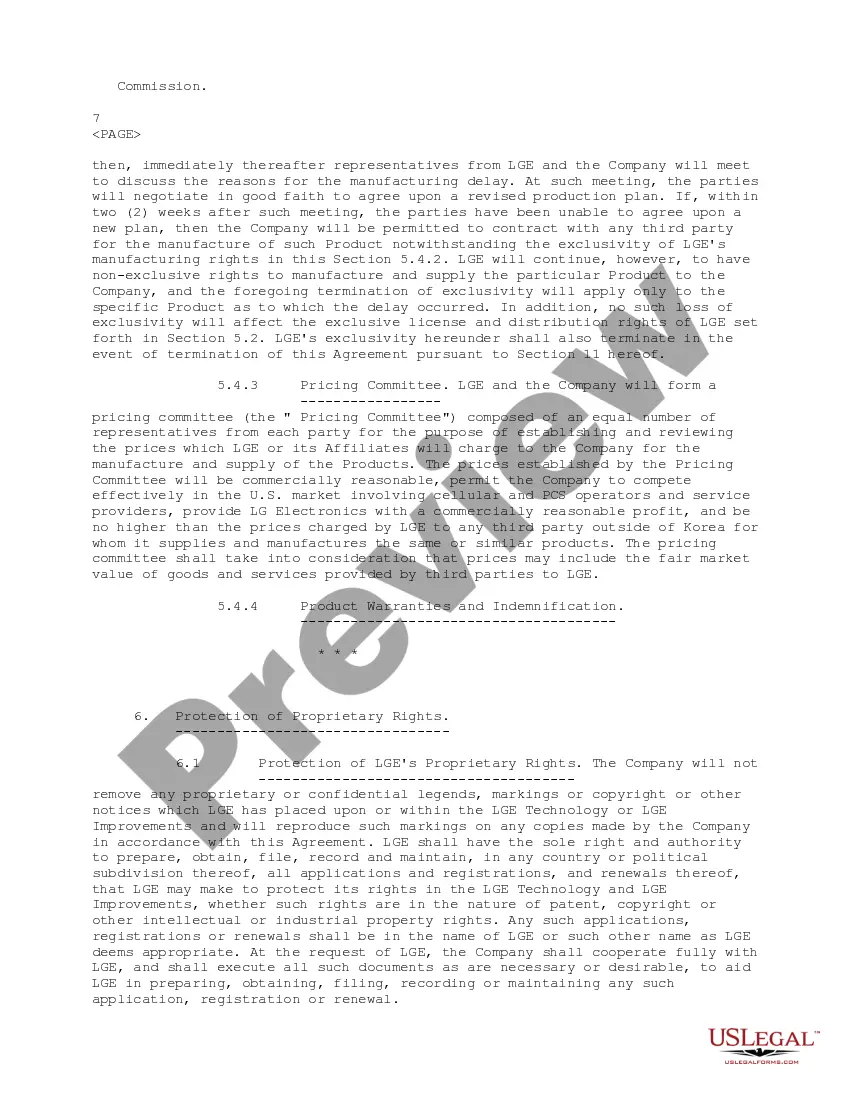
The Research, Development and Distribution Agreement is a legal contract designed for businesses involved in the development, marketing, and servicing of wireless telecommunications products. This particular agreement is between Innovative Global Solution, Inc. and LG Electronics, Inc. It outlines the mutual responsibilities regarding product development, technology sharing, and distribution rights, ensuring both parties understand their roles and obligations. This form is unique as it encompasses not only the technological aspects but also the marketing and distribution frameworks that govern the collaboration in the telecommunications sector.
Key components of this form
- Definitions: Clarifies key terms used throughout the agreement.
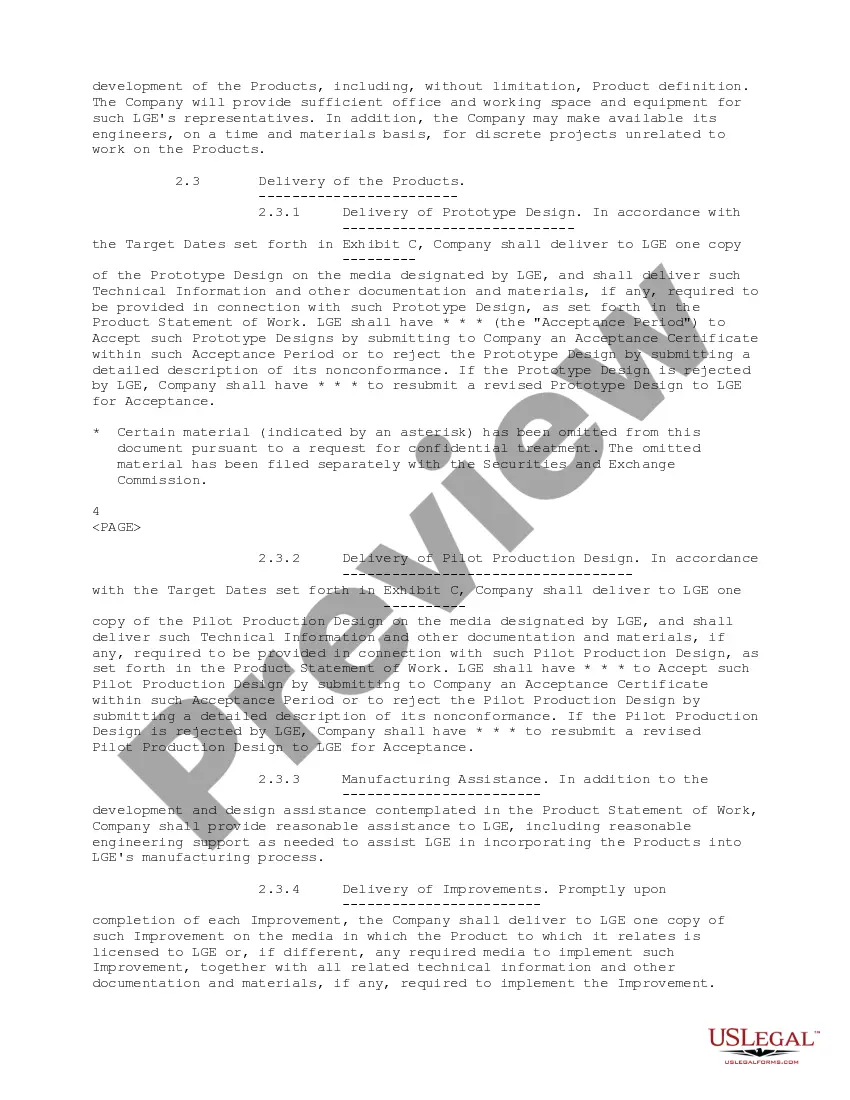
- Development and Delivery: Details the expectations for product development and timelines for deliverables.
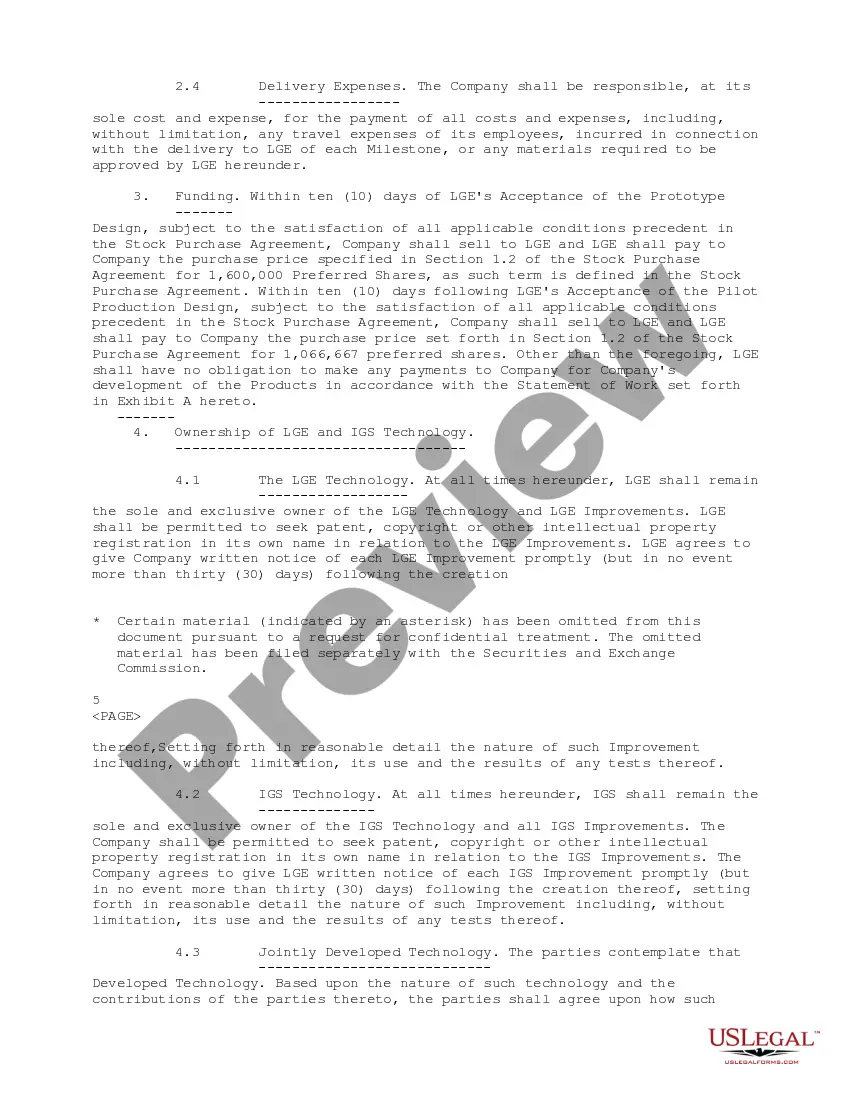
- Funding: Outlines the financial arrangements, including share purchase agreements related to product development milestones.
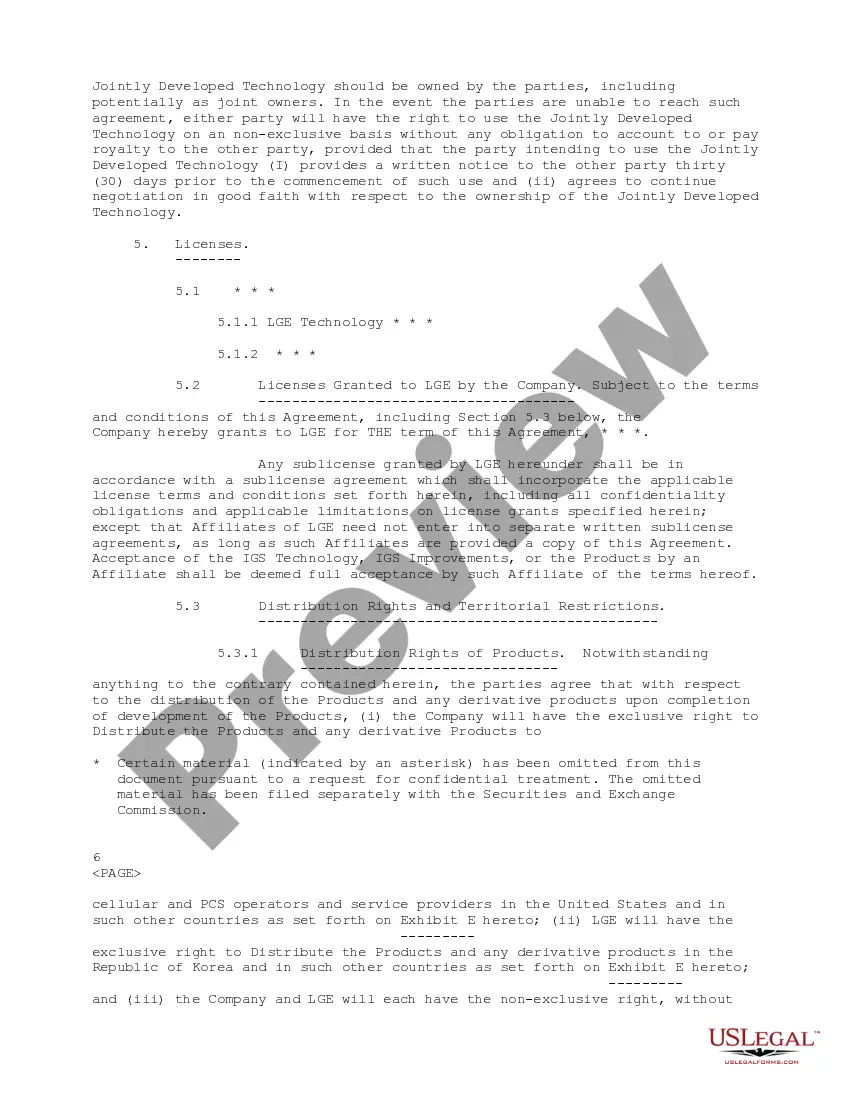
- Licenses: Specifies the licensing agreements for technologies used in product development and distribution.
- Ownership Rights: Addresses the ownership of technology and improvements made during the project.
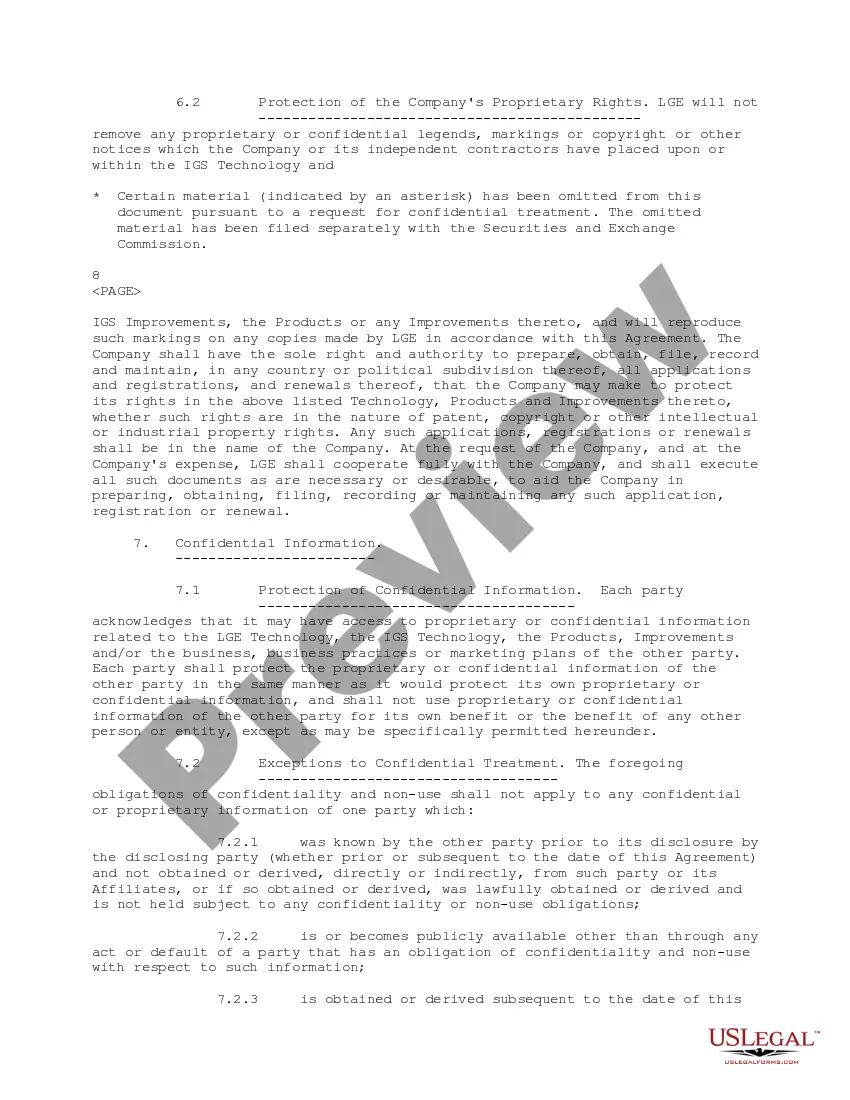
- Confidential Information: Establishes how proprietary information must be protected by both parties.

When this form is needed
This form should be used when two companies intend to collaborate on developing new wireless telecommunications products. It is particularly important when the project involves sharing proprietary technology, where clear guidelines on development responsibilities and distribution rights are necessary. This agreement is ideal for formalizing partnerships that cross national boundaries, as seen with the companies involved in this specific arrangement.
Intended users of this form
- Telecommunications companies looking to partner on product development.
- Businesses aiming to negotiate technological licensing agreements.
- Corporations needing to establish a formal framework for joint marketing and distribution efforts.
- Legal teams responsible for drafting and reviewing partnership agreements in technology sectors.
How to complete this form
- Identify the parties involved: Clearly state the names and addresses of both Innovative Global Solution, Inc. and LG Electronics, Inc.
- Define the products: Specify the wireless telecommunications products to be developed and their specifications.
- Enter financial details: Input the agreed-upon terms for funding, including share purchase amounts and conditions.
- Outline the licensing terms: Describe the technology that will be shared and the limitations on its use.
- Review confidentiality clauses: Ensure all confidential and proprietary information protection clauses are clear and agreed upon.
Notarization guidance
Notarization is generally not required for this form. However, certain states or situations might demand it. You can complete notarization online through US Legal Forms, powered by Notarize, using a verified video call available anytime.
Get your form ready online
Our built-in tools help you complete, sign, share, and store your documents in one place.
Make edits, fill in missing information, and update formatting in US Legal Forms—just like you would in MS Word.
Download a copy, print it, send it by email, or mail it via USPS—whatever works best for your next step.
Sign and collect signatures with our SignNow integration. Send to multiple recipients, set reminders, and more. Go Premium to unlock E-Sign.
If this form requires notarization, complete it online through a secure video call—no need to meet a notary in person or wait for an appointment.
We protect your documents and personal data by following strict security and privacy standards.

Make edits, fill in missing information, and update formatting in US Legal Forms—just like you would in MS Word.

Download a copy, print it, send it by email, or mail it via USPS—whatever works best for your next step.

Sign and collect signatures with our SignNow integration. Send to multiple recipients, set reminders, and more. Go Premium to unlock E-Sign.

If this form requires notarization, complete it online through a secure video call—no need to meet a notary in person or wait for an appointment.

We protect your documents and personal data by following strict security and privacy standards.
Common mistakes
- Failing to define key terms, leading to ambiguity in obligations.
- Omitting details on timelines and deadlines for development milestones.
- Neglecting to address distribution rights thoroughly, potentially causing conflicts later on.
- Not including provisions for data confidentiality adequately.
Why complete this form online
- Convenience: Access and complete the form from anywhere at any time.
- Editability: Easily make revisions to reflect the specific needs of the partnership.
- Reliability: Utilize templates drafted by licensed attorneys to ensure legality and compliance.
Legal use & context
- This agreement is legally binding, ensuring that both parties adhere to the outlined terms and conditions.
- It protects the intellectual property rights of both parties involved in the development process.
- Failure to comply with the terms of the agreement can result in legal ramifications, including potential lawsuits.
What to keep in mind
- The form sets a clear framework for collaboration between two companies in the telecommunications sector.
- It emphasizes the importance of protecting proprietary technology through licensing agreements.
- Properly completed, this form can prevent misunderstandings and enhance the partnership's success.
Looking for another form?
Form popularity
FAQ
A distribution agreement, also known as a distributor agreement, is a contract between a supplying company with products to sell and another company that markets and sells the products. The distributor agrees to buy products from the supplier company and sell them to clients within certain geographical areas.
A distributor is an intermediary entity between a the producer of a product and another entity in the distribution channel or supply chain, such as a retailer, a value-added reseller (VAR) or a system integrator (SI).
The definition of a distributor is a person or business who gives out or sells goods or services to customers or other businesses, or a device that sends out electrical currents in the proper order to spark plugs in a gasoline engine. An example of a distributor is a person who sells Tupperware home products.
A distribution agreement is a legal agreement between a supplier of goods and a distributor of goods. The supplier may be a manufacturer, or may itself be a distributor reselling another's goods.
A distributor is the only person who distributes goods in a specific area. He is the only source for the retailers and dealers to purchase that product in the area. Usually, a distributor is appointed by the company to sell their product on their behalf.
There are four types of distribution channels that exist: direct selling, selling through intermediaries, dual distribution, and reverse logistics channels. Each of these channels consist of institutions whose goal is to manage the transaction and physical exchange of products.
Terms and conditions of sale; term for which the contract is in effect; marketing rights; trademark licensing; geographical territory covered by the agreement; performance; reporting; and. circumstances under which the contract may be terminated.
Exclusive Distributor. Terms And Conditions Of Sale. Pricing. Term Of The Agreement. Marketing rights. Trademark licensing. The geographical territory covered by the agreement. Performance.
A distributor is an entity that buys noncompeting products or product lines and sells them direct to end users or customers. Most distributors also provide a range of services such as technical support, warranty or service. Distributors are essential in helping reach markets manufacturers could not otherwise target.