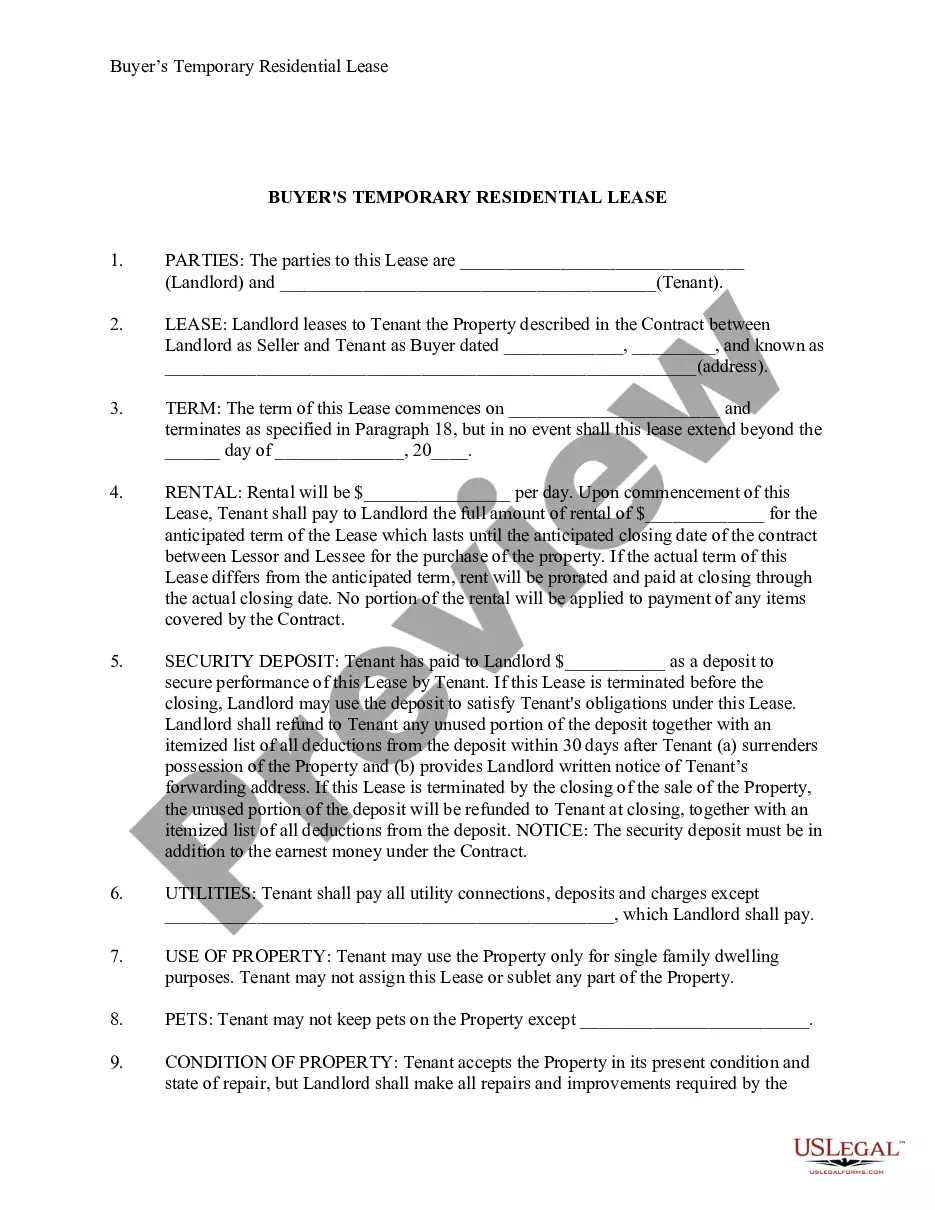
Assignment of Claim for Collection With Right to Initiate Legal Proceedings
Understanding this form
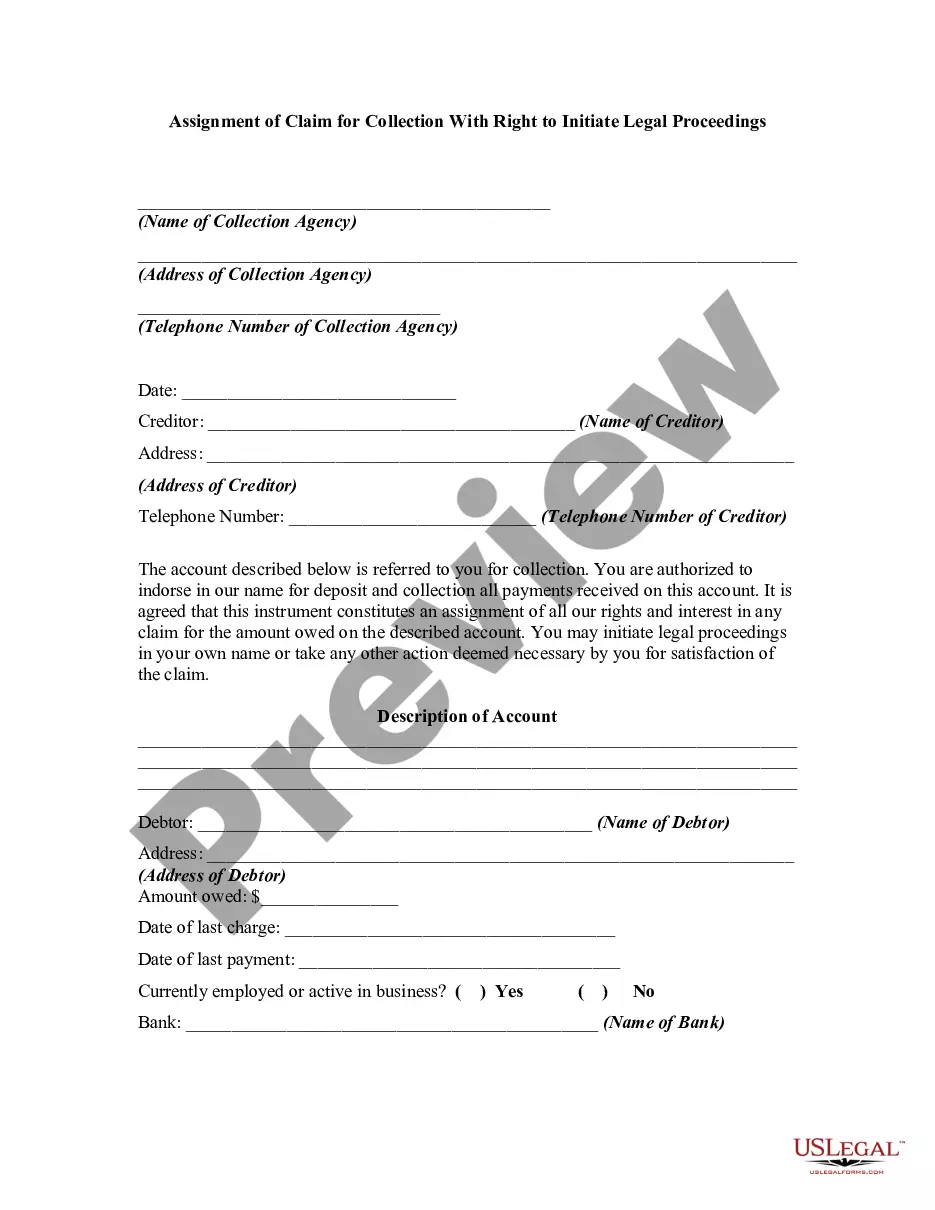
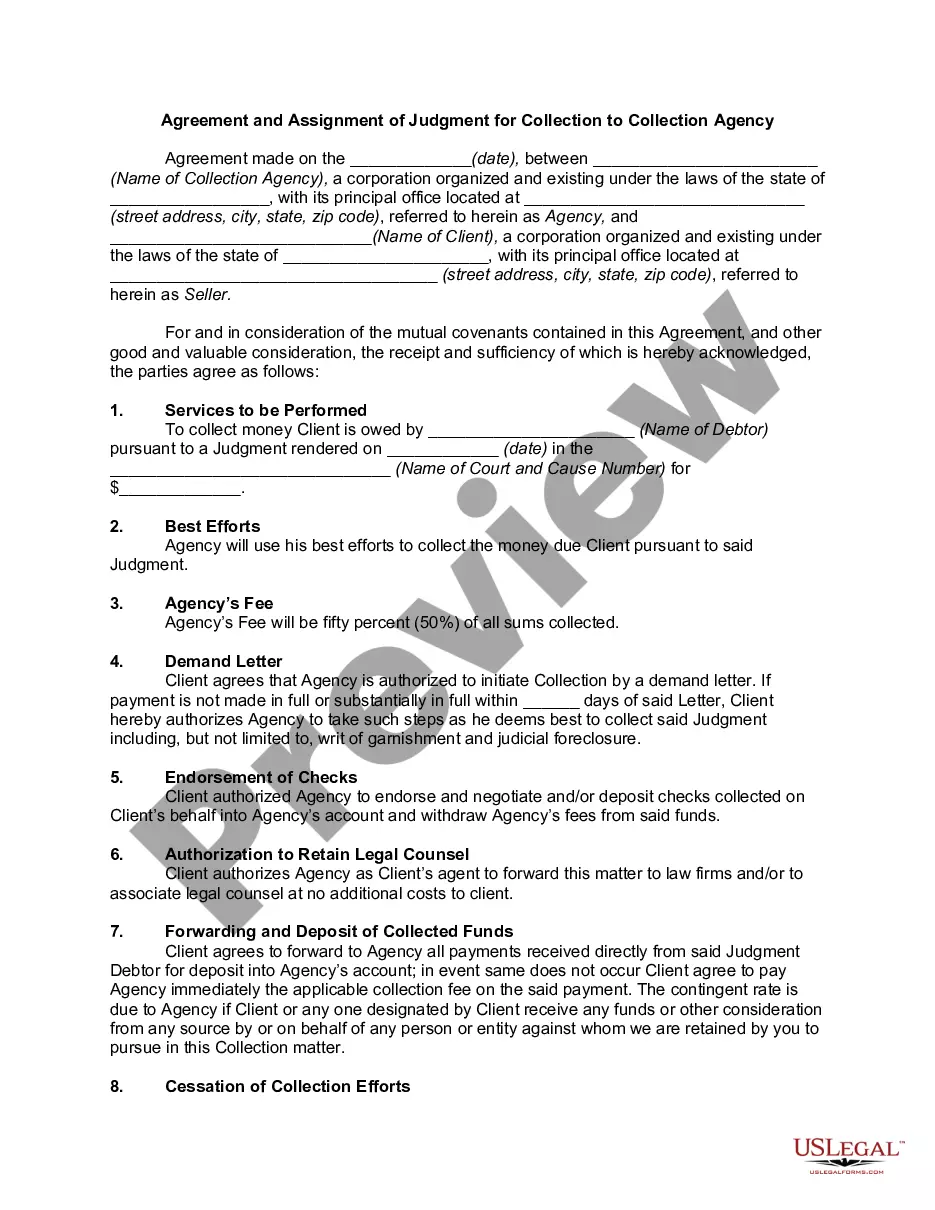
The Assignment of Claim for Collection With Right to Initiate Legal Proceedings is a legal document that allows a creditor to transfer their claim to a collection agency. By completing this form, the collection agency is authorized to collect payments and initiate legal proceedings if necessary. This assignment distinguishes itself from other forms by granting the agency the right to act in its own name, which can enhance the efficiency of the collection process.
Main sections of this form
- Collection agency name and address: Information identifying the agency handling the claim.
- Creditor details: Name, address, and contact information of the original creditor.
- Debtor information: Name and address of the individual or entity that owes the debt.
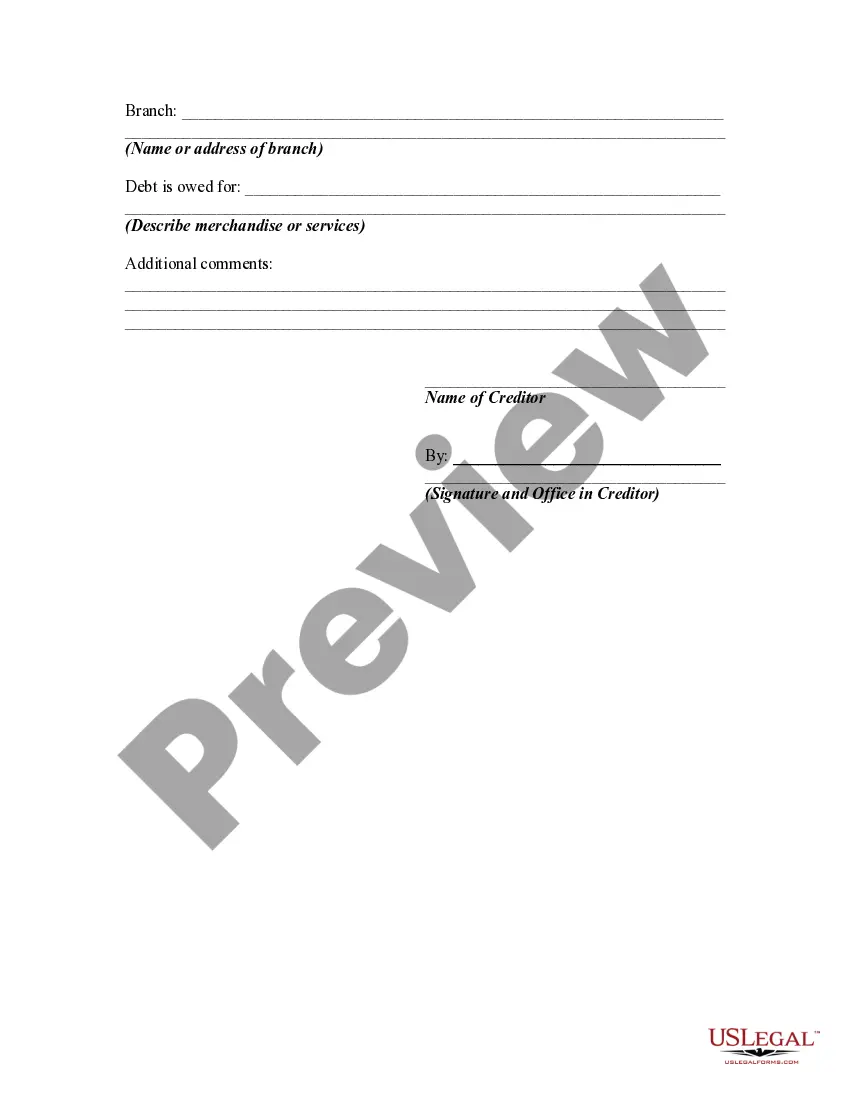
- Account description: Details regarding the account being assigned for collection.
- Legal authority: Clauses that authorize the collection agency to pursue the claim and initiate legal proceedings.
When this form is needed
This form is utilized when a creditor decides to assign their right to collect a debt to a collection agency. It is essential in scenarios where the creditor has been unable to collect the debt independently and seeks to expedite the process by allowing the agency to take legal action if necessary. This form may be relevant for businesses or individuals who have accounts that are overdue or non-collectible.
Intended users of this form
This form is intended for:
- Creditors looking to assign debts to collection agencies.
- Collection agencies that need formal authorization to pursue debts.
- Small business owners and individuals with overdue accounts awaiting collection.
Completing this form step by step
To complete the Assignment of Claim for Collection, follow these steps:
- Identify the collection agency: Enter the name and address of the agency responsible for collecting the debt.
- Fill in creditor details: Provide the name, address, and contact number of the creditor.
- Detail the account: Describe the account being assigned, including the debtorâs name and the amount owed.
- Authorize the agency: Sign and date the document to grant the collection agency the right to take legal action on your behalf.
- Verify completeness: Review all entries for accuracy before submitting the form to the collection agency.
Notarization guidance
This form does not typically require notarization unless specified by local law. Itâs important to check local regulations to ensure compliance.
Get your form ready online
Our built-in tools help you complete, sign, share, and store your documents in one place.
Make edits, fill in missing information, and update formatting in US Legal Forms—just like you would in MS Word.
Download a copy, print it, send it by email, or mail it via USPS—whatever works best for your next step.
Sign and collect signatures with our SignNow integration. Send to multiple recipients, set reminders, and more. Go Premium to unlock E-Sign.
If this form requires notarization, complete it online through a secure video call—no need to meet a notary in person or wait for an appointment.
We protect your documents and personal data by following strict security and privacy standards.

Make edits, fill in missing information, and update formatting in US Legal Forms—just like you would in MS Word.

Download a copy, print it, send it by email, or mail it via USPS—whatever works best for your next step.

Sign and collect signatures with our SignNow integration. Send to multiple recipients, set reminders, and more. Go Premium to unlock E-Sign.

If this form requires notarization, complete it online through a secure video call—no need to meet a notary in person or wait for an appointment.

We protect your documents and personal data by following strict security and privacy standards.
Avoid these common issues
- Failing to provide complete debtor information, leading to difficulties in collection.
- Not signing the document, which may render it invalid.
- Overlooking local laws regarding assignments, which can affect enforceability.
Why use this form online
- Convenience of creating a legally binding document without the need for legal counsel.
- Editable format that allows for customization according to specific needs.
- Secure access to forms and documentation that comply with legal standards.
- This form is legally binding once completed and signed.
- Collection agencies must comply with local laws governing debt collection practices.
- The effectiveness of this assignment may depend on the creditor's ability to establish ownership of the debt.
Quick recap
- The Assignment of Claim for Collection is crucial for transferring debt collection rights to an agency.
- Accuracy in completing this form is vital for its legal standing and effectiveness.
- Understanding state-specific regulations can prevent legal complications in the collection process.
Looking for another form?





Form popularity
FAQ
An assignable contract has a provision allowing the holder to give away the obligations and rights of the contract to another party or person before the contract's expiration date. The assignee would be entitled to take delivery of the underlying asset and receive all of the benefits of that contract before its expiry.
A right cannot be assigned if the assignment will significantly increase or alter the risks to or the duties of the obligor (the party owing performance under the contract).
Almost any legal right can be assigned, subject to certain legal exceptions and/or restrictions. This can include property rights, shareholdings, contractual rights and rights to issue and prosecute legal claims and litigation proceedings.
Assignment of Claims Act The Act permits a company to assign monies due or to become due under a contract, but only if certain conditions are met.The assignee must forward to the parties identified above three copies of the Notice of Assignment together with one true copy of the Instrument of Assignment.
This means that the insured business cannot cede its right to collect claim payments to another party.However, laws in most states permit policyholders to transfer their rights to another party under certain circumstances.
The delegation would change the entire nature of the agreement. The delegation involves a promise to pay a financial debt. The parties have agreed in their original contract that delegation is not allowed.
Primary tabs. Assignment is a legal term whereby an individual, the assignor, transfers rights, property, or other benefits to another known as the assignee. This concept is used in both contract and property law. The term can refer to either the act of transfer or the rights/property/benefits being transferred.
Personal Service Contracts. Partnership Agreements. Patent Licenses. Copyright Licenses. Trademark Licenses. Government Contracts. Franchise Agreements. Limited Liability Company Agreements and Joint Venture Agreements.
No payment due any person under the Plan shall be subject in any manner to anticipation, alienation, sale, transfer, assignment, pledge, encumbrance, or charge. Any attempt to anticipate, alienate, sell, transfer, assign, pledge, encumber, or charge such payment shall be void.