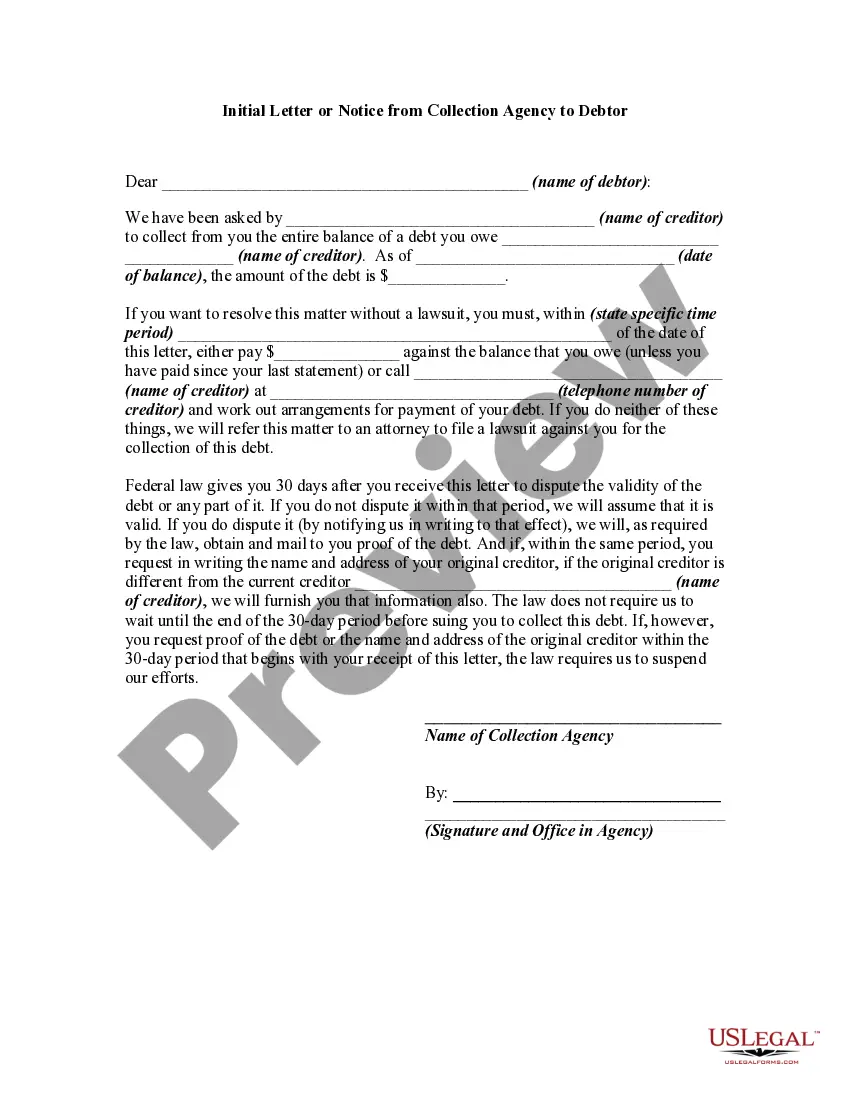
Initial Letter or Notice from Collection Agency to Debtor
What this document covers
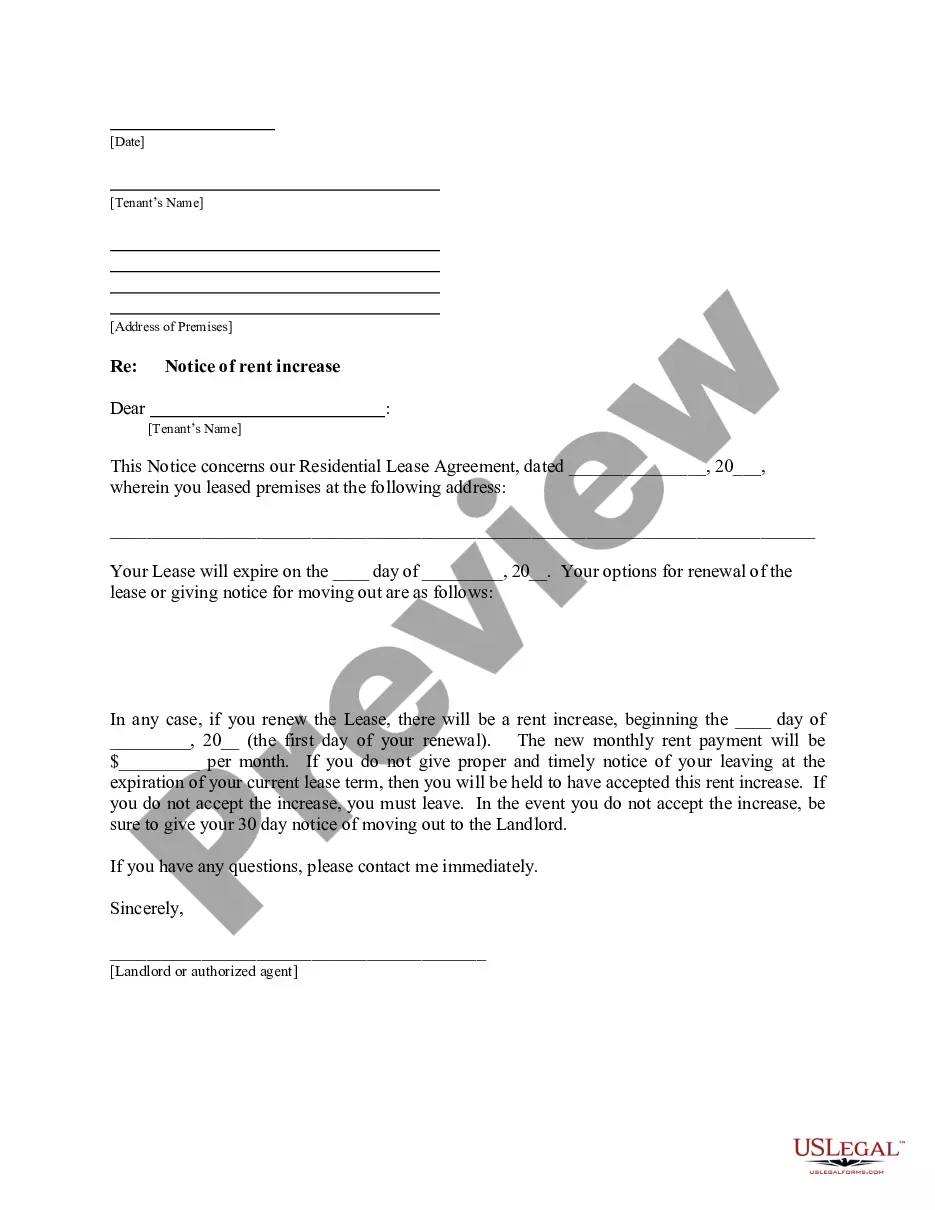
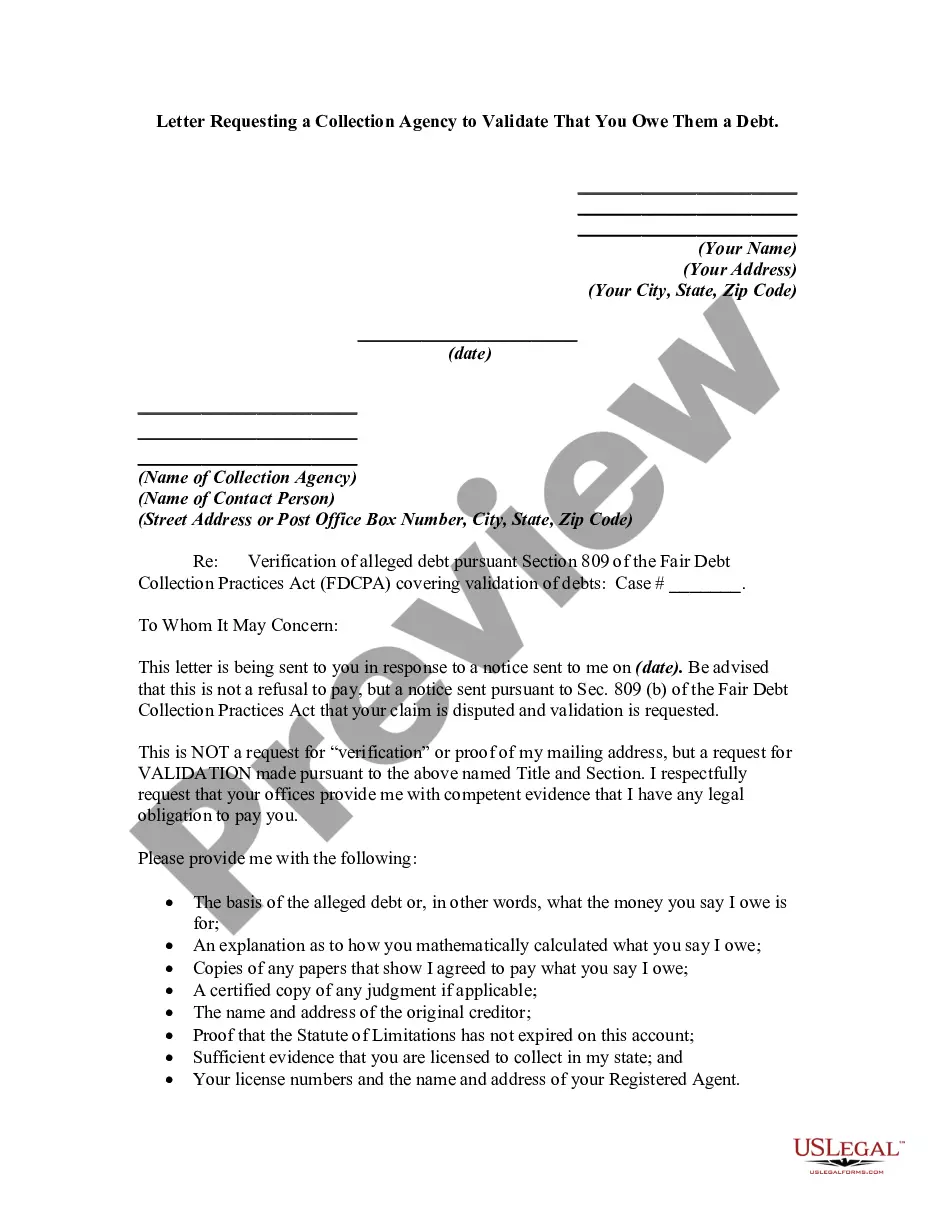
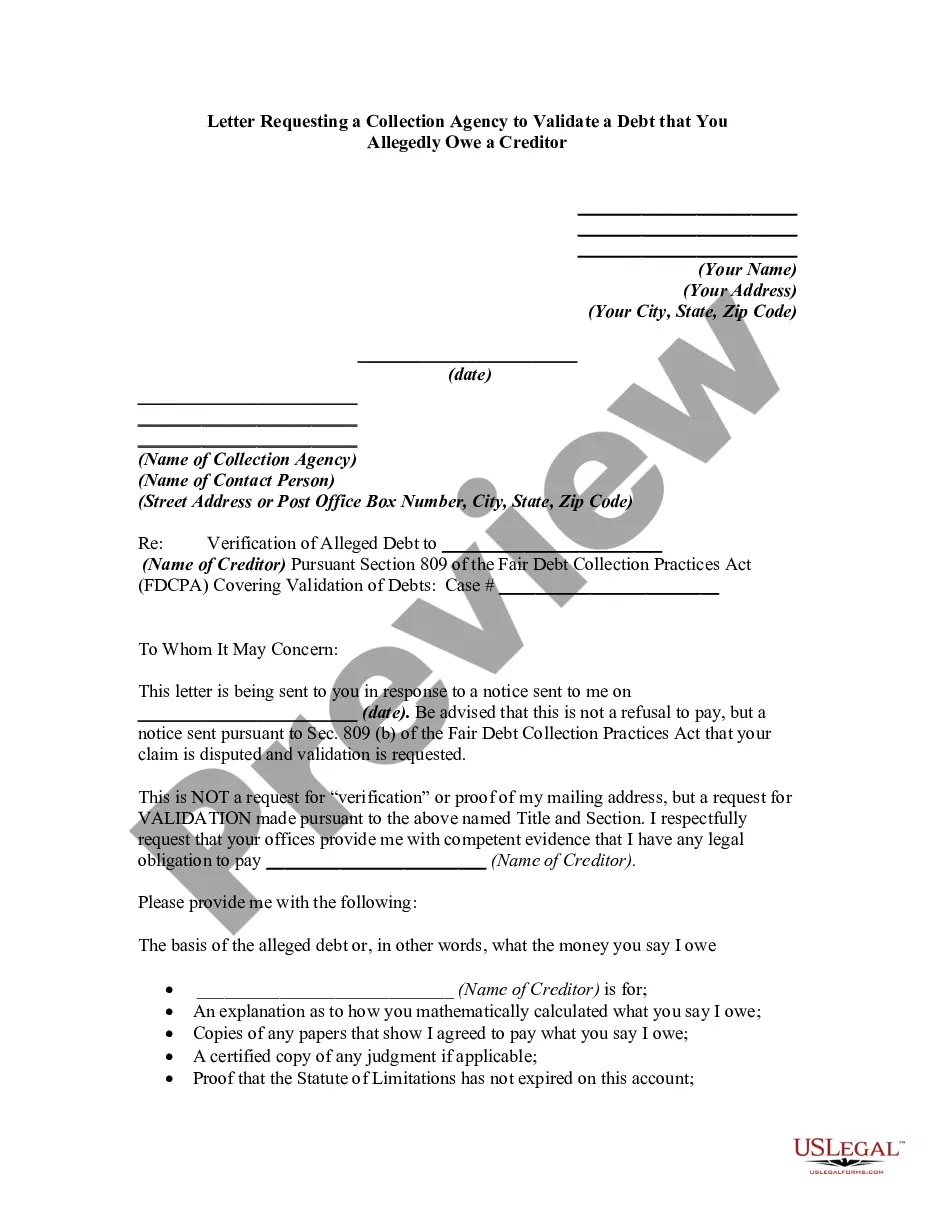
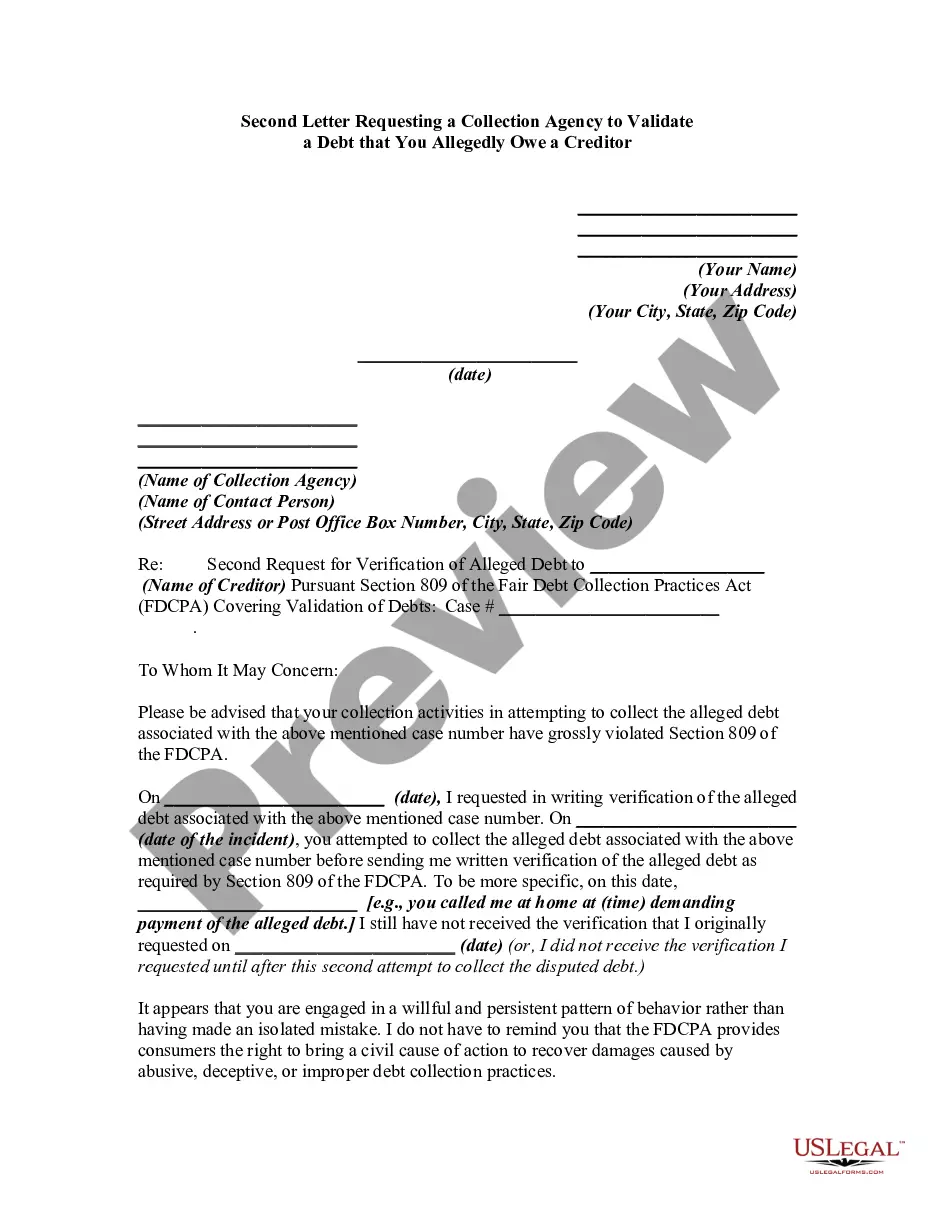
This Initial Letter or Notice from Collection Agency to Debtor is a formal communication issued by a collection agency to notify a debtor of an outstanding balance owed to a creditor. It serves to inform the debtor of their financial obligation and is governed by the Fair Debt Collection Practices Act (FDCPA). This form is distinct from similar forms as it must adhere to specific legal standards concerning the collection process and ensure that the debtor is treated fairly and without harassment.
Key parts of this document
- Debtor's name and contact information
- Name of the creditor
- The total amount owed as of a specified date
- Instructions for disputing the debt
- Timeframe for the debtor to respond or pay
- Contact information for the creditor
Common use cases
This form should be used when a collection agency has been contracted to collect debt from an individual. It is typically issued after the debtor has failed to make timely payments. The letter serves as a formal notice to the debtor to prompt payment or to allow the debtor an opportunity to dispute the debt before legal action is taken.
Who this form is for
This form is intended for:
- Collection agencies seeking to communicate with debtors
- Creditors wishing to address outstanding debts through a collection agency
- Debtors who need to understand their rights and obligations
Instructions for completing this form
- Identify the debtor's name and address clearly at the top of the letter.
- Insert the name of the creditor who has authorized the collection.
- Specify the total balance owed and the date as of which this amount is accurate.
- State the time period within which the debtor must respond or make payment.
- Provide the creditor's contact information for the debtor to discuss payment arrangements.
Does this form need to be notarized?
Notarization is generally not required for this form. However, certain states or situations might demand it. You can complete notarization online through US Legal Forms, powered by Notarize, using a verified video call available anytime.
Get your form ready online
Our built-in tools help you complete, sign, share, and store your documents in one place.
Make edits, fill in missing information, and update formatting in US Legal Forms—just like you would in MS Word.
Download a copy, print it, send it by email, or mail it via USPS—whatever works best for your next step.
Sign and collect signatures with our SignNow integration. Send to multiple recipients, set reminders, and more. Go Premium to unlock E-Sign.
If this form requires notarization, complete it online through a secure video call—no need to meet a notary in person or wait for an appointment.
We protect your documents and personal data by following strict security and privacy standards.

Make edits, fill in missing information, and update formatting in US Legal Forms—just like you would in MS Word.

Download a copy, print it, send it by email, or mail it via USPS—whatever works best for your next step.

Sign and collect signatures with our SignNow integration. Send to multiple recipients, set reminders, and more. Go Premium to unlock E-Sign.

If this form requires notarization, complete it online through a secure video call—no need to meet a notary in person or wait for an appointment.

We protect your documents and personal data by following strict security and privacy standards.
Avoid these common issues
- Failing to provide accurate contact information for the creditor.
- Not clearly stating the total amount owed or the date of the balance.
- Omitting a specified time frame for response from the debtor.
- Using threatening language or violating the FDCPA guidelines.
Advantages of online completion
- Convenience of filling out the form from anywhere at any time.
- Edit and customize the template to fit your needs.
- Ensures compliance with current legal standards by using attorney-drafted content.
Legal use & context
This form is legally binding under the Fair Debt Collection Practices Act (FDCPA). It is essential that all communication follows this act to prevent harassment allegations or legal repercussions arising from improper debt collection practices.
Quick recap
- The Initial Letter or Notice from Collection Agency to Debtor is crucial for initiating debt collection.
- Always comply with the Fair Debt Collection Practices Act when using this form.
- Take care to provide accurate information and clear instructions to the debtor.
Looking for another form?
Form popularity
FAQ
Under the Fair Debt collection Practices Act (FDCPA), I have the right to request validation of the debt you say I owe you. I am requesting proof that I am indeed the party you are asking to pay this debt, and there is some contractual obligation that is binding on me to pay this debt.
You have the right to force the debt collector to prove you owe the money. Debt validation is your federal right granted under the Fair Debt Collection Practices Act (FDCPA). To request debt validation, you must send a written request to the debt collector within 30 days of being contacted by the collection agency.
For the name and contact information of the original creditor. why the collector believes you own the debt in the first place. for a record of all owners of the debt. the amount and age of the debt (including an account number if you're able). under what authority the collector has to collect.
Make sure you state explicitly what the payment is for, or what payment/transaction the letter is in regard to. Include all relevant information, such as the parties involved, dates of payments and amounts due or guaranteed. Be straightforward and polite. There is no need to ramble, but a thank you goes a long way.
Type your letter. Concisely review the main facts. Be polite. Write with your goal in mind. Ask for exactly what you want. Set a deadline. End the letter by stating you will promptly pursue legal remedies if the other party does not meet your demand. Make and keep copies.
Accept plenty of payment methods. Five years ago, just about all of my clients paid by cheque. Ask for a deposit up-front. Spell out payment terms clearly and regularly. Follow up overdue invoices immediately. Increase the debtor pressure. Offer repayment schedules. Engage a good debt collector.
Try settling or negotiating. After you've received your letter and can verify that the debt is yours, see if the debt collector will settle for a portion of the cost if you pay upfront. If they still want the full amount due, ask if you can set up a payment plan.
When writing the letter, it is crucial to use a simple and professional language. Do not be harsh or threat the debtor in your letter as it can turn the tables against you. The letter should be addressed to the debtor's home address or any other address that the debtor has provided before.
Use a letterhead. Outline the facts/story leading up to the demand letter in a chronological manner. State the legal basis for your claim. State how you will pursue legal action if your demand is not met, and include a timeline within which the demand is to be met.