Lease or Rental Agreement of Personal Property of any Type with Option to Purchase and Own Personal Property - Lease or Rent to Own
What is this form?
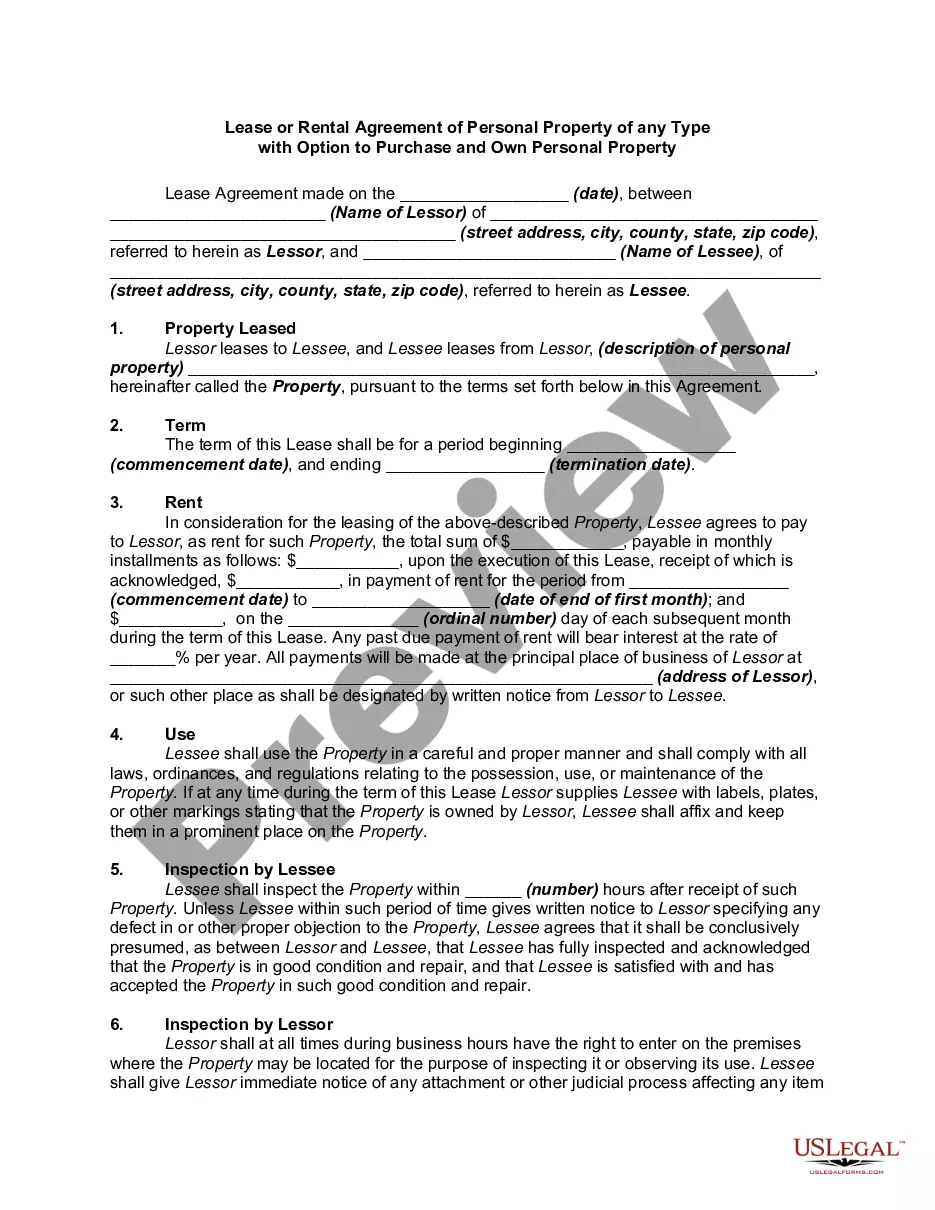
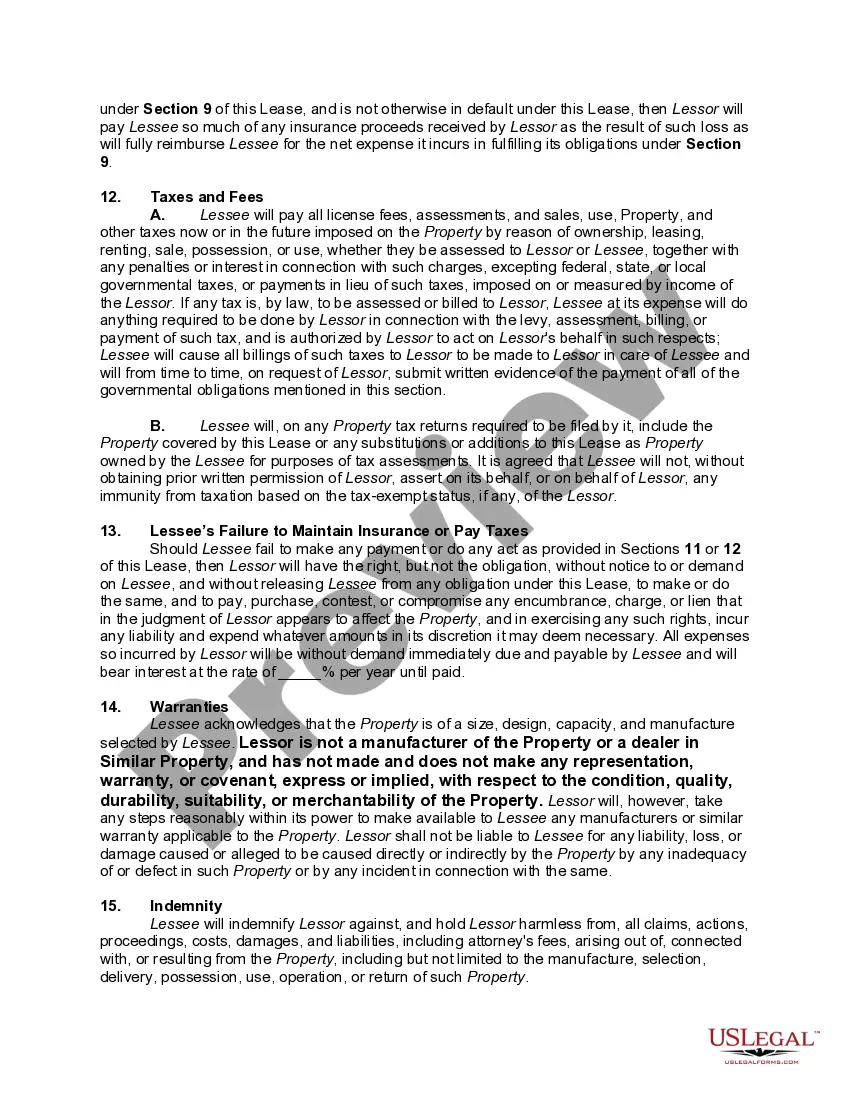
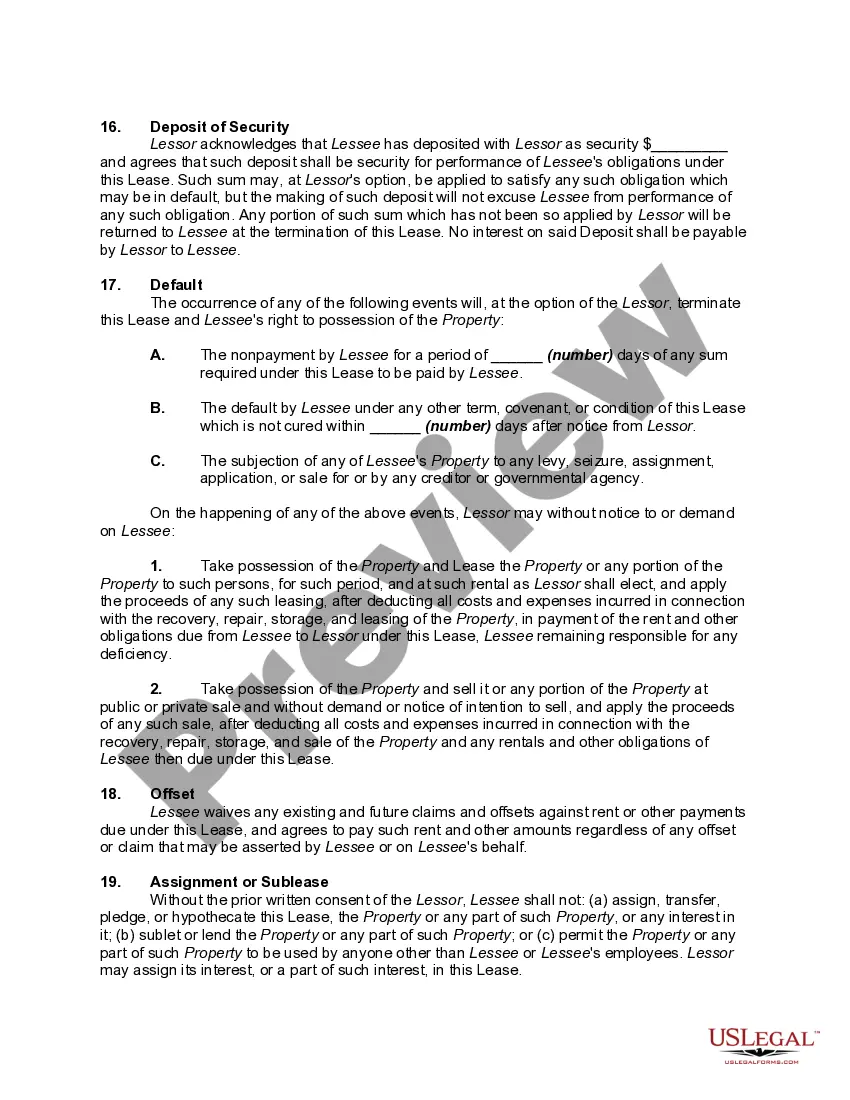
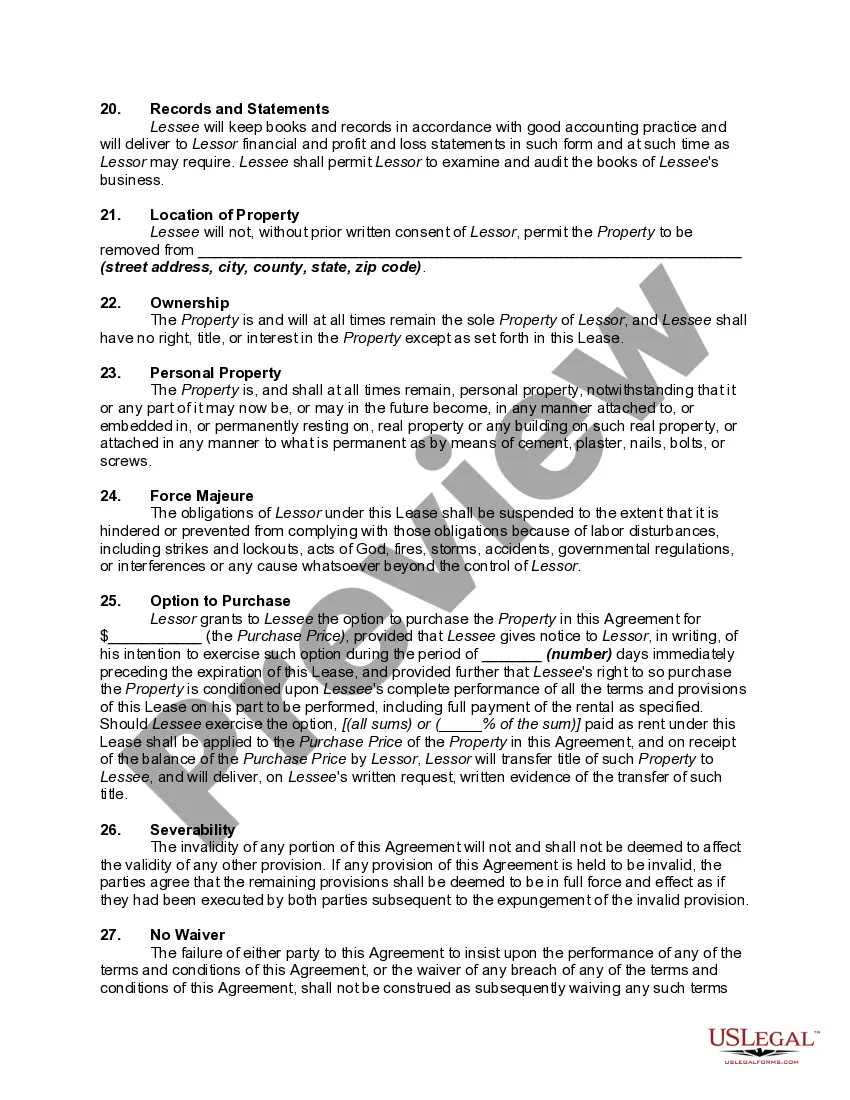
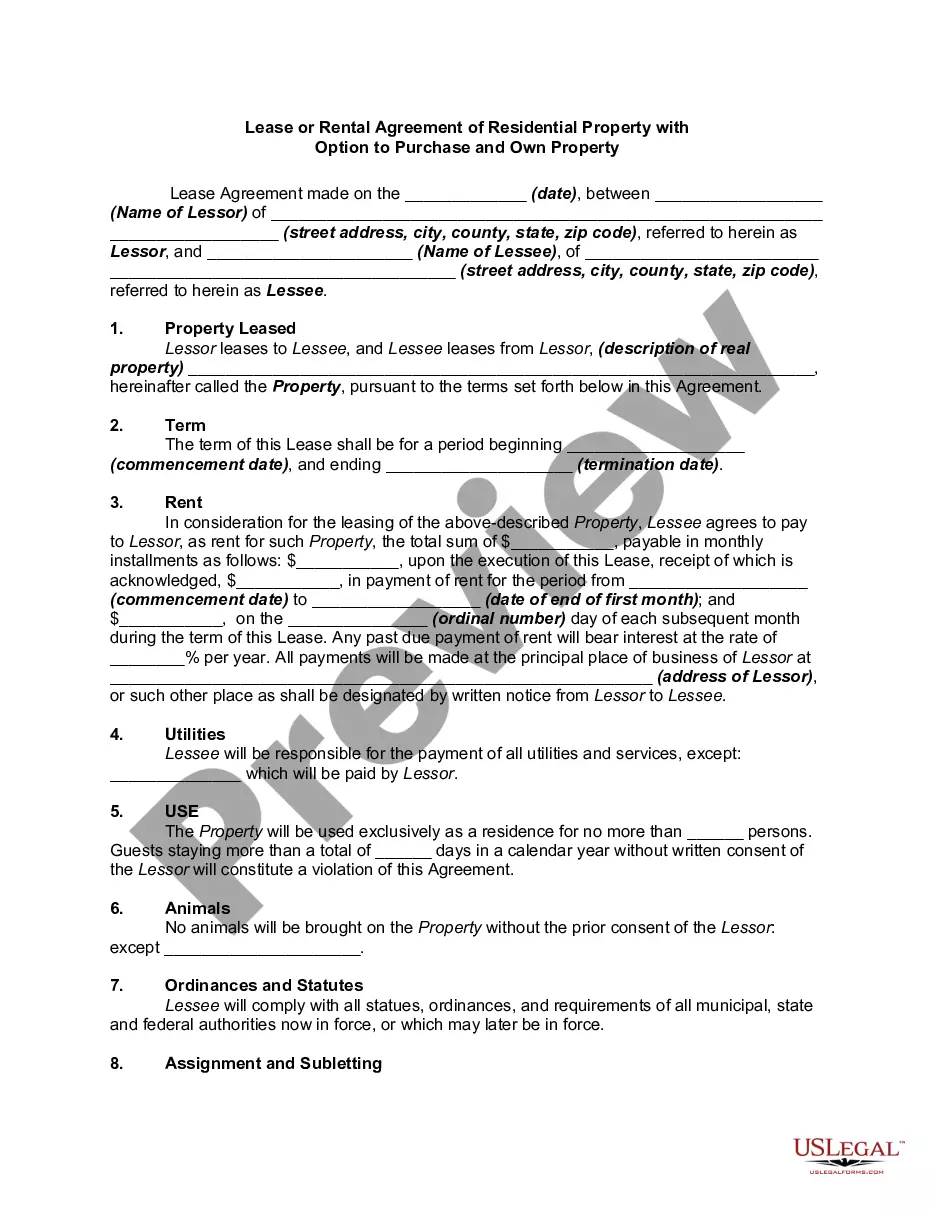
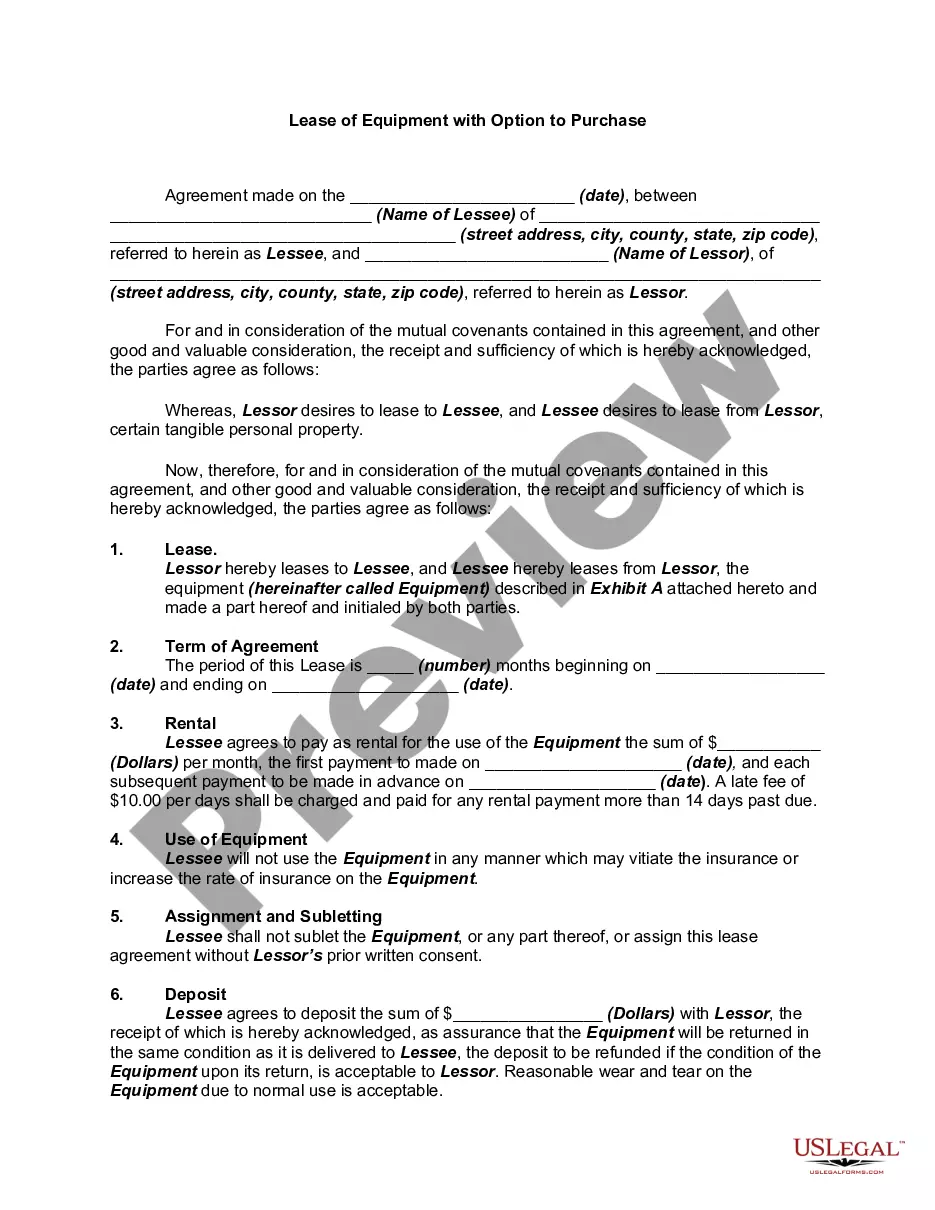
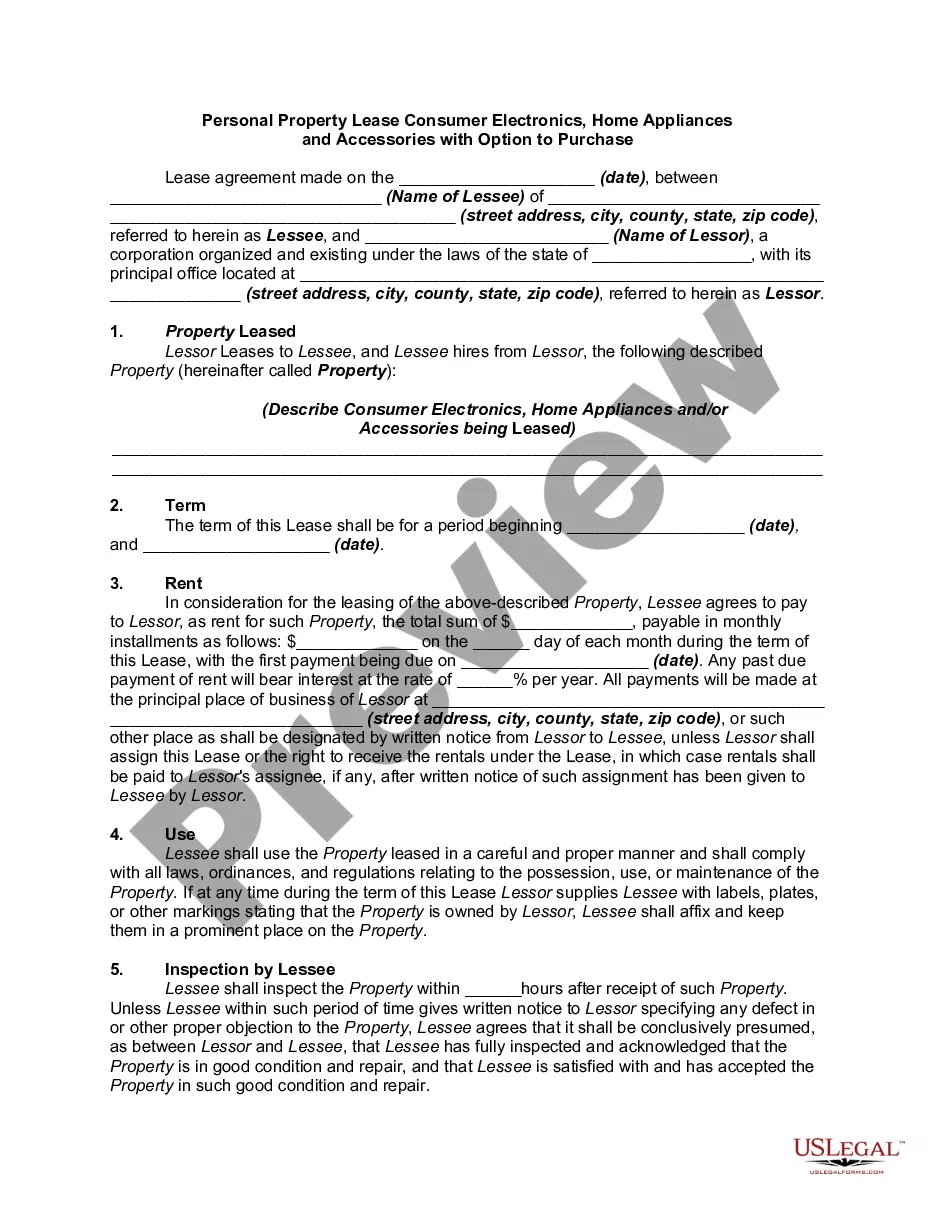
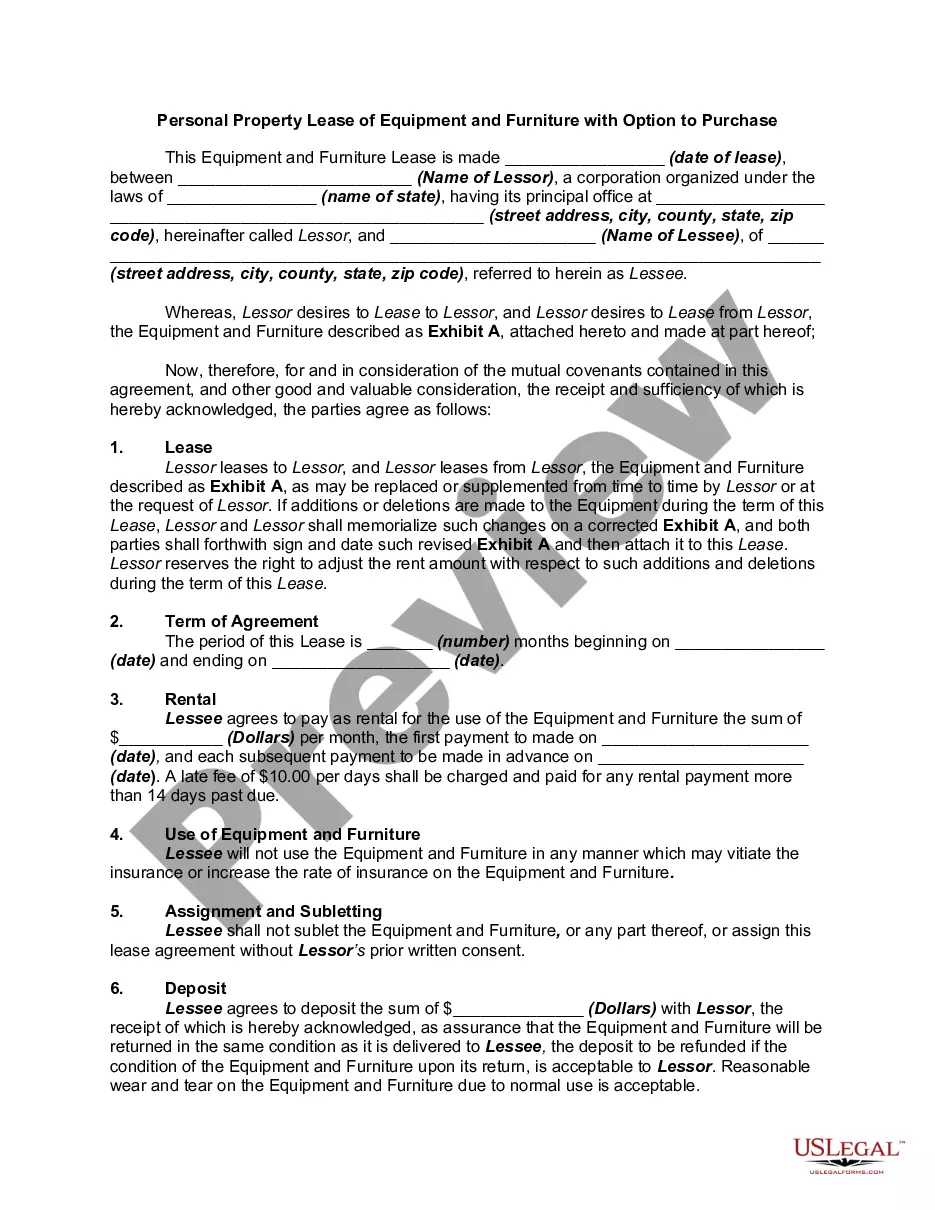
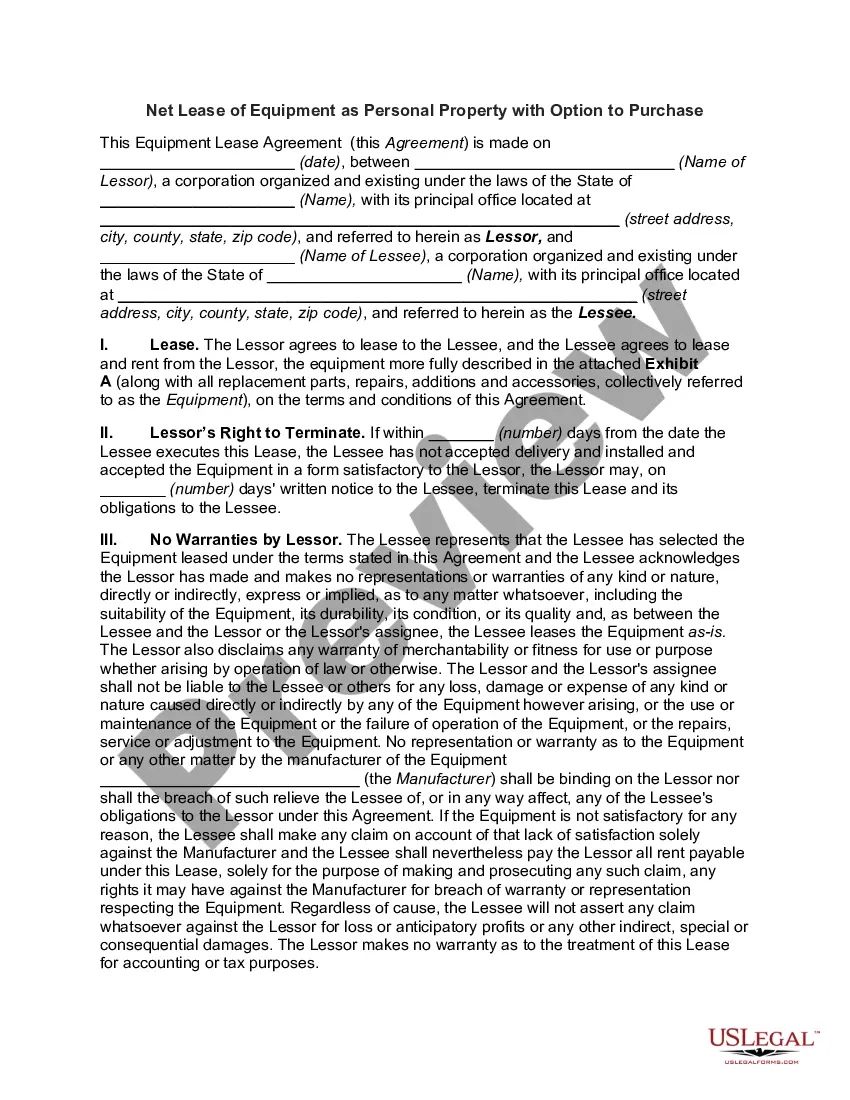
This Lease or Rental Agreement of Personal Property with an Option to Purchase is a legal template used for leasing personal property, such as equipment or furniture, between individuals or businesses. Unlike typical residential leases, this agreement does not include consumer protections under the Federal Consumer Leasing Act, making it suitable for non-consumer transactions. It provides the lessee an option to purchase the property at the end of the lease term, distinctly combining rental and purchase aspects.
Key parts of this document
- Property description: Clearly identifies the personal property being leased.
- Term of lease: Specifies the commencement and termination dates of the lease.
- Rent payment terms: Details the total rent, payment schedule, and late payment penalties.
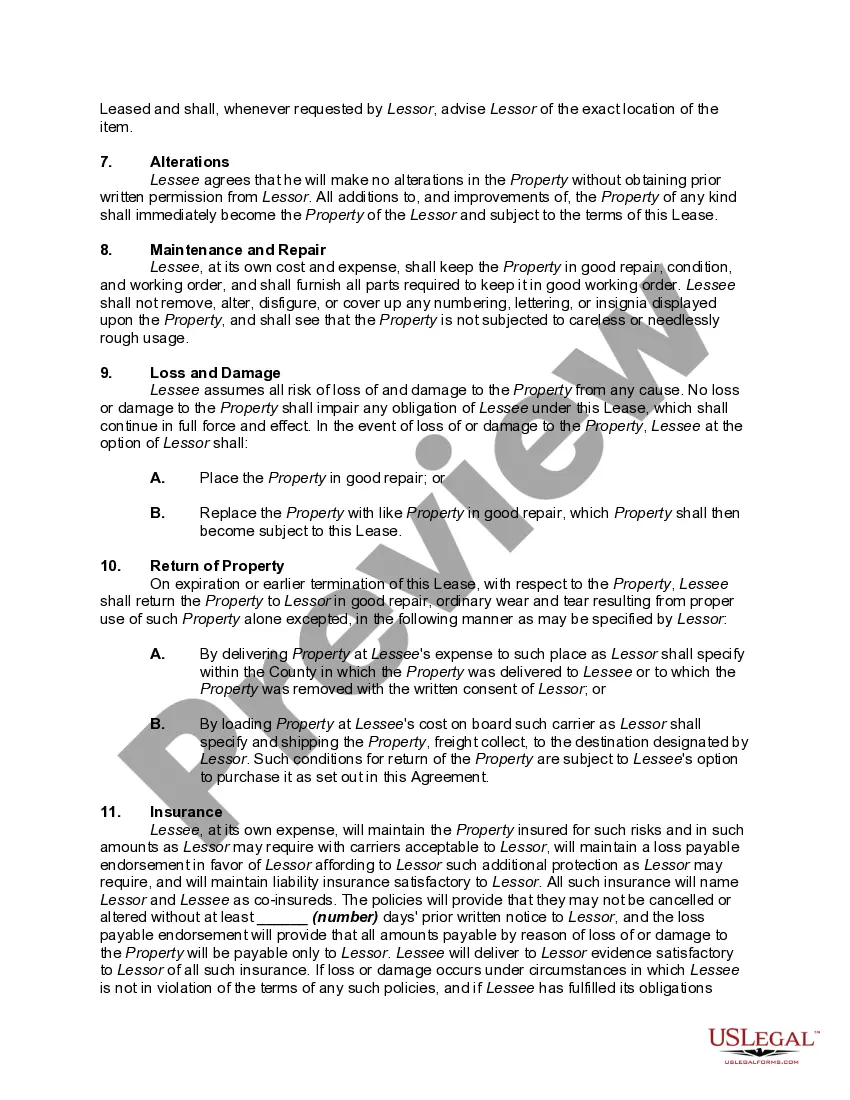
- Use and maintenance obligations: Outlines how the lessee should manage and care for the property.
- Insurance and taxes: States the lessee's responsibilities for maintaining insurance and paying applicable taxes.
- Option to purchase: Describes the conditions under which the lessee can buy the property.
Common use cases
This lease agreement is ideal for situations where one party wants to rent equipment, furniture, or other personal property, with the potential to purchase it at the end of the lease. It's useful for short-term needs where the lessee might want to evaluate the property before committing to a purchase. For instance, a business might use this form to lease machinery while deciding whether to buy it outright later.
Intended users of this form
- Individuals looking to rent personal property from another individual.
- Businesses leasing equipment from a supplier or vendor.
- Lessors and lessees involved in commercial transactions that do not fall under consumer protection laws.
- Parties interested in a rental agreement that includes options for future purchase.
Steps to complete this form
- Identify the parties: Fill in the names and addresses of the lessor and lessee.
- Specify the property: Provide a detailed description of the personal property being leased.
- Enter dates: Clearly state the lease's start and end dates.
- Detail payment terms: Include the total rental amount, payment schedule, and interest rate for late payments.
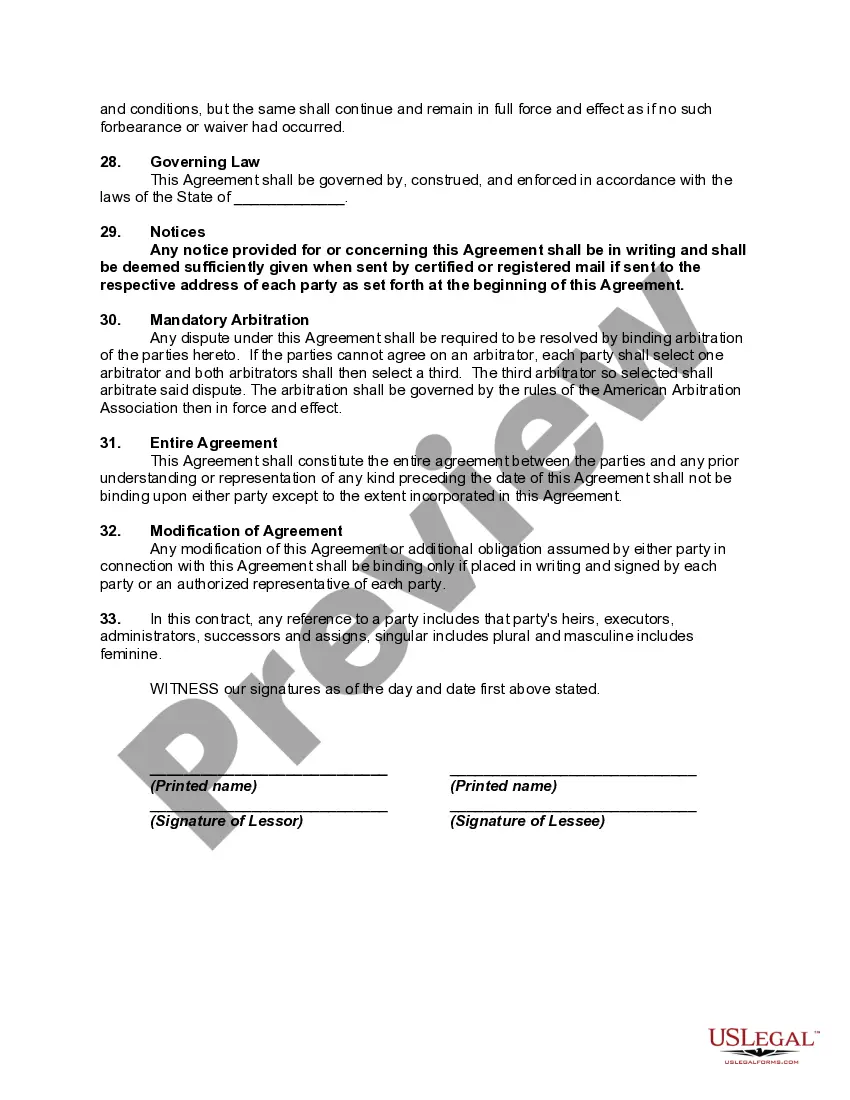
- Sign the agreement: Ensure both parties read, understand, and sign the document to make it legally binding.
Does this form need to be notarized?
This form does not typically require notarization unless specified by local law. It is advisable to check your local regulations to ensure compliance.
Get your form ready online
Our built-in tools help you complete, sign, share, and store your documents in one place.
Make edits, fill in missing information, and update formatting in US Legal Forms—just like you would in MS Word.
Download a copy, print it, send it by email, or mail it via USPS—whatever works best for your next step.
Sign and collect signatures with our SignNow integration. Send to multiple recipients, set reminders, and more. Go Premium to unlock E-Sign.
If this form requires notarization, complete it online through a secure video call—no need to meet a notary in person or wait for an appointment.
We protect your documents and personal data by following strict security and privacy standards.

Make edits, fill in missing information, and update formatting in US Legal Forms—just like you would in MS Word.

Download a copy, print it, send it by email, or mail it via USPS—whatever works best for your next step.

Sign and collect signatures with our SignNow integration. Send to multiple recipients, set reminders, and more. Go Premium to unlock E-Sign.

If this form requires notarization, complete it online through a secure video call—no need to meet a notary in person or wait for an appointment.

We protect your documents and personal data by following strict security and privacy standards.
Mistakes to watch out for
- Failing to provide a clear description of the leased property.
- Not specifying the terms of the option to purchase.
- Neglecting to outline maintenance and insurance obligations.
- Leaving out the payment schedule or interest terms for late payments.
Benefits of using this form online
- Immediate access to a professionally drafted legal document.
- Easy customization to meet specific needs and circumstances.
- Time-saving by avoiding the need for consultations with an attorney for standard agreements.
- Secure storage of forms with easy retrieval when needed.
Legal use & context
- This agreement outlines rights and responsibilities, ensuring both lessors and lessees understand their obligations.
- It is enforceable under commercial and contract law, provided all necessary details are filled out accurately.
- Failure to follow the agreement may result in legal repercussions or financial liability for either party.
What to keep in mind
- Covers leasing of personal property with an option for ownership.
- Clearly defines payment terms, responsibilities, and conditions for use.
- Suitable for both individuals and businesses needing to lease property.
- Ensure all required information is entered and signatures are obtained for validity.
Looking for another form?
Form popularity
FAQ
Document everything in writing. Keep a written record of everything that is agreed on, and be careful to use the right terms in the agreement. Consult an attorney. Use separate agreements. Keep the term short. Take a security deposit. Pay like an owner. Factor in repair costs. Don't give large rent credits.
The letter should be clear in its terms and conditions. The factors like rent amount, a period of rent and other details should be its special highlight. The letter should contain the interests of both parties. The letter should be inclusive of all the rights of both parties.
Names of all tenants. Limits on occupancy. Term of the tenancy. Rent. Deposits and fees. Repairs and maintenance. Entry to rental property. Restrictions on tenant illegal activity.
Lease-option contracts give you the right to buy the home when the lease expires, while lease-purchase contracts require you to buy it. You pay rent throughout the lease, and in some cases, a percentage of the payment is applied to the purchase price.
Officially record the lease agreement and purchase option. The easiest way to do this is have the paperwork notarized and then recorded in your local public real estate records. Escrow the deed. Record a mortgage.
If you're thinking of renting out your property, or you're a tenant, and the current owner doesn't already have an agreement drawn up, it's possible to create your own rental contract.
As long as the contract spells out specific details and both parties have signed that they agree to the contract's terms, a handwritten contract is legally binding and enforceable in court.
Collect each party's information. Include specifics about your property. Consider all of the property's utilities and services. Know the terms of your lease. Set the monthly rent amount and due date. Calculate any additional fees. Determine a payment method. Consider your rights and obligations.