Complaint Against Adjacent Landowner for Damages as a Result of Tree Falling on the Property of Plaintiff
What this document covers
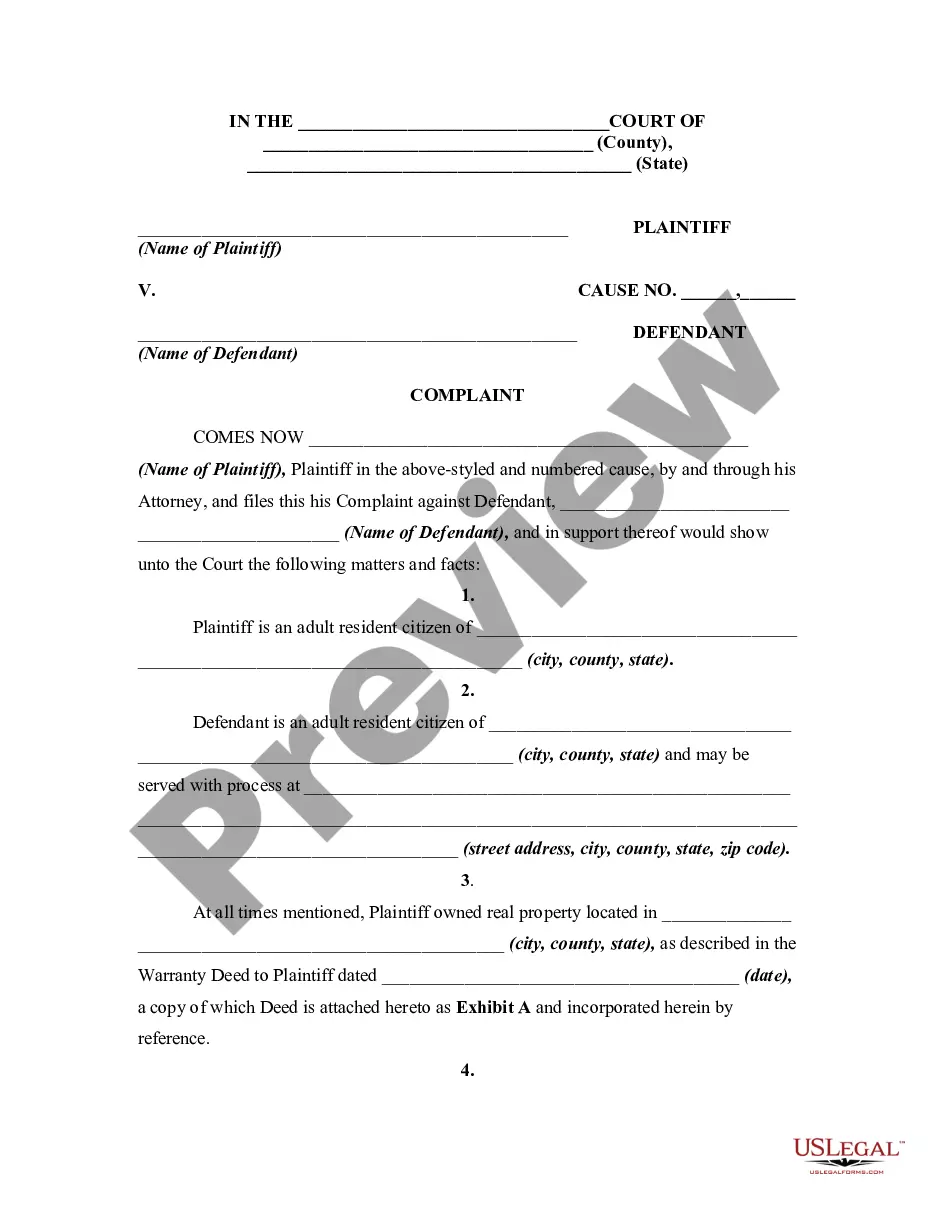
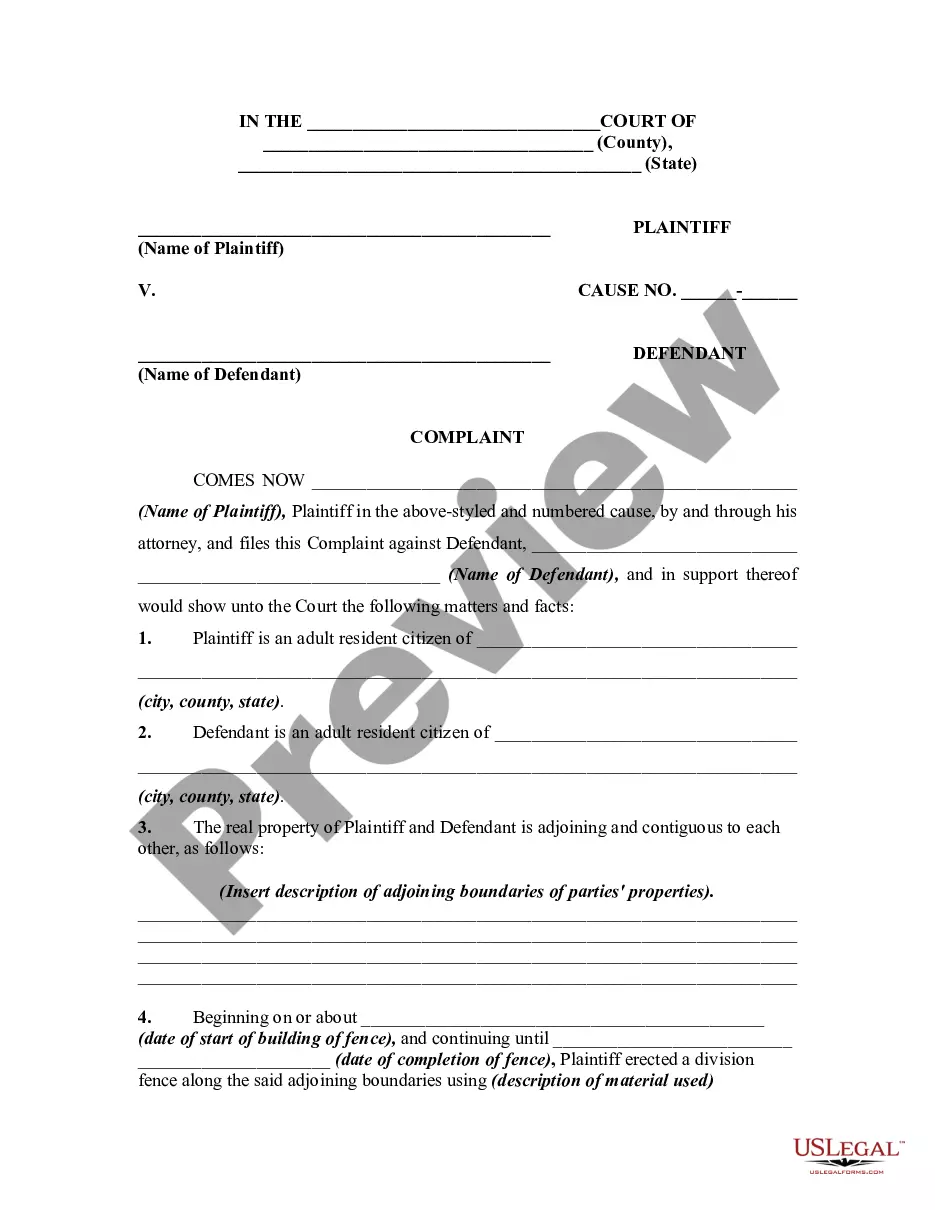
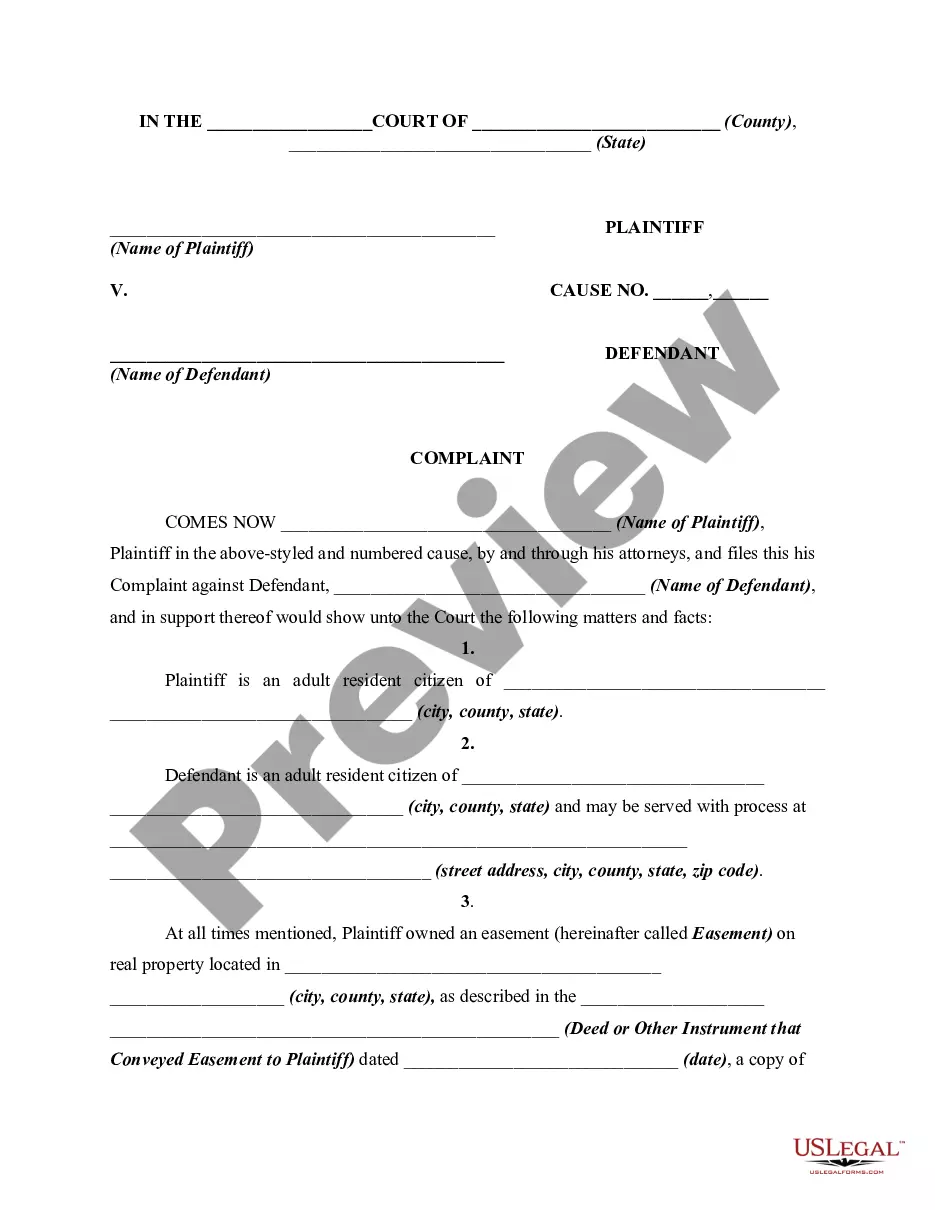
This Complaint Against Adjacent Landowner for Damages as a Result of Tree Falling on the Property of Plaintiff is a legal document that allows a property owner to seek compensation for damages caused by a falling tree from an adjacent property. This form is particularly important for addressing issues of negligence related to property maintenance. Unlike other legal complaints, this form focuses specifically on the liabilities associated with falling trees, making it essential for those needing to resolve disputes with neighboring landowners over property damage caused by natural growths.
Key parts of this document
- Identification of the plaintiff and defendant, including their addresses.
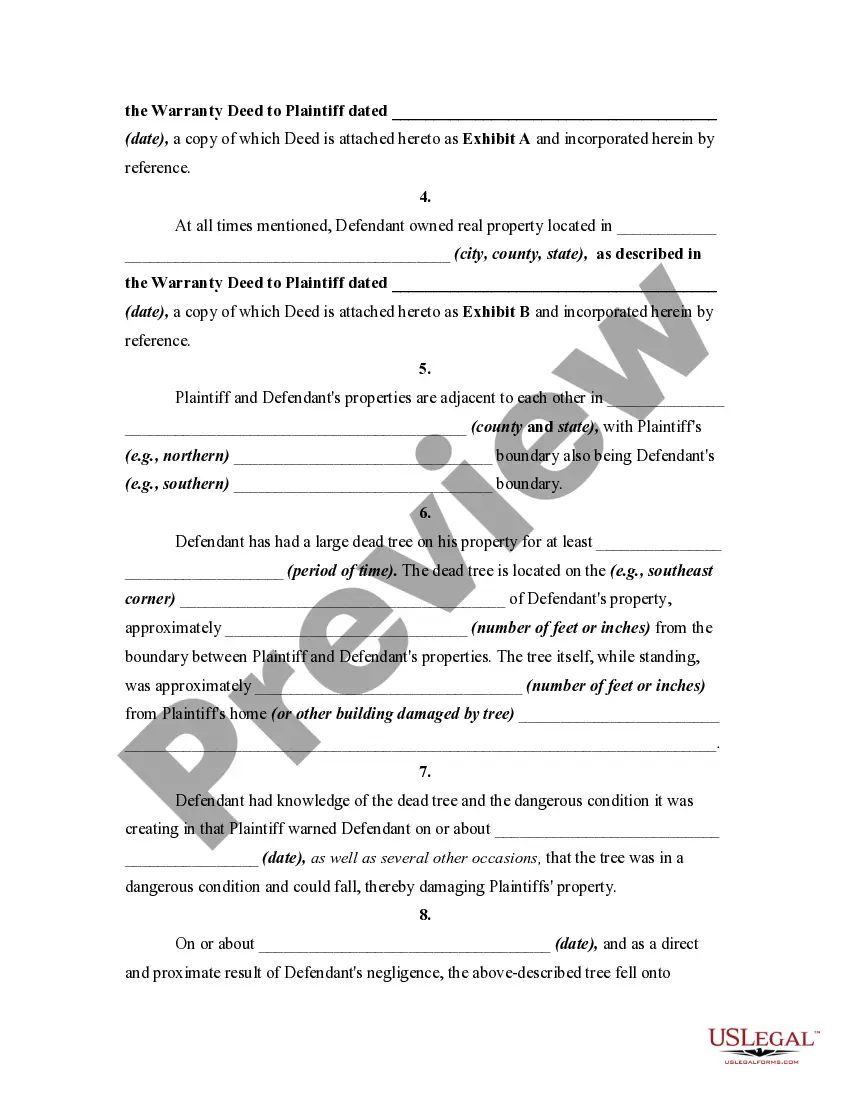
- Description of the properties involved and the ownership details.
- Details of the tree's condition and any prior warnings given to the defendant.
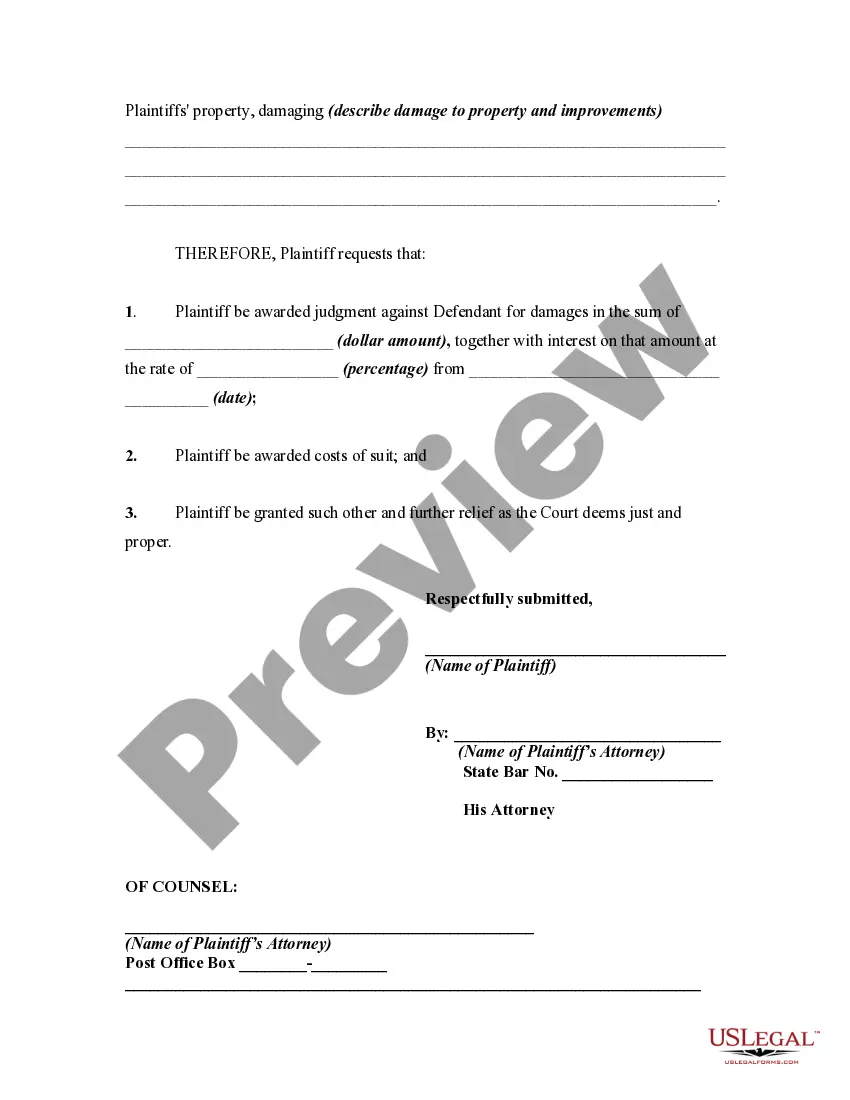
- Account of the incident when the tree fell and the resultant damages.
- Specific requests for damages and other legal relief sought by the plaintiff.

Situations where this form applies
This form should be used when a tree from a neighboring property has caused damage to your property, and you believe the tree's owner acted negligently in maintaining the tree. It is relevant in scenarios where the property owner has previously notified the neighbor about the dangerous condition of the tree, yet no corrective action has been taken, leading to property damage such as structural harm or loss of land use.
Who needs this form
This form is intended for:
- Property owners who have suffered damage from a falling tree originating from an adjacent owner's property.
- Individuals who have previously warned their neighbors regarding hazardous tree conditions.
- Anyone seeking to formally register a complaint against a neighbor for property damages.
Instructions for completing this form
- Begin by filling out the names and addresses of the plaintiff and defendant.
- Clearly describe the properties involved and include ownership verification through warranty deeds.
- Provide details about the tree, including its condition and location on the defendantâs property.
- Document the warning notices given to the defendant about the tree's hazardous state.
- Describe the damages incurred to your property as a result of the fallen tree.
- Specify the amount of damages sought and any other legal remedies requested from the court.
Notarization guidance
This form does not typically require notarization unless specified by local law. However, it is essential to check your jurisdiction's specific requirements before filing.
Get your form ready online
Our built-in tools help you complete, sign, share, and store your documents in one place.
Make edits, fill in missing information, and update formatting in US Legal Forms—just like you would in MS Word.
Download a copy, print it, send it by email, or mail it via USPS—whatever works best for your next step.
Sign and collect signatures with our SignNow integration. Send to multiple recipients, set reminders, and more. Go Premium to unlock E-Sign.
If this form requires notarization, complete it online through a secure video call—no need to meet a notary in person or wait for an appointment.
We protect your documents and personal data by following strict security and privacy standards.
Make edits, fill in missing information, and update formatting in US Legal Forms—just like you would in MS Word.
Download a copy, print it, send it by email, or mail it via USPS—whatever works best for your next step.
Sign and collect signatures with our SignNow integration. Send to multiple recipients, set reminders, and more. Go Premium to unlock E-Sign.

If this form requires notarization, complete it online through a secure video call—no need to meet a notary in person or wait for an appointment.
We protect your documents and personal data by following strict security and privacy standards.
Mistakes to watch out for
- Failing to accurately identify the properties and their respective owners.
- Omitting prior communication records with the defendant regarding the treeâs condition.
- Not clearly detailing the extent of damages incurred, which may weaken the case.
- Neglecting to verify local jurisdiction rules and filing requirements which could affect the submission.
Advantages of online completion
- Easy access to legally vetted templates drafted by licensed attorneys.
- Editable formats allow you to customize the form to fit your specific situation.
- Instant download provides immediate availability for urgent legal needs.
- No need for in-person visits, ensuring a quick and convenient process.
Quick recap
- This form is essential for property owners seeking compensation from a neighbor due to a falling tree.
- It must include detailed information on the properties and circumstances surrounding the incident.
- Local laws should be consulted to ensure the form meets jurisdictional requirements.
Looking for another form?



Form popularity
FAQ
Q: What Happens If The Tree Was On My Neighbor's Property? A: If your home is damaged by your neighbor's tree, homeowners insurance may help pay to repair the damage to your house (or other structure, if the tree falls on your fence, for example).
If the nuisance has stopped, can I still sue my neighbor? Yes. If the neighbor has stopped the activity or behavior that was the nuisance, you may still recover damages for the past existence of the nuisance. CAL.
If you think your neighbour's tree is dangerous, you can report it to the council - for example if you think it might fall over. They might ask the owner to make it safe or deal with it themselves. Search for 'trees' on your council's website to find which department to contact.
When a tree falls over onto a neighbor's property, that neighbor should submit a claim to his or her insurance company immediately. The insurance company is usually responsible for taking care of the damages. This is true if the tree fell over due to an act of nature.
Regardless of if there is property damage, a landowner may sue her neighbor to make that neighbor trim the branches that encroach the landowner's property. Serious harm caused by encroaching tree limbs or tree roots may give rise to a lawsuit.A neighbor may only sue if the tree is noxious.
A property damage claim is a request for financial compensation from an insurance company when a person's property has been damaged by a collision or other covered cause. The most common property damage claim is when a not-at-fault driver files a claim with the at-fault driver's insurer after a car accident.
Property damage is defined as some harm that is inflicted upon someone's property as the result of another person's negligence, willful destruction of that person's property, or by an act of nature. Flooding caused by a hurricane is an example of property damage caused by an act of nature.
The offence of Intentionally or recklessly destroy property carries a maximum penalty of 1 year imprisonment in the Local Court if the damage does not exceed $5,000.00 and 2 years imprisonment in the Local Court if the damage exceeds $5,000.00. The maximum penalty in the District Court is 5 years imprisonment.
Vandalism occurs when an individual destroys, defaces or otherwise degrades someone else's property without their permission; sometimes called criminal damage, malicious trespass, or malicious mischief.