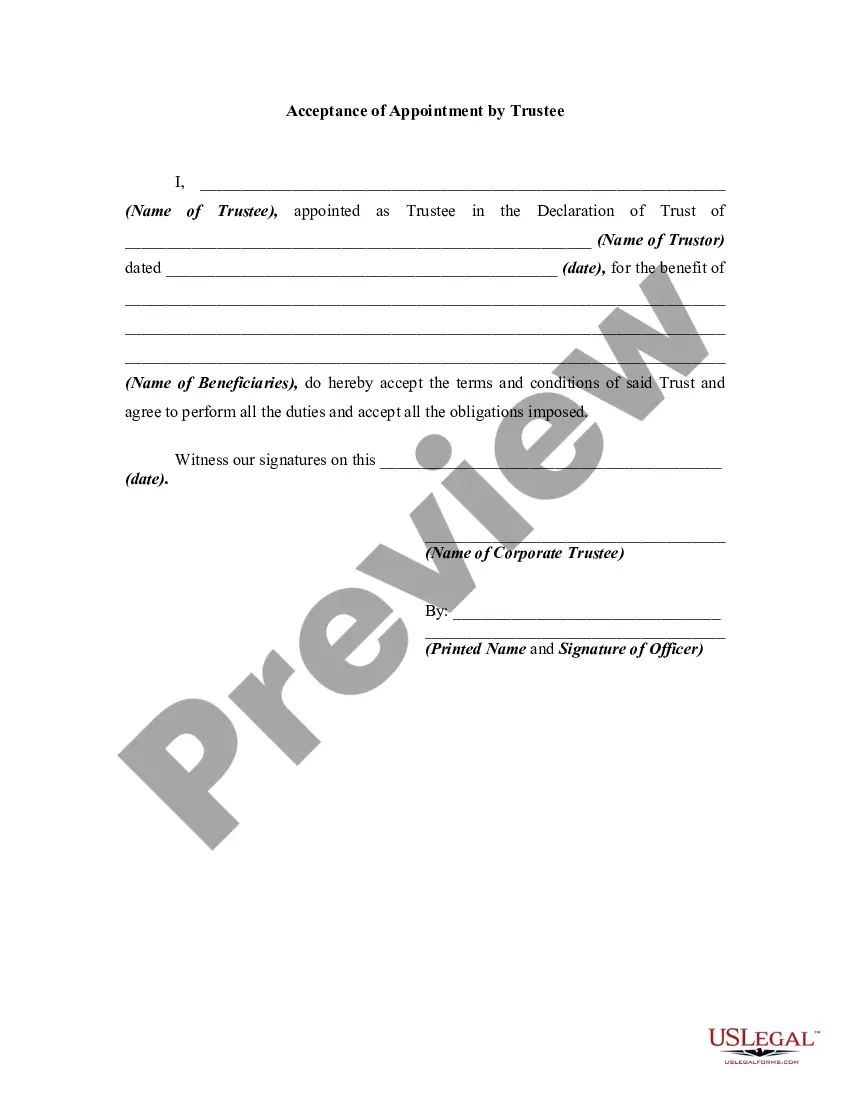
Acceptance of Appointment by Trustee
What is this form?
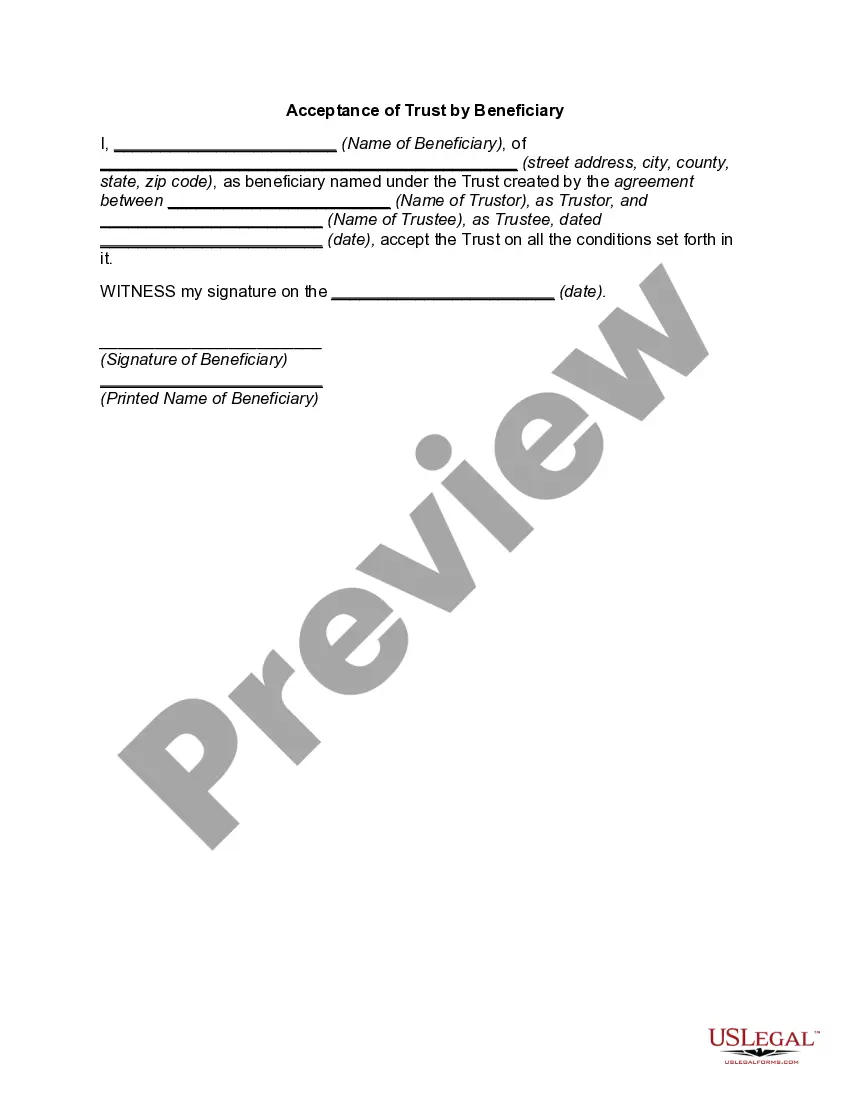
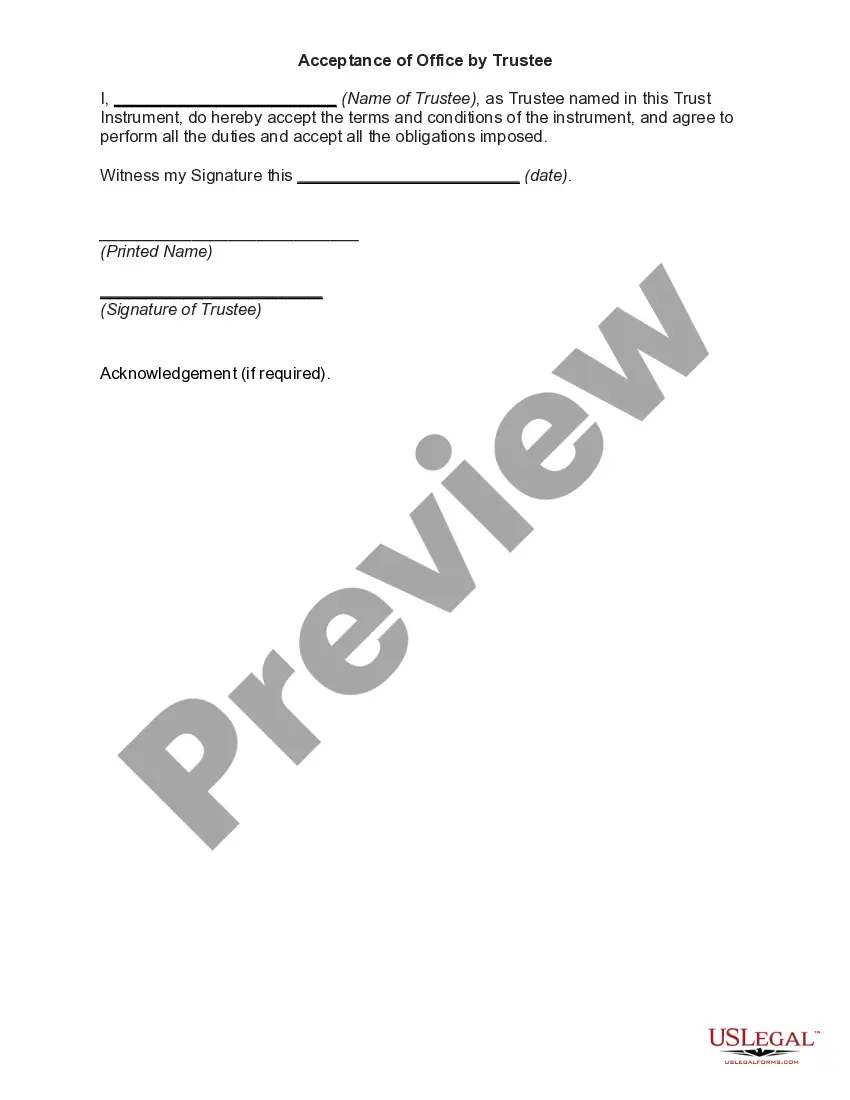
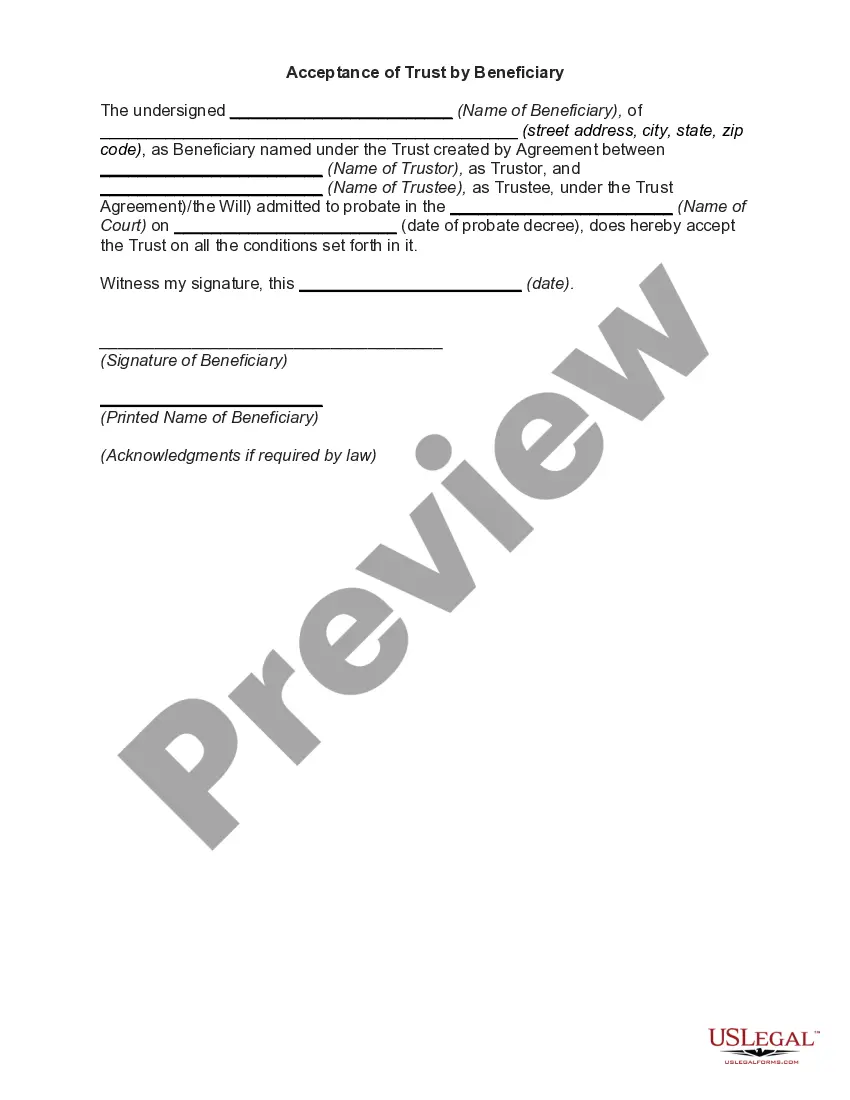
The Acceptance of Appointment by Trustee form is a legal document that confirms a personâs agreement to act as a trustee for a specified trust. While it is not necessary for the trust's validity, acceptance is important for the trustee to assume the responsibilities of managing the trust. This form serves as an officially recognized acknowledgment by the trustee and differs from other trust-related forms by specifically outlining the acceptance of the role and the obligations associated with it.
What’s included in this form
- Name of the Trustee being appointed.
- Name of the Trustor who created the trust.
- Date of the original Declaration of Trust.
- Details of the beneficiaries who will benefit from the trust.
- The trustee's acceptance of terms and conditions of the trust.
Situations where this form applies
This form should be used when a trustee has been appointed in a trust document and wishes to formally accept that role. It is particularly useful in situations where the trust needs to be administered and the trustee must acknowledge their responsibilities. Common scenarios include family trusts, charitable trusts, or any situation where the management of a trust is necessary for the benefit of its beneficiaries.
Who can use this document
- Individuals appointed as trustees in a trust agreement.
- Corporate entities designated as trustees for trust management.
- Beneficiaries of a trust who need to ensure proper administration.
How to prepare this document
- Enter the name of the trustee accepting the appointment.
- Fill in the name of the trustor and the date of the Declaration of Trust.
- Provide a detailed list of beneficiaries who will receive benefits from the trust.
- Review and accept the terms and conditions by signing and dating the form.
- If applicable, have the corporate trustee sign as required.
Does this form need to be notarized?
This form does not typically require notarization unless specified by local law. However, it is advisable to check your stateâs requirements to ensure compliance with any specific regulations.
Get your form ready online
Our built-in tools help you complete, sign, share, and store your documents in one place.
Make edits, fill in missing information, and update formatting in US Legal Forms—just like you would in MS Word.
Download a copy, print it, send it by email, or mail it via USPS—whatever works best for your next step.
Sign and collect signatures with our SignNow integration. Send to multiple recipients, set reminders, and more. Go Premium to unlock E-Sign.
If this form requires notarization, complete it online through a secure video call—no need to meet a notary in person or wait for an appointment.
We protect your documents and personal data by following strict security and privacy standards.

Make edits, fill in missing information, and update formatting in US Legal Forms—just like you would in MS Word.

Download a copy, print it, send it by email, or mail it via USPS—whatever works best for your next step.

Sign and collect signatures with our SignNow integration. Send to multiple recipients, set reminders, and more. Go Premium to unlock E-Sign.

If this form requires notarization, complete it online through a secure video call—no need to meet a notary in person or wait for an appointment.

We protect your documents and personal data by following strict security and privacy standards.
Avoid these common issues
- Failing to include all required signatures on the document.
- Not correctly identifying the beneficiaries of the trust.
- Leaving out the date of the Declaration of Trust.
Benefits of using this form online
- Convenient access to a downloadable format that can be completed at your own pace.
- Editability allows you to enter specific details tailored to your unique situation.
- Reliable templates drafted by licensed attorneys ensure legal compliance and validity.
Legal use & context
- The form establishes the trustee's acceptance of their role, helping clarify responsibilities and legal obligations.
- Enforceability varies by jurisdiction; therefore, consulting local laws before use is vital.
Quick recap
- The Acceptance of Appointment by Trustee form is essential for legally recognizing a trusteeâs role.
- Completing the form correctly is crucial for effective trust management.
- Always consult state-specific laws to ensure full compliance when using this form.
- Using this form digitally streamlines the process and minimizes errors.
Looking for another form?


Form popularity
FAQ
Acceptance of Appointment by Trustee is the form used to confirm a person’s agreement to act as trustee for a named trust. It isn’t required for validity, but it formalizes the trustee’s acceptance of the role and its duties. The form records the trustee’s name, the trustor, the date of the original Declaration of Trust, beneficiaries, and the trustee’s acceptance, plus a signature line for a corporate trustee or representative.
Common issues for trustees include misunderstandings of duties, delays in administering the trust, and unclear authority. This form helps address those issues by providing a formal acknowledgment of acceptance and outlining the trustee’s obligations. It records the trustee’s name, the trustor, the date of the Declaration of Trust, the beneficiaries, and a signed acceptance by the corporate trustee or representative.
To complete it, fill in the trustee’s name, the trustor’s name, the date of the original Declaration of Trust, the beneficiaries, and the trustee’s acceptance of the terms, then have the corporate trustee or a designated representative sign on the line provided.
Typically the person named as trustee signs to accept the role; if the appointment is by a corporate trustee, a corporate representative signs on behalf of the entity. The signature line on the form is specifically described for the corporate trustee or representative to confirm acceptance.
This form should be used when a trustee has been appointed in a trust document and wishes to formally accept that role. It is especially useful in family trusts, charitable trusts, or any situation where formal trust administration is required, because it provides official acknowledgment of the trustee’s responsibilities and begins the trust’s ongoing management.
What makes the Acceptance of Appointment by Trustee different from other trustee‑related forms is that it specifically documents the trustee’s acceptance of the role and its duties. Other forms may appoint or authorize a trustee, but this form formalizes the acceptance in writing, clarifying the trustee’s obligations and authority.