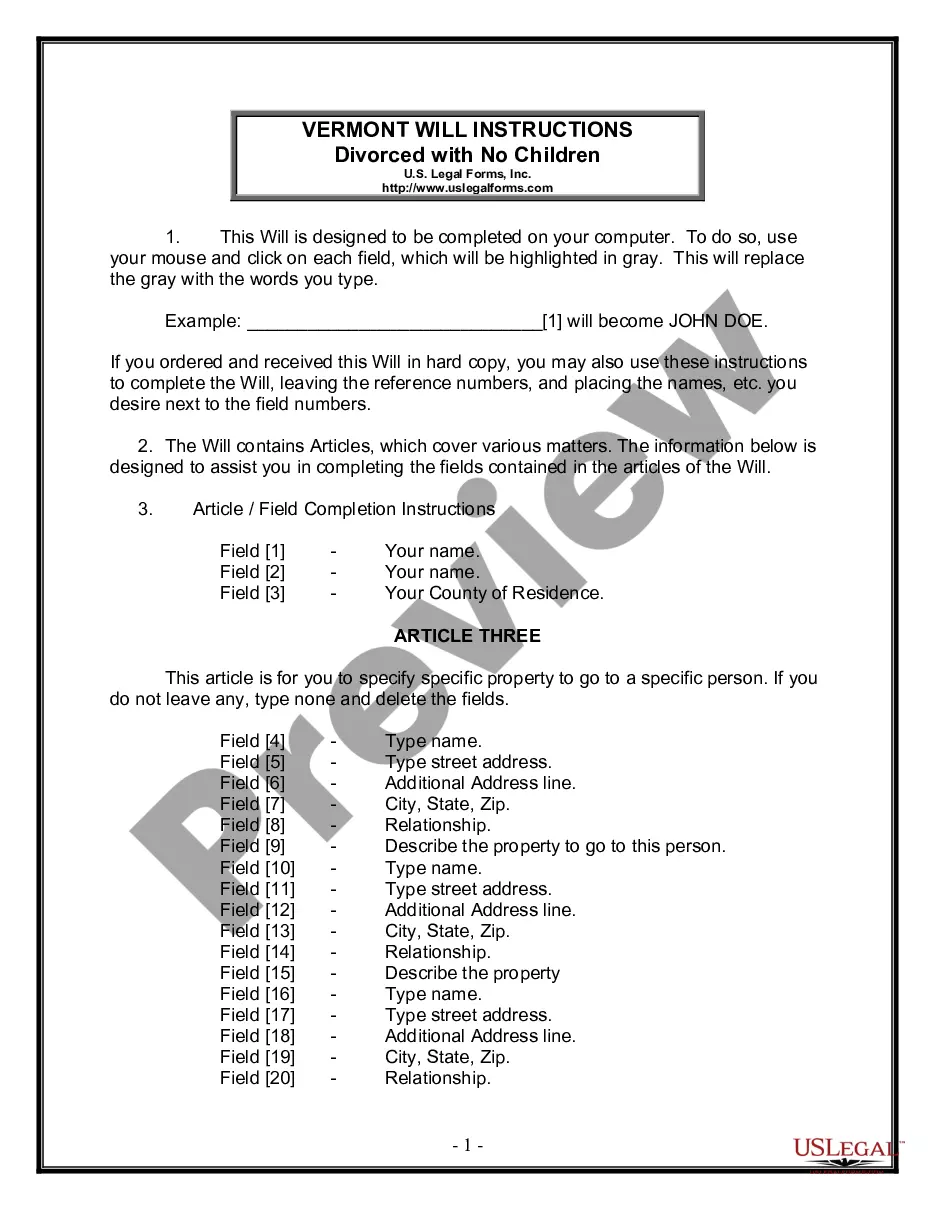
Release by Trustee to Beneficiary and Receipt from Beneficiary
About this form
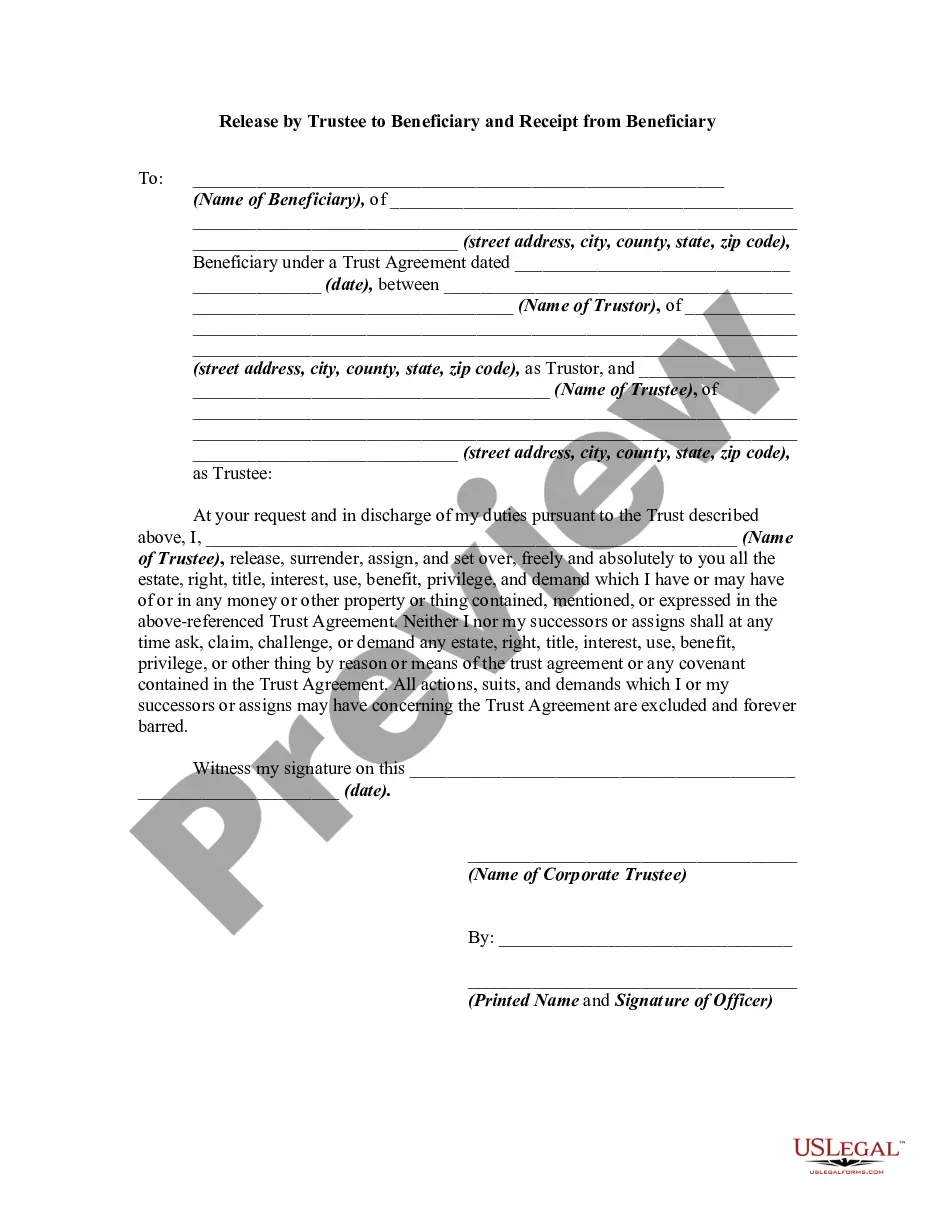
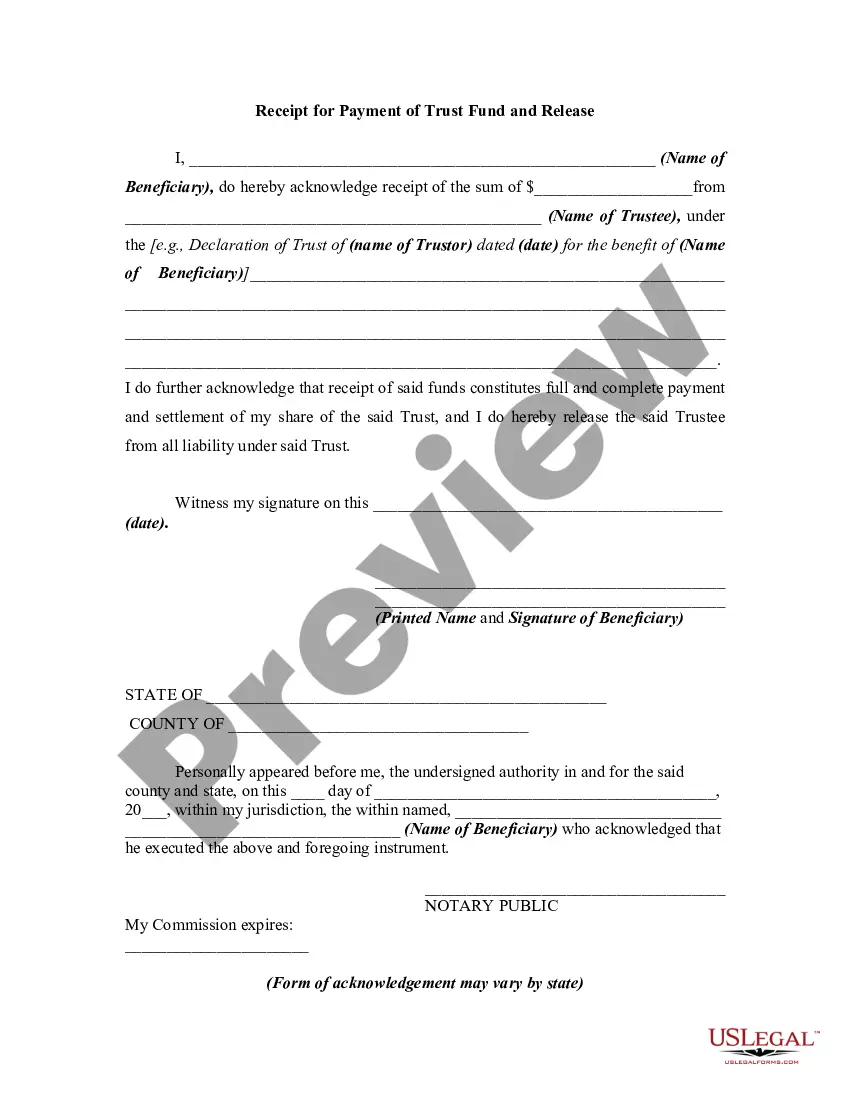
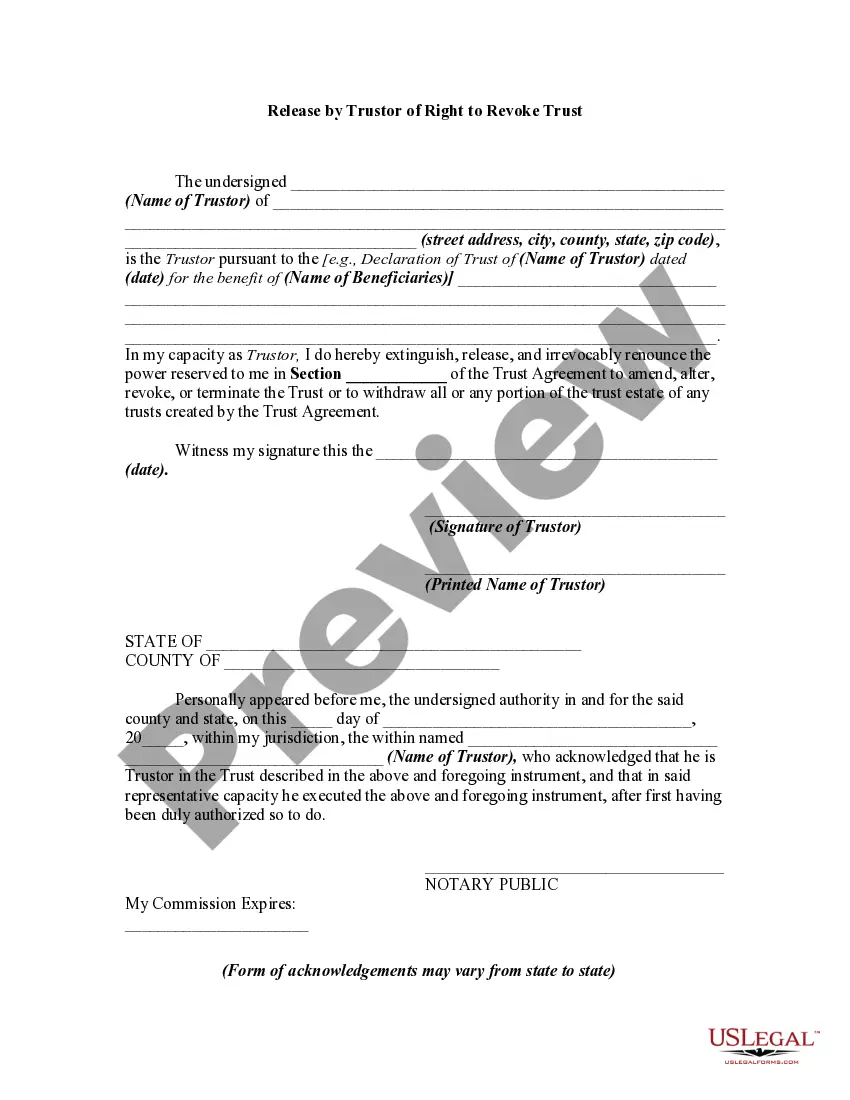
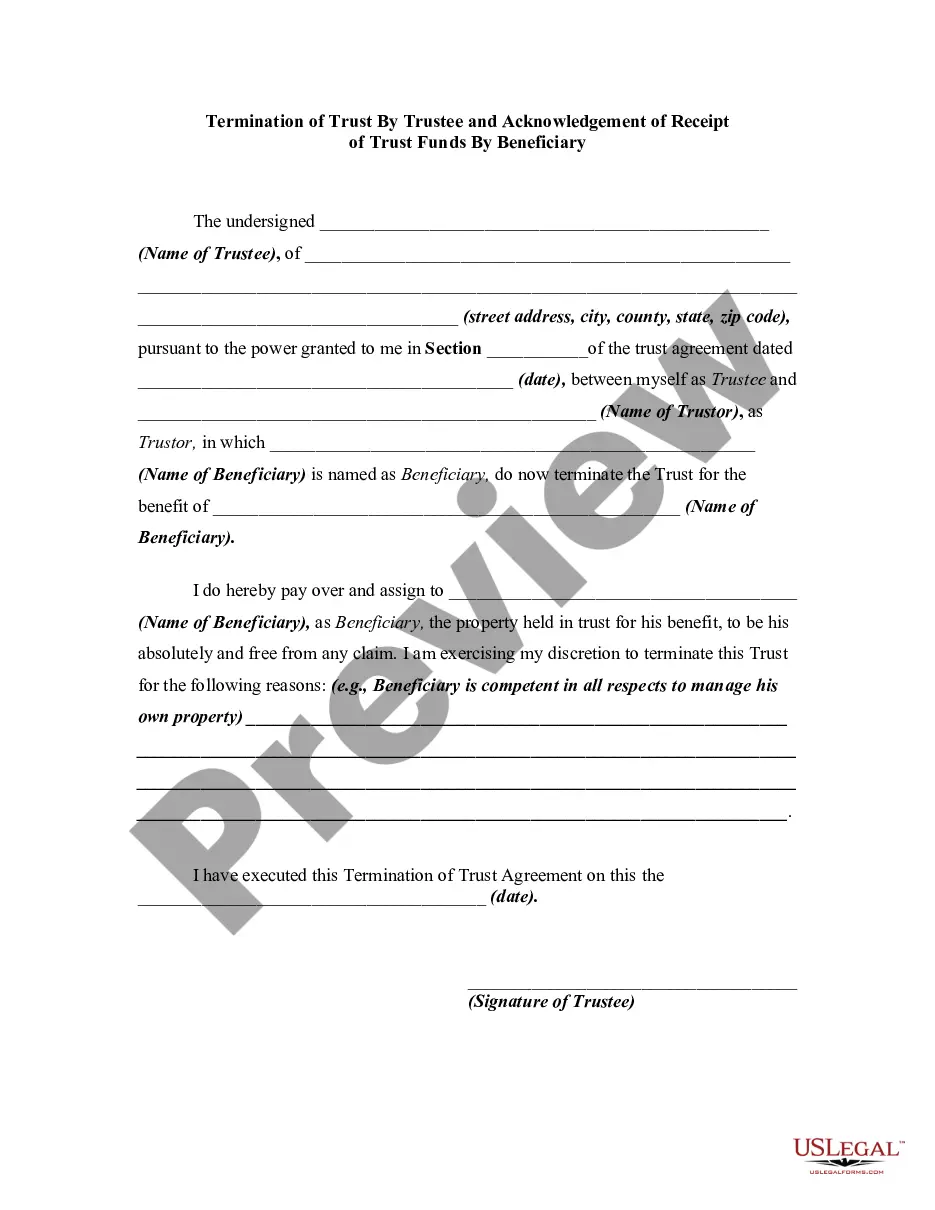
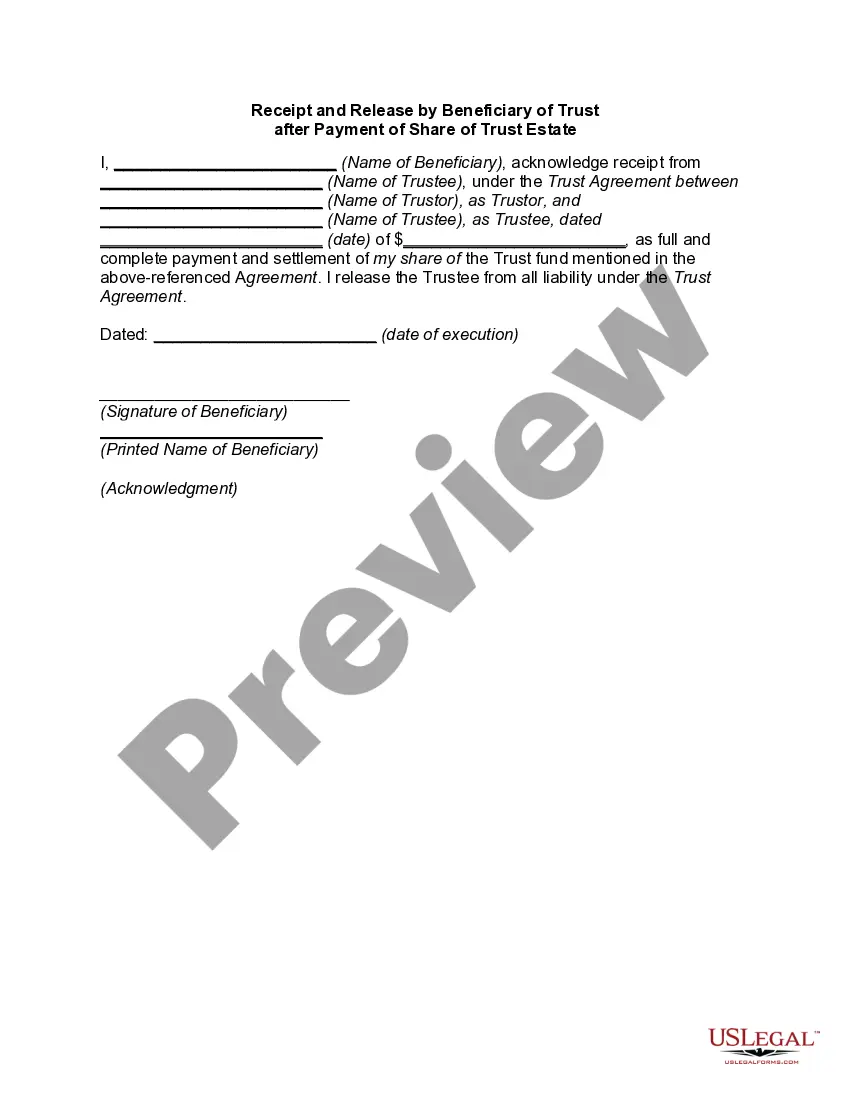
This form, known as the Release by Trustee to Beneficiary and Receipt from Beneficiary, serves to formally transfer property from a trustee to a beneficiary after a trust has concluded. It releases any claims or rights the trustee may have had over the transferred property. This document is crucial as it solidifies the beneficiary's ownership and the trustee's relinquishment of responsibilities. Unlike other forms of property transfer, this document is specific to trusts and ensures all parties acknowledge the termination of the trustee's claims.
Form components explained
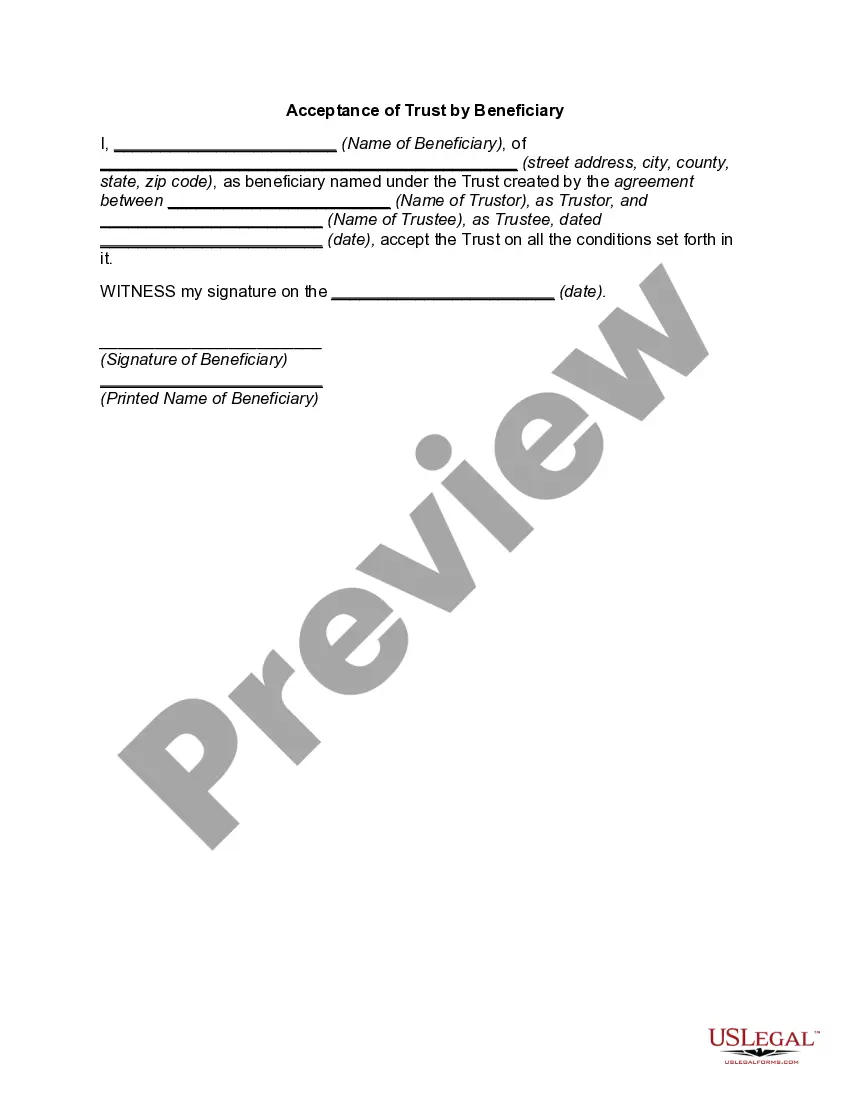
- Name and address of the beneficiary.
- Date of the trust agreement.
- Name and address of the trustor.
- Name and address of the trustee.
When to use this form
This form should be used when a trust has officially ended, and a beneficiary wishes to receive their entitled property from the trustee. It is essential when the trustee seeks to release all rights to the property and both parties need to confirm the transfer. Use this form to avoid potential disputes regarding claims to the trust property in the future.
Who should use this form
This form is intended for:
- Trustees who need to transfer property to beneficiaries after the termination of a trust.
- Beneficiaries seeking acknowledgment of their rights to received property.
- Individuals who are involved in managing or settling a deceased personâs estate.
Steps to complete this form
- Identify and fill in the name and address of the beneficiary.
- Specify the date the trust agreement was created.
- Enter the name and address of the trustor.
- Provide the name and address of the trustee.
- Complete the statement confirming the release of claims by the trustee.
- Ensure the signature sections are properly signed and include notarization where required.
Does this form need to be notarized?
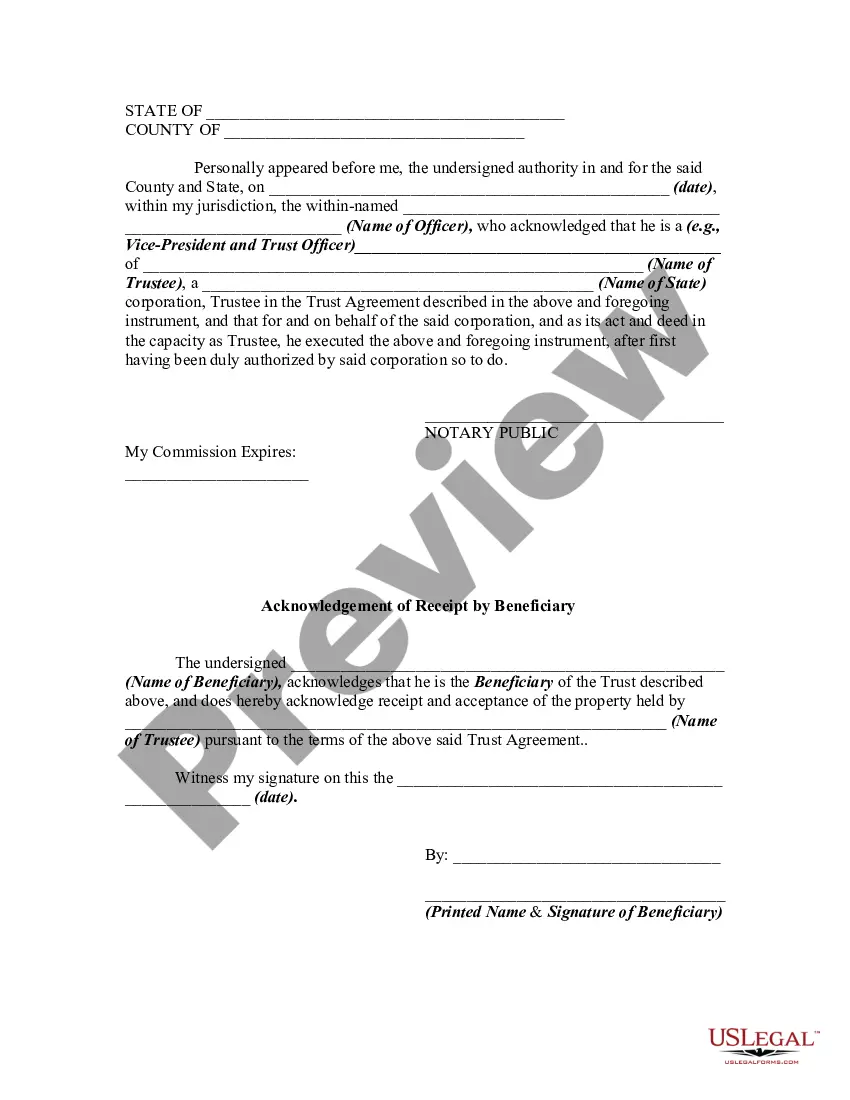
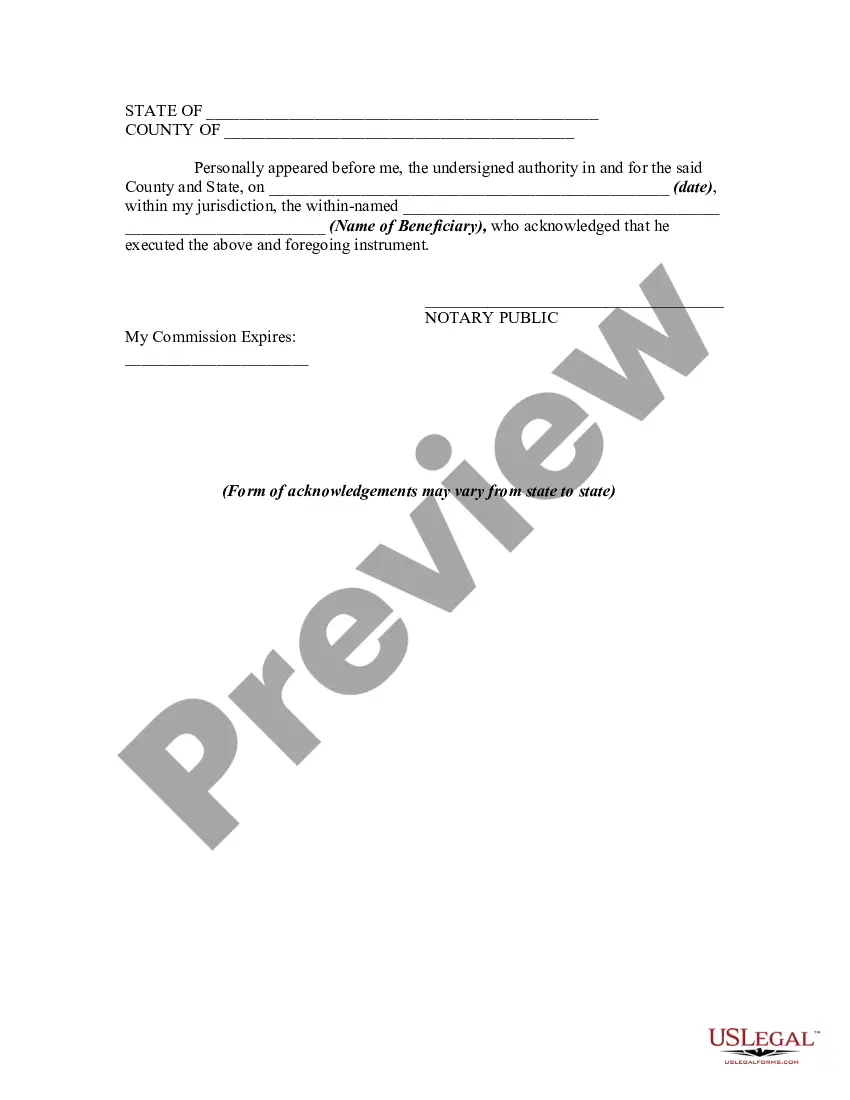
Yes, this form must be notarized to be legally valid. Notarization verifies the identities of the trustee and beneficiary and ensures that the signatures are witnessed. US Legal Forms offers integrated online notarization, allowing you to complete this process through a secure video call at any time, providing convenience and peace of mind.
Get your form ready online
Our built-in tools help you complete, sign, share, and store your documents in one place.
Make edits, fill in missing information, and update formatting in US Legal Forms—just like you would in MS Word.
Download a copy, print it, send it by email, or mail it via USPS—whatever works best for your next step.
Sign and collect signatures with our SignNow integration. Send to multiple recipients, set reminders, and more. Go Premium to unlock E-Sign.
If this form requires notarization, complete it online through a secure video call—no need to meet a notary in person or wait for an appointment.
We protect your documents and personal data by following strict security and privacy standards.

Make edits, fill in missing information, and update formatting in US Legal Forms—just like you would in MS Word.

Download a copy, print it, send it by email, or mail it via USPS—whatever works best for your next step.

Sign and collect signatures with our SignNow integration. Send to multiple recipients, set reminders, and more. Go Premium to unlock E-Sign.

If this form requires notarization, complete it online through a secure video call—no need to meet a notary in person or wait for an appointment.

We protect your documents and personal data by following strict security and privacy standards.
Typical mistakes to avoid
- Failing to properly identify all parties involved in the trust.
- Not including the date of the trust agreement.
- Omitting signatures or notarization requirements.
- Not ensuring that the trustee has the authority to make the release.
Advantages of online completion
- Immediate access to a legally vetted form tailored for your needs.
- Convenient download options for easy printing and completion.
- Editable template allows for customization based on specific situations.
- Reliable support and guidance available for navigating the formâs requirements.
Main things to remember
- The form is crucial for formalizing the transfer of property from a trustee to a beneficiary after a trust ends.
- It ensures that both parties clearly understand their rights and obligations regarding the trust's assets.
- Always consider state-specific regulations and the need for notarization to ensure the form's validity.
Looking for another form?





Form popularity
FAQ
The Release by Trustee to Beneficiary and Receipt from Beneficiary is a legal instrument used when a trust ends and property is transferred from the trustee to a beneficiary. It includes a release of claims by the trustee and a receipt by the beneficiary, documenting final distributions, and typically records the dates, parties, and signatures, plus a notary acknowledgment.
A receipt and release agreement is a legal document that records the trustee’s release of claims on trust property and the beneficiary’s receipt acknowledging the transfer. In this form, it is presented as the Release by Trustee to Beneficiary and Receipt from Beneficiary, with signature lines for both parties and a notary acknowledgment to finalize the distribution.
The receipt from the beneficiary confirms they have received the trust property specified and acknowledges the trustee’s release of claims on that property. Using this form, the beneficiary signs to show receipt and the notary acknowledges signatures, helping prove that the trust’s final distributions and obligations have been fulfilled.
The trustee signs to release any claims on the transferred property, while the beneficiary signs to acknowledge receipt of the distributions. The document includes a notary acknowledgment section to verify signatures and confirm that the final disposition complies with the trust terms.
Key components include the beneficiary’s name and address, the date of the trust agreement, the names and addresses of the trustor and trustee, a clause releasing all trustee claims on the transferred property, as well as signature lines for both parties and a notary acknowledgment.
This form uniquely combines a trustee’s release of claims with a beneficiary’s receipt in one instrument, plus a notary acknowledgment. The integrated structure signals the trust’s conclusion and final distribution, whereas some releases may omit the beneficiary receipt or notarization.