Amendment to Trust Agreement in Order to Change Beneficiaries
Overview of this form
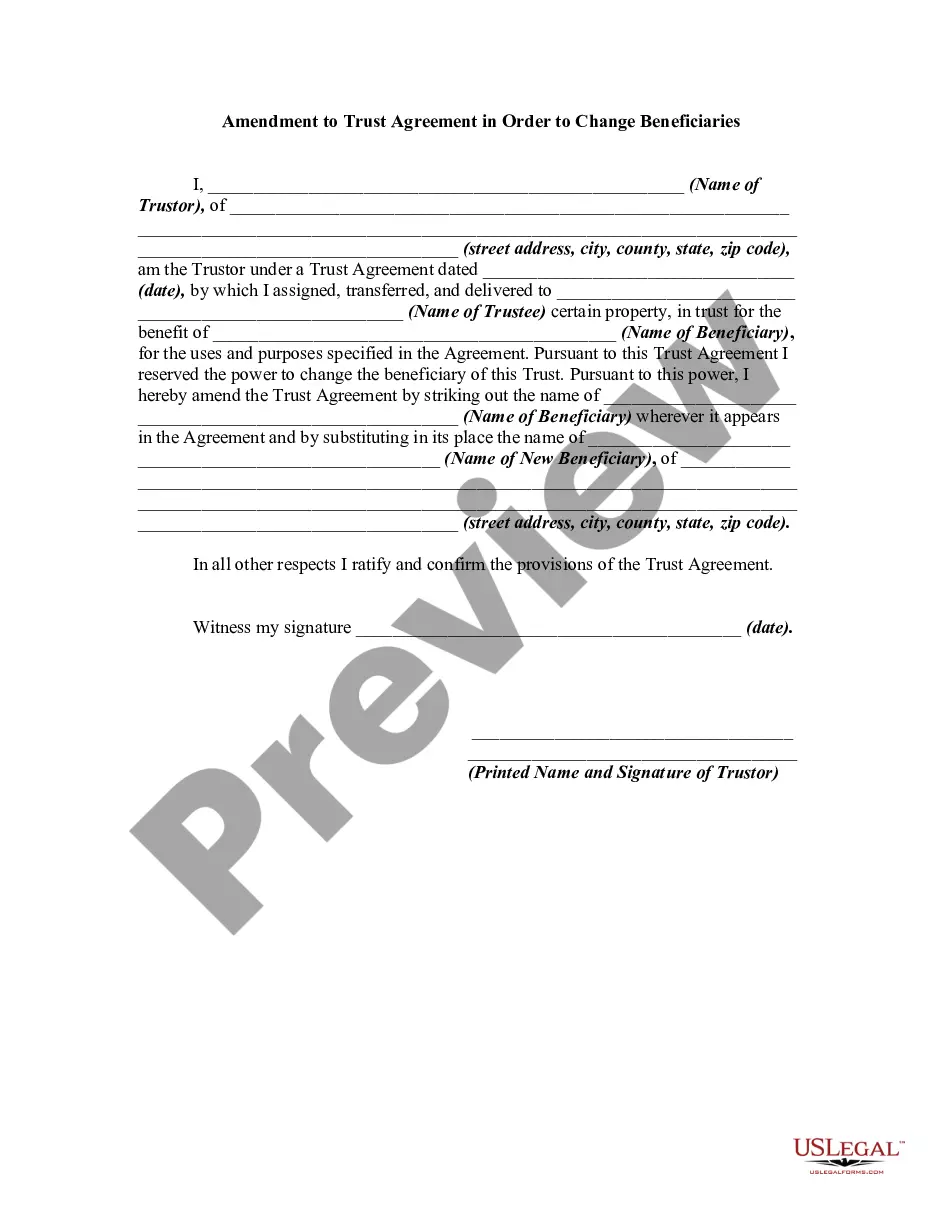
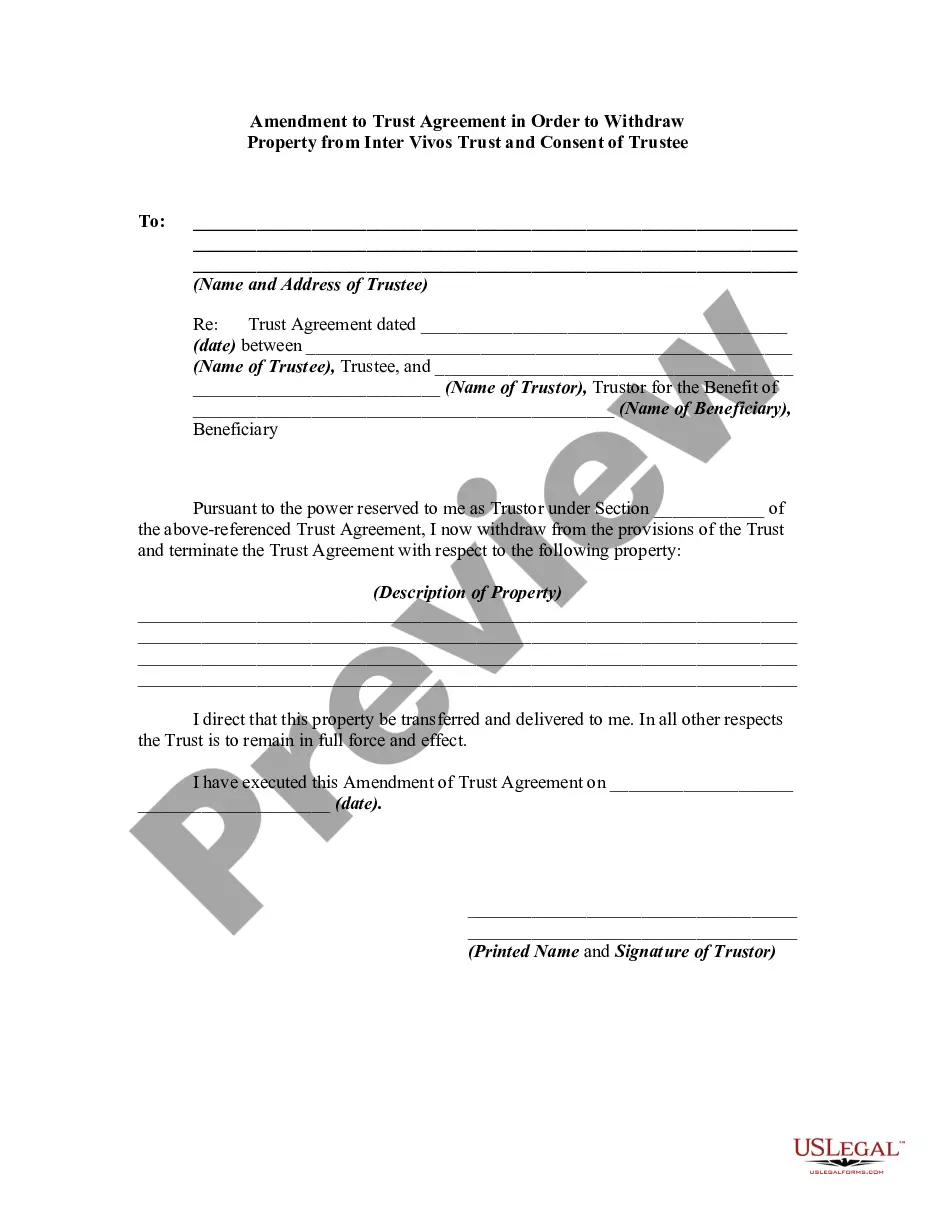
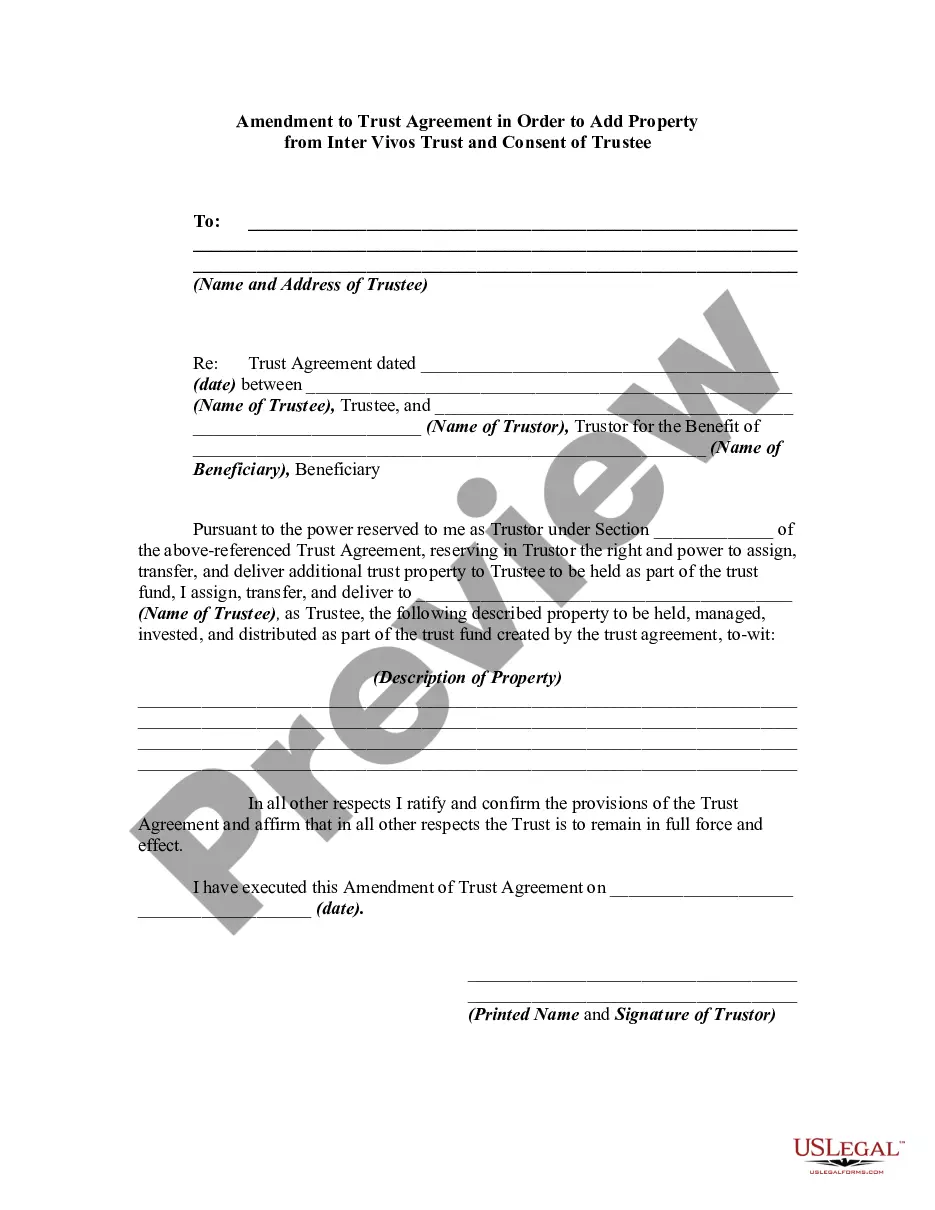
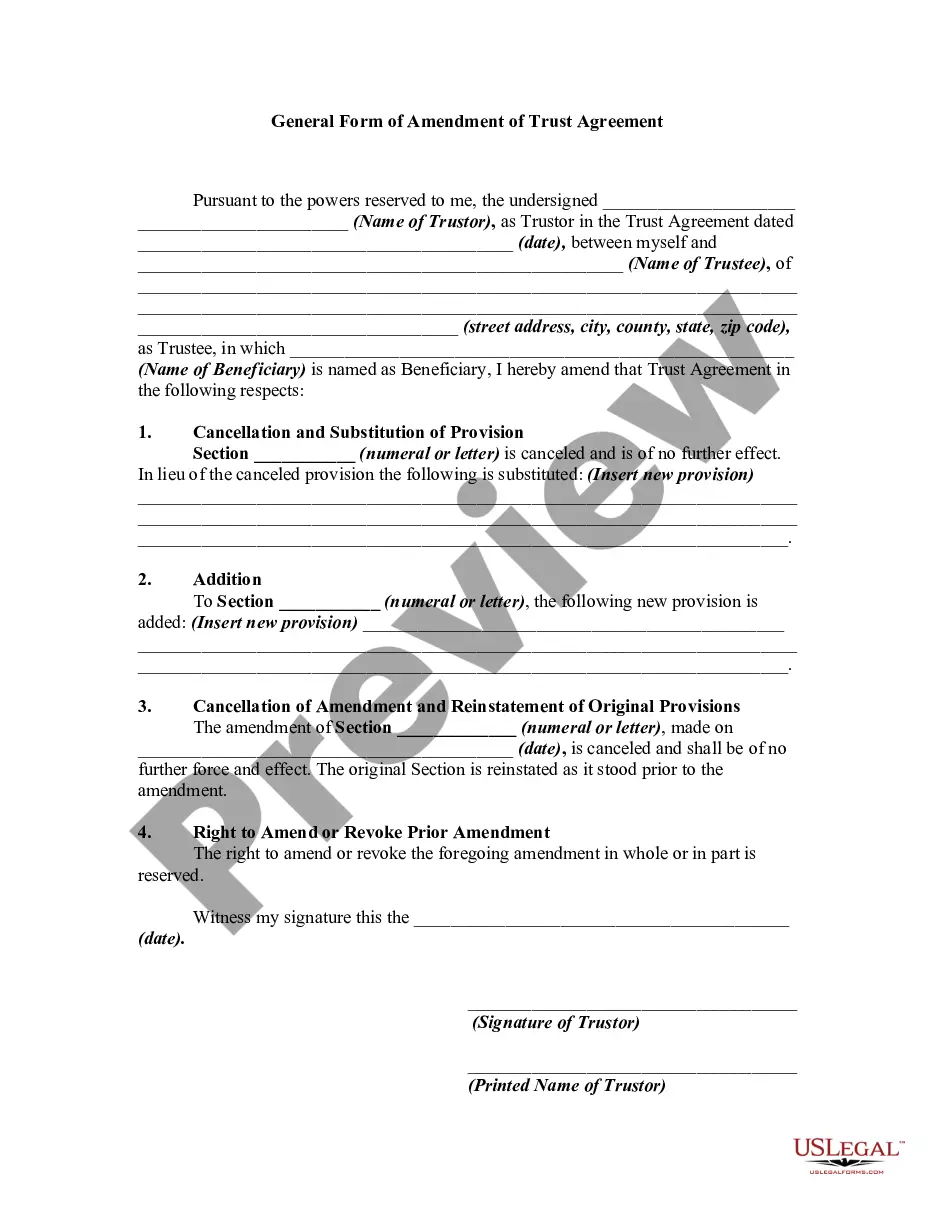
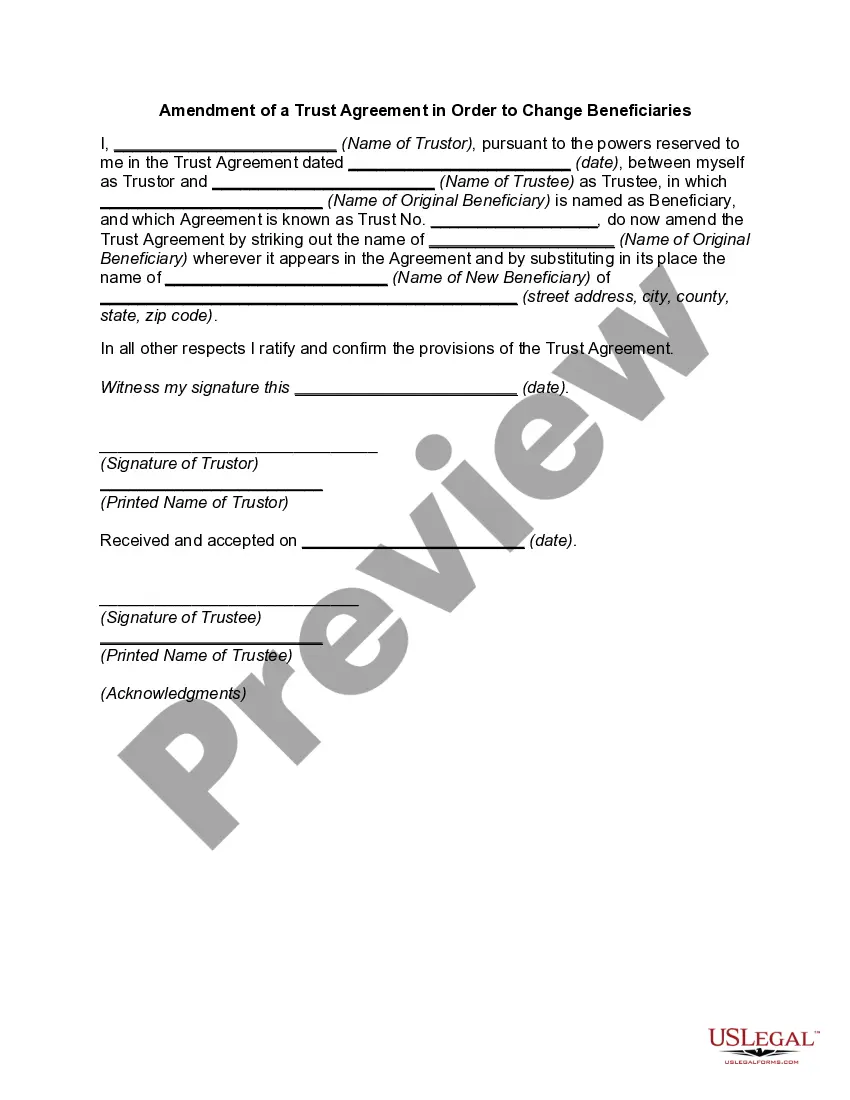
The Amendment to Trust Agreement in Order to Change Beneficiaries is a legal document that allows the trustor to modify the beneficiary designations within an existing trust agreement. This form is crucial for individuals who wish to update who will receive the trust assets upon their passing. It differs from a new trust document as it specifically focuses on making alterations without revoking the entire agreement.
Key parts of this document
- Name and contact information of the trustor.
- Details of the original Trust Agreement, including its date.
- Name of the current beneficiary to be replaced.
- Name of the new beneficiary being designated.
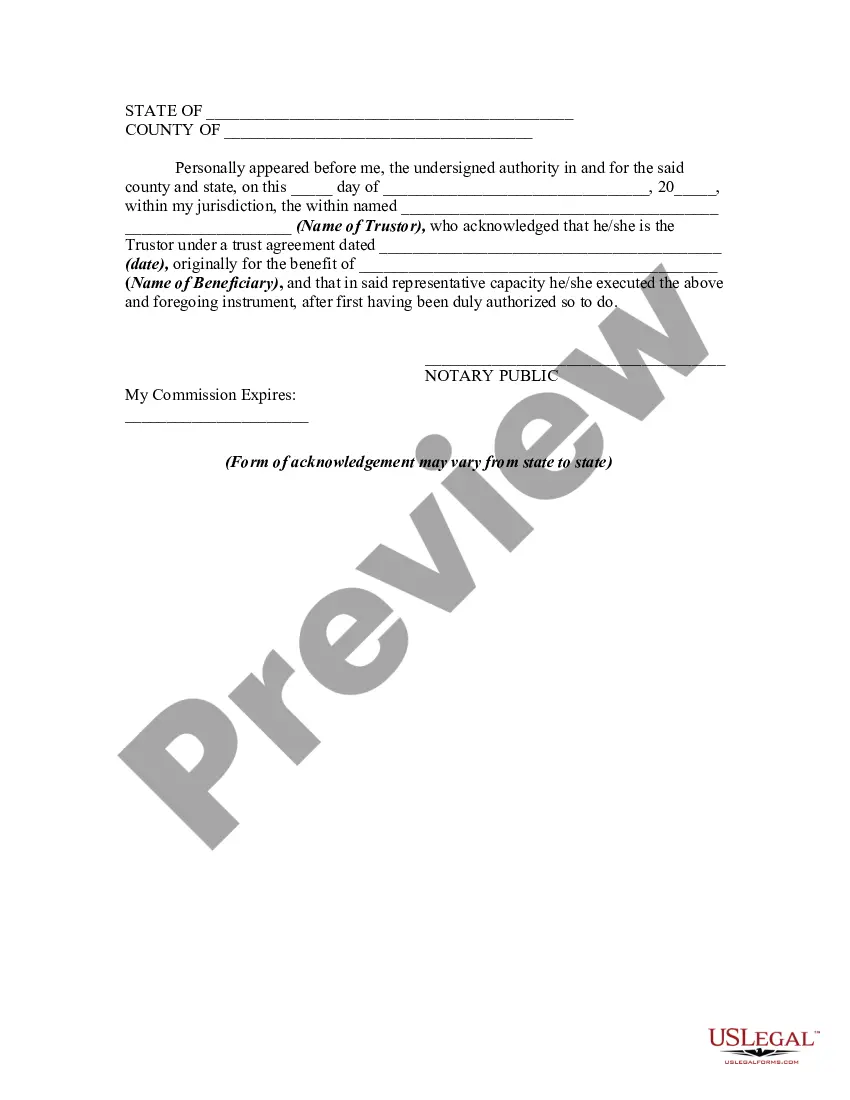
- Notarization details to validate the amendment.
Common use cases
This form should be used when the trustor decides to change the designated beneficiaries of their existing trust. Common scenarios include changes in personal relationships, such as marriage, divorce, or the passing of a previous beneficiary, or a desire to update who will receive certain assets. It's an important step in ensuring that one's wishes are accurately reflected in their estate plan.
Who can use this document
- Individuals who have established a trust and wish to update the beneficiaries.
- Trustors who have reserved the right to amend their trust agreements.
- Those who need to ensure their estate planning reflects current intentions and relationships.
Completing this form step by step
- Identify yourself as the Trustor and provide your full name and address.
- Specify the original Trust Agreement by including its date and the name of the Trustee.
- Clearly state the name of the beneficiary you intend to change and the name of the new beneficiary.
- Complete the acknowledgment section to notarize the amendment.
- Sign and date the amendment to finalize the changes.
Notarization requirements for this form
Yes, this form must be notarized to be legally valid. The notarization section ensures that the trustor's identity is verified and that the amendment is properly executed according to state laws. US Legal Forms offers integrated online notarization services, providing 24/7 accessibility through secure video calls, ensuring legal equivalence with in-person notarization without the need for physical travel.
Get your form ready online
Our built-in tools help you complete, sign, share, and store your documents in one place.
Make edits, fill in missing information, and update formatting in US Legal Forms—just like you would in MS Word.
Download a copy, print it, send it by email, or mail it via USPS—whatever works best for your next step.
Sign and collect signatures with our SignNow integration. Send to multiple recipients, set reminders, and more. Go Premium to unlock E-Sign.
If this form requires notarization, complete it online through a secure video call—no need to meet a notary in person or wait for an appointment.
We protect your documents and personal data by following strict security and privacy standards.

Make edits, fill in missing information, and update formatting in US Legal Forms—just like you would in MS Word.

Download a copy, print it, send it by email, or mail it via USPS—whatever works best for your next step.

Sign and collect signatures with our SignNow integration. Send to multiple recipients, set reminders, and more. Go Premium to unlock E-Sign.

If this form requires notarization, complete it online through a secure video call—no need to meet a notary in person or wait for an appointment.

We protect your documents and personal data by following strict security and privacy standards.
Common mistakes to avoid
- Failing to sign or date the amendment.
- Not properly completing the notarization section.
- Omitting the full name and address of the new beneficiary.
- Not consulting state-specific laws, which could lead to invalid amendments.
Advantages of online completion
- Convenient access to the form at any time.
- Easy to customize with your specific details and requirements.
- Quick download and printing options.
- Reliable templates drafted by licensed attorneys.
Legal use & context
- This form can serve as a legally binding document when correctly completed and notarized.
- It's important to keep a copy of the amendment with the original Trust Agreement.
- Failing to follow state-specific rules may lead to complications in trust execution.
Summary of main points
- The Amendment to Trust Agreement is essential for modifying beneficiaries.
- Proper completion and notarization are crucial for legality.
- Consulting local laws can prevent issues with the amendment process.
Looking for another form?

Form popularity
FAQ
This form is used to modify who will receive assets under an existing trust without revoking the entire agreement. It records the trustor’s name and contact information, the original Trust Agreement date, the current beneficiary to be replaced, the new beneficiary, and notarization details to validate the amendment. It’s intended for trustors who reserved the right to amend their trust.
To change the beneficiaries, this form is filled out to replace a current beneficiary with a new one within an existing trust. Provide the trustor’s name and contact information, the original Trust Agreement date, the current beneficiary to be replaced, and the name of the new beneficiary, plus any required notarization. It changes only beneficiary designations, not the entire trust.
Yes. This form lets a trustor who has the right to amend a trust update who will receive assets by substituting a new beneficiary for the current one. It requires identifying the trust and parties and is validated by notarization. It does not alter other terms of the trust besides the beneficiary designation.
A codicil amendment to a trust is not the same as this form. A codicil is typically used to modify a will, while this document amends the Trust Agreement to change beneficiaries. It requires the same fields—trustor name and contact, original trust date, current beneficiary, new beneficiary—and notarization, but it does not address other trust terms.
To amend a trust using this form, gather the trustor’s contact details, the original Trust Agreement date, the current beneficiary to be replaced, the new beneficiary’s name, and arrange for notarization. Then sign and date the amendment as required to validate the change, ensuring the beneficiary designation aligns with the trust’s terms.
This form amends the existing Trust Agreement to change beneficiaries, including sections for the trustor’s information, original trust date, and notarization. A codicil or other instruments would be a separate device and is not the typical method for beneficiary changes in trusts; codicils are more commonly associated with wills.