Bylaws
Understanding this form
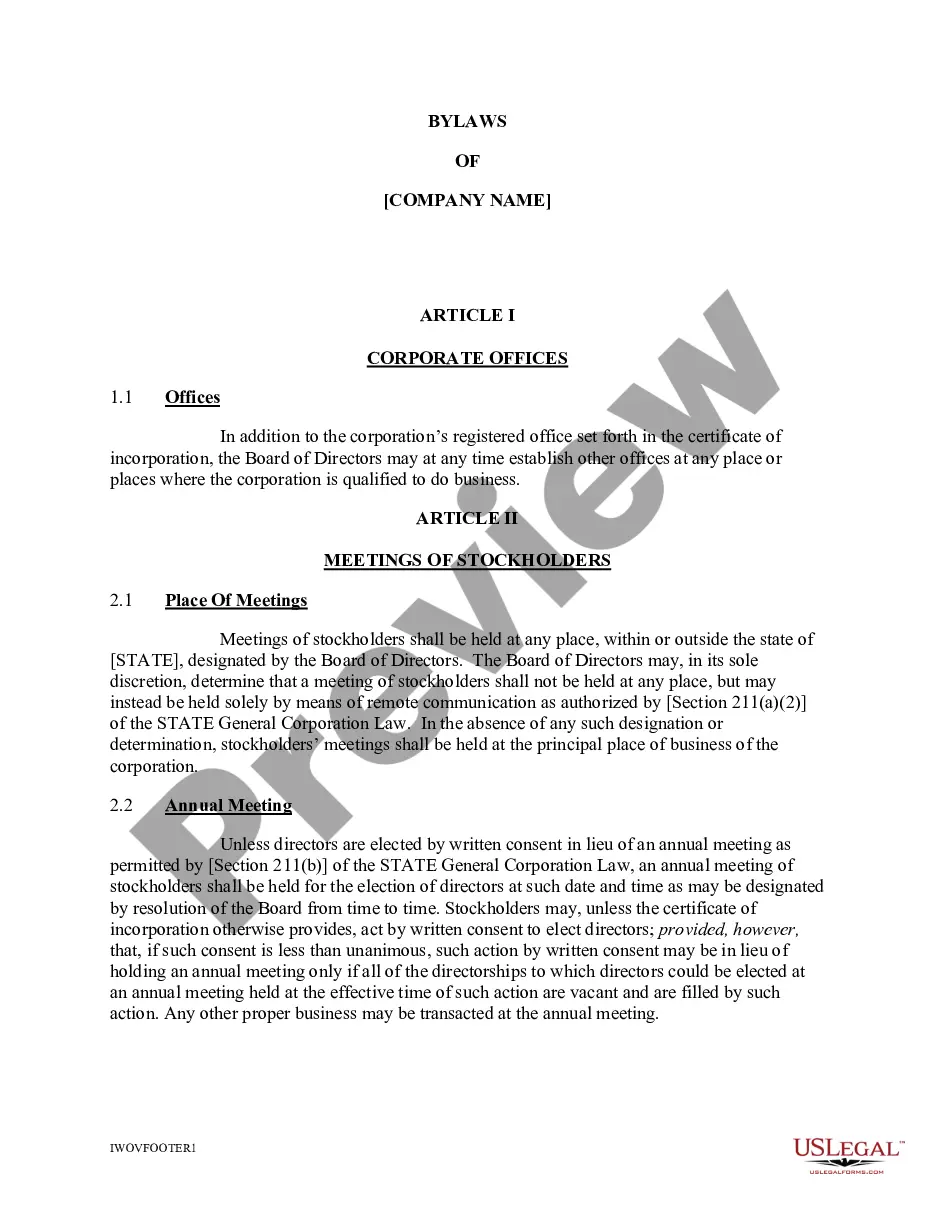
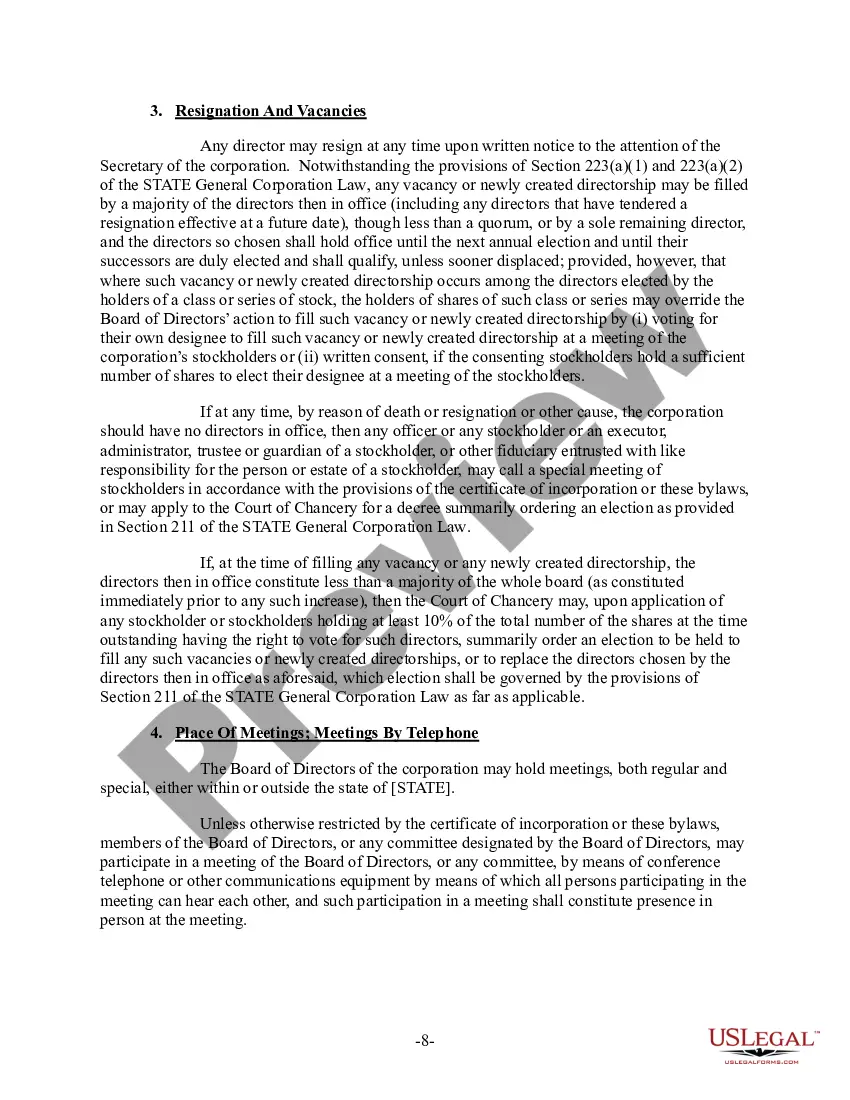
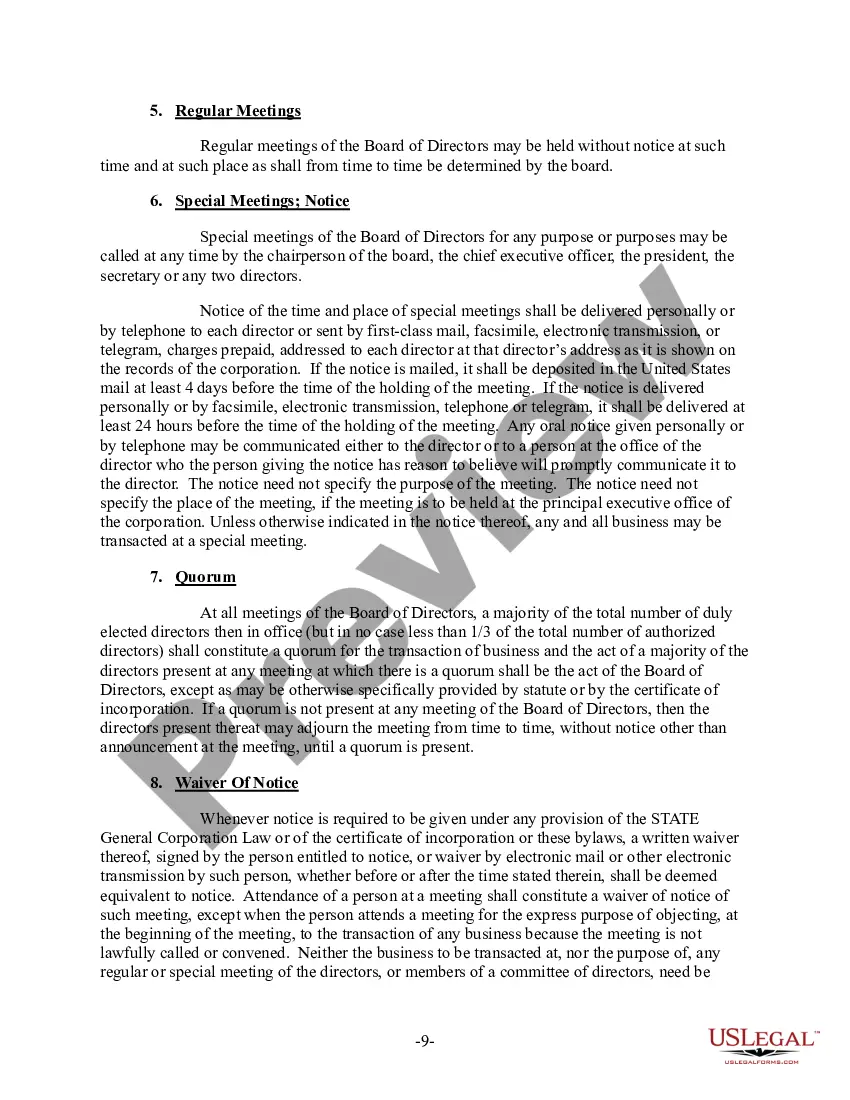
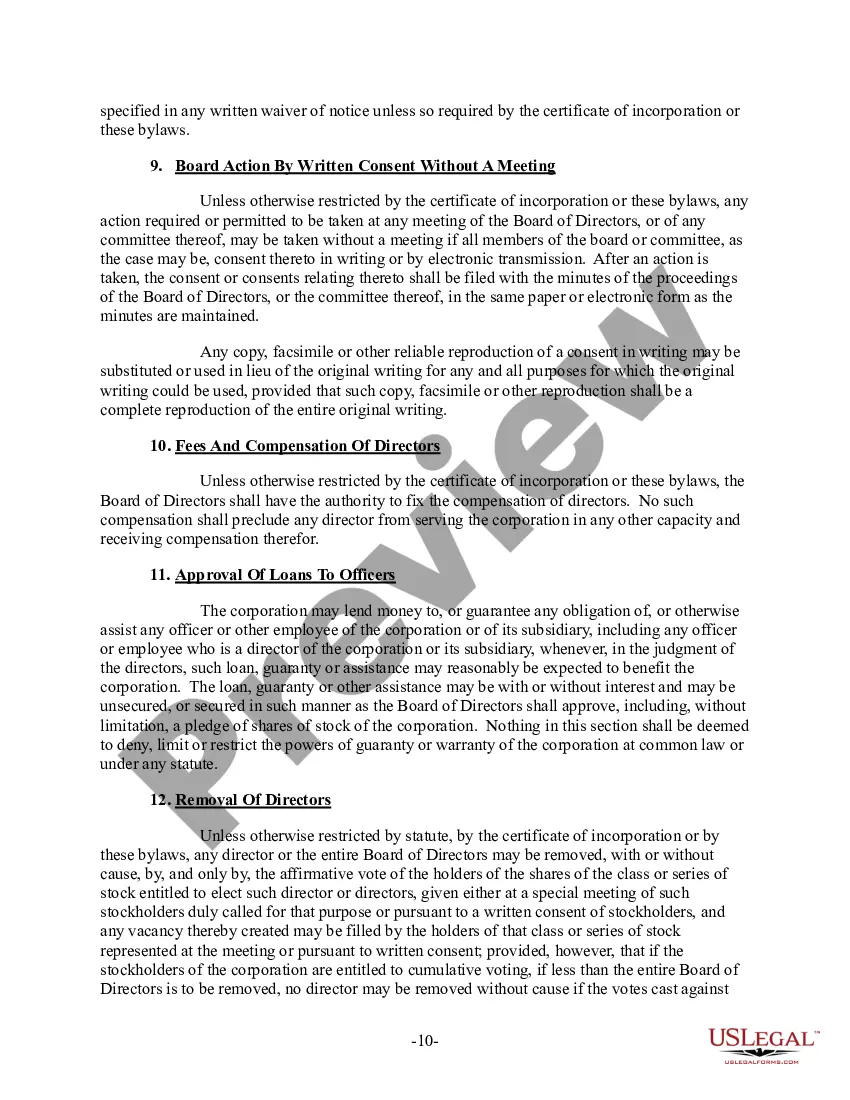
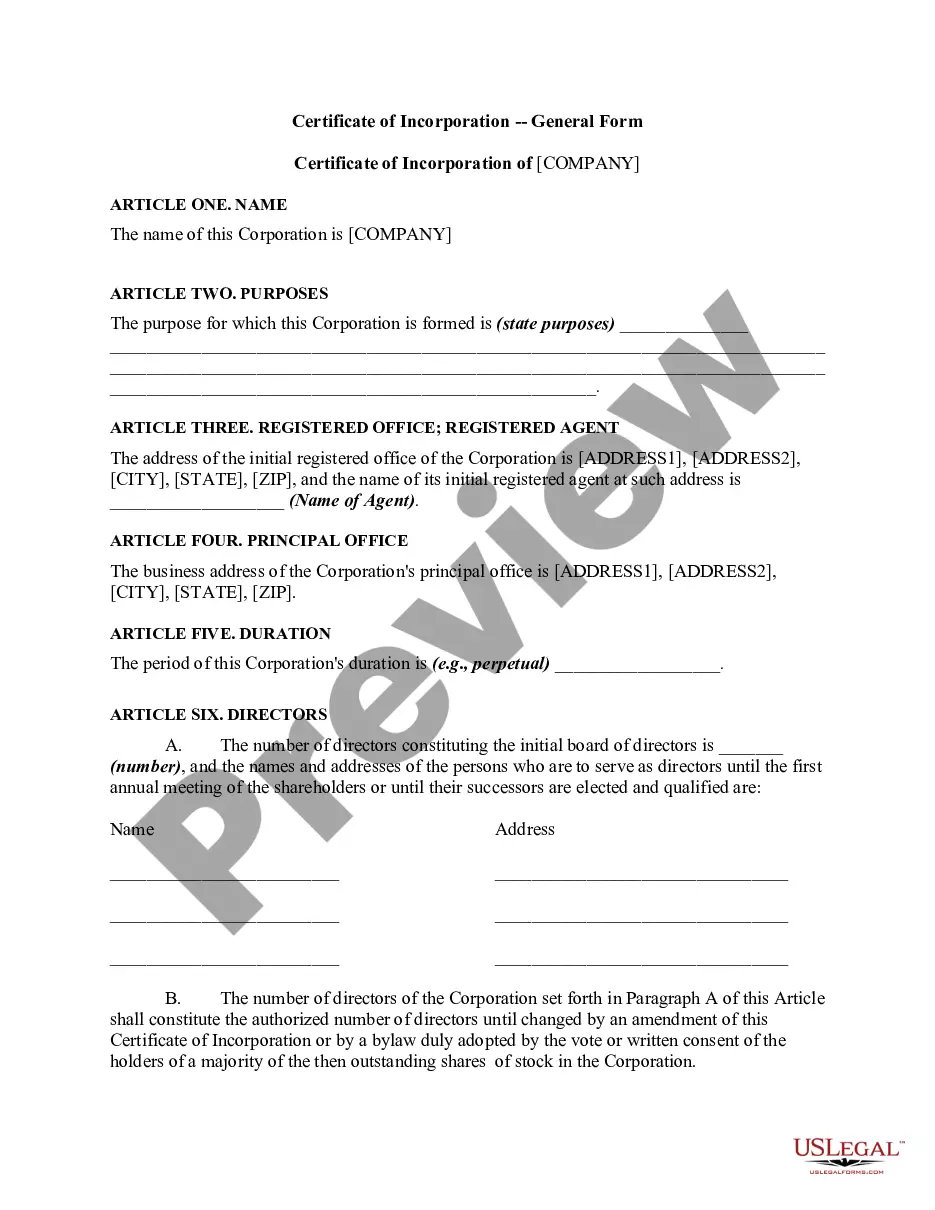
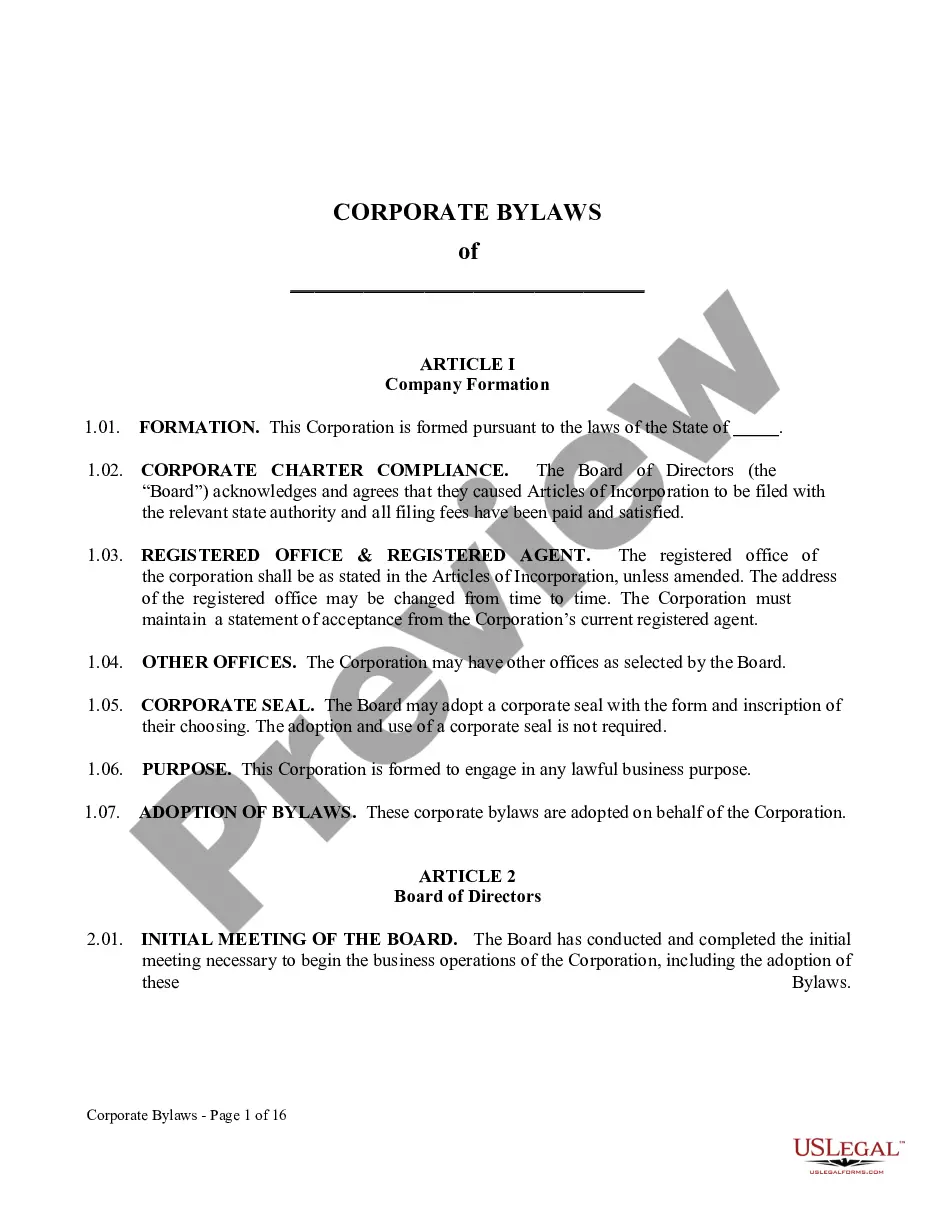
The Bylaws form is a legal document that sets forth the internal rules and regulations governing a corporation's operations. It outlines the structure and responsibilities of the corporationâs board of directors, officers, and shareholders, ensuring proper management and organization. Unlike other forms, such as articles of incorporation, the bylaws primarily focus on the procedures for organizational governance rather than the corporation's establishment.
Key components of this form
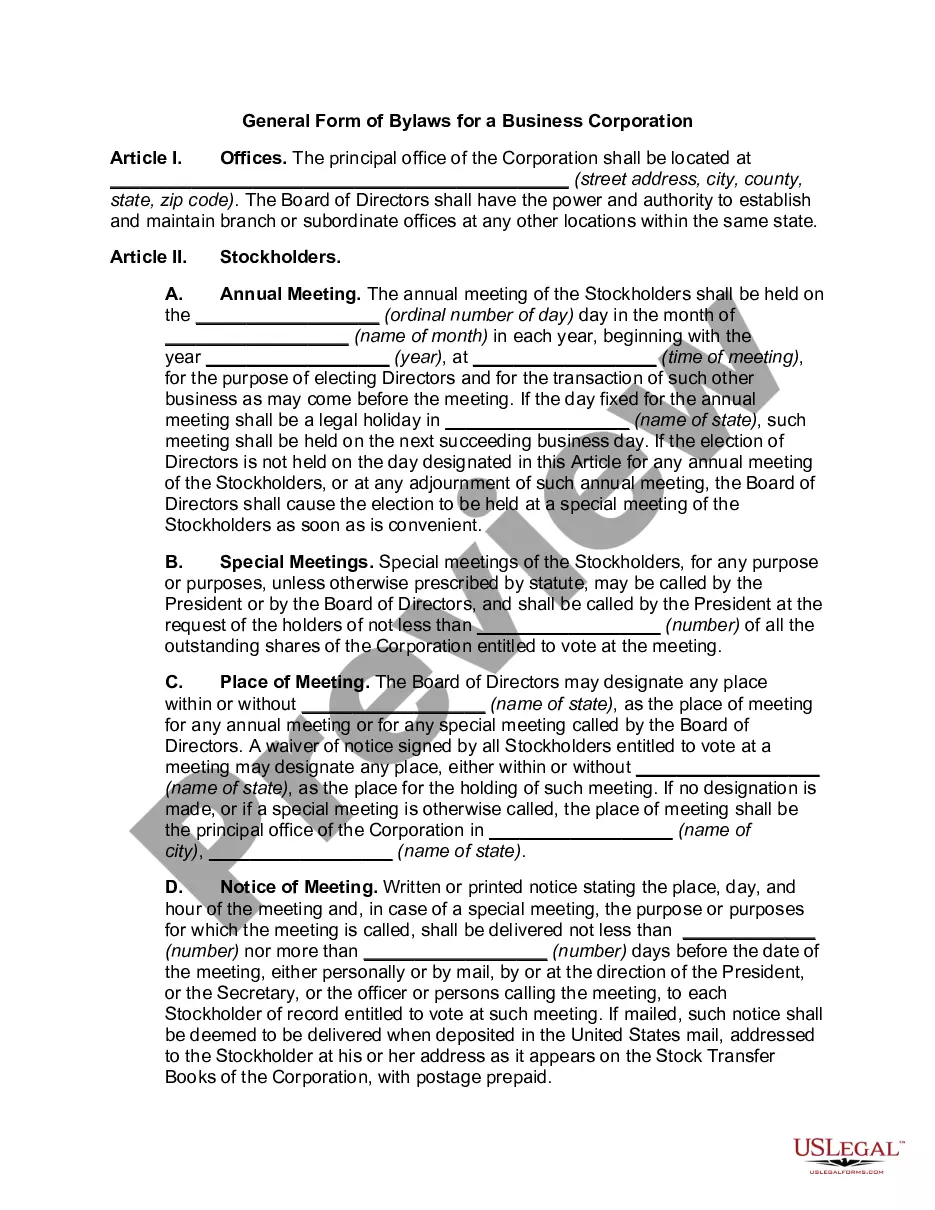
- Corporate offices specifications, including locations for holding meetings.
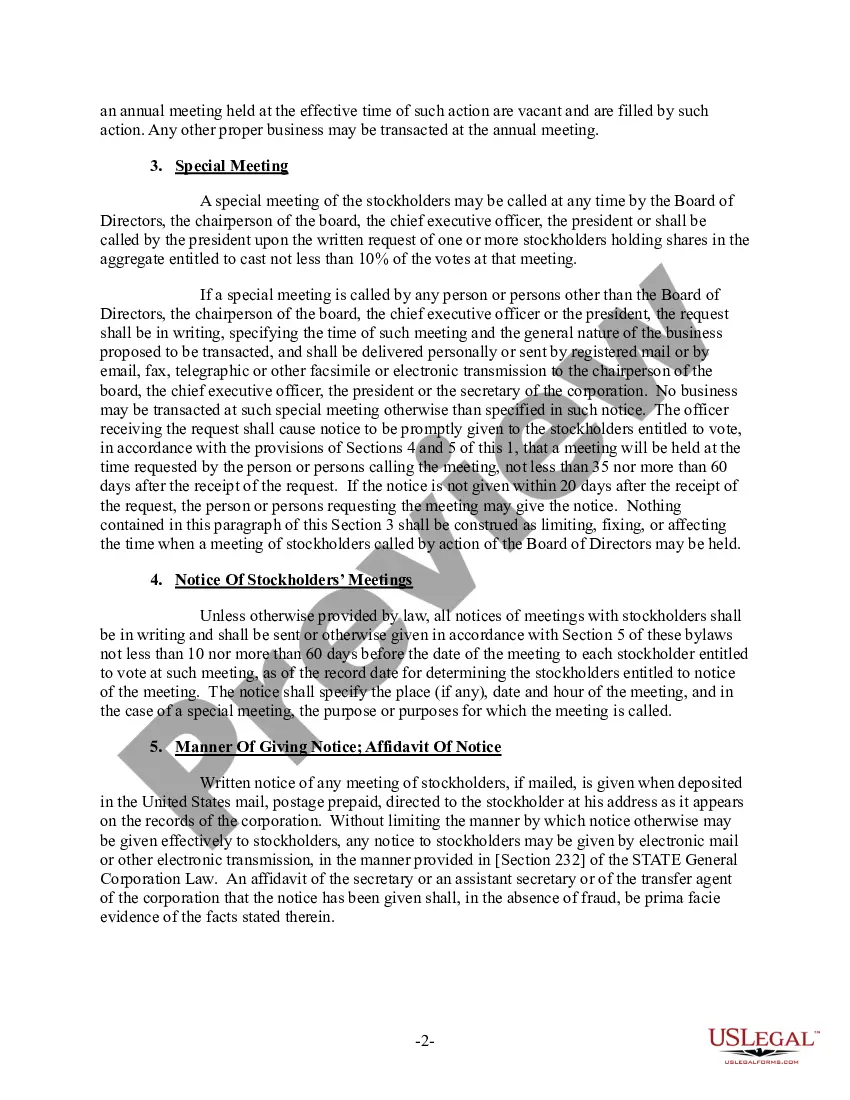
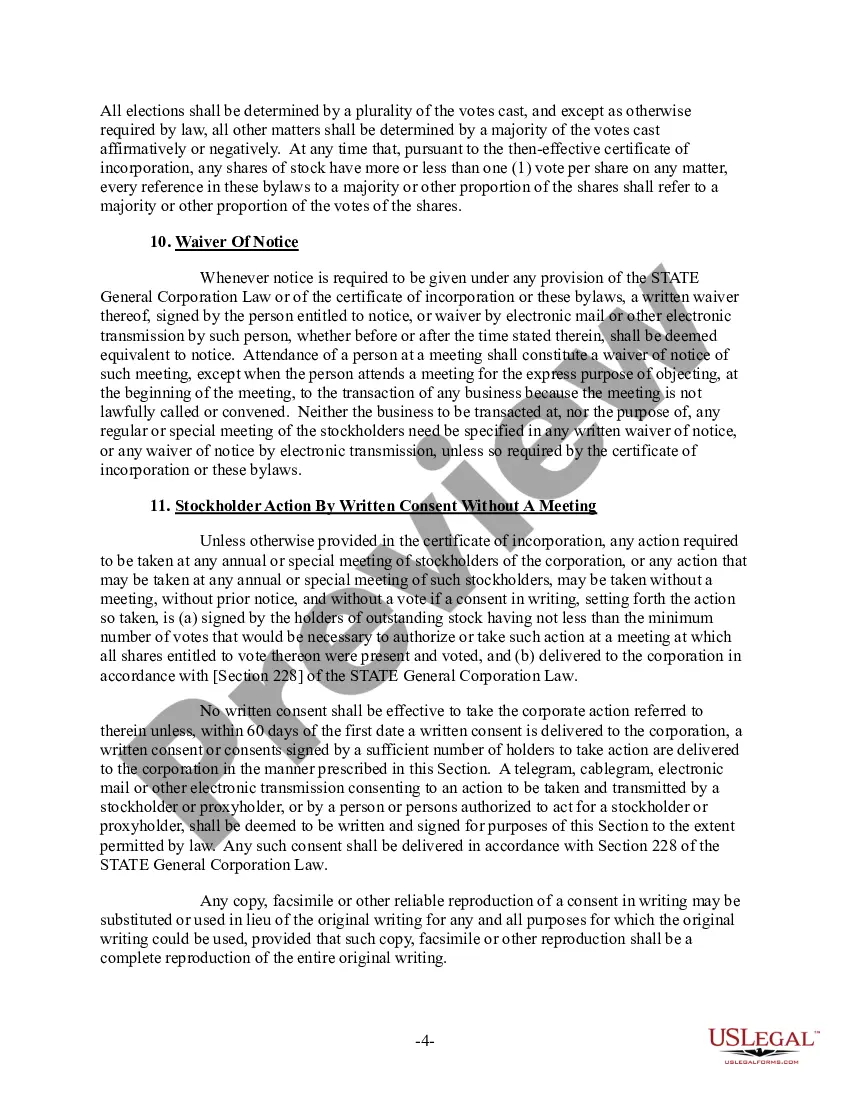
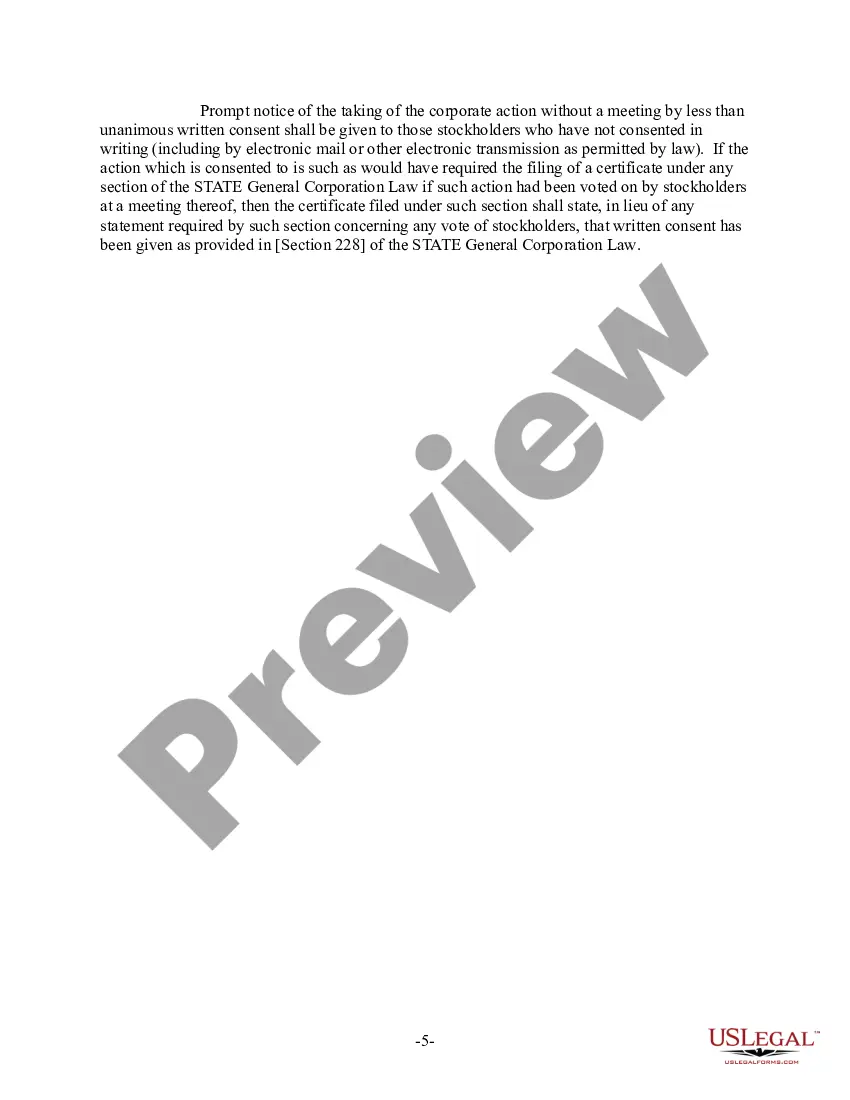
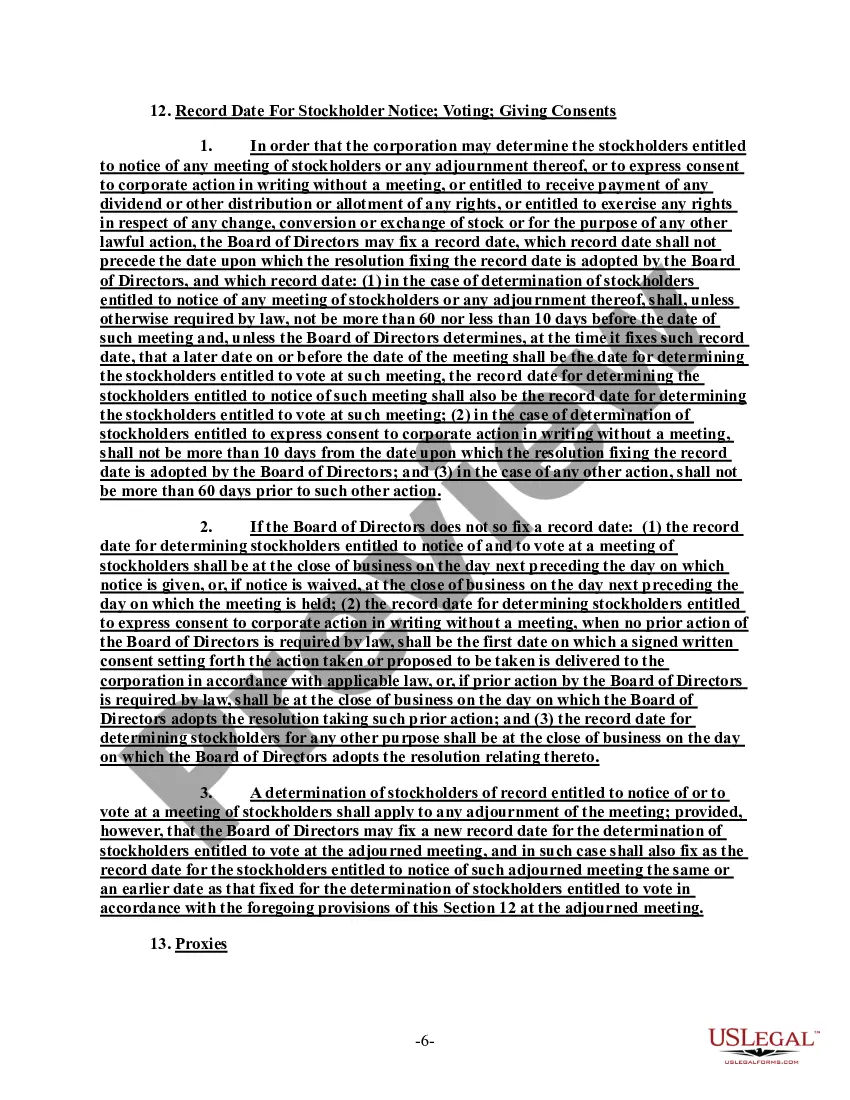
- Procedures for annual and special meetings of shareholders.
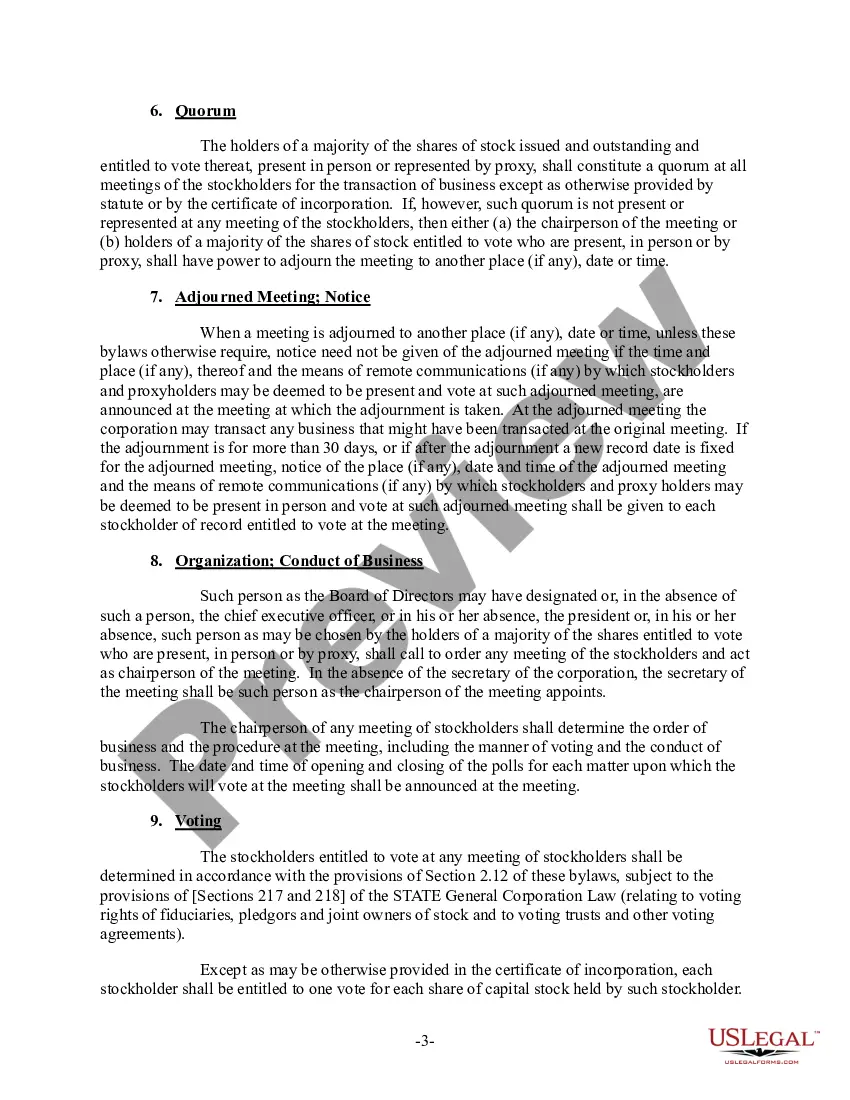
- Voting rights and processes for stockholders.
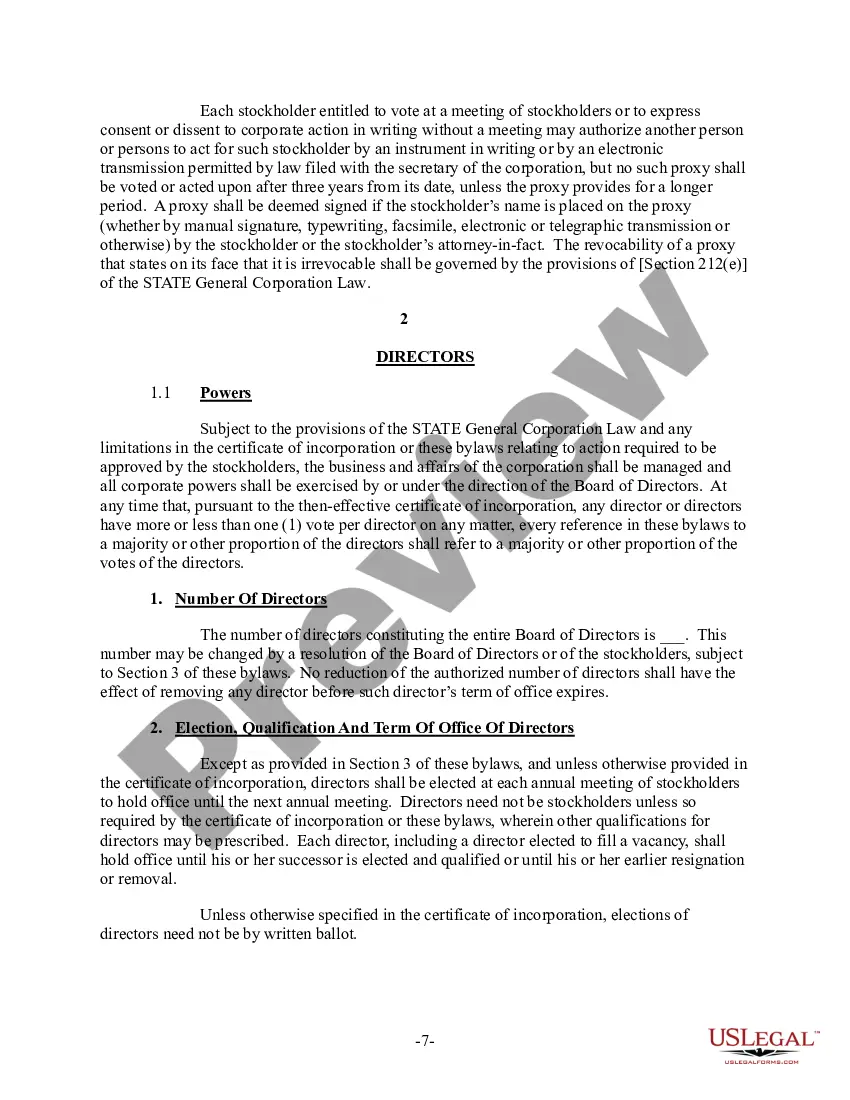
- Roles and powers of the board of directors.
- Guidelines for the appointment and responsibilities of corporate officers.
- Indemnification policies for directors and officers against liabilities.


When this form is needed
This form is essential for corporations to define their operational protocols. Use the Bylaws when starting a new corporation, amending existing governance structures, or clarifying procedures in corporate management. It's also necessary when there are changes in leadership or when addressing specific operational concerns that arise over time.
Who this form is for
This form is intended for:
- Corporate founders establishing the initial framework of a new company.
- Existing corporations looking to amend or reinforce their governance structure.
- Members of the board of directors responsible for corporate governance.
- Corporate officers needing clarity on their responsibilities and authority.
- Shareholders interested in understanding their rights and participation in corporate governance.
Completing this form step by step
- Identify the corporation's name and the state of incorporation.
- Specify the locations for the corporate offices and meeting places.
- Outline the procedures for conducting annual and special shareholder meetings.
- Define the number of directors and their election procedures.
- Detail the roles, powers, and appointment process for corporate officers.
- Include indemnification clauses for board members and officers.
Notarization guidance
This form does not typically require notarization unless specified by local law. It is advisable to check your stateâs requirements to ensure compliance.
Get your form ready online
Our built-in tools help you complete, sign, share, and store your documents in one place.
Make edits, fill in missing information, and update formatting in US Legal Forms—just like you would in MS Word.
Download a copy, print it, send it by email, or mail it via USPS—whatever works best for your next step.
Sign and collect signatures with our SignNow integration. Send to multiple recipients, set reminders, and more. Go Premium to unlock E-Sign.
If this form requires notarization, complete it online through a secure video call—no need to meet a notary in person or wait for an appointment.
We protect your documents and personal data by following strict security and privacy standards.

Make edits, fill in missing information, and update formatting in US Legal Forms—just like you would in MS Word.

Download a copy, print it, send it by email, or mail it via USPS—whatever works best for your next step.

Sign and collect signatures with our SignNow integration. Send to multiple recipients, set reminders, and more. Go Premium to unlock E-Sign.

If this form requires notarization, complete it online through a secure video call—no need to meet a notary in person or wait for an appointment.

We protect your documents and personal data by following strict security and privacy standards.
Typical mistakes to avoid
- Failing to update bylaws after significant changes in corporate structure.
- Neglecting to include clear voting procedures for shareholders.
- Overlooking state-specific requirements that might affect the bylaws.
- Not conducting regular reviews to ensure bylaws are still applicable.
- Using vague language that could lead to misunderstandings.
Why use this form online
- Convenient access from anywhere with an internet connection.
- Editable templates that allow for customization based on specific corporate needs.
- Quick downloads for immediate use, saving time in the documentation process.
- Reliability, as the forms are drafted by licensed attorneys.
Looking for another form?

Form popularity
FAQ
The bylaws are the regulations of a corporation. They contain the basic rules for the conduct of the corporation's business and affairs.
Constitution vs. Bylaws? The constitution of an organization contains the fundamental operating principles that govern its operation. The bylaws establish specific rules by which the group is to function.
By·?law. ?b?-?l? : a rule adopted by an organization chiefly for the government of its members and the management of its affairs. : a local ordinance. often used in pl.
Bylaws should provide specific authority of the board to adopt policies, identify provisions for adoption and the vote required for adoption or amendment. Policies reflect the tenets of the board on which current and future decisions are made.
A church's bylaws can define the specific obligations of a member of its board or management group, as well as anyone serving as an officer. The bylaws also define the authorities granted to officers and directors. For example, bylaws may specify who may bind the church contractually.