Amendment of Trust Agreement and Revocation of Particular Provision
Understanding this form
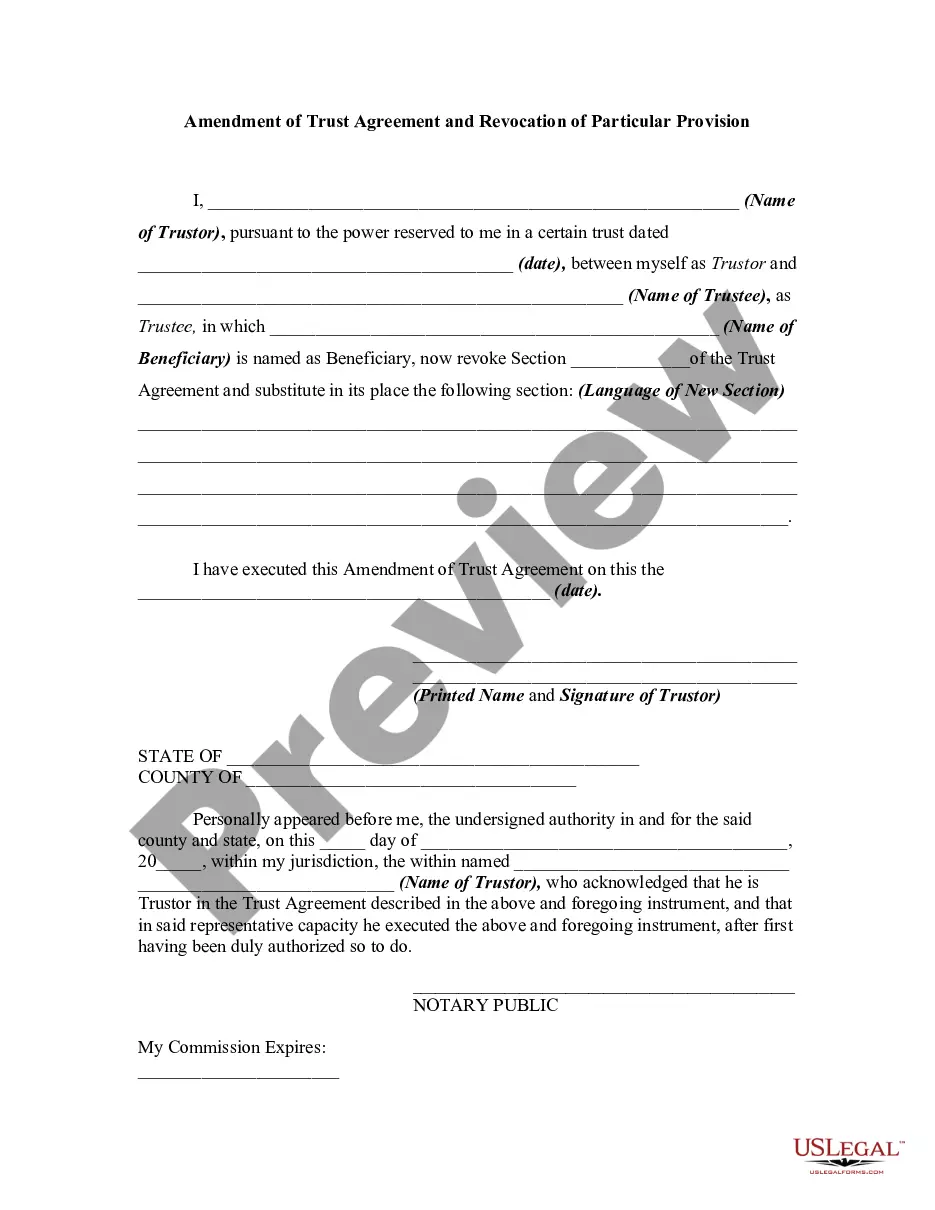
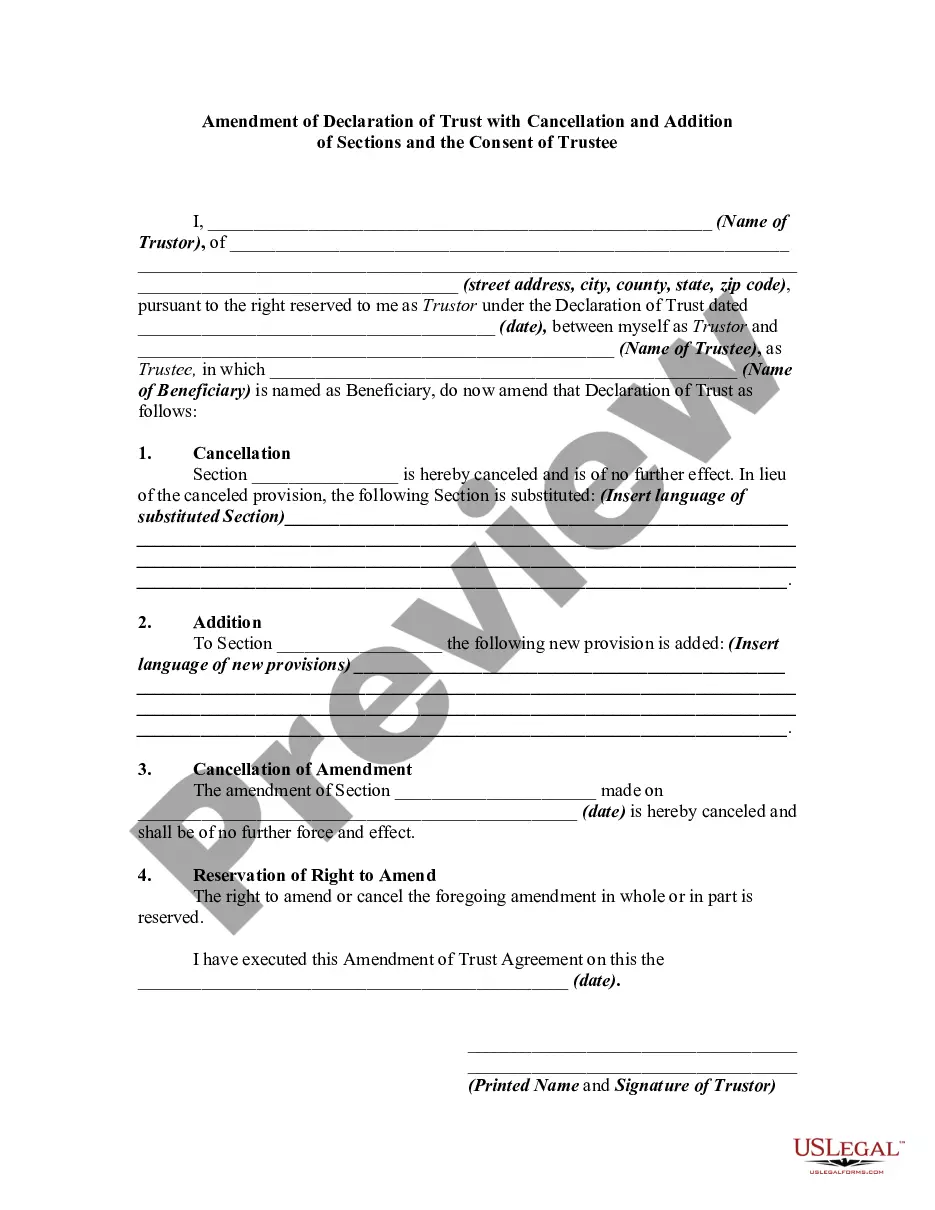
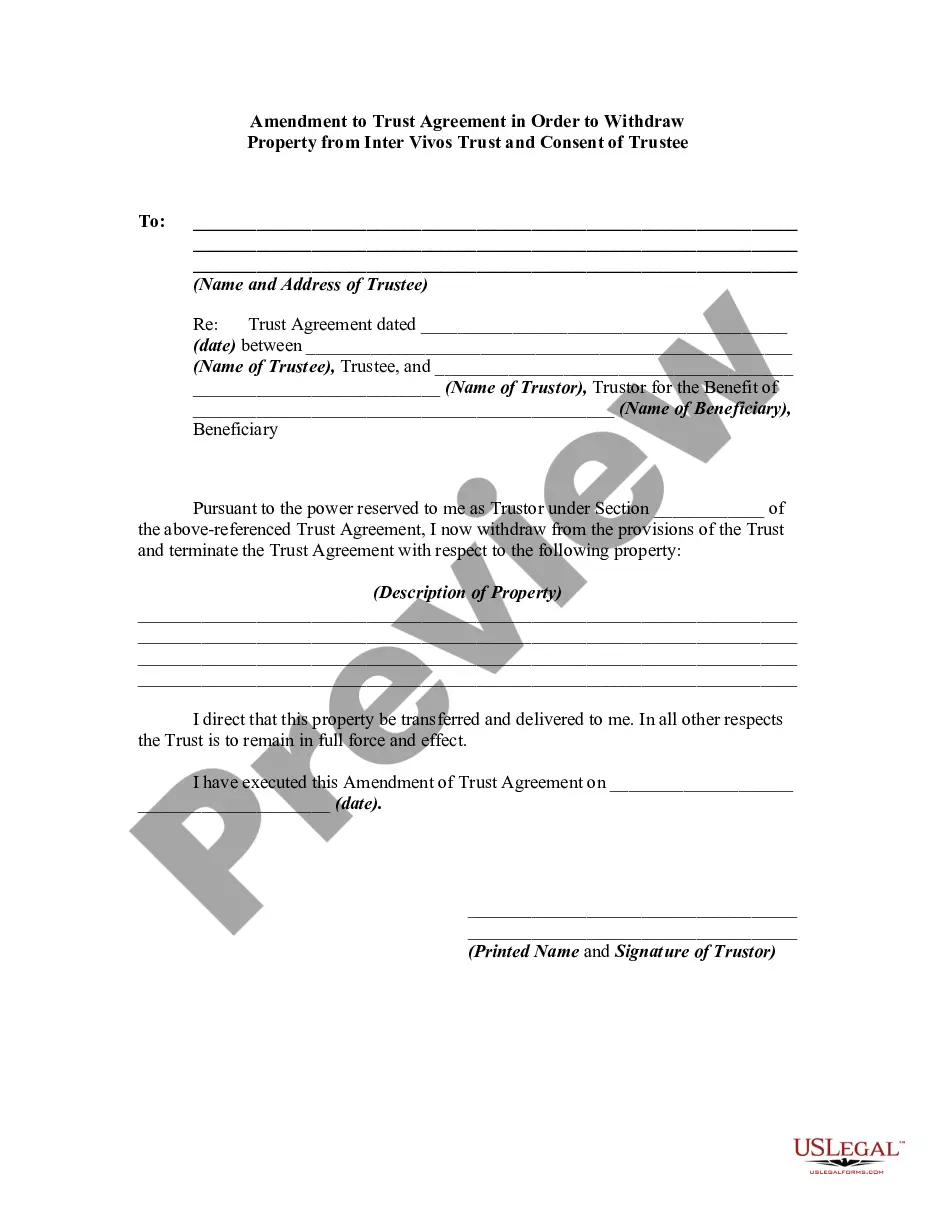
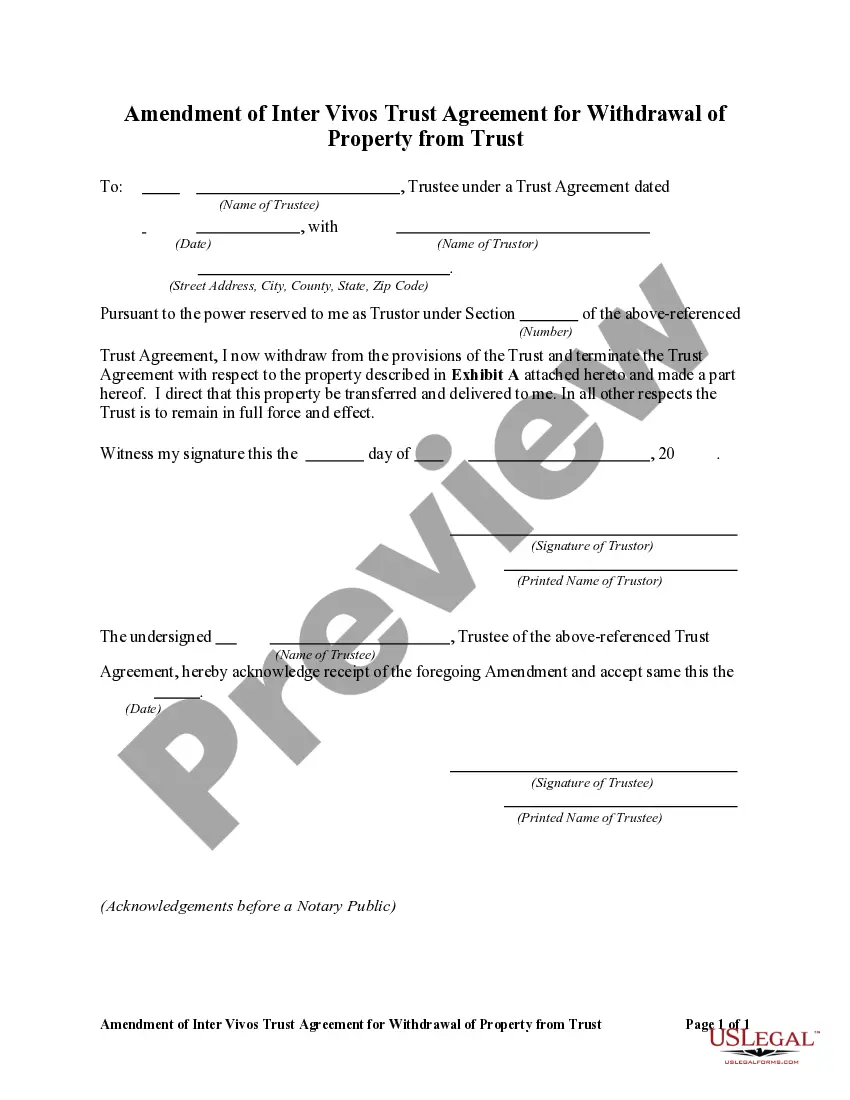
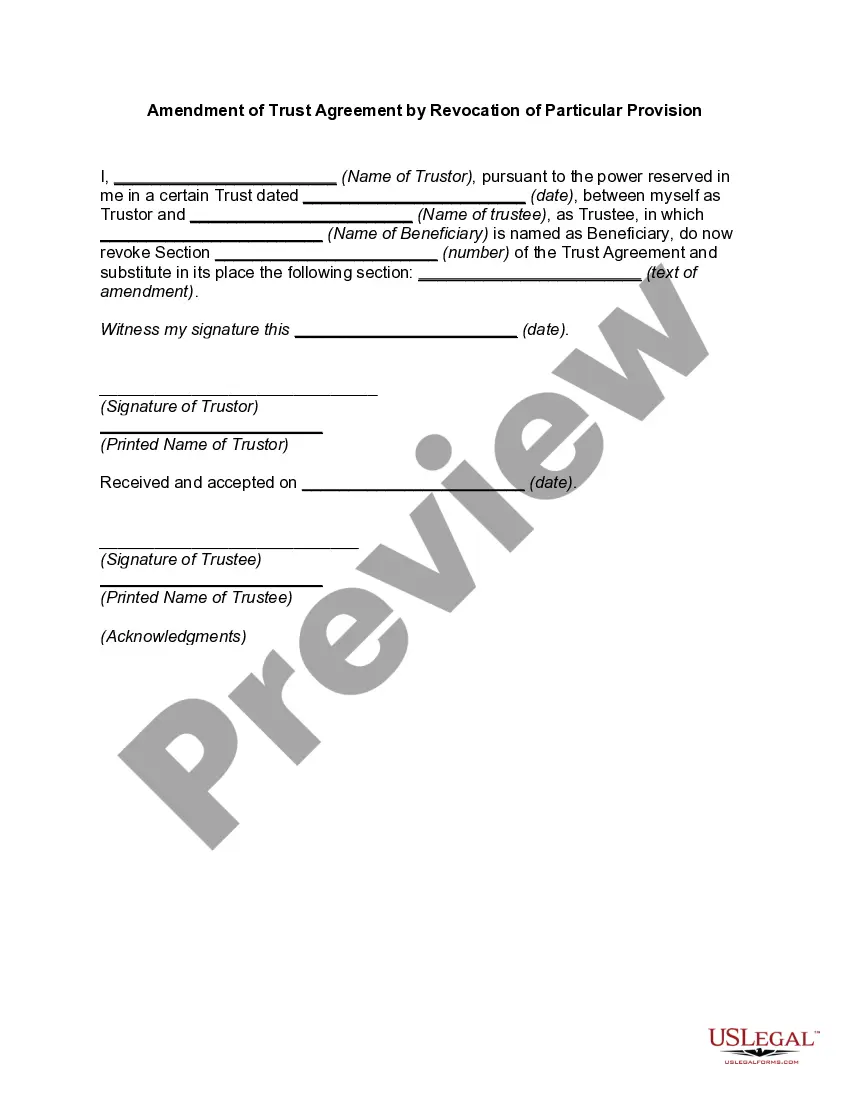
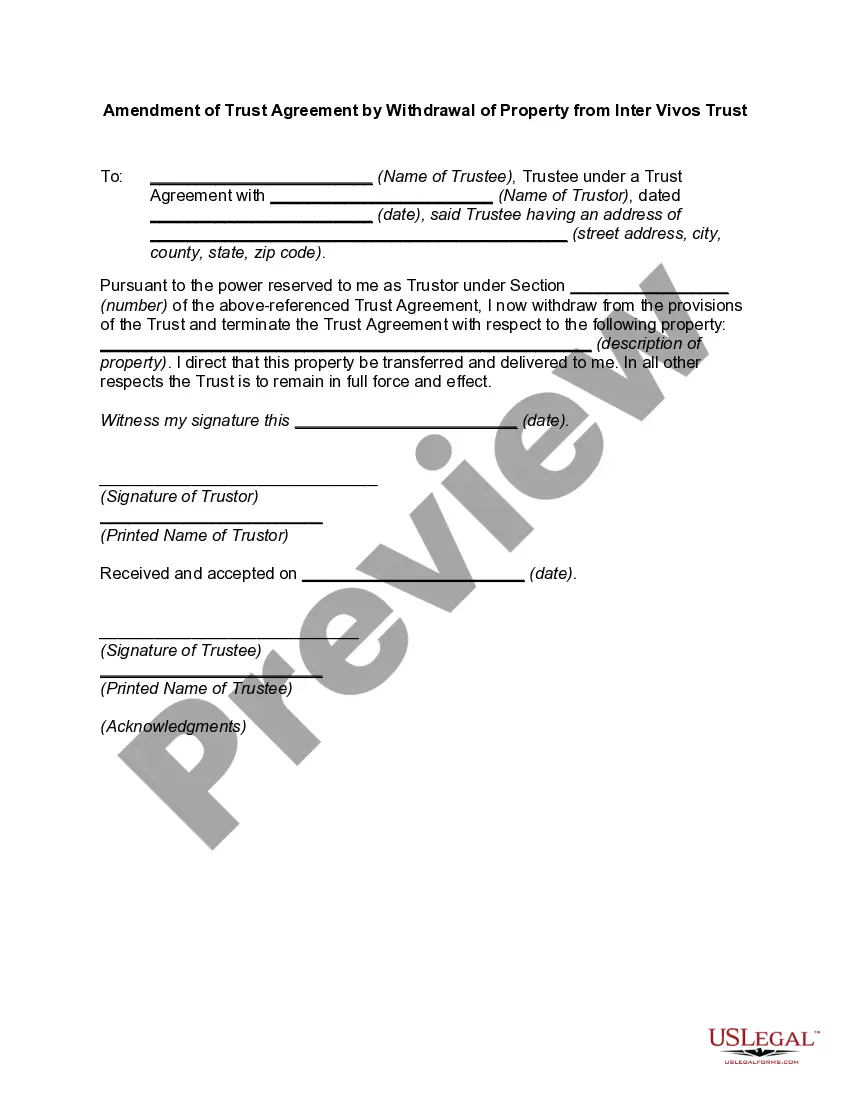
This form is an Amendment of Trust Agreement and Revocation of Particular Provision. It allows the trustor to make changes to an existing trust, modifying or revoking specific sections as allowed under the original trust agreement. This form is intended for use when updating the details of a trust and differs from other estate planning documents that may not specifically address amendments to trusts. It serves as a useful template for trust modifications tailored to an individual's unique circumstances.
Key parts of this document
- Name of Trustor
- Date of original trust
- Name of Trustee
- Name of Beneficiary
- Section being revoked and new language for that section
When to use this document
This form is essential when a trustor decides to change the provisions of an existing trust. Scenarios include updating beneficiaries, changing how assets are distributed, or revoking a section that may no longer be applicable. Itâs commonly used during life changes such as marriage, divorce, or significant financial events that require adjustments to the trustâs terms.
Who can use this document
- Individuals who have established a trust and wish to amend it.
- Trustors needing to revoke specific provisions of their trust.
- Trustors who recognize changes are necessary due to life circumstances.
- Trustees who need to acknowledge amendments made by the trustor.
Steps to complete this form
- Identify the parties involved: the Trustor, Trustee, and Beneficiary.
- Enter the date the original trust was created.
- Specify the section of the trust that is being revoked and provide the new language for that section.
- Ensure the Trustor signs and dates the amendment in the appropriate fields.
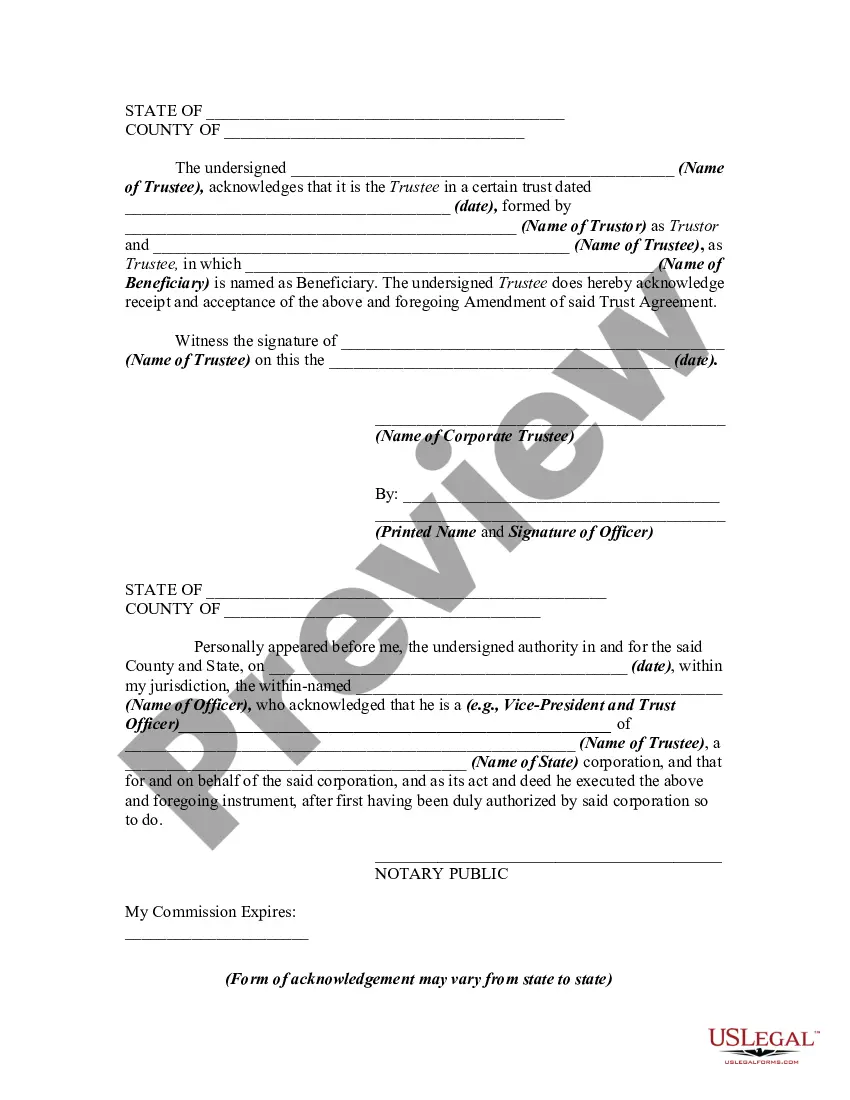
- Have the Trustee acknowledge receipt of the amendment by signing and dating the form.
- Arrange for notarization as needed for legal validity.
Notarization guidance
Yes, this form must be notarized to be legally valid. It requires the signatures of both the Trustor and Trustee to be acknowledged by a notary public. US Legal Forms offers integrated online notarization services, available 24/7 via secure video calls, ensuring a seamless and legally equivalent process without the need for travel.
Get your form ready online
Our built-in tools help you complete, sign, share, and store your documents in one place.
Make edits, fill in missing information, and update formatting in US Legal Forms—just like you would in MS Word.
Download a copy, print it, send it by email, or mail it via USPS—whatever works best for your next step.
Sign and collect signatures with our SignNow integration. Send to multiple recipients, set reminders, and more. Go Premium to unlock E-Sign.
If this form requires notarization, complete it online through a secure video call—no need to meet a notary in person or wait for an appointment.
We protect your documents and personal data by following strict security and privacy standards.

Make edits, fill in missing information, and update formatting in US Legal Forms—just like you would in MS Word.

Download a copy, print it, send it by email, or mail it via USPS—whatever works best for your next step.

Sign and collect signatures with our SignNow integration. Send to multiple recipients, set reminders, and more. Go Premium to unlock E-Sign.

If this form requires notarization, complete it online through a secure video call—no need to meet a notary in person or wait for an appointment.

We protect your documents and personal data by following strict security and privacy standards.
Typical mistakes to avoid
- Failing to specify which section of the trust is being revoked.
- Not including the necessary signatures and dates.
- Omitting the notary acknowledgment if required.
- Using outdated language from previous versions of the trust without proper updates.
Benefits of using this form online
- Convenience of downloading and editing at your own pace.
- Access to templates drafted by licensed attorneys to ensure legal accuracy.
- Ability to customize the form to meet specific legal needs.
- Instant access to documents without the need for in-person appointments.
Legal use & context
- This form modifies an existing trust without invalidating the entire trust agreement.
- Amendments made must comply with state laws regarding trust management and modifications.
- Failure to follow legal requirements can lead to disputes or challenges to the trustâs validity in the future.
Quick recap
- The Amendment of Trust Agreement form allows for specific changes to a trust while maintaining its overall structure.
- Itâs essential to accurately fill out all sections to avoid legal complications.
- Notarization may be necessary depending on local laws.
Looking for another form?
Form popularity
FAQ
Of course you can, however, "Codicil" is an amendment to a will. Amending a trust called "Amendment" to the trust, even if it is just amending a trustee's name. It needs to be notarized and some specific language to be sufficient.
Just about any writing will suffice to make a valid Trust amendment. Having the writing typed is not legally required. That's really the point of Trust amendments, to allow a Settlor to express his or her intent as easily as possible. As long as the Trust terms are followed, any writing will do.
Generally, a successor trustee cannot change or amend a trust. Most trusts are initially managed by their creator or original trustee, while they are still alive and competent. But after their passing, a successor trustee must step in to take legal title to assets and administer the trust according to its terms.
The first step in dissolving a revocable trust is to remove all the assets that have been transferred into it. The second step is to fill out a formal revocation form, stating the grantor's desire to dissolve the trust.
Locate the original trust. The grantor must locate the original trust documents and identify the specific provisions that require amendment. Prepare an amendment form. Get the amendment form notarized. Attach amendment form to original trust.
Find living trust forms online. Be as clear as possible. Include specific language. Have the amendment notarized. Keep your trust document and amendment together in a safe place. Alternatively, do what is called a restatement of the trust. Revoke your trust.
An amendment to a trust is not required to be notarized or witnessed unless the terms of the original trust require it.
1Locate the original trust. The grantor must locate the original trust documents and identify the specific provisions that require amendment.2Prepare an amendment form.3Get the amendment form notarized.4Attach amendment form to original trust.
A court can, when given reasons for a good cause, amend the terms of irrevocable trust when a trustee and/or a beneficiary petitions the court for a modification.Such modification provisions are common with charitable trusts, to allow modifications when federal tax law changes.