Certificate of Trust with Real Property as Part of the Corpus
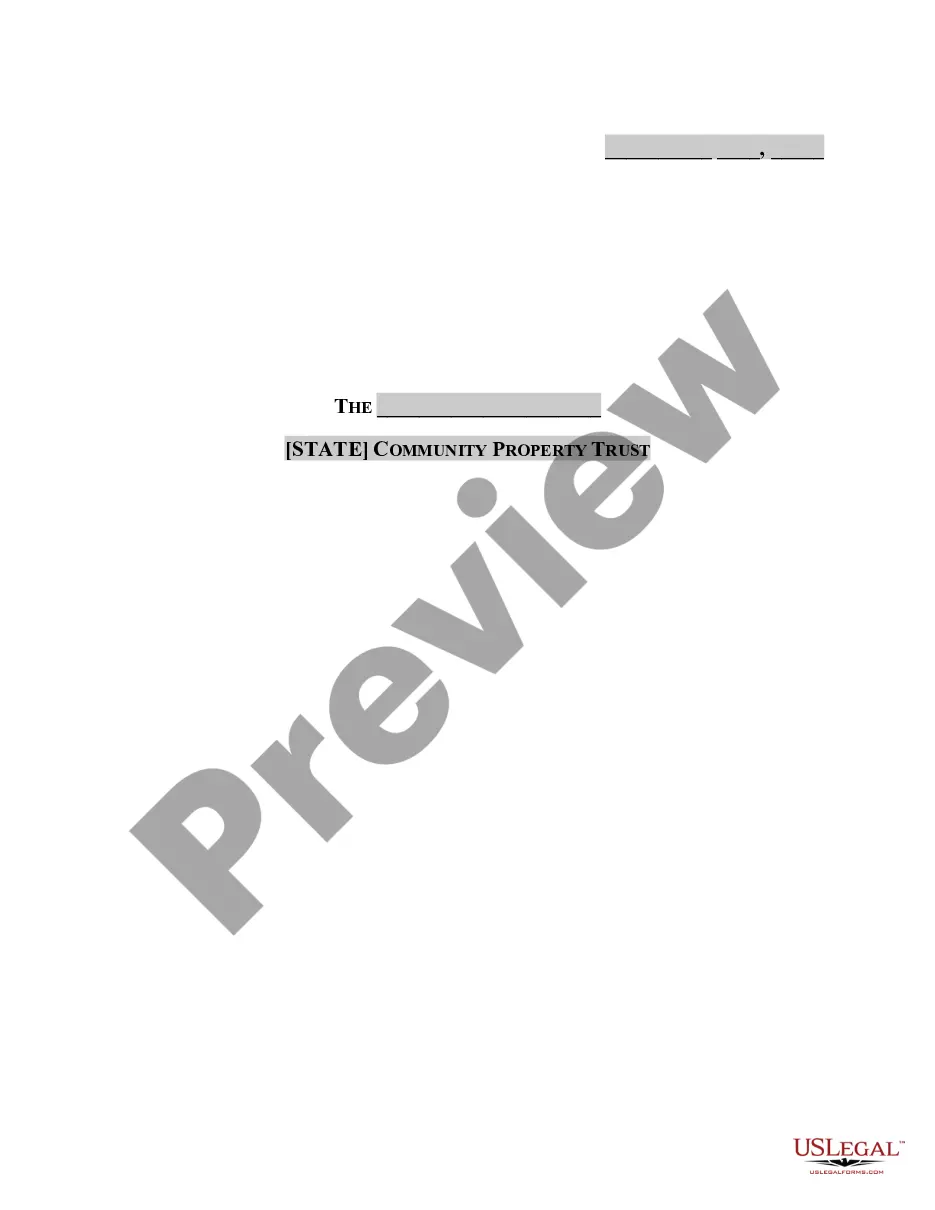
What is this form?
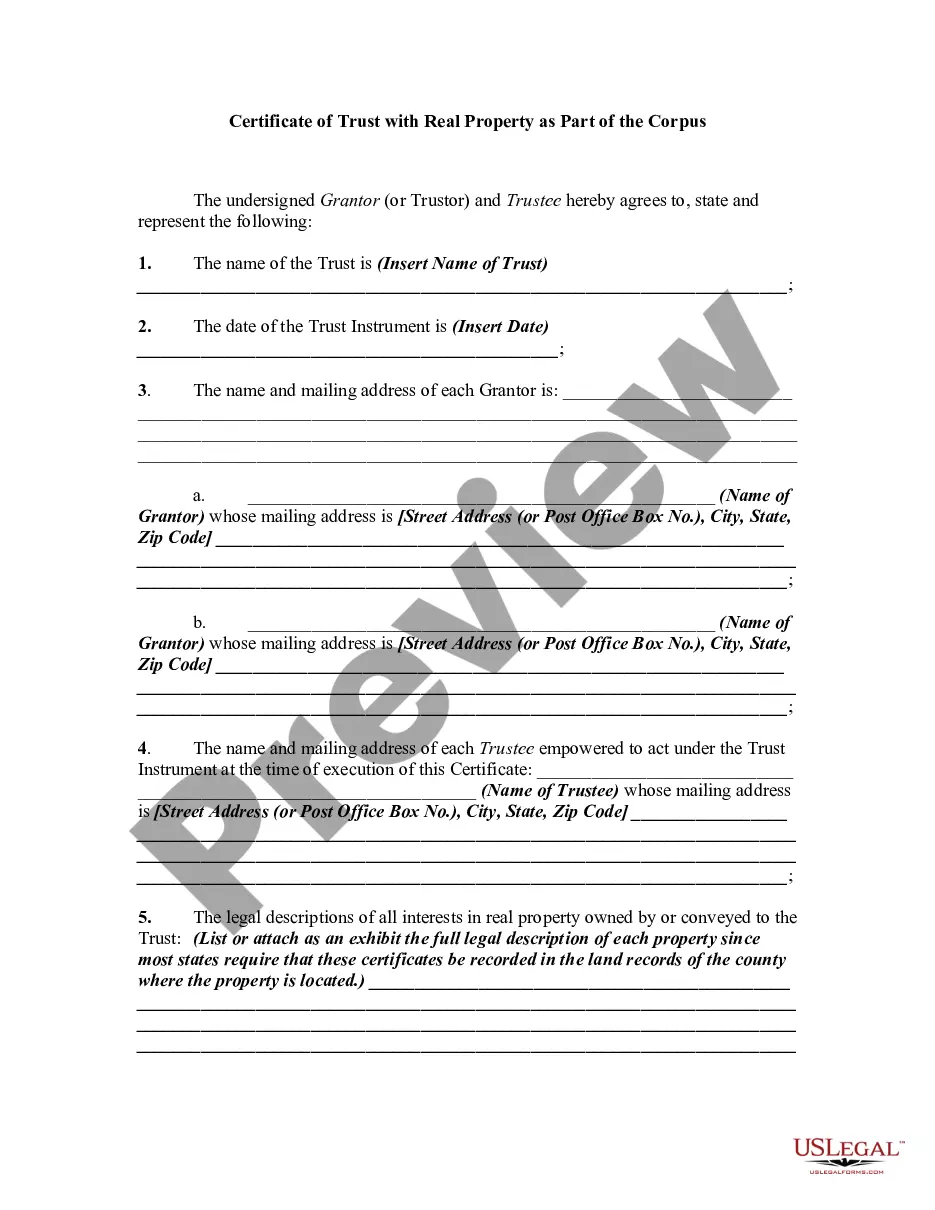
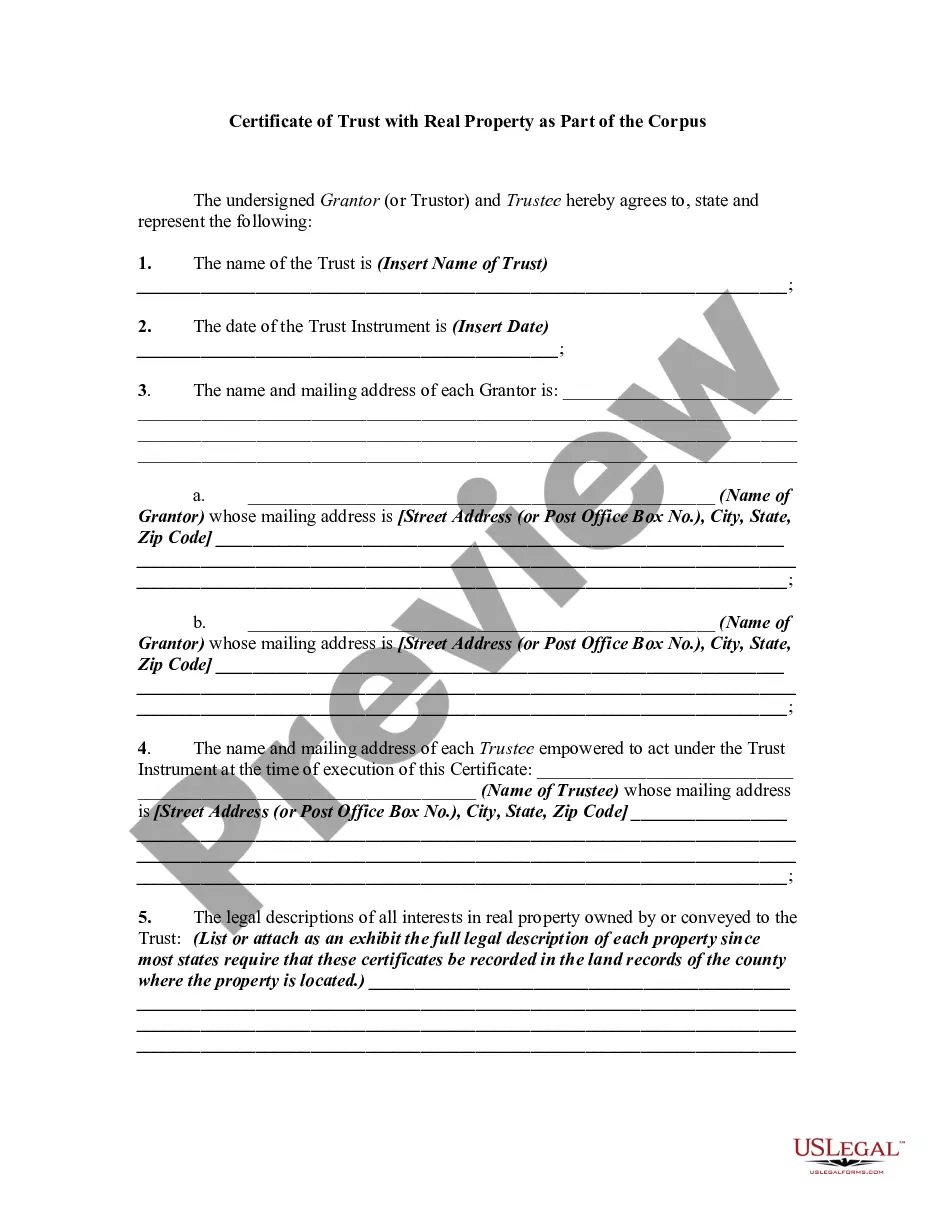
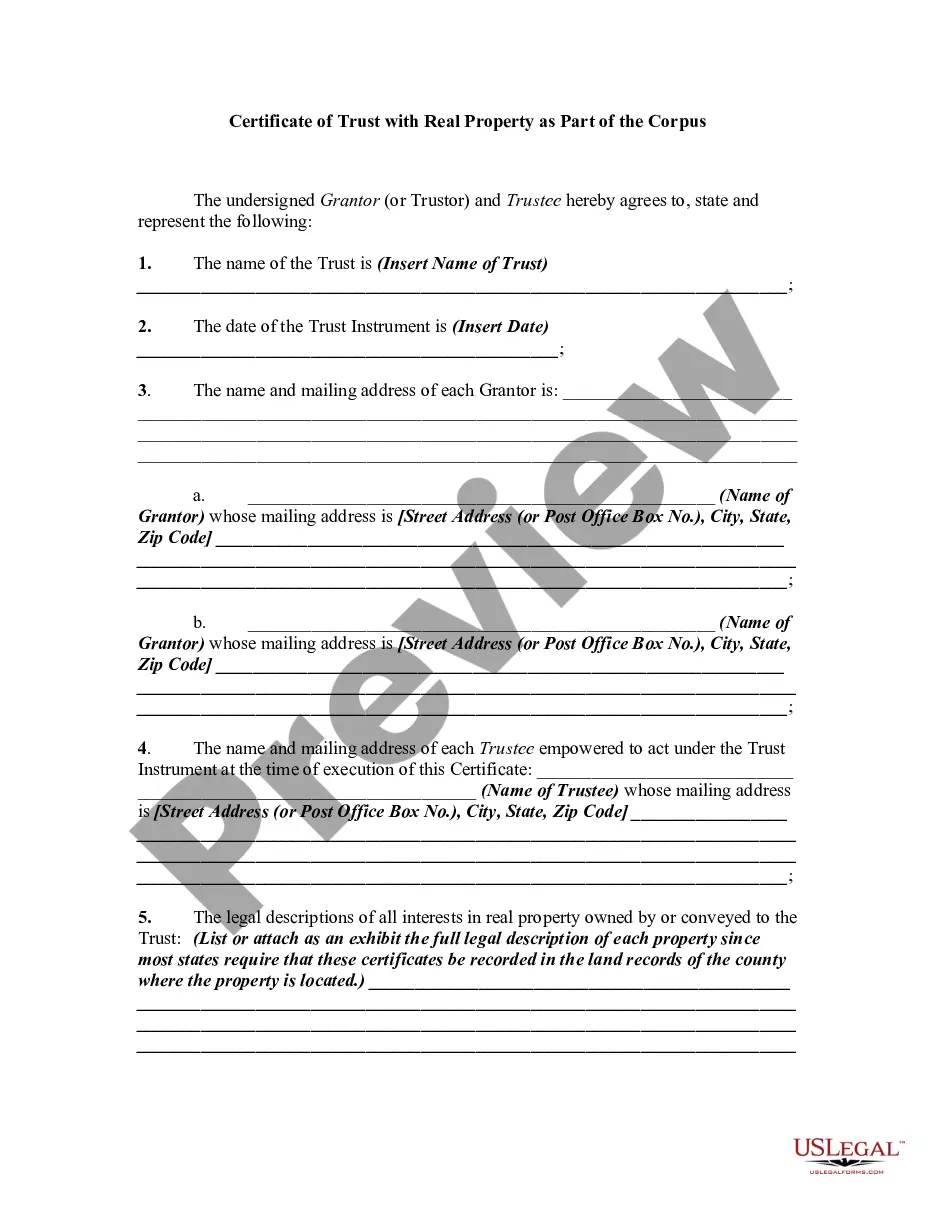
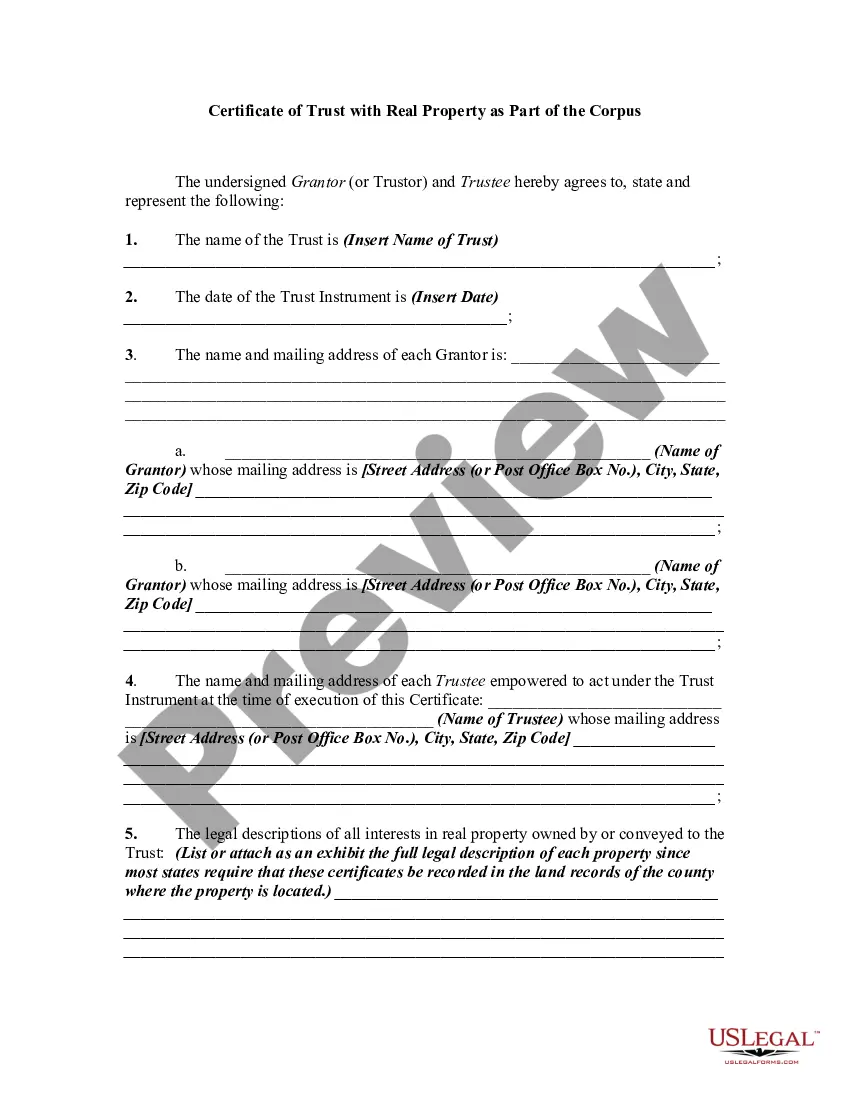
A Certificate of Trust with Real Property as Part of the Corpus is a legal document that confirms the existence of a trust and outlines the powers granted to the trustee. This form acts as a simplified version of a trust agreement, specifically when the trust includes real property. It is essential to record this certificate with the county clerk's office where the property is located, ensuring public accessibility and verification of the trust's authority to manage the property.
Form components explained
- Name of the Trust.
- Date of the Trust Instrument.
- Names and mailing addresses of each Grantor.
- Names and mailing addresses of each Trustee.
- Legal descriptions of real property owned by the Trust.
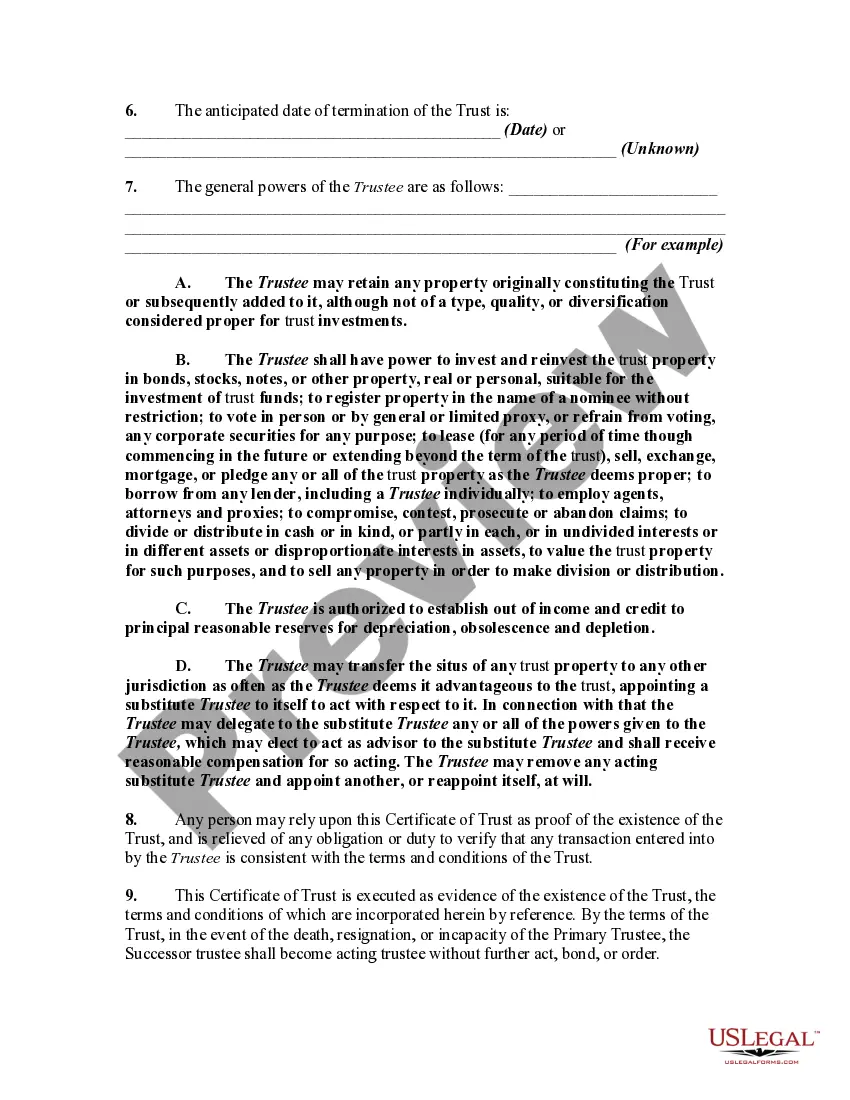
- Anticipated date of termination of the Trust.
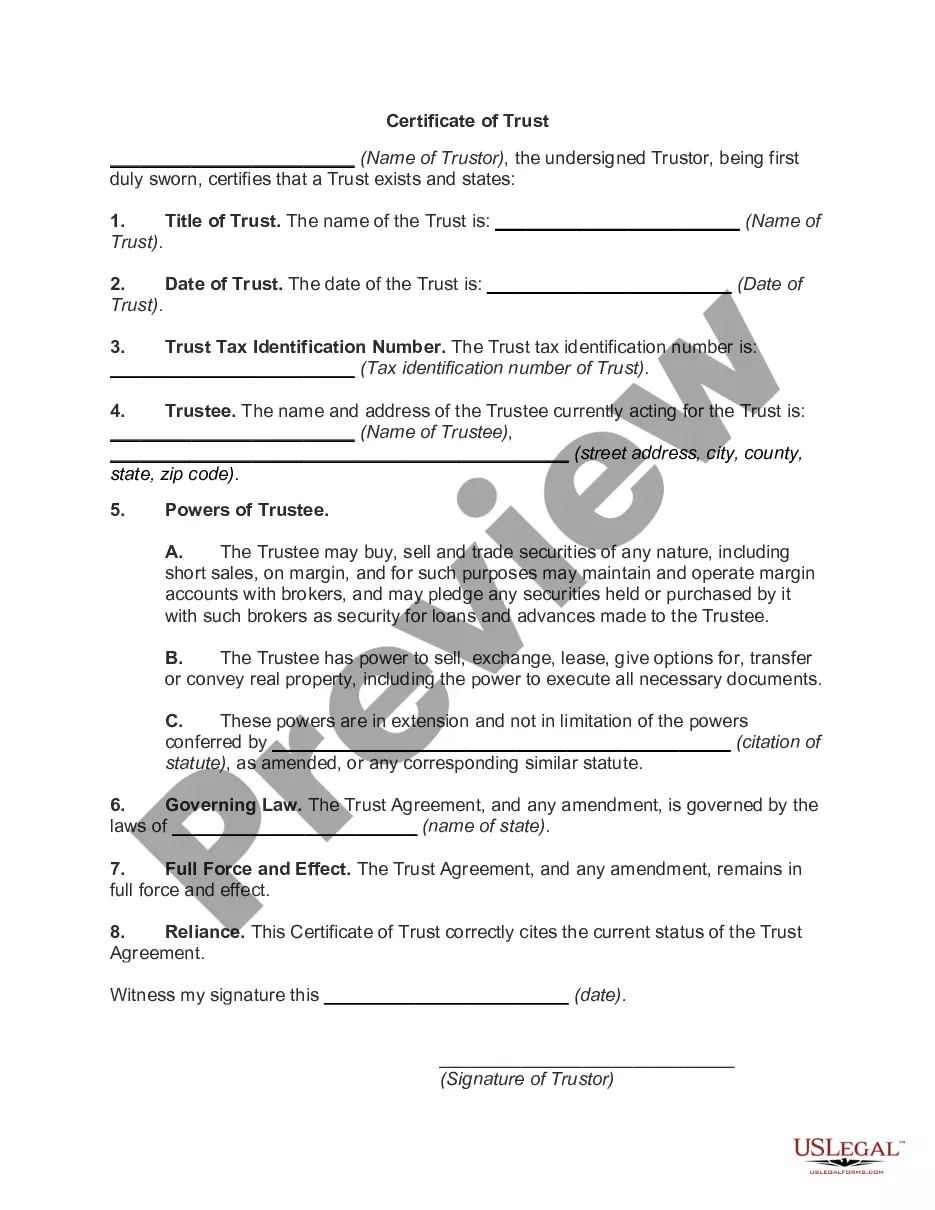
- General powers of the Trustee.
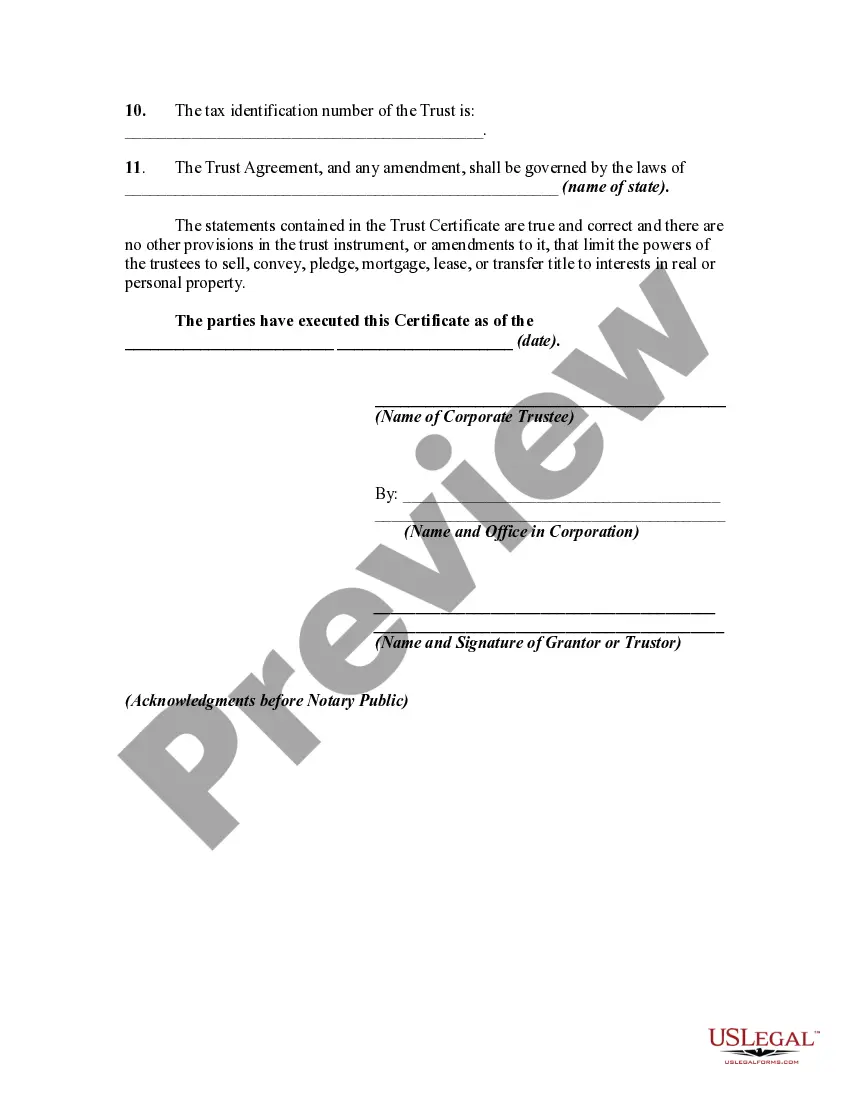
- Tax identification number of the Trust.
- Governing laws of the Trust Agreement.
When to use this form
This form is necessary when you have created a trust that includes real property and need to verify the trust's existence to third parties, such as banks or potential buyers. It is required for transactions involving the sale, lease, or mortgage of the real property held in the trust. Additionally, any significant changes to the trust, such as changes in trustees or property, may warrant the use of this form to maintain clarity and legal standing.
Who this form is for
- Grantors who have established a trust that includes real property.
- Trustees needing to demonstrate their authority to act on behalf of the trust.
- Individuals involved in transactions concerning trust property, such as lenders or buyers.
- Legal representatives looking to confirm the operational status of a trust.
Steps to complete this form
- Identify and enter the name of the Trust.
- Specify the date of the Trust Instrument.
- List all Grantors and their mailing addresses accurately.
- Detail the legal descriptions of all real property included in the Trust.
- Outline the powers granted to the Trustee.
- Include the tax identification number of the Trust.
Does this form need to be notarized?
This form must be notarized to be legally valid. Notarization helps authenticate the identities of the signers and affirms the legitimacy of the document. US Legal Forms offers integrated online notarization services, allowing you to complete this process through secure video calls anytime, without needing to travel.
Get your form ready online
Our built-in tools help you complete, sign, share, and store your documents in one place.
Make edits, fill in missing information, and update formatting in US Legal Forms—just like you would in MS Word.
Download a copy, print it, send it by email, or mail it via USPS—whatever works best for your next step.
Sign and collect signatures with our SignNow integration. Send to multiple recipients, set reminders, and more. Go Premium to unlock E-Sign.
If this form requires notarization, complete it online through a secure video call—no need to meet a notary in person or wait for an appointment.
We protect your documents and personal data by following strict security and privacy standards.

Make edits, fill in missing information, and update formatting in US Legal Forms—just like you would in MS Word.

Download a copy, print it, send it by email, or mail it via USPS—whatever works best for your next step.

Sign and collect signatures with our SignNow integration. Send to multiple recipients, set reminders, and more. Go Premium to unlock E-Sign.

If this form requires notarization, complete it online through a secure video call—no need to meet a notary in person or wait for an appointment.

We protect your documents and personal data by following strict security and privacy standards.
Common mistakes
- Failing to accurately list the legal descriptions of real property.
- Not including all Grantors or Trustees.
- Omitting the Trust's tax identification number.
- Not recording the certificate as required by state law.
Why use this form online
- Convenient access to download and complete the form at your own pace.
- Editability allows customization of terms and specific legal descriptions.
- Reliability, as forms are drafted by licensed attorneys to meet legal standards.
Legal use & context
- The Certificate of Trust functions as evidence of the trust's existence and terms.
- It may protect the trustee from personal liability when conducting trust transactions.
- In some jurisdictions, it is a prerequisite for transferring real property held in the trust.
Key takeaways
- The Certificate of Trust is essential for validating the authority of trustees managing trust property.
- Correctly completing and filing this form can simplify real estate transactions involving trusts.
- It is important to verify state-specific requirements that may affect the use of this form.
Looking for another form?
Form popularity
FAQ
Locate your current deed. Use the proper deed. Check with your title insurance company and lender. Prepare a new deed. Sign in the presence of a notary. Record the deed in the county clerk's office. Locate the deed that's in trust. Use the proper deed.
Using A Trust To Hold Title To Real Property It is the trustee of the trust that can hold legal title to the property on behalf or for the benefit of the beneficiaries of the trust. What this means is that a trustee has the power to sell or lease the property.
A Certificate of Trust is recorded in the Official Records of the county in which any trust real property is located. It aids in clearing title to the property. Generally, where the trust owns no real property, there is no need to record a Certificate...
Transferring Real Property to a Trust You can transfer your home (or any real property) to the trust with a deed, a document that transfers ownership to the trust. A quitclaim deed is the most common and simplest method (and one you can do yourself).
Can I make a declaration of trust myself? Some owners are put off using solicitors duke to the deed of trust cost. Individuals can write out their own, and use someone else as a witness. However, this may have errors or not be a legally binding document.
Assets Held in the Trustee's Name Kahane Revocable Living Trust or the Nessler Family Trust. In particular, look for a list of assets at the end of the document. It will likely be labeled Schedule A or something similar, and should list the items the person who set up the trust intended to hold in the trust.
How To Establish A Trust. You will need to retain an estate attorney to draft and execute your trust document. For a simple revocable or irrevocable trust, it may cost anywhere from $2,000 $5,000.
Can I make a declaration of trust myself? Some owners are put off using solicitors duke to the deed of trust cost. Individuals can write out their own, and use someone else as a witness. However, this may have errors or not be a legally binding document.
Trust property refers to assets that have been placed into a fiduciary relationship between a trustor and trustee for a designated beneficiary. Trust property may include any type of asset, including cash, securities, real estate, or life insurance policies.