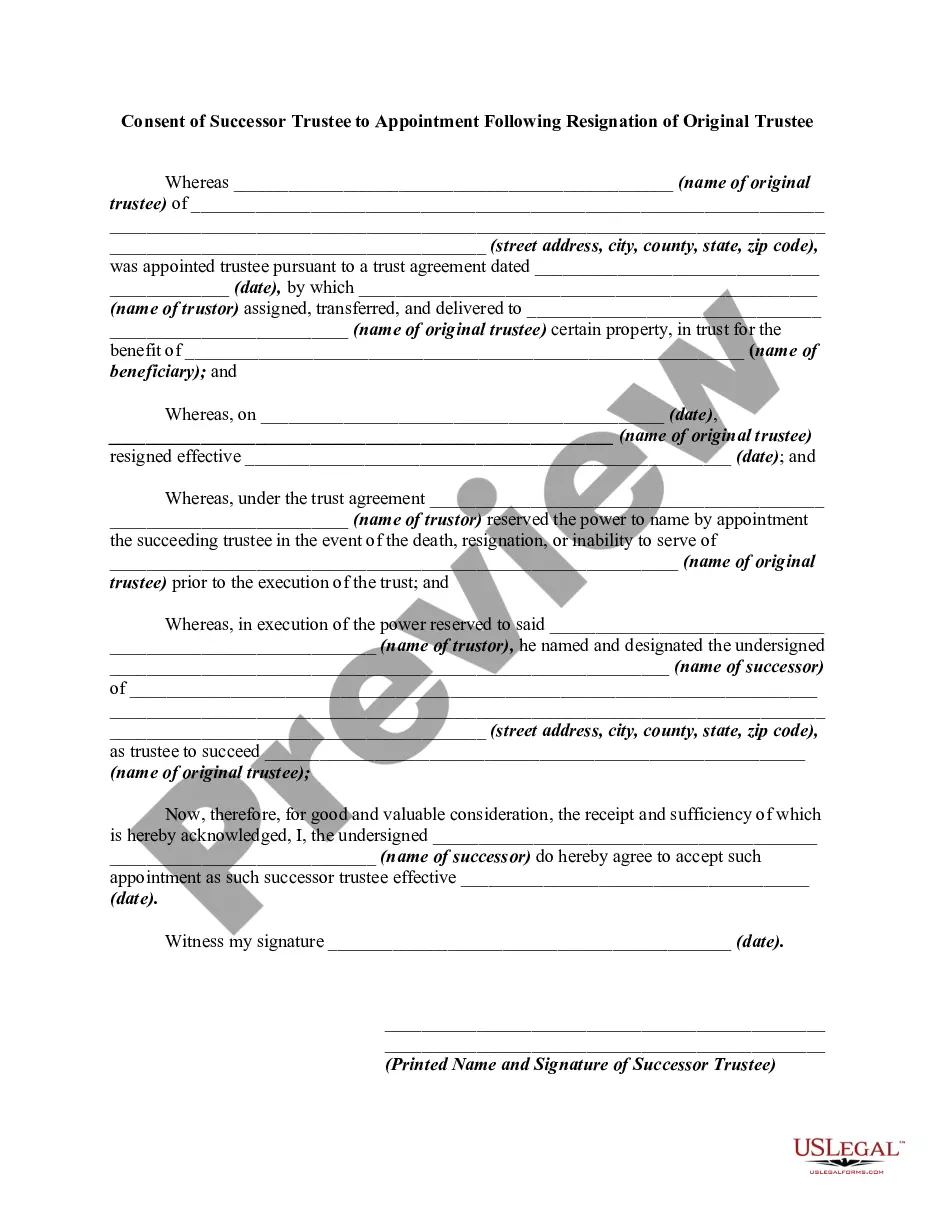
Consent of Successor Trustee to Appointment Following Resignation of Original Trustee
Understanding this form
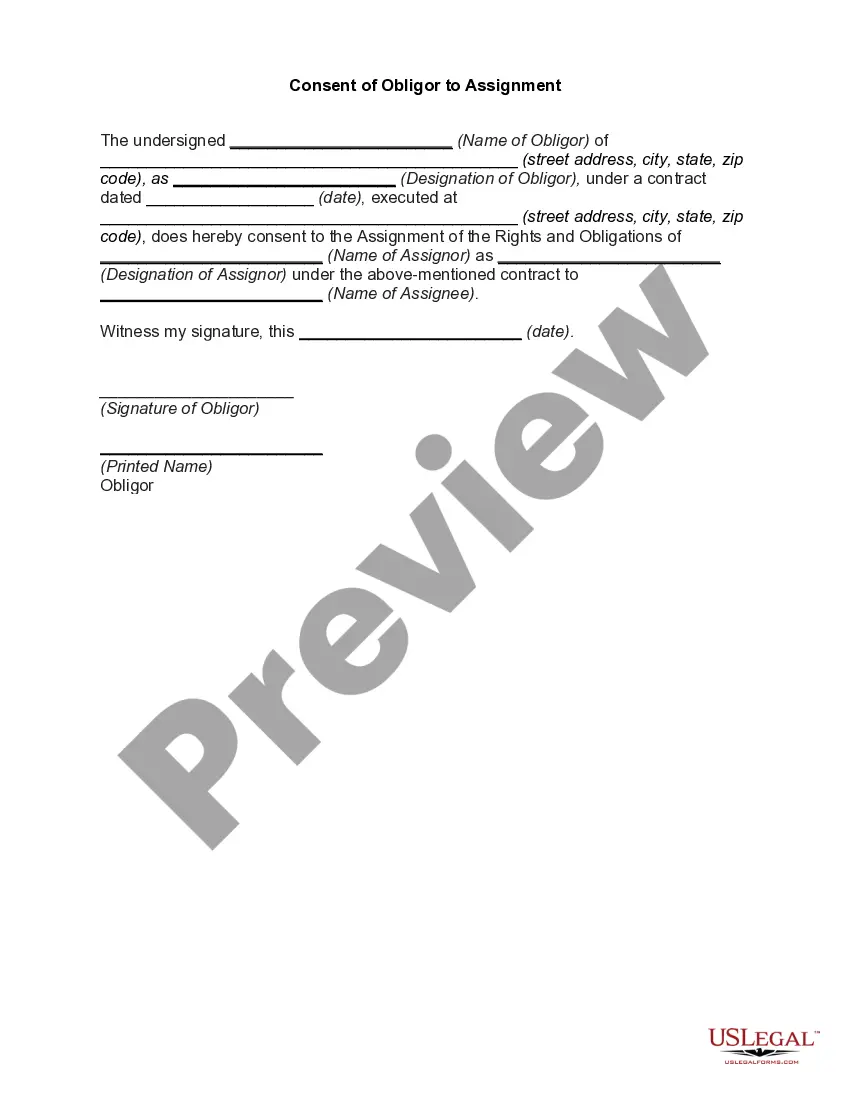
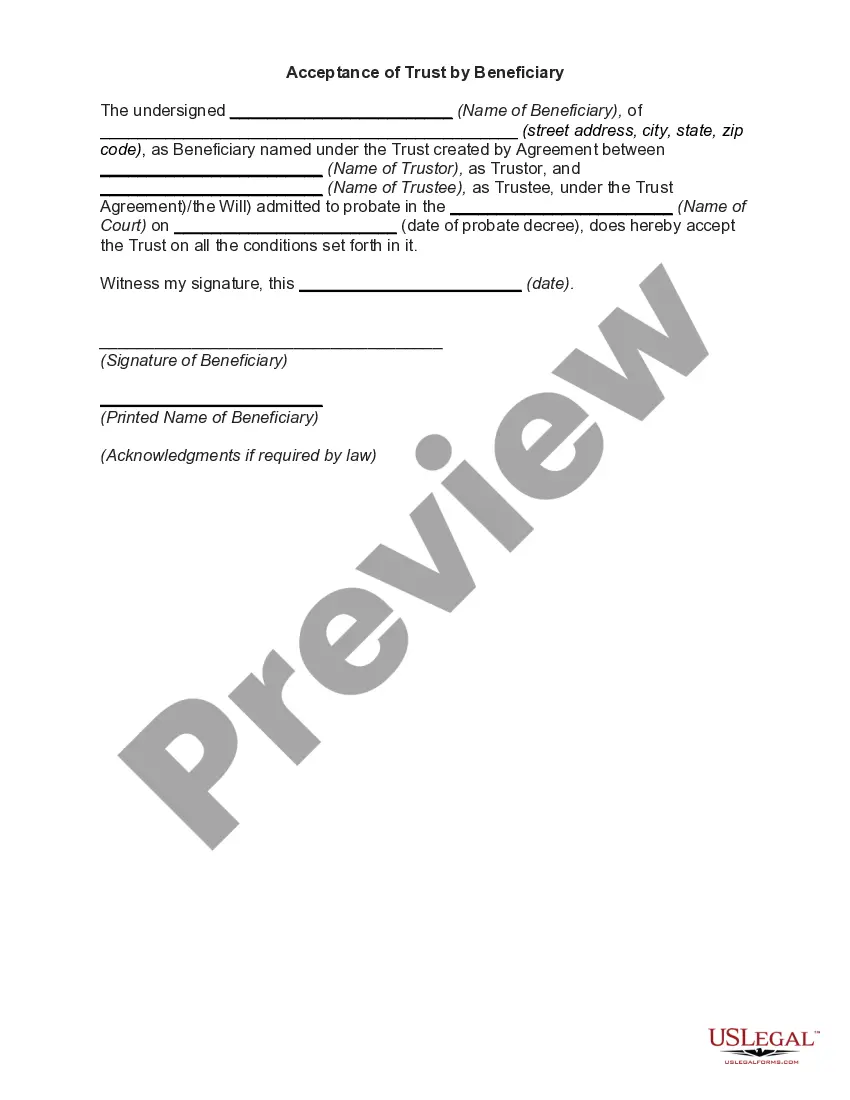
The Consent of Successor Trustee to Appointment Following Resignation of Original Trustee is a legal document that formalizes the appointment of a new trustee after the original trustee has resigned. This form outlines the necessary agreements and acknowledgments needed to ensure a smooth transition of responsibilities in managing a trust. Unlike general trustee appointment documents, this form is specifically designed for circumstances involving the resignation of an existing trustee, ensuring all legal and procedural requirements are met.
Key parts of this document
- Name and details of the original trustee.
- Date of the original trustee's resignation.
- Name and details of the successor trustee.
- Acknowledgment of acceptance of the trustee position by the successor trustee.
- Notarization section for legal validation.


When to use this document
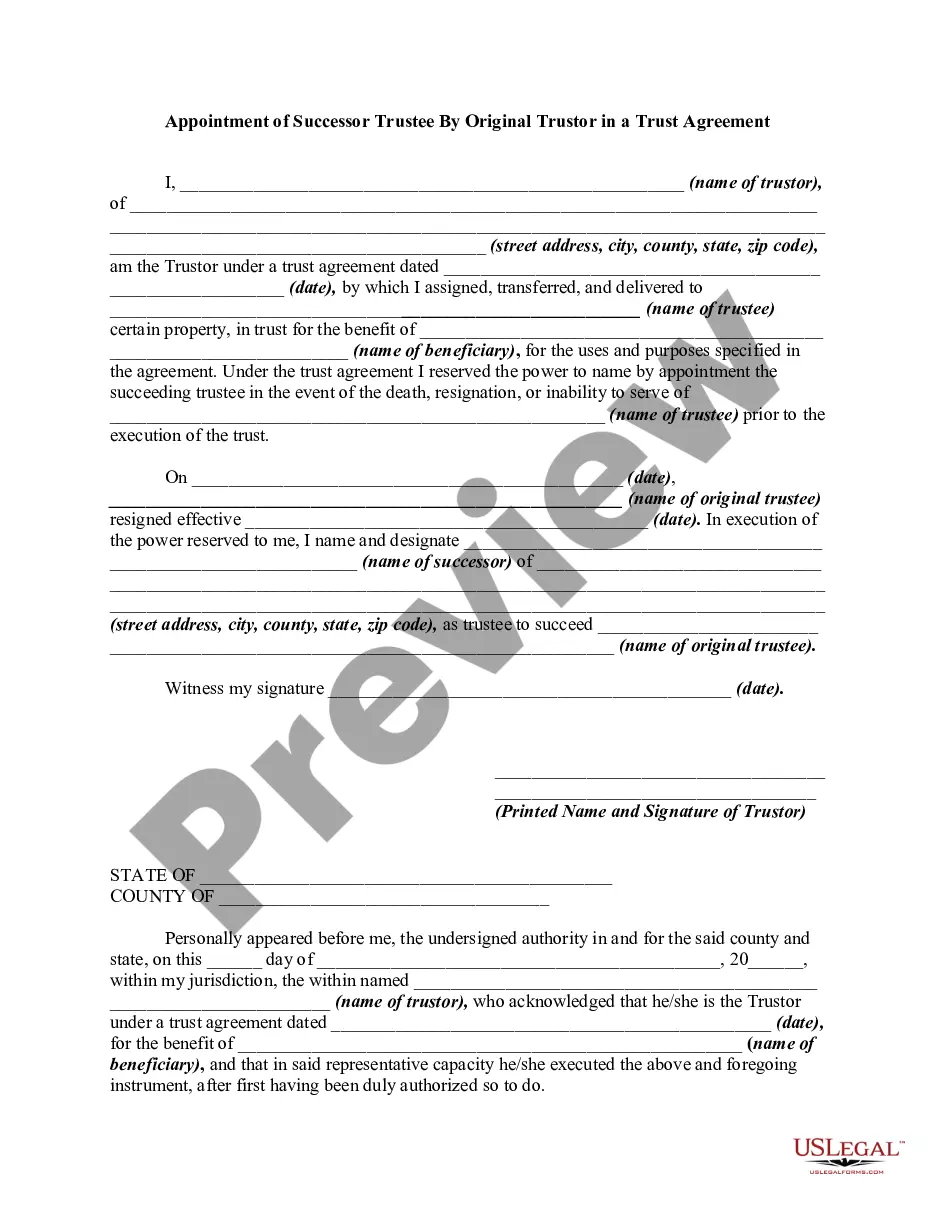
This form should be utilized when the original trustee of a trust has formally resigned, and a successor trustee has been designated to take over their responsibilities. It is essential in situations where the trust agreement allows the trustor or a beneficiary to appoint a new trustee following resignation. Using this form helps clarify the transition and ensures compliance with the trust's provisions.
Who needs this form
- Trustors who have appointed a new trustee after the original trustee's resignation.
- Beneficiaries involved in the trust who need to oversee the appointment of a successor trustee.
- Estate planners or legal professionals assisting clients in managing trust transitions.
Instructions for completing this form
- Identify the original trustee and provide their full name and address.
- Enter the date of the original trustee's resignation and the effective date of their resignation.
- Specify the name and address of the successor trustee being appointed.
- Have the successor trustee sign the form to accept the appointment.
- Include a notarization section to authenticate the signatures if required by state law.
Notarization requirements for this form
Yes, this form must be notarized to be legally valid. Notarization provides an additional layer of authentication, ensuring that the signatures are legitimate. US Legal Forms offers integrated online notarization, allowing users to securely complete this process via video call, 24/7, without the need for travel.
Get your form ready online
Our built-in tools help you complete, sign, share, and store your documents in one place.
Make edits, fill in missing information, and update formatting in US Legal Forms—just like you would in MS Word.
Download a copy, print it, send it by email, or mail it via USPS—whatever works best for your next step.
Sign and collect signatures with our SignNow integration. Send to multiple recipients, set reminders, and more. Go Premium to unlock E-Sign.
If this form requires notarization, complete it online through a secure video call—no need to meet a notary in person or wait for an appointment.
We protect your documents and personal data by following strict security and privacy standards.

Make edits, fill in missing information, and update formatting in US Legal Forms—just like you would in MS Word.

Download a copy, print it, send it by email, or mail it via USPS—whatever works best for your next step.

Sign and collect signatures with our SignNow integration. Send to multiple recipients, set reminders, and more. Go Premium to unlock E-Sign.

If this form requires notarization, complete it online through a secure video call—no need to meet a notary in person or wait for an appointment.

We protect your documents and personal data by following strict security and privacy standards.
Avoid these common issues
- Failing to notarize the document when required.
- Not including the correct dates related to the resignation and appointment.
- omitting the full legal names and addresses of the trustees involved.
Benefits of completing this form online
- Convenient access to professionally drafted documents that can be downloaded and filled out quickly.
- Customizable templates that meet specific state requirements.
- Increased reliability and accuracy by using forms created by licensed attorneys.
Looking for another form?




Form popularity
FAQ
A trustee cannot resign without the permission of the court unless the trust instrument so provides or unless all of the beneficiaries who are legally capable to do so consent to the resignation.
California's Probate Code does allow you to resign from being a trustee by certain methods.If the trust is irrevocable, you need to have the consent of all of the adult beneficiaries of the trust in order to resign. The law also allows you to petition the court to accept your resignation as trustee.
Resignation is typically done by giving written notice to the beneficiaries and to the successor Trustee. The successor Trustee should receive the resignation so that he or she knows that it's their turn to manage the Trust estate.
Once you follow that directive, the Trustee must step down and a successor Trustee can be appointed.Once a Trustee resigns, then either the next person named would act, or maybe you can appoint someone new if the Trust terms allow you to do that. Either way, a new Trustee will be in office when a Trustee resigns.
Typically, the named successor trustee to a trust does not take over until the existing trustee stops serving, whether due to his or her resignation, removal, or death.First, the trustee can use the trust funds to fight the court case. Second, the court will first seek to advance the trust grantor's intent.
Your successor trustee is tasked with managing the assets in your trust as he or she sees fit. The successor trustee will do so until the time comes to transfer the assets to your beneficiaries. This responsibility only kicks in, however, once you can no longer effectively serve as your own trustee.
When a Trustee resigns, they must still act in the best interests of the Trust and the Trust beneficiaries. That means the Trust assets must be managed prudently while a new Trustee is selected. Further, the Trustee is required to provide an accounting to the Trust beneficiaries upon resignation.