Agreement Between Adjoining Landowners Regarding Encroachment of Trees or Bushes
Understanding this form
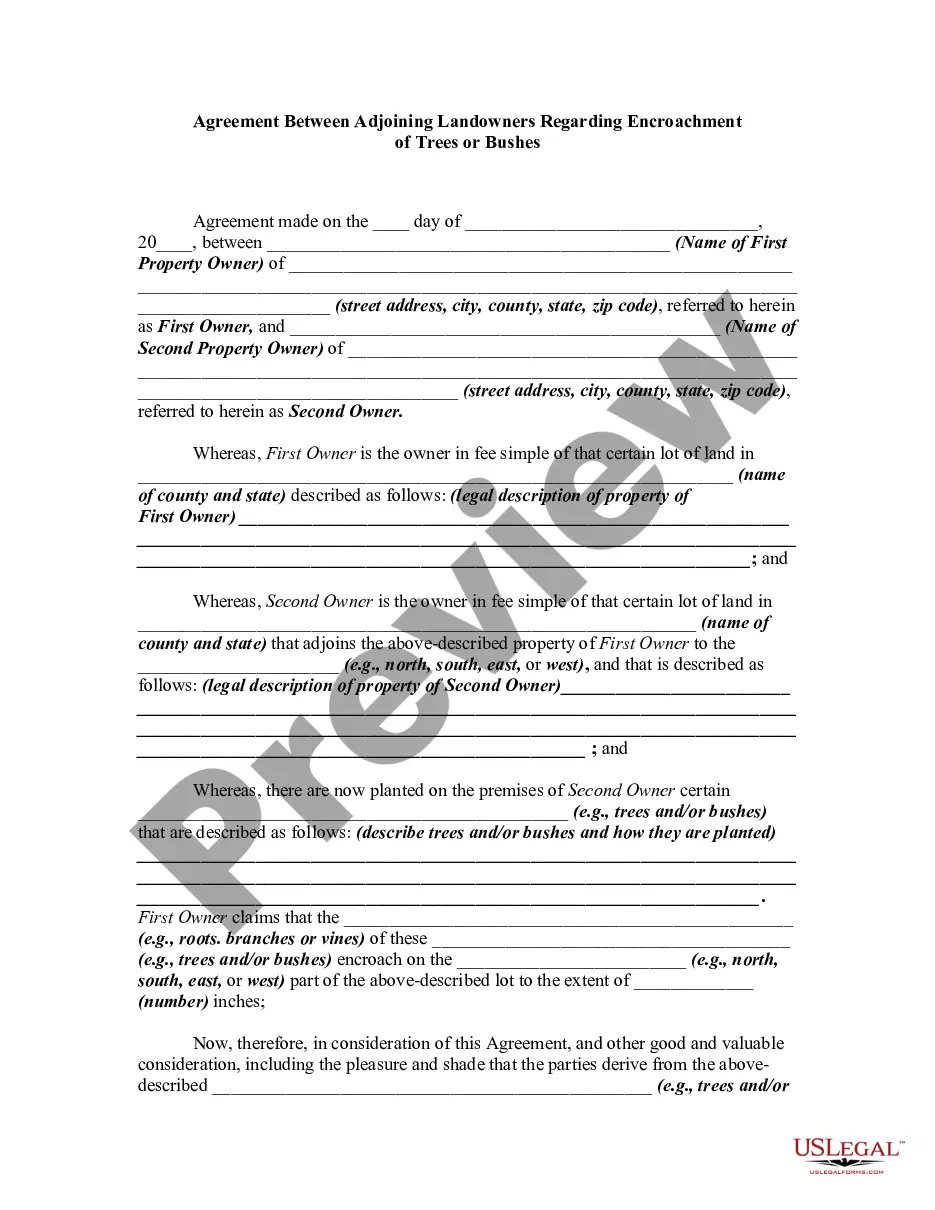
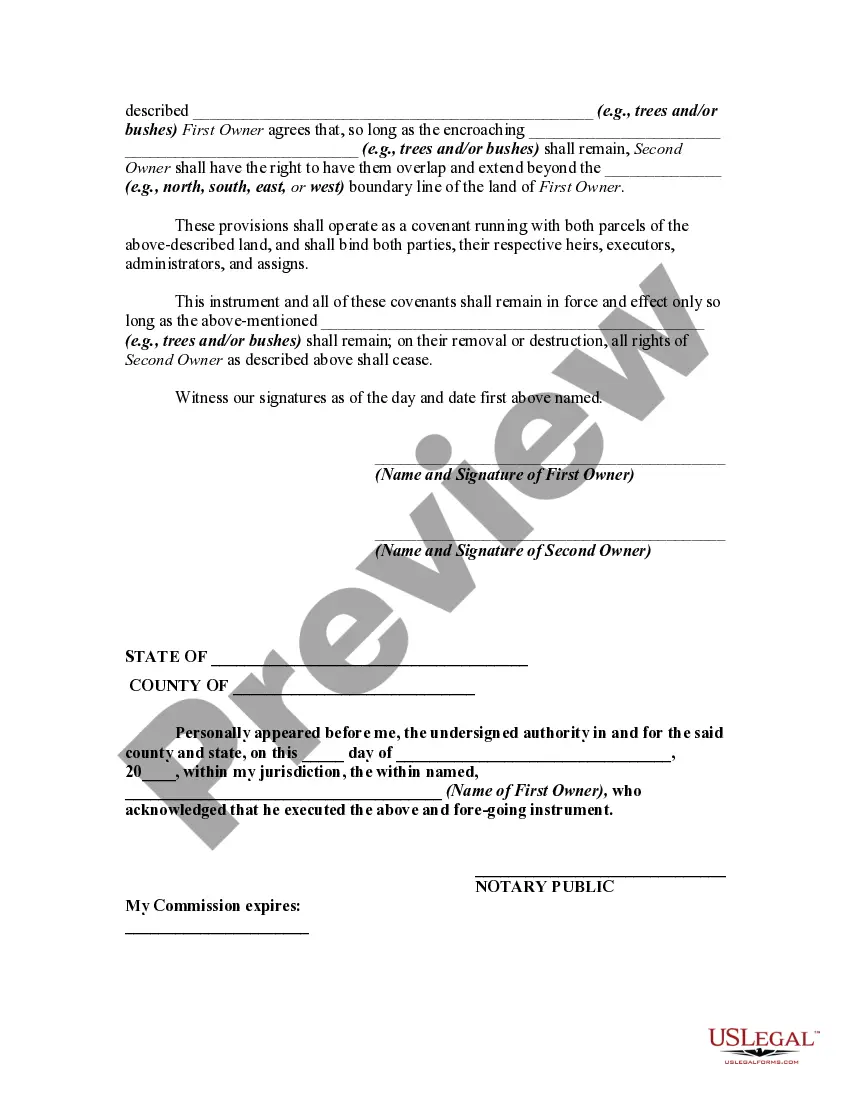
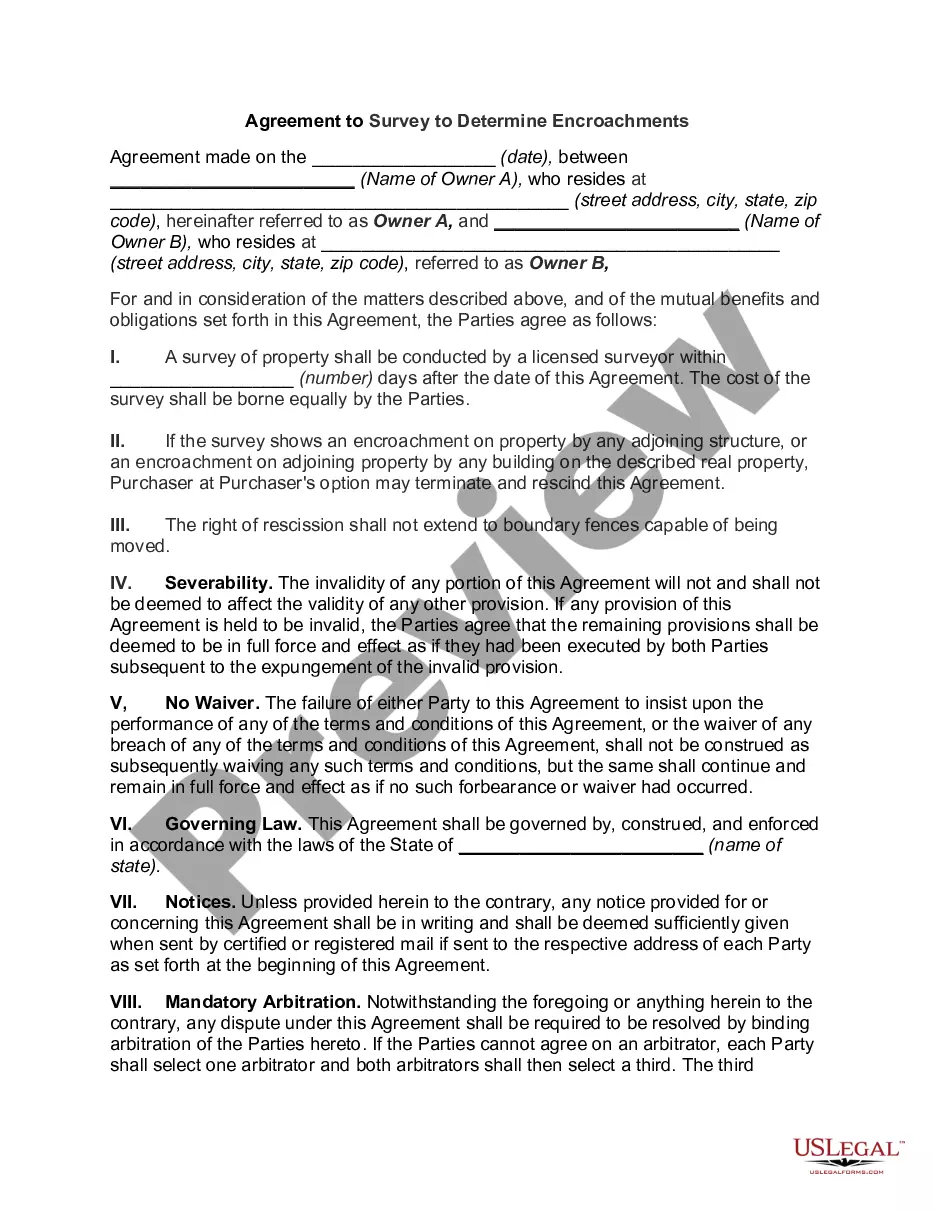
This Agreement Between Adjoining Landowners Regarding Encroachment of Trees or Bushes is a legal document that establishes consent between two property owners regarding the encroachment of plant life from one property onto another. This agreement allows one party to maintain trees or bushes that span the property line, while ensuring that this permission is contingent upon the continued presence of the encroaching vegetation. It differs from other property agreements by focusing specifically on natural encroachments rather than structures or fences.
Form components explained
- Identification of the property owners and their addresses.
- Legal descriptions of both adjoining properties.
- Description of the encroaching trees or bushes and their extent of encroachment.
- Consent from the First Owner allowing the encroachment to remain.
- Provision for the termination of consent upon removal or destruction of the encroaching vegetation.
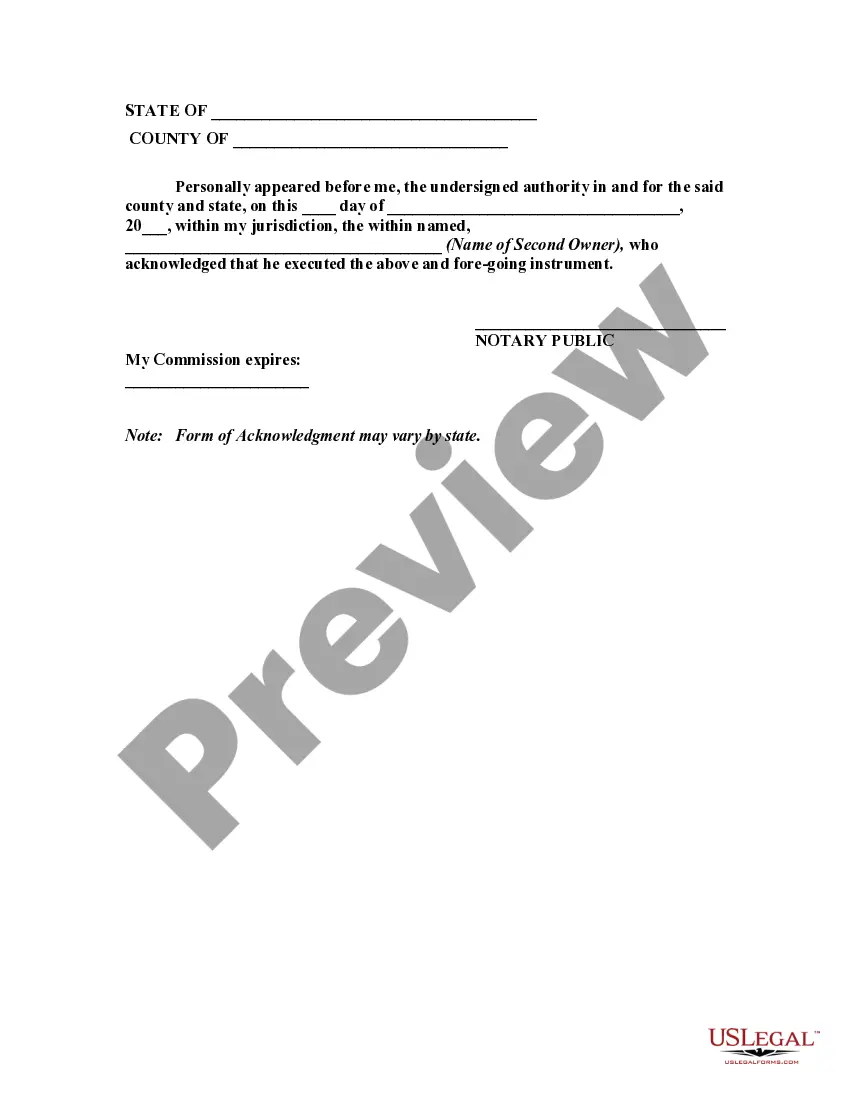
- Signature lines for both parties along with notarization sections.
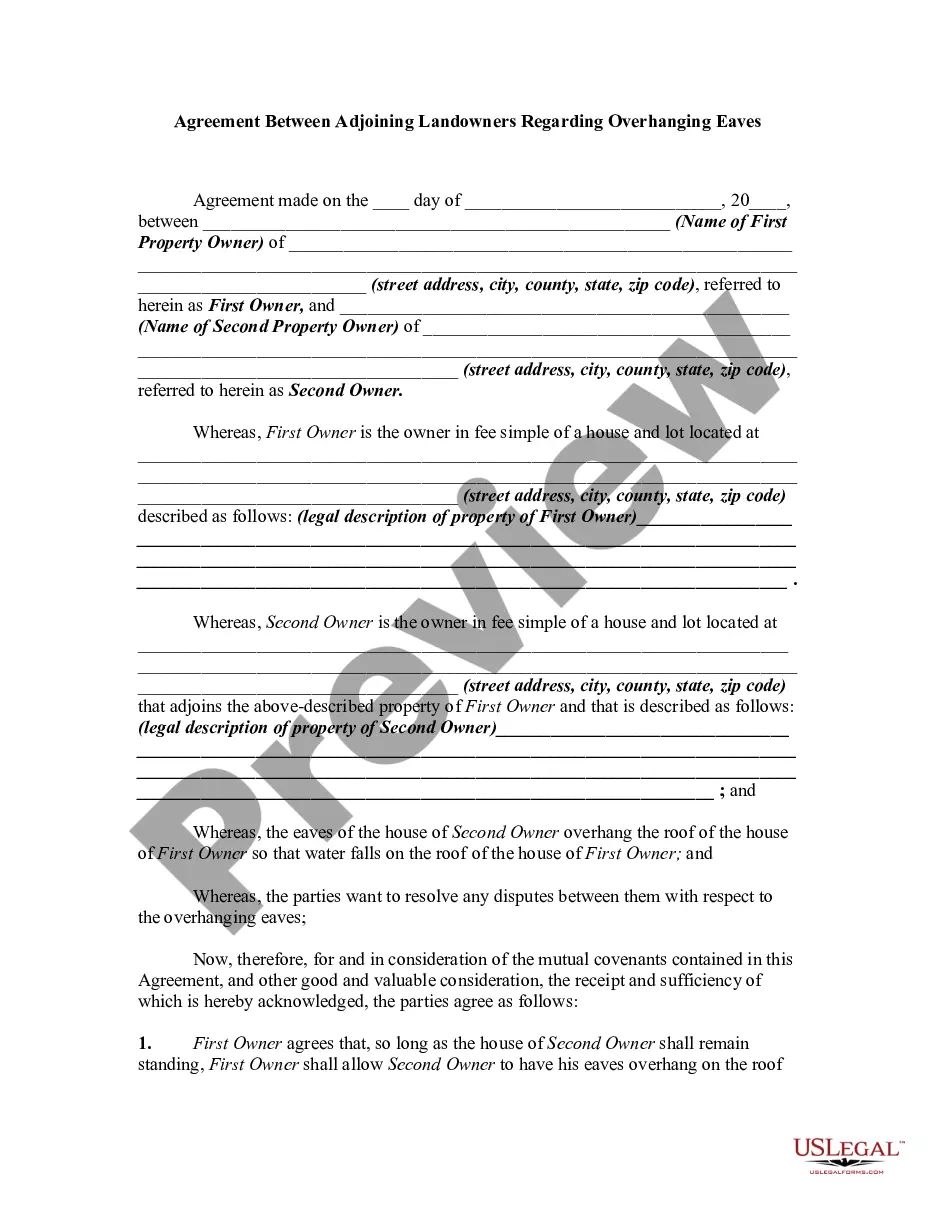
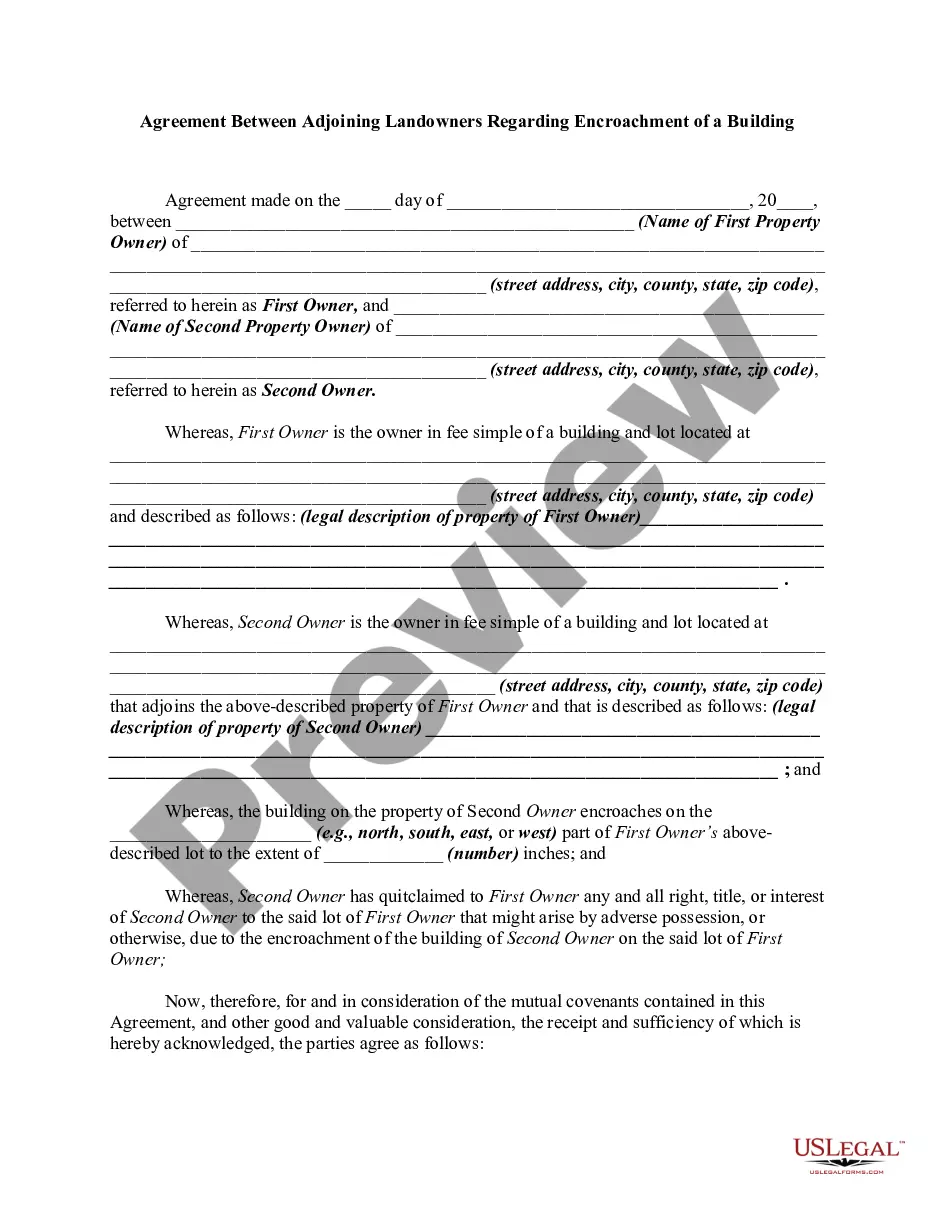
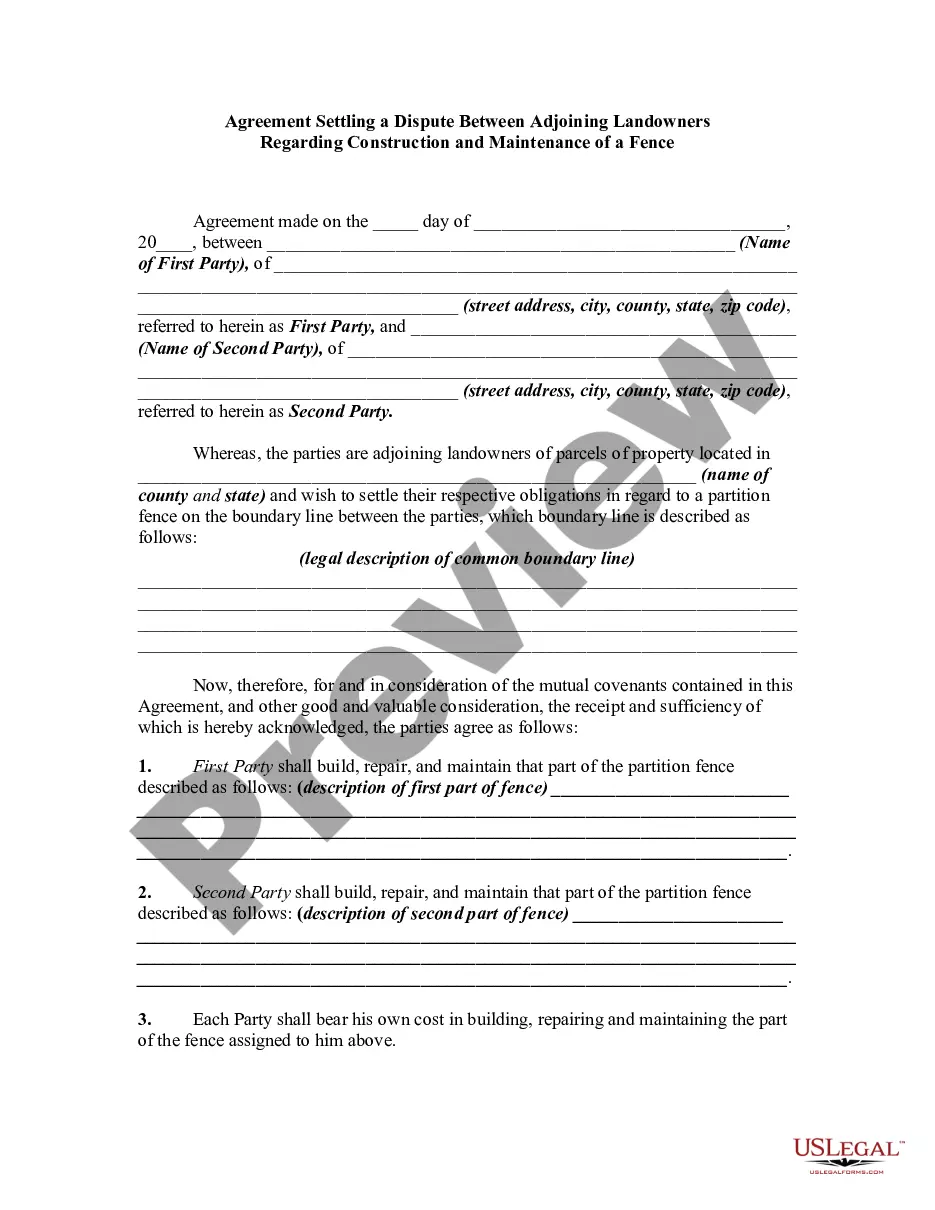
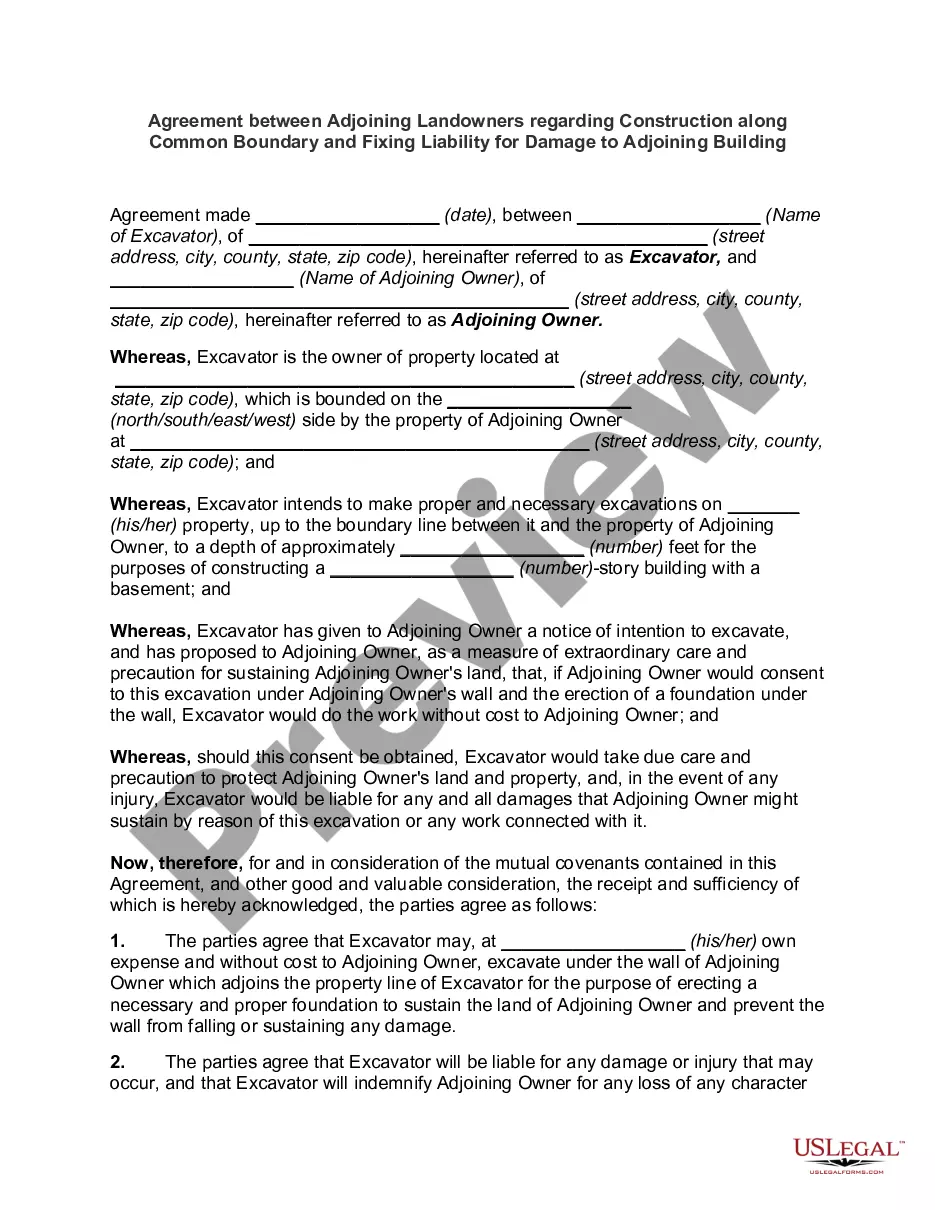
When to use this document
This form is useful in situations where a property owner discovers that trees or bushes from a neighboring property are encroaching onto their land. It is often employed when both parties agree to maintain the current arrangement, thus avoiding potential disputes or conflicts over property boundaries. Use this agreement to formalize consent and protect both parties' interests should the encumbering plants be removed or cause issues in the future.
Who this form is for
- Property owners whose land borders another property with encroaching trees or bushes.
- Neighbors looking to establish a clear understanding and agreement regarding property boundaries and natural intrusions.
- Individuals seeking to avoid legal disputes related to property encroachments.
Completing this form step by step
- Identify and enter the names and addresses of both property owners at the beginning of the form.
- Provide the legal description of each property to delineate boundaries accurately.
- Describe the trees or bushes that are encroaching, specifying how they overlap with the neighboring property.
- Enter the degree of encroachment, indicating how far the vegetation extends onto the adjacent lot.
- Both owners should sign and date the agreement, followed by notarization to validate the document.
Is notarization required?
Notarization is required for this form to take effect. Our online notarization service, powered by Notarize, lets you verify and sign documents remotely through an encrypted video session, available 24/7.
Get your form ready online
Our built-in tools help you complete, sign, share, and store your documents in one place.
Make edits, fill in missing information, and update formatting in US Legal Forms—just like you would in MS Word.
Download a copy, print it, send it by email, or mail it via USPS—whatever works best for your next step.
Sign and collect signatures with our SignNow integration. Send to multiple recipients, set reminders, and more. Go Premium to unlock E-Sign.
If this form requires notarization, complete it online through a secure video call—no need to meet a notary in person or wait for an appointment.
We protect your documents and personal data by following strict security and privacy standards.

Make edits, fill in missing information, and update formatting in US Legal Forms—just like you would in MS Word.

Download a copy, print it, send it by email, or mail it via USPS—whatever works best for your next step.

Sign and collect signatures with our SignNow integration. Send to multiple recipients, set reminders, and more. Go Premium to unlock E-Sign.

If this form requires notarization, complete it online through a secure video call—no need to meet a notary in person or wait for an appointment.

We protect your documents and personal data by following strict security and privacy standards.
Mistakes to watch out for
- Failing to provide accurate legal descriptions of the properties involved.
- Not specifying the exact nature of the encroachment, which can lead to misunderstandings.
- Omitting signatures or failing to notarize the document where required.
Benefits of using this form online
- Convenience of downloading and completing the form from home.
- Editable fields allow for easy customization based on specific property details.
- Access to expert-drafted language ensures the agreement is legally sound.
Legal use & context
- This agreement helps clarify rights between property owners regarding vegetation that encroaches on property lines.
- It serves to prevent potential disputes and outlines conditions for the continued presence of the encroaching plants.
- Enforceability depends on adherence to state regulations and proper execution of the agreement.
What to keep in mind
- The form allows for mutual agreement on encroaching vegetation between neighbors.
- Proper completion ensures clarity and protects property rights.
- Always check for specific state regulations that may impact the form's validity.
Looking for another form?
Form popularity
FAQ
Have a Professional Land Survey Done. Talk Things Out and Offer Concessions. Seek Mediation or a Neutral Third Party. If all else fails, hire a qualified real estate attorney.
As a last resort, if you feel confident that your property is being encroached upon, you can file a claim in court and ask a judge to decide the boundariesbut the more you involve the legal system, the more cost you will incur.
By suggesting that one party or the other should apply to the Revenue Officer to fix the limits, under section 101 (1) of the Punjab Land Revenue Act. by appointing a local Commissioner, and. by the Court itself making a local enquiry.
If you think your neighbour's tree is dangerous, you can report it to the council - for example if you think it might fall over. They might ask the owner to make it safe or deal with it themselves. Search for 'trees' on your council's website to find which department to contact.
A Land Survey Works Wonders for Boundary Disputes. If you feel like your neighbor has or is developing on top of your land, you may want to get a professional land survey. Talk it Over and Offer Concessions. Bring on a Neutral Third Party. Hire a Qualified Estate Attorney.
When you file a nuisance lawsuit against your neighbor, you essentially make the claim that your neighbor's actions are interfering with the enjoyment of your property. Nuisance claims are considered either private or public.A nuisance typically involves non-physical elements, such as odors or sounds.
A Land Survey Works Wonders for Boundary Disputes. If you feel like your neighbor has or is developing on top of your land, you may want to get a professional land survey. Talk it Over and Offer Concessions. Bring on a Neutral Third Party. Hire a Qualified Estate Attorney.
A neighbor will not own the part of a structure that encroaches on their land. Instead, the encroachment will be viewed as an act of trespass. Also, although the neighbor will be able to sue that person for trespass, they will not automatically gain legal title to the portion of the building that is now on their land.
You can cut back any overhanging branch that comes into your property. However, the cut branch(es), and any fruit or flowers attached to the branch(es) remain the property of the tree owner and must be returned. If the tree has a Preservation Order on it then you cannot cut/pare any branches.