Confidentiality Policy
About this form
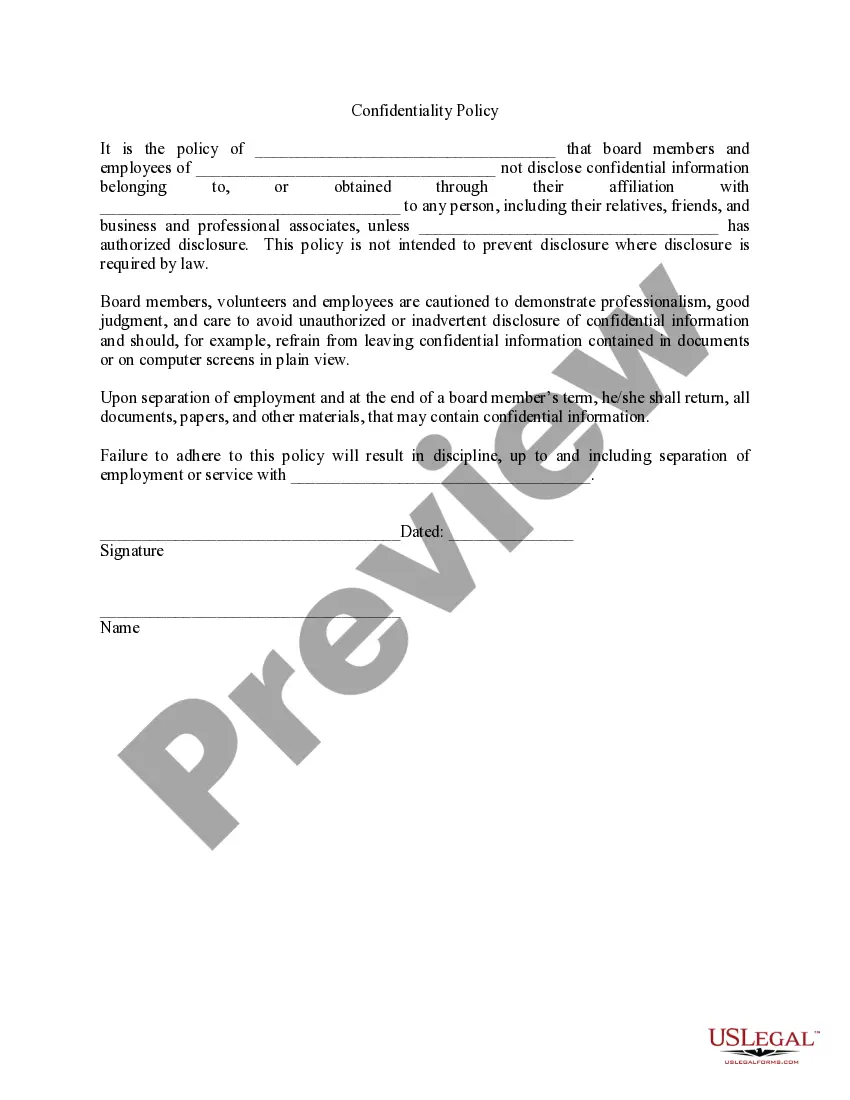
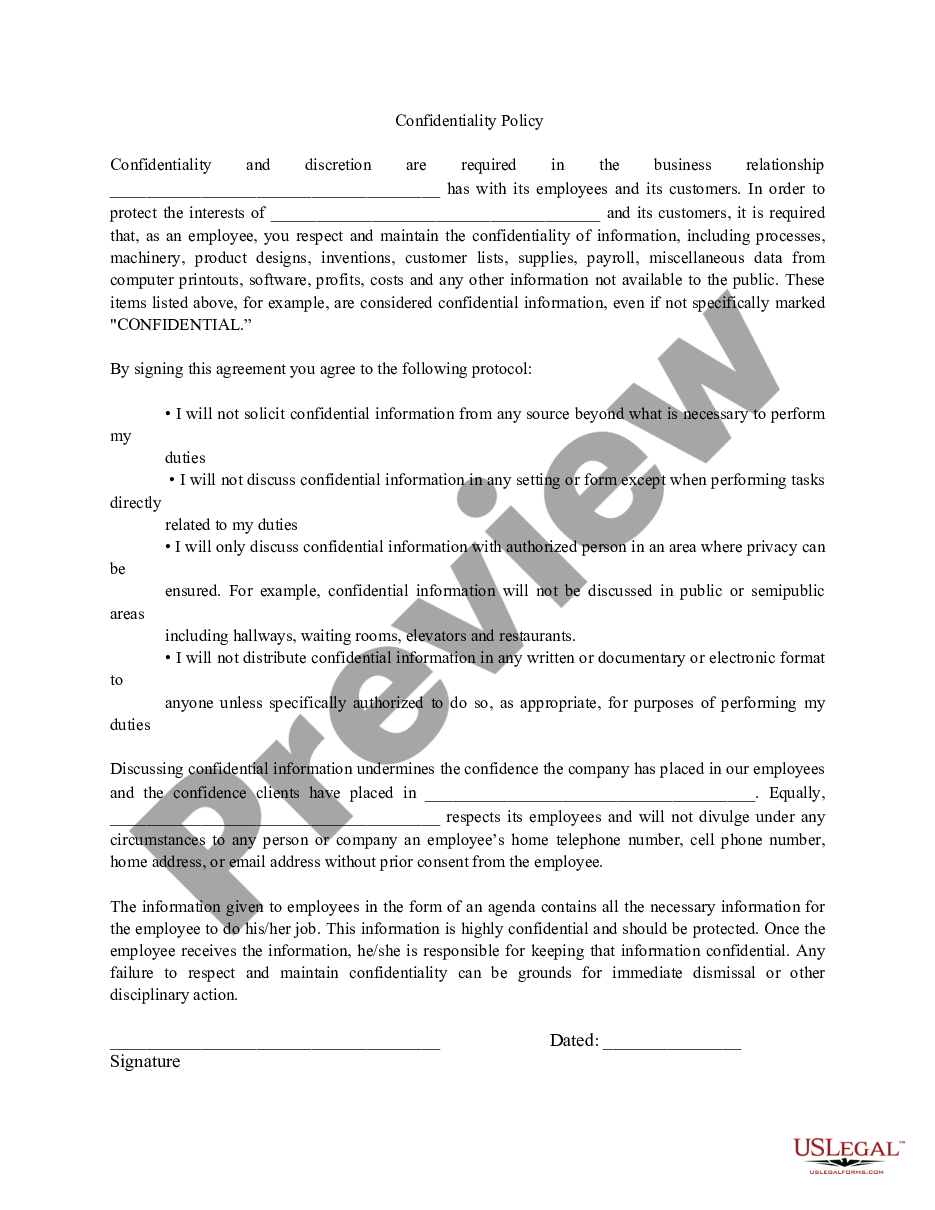
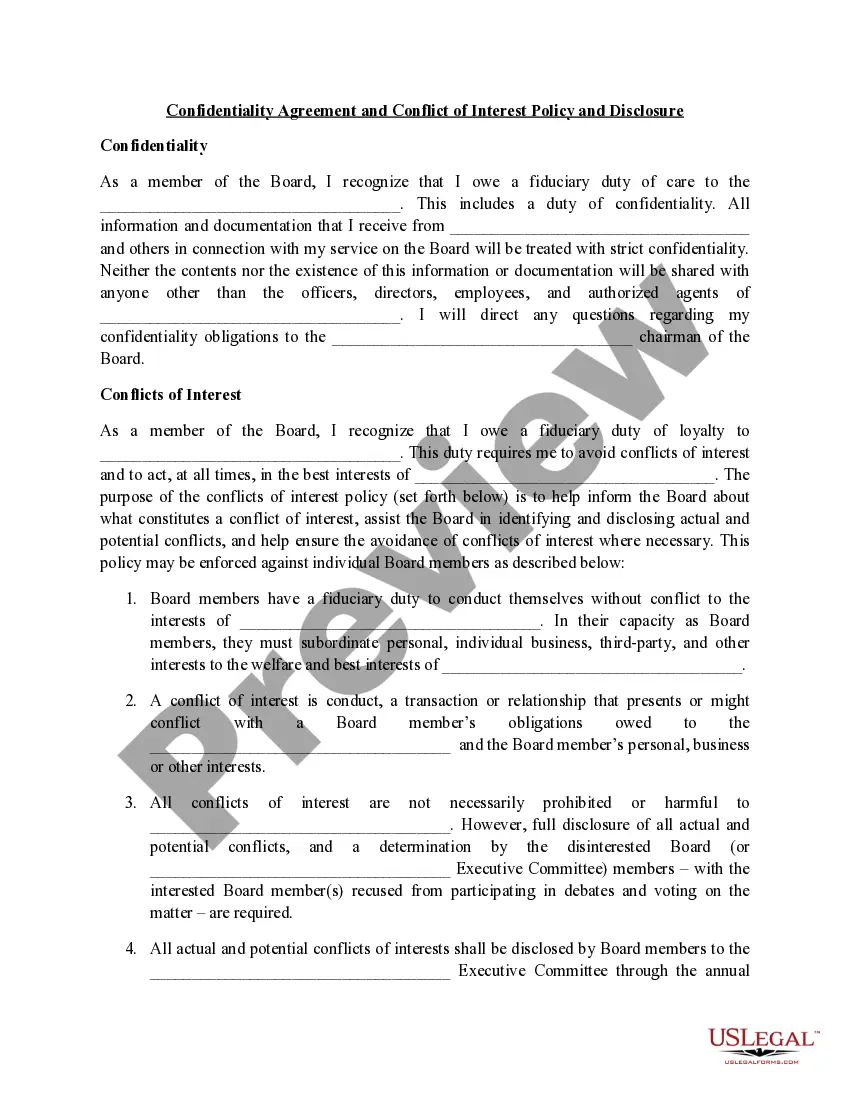
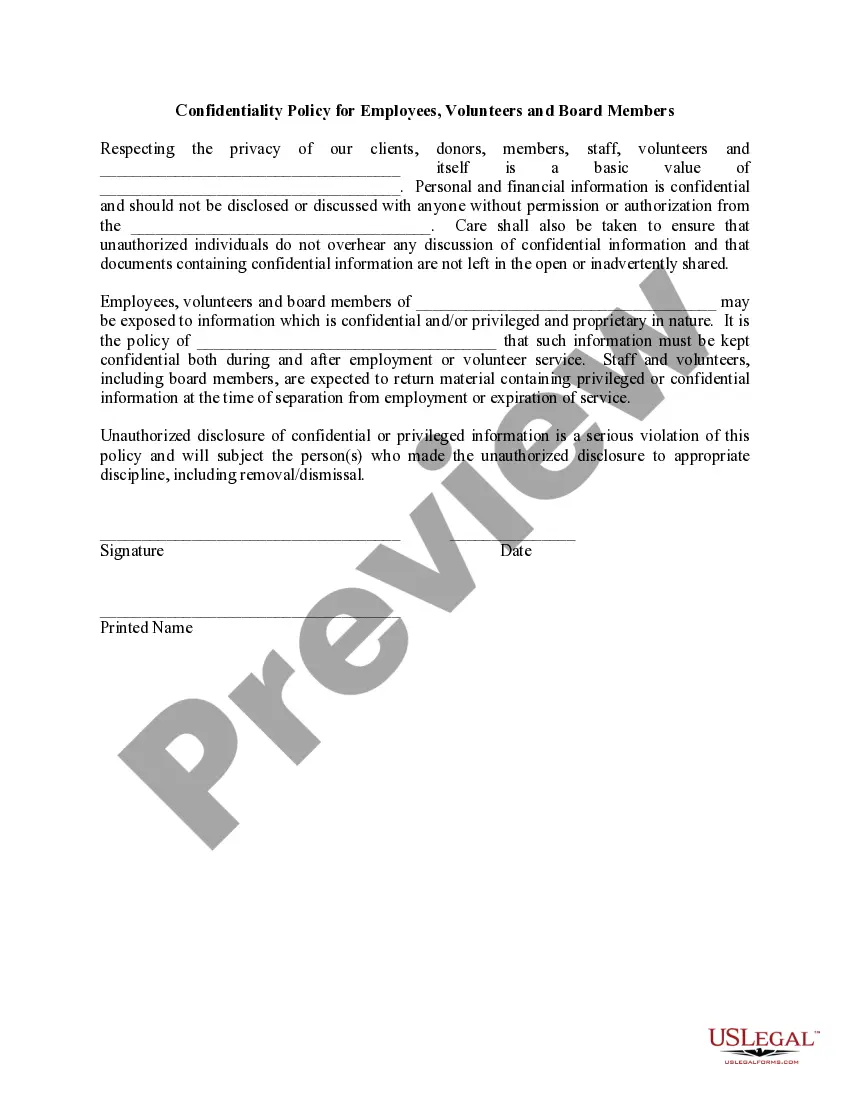
The Confidentiality Policy is a legal document designed for employers to protect sensitive information shared with employees and board members. This form establishes the expectation that confidential information will not be disclosed to unauthorized parties, helping to maintain the integrity and security of business operations. Unlike other agreements, the Confidentiality Policy specifically outlines the responsibility of employees to handle information with discretion and professionalism.
Key components of this form
- Identification of the organization and its employees or board members.
- A statement prohibiting the disclosure of confidential information without authorization.
- Guidelines on maintaining confidentiality, such as proper document handling.
- Instructions for returning confidential materials upon termination.
- Details on disciplinary actions for policy violations.
When to use this document
This Confidentiality Policy should be used in various situations, including when hiring new employees, onboarding board members, or when there is a need to formalize expectations regarding the treatment of sensitive information. It is particularly important in industries where proprietary information, trade secrets, or client data are handled.
Who this form is for
- Employers looking to formalize confidentiality standards within their organization.
- Business owners who manage sensitive or confidential information.
- Non-profit organizations requiring confidentiality agreements from volunteers and board members.
- Any entity that needs to ensure the protection of confidential information shared with employees or affiliates.
Steps to complete this form
- Enter the name of your organization at the beginning of the policy.
- Specify the parties involved, including employees and board members.
- Fill in the date of the policyâs establishment.
- Sign the document to formalize agreement to the policy.
- Ensure that all involved parties understand their confidentiality obligations.
Notarization requirements for this form
This form does not typically require notarization unless specified by local law. It is, however, important to confirm any particular requirements based on your jurisdiction's regulations.
Get your form ready online
Our built-in tools help you complete, sign, share, and store your documents in one place.
Make edits, fill in missing information, and update formatting in US Legal Forms—just like you would in MS Word.
Download a copy, print it, send it by email, or mail it via USPS—whatever works best for your next step.
Sign and collect signatures with our SignNow integration. Send to multiple recipients, set reminders, and more. Go Premium to unlock E-Sign.
If this form requires notarization, complete it online through a secure video call—no need to meet a notary in person or wait for an appointment.
We protect your documents and personal data by following strict security and privacy standards.

Make edits, fill in missing information, and update formatting in US Legal Forms—just like you would in MS Word.

Download a copy, print it, send it by email, or mail it via USPS—whatever works best for your next step.

Sign and collect signatures with our SignNow integration. Send to multiple recipients, set reminders, and more. Go Premium to unlock E-Sign.

If this form requires notarization, complete it online through a secure video call—no need to meet a notary in person or wait for an appointment.

We protect your documents and personal data by following strict security and privacy standards.
Common mistakes to avoid
- Failing to clearly identify all parties involved in the policy.
- Not providing specific examples of what constitutes confidential information.
- Neglecting to communicate the policy effectively to all employees.
- Omitting disciplinary measures for violations of the policy.
Why use this form online
- Immediate access to downloadable and customizable templates.
- Convenience in editing the form to fit specific organizational needs.
- Ability to securely store and share the document electronically.
- Access to legal forms drafted by licensed attorneys, ensuring reliability and effectiveness.
Legal use & context
- This policy serves as a legal safeguard for organizations to protect sensitive information.
- Employees and board members may be held liable for breaches of confidentiality.
- The policy does not override any legal obligations to disclose information when mandated by law.
Summary of main points
- The Confidentiality Policy is essential for safeguarding sensitive business information.
- Clear guidelines help prevent unauthorized disclosures by employees and board members.
- This policy should be communicated thoroughly to ensure understanding and compliance.
- It can be used across different states, catering to various organizational needs.
Looking for another form?

Form popularity
FAQ
These should include, for example: Ensuring that confidential information is always locked away at night, and not left unattended during the day; Password-protecting sensitive computer files; Marking confidential information clearly as such, and ensuring that paper copies are shredded before disposal; and.
A typical confidentiality clause might say, "The phrases and circumstances of this Agreement are completely confidential between the parties and shall not be disclosed to anybody else. Any disclosure in violation shall be deemed a breach of this Agreement."
This can include salaries, employee perks, client lists, trade secrets, sales numbers, customer information, news about pending terminations, reasons for a firing, phone codes or computer passwords. You may not divulge this information while you are working for an employer or after you leave.
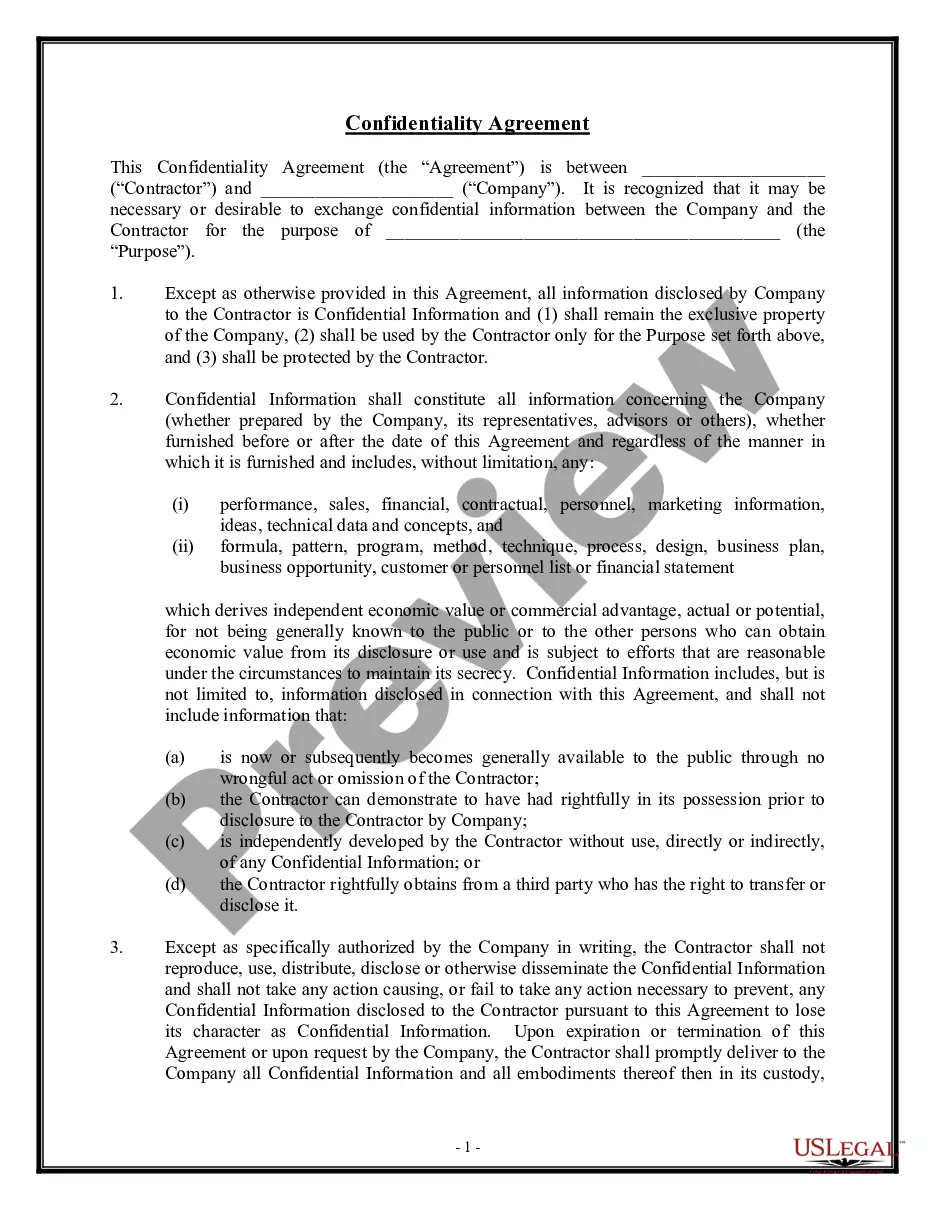
An employee confidentiality agreement, or non-disclosure agreement (NDA), is a contract that prevents the employee from revealing confidential information about a business. Employee confidentiality agreements can't be broad?they must list specific information that employees are not allowed to disclose.
Confidentiality at work Confidentiality is a term used to describe something that cannot be told to or shared with anyone else because it must remain a secret. Confidentiality at work involves keeping verbal and written information private.
Confidential Information Examples Contact details. Bank details. Medical records and history. Personal information such as name, birthday, sex, address. Company reports whether sales, financial.
Examples of When You Need a Confidentiality Agreement? Trade Secrets. Scientific Information. Secret formulas. Computer Technology. Copyrights. Recipes. Prototypes and samples. Proprietary information has been shared.