Complaint Objecting to Discharge by Bankruptcy Court on the Grounds that Transaction was Induced by Fraud Regarding Debtor's Financial Condition
What this document covers
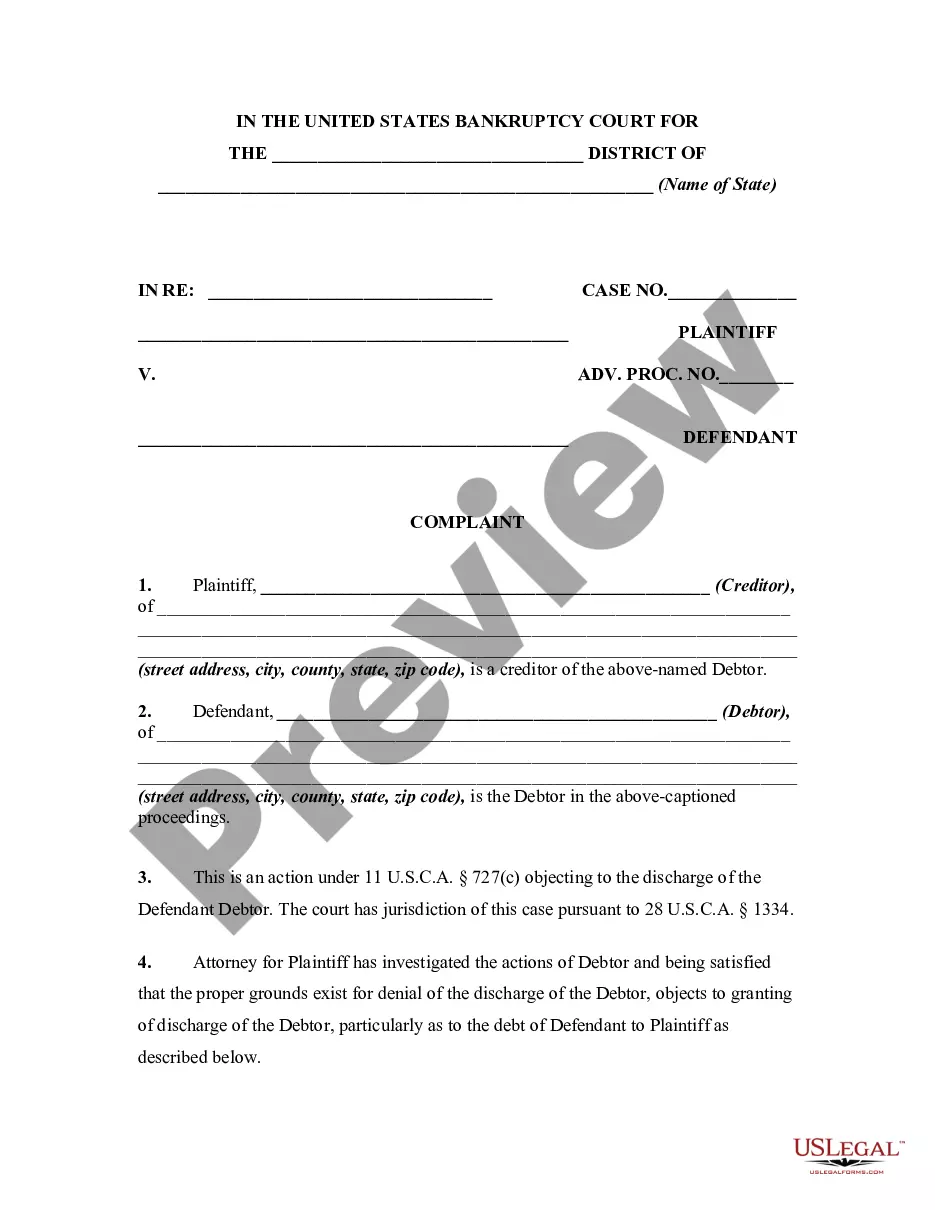
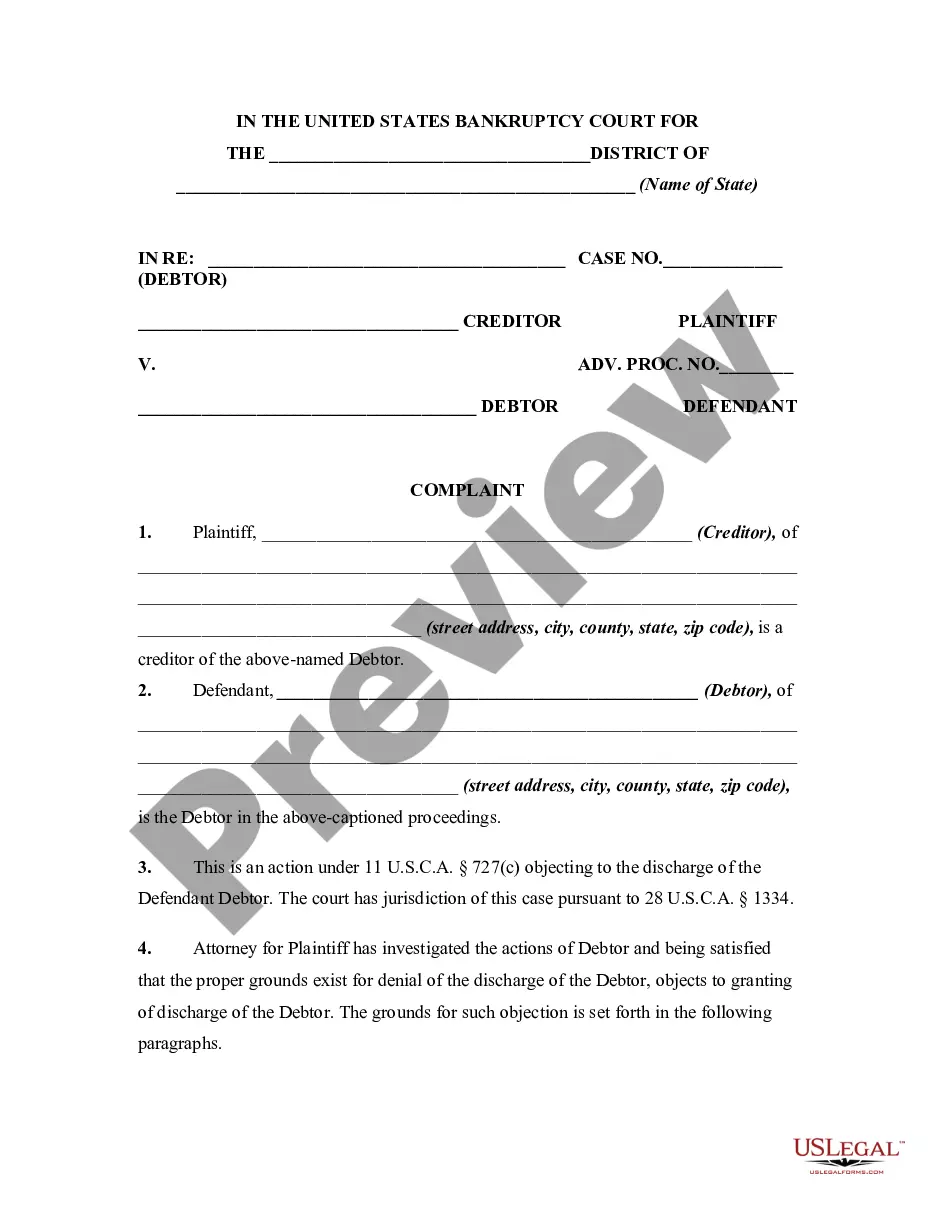
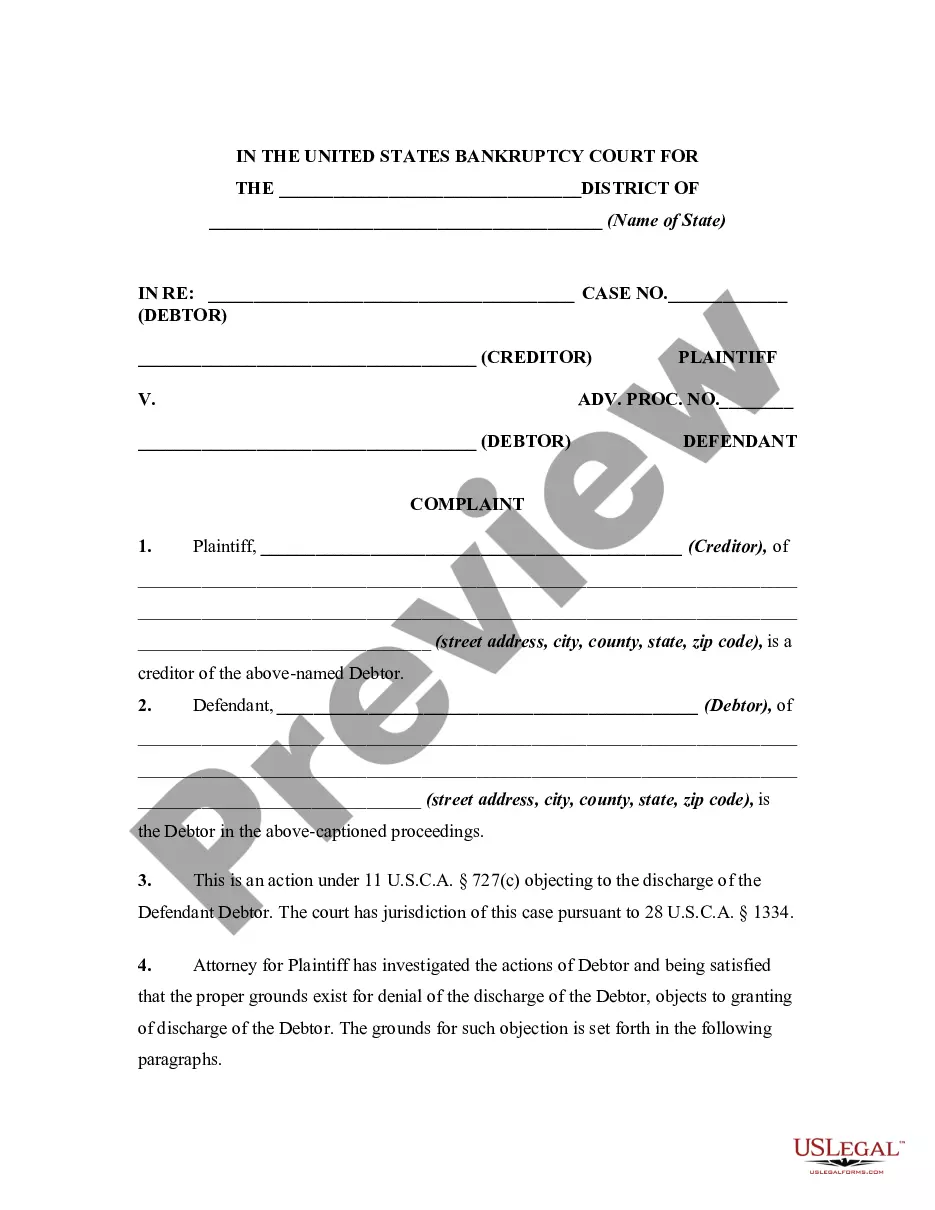
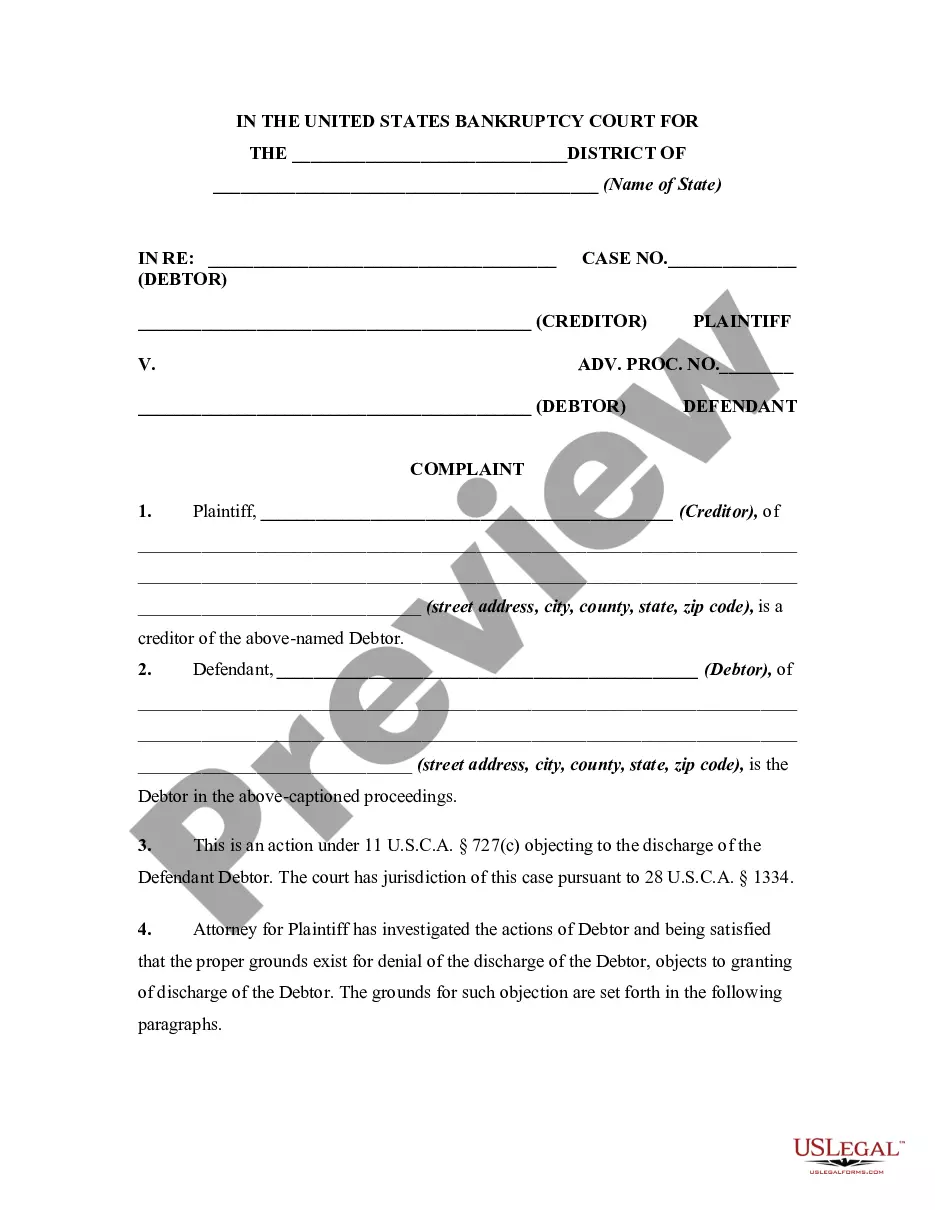
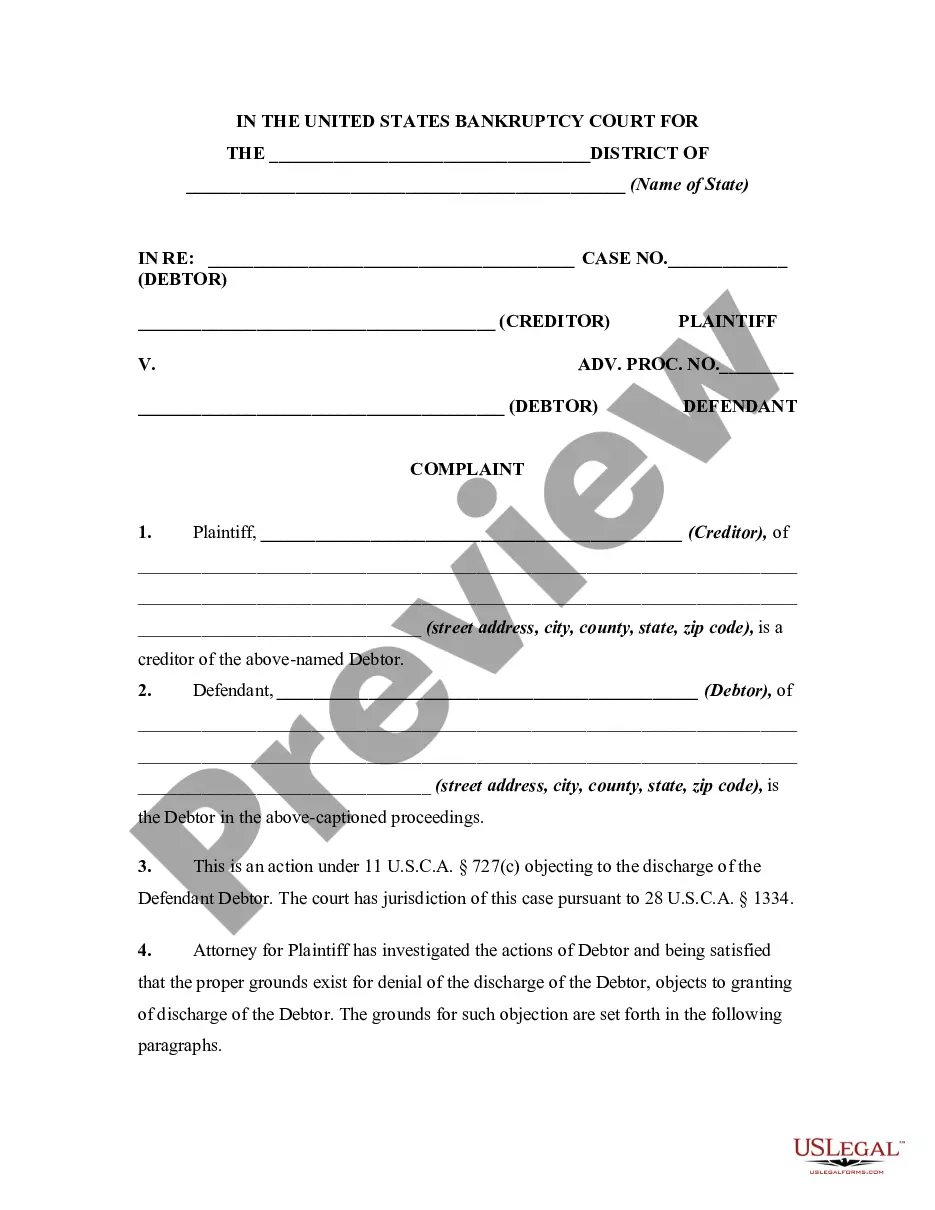
This form is a legal document used to object to the discharge of debts in bankruptcy court. Specifically titled "Complaint Objecting to Discharge by Bankruptcy Court on the Grounds that Transaction was Induced by Fraud Regarding Debtor's Financial Condition," it serves to challenge the financial representation made by a debtor that may have been fraudulent. Unlike other bankruptcy forms, this complaint centers on proving that the debtor should not be granted a discharge due to deception regarding their financial situation.
Form components explained
- Identification of the parties: Includes the names and addresses of the creditor and debtor.
- Statement of jurisdiction: Establishes the court's authority to hear the case under specific U.S. codes.
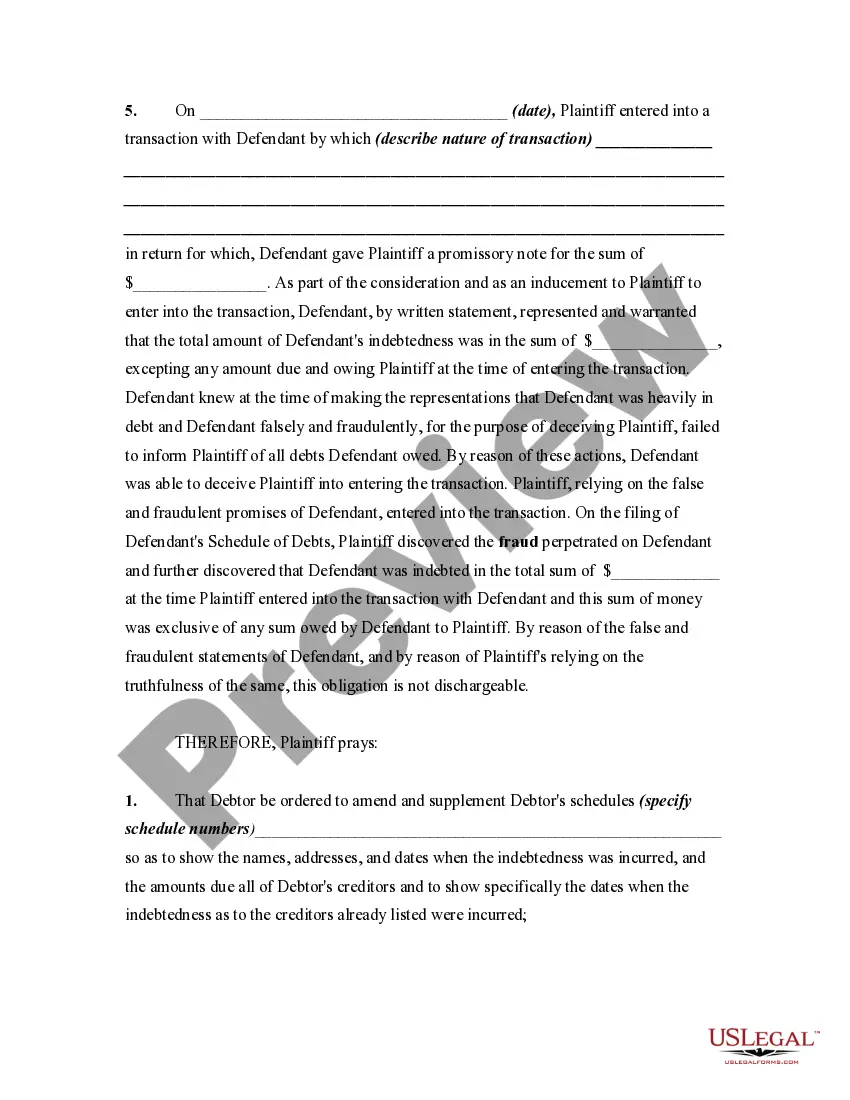
- Allegation of fraudulent actions: Details the nature of the transaction and the fraudulent statements made by the debtor.
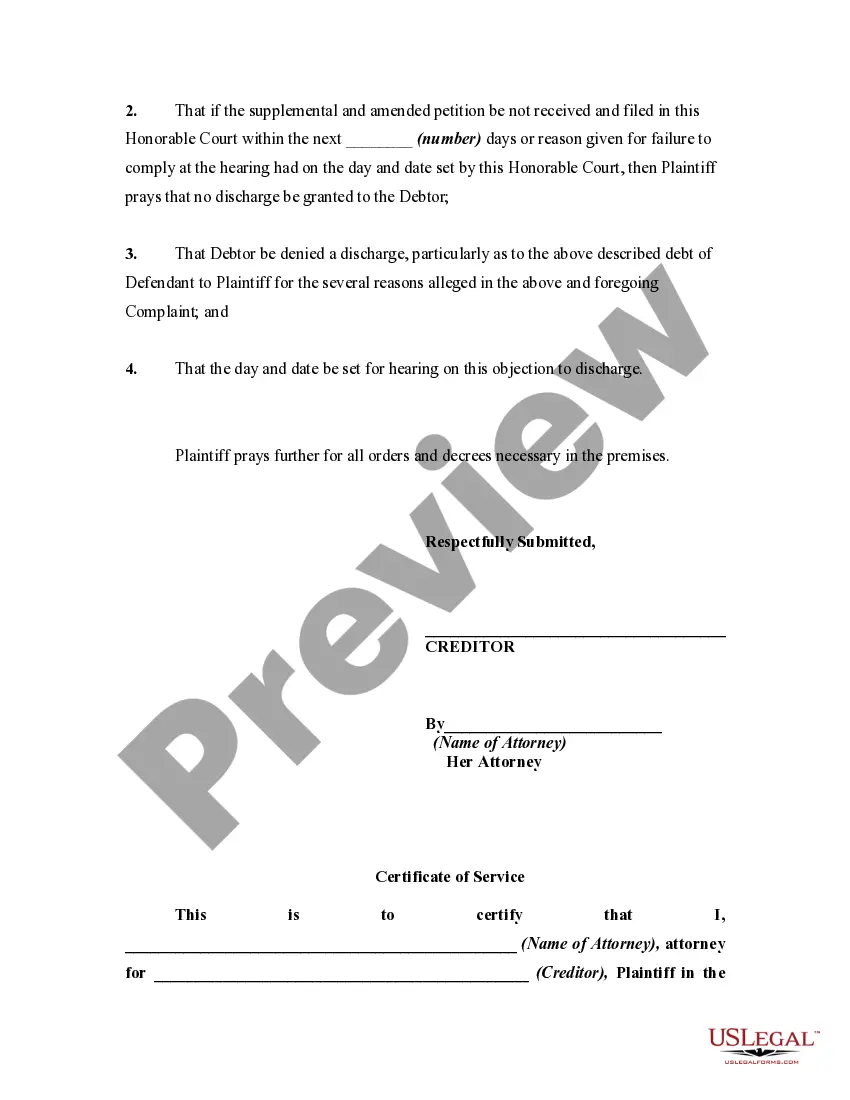
- Request for court orders: Specifies the actions the creditor wants the court to take regarding the discharge.
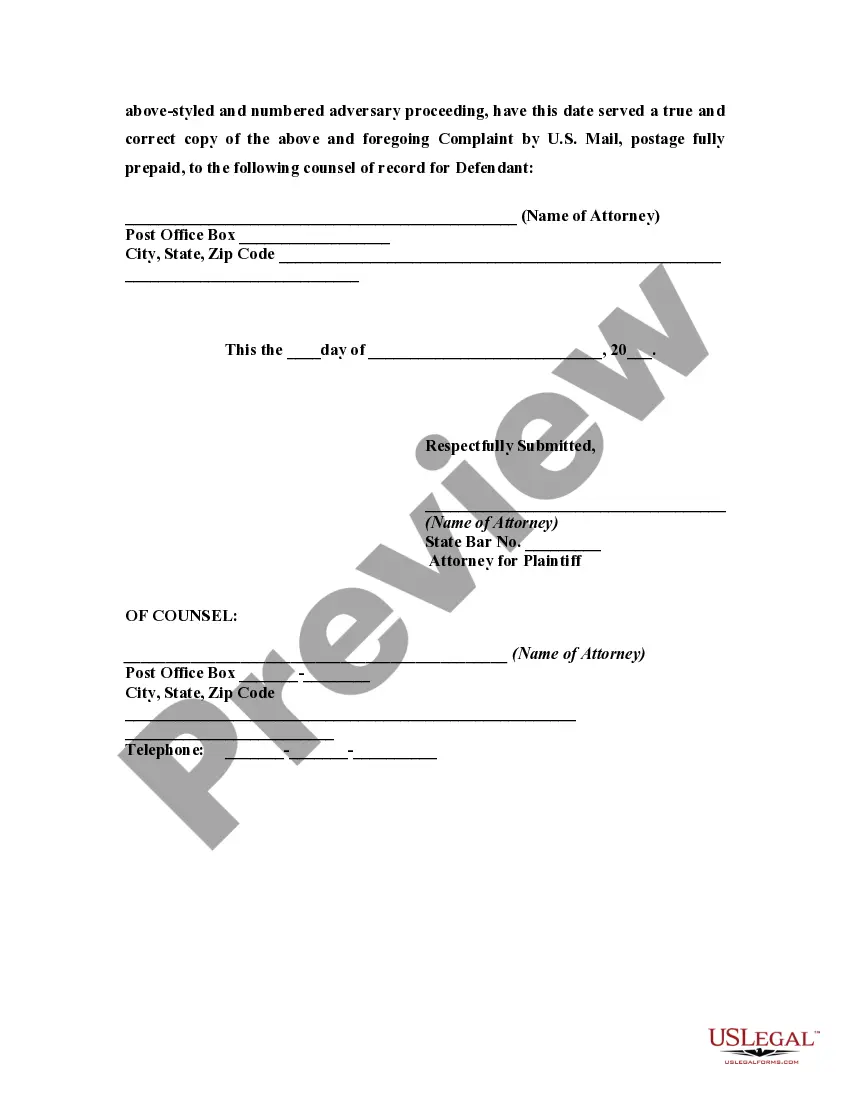
- Certificate of service: Confirms that the complaint has been delivered to the debtor's attorney.
When to use this form
This form should be used when a creditor believes that a debtor has misrepresented their financial condition during a bankruptcy proceeding. If the creditor has evidence that the debtor engaged in fraudulent activity to induce a transaction, this complaint is necessary to contest the debtor's right to discharge those debts. Common scenarios for its use include loan agreements, credit transactions, or any contractual dealings where fraud is suspected.
Who needs this form
This form is intended for use by:
- Creditors who have extended credit to a debtor and are seeking to prevent the discharge of that debt.
- Attorneys representing creditors in bankruptcy proceedings.
- Individuals or businesses that believe they have been deceived by a debtor regarding the extent of their financial obligations.
Instructions for completing this form
- Identify the plaintiff: Fill in your name and address as the creditor.
- Identify the defendant: Enter the debtor's name and address accurately.
- Detail the transaction: Describe the nature of the transaction that led to the loan or credit extension.
- State the fraudulent representations: Clearly outline the specific fraudulent statements made by the debtor.
- Enter the requested relief: Specify what you are asking the court to do regarding the debtor's discharge.
Notarization guidance
This form does not typically require notarization unless specified by local law. However, it is essential to verify your jurisdictionâs requirements to ensure compliance.
Get your form ready online
Our built-in tools help you complete, sign, share, and store your documents in one place.
Make edits, fill in missing information, and update formatting in US Legal Forms—just like you would in MS Word.
Download a copy, print it, send it by email, or mail it via USPS—whatever works best for your next step.
Sign and collect signatures with our SignNow integration. Send to multiple recipients, set reminders, and more. Go Premium to unlock E-Sign.
If this form requires notarization, complete it online through a secure video call—no need to meet a notary in person or wait for an appointment.
We protect your documents and personal data by following strict security and privacy standards.

Make edits, fill in missing information, and update formatting in US Legal Forms—just like you would in MS Word.

Download a copy, print it, send it by email, or mail it via USPS—whatever works best for your next step.

Sign and collect signatures with our SignNow integration. Send to multiple recipients, set reminders, and more. Go Premium to unlock E-Sign.

If this form requires notarization, complete it online through a secure video call—no need to meet a notary in person or wait for an appointment.

We protect your documents and personal data by following strict security and privacy standards.
Avoid these common issues
- Neglecting to provide complete and accurate addresses for all parties involved.
- Failing to adequately describe the nature of the fraudulent transaction.
- Omitting relevant dates or amounts, which can weaken the complaint.
- Not certifying service of the complaint to the debtor's attorney.
Advantages of online completion
- Convenience: Access and complete the form anytime, without the need for physical paperwork.
- Editability: Make updates easily if your situation or information changes.
- Reliability: Forms are drafted by licensed attorneys to meet legal standards.
Looking for another form?

Form popularity
FAQ
Ways to Object to a Bankruptcy Discharge If you'd like to dispute the debtor's right to a discharge, you'll need to file either an adversary proceeding (a type of lawsuit) or a motion, depending on the type of debt involved.
Ways to Object to a Bankruptcy Discharge If you'd like to dispute the debtor's right to a discharge, you'll need to file either an adversary proceeding (a type of lawsuit) or a motion, depending on the type of debt involved.
If the court grants a creditor or trustee's objection to a debt discharge, you'll remain responsible for paying the debt.Interested parties such as creditors or the trustee still have time to object to your bankruptcy discharge after your initial hearing.
It is important to understand the distinction between the exception of discharge and the denial of discharge. The exception of discharge is where one specific debt is denied but the rest are discharged. The denial of discharge is what is sounds like, all debts are not discharged.
The trustee (or a creditor) can object to the Chapter 13 plan if it appears that someone isn't getting paid the right amount. A judge has the final say, however, and will either approve or reject the plan at the confirmation hearing.
An objection to a proof of claim must be in writing and filed with the bankruptcy court. A copy of the objection and the notice of court hearing date must be mailed to the creditor, the trustee, and the debtor at least 30 days before the hearing.
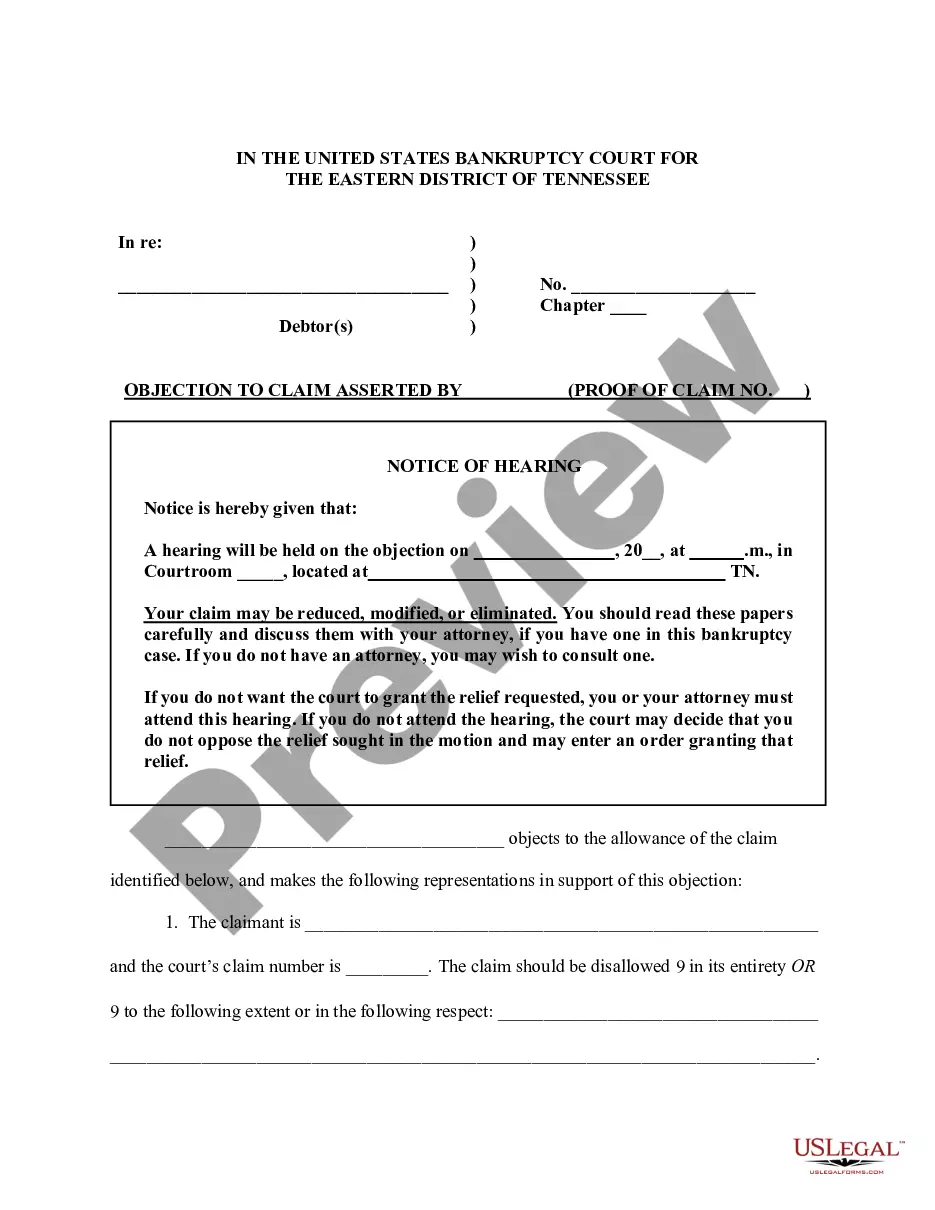
An objection to claim may be filed to object to one claim or multiple claims subject to conditions in Federal Rule of Bankruptcy Procedure 3007(e). When an objection to claim objects to multiple claims, it is called an omnibus objection to claim. An omnibus objection to claim may cause the entry of multiple orders.