Complaint By Purchaser of Residence Against Seller for Holding Over After Consummation of Sale
What this document covers
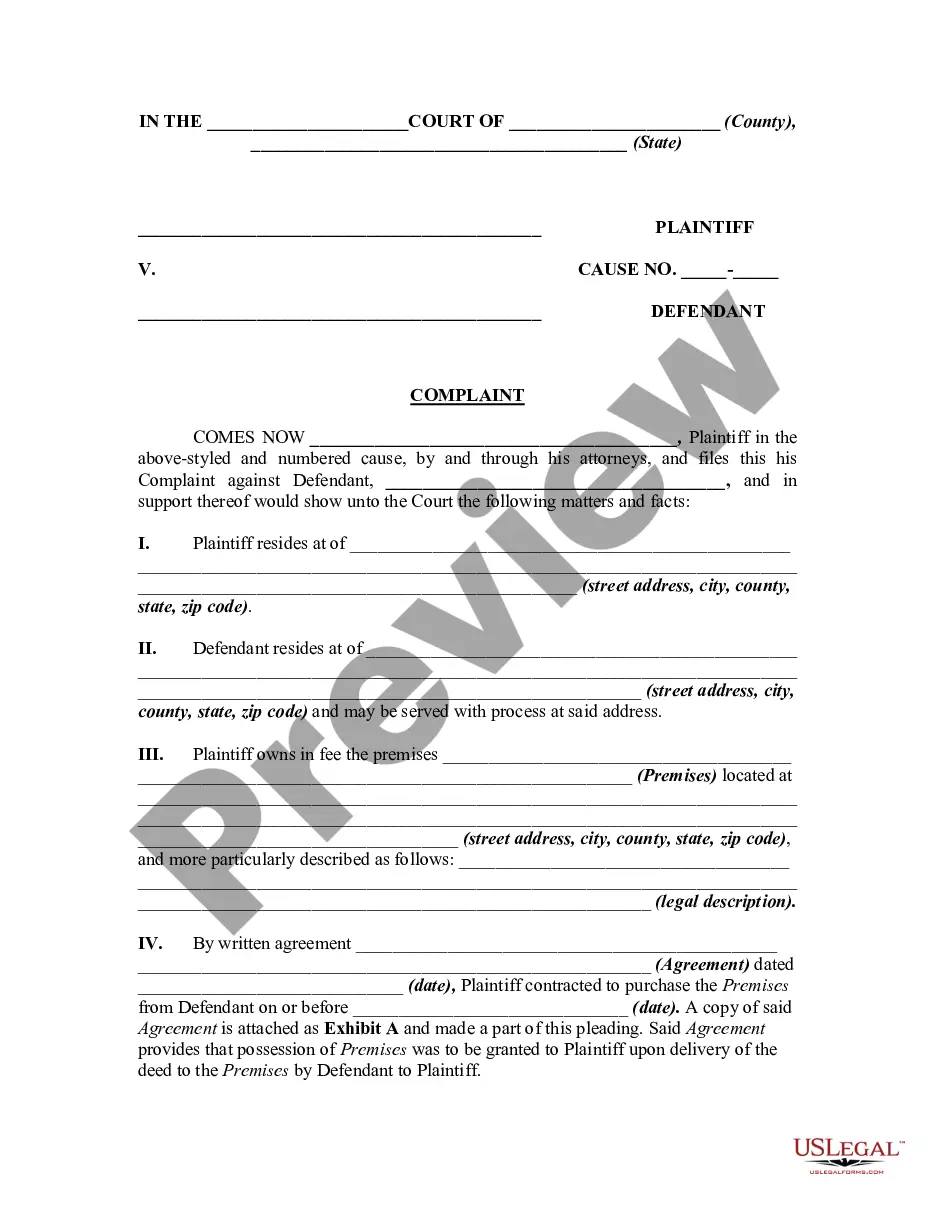
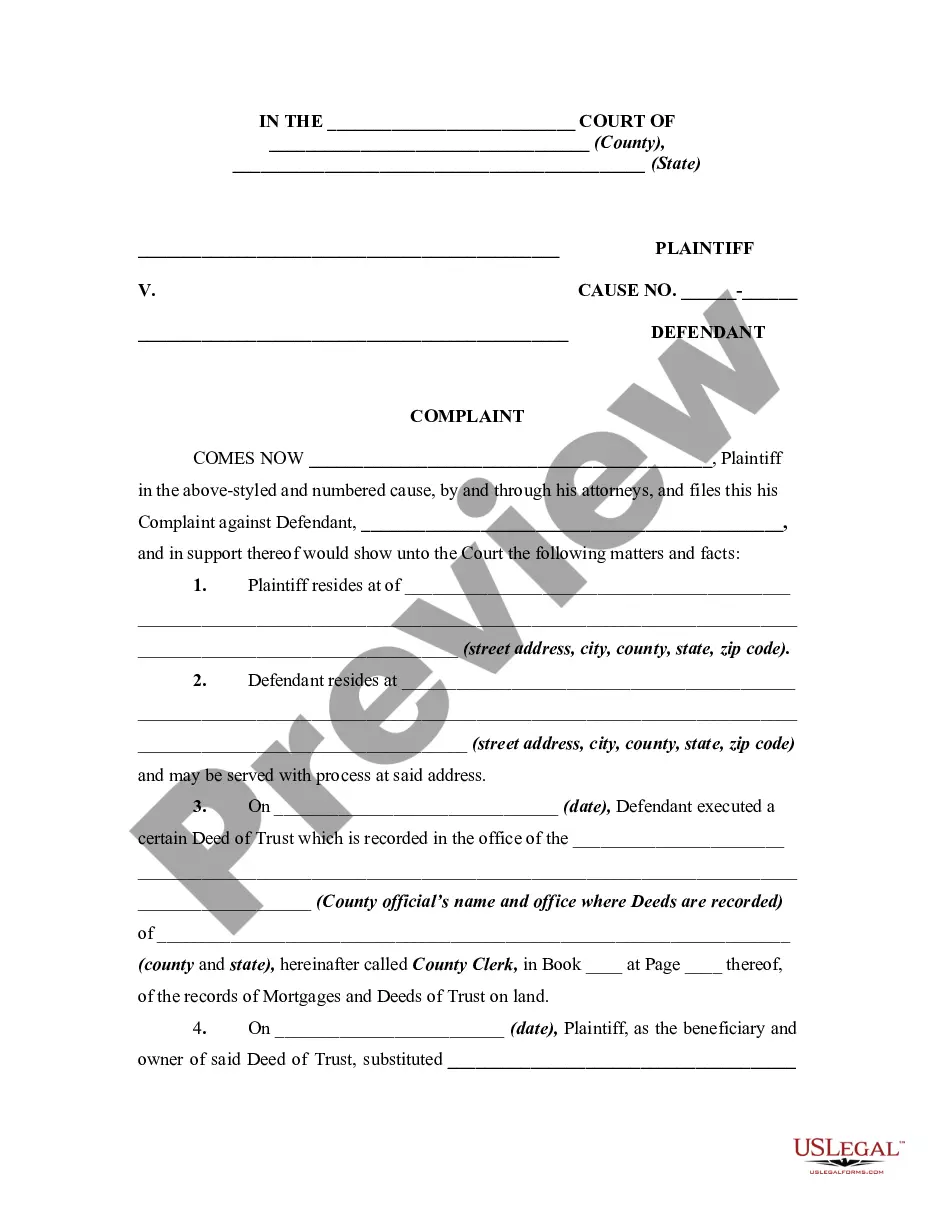
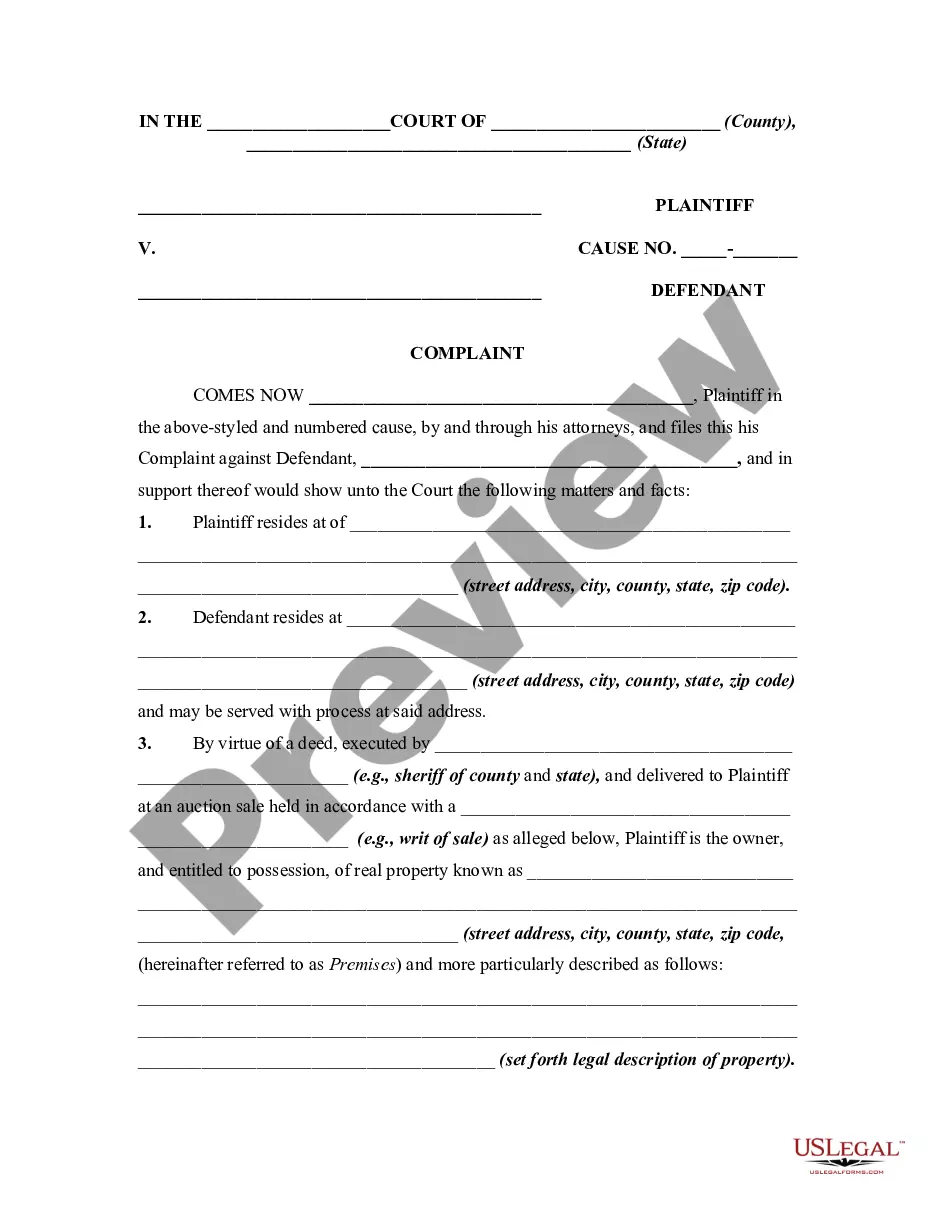
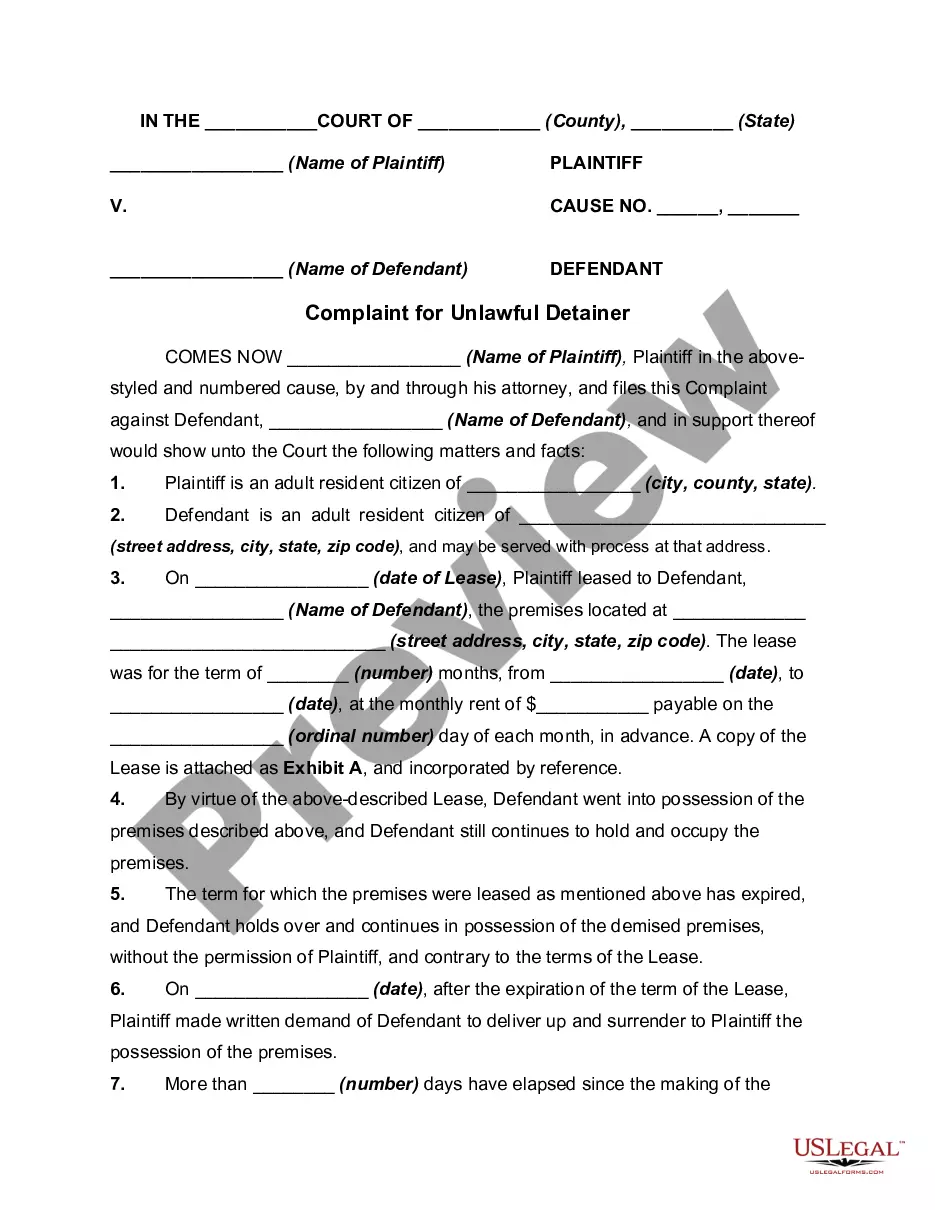
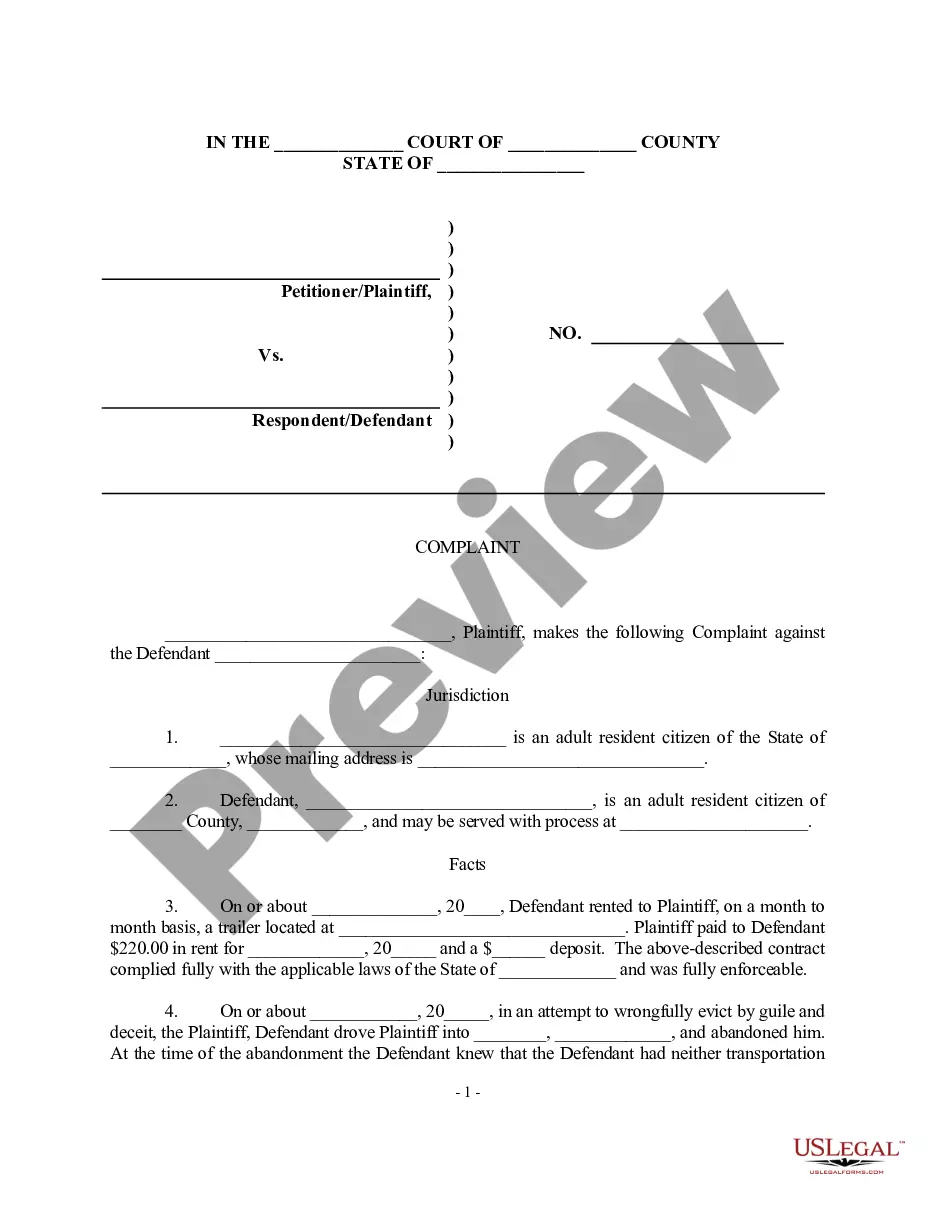
The Complaint By Purchaser of Residence Against Seller for Holding Over After Consummation of Sale is a legal document that allows a property buyer to take action against a seller who refuses to vacate the property after the sale is completed. This form enables the new owner to file for unlawful detainer, seeking a court order to regain possession of the property, along with potential damages and unpaid rent. It differs from eviction forms used in rental situations, focusing specifically on the sale of real property.
Key parts of this document
- Identification of the plaintiff (buyer) and defendant (seller).
- Description of the property, including its legal details.
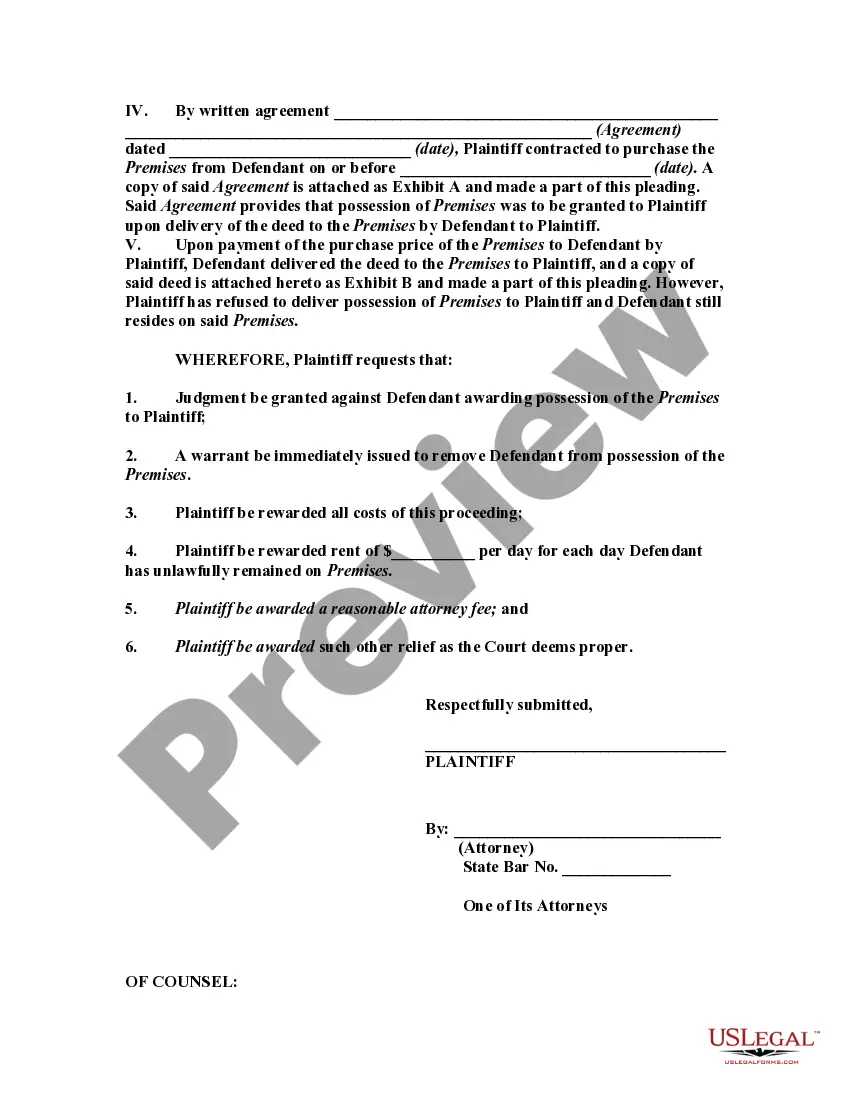
- Terms of the purchase agreement between the buyer and seller.
- Claim for possession of the property and explanation of the seller's refusal to vacate.
- Request for court-ordered relief, including any applicable damages.
Common use cases
This form should be utilized when a buyer has completed the purchase of a residence, but the seller continues to occupy the property without legal right. This situation may arise if the seller fails to vacate by the agreed-upon date in the purchase agreement or refuses to hand over possession after the sale has been finalized.
Who this form is for
This form is intended for:
- Homebuyers who have purchased a property and are seeking to regain possession from the former owner.
- Individuals who wish to avoid lengthy eviction processes through a formal complaint.
- Real estate attorneys representing clients in disputes over possession of purchased properties.
Completing this form step by step
- Identify the parties involved by providing the names and addresses of the buyer (plaintiff) and seller (defendant).
- Provide a description of the property, including its address and legal description.
- Fill in the details of the purchase agreement, including dates and any attached exhibits.
- Clearly state the claims against the seller for unlawful detainer, including requests for possession and any damages.
- Sign the form and include the contact information for your attorney, if applicable.
Is notarization required?
Notarization is required for this form to take effect. Our online notarization service, powered by Notarize, lets you verify and sign documents remotely through an encrypted video session, available 24/7.
Get your form ready online
Our built-in tools help you complete, sign, share, and store your documents in one place.
Make edits, fill in missing information, and update formatting in US Legal Forms—just like you would in MS Word.
Download a copy, print it, send it by email, or mail it via USPS—whatever works best for your next step.
Sign and collect signatures with our SignNow integration. Send to multiple recipients, set reminders, and more. Go Premium to unlock E-Sign.
If this form requires notarization, complete it online through a secure video call—no need to meet a notary in person or wait for an appointment.
We protect your documents and personal data by following strict security and privacy standards.

Make edits, fill in missing information, and update formatting in US Legal Forms—just like you would in MS Word.

Download a copy, print it, send it by email, or mail it via USPS—whatever works best for your next step.

Sign and collect signatures with our SignNow integration. Send to multiple recipients, set reminders, and more. Go Premium to unlock E-Sign.

If this form requires notarization, complete it online through a secure video call—no need to meet a notary in person or wait for an appointment.

We protect your documents and personal data by following strict security and privacy standards.
Common mistakes
- Failing to provide accurate legal descriptions of the property.
- Not including all relevant dates, such as the purchase date and deadline for possession.
- Leaving out attorney information, if representation is involved.
- Not properly serving the defendant with the complaint.
- Neglecting to file the form within the time limits established by local laws.
Benefits of completing this form online
- Convenience of downloading and filling out the form at your own pace.
- Access to templates created by licensed attorneys, ensuring legal accuracy.
- Editability, allowing for personal adaptation to specific circumstances.
- Availability of legal resources to assist throughout the process.
Looking for another form?
Form popularity
FAQ
According to the dictionary, negligence is the failure to exercise the care that a reasonably prudent person would exercise in like circumstances. In a legal sense, negligence is different from fraud in that it lacks intent. A real estate agent is fraudulent if they intentionally dupe or mislead a client.
As a last resort, a homeowner may file a lawsuit against the seller within a limited amount of time, known as a statute of limitations. Statutes of limitations are typically two to 10 years after closing. Lawsuits may be filed in small claims court relatively quickly and inexpensively, and without an attorney.
Does the "as is" clause in the seller's disclosure form minimize risk concerns for the sellers? Minimizes, but does not eliminate risk concerns.
Finally, a seller may refuse to close on a sale if they have failed to complete all the repairs required under the terms of the contract for sale. It's important to keep in mind that none of these reasons justifies a refusal to perform under the contract by closing escrow and vacating the property.
The buyer can force the seller to complete the sale. If the seller doesn't have the legal ground to stand on and doesn't want to take the case to court, they still may be forced into specific performance, legalese for completing the transaction.
Here's the good news. You are (probably) within your rights to sue someone who knowingly sells you a house with serious problems. "Most U.S. states have a home seller disclosure law that requires a seller to disclose defects in the home that they are aware of.
Per Civil Code §1102.13, any person who willfully or negligently violates or fails to perform any duty prescribed by any provision of this article shall be liable in the amount of actual damages suffered by a transferee. Thus, any Seller who fails to make a required disclosure is liable for the actual amount in
If the Seller decides to breach the contract and keep their home, they may do so, but the court may order the Buyer receive money for the resulting breach. Generally, the money owed to Buyer may include reimbursing the Buyer with: The buyer's temporary housing costs. The buyer's inspection and survey fees.
The seller may have the option to sue the buyer that breaks the deal, but he or she can also seek other options that can help salvage the loss of the initial sale. By taking the earnest money, this person can relist the property and seek a new buyer.