Terminating or Termination of Easement by a General Release
Understanding this form
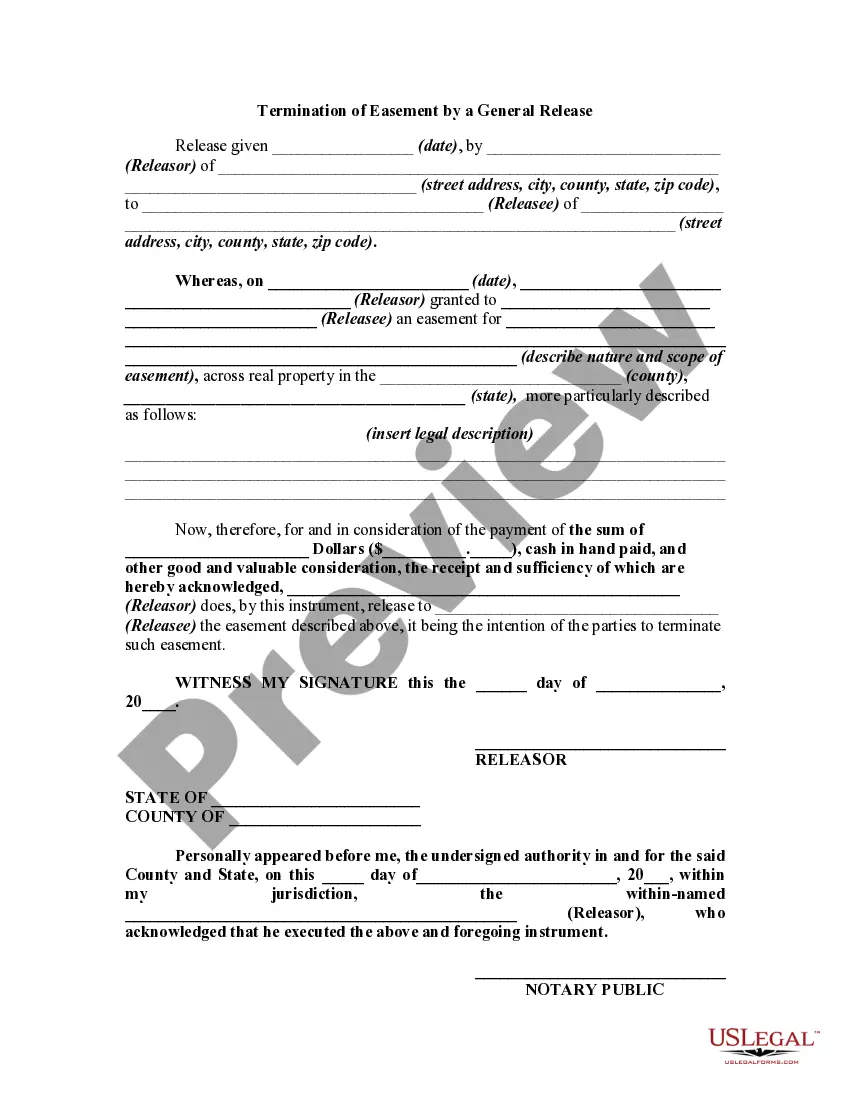
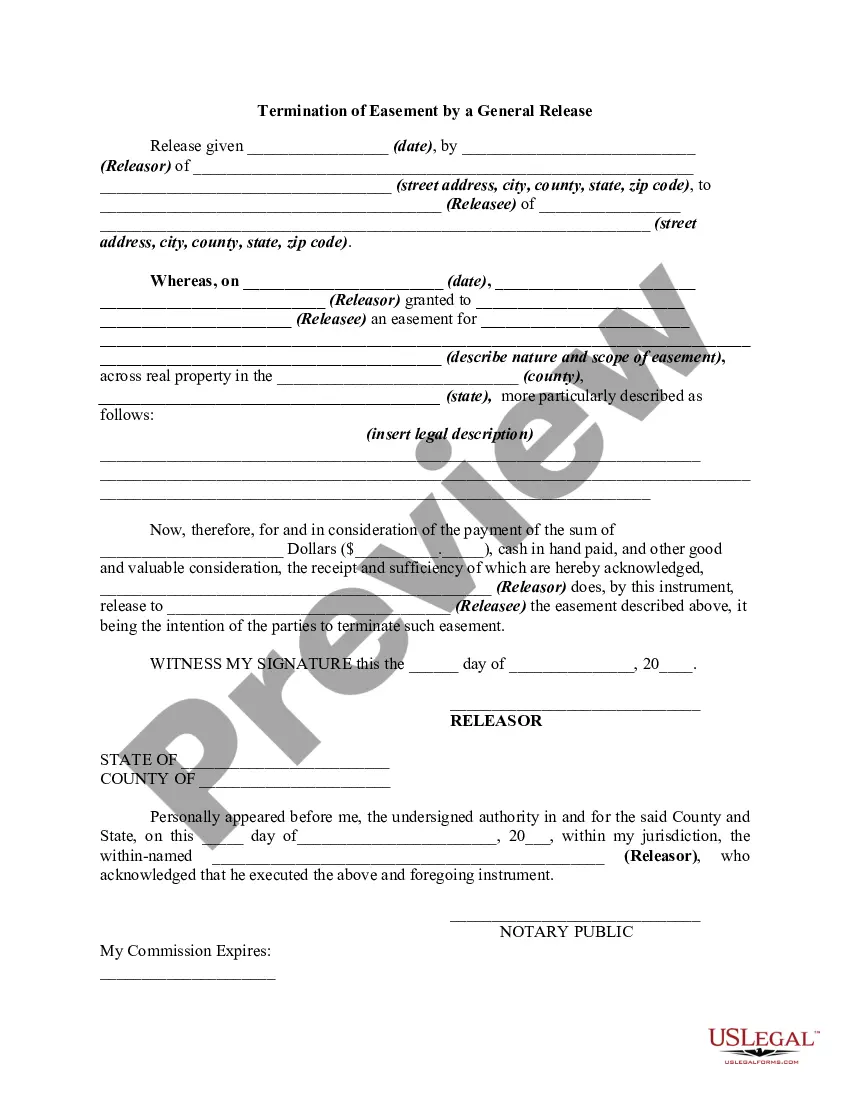
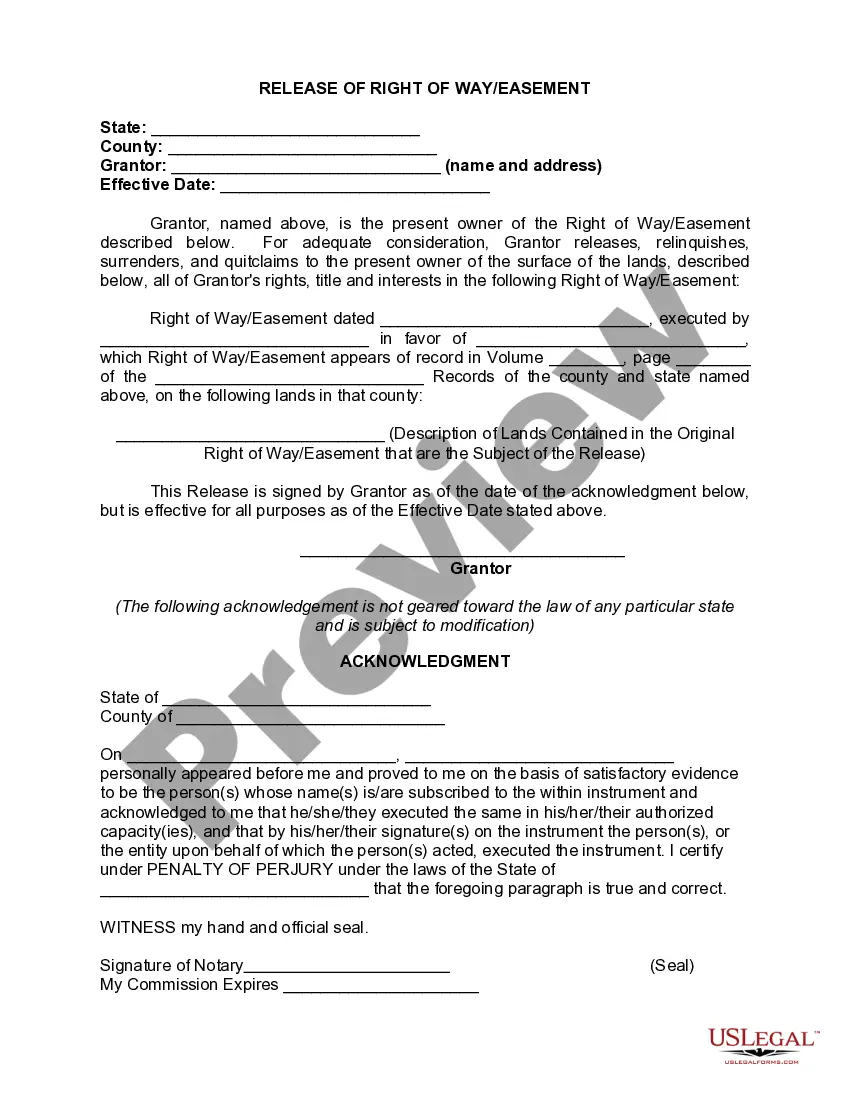
The Termination of Easement by a General Release form is a legal document that allows the owner of an easement to officially terminate their rights to that easement in favor of the property owner on which it is situated. This document is crucial in clarifying property boundaries and rights, distinguishing it from other forms of easement documents that may only modify or transfer the easement. It provides a clear, legally recognized termination, maintaining proper real estate records and preventing potential disputes.
What’s included in this form
- Date of release
- Name and address of the Releasor (the person terminating the easement)
- Name and address of the Releasee (the property owner)
- Description of the easement being terminated
- Signatures of the Releasor and notarization requirements


When to use this document
This form is used when an easement is no longer needed or desired by the Releasor. This may occur if the property has been sold, if the easement is underutilized, or if the terms of use are no longer applicable. It is important to formalize the termination to prevent any future legal disputes regarding the easement.
Who should use this form
- Property owners who wish to terminate an existing easement
- Individuals or companies that have granted easements on their property
- Real estate professionals assisting clients with property rights issues
How to complete this form
- Identify the parties involved by entering the names and addresses of the Releasor and Releasee.
- Specify the date of the release.
- Describe the easement being terminated, including its nature and scope.
- Enter the consideration amount (payment) for terminating the easement.
- Sign the document in the presence of a notary public, as required.
Is notarization required?
This form must be notarized to be legally valid. US Legal Forms provides secure online notarization powered by Notarize, allowing you to complete the process through a verified video call.
Get your form ready online
Our built-in tools help you complete, sign, share, and store your documents in one place.
Make edits, fill in missing information, and update formatting in US Legal Forms—just like you would in MS Word.
Download a copy, print it, send it by email, or mail it via USPS—whatever works best for your next step.
Sign and collect signatures with our SignNow integration. Send to multiple recipients, set reminders, and more. Go Premium to unlock E-Sign.
If this form requires notarization, complete it online through a secure video call—no need to meet a notary in person or wait for an appointment.
We protect your documents and personal data by following strict security and privacy standards.

Make edits, fill in missing information, and update formatting in US Legal Forms—just like you would in MS Word.

Download a copy, print it, send it by email, or mail it via USPS—whatever works best for your next step.

Sign and collect signatures with our SignNow integration. Send to multiple recipients, set reminders, and more. Go Premium to unlock E-Sign.

If this form requires notarization, complete it online through a secure video call—no need to meet a notary in person or wait for an appointment.

We protect your documents and personal data by following strict security and privacy standards.
Typical mistakes to avoid
- Failing to provide a complete and accurate legal description of the easement.
- Not including the date of the release.
- Overlooking the signature of the Releasor or the notarization requirement.
- Leaving out the consideration amount or failing to specify it clearly.
Benefits of completing this form online
- Convenient access to legal document templates without the need for extensive legal knowledge.
- Editable forms that can be customized to meet specific needs quickly.
- Reliable templates drafted by licensed attorneys, ensuring compliance with legal standards.
Quick recap
- The Terminating or Termination of Easement by a General Release form is essential for officially terminating an easement.
- Correct completion of the form ensures legal clarity and helps prevent disputes.
- This form must be notarized to be enforceable.
Looking for another form?
Form popularity
FAQ
This form is a legal instrument that allows the owner (the releasor) to terminate their easement rights in favor of the property owner where the easement sits. It formalizes the termination, helps keep accurate real estate records, clarifies boundaries, and helps prevent future disputes, especially when the easement is no longer needed.
This Terminating or Termination of Easement by a General Release provides a structured path to end an easement by general release. It requires mutual agreement between the releasor and releasee, with the date of release, names and addresses, a description of the easement, any consideration, and signed, notarized execution to finalize the termination.
The termination occurs by executing the Terminating or Termination of Easement by a General Release, with the releasor releasing rights to the releasee. The form requires a date, identities and addresses of both parties, a description of the easement, any consideration, and the signatures plus notarization to make the termination legally effective.
This form terminates an easement only through a general release signed by both the releasor and releasee and usually notarized. It does not describe unilateral termination or other mechanisms outside of a mutual release, so if the parties cannot agree or a different termination process is required, this form would not accomplish termination. Consult a licensed attorney if needed.
This form terminates an easement by general release, not by non-use. The page blocks describe a mutual release with listed components (date, releasor, releasee, description, consideration, signatures, notarization). Non-use termination is not described as a mechanism in this form.
It terminates the easement by a general release, requiring a mutual agreement and formal execution. The form lists specific components—date of release, names/addresses of the releasor and releasee, description of the easement, any consideration, and signatures with notarization—clarifying boundaries and preserving records, unlike forms that only modify or transfer an easement.