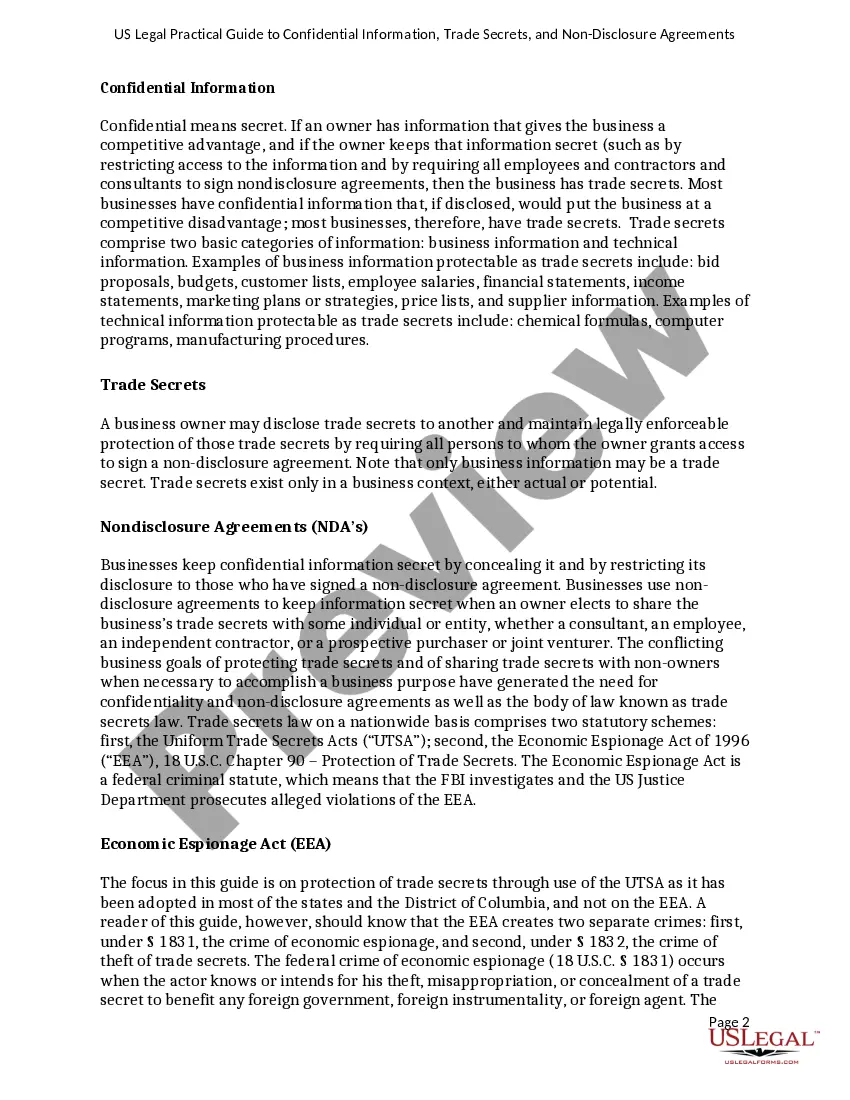
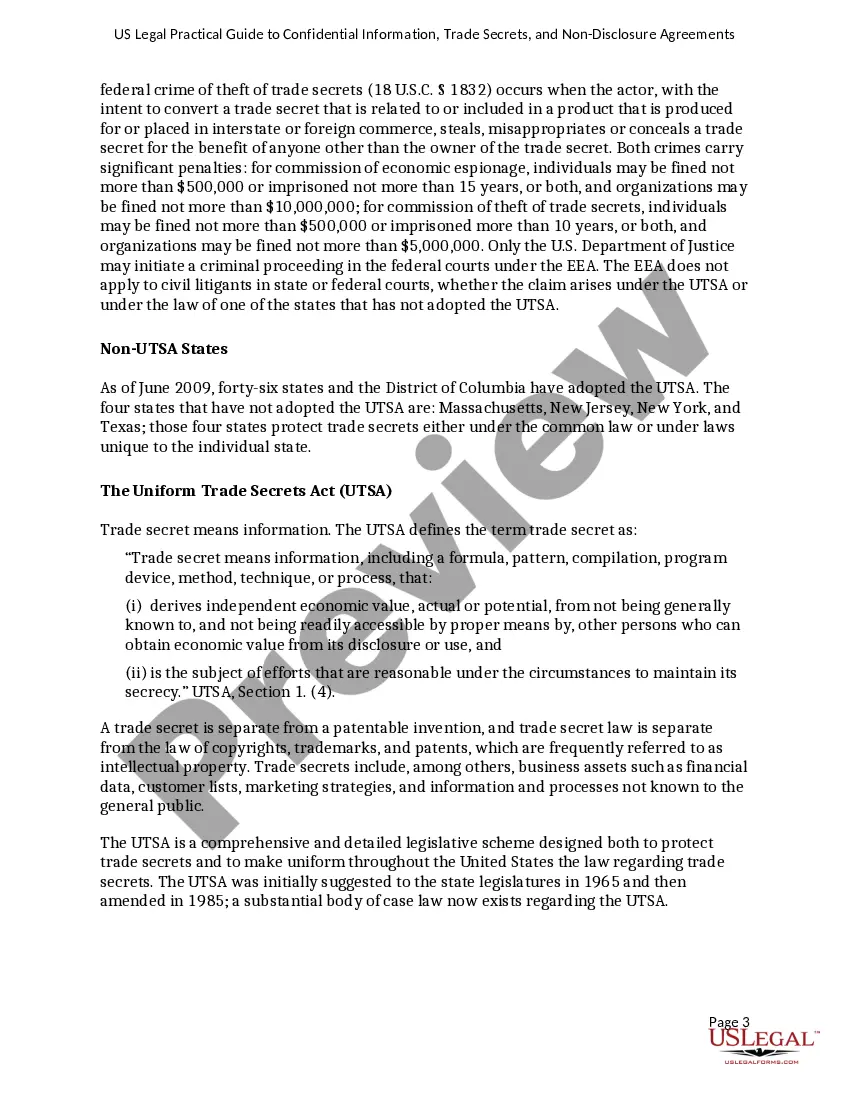
USLegal Practical Guide to Confidential Information, Trade Secrets and NonDisclosure Agreements
Overview of this form
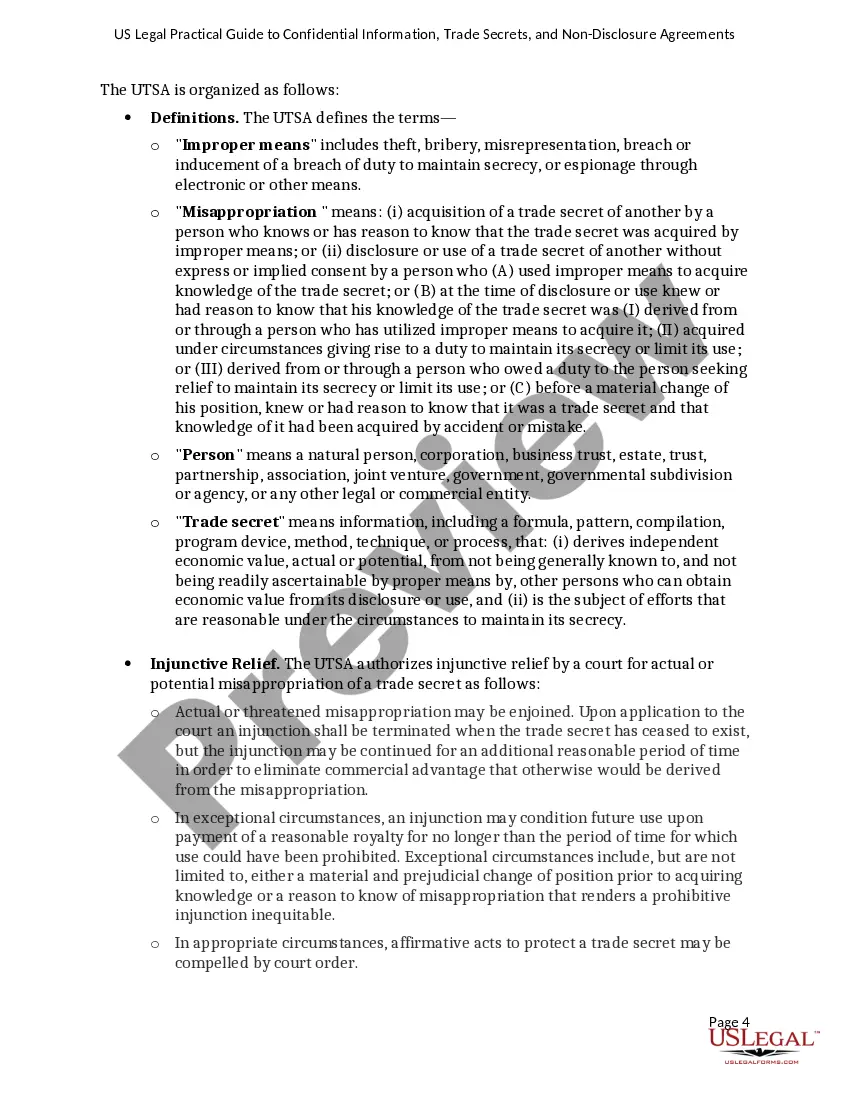
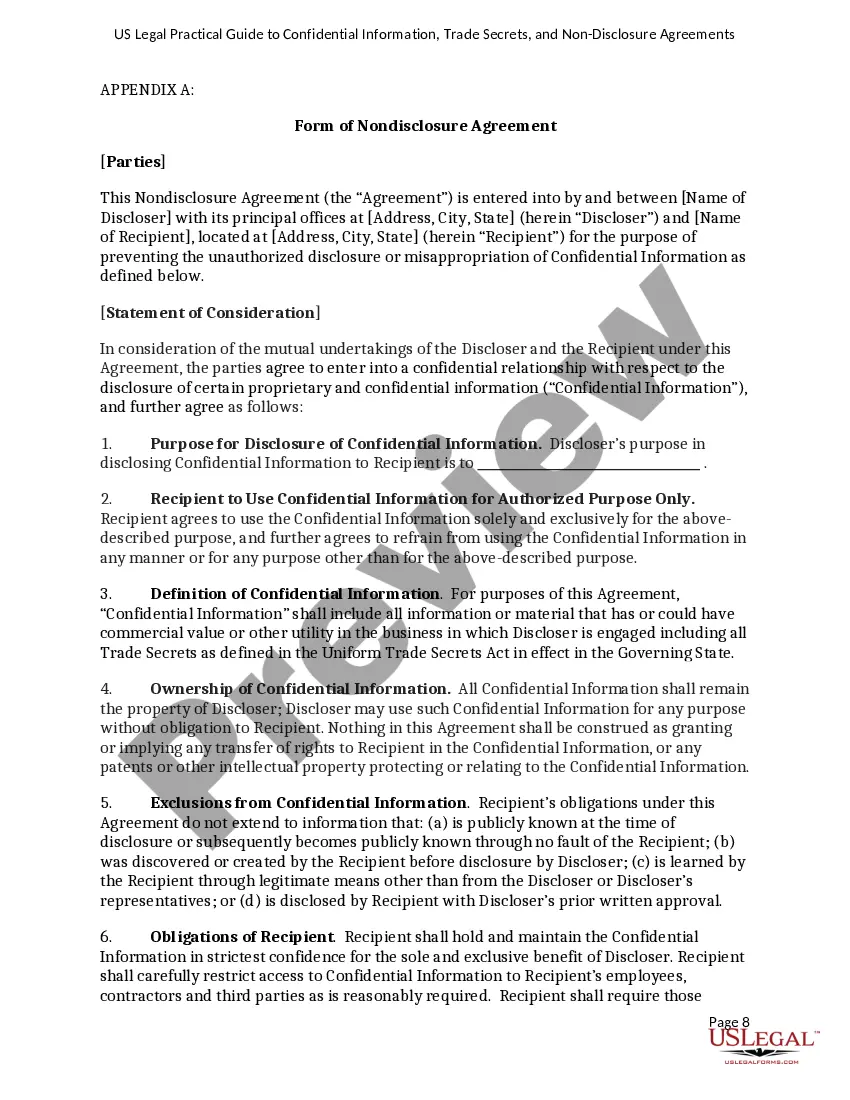
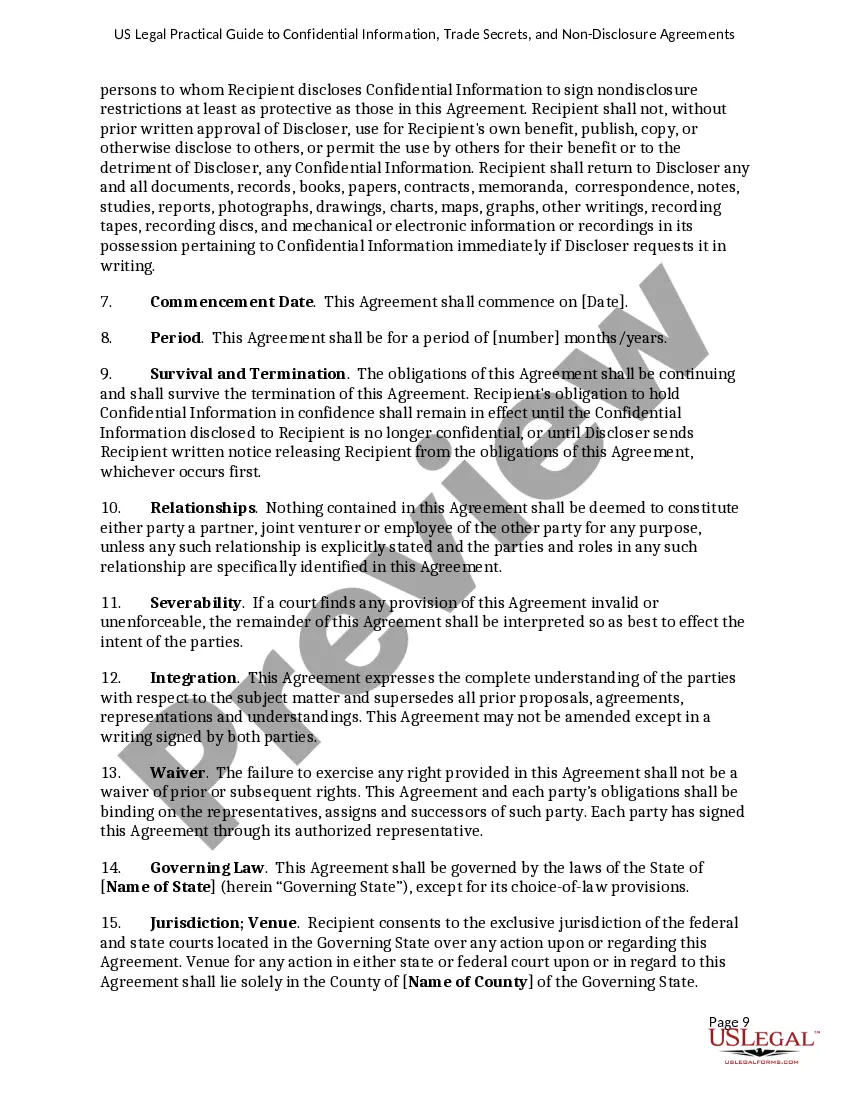
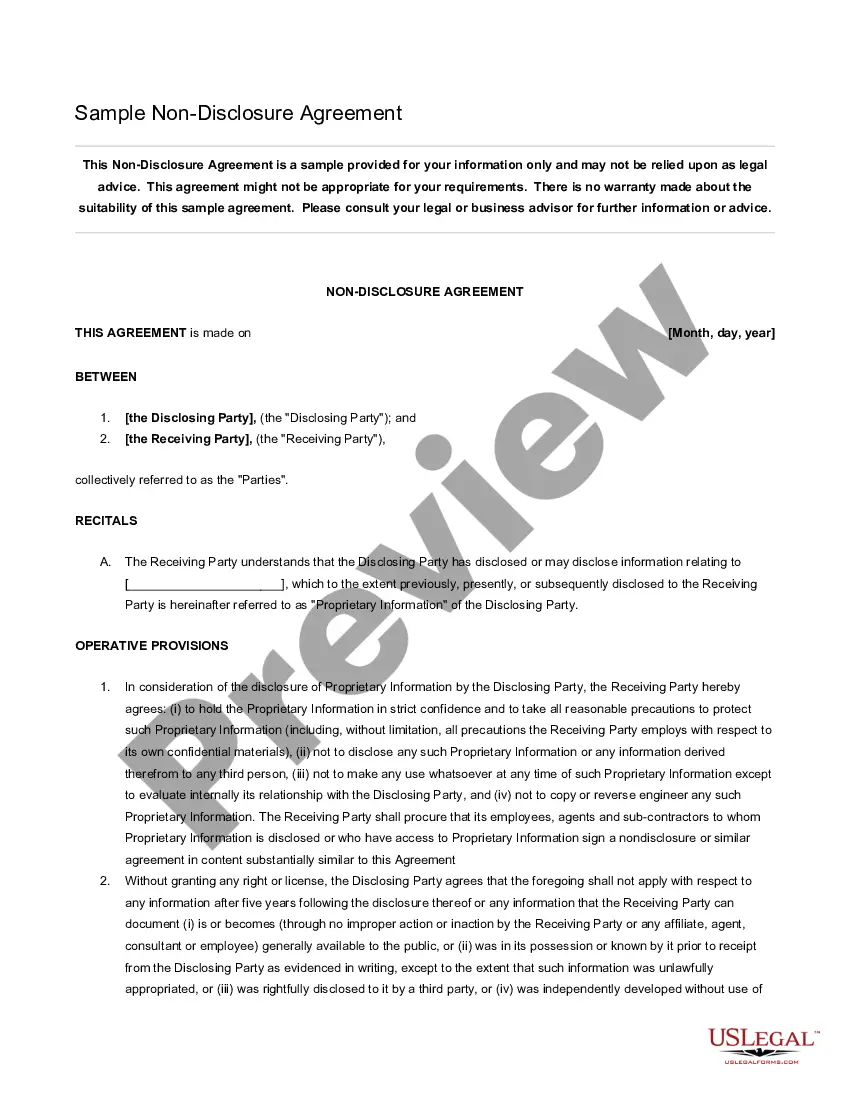
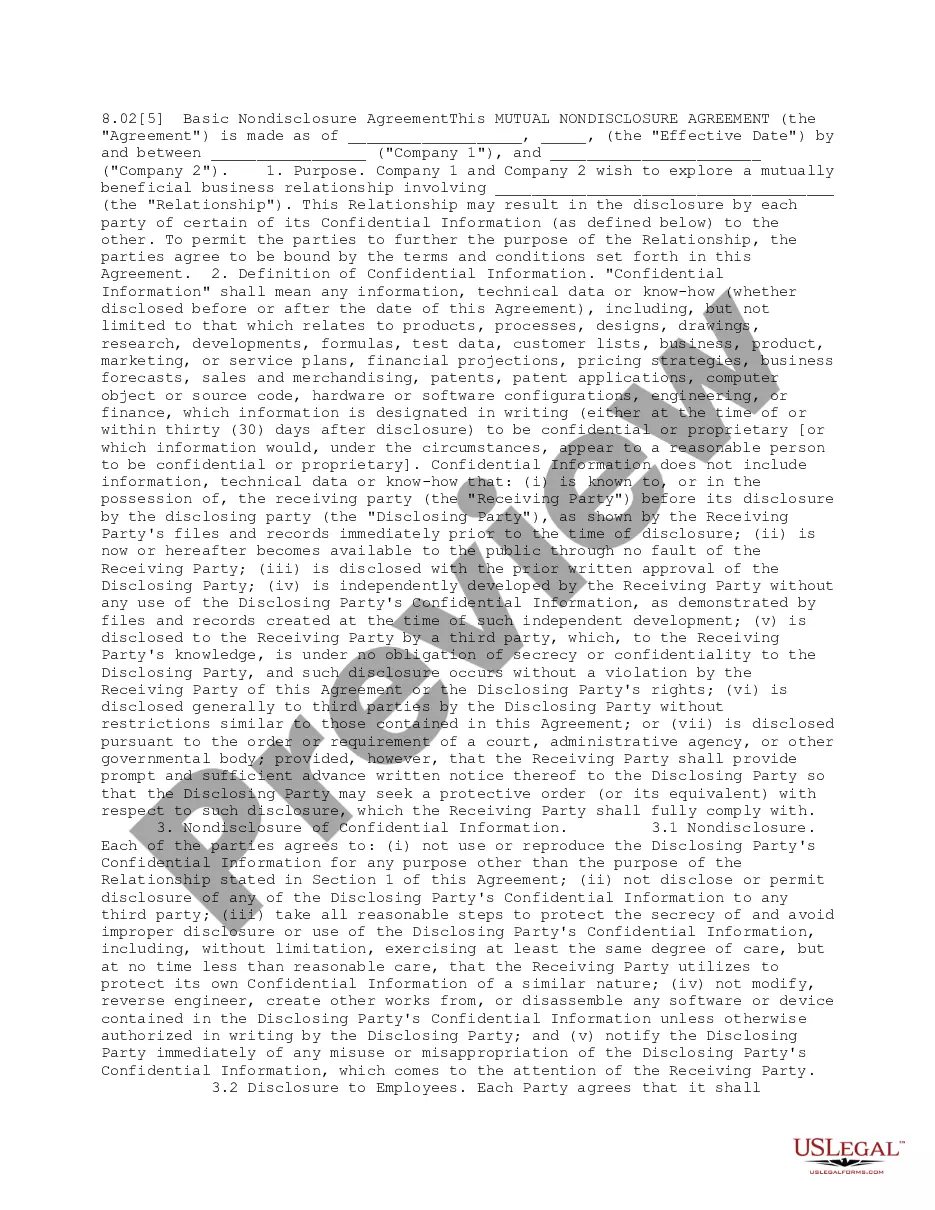
The USLegal Practical Guide to Confidential Information, Trade Secrets, and Non-Disclosure Agreements provides a structured approach to safeguarding sensitive information in business contexts. This form is essential for creators, business owners, and anyone needing to protect confidential data through a legally binding agreement. Unlike general contracts, this guide focuses specifically on the nuances of trade secrets and the legal frameworks that support them, making it a vital resource for maintaining competitive advantage.
Key components of this form
- Definitions of key terms such as "trade secret" and "confidential information"
- Obligations of the parties involved regarding the use and disclosure of confidential information
- Criteria for what constitutes misappropriation of trade secrets
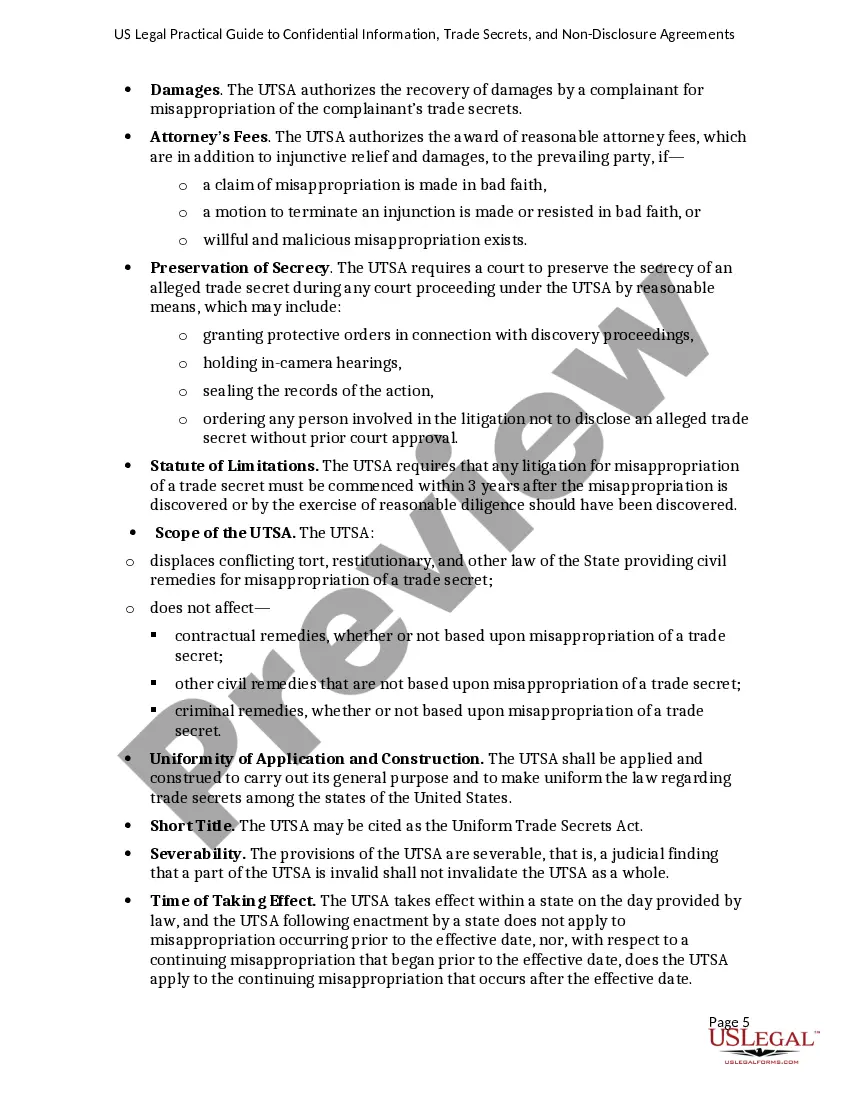
- Legal ramifications and potential damages for violations
- Specific clauses for jurisdiction and governing laws
Common use cases
This guide is useful when entering into agreements that involve disclosing sensitive information. Scenarios include hiring employees, engaging consultants, or negotiating joint ventures where confidential data will be shared. Anytime your business's trade secrets need to be protected from unauthorized disclosure, this form should be implemented.
Who can use this document
- Business owners looking to protect proprietary information
- Inventors and creators of original works needing to safeguard their ideas
- Consultants and freelancers who handle sensitive information for clients
- Employees who may be required to sign NDAs as part of their employment
Completing this form step by step
- Identify the parties involved by entering their names and addresses.
- Specify the purpose for which the confidential information will be disclosed.
- List the obligations of the recipient regarding the use of confidential information.
- Include any relevant exclusions from the definition of confidential information.
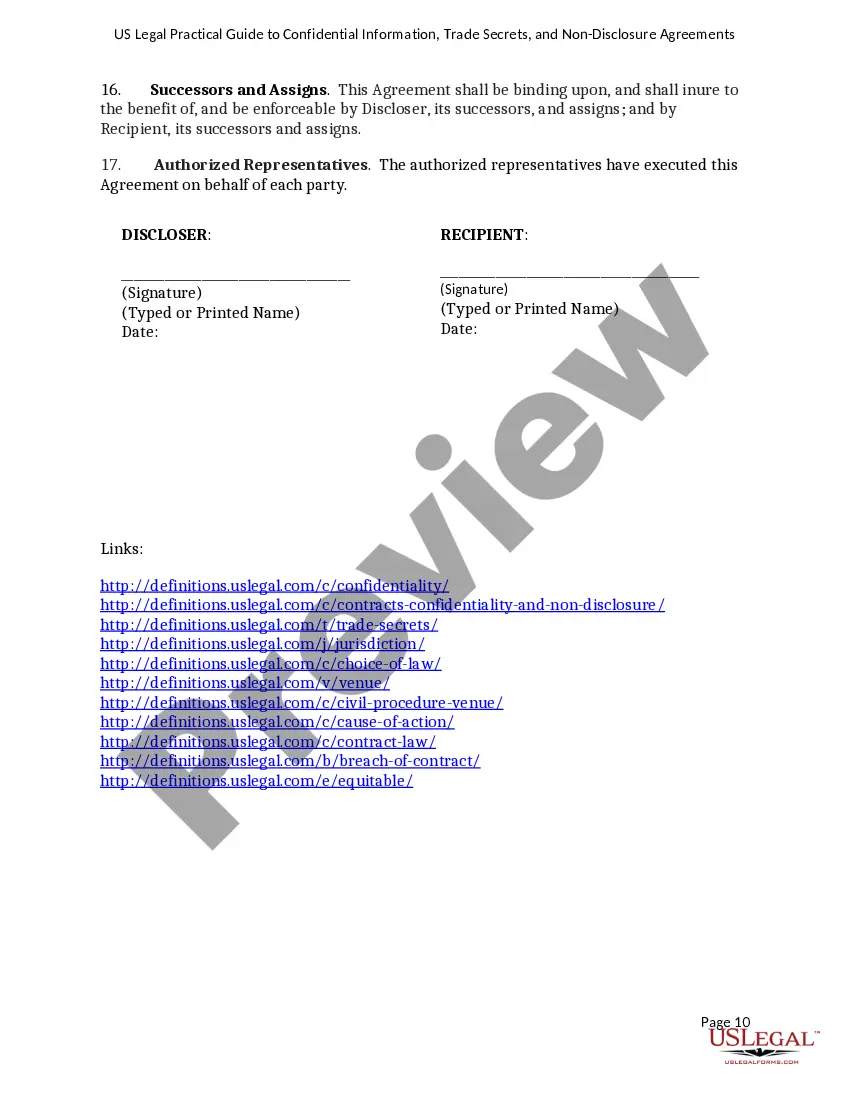
- State the governing law and jurisdiction applicable to the agreement.
Notarization guidance
Notarization is not commonly needed for this form. However, certain documents or local rules may make it necessary. Our notarization service, powered by Notarize, allows you to finalize it securely online anytime, day or night.
Get your form ready online
Our built-in tools help you complete, sign, share, and store your documents in one place.
Make edits, fill in missing information, and update formatting in US Legal Forms—just like you would in MS Word.
Download a copy, print it, send it by email, or mail it via USPS—whatever works best for your next step.
Sign and collect signatures with our SignNow integration. Send to multiple recipients, set reminders, and more. Go Premium to unlock E-Sign.
If this form requires notarization, complete it online through a secure video call—no need to meet a notary in person or wait for an appointment.
We protect your documents and personal data by following strict security and privacy standards.

Make edits, fill in missing information, and update formatting in US Legal Forms—just like you would in MS Word.

Download a copy, print it, send it by email, or mail it via USPS—whatever works best for your next step.

Sign and collect signatures with our SignNow integration. Send to multiple recipients, set reminders, and more. Go Premium to unlock E-Sign.

If this form requires notarization, complete it online through a secure video call—no need to meet a notary in person or wait for an appointment.

We protect your documents and personal data by following strict security and privacy standards.
Common mistakes
- Failing to define what constitutes confidential information clearly.
- Not specifying the duration of confidentiality obligations.
- Overlooking the need to specify governing law and jurisdiction.
- Neglecting to include proper signatures from authorized representatives.
Why use this form online
- Convenience of accessing and downloading the form anytime, anywhere.
- Editability allows for customization to fit specific business needs.
- Reliability of obtaining a document vetted by licensed attorneys.
Legal use & context
- The NDA provides a legally enforceable means to protect trade secrets.
- It outlines the consequences of breach, including potential legal action for misappropriation.
- Used correctly, this form can help businesses maintain their competitive edge in the market.
Looking for another form?
Form popularity
FAQ
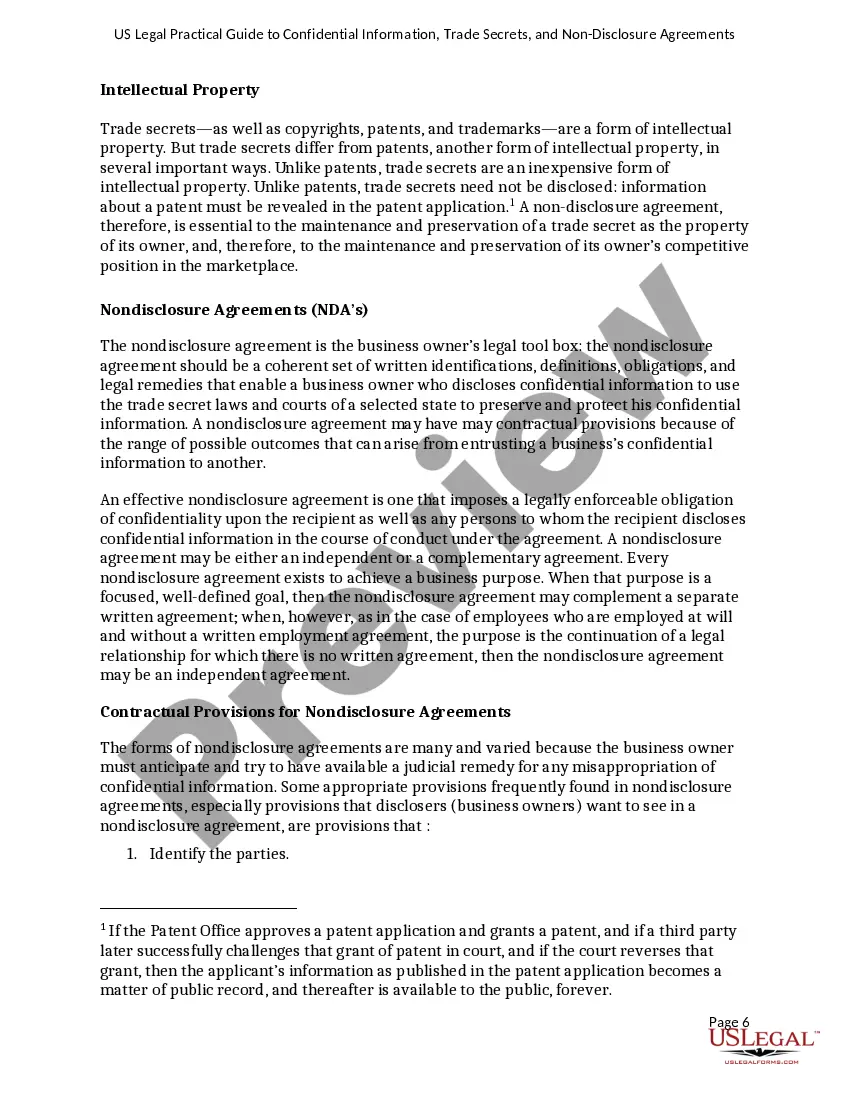
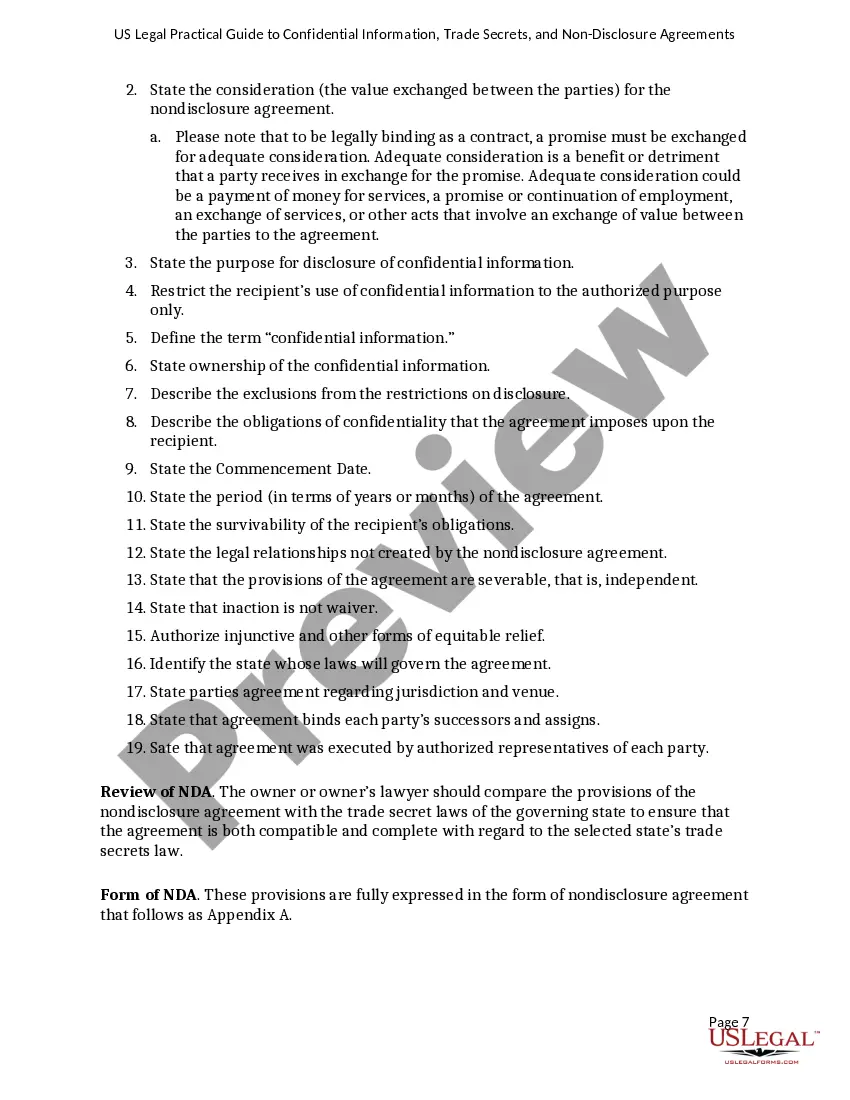
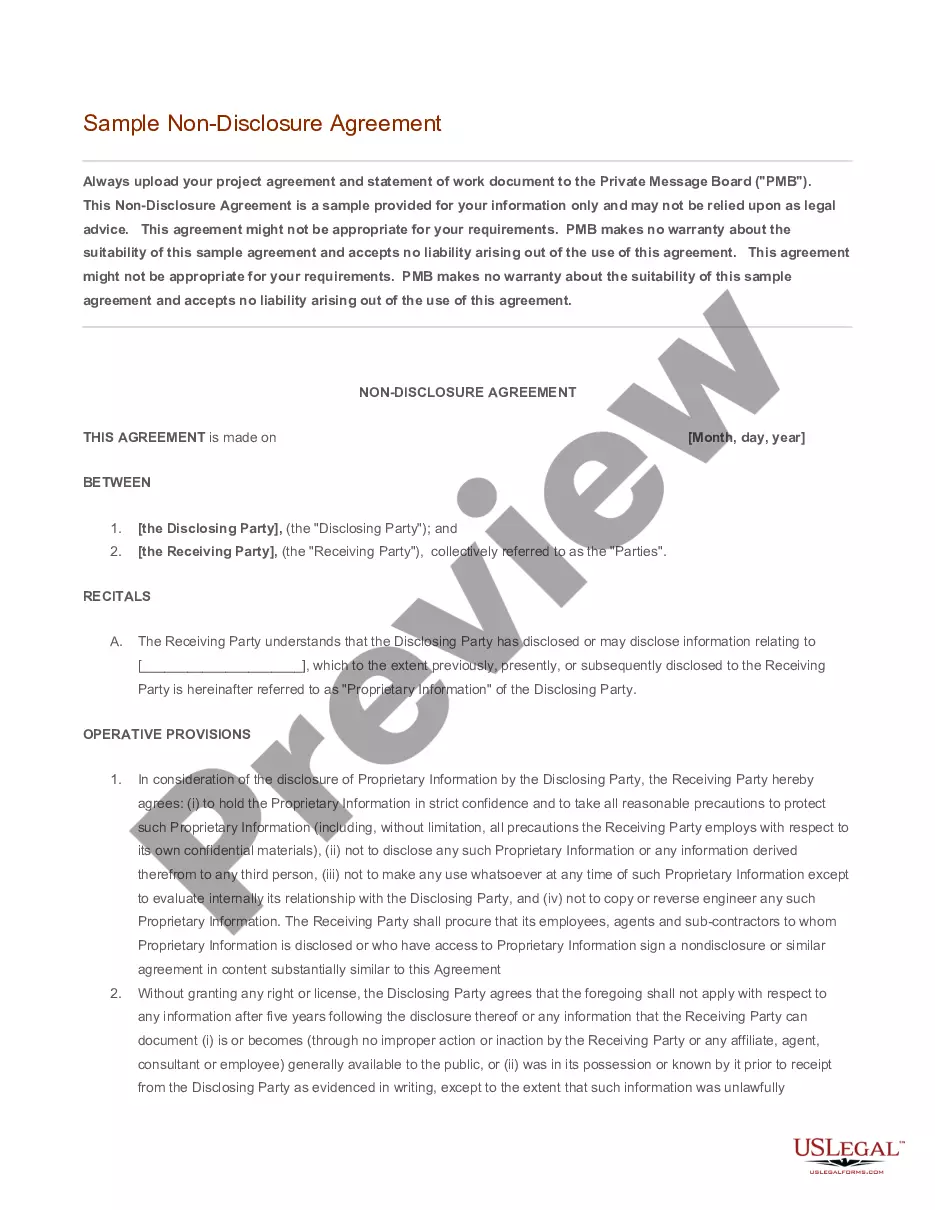
Identification of the parties. Definition of what is deemed to be confidential. The scope of the confidentiality obligation by the receiving party. The exclusions from confidential treatment. The term of the agreement.
Consideration. Like any other contract, confidentiality agreements require consideration, which means that the Receiving Party must receive something in exchange for its promise not to disclose the information.
Confidentiality agreements usually allow the recipient to disclose confidential information if required to do so by court order or other legal process.
The non-disclosure agreement sometimes shortened as NDA is also known as a trade secret agreement or a confidentiality agreement. An NDA is a legally binding contract between parties that requires them to keep certain information confidential.
A nondisclosure agreement (NDA) helps a business protect its trade secrets, among other confidential information. Businesses often maintain valuable and confidential information. This information might include a sales plan, a list of customers, a manufacturing process, or a formula for a soft drink.
A definition of confidential information. Who is involved. Why the recipient knows the information. Exclusions or limits on confidential information. Receiving party's obligations. Time frame or term. Discloser to the recipient.
The purpose of a confidentiality agreement, which is also referred to as a nondisclosure agreement or NDA, is to protect information exchanged between two or more parties. Anyone who signs a confidentiality agreement is promising to keep the relevant information secret.
For an NDA to be enforceable in California, it must not be too generic or too open-ended (no time limit established), or the courts will likely throw it out.An enforceable NDA in California must include: A statement of the purpose of the NDA and the parties involved.