Position Sample Letter from Law Firm to Opposing Counsel
What is this form?
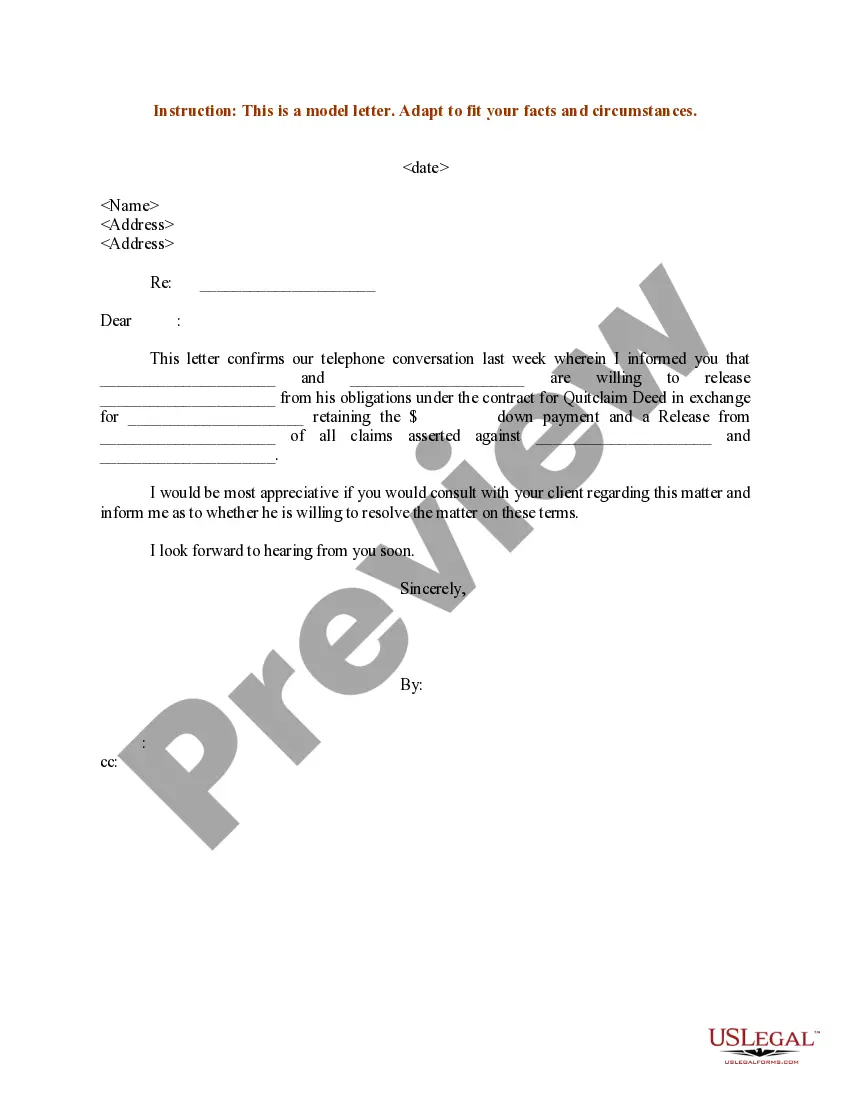
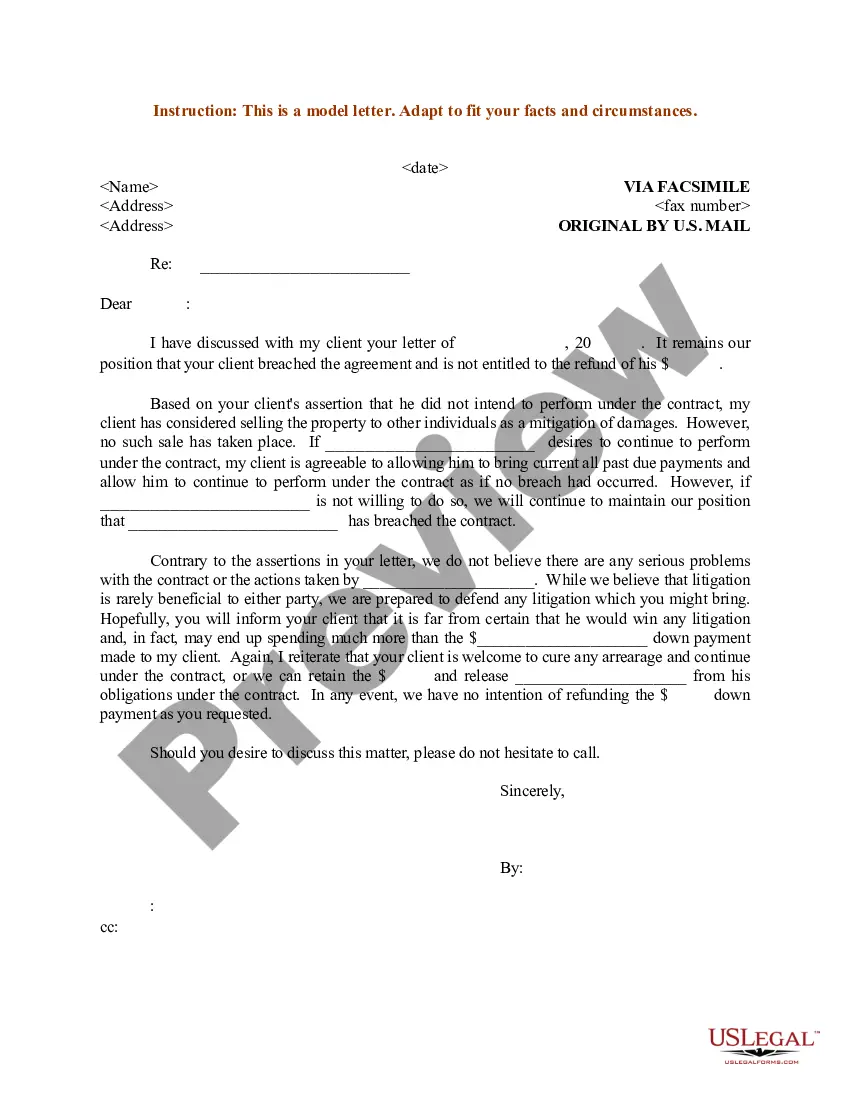
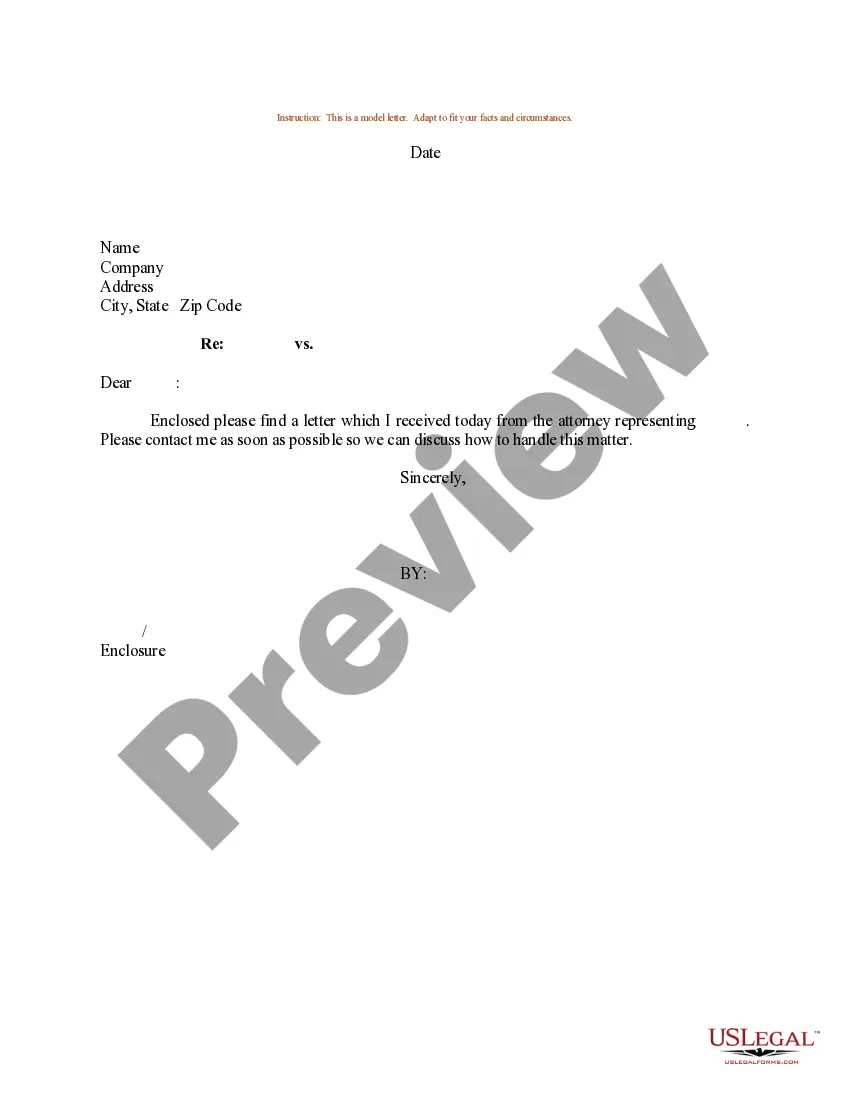
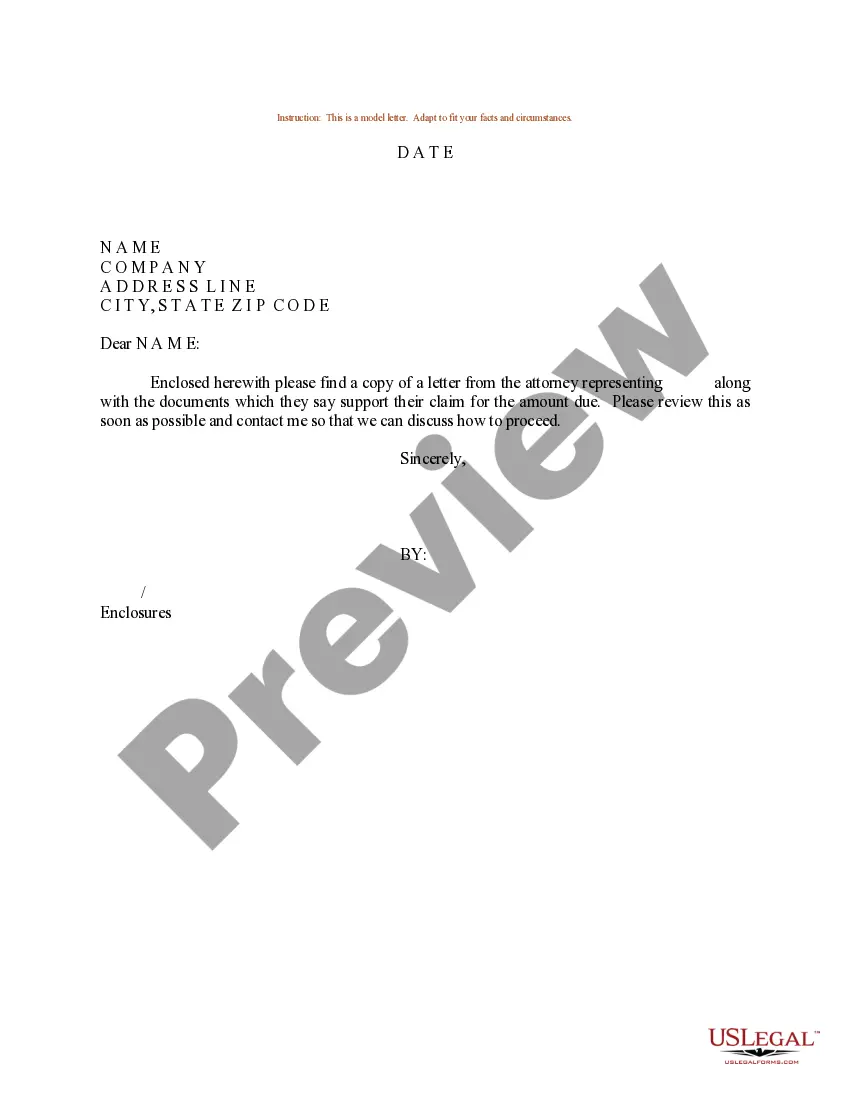
This form is a Position Sample Letter from Law Firm to Opposing Counsel. It serves as a template for communications between a law firm and opposing counsel, detailing the legal position of a party in a dispute. This letter differs from general correspondence by focusing on formal legal language and specific arguments relevant to the case at hand.
Key parts of this document
- Sender's information: Includes the address and contact details of the law firm.
- Recipient's information: Contains the address and contact details of opposing counsel.
- Subject line: Clearly states the purpose of the letter for easy reference.
- Body of the letter: Presents the legal position, supporting arguments, and relevant facts.
- Closing: Provides a professional conclusion and the sender's signature line.

When to use this form
This form is used when a law firm needs to inform opposing counsel of its legal position in a pending dispute. It is appropriate in various legal contexts, such as negotiations, settlements, or responding to claims or motions. This letter helps to clarify misunderstandings and set the stage for further legal proceedings.
Who can use this document
Intended users:
- Law firms representing clients in legal disputes.
- Attorneys looking to communicate formal positions to opposing parties.
- Legal professionals drafting correspondence for negotiation or litigation purposes.
Instructions for completing this form
Steps to complete the form:
- Identify the parties involved by including the senderâs and recipientâs details.
- Clearly state the subject of the letter to provide context.
- Draft the body of the letter, articulating the legal position with supporting facts.
- Conclude the letter with a professional closing and include the sender's name and title.
- Review the letter for clarity and accuracy before sending.
Does this form need to be notarized?
This form does not typically require notarization unless specified by local law.
Get your form ready online
Our built-in tools help you complete, sign, share, and store your documents in one place.
Make edits, fill in missing information, and update formatting in US Legal Forms—just like you would in MS Word.
Download a copy, print it, send it by email, or mail it via USPS—whatever works best for your next step.
Sign and collect signatures with our SignNow integration. Send to multiple recipients, set reminders, and more. Go Premium to unlock E-Sign.
If this form requires notarization, complete it online through a secure video call—no need to meet a notary in person or wait for an appointment.
We protect your documents and personal data by following strict security and privacy standards.

Make edits, fill in missing information, and update formatting in US Legal Forms—just like you would in MS Word.

Download a copy, print it, send it by email, or mail it via USPS—whatever works best for your next step.

Sign and collect signatures with our SignNow integration. Send to multiple recipients, set reminders, and more. Go Premium to unlock E-Sign.

If this form requires notarization, complete it online through a secure video call—no need to meet a notary in person or wait for an appointment.

We protect your documents and personal data by following strict security and privacy standards.
Mistakes to watch out for
- Failing to include complete contact information for both parties.
- Using vague or unclear language in the legal position statement.
- Not properly addressing the letter to the intended recipient.
- Neglecting to proofread the letter for errors before sending.
Why use this form online
- Convenient access to a professionally crafted legal template.
- Editability allows for customization to suit specific needs.
- Reliability ensures adherence to legal standards in communication.
This letter serves as formal correspondence in legal disputes and is crucial for establishing the partiesâ positions. Its enforceability may depend on the jurisdiction and adherence to legal standards in communication.
Key takeaways
- The Position Sample Letter serves a specific purpose in legal communication between counsel.
- Clarity and professionalism are essential in drafting this document.
- Customization may be necessary to meet state-specific requirements.
Looking for another form?

Form popularity
FAQ
Never Refer To Counsel In Argument Resist the impulse in Court to address opposing counsel directly always address through the Court. It will keep you more civil and calmer (and it's what the Court wants anyway).
Definitions of opposing counsel lawyers representing the other side (the opponents) in a dispute. "Some clients are pleased at first when their lawyers attack opposing counsel."
But by default, communications to the other side are addressed to the designated attorney-in-charge/top-named lawyer, with cc's to everyone else. In a rare situation where you are sending a letter specifically to multiple attorneys as opposed to the other side as a whole, it's Dear Messrs. Smith and Jones, Dear Ms.
Prepare to write your letter. Before you begin writing, think about your audience, what you need to say, and what tone of voice you should use. Briefly explain the purpose of the letter. Make each point in a separate paragraph. Ask the recipient to do something.
Opposing counsel call each other 'friend' in increasingly popular SCOTUS lingo. The Supreme Court under the leadership of Chief Justice John G. Roberts Jr. is increasingly using the word friend to refer to opposing counsel in oral arguments, a term also picked up by the lawyers appearing before the court.
CORRESPONDENCE. The letters written by one to another, and the answers thereto, make what is called the correspondence of the parties. 2. In general, the correspondence of the parties contains the best evidence of the facts to which it relates. See Letter, contracts; Proposal.
A lawyer is not prohibited from calling another party's attorney or another member of the party's attorney's firm as a witness, either in discovery or at trial, where such attorney may have unprivileged knowledge relevant to the case or unprivileged knowledge reasonably calculated to lead to the discovery of admissible
Never Refer To Counsel In Argument Resist the impulse in Court to address opposing counsel directly always address through the Court. It will keep you more civil and calmer (and it's what the Court wants anyway).