Designation of Successor Custodian by Donor Pursuant to the Uniform Transfers to Minors Act
Overview of this form
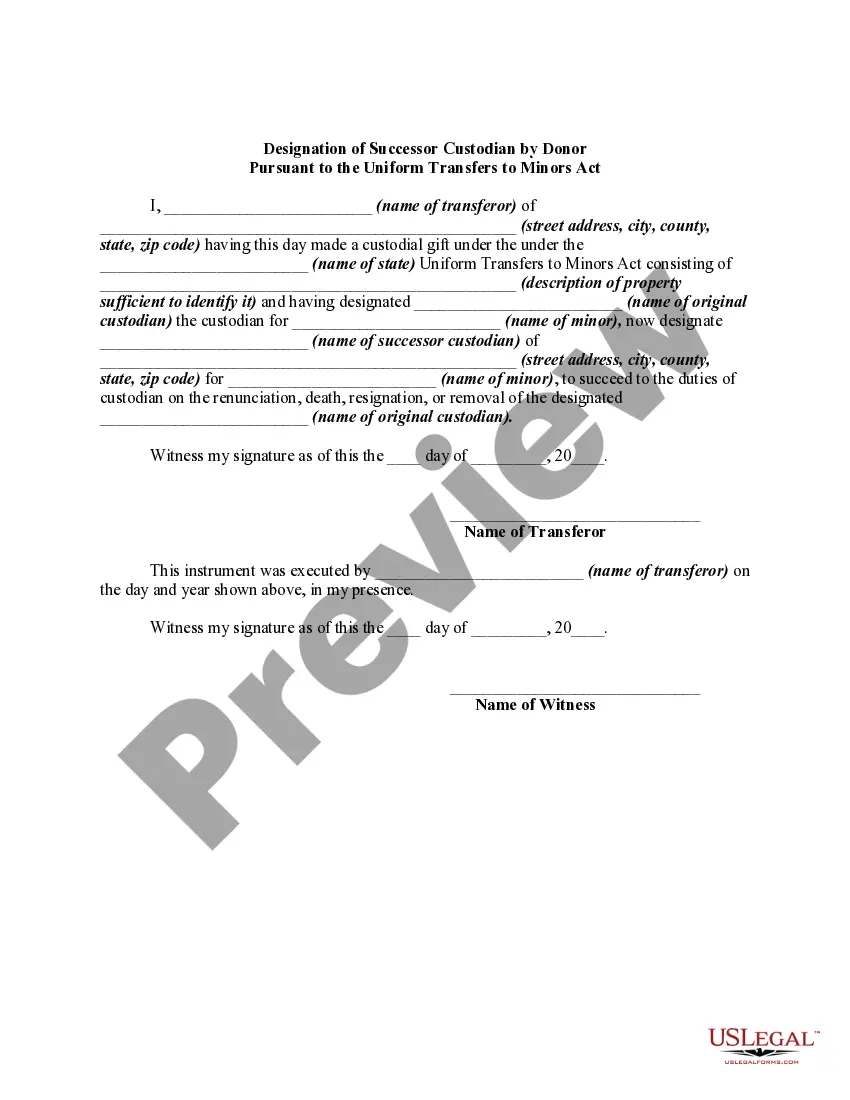
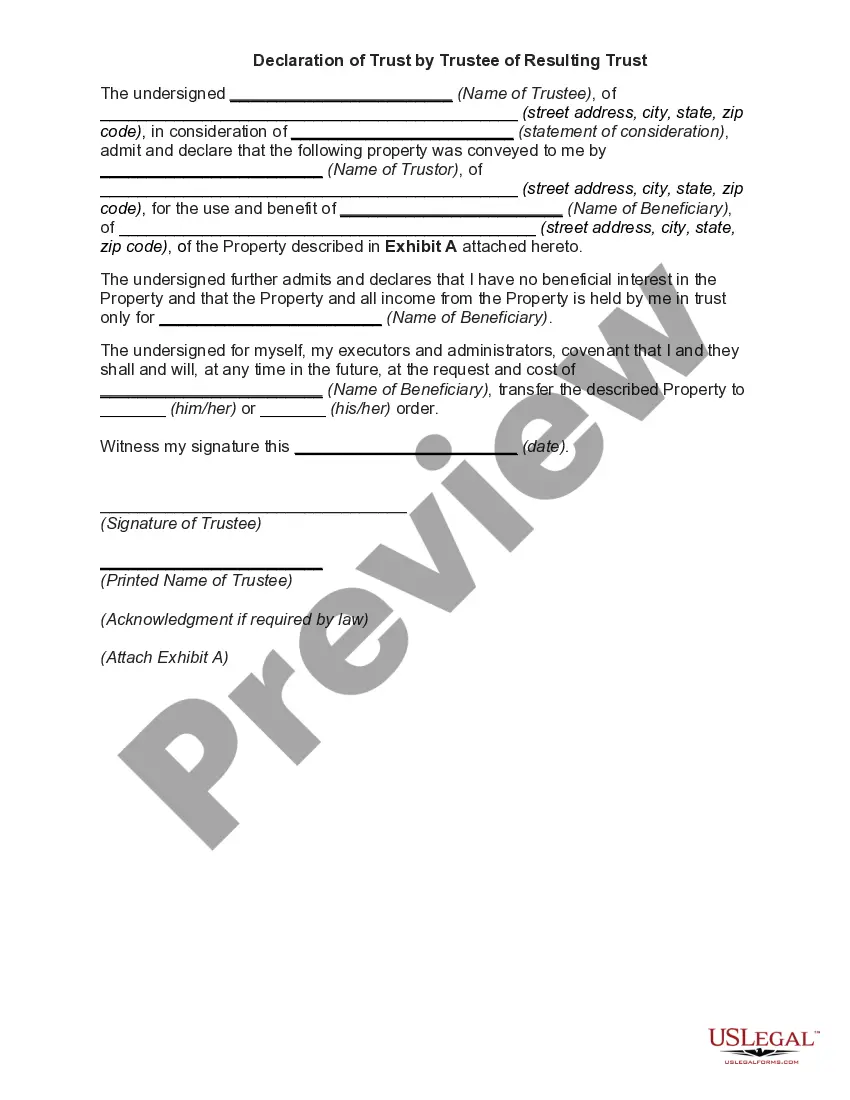
The Designation of Successor Custodian by Donor Pursuant to the Uniform Transfers to Minors Act is a legal document that allows a donor to appoint a successor custodian for a custodial gift made to a minor. This form is essential for ensuring that the gift is managed appropriately after the original custodian can no longer fulfill their duties. It differs from similar forms in that it specifically addresses the transfer of custodial responsibilities under the Uniform Transfers to Minors Act, safeguarding the minorâs interests in the process.
Key components of this form
- Name of transferor: Identifies the person making the custodial gift.
- Property description: Details the assets being gifted to the minor.
- Original custodian: Names the person initially responsible for managing the gift.
- Successor custodian: Designates the individual who will take over custodianship if needed.
- Witness signature: Indicates that the form was signed in the presence of a witness not related to the successor custodian.
Situations where this form applies
This form should be used when a donor establishes a custodial account for a minor and wishes to name a successor custodian. It is necessary when the original custodian is unable to continue, whether due to resignation, death, or removal. This ensures that there is a clear plan for the ongoing management of the minor's assets, providing peace of mind for the donor.
Who should use this form
- Donors establishing a custodial gift for minors.
- Parents or guardians managing assets for the benefit of a child.
- Individuals wanting to ensure continuous management of a minorâs assets in accordance with the law.
How to complete this form
- Identify the parties involved: Fill in the name and address of the transferor and the original custodian.
- Specify the property: Describe the custodial gift being made to the minor in detail.
- Designate the successor custodian: Clearly name the individual who will take over custodianship.
- Enter the date: Write the date of the formâs execution.
- Signatures: Ensure the transferor signs and dates the document in the presence of a witness who also provides their signature.
Is notarization required?
This form does not typically require notarization unless specified by local law. It is important to check local regulations to confirm if notarization is necessary in your jurisdiction.
Get your form ready online
Our built-in tools help you complete, sign, share, and store your documents in one place.
Make edits, fill in missing information, and update formatting in US Legal Forms—just like you would in MS Word.
Download a copy, print it, send it by email, or mail it via USPS—whatever works best for your next step.
Sign and collect signatures with our SignNow integration. Send to multiple recipients, set reminders, and more. Go Premium to unlock E-Sign.
If this form requires notarization, complete it online through a secure video call—no need to meet a notary in person or wait for an appointment.
We protect your documents and personal data by following strict security and privacy standards.

Make edits, fill in missing information, and update formatting in US Legal Forms—just like you would in MS Word.

Download a copy, print it, send it by email, or mail it via USPS—whatever works best for your next step.

Sign and collect signatures with our SignNow integration. Send to multiple recipients, set reminders, and more. Go Premium to unlock E-Sign.

If this form requires notarization, complete it online through a secure video call—no need to meet a notary in person or wait for an appointment.

We protect your documents and personal data by following strict security and privacy standards.
Typical mistakes to avoid
- Failing to properly identify all parties involved in the custodial arrangement.
- Not describing the property in sufficient detail to ensure clear identification.
- Omitting the witness signature or failing to have a non-successor custodian as the witness.
Advantages of online completion
- Convenient access: Download the form instantly from anywhere.
- Editable format: Customize the document to meet your needs before printing.
- Reliable templates: Use professionally drafted forms to ensure compliance with legal standards.
What to keep in mind
- The form allows a donor to designate a successor custodian for a custodial gift to a minor.
- Completing the form ensures proper future management of the minor's assets.
- It is essential to have the form executed correctly to avoid legal issues.
Looking for another form?










Form popularity
FAQ
A custodial account will automatically close when the custodian releases the assets to the new adult. But the custodian has no authority to close a custodial account before then. A custodial account can only be transferred to another custodian on the child's behalf.
There is no ability to transfer a UGMA or UTMA account to another child or to change beneficiaries. You are not supposed to use a UTMA-529 or UGMA-529 account conversion to change the beneficiary either because that would equate to giving your child's money to someone else.
Every UTMA account has a designated custodian who can make withdrawals or cash in the account at any time. However, the cash can't be used for day-to-day expenses like groceries. It can be used for school outings, music lessons and other non-essentials that benefit the child.
Opening Custodial Account Whether more than one custodian can be listed on the account depends on state law and the policy of the individual bank. If two custodians are permitted, each will have authority to conduct transactions on the account, including withdrawals.
If a donor acting as the custodian dies before the account terminates, the account value will be included in the donor's estate for estate tax purposes. If a minor dies before the age of majority, a custodial account is considered part of the minor's estate and is distributed according to state law.
UTMA stands for the Uniform Transfers to Minors Act, which is the legal provision in many states that authorizes a custodian to hold assets on behalf of a minor child until the child reaches the age of majority -- typically either 18 or 21.
The Uniform Transfers to Minors Act (UTMA) allows an adult to transfer assets to a minor by opening a custodial account. This type of account is managed by an adult the custodian who holds onto the assets until the minor reaches a certain age, usually 18 or 21.
(A) Any person who is eighteen years of age or older or a trust company is eligible to become a successor custodian. A successor custodian has all the rights, powers, duties, and immunities of a custodian designated in a manner prescribed by sections 5814.01 to 5814.10 of the Revised Code.