Personal Injury Waiver, Release, Hold Harmless, and Indemnity Agreement for Babysitting Services offered by Nonprofit Organization
About this form
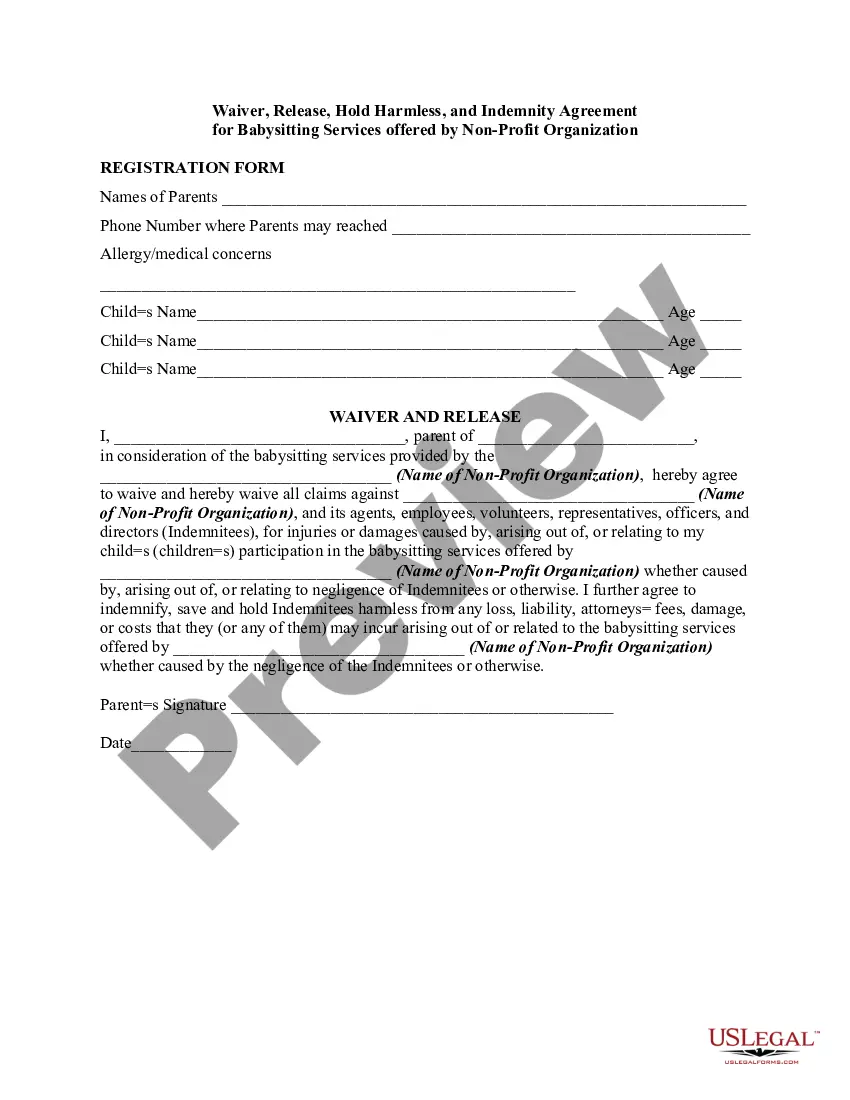
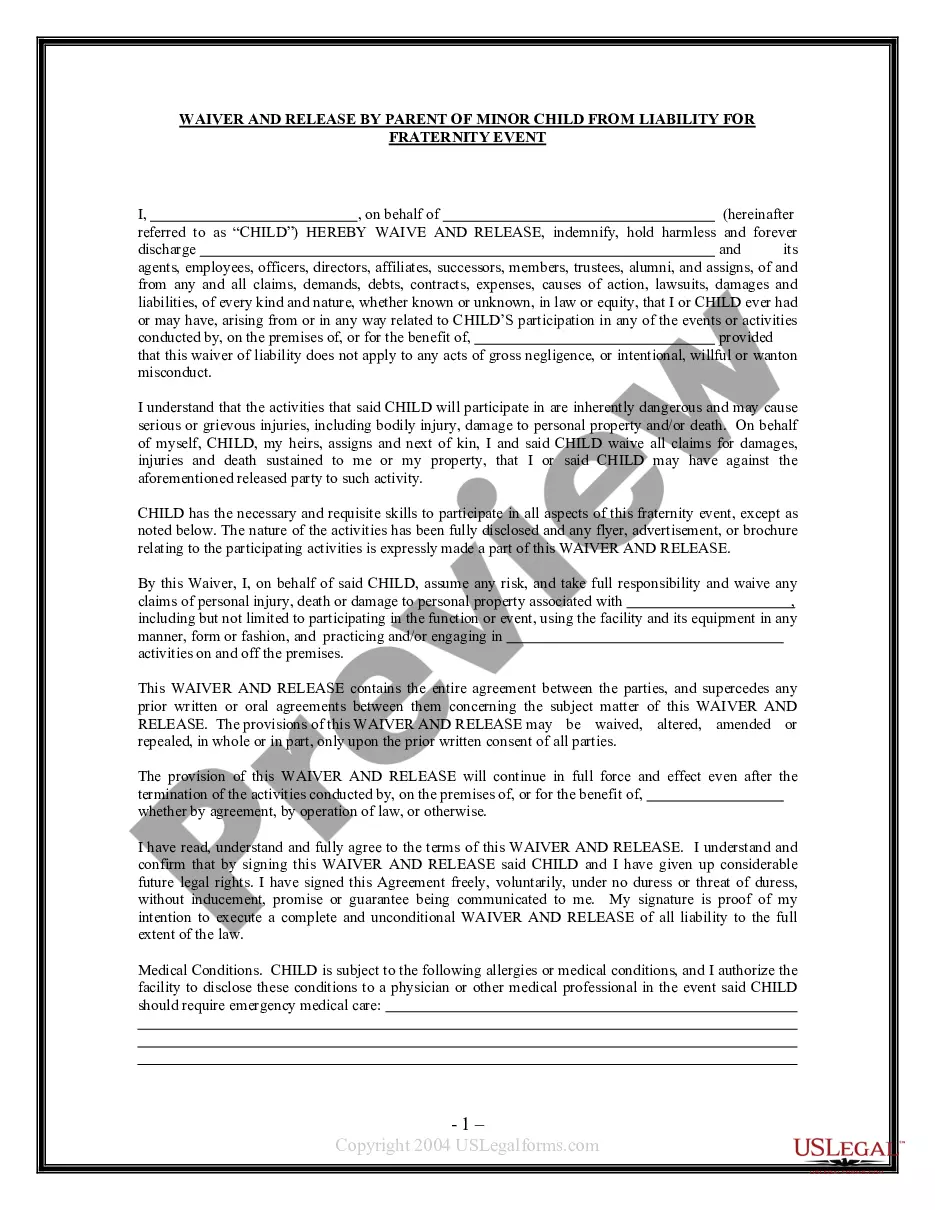
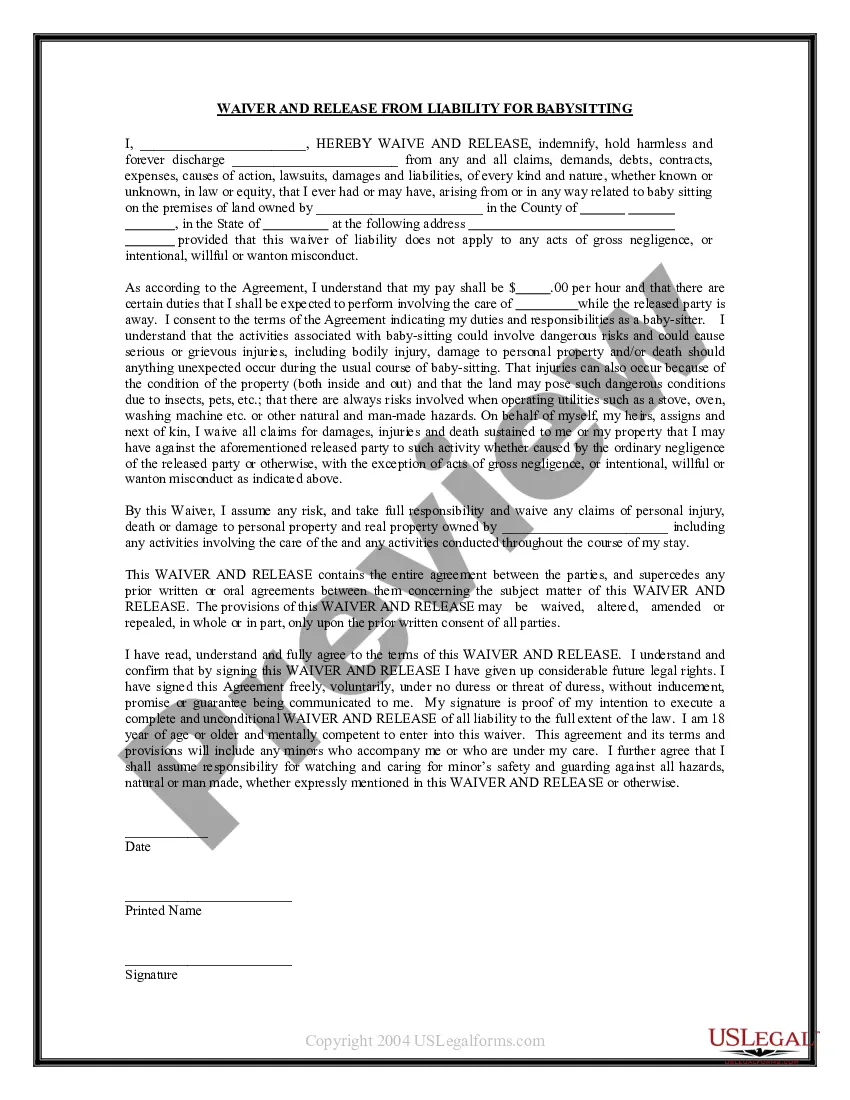
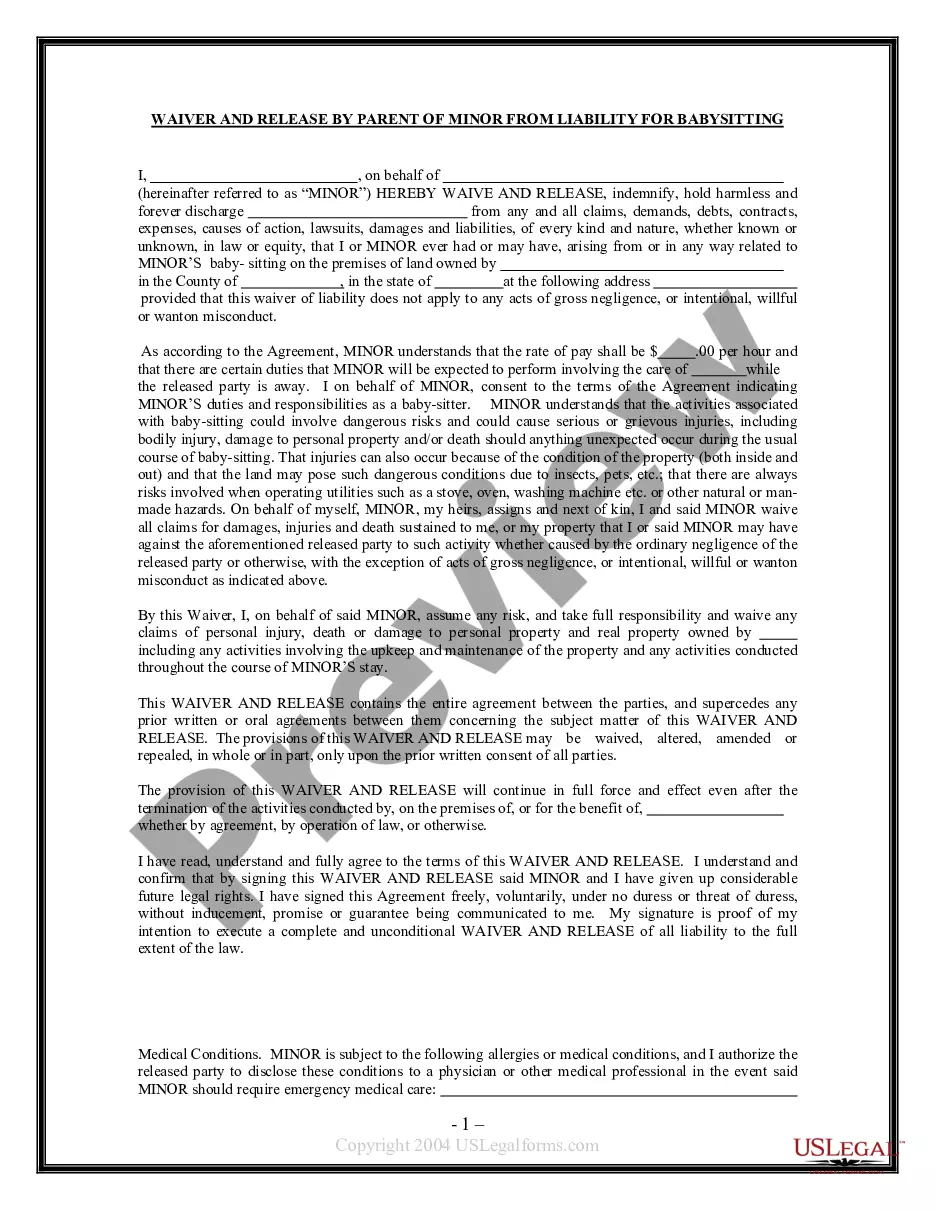
The Personal Injury Waiver, Release, Hold Harmless, and Indemnity Agreement for Babysitting Services offered by Nonprofit Organizations is a legal document designed to protect nonprofit organizations from liability for injuries that may occur while children are under their care. By signing this form, parents acknowledge potential risks and agree to release the organization from claims of negligence or injury. This form is specifically tailored for babysitting services provided by nonprofits, distinguishing it from general liability waivers used by for-profit entities.
Form components explained
- Registration information for parents, including contact details and medical concerns.
- Name and age of each child receiving babysitting services.
- Waiver and release clause, stating the parent's agreement to relinquish liability.
- Indemnity agreement, ensuring parents cover costs arising from any claims against the organization.
- Signature and date fields for parents to confirm their consent.
Common use cases
This form should be used when a nonprofit organization is offering babysitting services and needs to ensure parental acknowledgment of risks involved. Parents are encouraged to complete this document prior to their child's participation to protect both the organization and themselves from potential legal claims related to injuries that may occur during caregiving activities.
Intended users of this form
- Nonprofit organizations providing babysitting services.
- Parents or guardians of children participating in these services.
- Event coordinators planning child-focused activities where babysitting is involved.
Instructions for completing this form
- Identify and write in the names of the parents or guardians at the top of the form.
- Provide a phone number where parents can be reached during babysitting services.
- List any allergy or medical concerns relevant to each child.
- Enter each child's name and age in the designated fields.
- Sign and date the waiver and release section to confirm understanding and agreement.
Notarization guidance
In most cases, this form does not require notarization. However, some jurisdictions or signing circumstances might. US Legal Forms offers online notarization powered by Notarize, accessible 24/7 for a quick, remote process.
Get your form ready online
Our built-in tools help you complete, sign, share, and store your documents in one place.
Make edits, fill in missing information, and update formatting in US Legal Forms—just like you would in MS Word.
Download a copy, print it, send it by email, or mail it via USPS—whatever works best for your next step.
Sign and collect signatures with our SignNow integration. Send to multiple recipients, set reminders, and more. Go Premium to unlock E-Sign.
If this form requires notarization, complete it online through a secure video call—no need to meet a notary in person or wait for an appointment.
We protect your documents and personal data by following strict security and privacy standards.

Make edits, fill in missing information, and update formatting in US Legal Forms—just like you would in MS Word.

Download a copy, print it, send it by email, or mail it via USPS—whatever works best for your next step.

Sign and collect signatures with our SignNow integration. Send to multiple recipients, set reminders, and more. Go Premium to unlock E-Sign.

If this form requires notarization, complete it online through a secure video call—no need to meet a notary in person or wait for an appointment.

We protect your documents and personal data by following strict security and privacy standards.
Common mistakes
- Failing to complete all required fields, especially contact information.
- Not providing full names and ages of all children involved.
- Overlooking the need for a parent or guardian's signature.
- Assuming verbal consent suffices without a signed agreement.
Advantages of online completion
- Convenient access to download the form at any time.
- Editable fields allow for personalized information entries.
- Provides a reliable legal structure to protect both parties involved.
- Reduces paperwork and physical storage needs.
Looking for another form?
Form popularity
FAQ
What Is a Hold Harmless Clause? The hold harmless clause is a statement in a legal contract that absolves one or both parties in a contract of legal liability for any injuries or damage suffered by the party signing the contract.
By signing a broad form hold harmless agreement you are possibly exposing your company to uninsurable risk. Contractual Liability Coverage for sole or gross negligent acts of your client is excluded is y most liability policies.As with all contracts, it is best to have legal counsel review prior to signing.
A hold harmless agreement is a liability waiver that protects one party in the event that the other party gets injured during the working relationship between the parties. It is also referred to as a liability waiver and an indemnification agreement.
Enforceability of Hold Harmless Agreements The general answer is yes, that these documents signing away your right to sue for negligence are legally enforceable.
A Hold Harmless Agreement is a legal agreement that states that one party will not hold another party liable for risk, often physical risk or damage. The Hold Harmless Clause can be one-way (unilateral) or two-way (reciprocal) agreements and can be signed before or after an activity takes place.
The date of the agreement. The name of the person held harmless or protected, with their address. The name of the other party to the agreement, with their address. Details about the activity or event the agreement is about, such as horseback riding or country club membership.
Executing Your Hold Harmless Agreement Once the hold harmless agreement has been completed, simply have all parties sign and date to complete the document. Although not required, it is always a good idea to have the document notarized for extra protection.