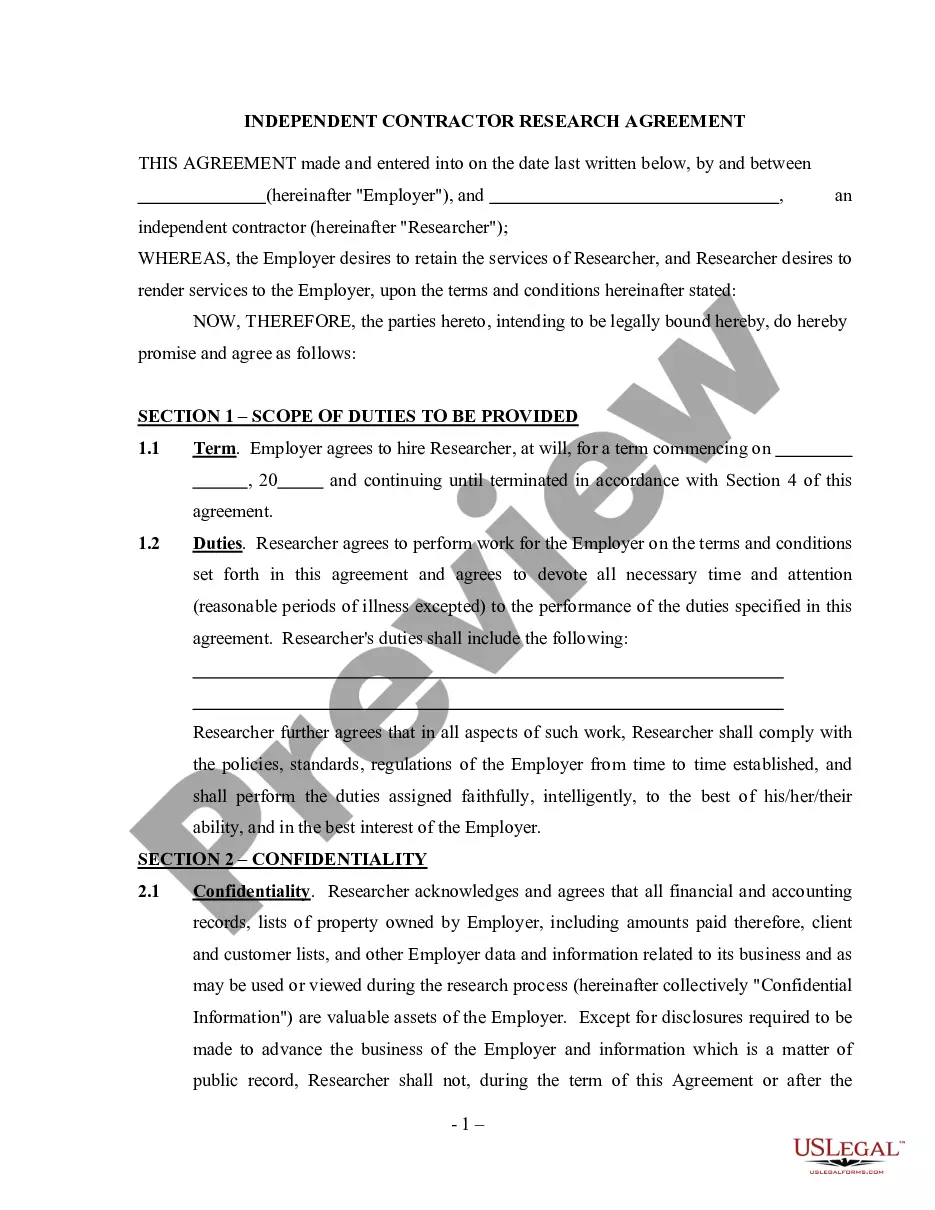
Complaint for Violation of Civil Rights and for Wrongful Discharge for Reporting Illegal Acts - 1st, 14th Amendments, US Constitution - Jury Trial Demand
Understanding this form
This form is a Complaint for Violation of Civil Rights and for Wrongful Discharge specifically addressing issues under the 1st and 14th Amendments of the U.S. Constitution. It is designed for individuals who believe they have been wrongfully terminated or discriminated against due to exercising their constitutional rights, particularly regarding gender discrimination and retaliation for reporting illegal acts. Unlike other employment-related complaints, this form specifically integrates federal civil rights claims.
Key parts of this document
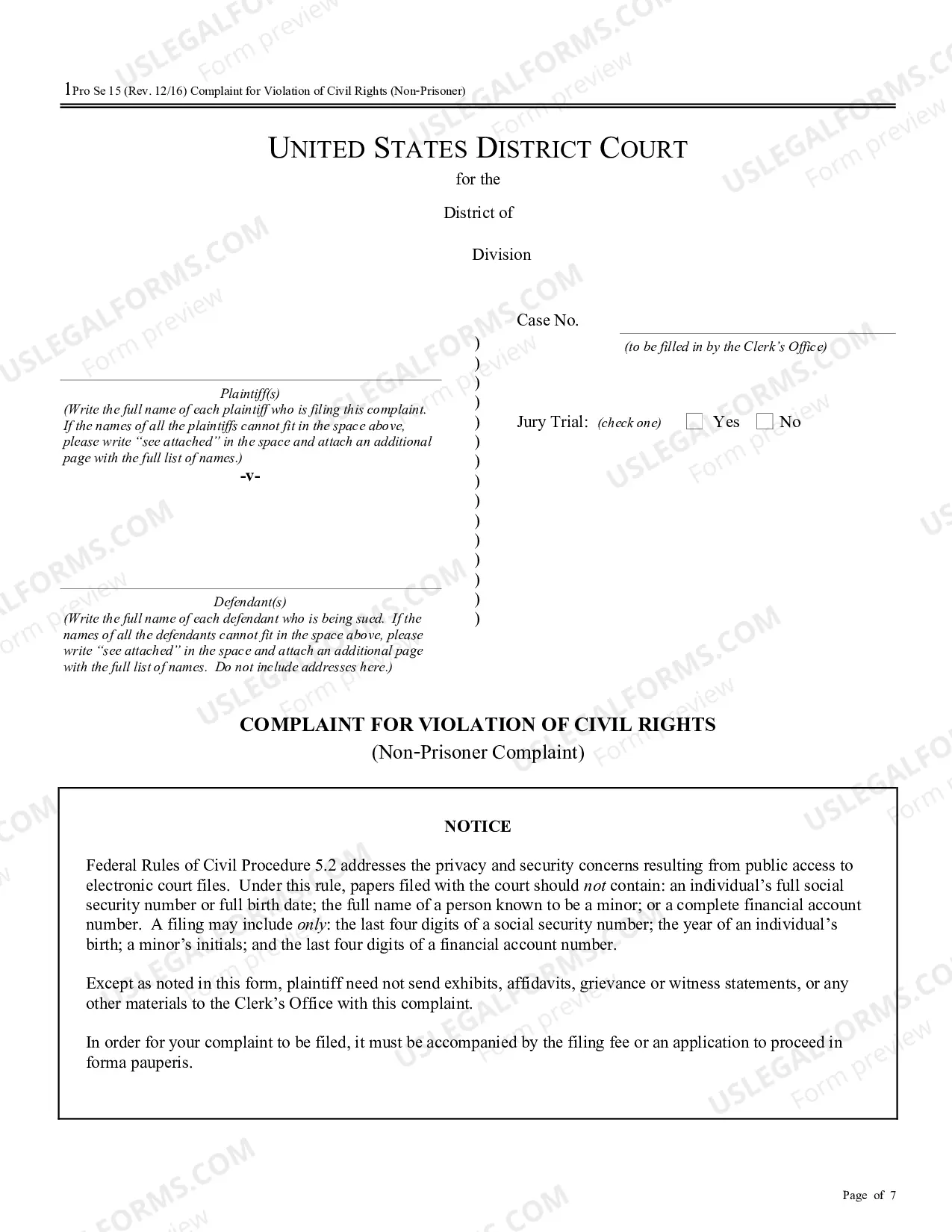
- Identification of the parties involved, including plaintiff and defendants.
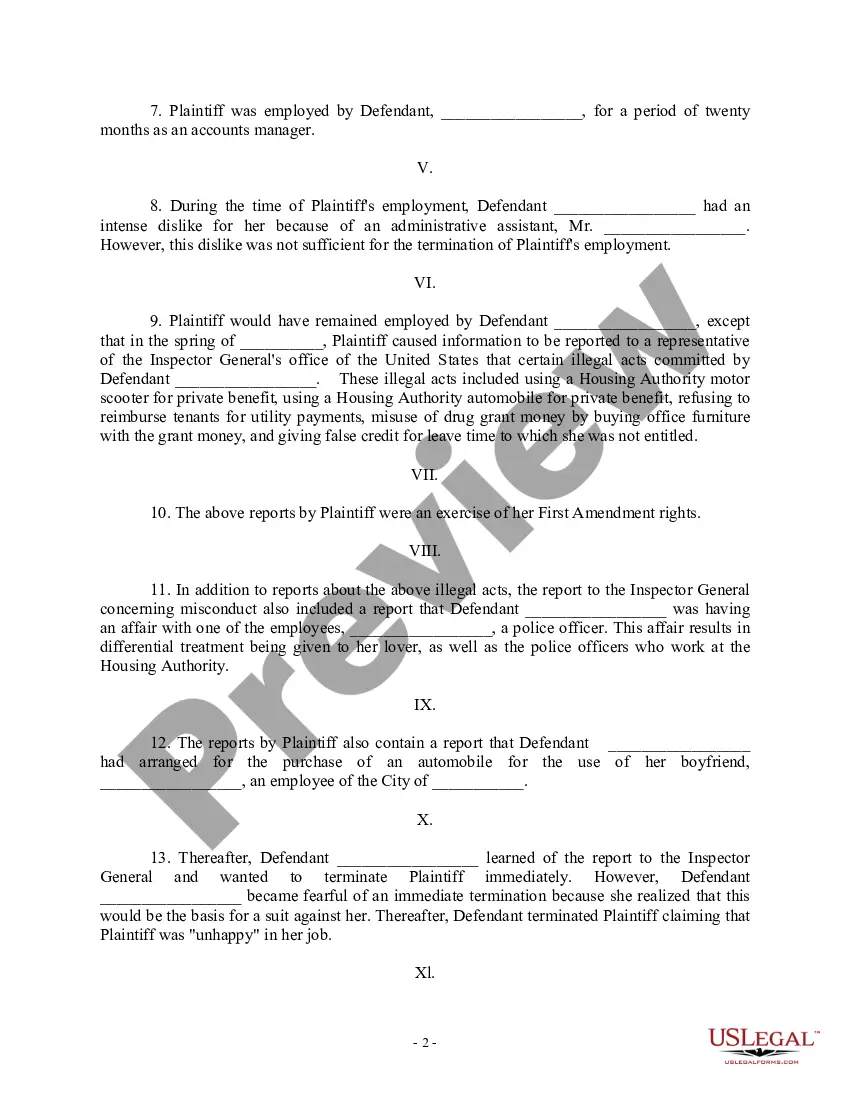
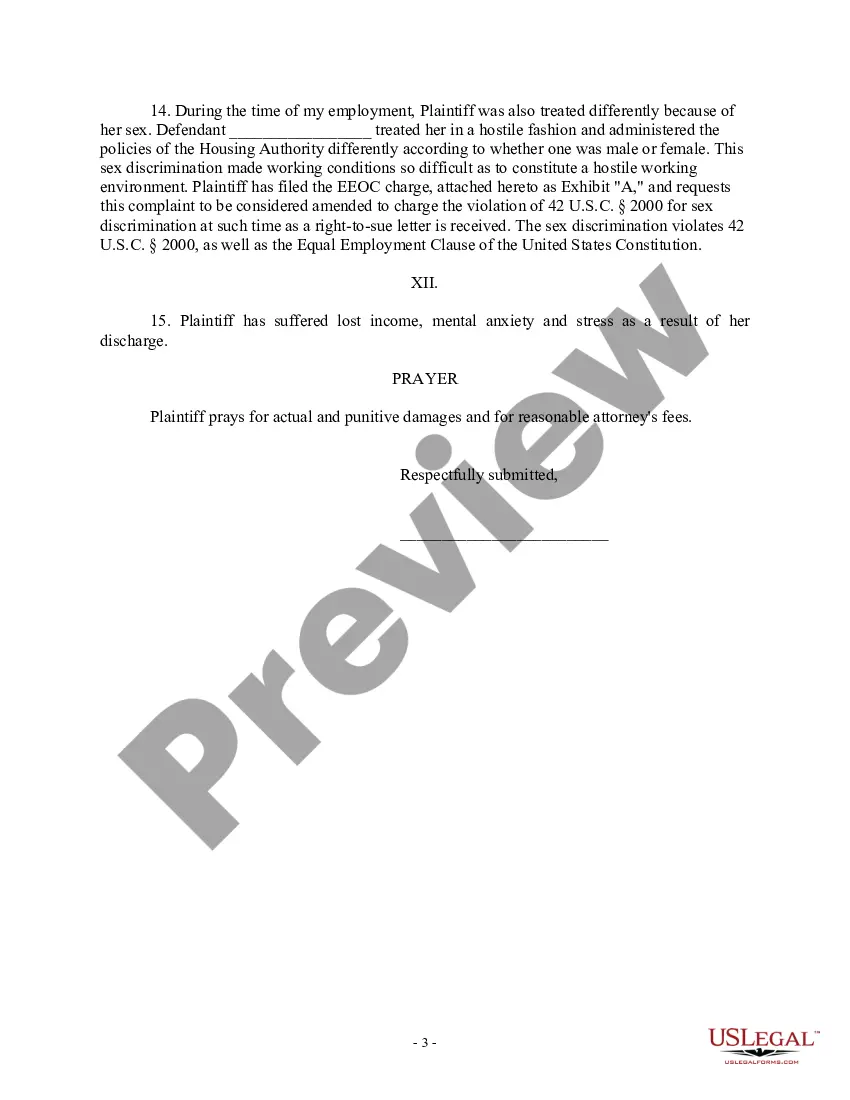
- Factual background regarding the employment relationship and circumstances of termination.
- Claims of constitutional violations under the First and Fourteenth Amendments.
- Details about retaliation for reporting illegal activities.
- Requests for damages and attorney's fees.
- Jury trial demand for pursuing civil rights claims.





Situations where this form applies
You should use this form if you believe you have been unlawfully terminated from your job, particularly if the termination was related to your gender or if it occurred after you reported illegal conduct by your employer. It is also applicable if you wish to assert your rights under the First Amendment, especially concerning adverse employment actions taken against you for whistleblowing or exercising free speech within the workplace.
Who this form is for
- Individuals who have experienced wrongful termination related to civil rights violations.
- Employees who have been subjected to discriminatory treatment based on gender.
- Whistleblowers who reported illegal acts by their employers and faced retaliation.
- Anyone seeking to formally file a complaint in federal court regarding civil rights issues in employment.
How to prepare this document
- Enter the court details, including district and division information at the top of the form.
- Fill in your name and address as the plaintiff, along with the defendant's identification.
- Clearly state the facts surrounding your employment and termination in the designated sections.
- Outline the specific constitutional violations you are claiming, citing applicable amendments.
- Include any relevant details about your reports to authorities regarding illegal activities.
- Sign and date the form before submission to the appropriate court.
Notarization requirements for this form
Notarization is not commonly needed for this form. However, certain documents or local rules may make it necessary. Our notarization service, powered by Notarize, allows you to finalize it securely online anytime, day or night.
Get your form ready online
Our built-in tools help you complete, sign, share, and store your documents in one place.
Make edits, fill in missing information, and update formatting in US Legal Forms—just like you would in MS Word.
Download a copy, print it, send it by email, or mail it via USPS—whatever works best for your next step.
Sign and collect signatures with our SignNow integration. Send to multiple recipients, set reminders, and more. Go Premium to unlock E-Sign.
If this form requires notarization, complete it online through a secure video call—no need to meet a notary in person or wait for an appointment.
We protect your documents and personal data by following strict security and privacy standards.

Make edits, fill in missing information, and update formatting in US Legal Forms—just like you would in MS Word.

Download a copy, print it, send it by email, or mail it via USPS—whatever works best for your next step.

Sign and collect signatures with our SignNow integration. Send to multiple recipients, set reminders, and more. Go Premium to unlock E-Sign.

If this form requires notarization, complete it online through a secure video call—no need to meet a notary in person or wait for an appointment.

We protect your documents and personal data by following strict security and privacy standards.
Typical mistakes to avoid
- Failing to provide complete and accurate details about the defendants.
- Omitting critical facts regarding the employment situation and termination.
- Not citing the specific laws and amendments that support the claims.
- Neglecting to include a jury trial demand if desired.
Why use this form online
- Convenient access to legally vetted, downloadable legal forms.
- Edit and fill out the form at your own pace, ensuring accuracy.
- Reliable templates that are tailored to comply with federal civil rights laws.
Legal use & context
- Filing this complaint can initiate legal proceedings to redress violations of civil rights.
- The U.S. Constitution provides a framework for challenging unlawful employment practices.
- Understanding the legal context helps in effectively presenting your case, improving chances of a successful outcome.
Key takeaways
- This form is essential for individuals claiming violations of their civil rights in the workplace.
- It addresses both wrongful discharge and discrimination, allowing for a comprehensive approach to pursuing justice.
- Accurate completion is crucial for a successful lawsuit; vigilance in detail will strengthen your case.
Looking for another form?
Form popularity
FAQ
The 14th Amendment to the U.S. Constitution, ratified in 1868, granted citizenship to all persons born or naturalized in the United Statesincluding former enslaved peopleand guaranteed all citizens equal protection of the laws. One of three amendments passed during the Reconstruction era to abolish slavery and
In 1954, sixty years after Plessy v. Ferguson, the Supreme Court ruled unanimously in Brown v. Board of Education that separate but equal was unconstitutional under the Equal Protection Clause of the Fourteenth Amendment.
In Brown v. Board of Education of Topeka in 1954, the court decided that separate educational facilities are inherently unequal, and thus violated the Equal Protection Clause of the 14th Amendment. The ruling overturned Plessy and forced desegregation.
By this definition, the framers of the Fourteenth Amendment failed, because though African Americans were granted the legal rights to act as full citizens, they could not do so without fear for their lives and those of their family.
No Person shall be a Senator or Representative in Congress, or elector of President and Vice-President, or hold any office, civil or military, under the United States, or under any State, who, having previously taken an oath, as a member of Congress, or as an officer of the United States, or as a member of any State
1954High Court Strikes Down School Segregation In a unanimous decision, the U.S. Supreme Court overturns its 1896 ruling in Plessy v. Ferguson that separate but equal is constitutional and rules that segregation is a violation of the Fourteenth Amendment's equal protection clause. In Brown v.
Congress passed the 14th Amendment to the Constitution, ratified in 1868, to extend the rights of citizenship to freedmen. The amendment, however, only included whites and African Americans as legal citizens.
Amendment XIV, Section 3 prohibits any person who had gone to war against the union or given aid and comfort to the nation's enemies from running for federal or state office, unless Congress by a two-thirds vote specifically permitted it.
Passed by the Senate on June 8, 1866, and ratified two years later, on July 9, 1868, the Fourteenth Amendment granted citizenship to all persons "born or naturalized in the United States," including formerly enslaved people, and provided all citizens with equal protection under the laws, extending the provisions of