Texas Letter from Landlord to Tenant as Notice to Tenant of Tenant's Disturbance of Neighbors' Peaceful Enjoyment to Remedy or Lease Terminates
What this document covers
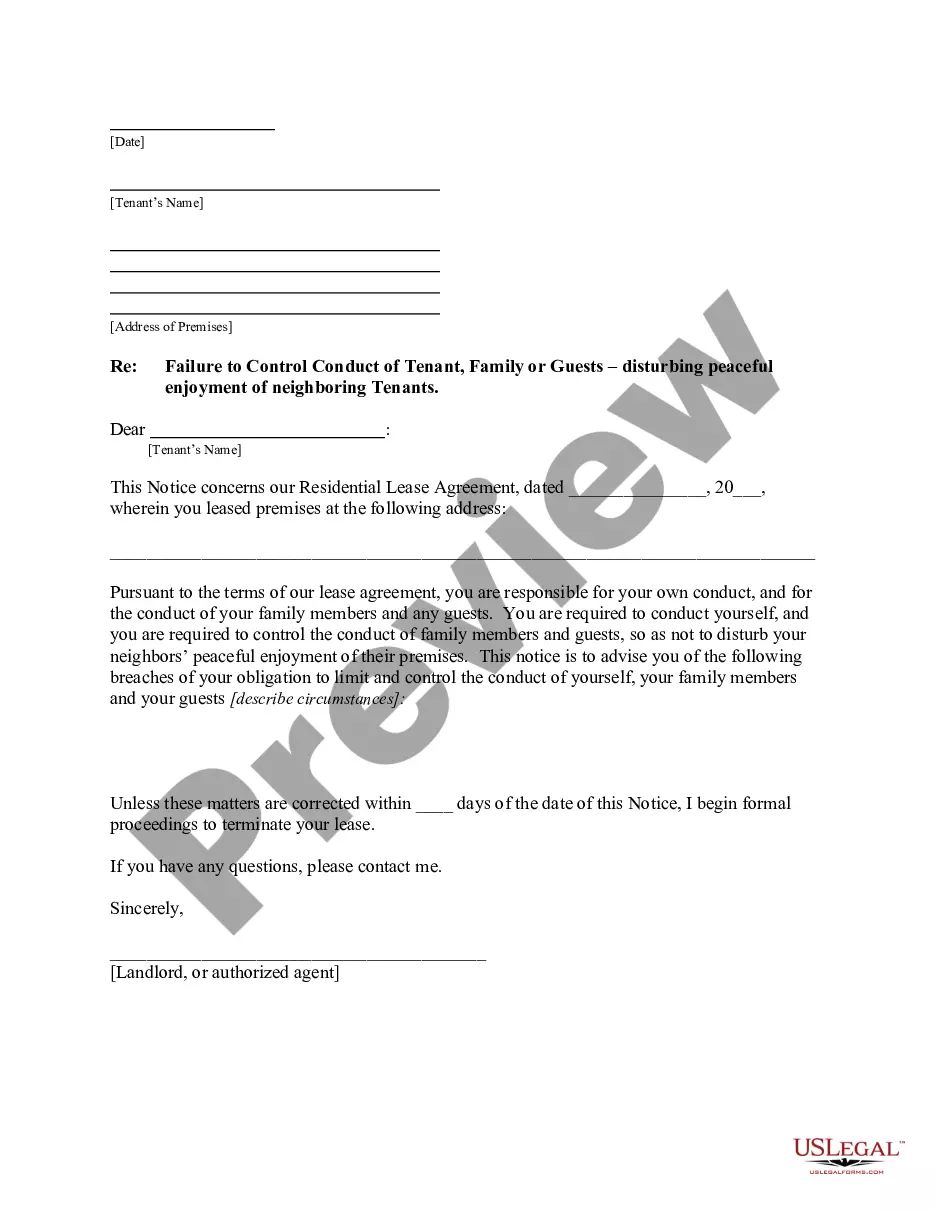
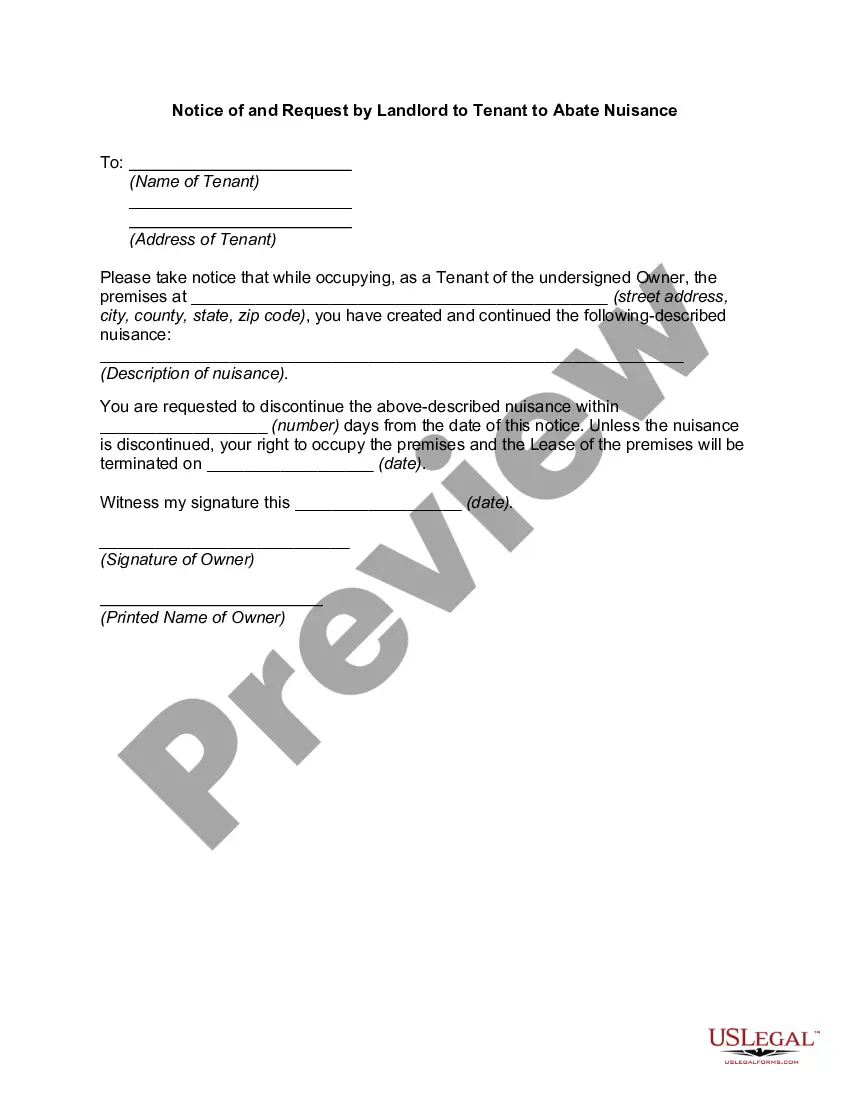
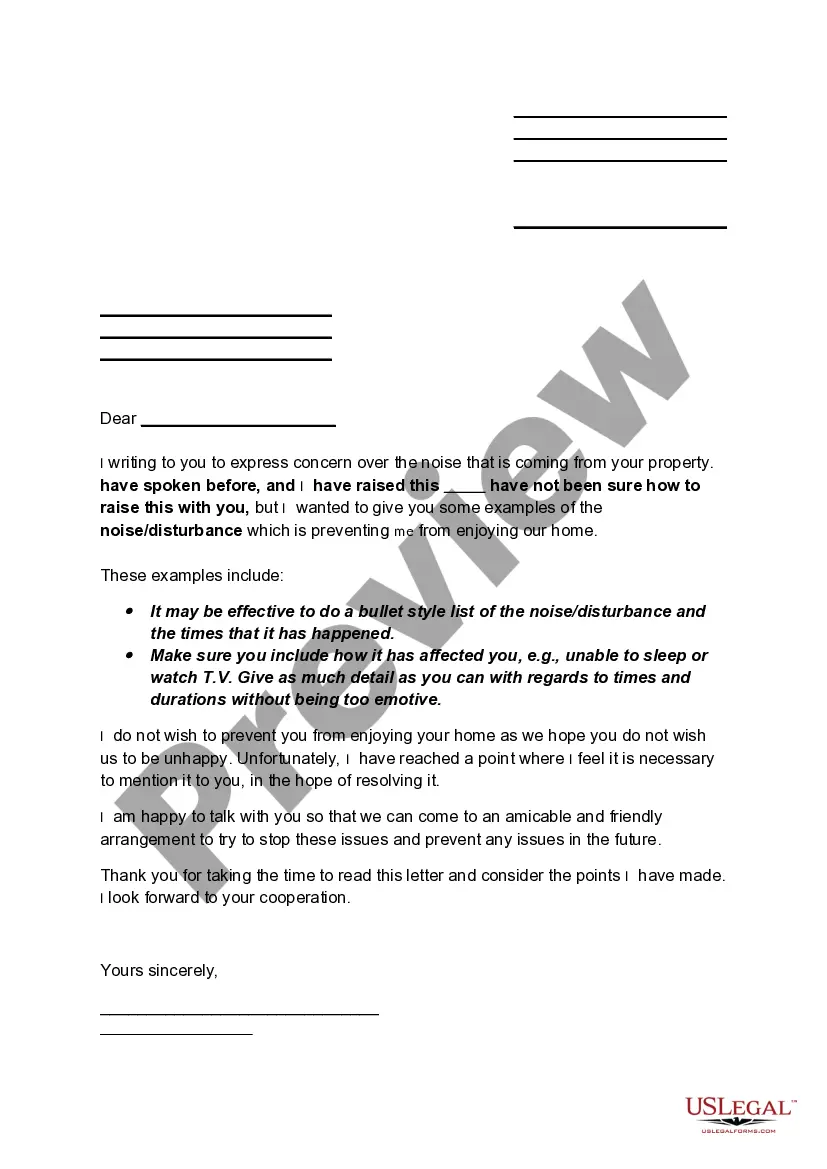
This Letter from Landlord to Tenant as Notice to Tenant of Tenant's Disturbance of Neighbors' Peaceful Enjoyment is a formal notification from a landlord to a tenant. It addresses breaches of the tenant's responsibility to maintain a peaceful living environment for other residents. The primary purpose of this form is to inform the tenant that their actions, or those of their guests, are impacting the quiet and peaceful enjoyment of neighboring tenants. Unlike other notices, this form specifically emphasizes the requirement for tenants to remedy their disruptive behavior or face potential lease termination.
Key components of this form
- Identification of the landlord and tenant involved
- Description of the specific disturbances affecting neighbors
- A clear request for the tenant to remedy the situation
- Consequences of failing to rectify the disturbances
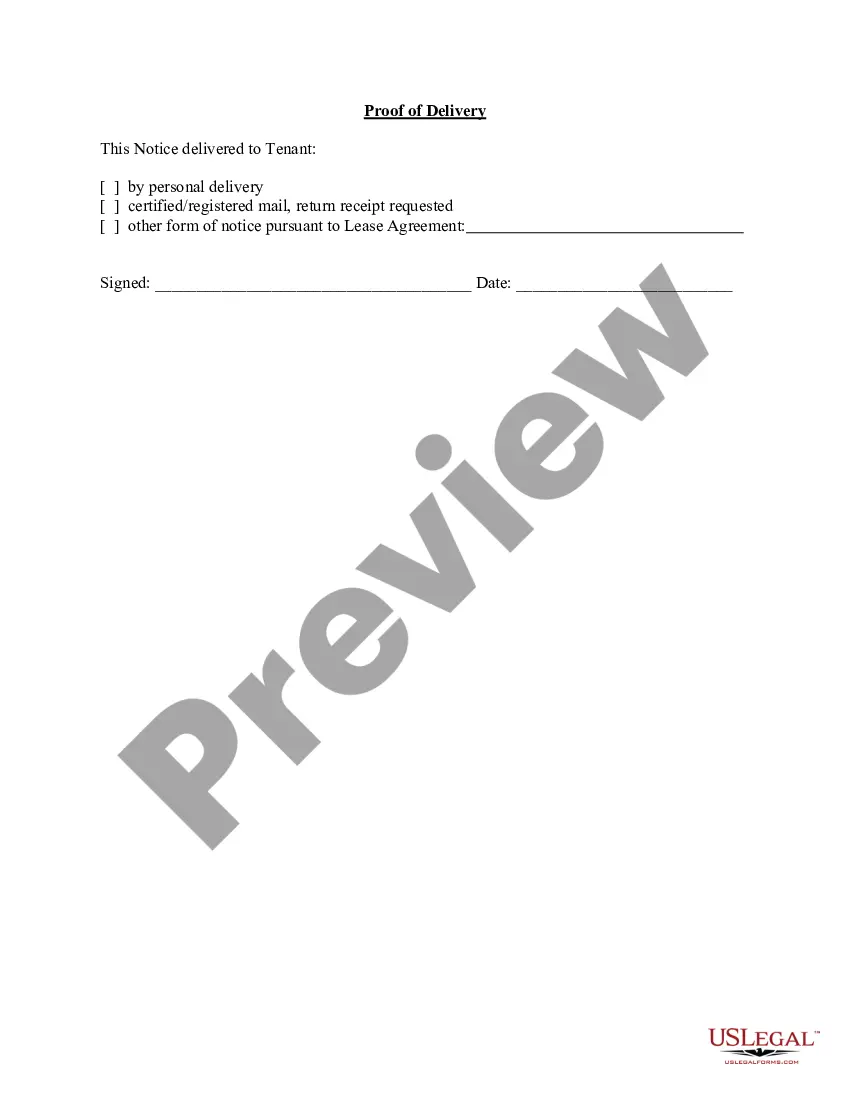
- Proof of delivery confirmation methods


Common use cases
This form should be used when a landlord needs to formally notify a tenant about disturbances caused by their conduct or that of their guests. Common scenarios include excessive noise, disruptive parties, or other actions that significantly affect the rights of neighbors to enjoy their living space peacefully. It is essential for the landlord to issue this notice before taking further action, such as initiating lease termination procedures or evictions.
Who should use this form
This form is suitable for:
- Landlords who manage rental properties
- Property managers acting on behalf of landlords
- Tenants who need to be informed about their responsibilities
- Legal representatives assisting in eviction or lease disputes
How to complete this form
- Identify the parties involved, including landlord and tenant names.
- Clearly state the specific instances of disturbance affecting neighbors.
- Specify the actions required for the tenant to remedy the situation.
- Include the consequences of inaction, such as lease termination.
- Sign and date the notice, and choose a delivery method.
Notarization requirements for this form
This form does not typically require notarization unless specified by local law. However, ensuring proper delivery and documentation is crucial for enforceability.
Get your form ready online
Our built-in tools help you complete, sign, share, and store your documents in one place.
Make edits, fill in missing information, and update formatting in US Legal Forms—just like you would in MS Word.
Download a copy, print it, send it by email, or mail it via USPS—whatever works best for your next step.
Sign and collect signatures with our SignNow integration. Send to multiple recipients, set reminders, and more. Go Premium to unlock E-Sign.
If this form requires notarization, complete it online through a secure video call—no need to meet a notary in person or wait for an appointment.
We protect your documents and personal data by following strict security and privacy standards.

Make edits, fill in missing information, and update formatting in US Legal Forms—just like you would in MS Word.

Download a copy, print it, send it by email, or mail it via USPS—whatever works best for your next step.

Sign and collect signatures with our SignNow integration. Send to multiple recipients, set reminders, and more. Go Premium to unlock E-Sign.

If this form requires notarization, complete it online through a secure video call—no need to meet a notary in person or wait for an appointment.

We protect your documents and personal data by following strict security and privacy standards.
Avoid these common issues
- Not providing specific details about the disturbance.
- Failing to sign or date the notice correctly.
- Neglecting to choose a valid proof of delivery method.
- Using vague language that may not clearly convey the issue.
Benefits of completing this form online
- Convenience of easy access and immediate download.
- Templates are drafted by licensed attorneys for reliability.
- Editable format allows landlords to customize the letter as needed.
- Suitable for both experienced landlords and those with limited legal background.
Looking for another form?




Form popularity
FAQ
According to Nolo, quiet enjoyment is The right of a property owner or tenant to enjoy his or her property without interference. Disruption of quiet enjoyment may constitute a legal nuisance.
According to Nolo, quiet enjoyment is The right of a property owner or tenant to enjoy his or her property without interference.Leases and rental agreements often contain a covenant of quiet enjoyment, expressly obligating the landlord to ensure that tenants live undisturbed.
A 'quiet enjoyment letter' is typically an undertaking from a ship's lenders or mortgagee establishing a direct relationship between the mortgagee and the charterer, pursuant to which the relevant mortgagee undertakes not to enforce its rights or security against the ship, provided that the charterer continues to
A covenant of quiet enjoyment insures an owner or tenant against a disturbance of his or her right to possess or use property. For example, a covenant of quiet enjoyment could prevent a tenant from being evicted by a person with superior title.
A Covenant that promises that the grantee or tenant of an estate in real property will be able to possess the premises in peace, without disturbance by hostile claimants. Quiet enjoyment is a right to the undisturbed use and enjoyment of real property by a tenant or landowner.
The covenant of quiet enjoyment states that a tenant has the right to enjoy his or her rental unit without substantial interference from the landlord. It ensures that tenants benefit from the full use and enjoyment of their rental unit.
A COVENANT that promises that the grantee or tenant of an estate in real property will be able to possess the premises in peace, without disturbance by hostile claimants. Quiet enjoyment is a right to the undisturbed use and enjoyment of real property by a tenant or landowner.
Under common law tenants have a right to 'quiet enjoyment' of the property. This is an implied term, or covenant, which has been expressed or implied in conveyances and leases of English land for centuries.'Quiet enjoyment' is a term so often misunderstood.