Tennessee Warning of Default on Residential Lease
Overview of this form
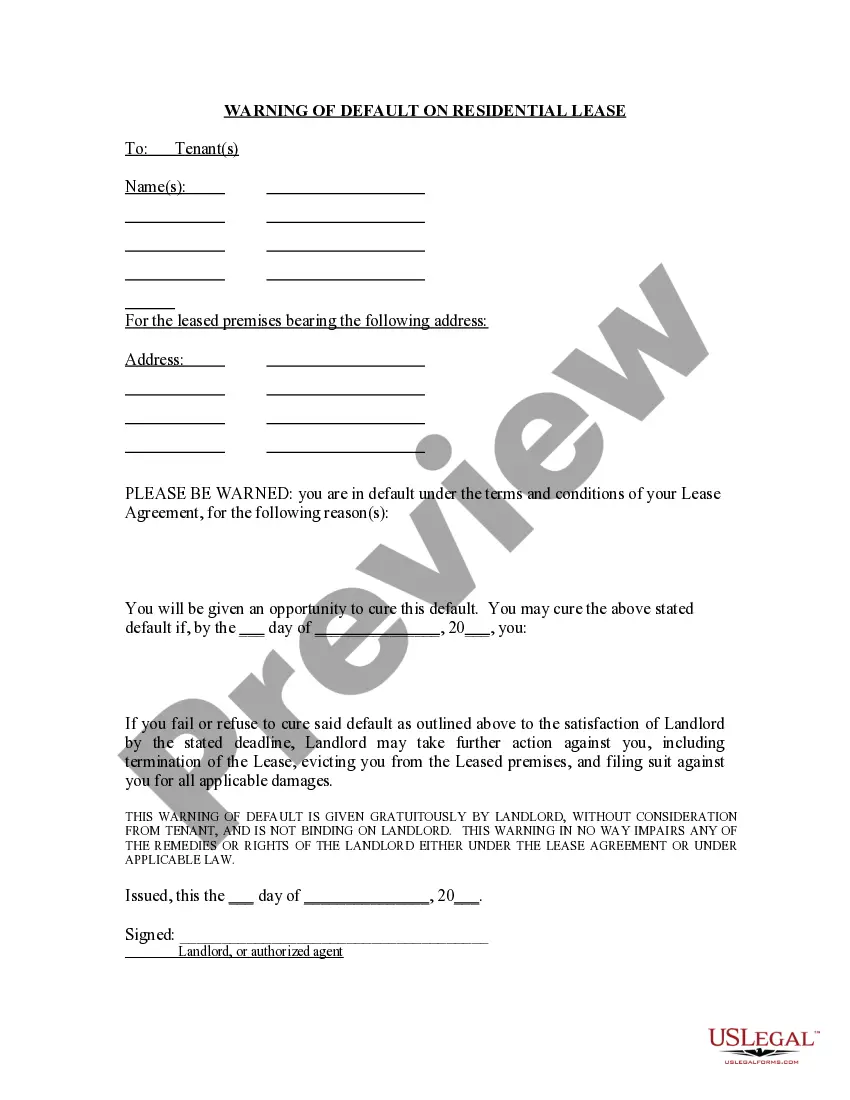
The Warning of Default on Residential Lease is a letter issued by a landlord to a tenant. Its purpose is to notify tenants about potential default under their lease agreement due to specific issues that require attention. This form is essential for clearly communicating expectations and serves as a formal notice, differentiating it from less formal communications regarding lease defaults.
What’s included in this form
- Date of issuance
- Landlord's signature or authorized agent's signature
- Statement clarifying that the warning is gratuitous and not binding on the landlord
- Details of the tenant's obligations that need remedy



Common use cases
This form should be used when a landlord identifies that a tenant is not complying with the terms of their residential lease, such as failing to pay rent or neglecting property maintenance. It serves as a preliminary notice that signals the need for corrective action to avoid legal repercussions and helps maintain open communication between parties.
Who this form is for
- Landlords seeking to formally notify tenants of lease violations
- Property managers managing rental agreements on behalf of landlords
- Tenants wishing to understand their obligations under a lease
Instructions for completing this form
- Identify and fill in the date of issuance.
- Provide the landlord's name or authorized agent's name where indicated.
- If applicable, specify the conditions the tenant must remedy to avoid default.
- Ensure all required signatures are completed.
- Keep a copy for your records and provide a copy to the tenant.
Notarization requirements for this form
This form does not typically require notarization unless specified by local law. It is designed for straightforward communication between the landlord and tenant regarding lease compliance.
Get your form ready online
Our built-in tools help you complete, sign, share, and store your documents in one place.
Make edits, fill in missing information, and update formatting in US Legal Forms—just like you would in MS Word.
Download a copy, print it, send it by email, or mail it via USPS—whatever works best for your next step.
Sign and collect signatures with our SignNow integration. Send to multiple recipients, set reminders, and more. Go Premium to unlock E-Sign.
If this form requires notarization, complete it online through a secure video call—no need to meet a notary in person or wait for an appointment.
We protect your documents and personal data by following strict security and privacy standards.

Make edits, fill in missing information, and update formatting in US Legal Forms—just like you would in MS Word.

Download a copy, print it, send it by email, or mail it via USPS—whatever works best for your next step.

Sign and collect signatures with our SignNow integration. Send to multiple recipients, set reminders, and more. Go Premium to unlock E-Sign.

If this form requires notarization, complete it online through a secure video call—no need to meet a notary in person or wait for an appointment.

We protect your documents and personal data by following strict security and privacy standards.
Mistakes to watch out for
- Failing to deliver the notice properly to the tenant.
- Omitting necessary details about the lease violations.
- Not signing the form or leaving signature fields blank.
Why use this form online
- Convenient access to a legally compliant form that can be completed anytime.
- Edit and customize the form easily to suit your specific situation.
- Reliable templates drafted by licensed attorneys help ensure accuracy.
Legal use & context
This form provides a clear record of the landlord's notification to the tenant regarding defaults, which can be important in legal proceedings if disputes arise later. It establishes the landlord's position prior to taking further action, such as eviction.
Quick recap
- The Warning of Default on Residential Lease is crucial for maintaining communication between landlords and tenants.
- It provides tenants with an opportunity to correct violations before further action is taken.
- Completing the form accurately is essential for legal enforceability.
Looking for another form?


Form popularity
FAQ
You are responsible for: paying your rent on time, paying any late fees, keeping the place clean and safe, not letting anyone else damage it, not breaking the law, disposing of your garbage, and following your landlord's rules. If you break your lease, then it may become a legal issue.
Landlords are prohibited from harassing or retaliating against tenants who exercise their legal rights. In Tennessee, the landlord must not terminate, refuse to renew a lease, or fine a tenant for complaining to the landlord regarding the deposit, complaining to a government agency, or exercising a legal right.
Notice Requirements for Tennessee Landlords A landlord can simply give you a written notice to move, allowing you 30 days as required by Tennessee law and specifying the date on which your tenancy will end.
Tenants also have certain rights under federal, state, and some local laws. These include the right to not be discriminated against, the right to a habitable home, and the right to not be charged more for a security deposit than is allowed by state law, to name just a few.
Title 66 - Property. Chapter 28 - Uniform Residential Landlord and Tenant Act. (b) The landlord may enter the premises without consent of the tenant in case of emergency.
Tennessee definitely landlord friendly. If you have the tenant waive their right to the whole legislative eviction process, which you can legally do, you can put them out real fast after the legal grace period (5 business days).
The first thing a landlord must do is provide the tenant with a written notice that an eviction will occur in 30 days if the tenant does not comply with the terms of the lease within 14 days. This notice is required by T.C.A. Section 66-28-505.