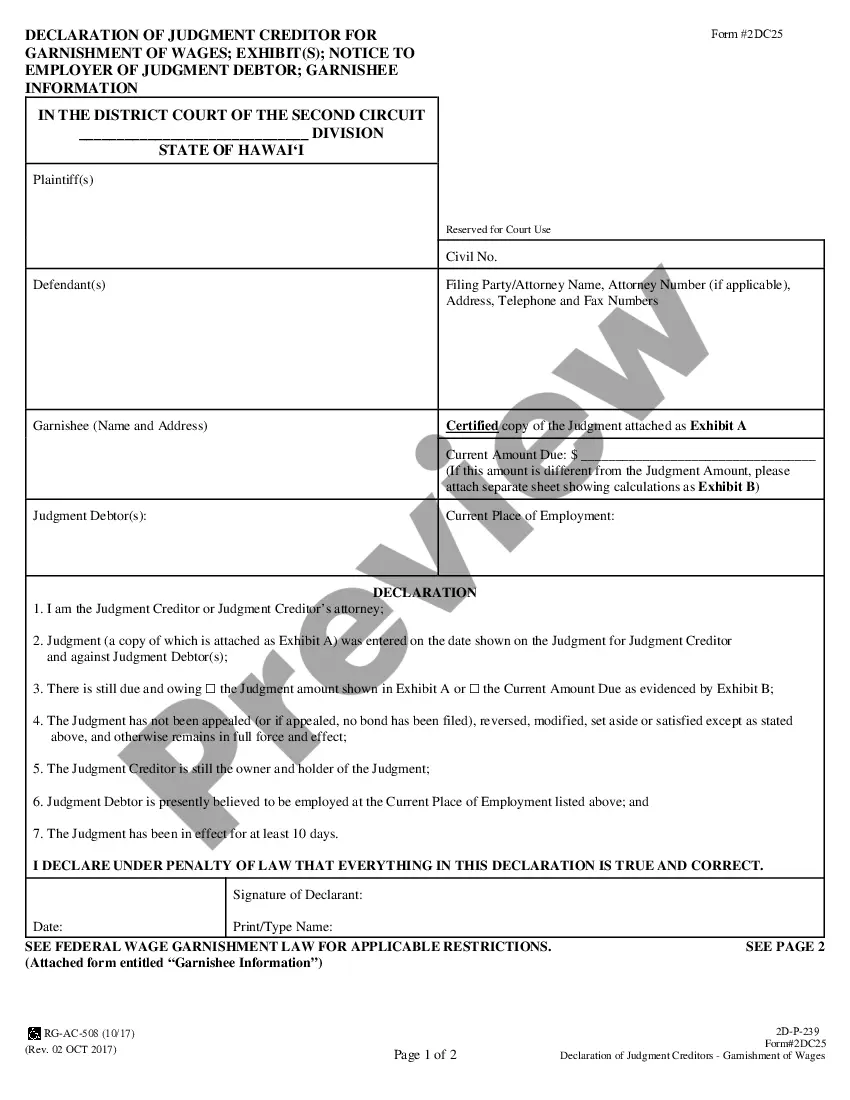
Oregon Ex Parte Status Quo Order
Overview of this form
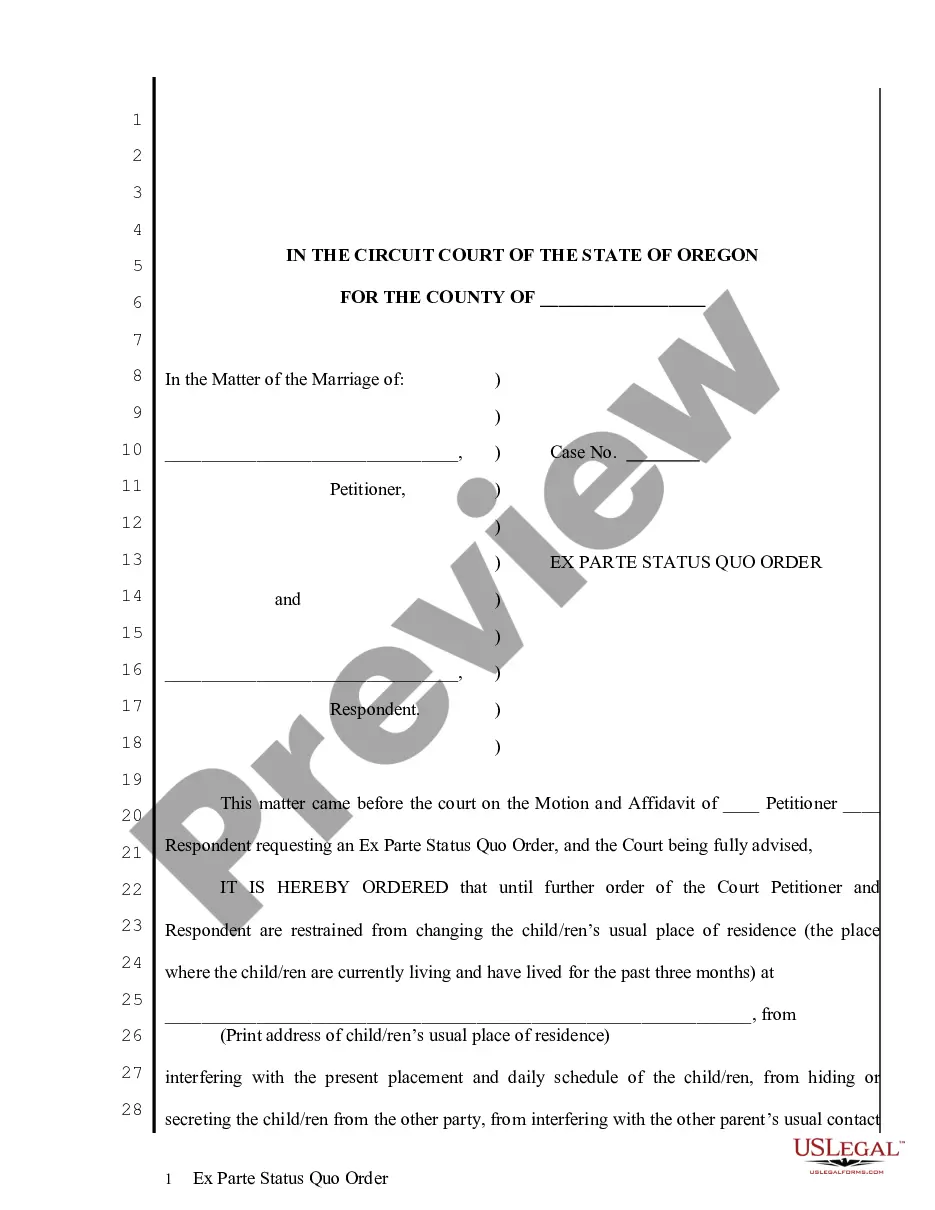
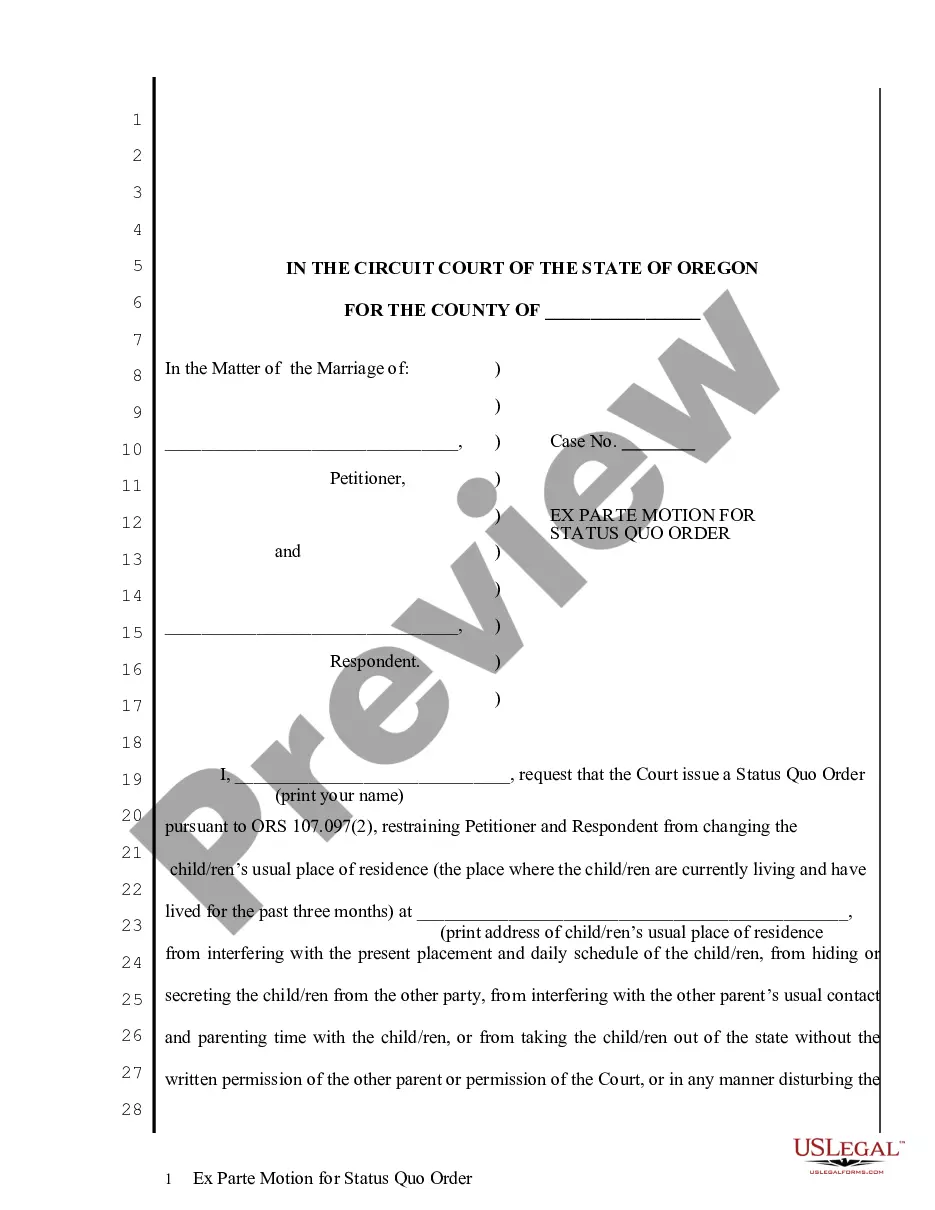
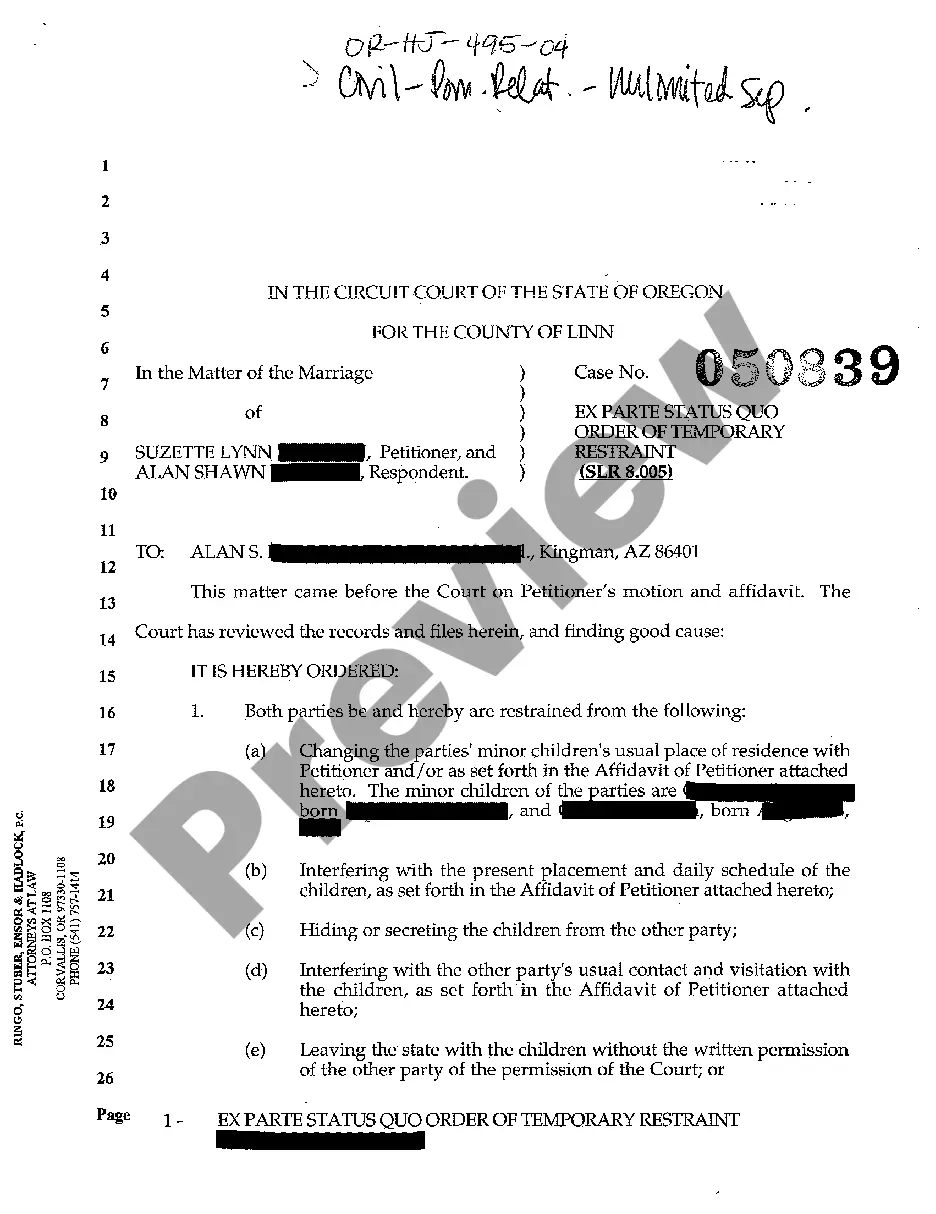
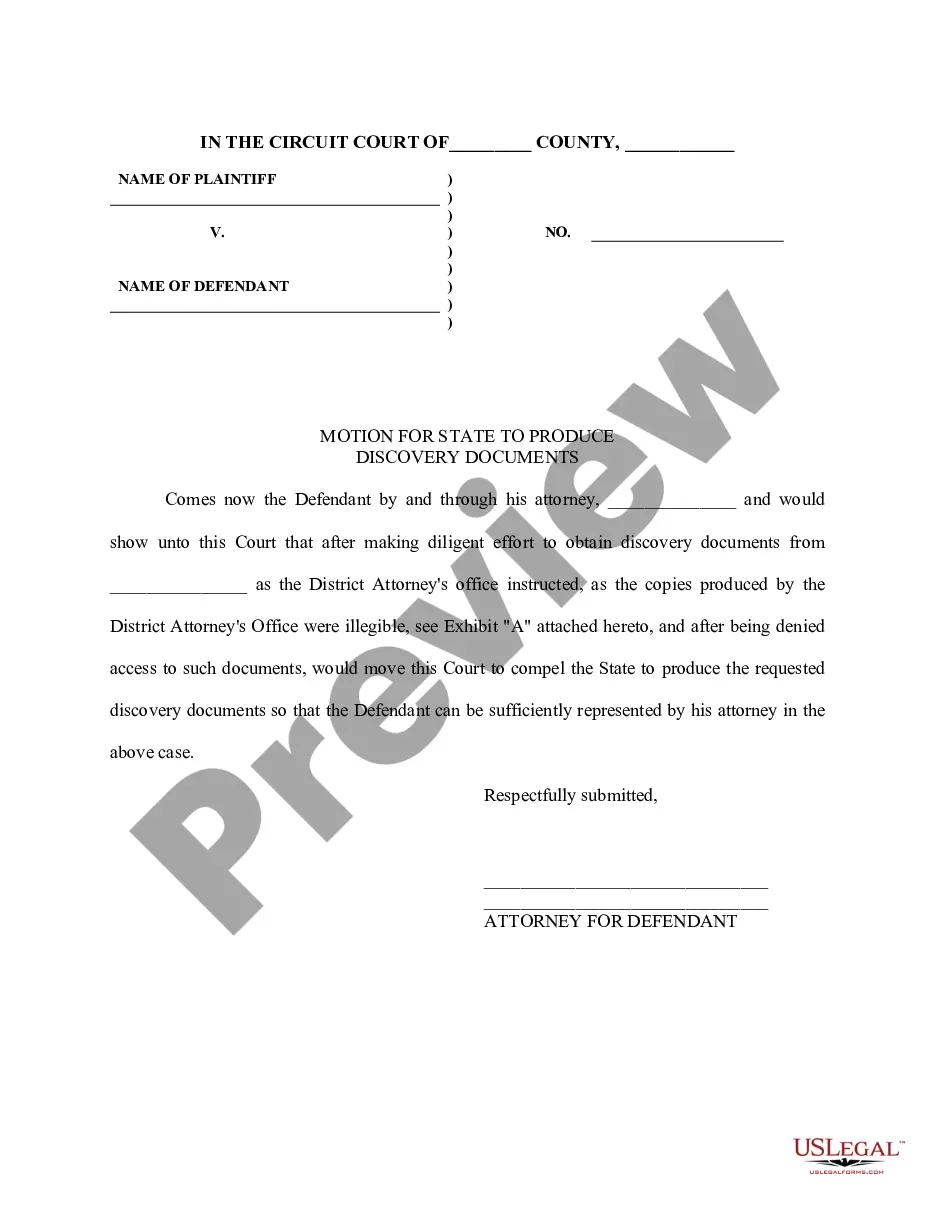
The Ex Parte Status Quo Order is a legal document used in domestic litigation, particularly in Oregon. It serves to maintain the current living situation and daily routine of children involved in custody disputes until a formal custody arrangement is established. This form is distinct because it allows for immediate court intervention without the need for both parties to be present, making it a crucial tool for protecting children during sensitive legal proceedings.
What’s included in this form
- Case information, including the names and case number of the parties involved.
- Restrictions on changing the child's residence, daily schedule, or hiding the child from the other parent.
- Details regarding the childâs usual place of residence.
- Information about the minor children, including their names and birth dates.
- Signature and contact information of the submitting party.


When this form is needed
This form is needed when there is an urgent need to prevent either parent from making significant changes to the custody or location of their children during a pending custody case. It is often employed when one party fears that the other may act without consent or court approval, risking the stability of the childrenâs environment.
Who can use this document
- Parents involved in ongoing custody disputes.
- Individuals seeking immediate legal protection for their children during litigation.
- Petitioners or respondents in a domestic violence situation impacting parenting.
Instructions for completing this form
- Enter the case information at the top, including names and case number.
- Specify the child's usual place of residence, including the complete address.
- List the names and birth dates of all minor children involved.
- Indicate who is submitting the form by selecting either Petitioner or Respondent.
- Sign and date the form, providing contact information.
Does this form need to be notarized?
In most cases, this form does not require notarization. However, some jurisdictions or signing circumstances might. US Legal Forms offers online notarization powered by Notarize, accessible 24/7 for a quick, remote process.
Get your form ready online
Our built-in tools help you complete, sign, share, and store your documents in one place.
Make edits, fill in missing information, and update formatting in US Legal Forms—just like you would in MS Word.
Download a copy, print it, send it by email, or mail it via USPS—whatever works best for your next step.
Sign and collect signatures with our SignNow integration. Send to multiple recipients, set reminders, and more. Go Premium to unlock E-Sign.
If this form requires notarization, complete it online through a secure video call—no need to meet a notary in person or wait for an appointment.
We protect your documents and personal data by following strict security and privacy standards.

Make edits, fill in missing information, and update formatting in US Legal Forms—just like you would in MS Word.

Download a copy, print it, send it by email, or mail it via USPS—whatever works best for your next step.

Sign and collect signatures with our SignNow integration. Send to multiple recipients, set reminders, and more. Go Premium to unlock E-Sign.

If this form requires notarization, complete it online through a secure video call—no need to meet a notary in person or wait for an appointment.

We protect your documents and personal data by following strict security and privacy standards.
Common mistakes
- Failing to provide complete and accurate information about the children's residence.
- Not specifying all minor children when listing their names and birth dates.
- Submitting the form without the necessary signatures.
- Neglecting to attach any required supporting documents or affidavits.
Benefits of using this form online
- Convenience of downloading and filling out the form from home.
- Editability allows for easy adjustments before final submission.
- Access to professionally drafted forms ensures legal accuracy.
Legal use & context
- The Ex Parte Status Quo Order serves to protect the current living arrangements of minor children during custody proceedings.
- This form is enforceable upon judicial approval, maintaining its authority in legal matters concerning child custody and visitation.
Main things to remember
- The Ex Parte Status Quo Order is crucial for protecting children's current living arrangements during custody disputes.
- This form requires careful completion, especially regarding children's details and signatures.
- It is specific to the state of Oregon and adheres to local laws.
Looking for another form?


Form popularity
FAQ
The state of things; the way things are, as opposed to the way they could be; the existing state of affairs. The definition of status quo is the current political or social conditions. An example of status quo is that the U.S. government is in debt. An example of status quo is the common sense of a period of time.
Definition of STATUS QUO.Basically status quo is ordered to prevent the third party interests in the property that is with respect to leasing, selling, mortgaging, gifting, willing or any acts which is done to transfer the interest in the property under the Transfer of property act.
Therefore Status quo does not mean that whatever mesne profits (i.e profits from the property) a person is deriving is to be stopped as status quo is not a stay order there is a wide difference between the Status quo and stay order, a stay order compels the person to start or stop any activity, while status quo is
What Happens After the Judge Reviews the Ex Parte Motion? The judge can grant the ex parte motion and issue a temporary order, such as a temporary full custody order or a temporary restraining order. Because the other party was not present, the order is only temporary.
To maintain the status quo is to keep things the way they presently are.The related phrase status quo ante, literally "the state in which before", emphasises "the state of affairs that existed" (previously).
Anyone that has gone through a custody or visitation battle in court, or is about to, may have heard the term status quo. Status quo, in terms of custody and visitation, means the schedule the parties have been following prior to court.
An order that is issued ex parte means that it is issued without prior notice to the other parent, based only on your affidavit/testimony. If the judge issues an emergency ex parte order, the judge will schedule a hearing within 14 days2 and the respondent but be served at least 5 days before that hearing.
: the current situation : the way things are now He's content with the status quo and isn't looking for change.
A Latin term, status quo means 'the existing state of affairs, the way things are.In a legal setting, judges use a status quo orderalso called a temporary protective order of custody and restraintto maintain a situation. This prevents parties involved in affecting change until the matter at hand is resolved.