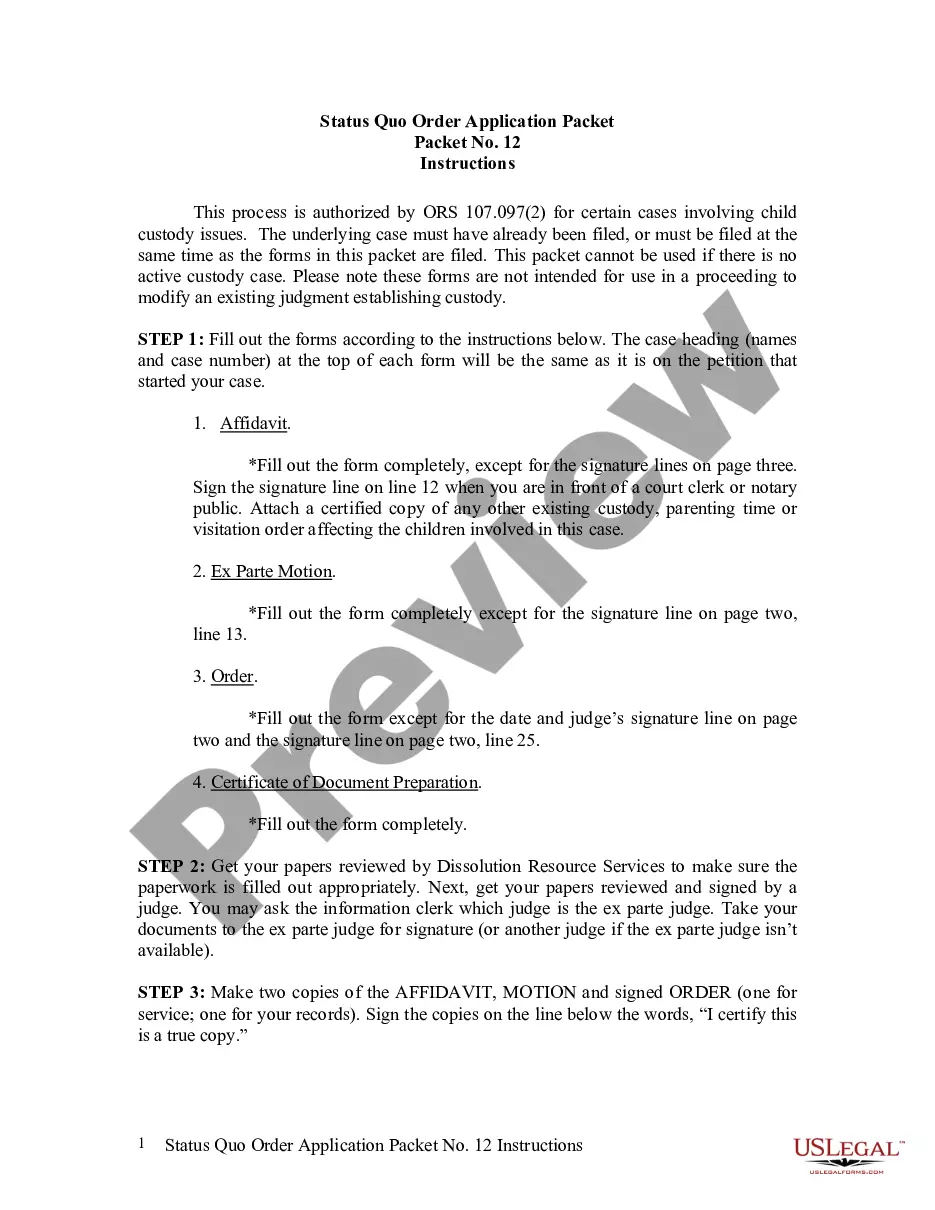
Oregon Status Quo Application Instructions
Understanding this form
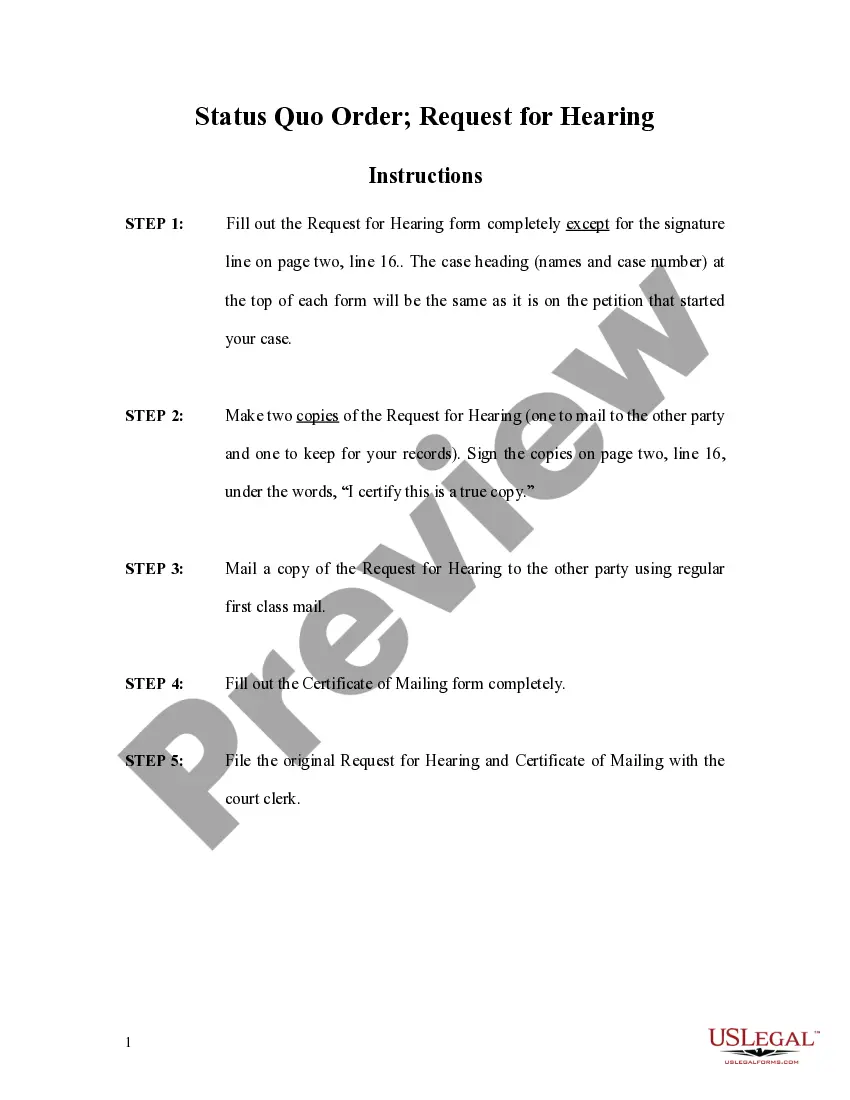
The Status Quo Application Instructions provide guidance for individuals seeking to file a Status Quo Application in Oregon. This legal document is specifically designed for situations where there are ongoing child custody issues. It is important to note that this application cannot modify existing child custody arrangements, differentiating it from other forms related to custody modifications.
Form components explained
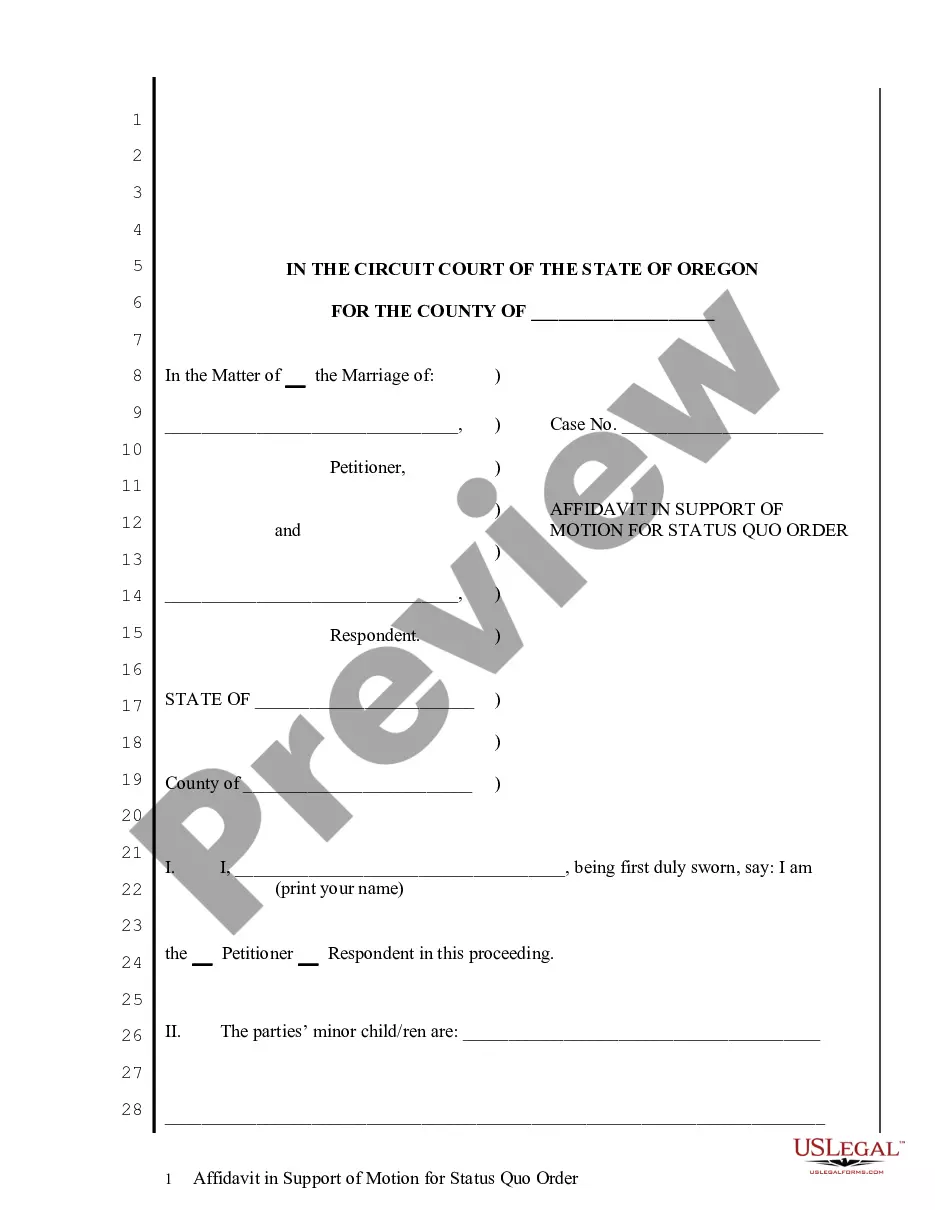
- Affidavit: This form allows you to present your facts regarding custody and parenting time.
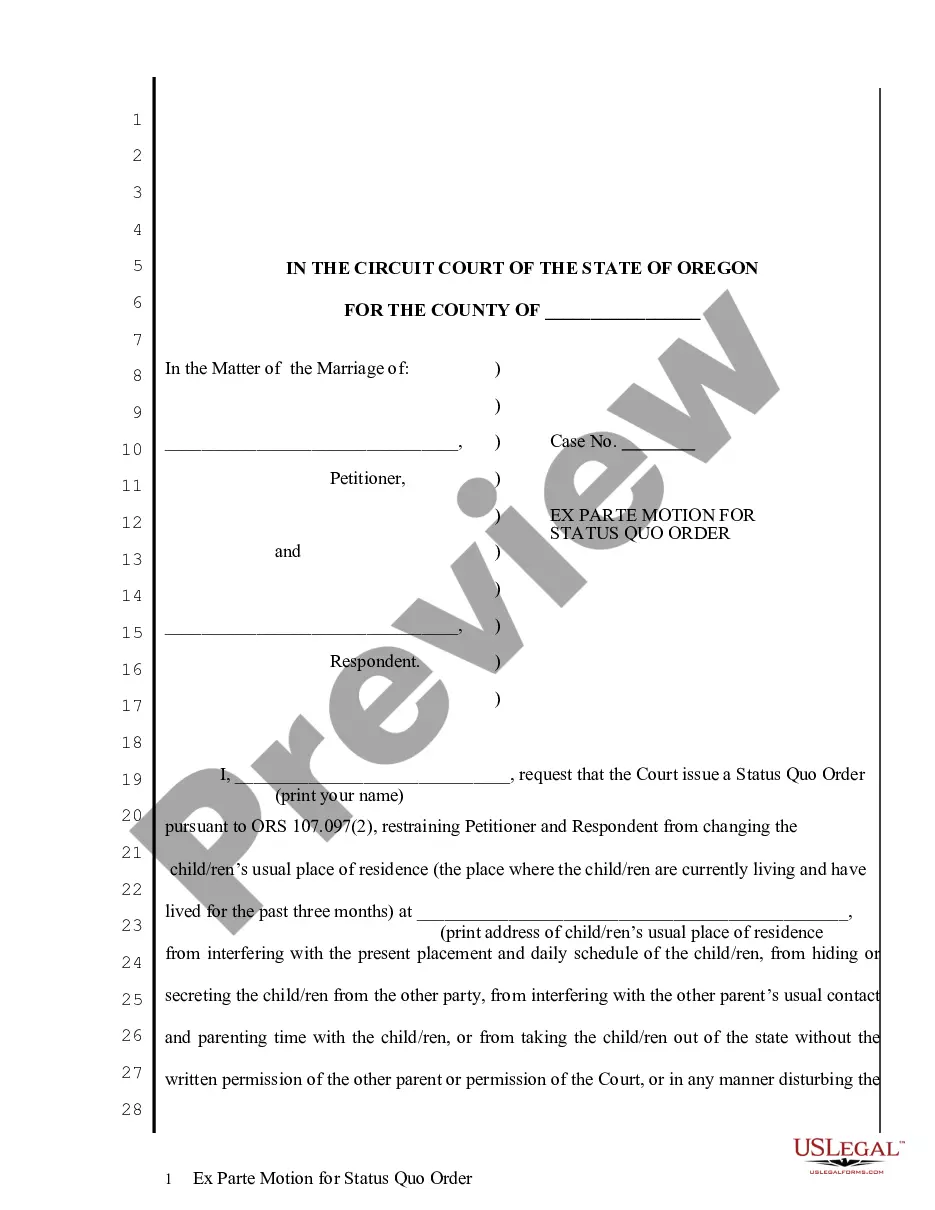
- Ex Parte Motion: A request to expedite the application process without the other party's immediate participation.
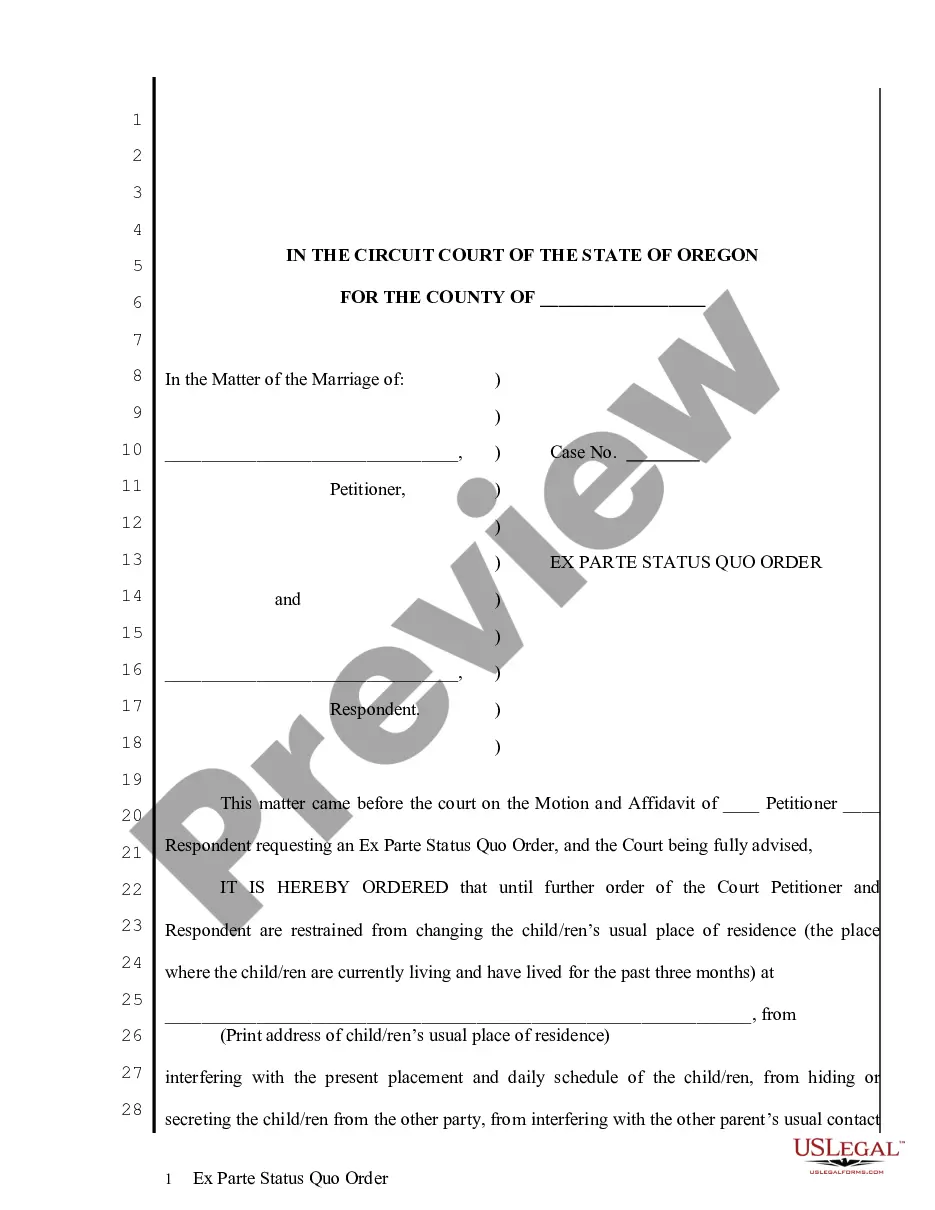
- Order: A document that, once signed by a judge, formalizes the Status Quo directives.
- Certificate of Document Preparation: A declaration affirming that the form was completed correctly.
When this form is needed
This form should be used when there are ongoing child custody issues that require immediate attention. It is essential to file this application when there is an active custody case or when you are filing a new case simultaneously. It is not suitable for modifying existing custody judgments.
Intended users of this form
- Individuals engaged in child custody disputes in Oregon.
- Parties who have already filed or are in the process of filing a custody case.
- Parents or guardians seeking to maintain the current custody status while issues are being resolved.
Instructions for completing this form
- Fill out the Affidavit, leaving the signature lines open until notarized.
- Complete the Ex Parte Motion, except for the signature line.
- Fill in the Order but leave the judge's signature line blank.
- Complete the Certificate of Document Preparation.
- Seek review and signature from a judge on the completed documents.
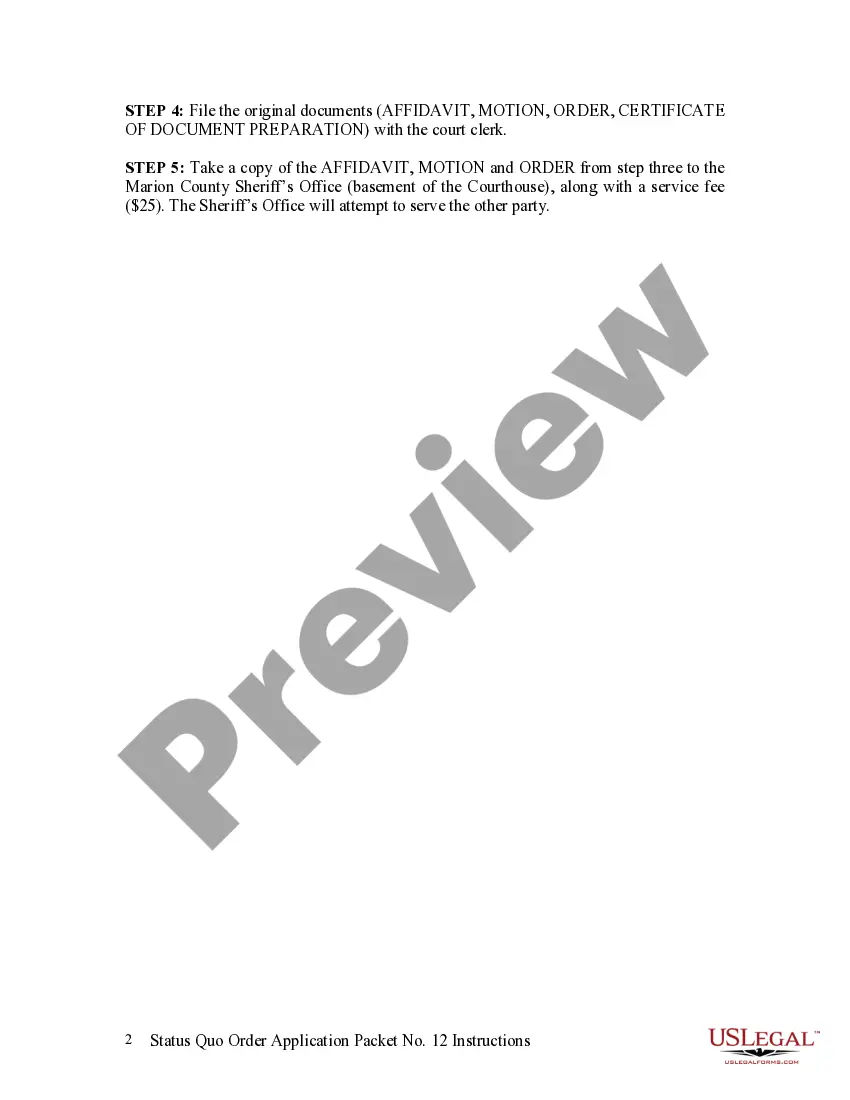
- File the original forms with the court clerk.
Is notarization required?
This form needs to be notarized to ensure legal validity. US Legal Forms provides secure online notarization powered by Notarize, allowing you to complete the process through a verified video call, available anytime.
Get your form ready online
Our built-in tools help you complete, sign, share, and store your documents in one place.
Make edits, fill in missing information, and update formatting in US Legal Forms—just like you would in MS Word.
Download a copy, print it, send it by email, or mail it via USPS—whatever works best for your next step.
Sign and collect signatures with our SignNow integration. Send to multiple recipients, set reminders, and more. Go Premium to unlock E-Sign.
If this form requires notarization, complete it online through a secure video call—no need to meet a notary in person or wait for an appointment.
We protect your documents and personal data by following strict security and privacy standards.

Make edits, fill in missing information, and update formatting in US Legal Forms—just like you would in MS Word.

Download a copy, print it, send it by email, or mail it via USPS—whatever works best for your next step.

Sign and collect signatures with our SignNow integration. Send to multiple recipients, set reminders, and more. Go Premium to unlock E-Sign.

If this form requires notarization, complete it online through a secure video call—no need to meet a notary in person or wait for an appointment.

We protect your documents and personal data by following strict security and privacy standards.
Common mistakes to avoid
- Submitting the application without ensuring an active custody case is in place.
- Forgetting to leave signature lines blank for notarization.
- Missing required attachments, such as certified copies of existing custody orders.
- Failing to obtain timely signatures from a judge.
Benefits of using this form online
- Convenience: Download and complete the form from the comfort of your home.
- Editability: Easily fill out and modify the document as needed before finalizing.
- Reliability: Access forms drafted by licensed attorneys, ensuring compliance with Oregon law.
Main things to remember
- The Status Quo Application Instructions are essential for managing custody disputes in Oregon.
- This form cannot modify custody arrangements but can help maintain the current status.
- It is crucial to adhere to the state's legal requirements when completing and filing this form.
Looking for another form?
Form popularity
FAQ
Legal custody, which means who makes important decisions for your children (like health care, education, and welfare), and. Physical custody, which means who your children live with.
To get an Immediate Danger temporary order, you must file a form called an Ex Parte Motion for Order of Immediate Danger & Temporary Custody and Parenting Time & Declaration in Support.
Quo has been edefined as meaning: "The existing state of things at any given date; e.g., Status quo ante. Supreme Court of India.
Some people think joint custody means the child lives with each parent 50% of the time.A court cannot award joint custody in Oregon unless both parents agree to it. Sole custody in Oregon means that the parent who has custody makes all major decisions regarding the child.
The legal definition of an unfit parent is when the parent through their conduct fails to provide proper guidance, care, or support. Also, if there is abuse, neglect, or substance abuse issues, that parent will be deemed unfit.
Anyone that has gone through a custody or visitation battle in court, or is about to, may have heard the term status quo. Status quo, in terms of custody and visitation, means the schedule the parties have been following prior to court.
A Latin term, status quo means 'the existing state of affairs, the way things are.In a legal setting, judges use a status quo orderalso called a temporary protective order of custody and restraintto maintain a situation. This prevents parties involved in affecting change until the matter at hand is resolved.
Oregon Custody Law Does Not Favor Either Parent Fathers' rights in Oregon are viewed as equal to mothers' rights. Instead, according to Oregon custody law, courts largely base their decisions on what is in the best interests of the child.
To maintain the status quo is to keep things the way they presently are.The related phrase status quo ante, literally "the state in which before", emphasises "the state of affairs that existed" (previously).