Tennessee Notice of Default in Payment of Rent as Warning Prior to Demand to Pay or Terminate for Nonresidential or Commercial Property
About this form
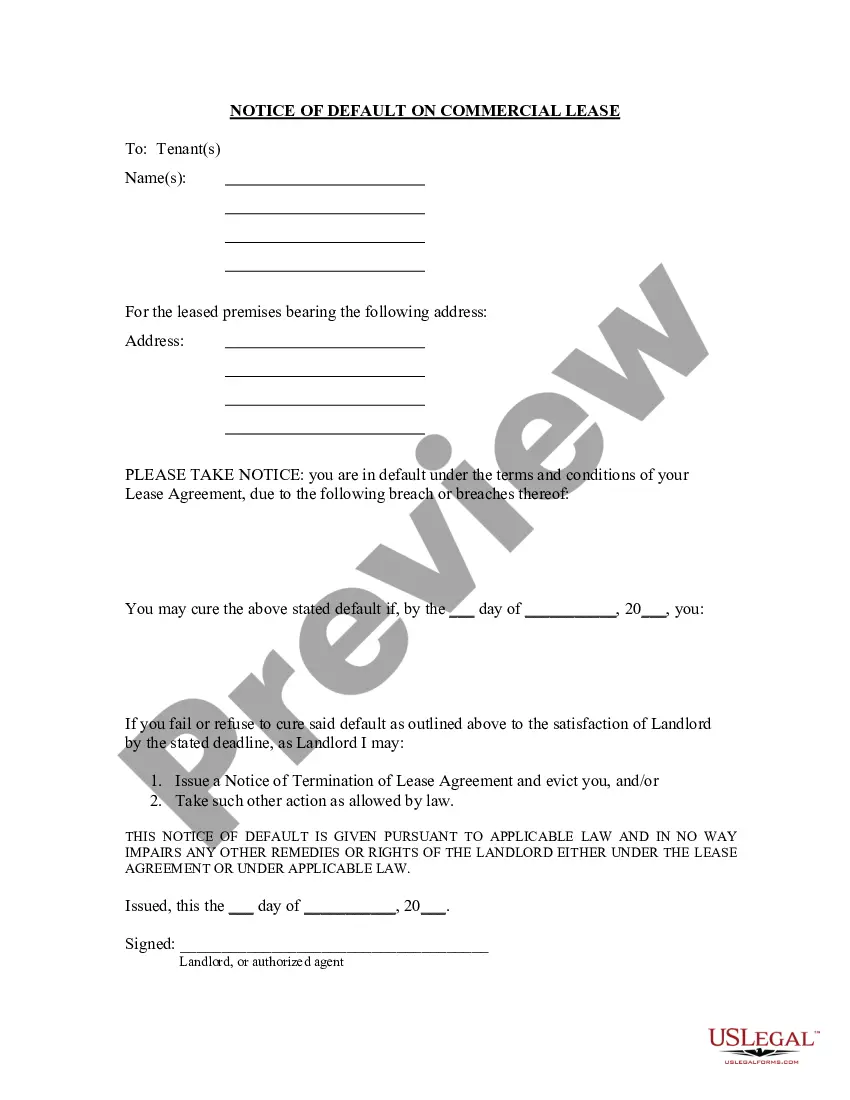
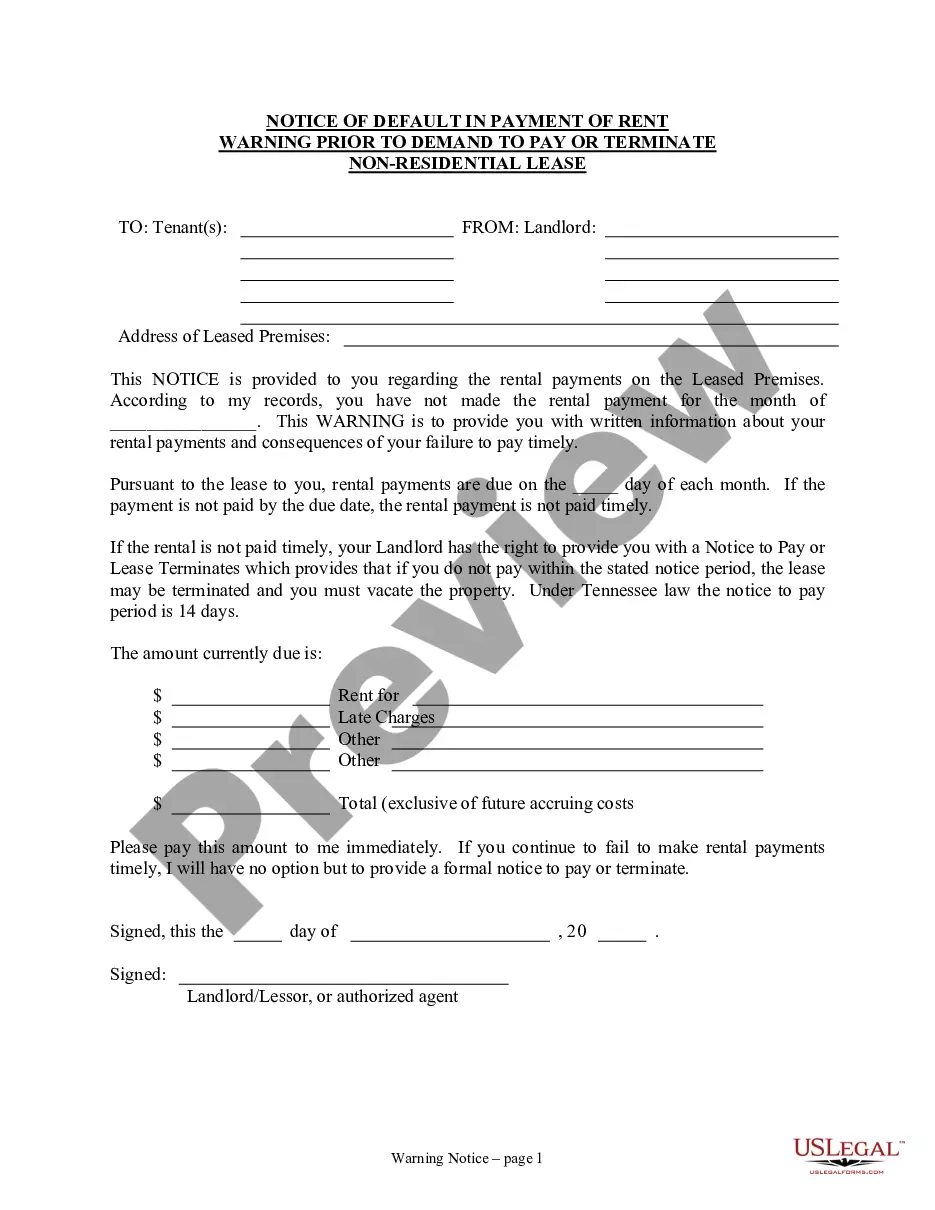
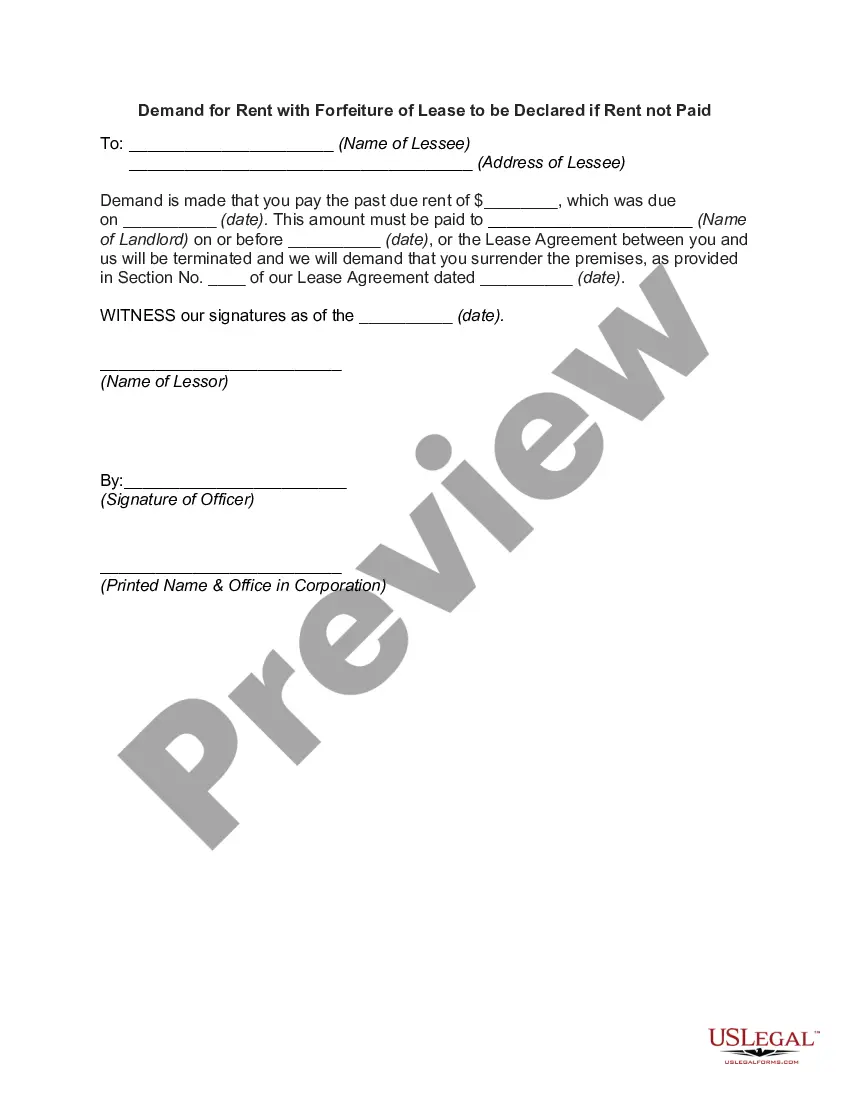
The Notice of Default in Payment of Rent as Warning Prior to Demand to Pay or Terminate for Nonresidential or Commercial Property is a legal document used by landlords to formally notify tenants of their failure to pay rent on time. This notice serves as a warning that the tenant is in default of payment, outlining the payment terms and possible consequences if the rent remains unpaid. Unlike a formal demand to pay or terminate the lease, this notice gives tenants an opportunity to address the issue before further action is taken.
Form components explained
- The date and address of the leased premises.
- A statement outlining the specific month for which rent has not been paid.
- The due date for rental payments according to the lease agreement.
- The total amount due, including late charges if applicable.
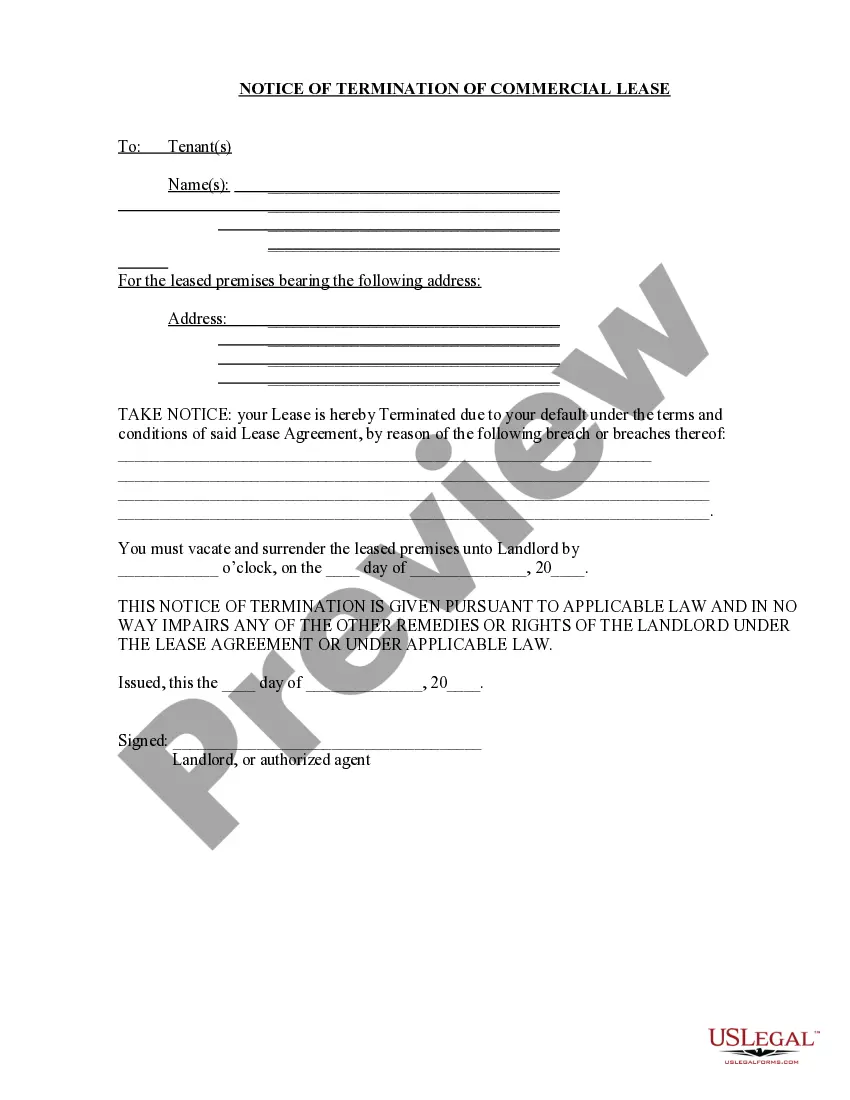
- Consequences of continued non-payment, including potential lease termination.
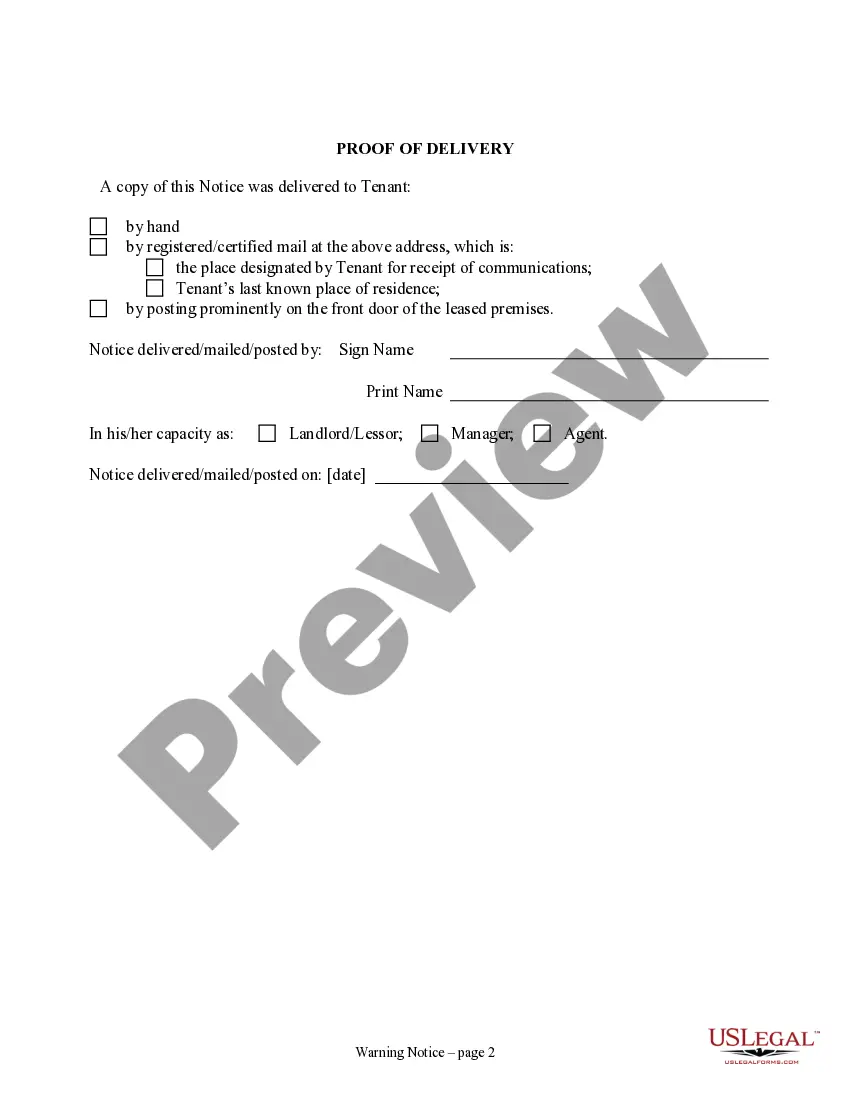
- Proof of delivery section to confirm the notice was provided to the tenant.


Situations where this form applies
This form is used when a landlord needs to notify a tenant that their rent payment is past due but wishes to allow the tenant an opportunity to rectify the situation before taking further action. It is particularly useful in commercial or non-residential rental agreements where timely rent payment is crucial for the landlord's cash flow.
Who this form is for
- Landlords of non-residential or commercial properties.
- Property managers acting on behalf of landlords.
- Landlords who want to ensure proper communication regarding rent defaults.
How to complete this form
- Enter the address of the leased premises and the date of the notice.
- Specify the month for which the rent was not paid.
- Fill in the due date for rent and the total amount owed, including any late charges.
- Clearly state the consequences if the rent is not paid promptly.
- Sign the notice and complete the proof of delivery section to record how the notice was provided to the tenant.
Notarization guidance
This form does not typically require notarization unless specified by local law.
Get your form ready online
Our built-in tools help you complete, sign, share, and store your documents in one place.
Make edits, fill in missing information, and update formatting in US Legal Forms—just like you would in MS Word.
Download a copy, print it, send it by email, or mail it via USPS—whatever works best for your next step.
Sign and collect signatures with our SignNow integration. Send to multiple recipients, set reminders, and more. Go Premium to unlock E-Sign.
If this form requires notarization, complete it online through a secure video call—no need to meet a notary in person or wait for an appointment.
We protect your documents and personal data by following strict security and privacy standards.

Make edits, fill in missing information, and update formatting in US Legal Forms—just like you would in MS Word.

Download a copy, print it, send it by email, or mail it via USPS—whatever works best for your next step.

Sign and collect signatures with our SignNow integration. Send to multiple recipients, set reminders, and more. Go Premium to unlock E-Sign.

If this form requires notarization, complete it online through a secure video call—no need to meet a notary in person or wait for an appointment.

We protect your documents and personal data by following strict security and privacy standards.
Mistakes to watch out for
- Failing to specify the month of non-payment clearly.
- Not including accurate due dates as per the lease agreement.
- Ommiting to sign the notice before delivery.
- Not providing proof of delivery to the tenant.
Advantages of online completion
- Convenient access and easy downloads from any device.
- Editable templates to ensure accurate and personalized information.
- Reliability with forms drafted by licensed attorneys, ensuring legal compliance.
Legal use & context
- This notice is a preventive measure to inform tenants before formal lease termination procedures.
- It establishes a clear record of communication regarding payment defaults.
- This form helps protect landlordsâ rights while providing tenants an opportunity to correct payment issues.
Summary of main points
- Use this notice to inform tenants of rent payment defaults in a non-threatening manner.
- The form is essential for landlords managing non-residential or commercial properties.
- Completing the form correctly ensures legal compliance and protects your rights as a landlord.
Looking for another form?
Form popularity
FAQ
Tenants also have certain rights under federal, state, and some local laws. These include the right to not be discriminated against, the right to a habitable home, and the right to not be charged more for a security deposit than is allowed by state law, to name just a few.
The first thing a landlord must do is provide the tenant with a written notice that an eviction will occur in 30 days if the tenant does not comply with the terms of the lease within 14 days. This notice is required by T.C.A. Section 66-28-505.
Notice Requirements for Tennessee Landlords A landlord can simply give you a written notice to move, allowing you 30 days as required by Tennessee law and specifying the date on which your tenancy will end.
Under both the regular Tennessee Code and the URLTA, a landlord is required to give a tenant a 14-day notice to pay rent before filing an eviction lawsuit. If the tenant pays the rent within the 14-day period, the landlord must not proceed with the eviction lawsuit (see Tenn. Code Ann. § A§ 66-7-109 and 66-28-505).
For example, to end a monthly tenancy without a lease, the landlord must give a 30-day notice to vacate. If tenants pay weekly, the landlord must give a 10-day notice. The act allows landlords to give a three-day notice if tenants commit a violent or dangerous act against others on the property.
Landlords are prohibited from harassing or retaliating against tenants who exercise their legal rights. In Tennessee, the landlord must not terminate, refuse to renew a lease, or fine a tenant for complaining to the landlord regarding the deposit, complaining to a government agency, or exercising a legal right.
You are responsible for: paying your rent on time, paying any late fees, keeping the place clean and safe, not letting anyone else damage it, not breaking the law, disposing of your garbage, and following your landlord's rules. If you break your lease, then it may become a legal issue.
Title 66 - Property. Chapter 28 - Uniform Residential Landlord and Tenant Act. (b) The landlord may enter the premises without consent of the tenant in case of emergency.