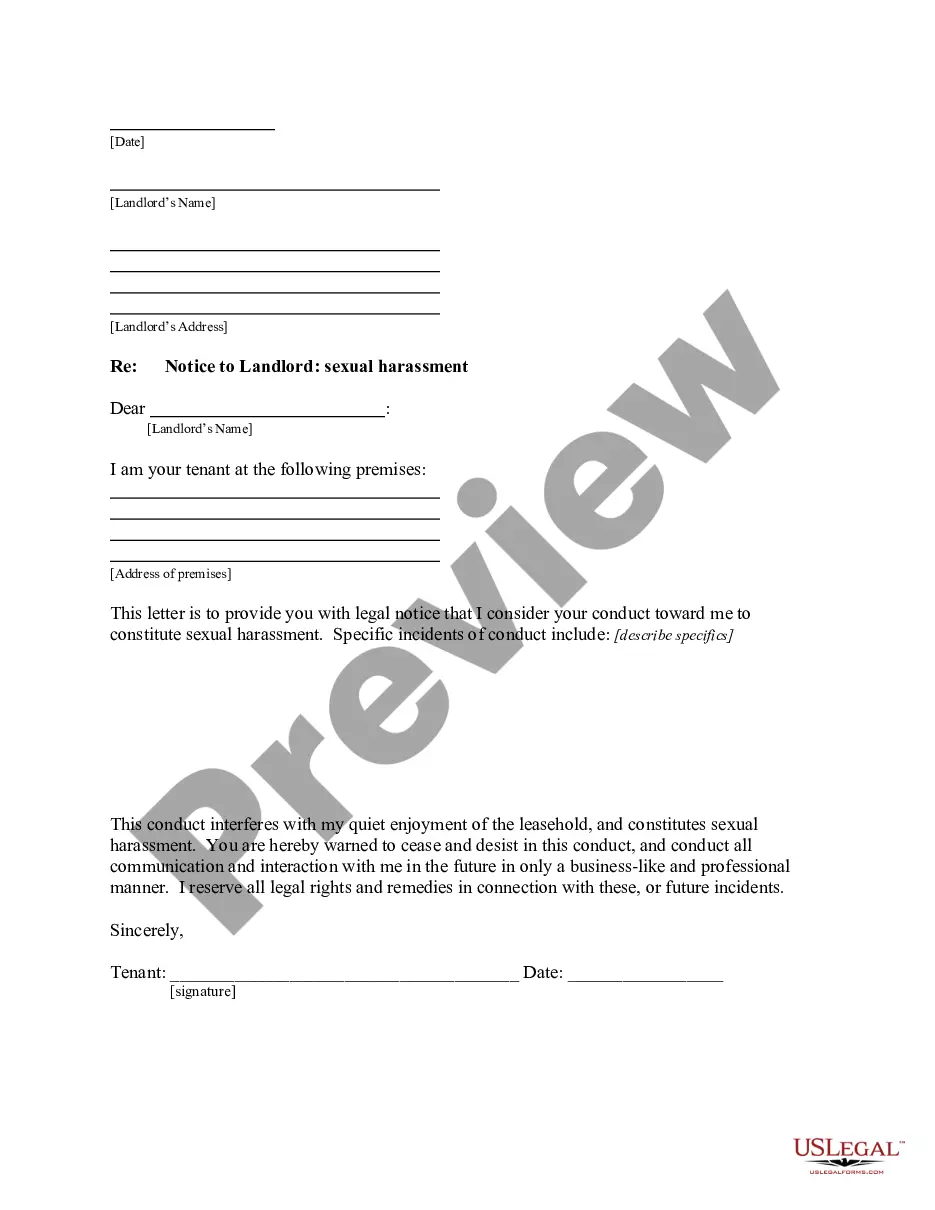
Tennessee Letter from Tenant to Landlord containing Notice to landlord to withdraw improper rent increase due to violation of rent control ordinance
What this document covers
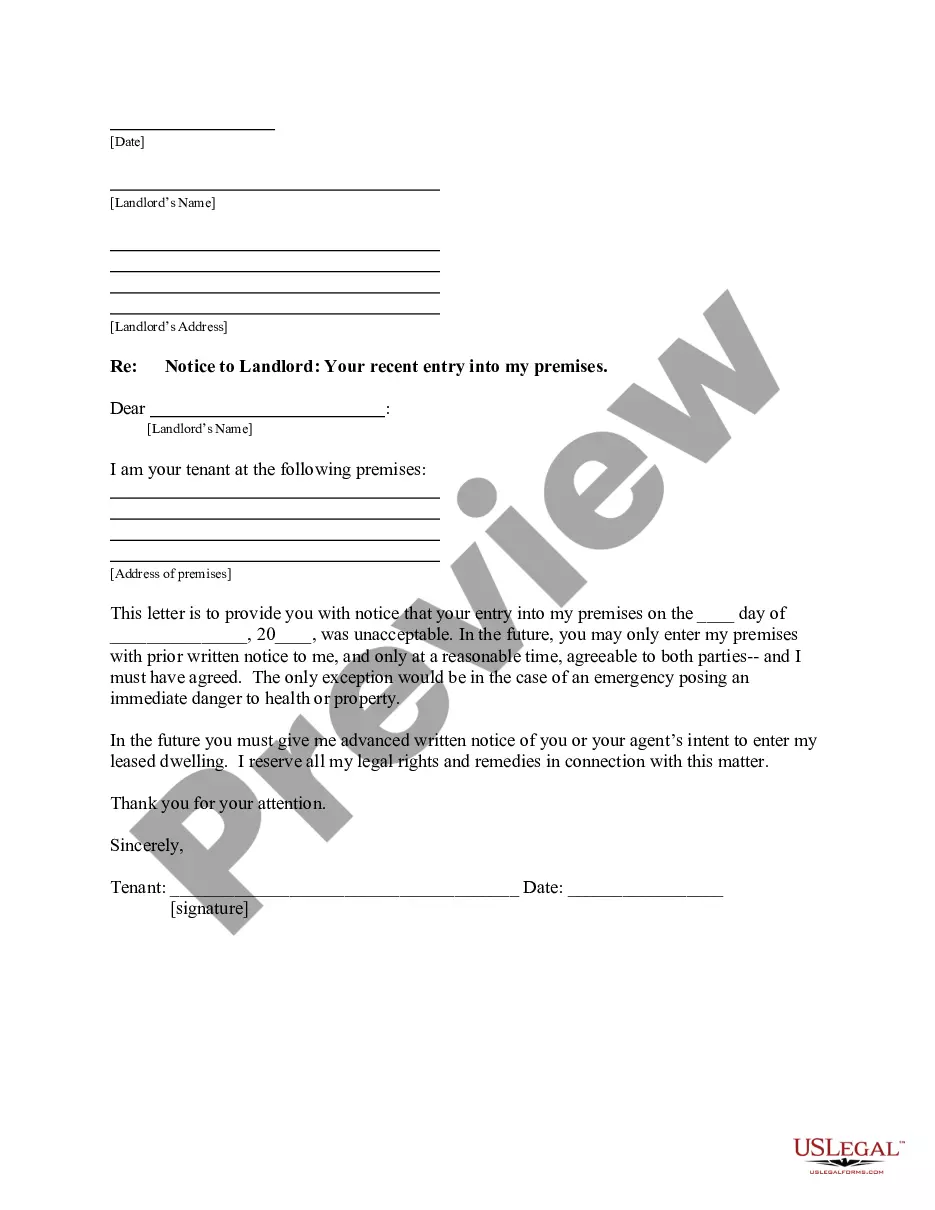
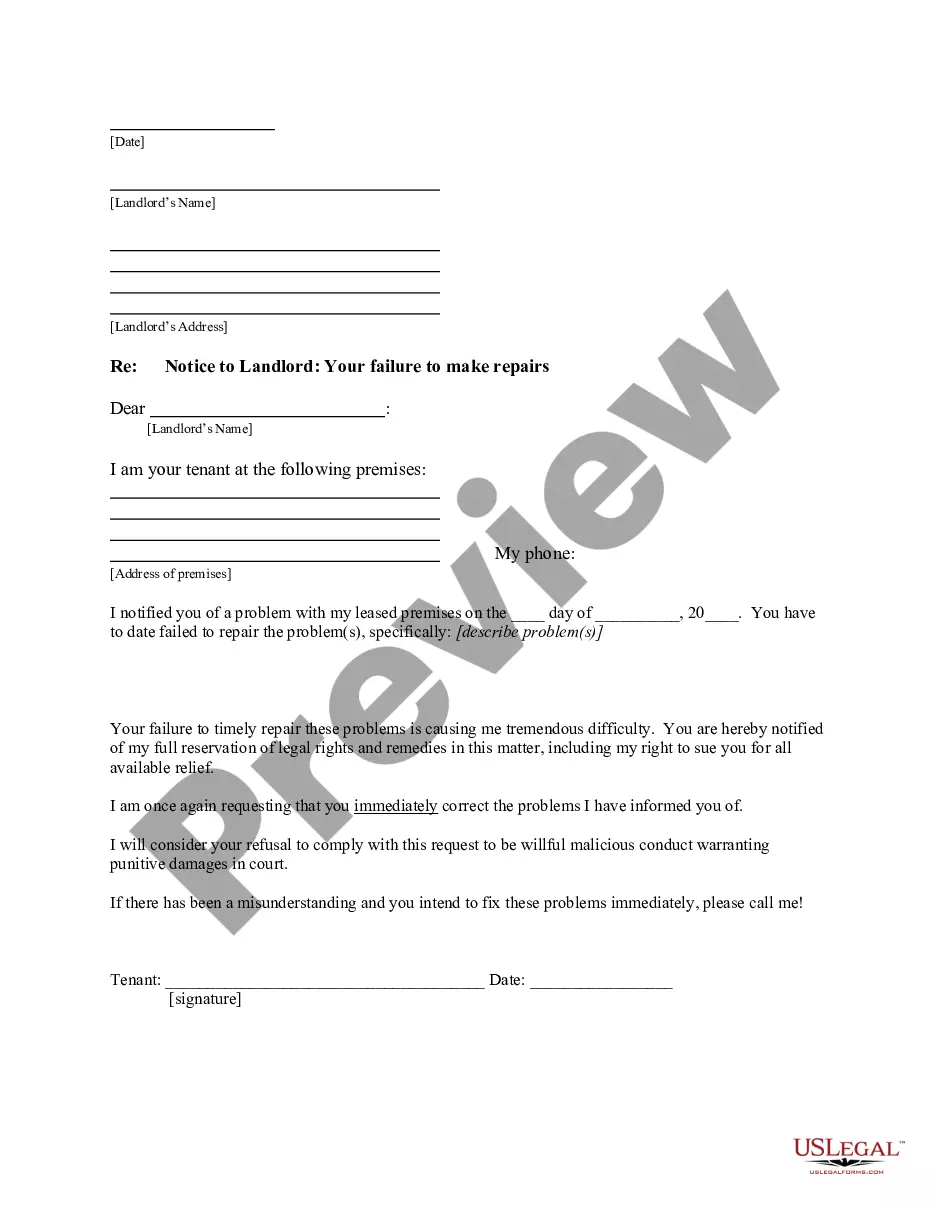
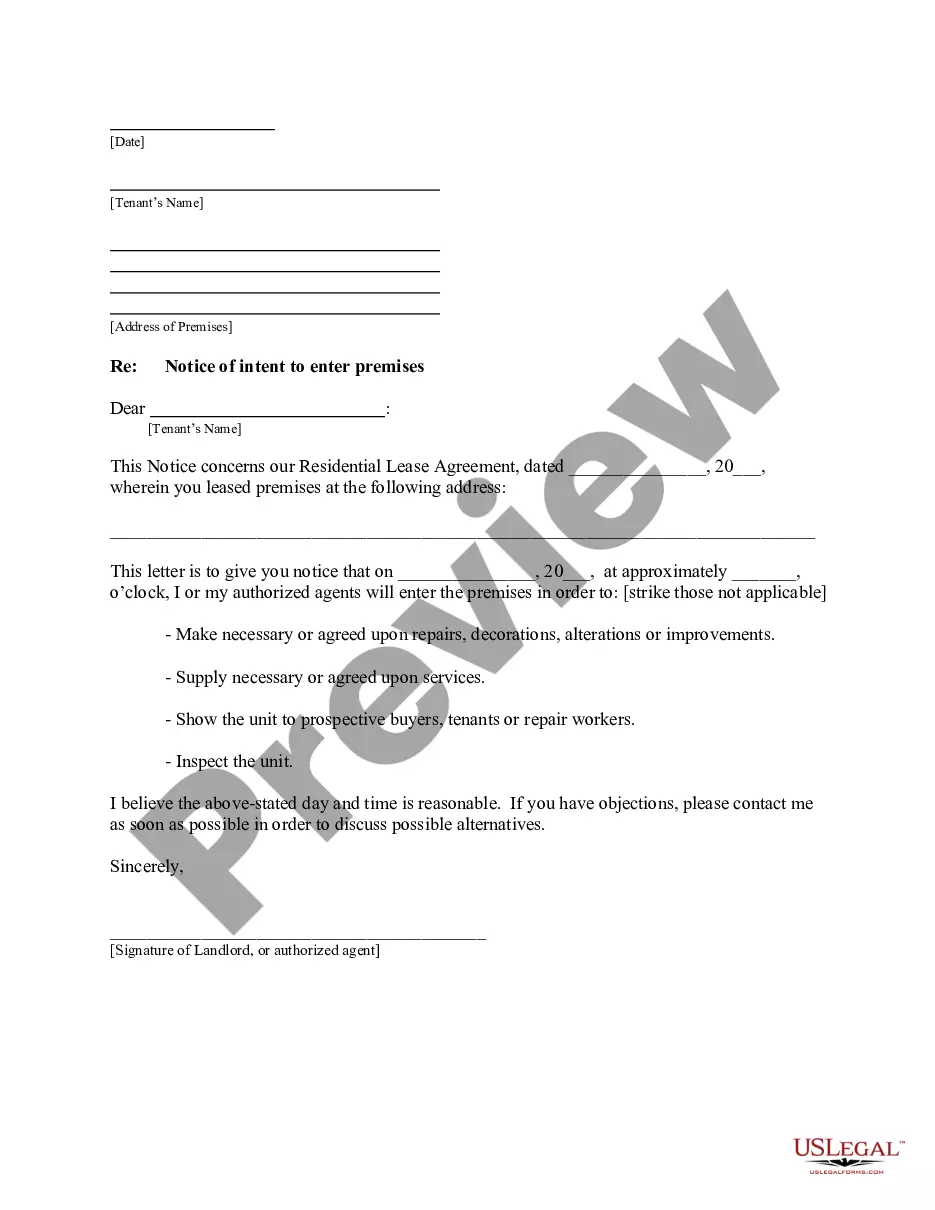
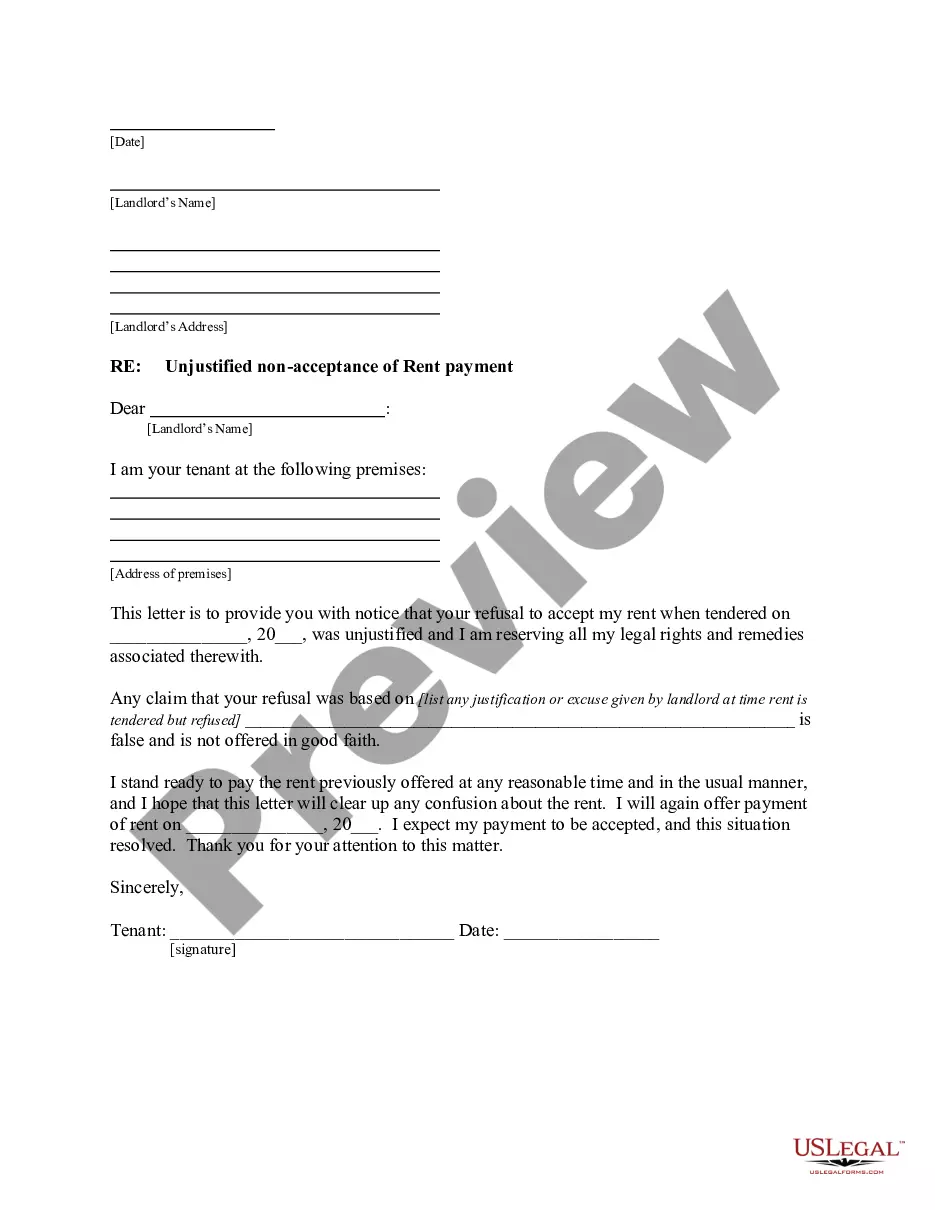
This form is a letter from a tenant to a landlord that includes a formal notice to withdraw an improper rent increase. It addresses potential violations of rent control ordinances, notifying the landlord that the rent increase may be unlawful. Unlike other tenant letters, this notice specifically focuses on rent control issues, providing tenants with a clear mechanism to challenge illegitimate rent hikes.
Key components of this form
- Identification of the tenant and landlord involved in the rental agreement.
- Reference to the specific rent control ordinance that has been violated.
- A clear demand for the withdrawal of the improper rent increase.
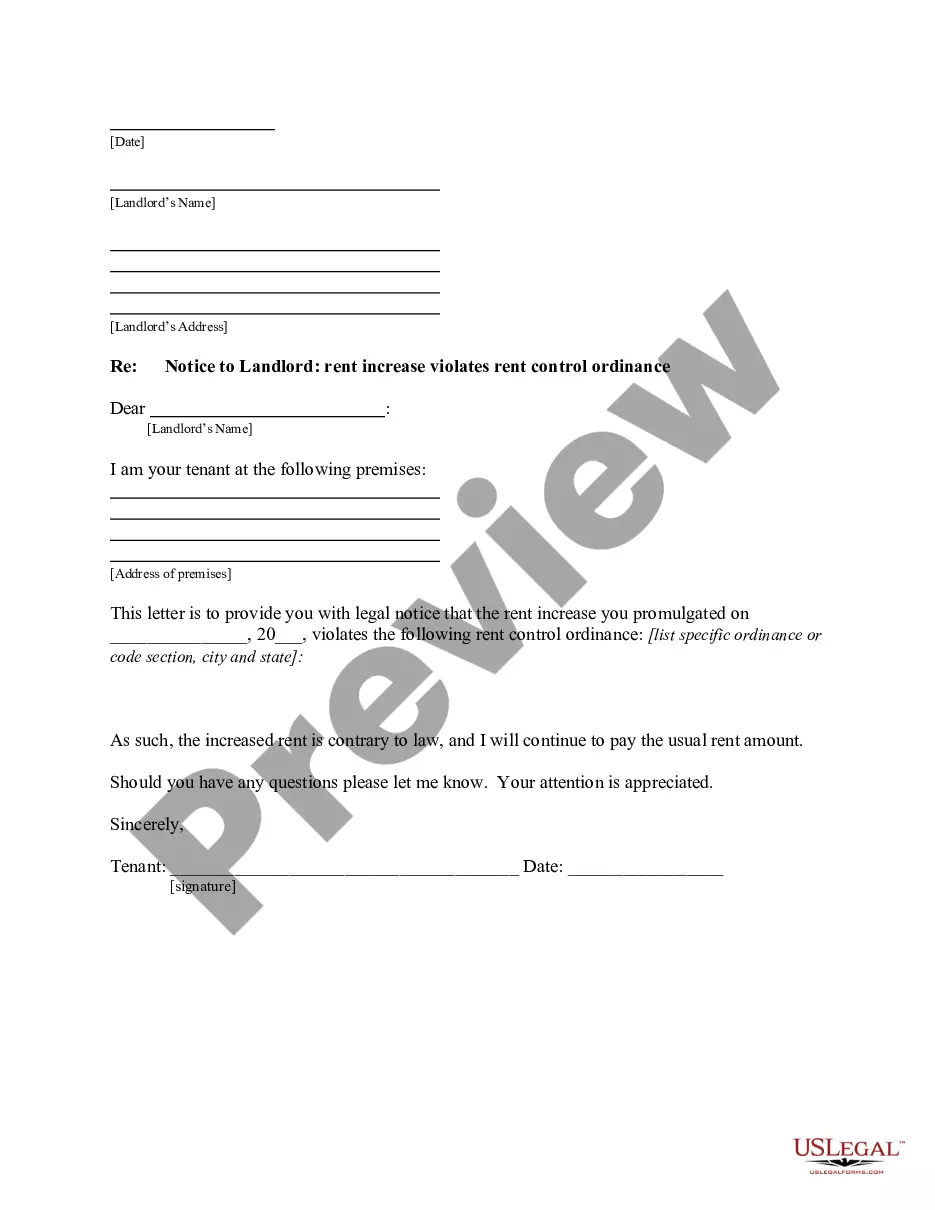
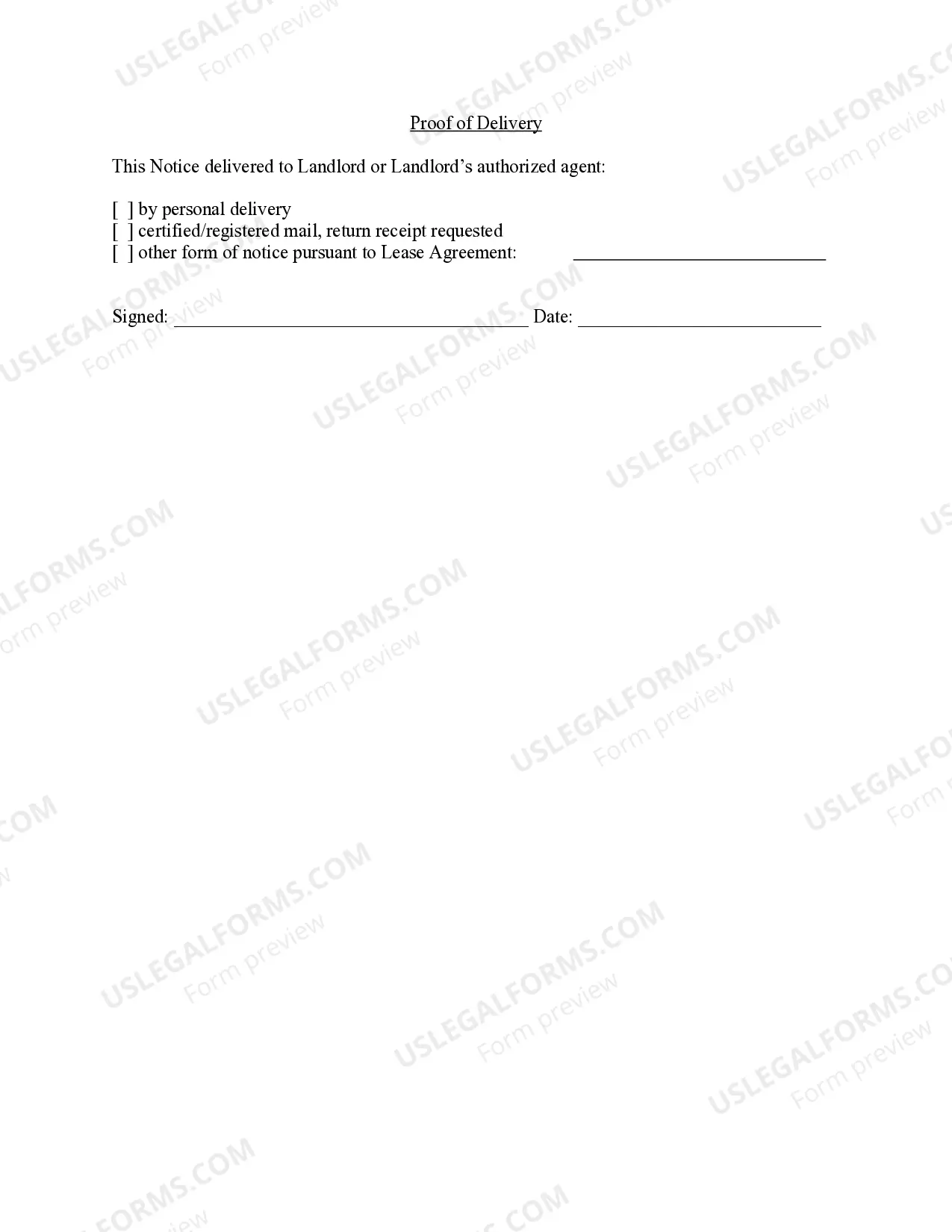
- Proof of delivery options, such as personal delivery or certified mail.
- Signatures of the tenant for authenticity.

Common use cases
This form should be used when a tenant receives a rent increase that they believe violates local rent control laws. It is particularly useful in situations where the tenant wants to formally notify their landlord of the dispute regarding the rent increase and request to withdraw it. Utilizing this letter can help resolve the issue amicably before escalating to legal actions or disputes.
Who should use this form
This letter is intended for:
- Tenants who have received an unjustifiable rent increase.
- Landlords seeking to maintain compliance with local rent control laws.
- Individuals unfamiliar with legal jargon who need a straightforward method to assert their rights.
Completing this form step by step
- Identify the parties involved by including the names and addresses of both the tenant and landlord.
- State the date on which the letter is being sent.
- Clearly reference the rent control ordinance being violated in your notice.
- Request the withdrawal of the improper rent increase and provide any necessary details.
- Sign the letter and include your contact information for follow-up.
- Choose the method of delivery and provide proof of delivery if applicable.
Does this form need to be notarized?
This form does not typically require notarization to be legally valid. However, some jurisdictions or document types may still require it. US Legal Forms provides secure online notarization powered by Notarize, available 24/7 for added convenience.
Get your form ready online
Our built-in tools help you complete, sign, share, and store your documents in one place.
Make edits, fill in missing information, and update formatting in US Legal Forms—just like you would in MS Word.
Download a copy, print it, send it by email, or mail it via USPS—whatever works best for your next step.
Sign and collect signatures with our SignNow integration. Send to multiple recipients, set reminders, and more. Go Premium to unlock E-Sign.
If this form requires notarization, complete it online through a secure video call—no need to meet a notary in person or wait for an appointment.
We protect your documents and personal data by following strict security and privacy standards.

Make edits, fill in missing information, and update formatting in US Legal Forms—just like you would in MS Word.

Download a copy, print it, send it by email, or mail it via USPS—whatever works best for your next step.

Sign and collect signatures with our SignNow integration. Send to multiple recipients, set reminders, and more. Go Premium to unlock E-Sign.

If this form requires notarization, complete it online through a secure video call—no need to meet a notary in person or wait for an appointment.

We protect your documents and personal data by following strict security and privacy standards.
Typical mistakes to avoid
- Not including the specific ordinance number or citation.
- Failing to provide accurate dates related to the rent increase.
- Omitting proof of delivery, which can lead to disputes over notice receipt.
- Not keeping a copy of the letter for personal records.
Advantages of online completion
- Convenient and quick access to legal forms tailored to your needs.
- Editable templates that ensure accuracy and compliance with local laws.
- Confidence in the reliability of documents created by licensed attorneys.
Quick recap
- This form is essential for tenants facing unjust rent increases.
- Properly completing the form helps assert your rights.
- Always deliver the notice properly and retain proof.
Looking for another form?



Form popularity
FAQ
Yes, your tenant is within their rights to refuse you access to the property. In a lot of cases, tenants will refuse because the date and time isn't convenient for them and will suggest an alternative date or ask you to rearrange. However, some tenants will persistently try to obstruct you from entering the property.
A landlord cannot legally evict you without a court order, whether or not you have a lease.) How long does it take for a landlord to evict a tenant? A landlord can evict a tenant only by going through a formal eviction proceeding, which can take a few weeks from start to finish.
Title 66 - Property. Chapter 28 - Uniform Residential Landlord and Tenant Act. (b) The landlord may enter the premises without consent of the tenant in case of emergency.
Notice Requirements for Tennessee Landlords A landlord can simply give you a written notice to move, allowing you 30 days as required by Tennessee law and specifying the date on which your tenancy will end.
The first thing a landlord must do is provide the tenant with a written notice that an eviction will occur in 30 days if the tenant does not comply with the terms of the lease within 14 days. This notice is required by T.C.A. Section 66-28-505.
Your landlord can end the let at any time by serving a written 'notice to quit'. The notice period will depend on the tenancy or agreement, but is often at least 4 weeks.
You are responsible for: paying your rent on time, paying any late fees, keeping the place clean and safe, not letting anyone else damage it, not breaking the law, disposing of your garbage, and following your landlord's rules. If you break your lease, then it may become a legal issue.
If the tenant refuses, you are permitted to send them a notice to agree or quit the property. The tenant refusing you access constitutes a breach in the lease agreement, so they could be evicted if they continue to deny access.
If a tenant does not pay the outstanding rent by the fourteenth day, they have 16 days to vacate the property. If a tenant does not leave the property by the end of the 16-day period (30 days after the landlord delivered the notice to quit) the landlord can go to court to request a detainer warrant for the tenant.