South Carolina Statutory Health Care Power of Attorney
Overview of this form
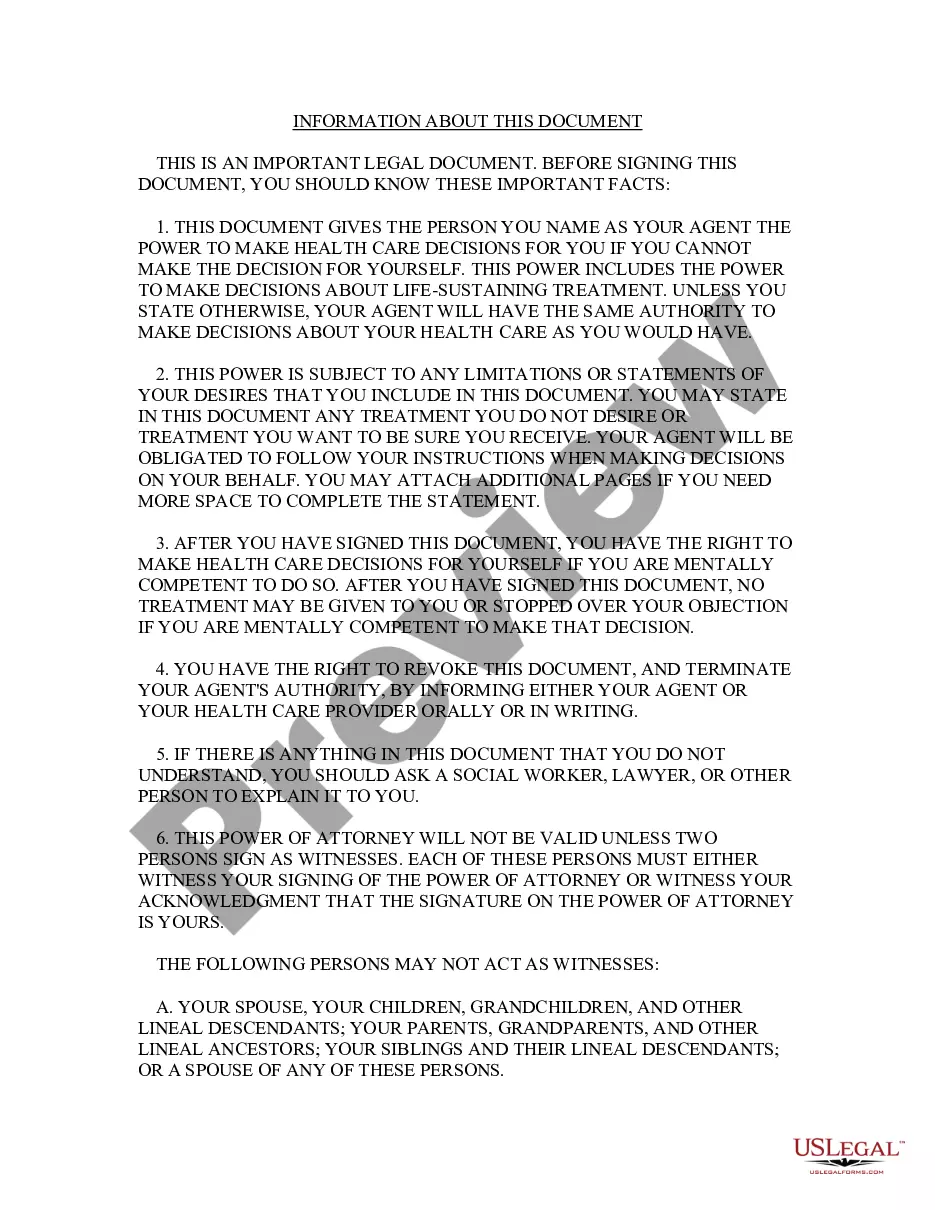
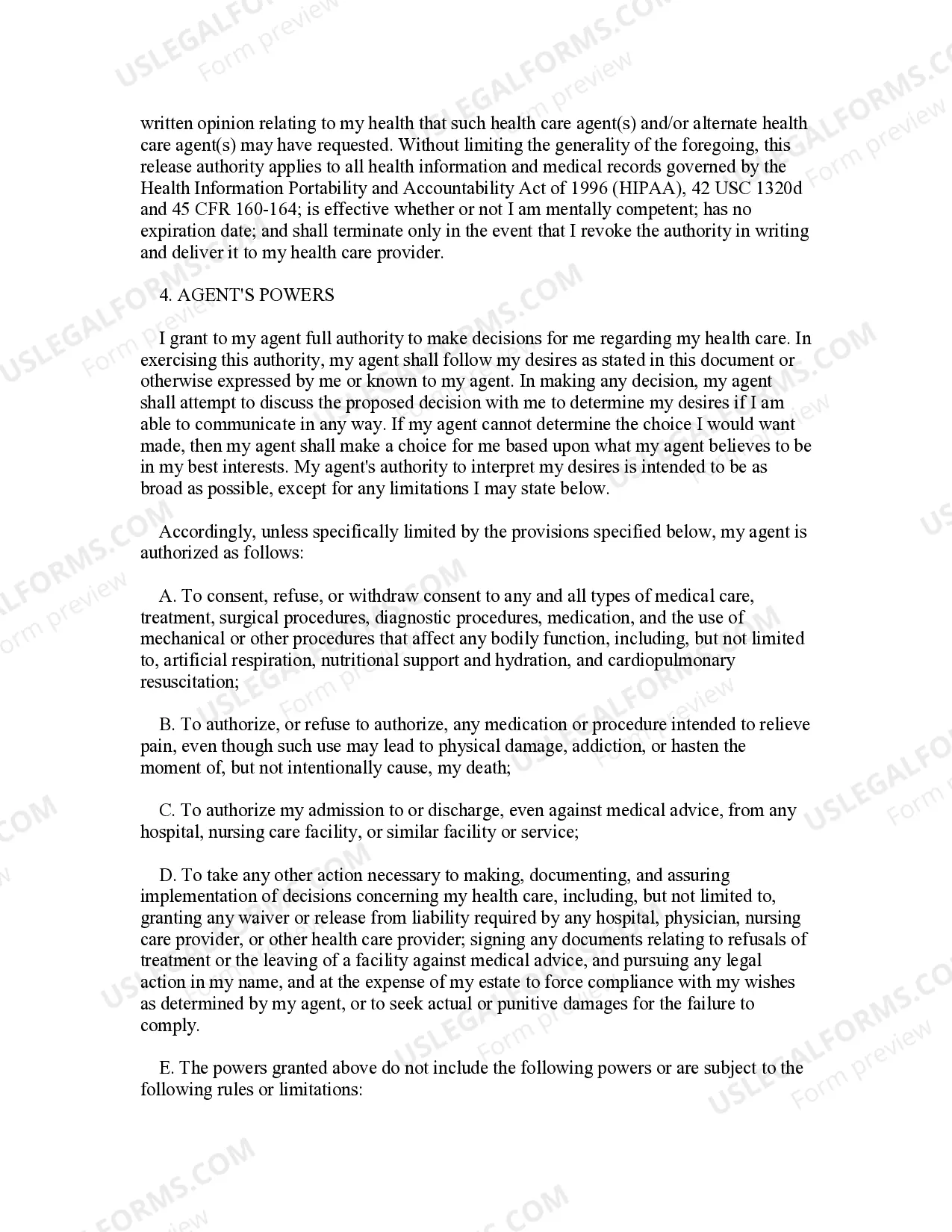
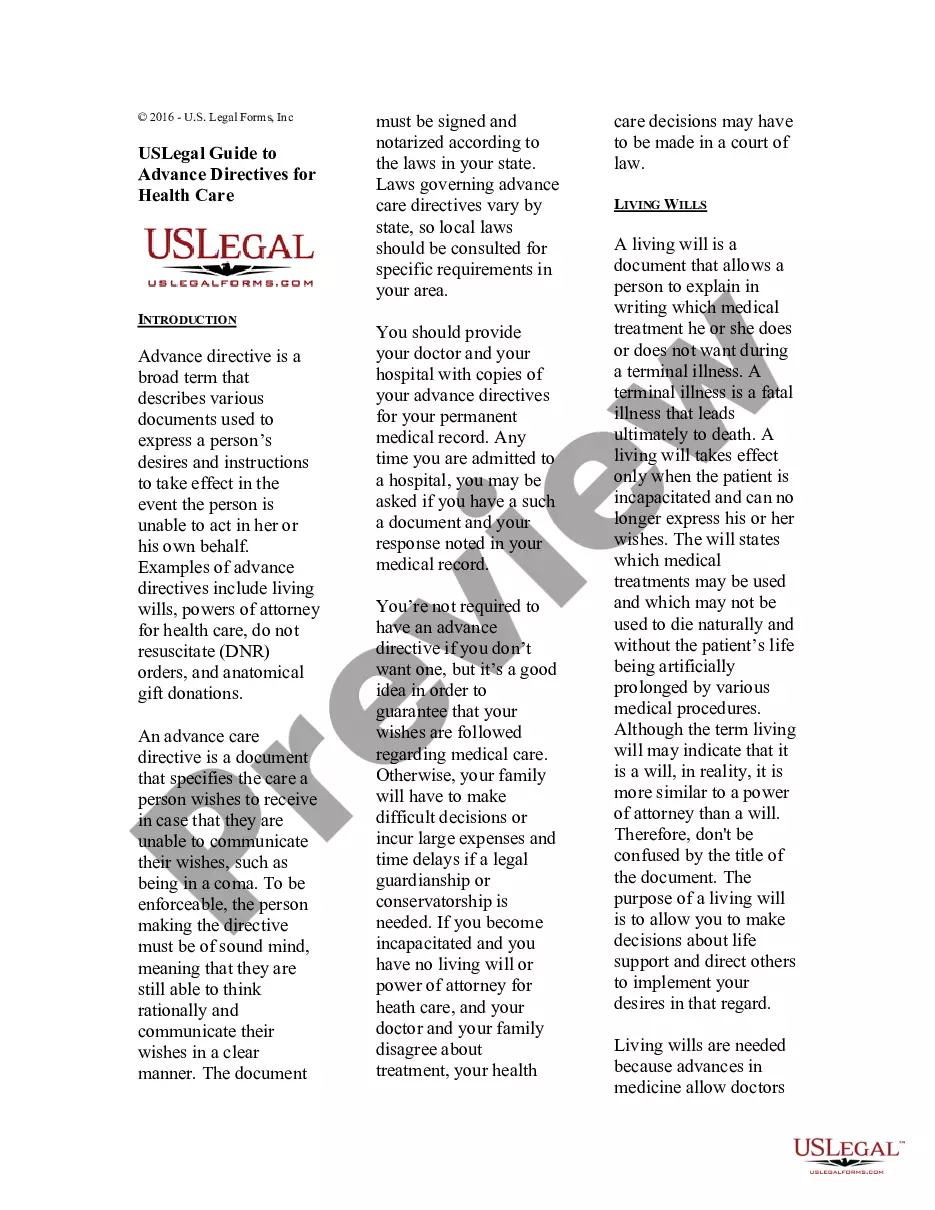
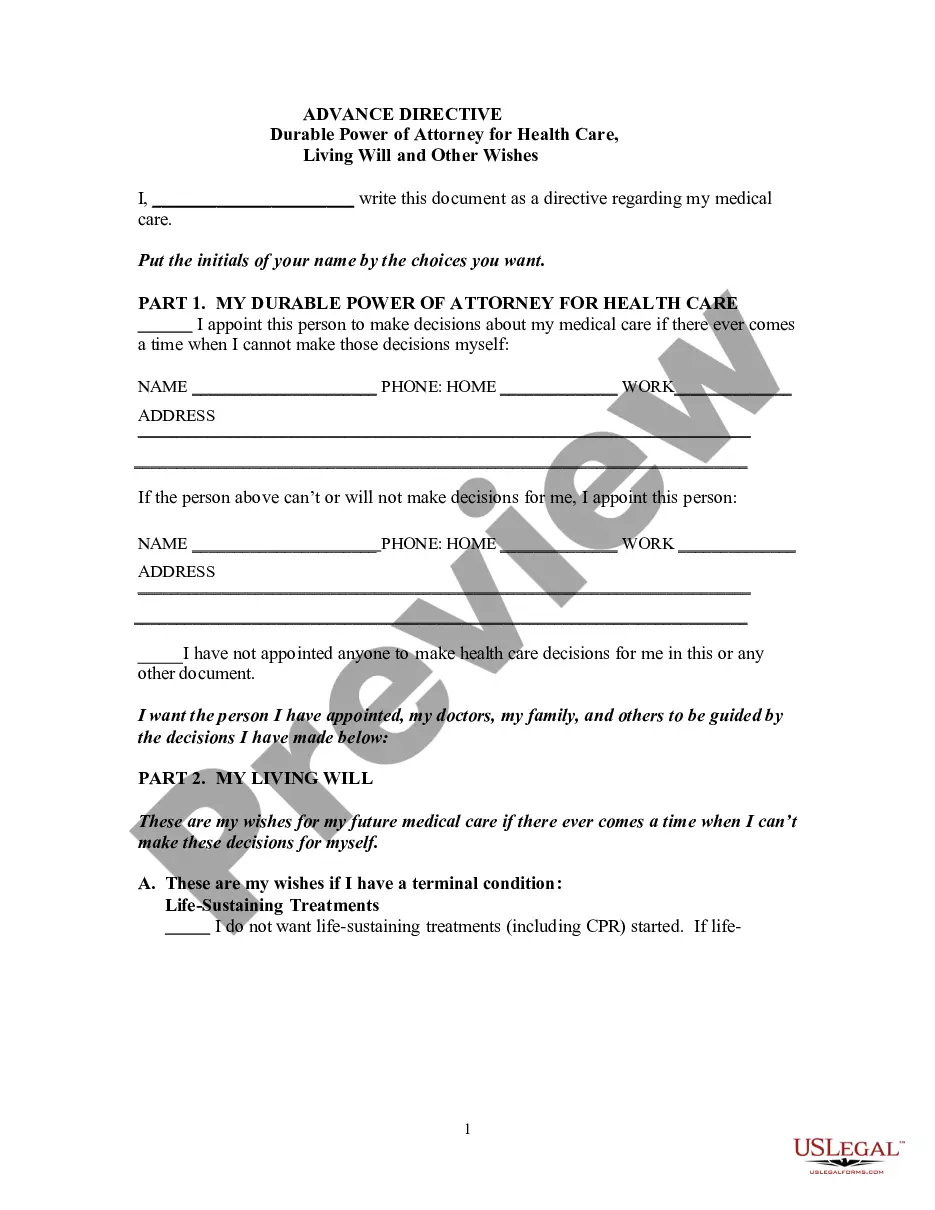
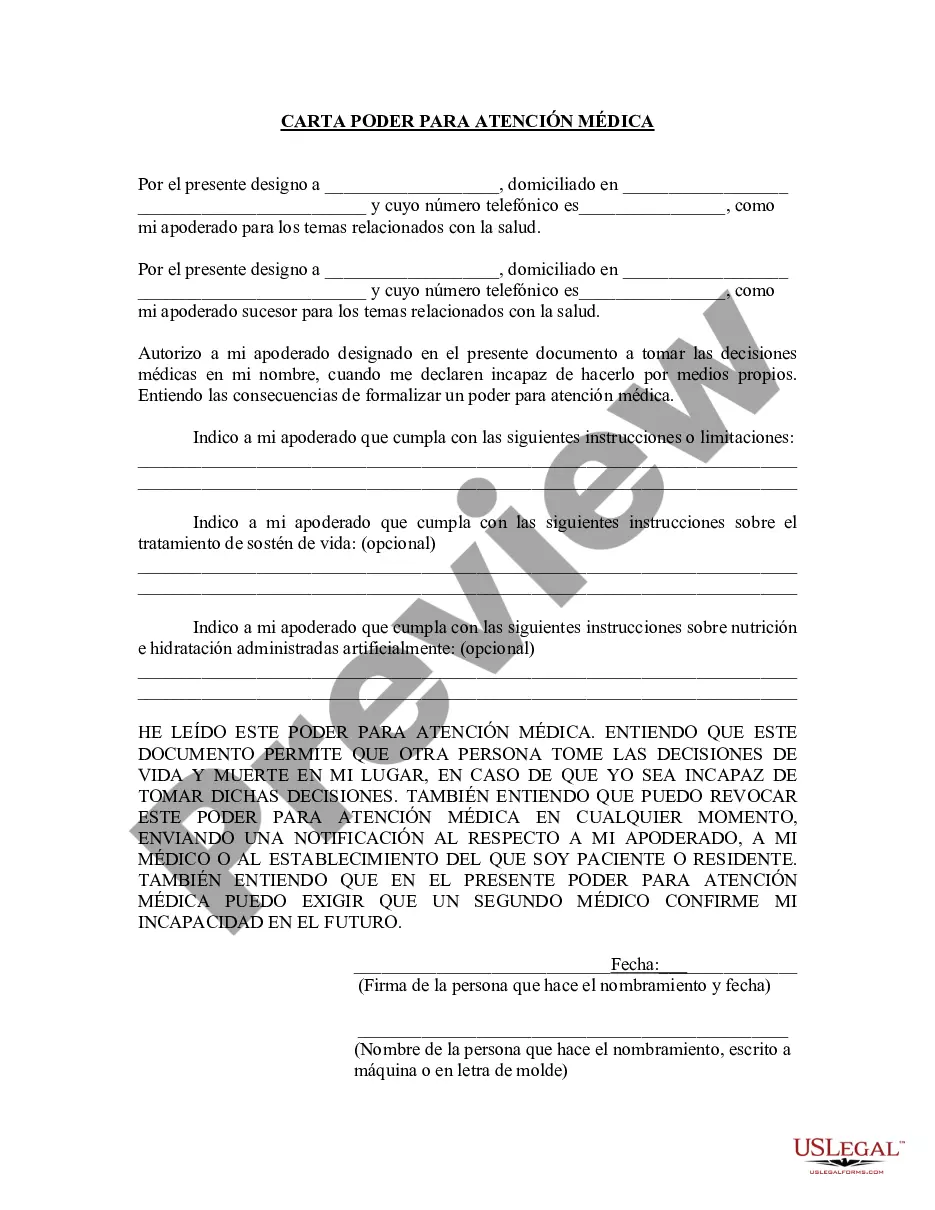
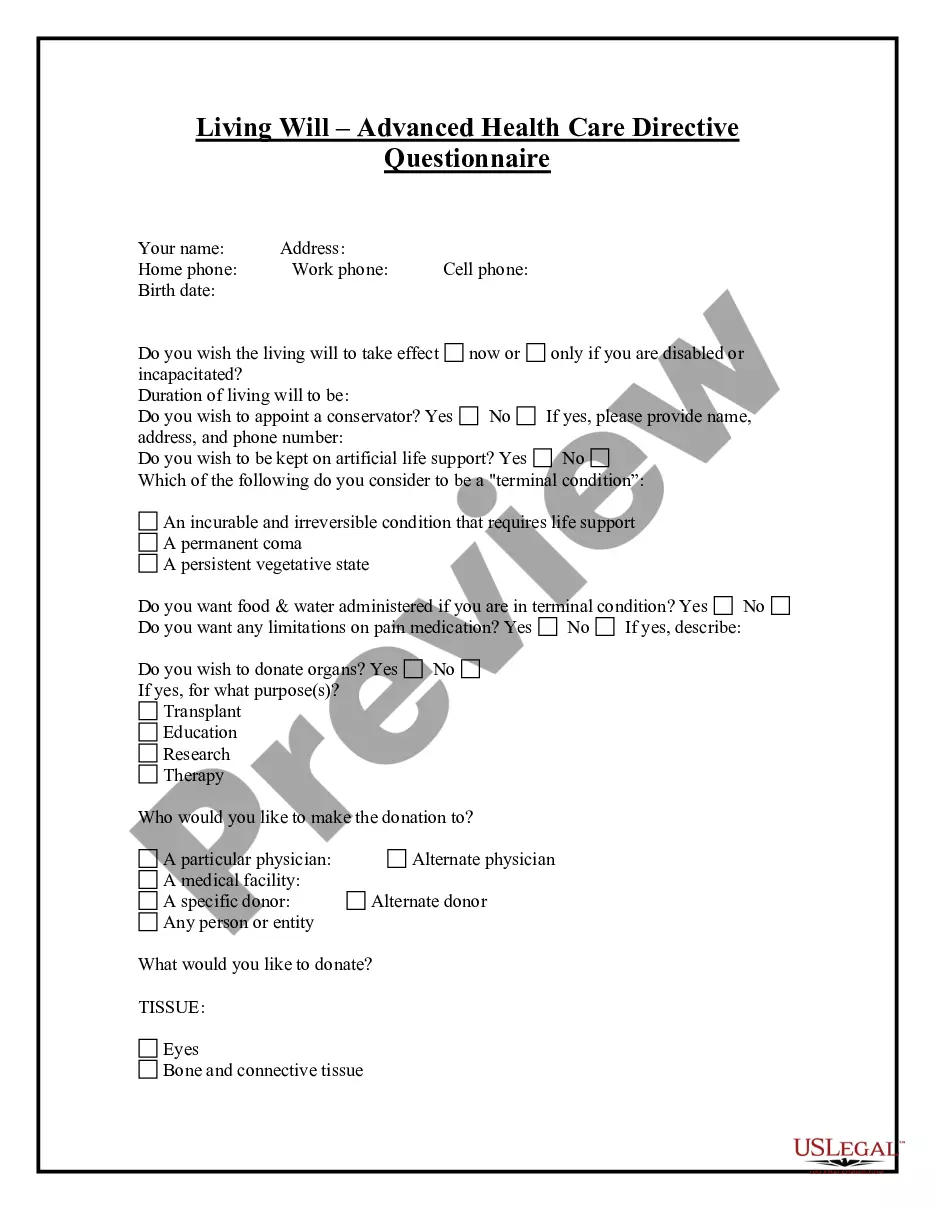
The Statutory Health Care Power of Attorney is a crucial legal document that allows you to appoint someone as your agent to make health care decisions on your behalf in instances where you are unable to do so yourself. This form ensures that your health care preferences are known and respected, particularly regarding critical decisions such as life-sustaining treatments. Unlike general powers of attorney, this specific form focuses exclusively on health care choices, including provisions for life support treatment and anatomical gifts.
Key parts of this document
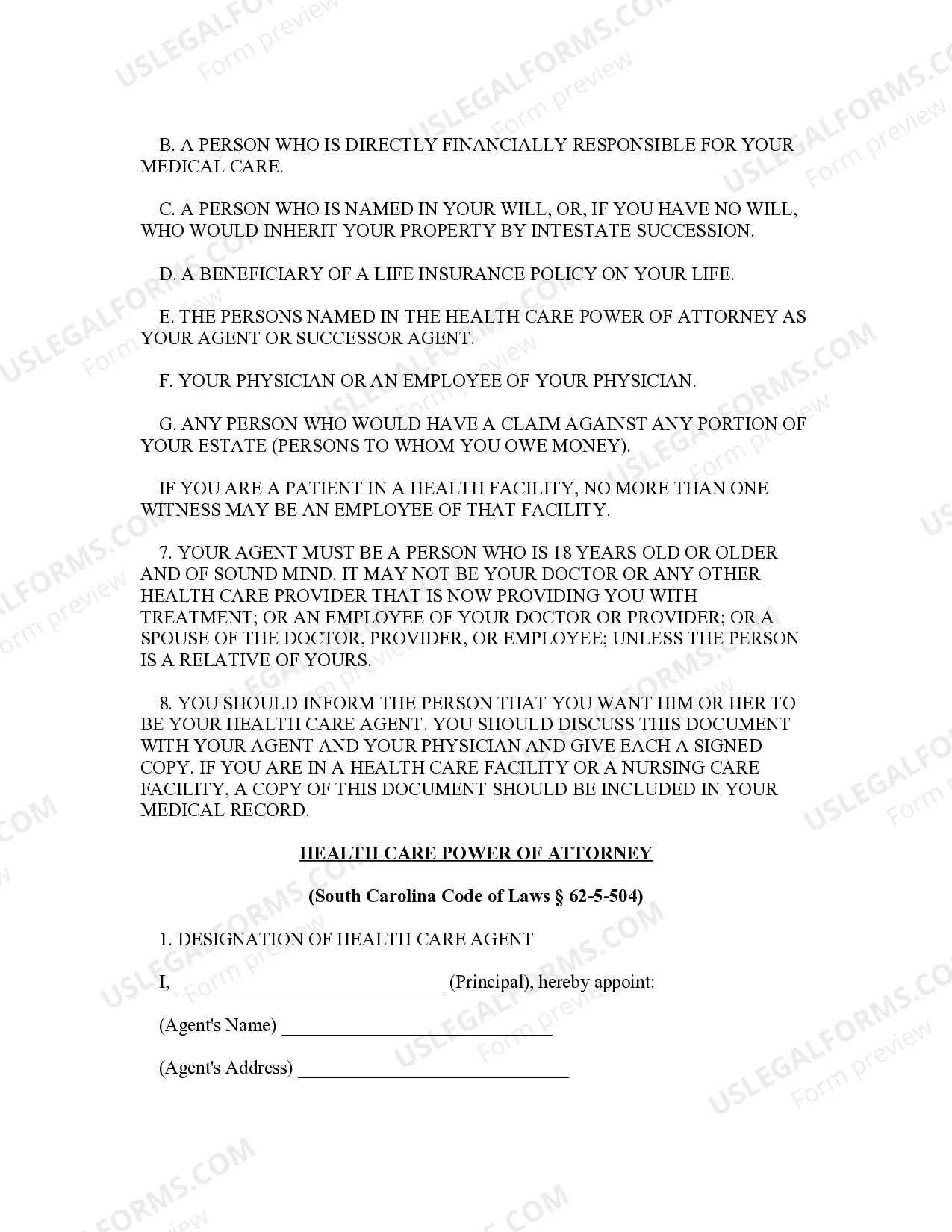
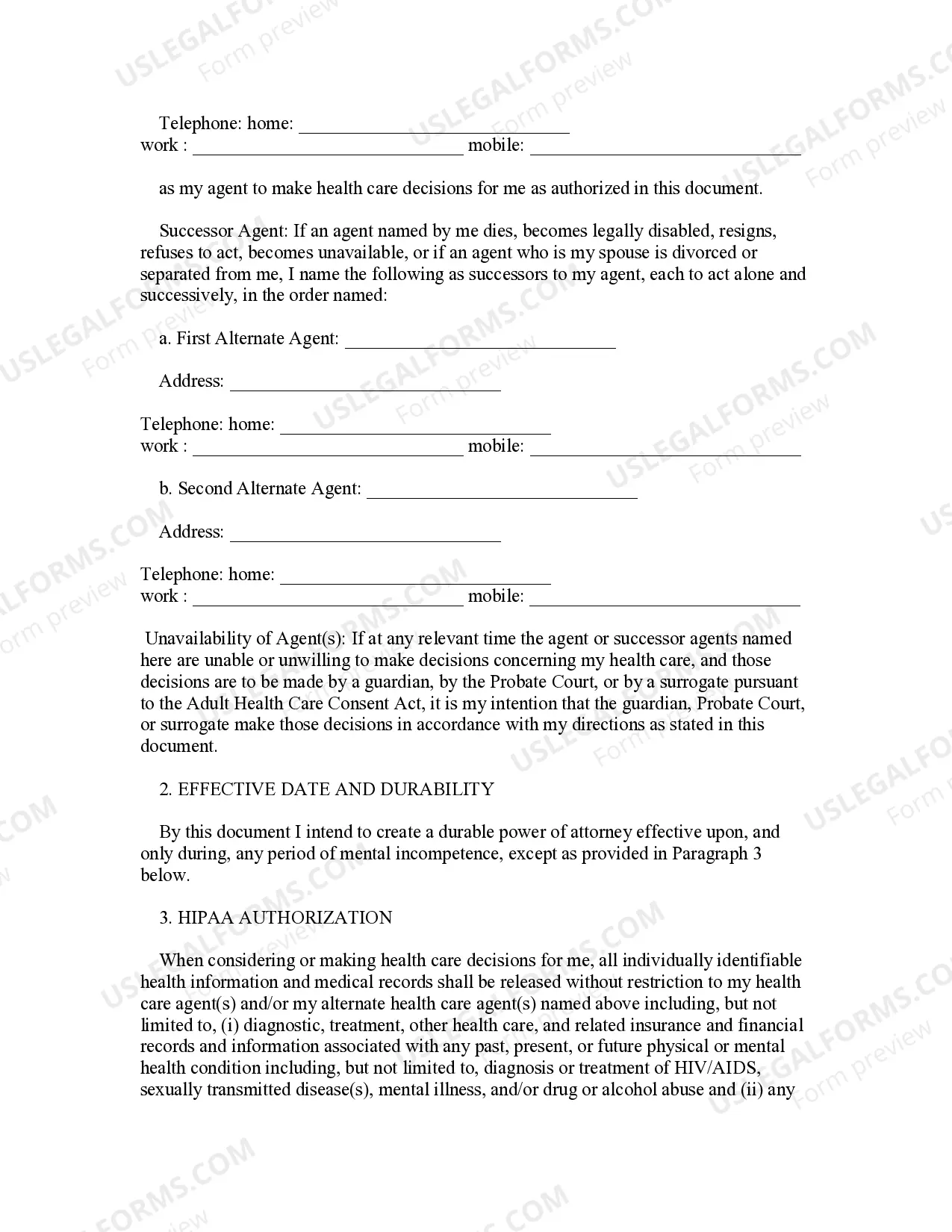
- Designation of your health care agent and any successors.
- Effective date and durability clauses based on mental competence.
- HIPAA authorization for sharing medical information with your agent.
- Your agent's powers and limitations regarding health care decisions.
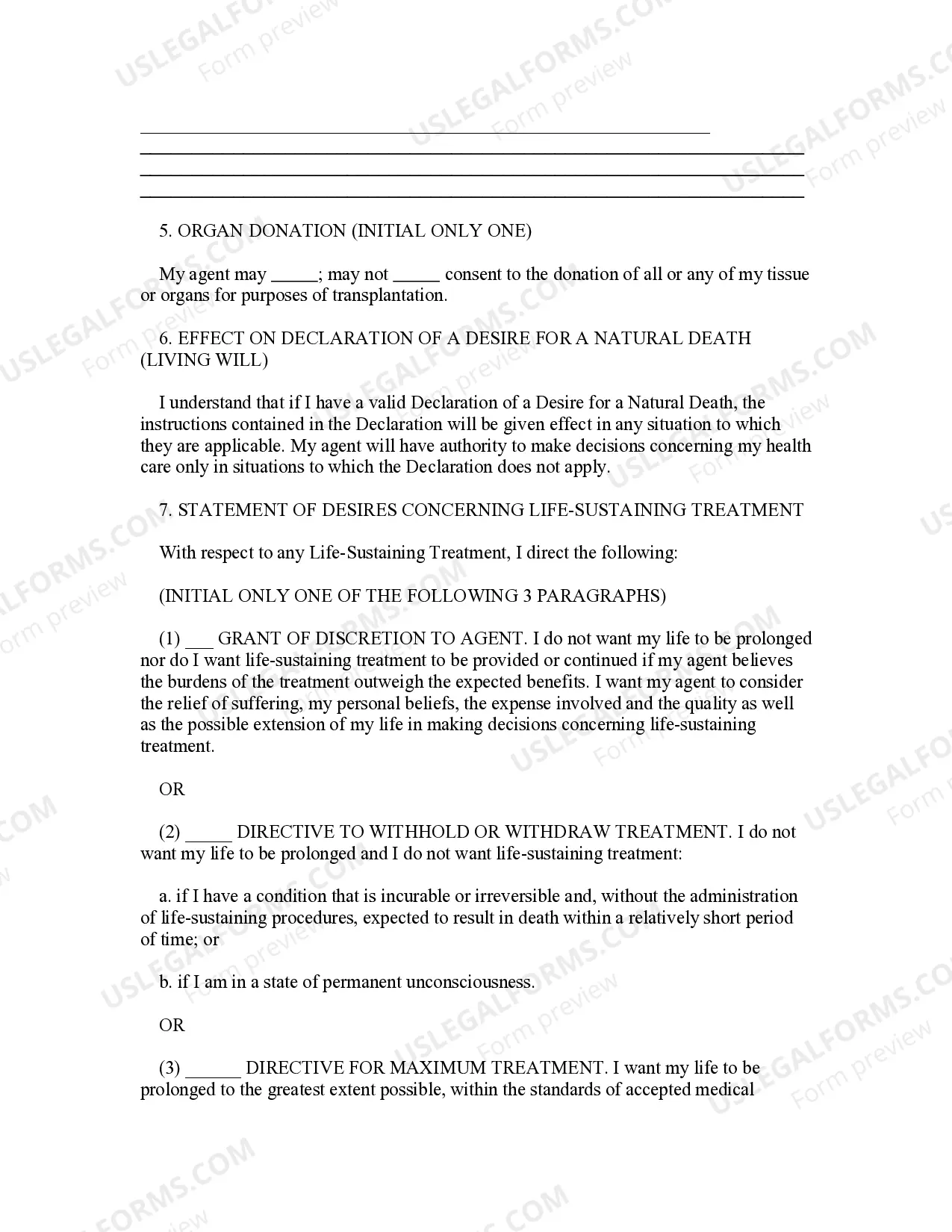
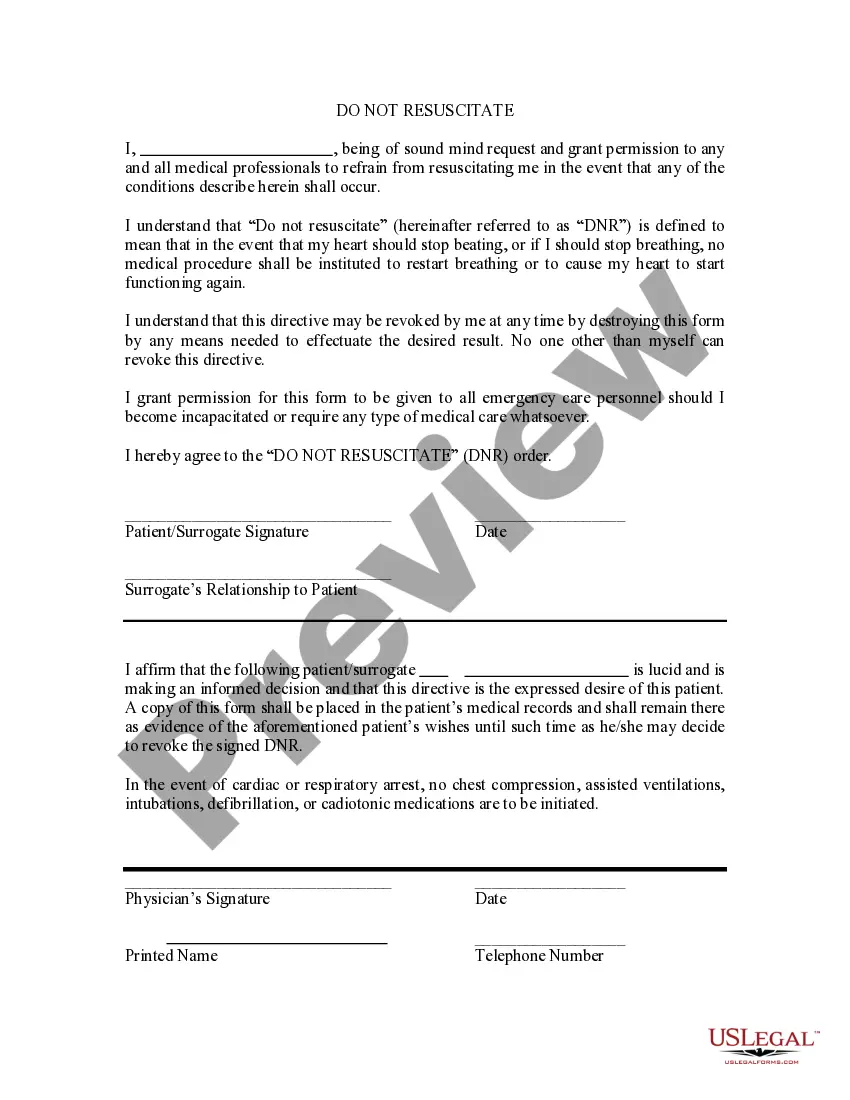
- Options for life-sustaining treatment and nutrition preferences.
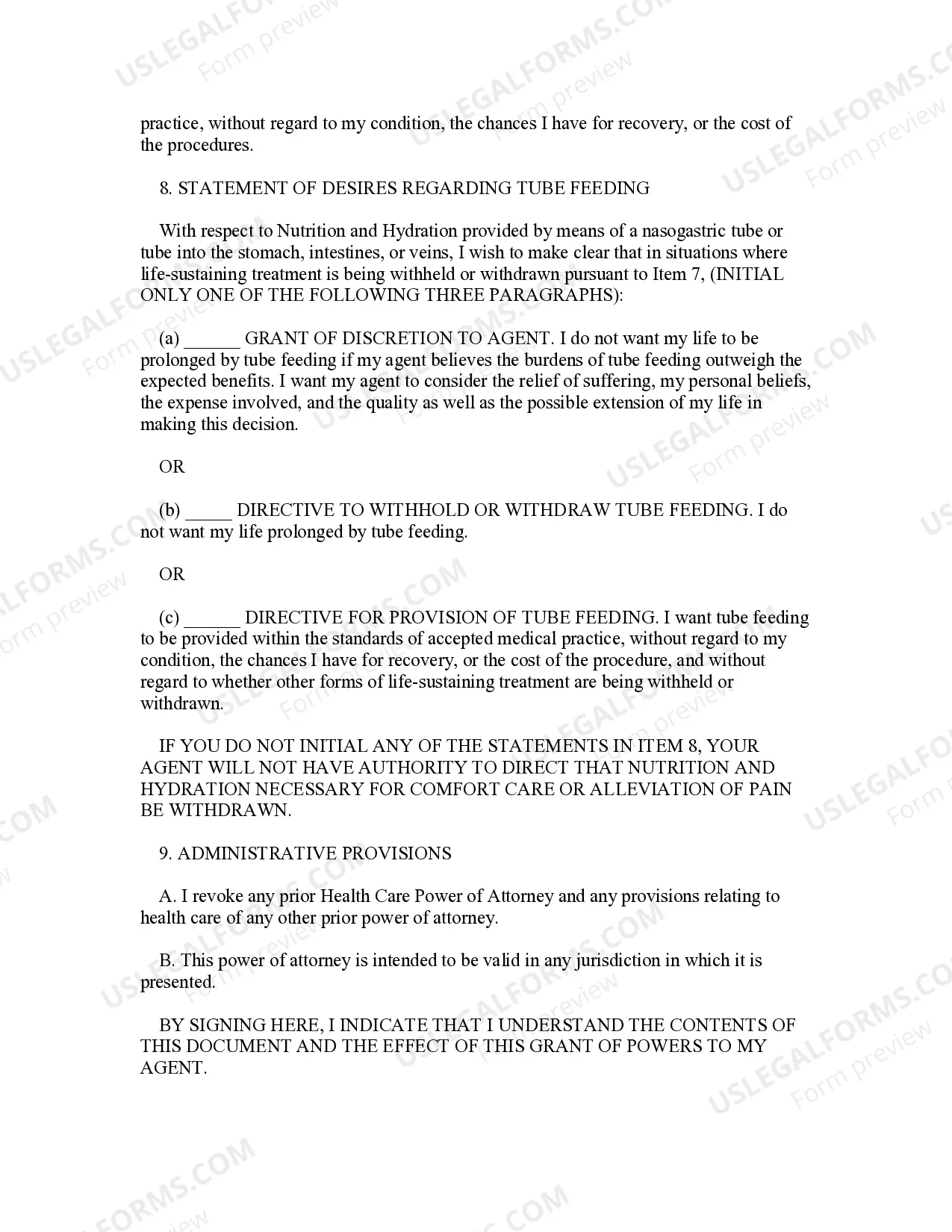
- Administrative provisions, including the revocation of prior powers of attorney.

When to use this document
This form is essential in situations where you may become incapacitated and unable to communicate your health care wishes, such as during a medical emergency or a significant medical procedure. It is also useful if you plan for future health care decisions, ensuring that someone you trust can advocate for your preferences should you be unable to express them yourself.
Who needs this form
- Individuals who want to designate a trusted person to make health care decisions on their behalf.
- Those seeking to specify their preferences regarding life-sustaining treatments and medical care.
- Anyone who anticipates the possibility of being incapacitated due to health issues.
Steps to complete this form
- Identify and name your primary health care agent and any alternate agents.
- Specify the effective date and any limitations on your agent's powers.
- Provide detailed instructions regarding your preferences for life-sustaining treatments and tube feeding.
- Include HIPAA authorization for your agent to access your medical information.
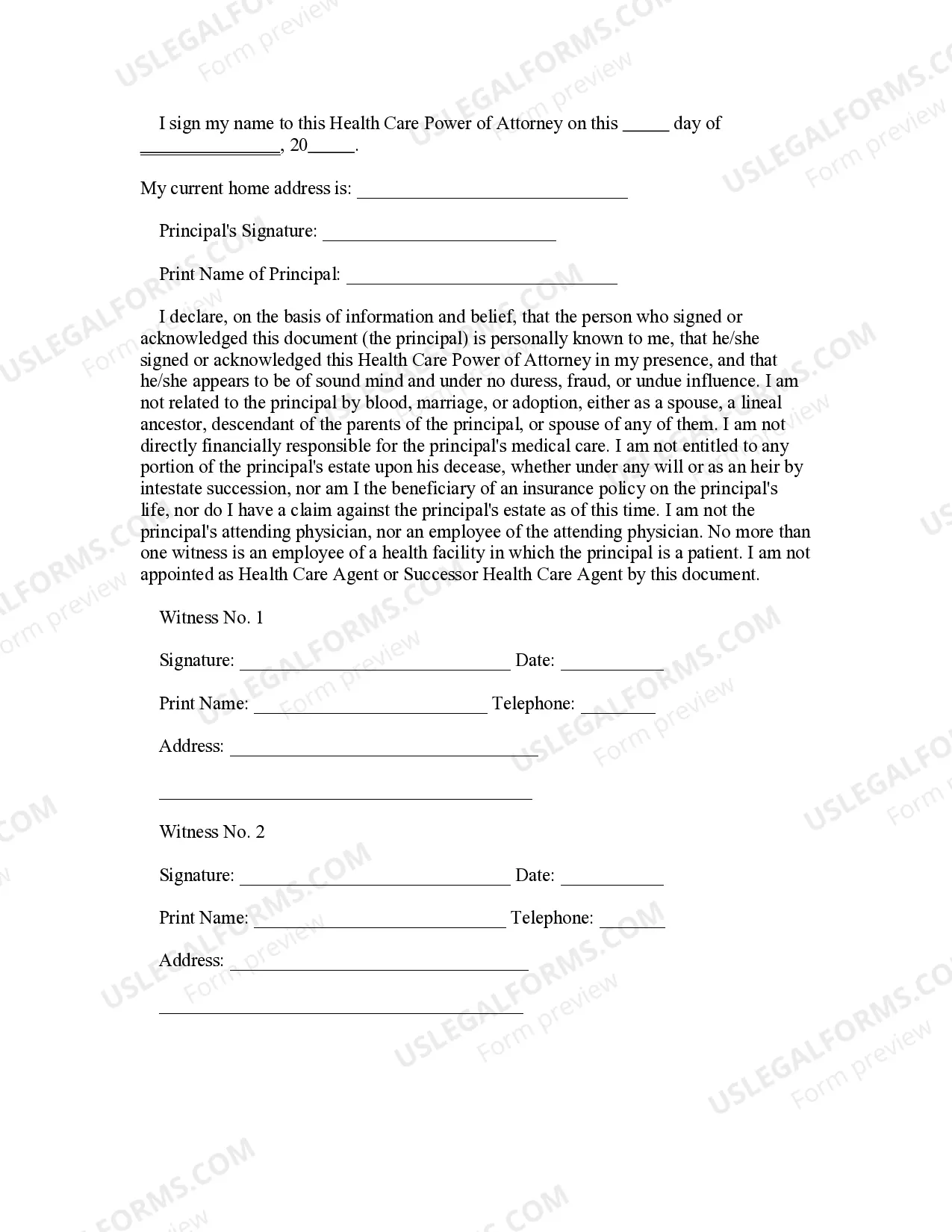
- Ensure two witnesses sign the document, confirming they meet the necessary criteria.
- Make copies of the completed form for your agent, health care providers, and your medical records if applicable.
Is notarization required?
Notarization is generally not required for this form. However, certain states or situations might demand it. You can complete notarization online through US Legal Forms, powered by Notarize, using a verified video call available anytime.
Get your form ready online
Our built-in tools help you complete, sign, share, and store your documents in one place.
Make edits, fill in missing information, and update formatting in US Legal Forms—just like you would in MS Word.
Download a copy, print it, send it by email, or mail it via USPS—whatever works best for your next step.
Sign and collect signatures with our SignNow integration. Send to multiple recipients, set reminders, and more. Go Premium to unlock E-Sign.
If this form requires notarization, complete it online through a secure video call—no need to meet a notary in person or wait for an appointment.
We protect your documents and personal data by following strict security and privacy standards.

Make edits, fill in missing information, and update formatting in US Legal Forms—just like you would in MS Word.

Download a copy, print it, send it by email, or mail it via USPS—whatever works best for your next step.

Sign and collect signatures with our SignNow integration. Send to multiple recipients, set reminders, and more. Go Premium to unlock E-Sign.

If this form requires notarization, complete it online through a secure video call—no need to meet a notary in person or wait for an appointment.

We protect your documents and personal data by following strict security and privacy standards.
Common mistakes to avoid
- Failing to select a qualified witness who meets legal requirements.
- Not providing clear instructions regarding health care preferences.
- Neglecting to discuss your wishes with your appointed agent or ensuring they have a copy of the document.
- Forgetting to revoke any previous powers of attorney regarding health care.
Benefits of using this form online
- Convenience of completing the form from home at your own pace.
- Editability allows for easy updates to reflect your current wishes.
- Access to reliable templates drafted by licensed attorneys to ensure compliance with legal standards.
Legal use & context
- This document enables your appointed agent to make health care decisions aligned with your wishes.
- It complies with South Carolina law, ensuring it is enforceable in medical settings.
- Keep in mind that your agent's authority should always be exercised in your best interests and violated wishes.
Summary of main points
- The Statutory Health Care Power of Attorney permits you to choose someone to make vital health decisions for you.
- It is essential to complete the form accurately, including witness requirements.
- Regularly review and discuss your health care preferences to ensure they are understood by your agent.
Looking for another form?


Form popularity
FAQ
In order to make your South Carolina Health Care Power of Attorney legal, you must sign and date it or acknowledge your signature in the presence of two witnesses.Your notary may act as one of your witnesses.
Writing your own durable power of attorney is an inexpensive way to deal with end-of-life decision-making because it allows you to appoint a person to make decisions for you after you are incapacitated or legally incompetent.
Yes, South Carolina requires that Powers of Attorney are witnessed and notarized.
A medical or health care power of attorney is a type of advance directive in which you name a person to make decisions for you when you are unable to do so. In some states this directive may also be called a durable power of attorney for health care or a health care proxy.Health care agent.
A "health care proxy," sometimes called a "health care surrogate" or "durable medical power of attorney," is a durable power of attorney specifically designed to cover medical treatment.
There are two kinds of durable powers of attorney: a durable power of attorney for finances lets you name someone to manage your financial affairs if you become incapacitated, and a durable power of attorney for health care allows someone to make medical decisions for you if you are no longer able to speak for yourself
A Power of Attorney appoints someone else to make decisions on your behalf, whereas an ACD sets out your wishes directly to your medical treatment providers should you be unable to communicate those wishes for medical treatment are.You have made these decisions ahead of time and have let your medical providers know.
A unique feature of the new form is that it complies with state legal requirements for a valid power of attorney for health care in almost every state. Only five states have laws so inflexible and cumbersome that the bare bones power will not work: Indiana, New Hampshire, Ohio, Texas, and Wisconsin.