Louisiana Emancipation by Notarial Act
What is this form?
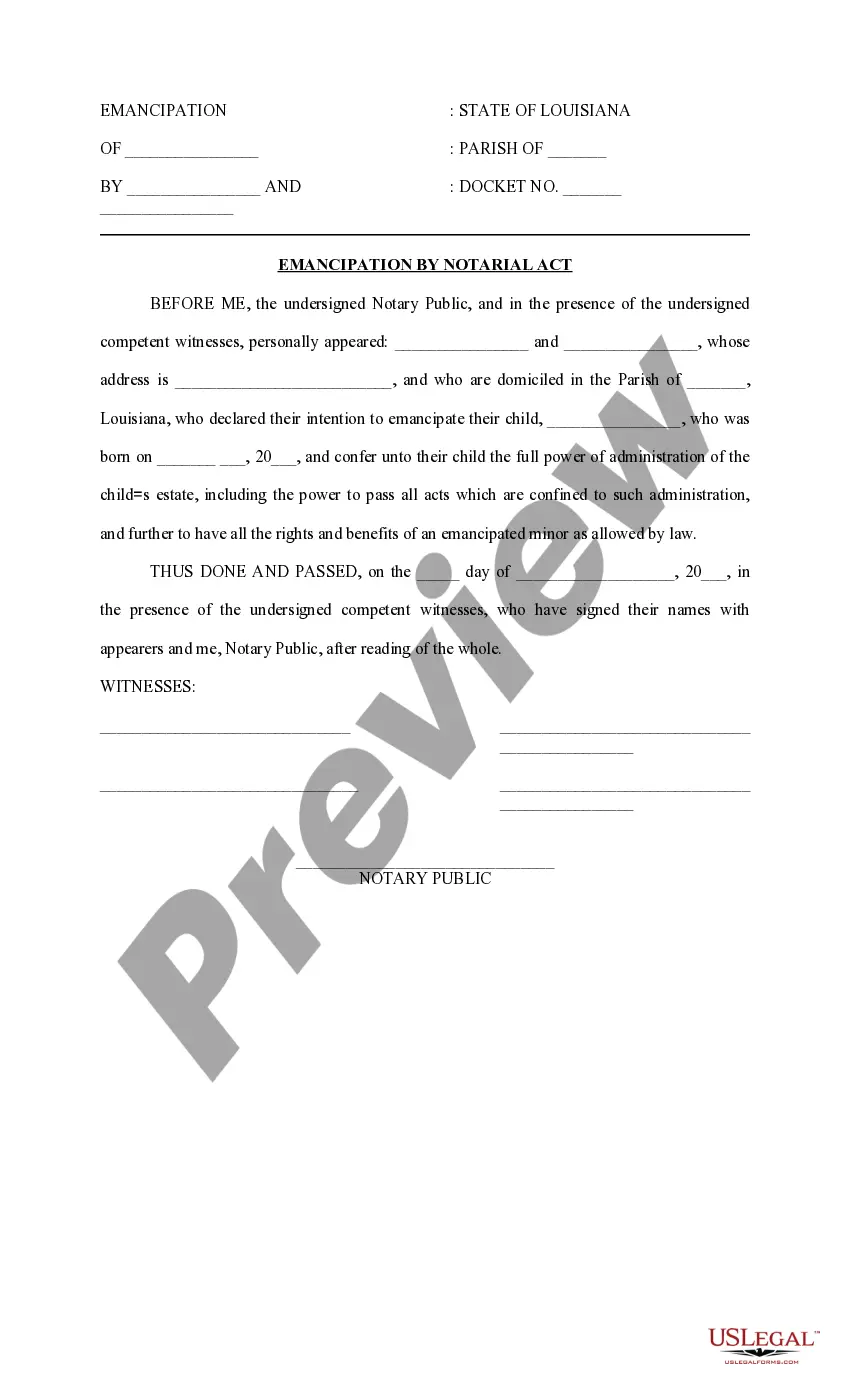
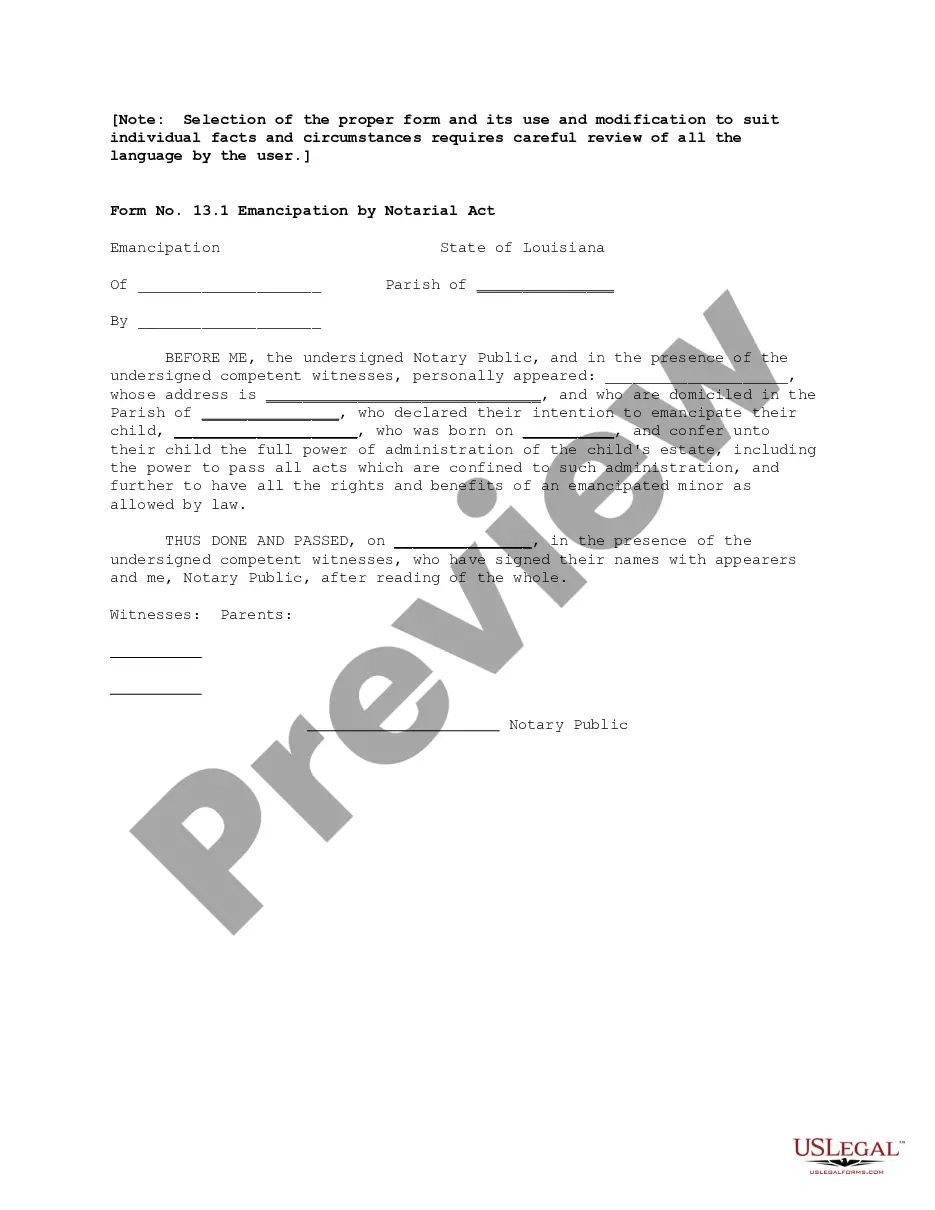
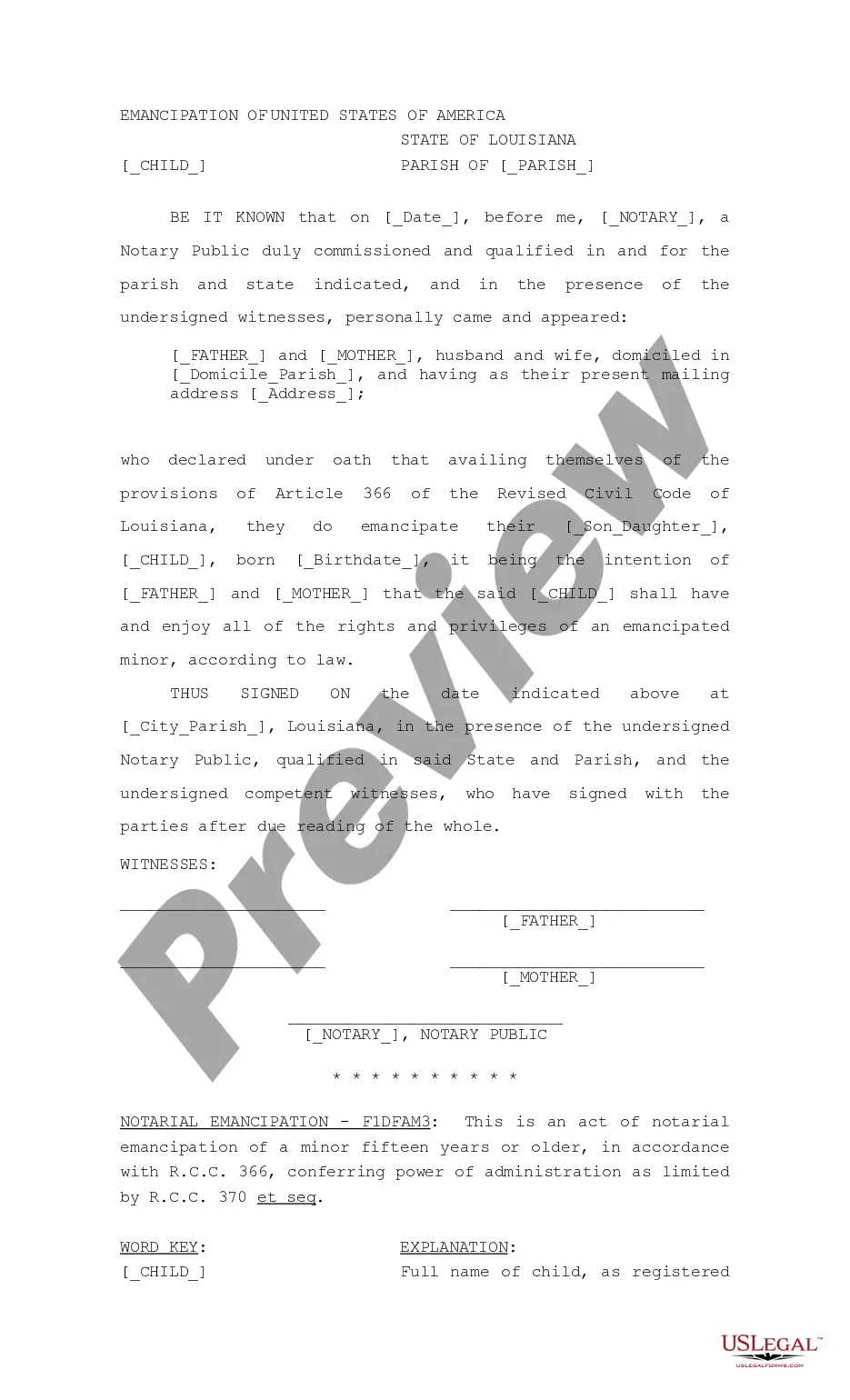
The Emancipation by Notarial Act is a legal document that allows a parent or both parents to declare the emancipation of their minor child aged fifteen or older. This process involves a notary public and two witnesses, distinguishing it from other forms of emancipation that may require court approval. By completing this form, parents can grant their child the full rights of an emancipated minor, including control over their own estate and decision-making authority.
Key parts of this document
- Personal information of the parents, including names and addresses.
- Name and birthdate of the minor being emancipated.
- Declaration of intent to emancipate by the parents in front of a notary.
- Signatures of the witnesses present during the emancipation declaration.
- Signature of the notary public to validate the document.

Situations where this form applies
This form is useful when parents wish to legally free their child from the control and care of the guardianship that the parents hold. Situations may include when a minor demonstrates financial independence or the ability to make meaningful decisions regarding their life and welfare. It can also be relevant in instances where the minor needs to enter into contracts or manage their own affairs.
Who needs this form
This form is intended for:
- Parents looking to emancipate their minor child aged fifteen or older.
- Guardians or legal custodians of a teenager who can demonstrate the readiness for independence.
- Family members supporting the minor in becoming legally independent.
Steps to complete this form
- Identify the parents and their addresses, ensuring accurate details are provided.
- Enter the name and birthdate of the minor being emancipated.
- Complete the declaration statement of emancipation in the presence of a notary public and witnesses.
- Have the witnesses sign the document to confirm their presence at the declaration.
- Sign the form and have the notary public provide their signature and seal to finalize the process.
Does this form need to be notarized?
This form must be notarized to be legally valid. US Legal Forms provides secure online notarization powered by Notarize, allowing you to complete the process through a verified video call.
Get your form ready online
Our built-in tools help you complete, sign, share, and store your documents in one place.
Make edits, fill in missing information, and update formatting in US Legal Forms—just like you would in MS Word.
Download a copy, print it, send it by email, or mail it via USPS—whatever works best for your next step.
Sign and collect signatures with our SignNow integration. Send to multiple recipients, set reminders, and more. Go Premium to unlock E-Sign.
If this form requires notarization, complete it online through a secure video call—no need to meet a notary in person or wait for an appointment.
We protect your documents and personal data by following strict security and privacy standards.

Make edits, fill in missing information, and update formatting in US Legal Forms—just like you would in MS Word.

Download a copy, print it, send it by email, or mail it via USPS—whatever works best for your next step.

Sign and collect signatures with our SignNow integration. Send to multiple recipients, set reminders, and more. Go Premium to unlock E-Sign.

If this form requires notarization, complete it online through a secure video call—no need to meet a notary in person or wait for an appointment.

We protect your documents and personal data by following strict security and privacy standards.
Typical mistakes to avoid
- Failing to have the form signed in front of a notary and witnesses.
- Not providing complete and accurate personal information for all parties involved.
- Overlooking the requirement that the minor must be at least fifteen years old.
Why complete this form online
- Convenience of downloading the form instantly from anywhere.
- Editability allows you to enter specific details without hassle.
- Reliability, as the form is drafted by licensed attorneys to meet legal standards.
Main things to remember
- The Emancipation by Notarial Act form is crucial for minors seeking independence in Louisiana.
- Accurate completion and notarization of the form are essential for legal validity.
- This form provides minors with significant rights regarding their estate and personal decisions.
Looking for another form?

Form popularity
FAQ
Emancipation does not terminate if the marriage ends in divorce. The law is at Louisiana Civil Code Art. 367. Judicial Emancipation: A court may order full or limited emancipation of a minor aged 16 or older "for good cause." The judge decides whether there is a good cause to emancipate the minor.
Proof of Emancipation and/or Legal Guardianship. You have indicated on your FAFSA that you may be an emancipated minor or in legal guardianship. An emancipated minor will have been legally (through the courts, not an attorney) released from control of their parent or guardian.
The parents or the minor may file a petition for emancipation. A petition is a legal document that asks the court to grant the request. The minor does not need consent from a parent or guardian to file a petition. Both the parent and minor may also file a joint petition for emancipation.
Emancipation by marriage. In most states, minors automatically achieve emancipation once they get married.For example, to get married in California, a minor must 1) be at least 14 years old, 2) be accompanied by a parent or legal guardian, and 3) appear before the court.
Can you legally move out at 16 in Louisiana? choose to leave home - at age 16 a young person can leave home without their parents' consent.get married or enter into a civil union with parents' consent - age 16. be legally independent of guardianship - age 18.
Minor emancipation laws vary by state, but most state courts charge a filing fee of between $150 and $200. You must file the petition with the court and notify your parents or legal guardians (required by most states). Then the court will schedule a hearing.
A 17 yr old can leave home in Louisiana without fear of being in trouble with the law. And they do not have to have a job or their own place. They can live with a relative or friend.
The parents or the minor may file a petition for emancipation. The petition must be filed in the parish where the minor or the minor's parents are domiciled (permanent home). The petition must include: (1) The name, domicile, age, and, if known, the current address of the minor.