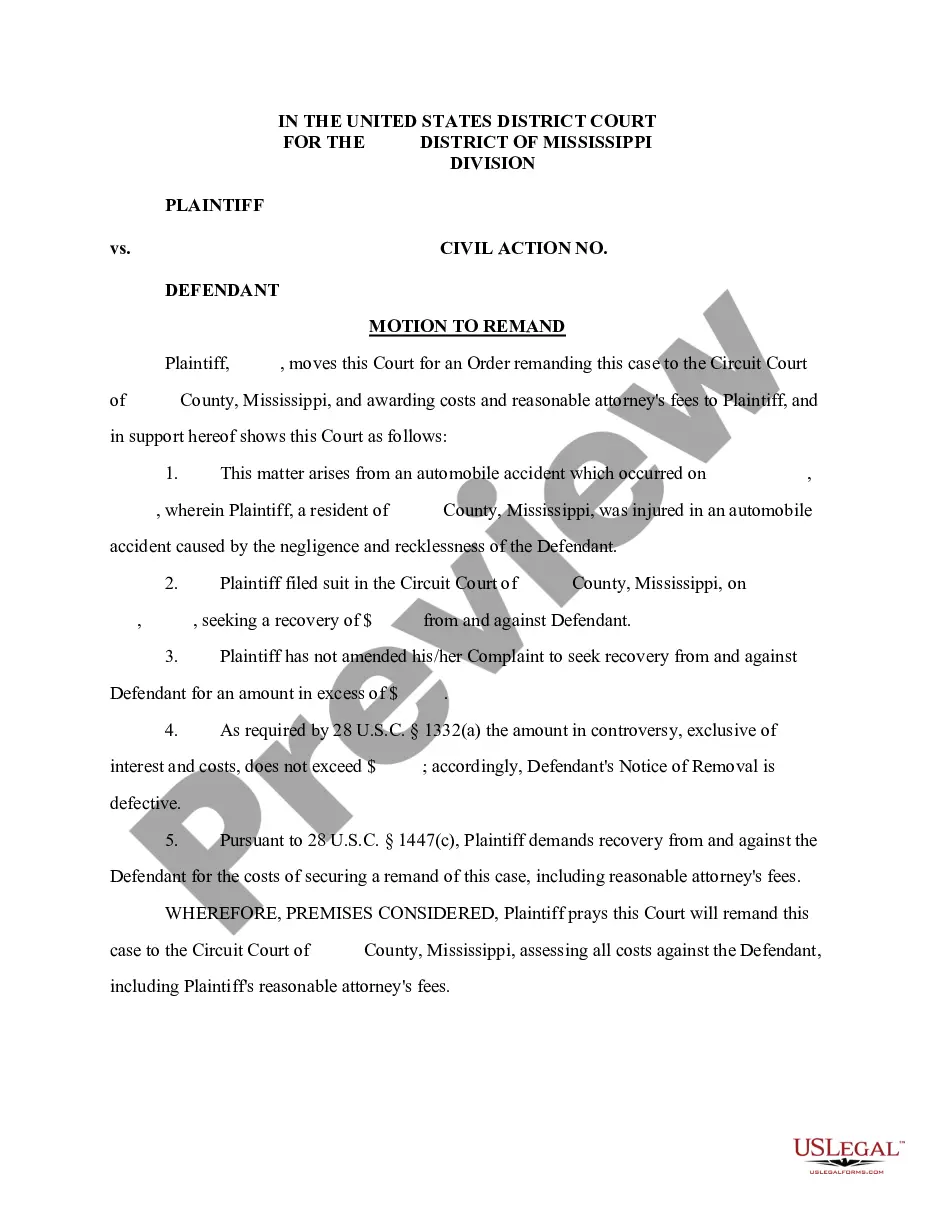
Pennsylvania Last Will for a Widow or Widower with no Children
Overview of this form
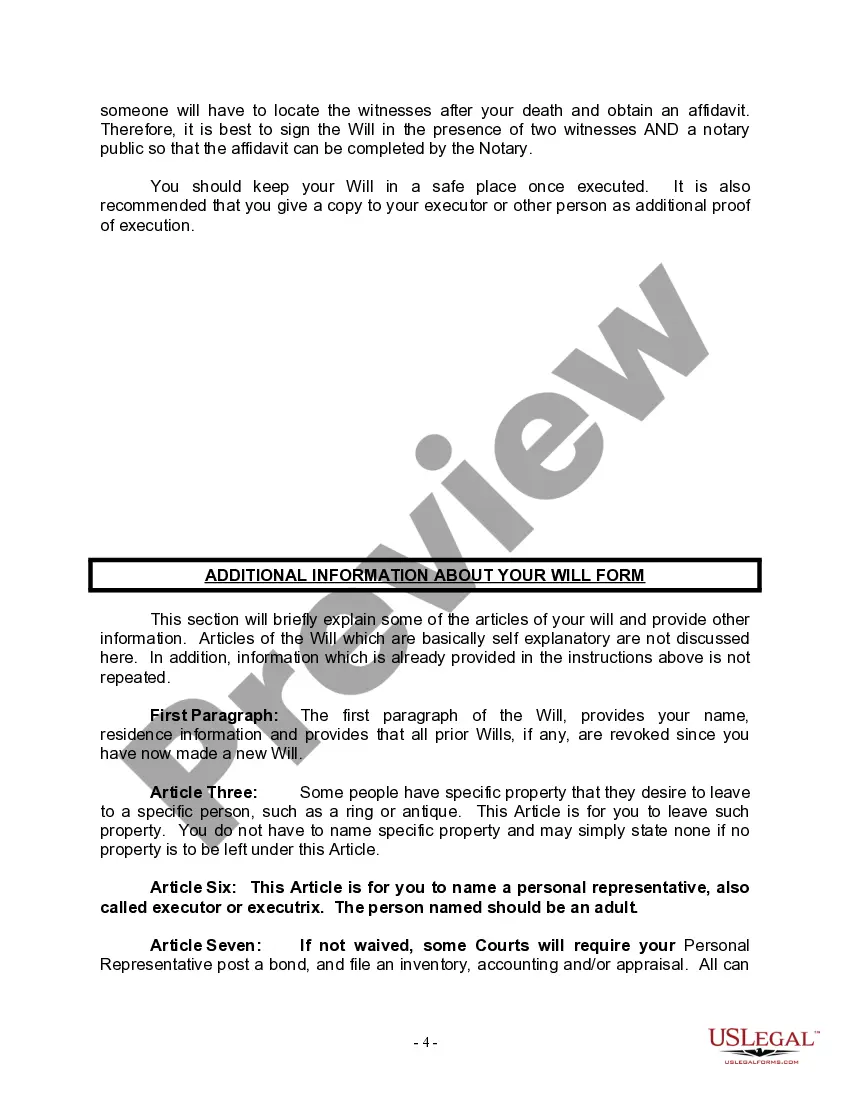
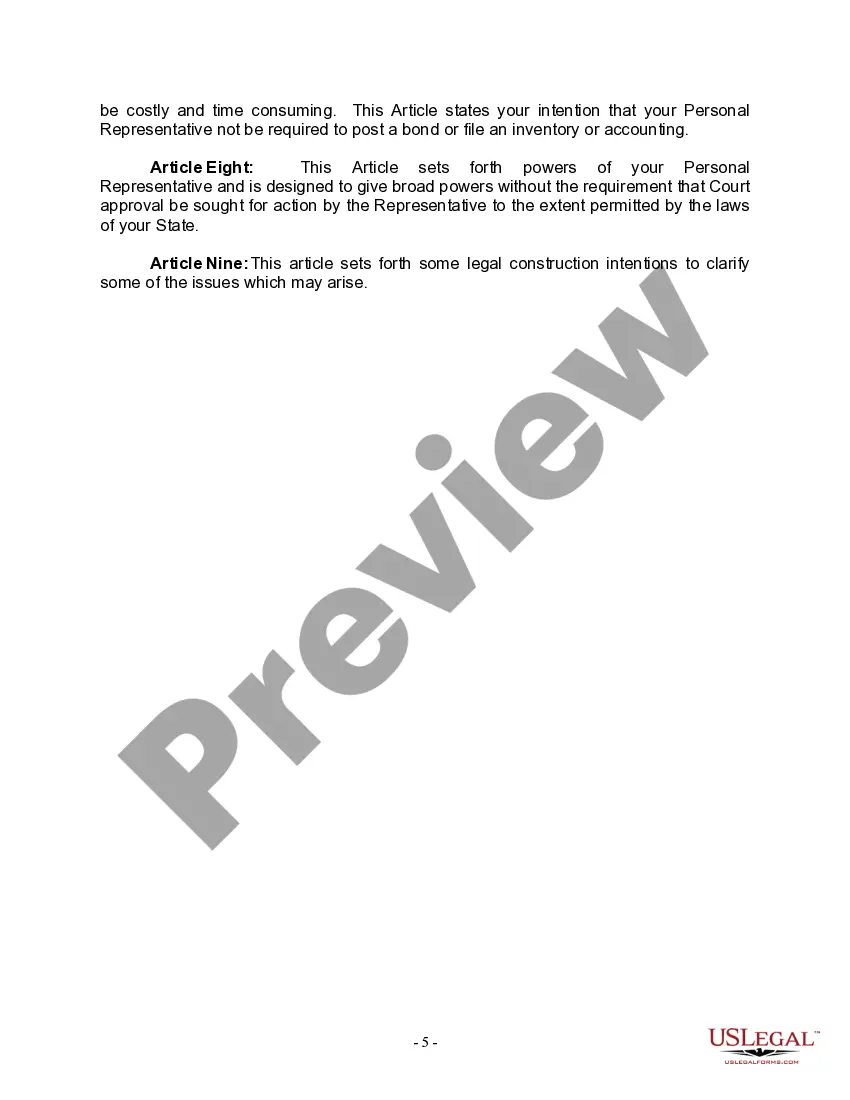
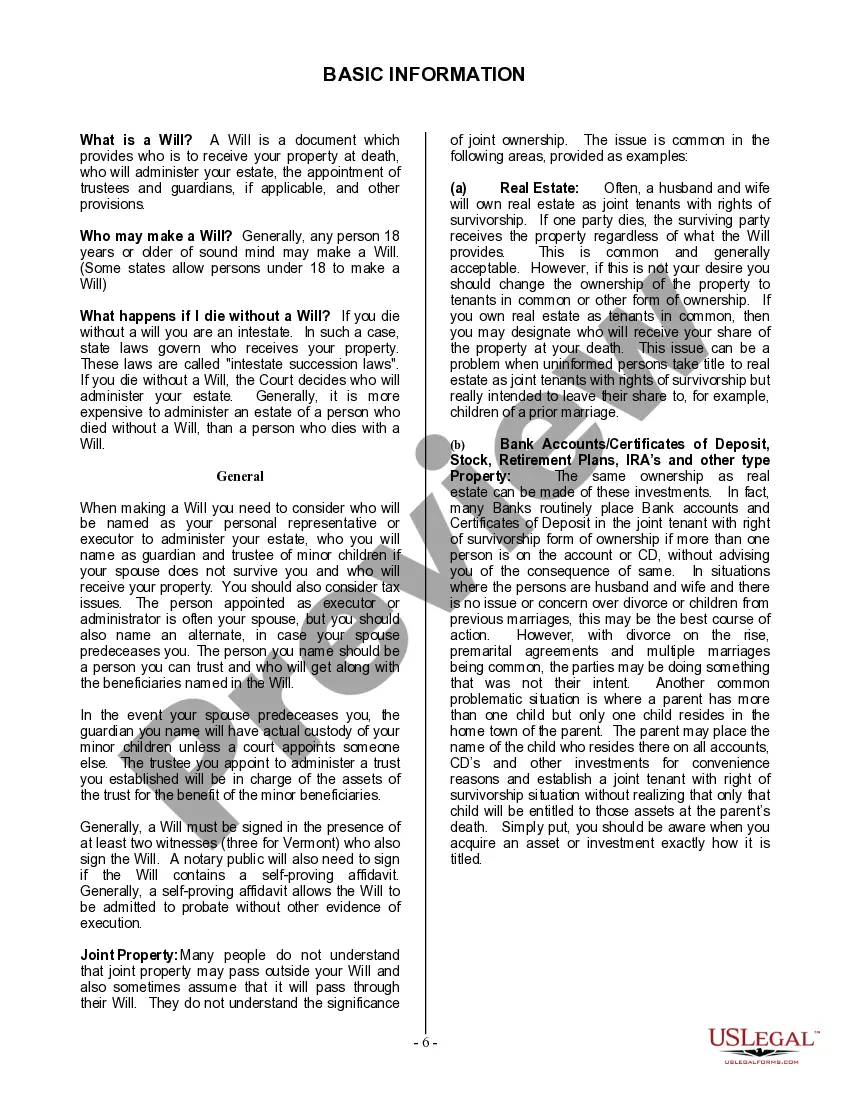
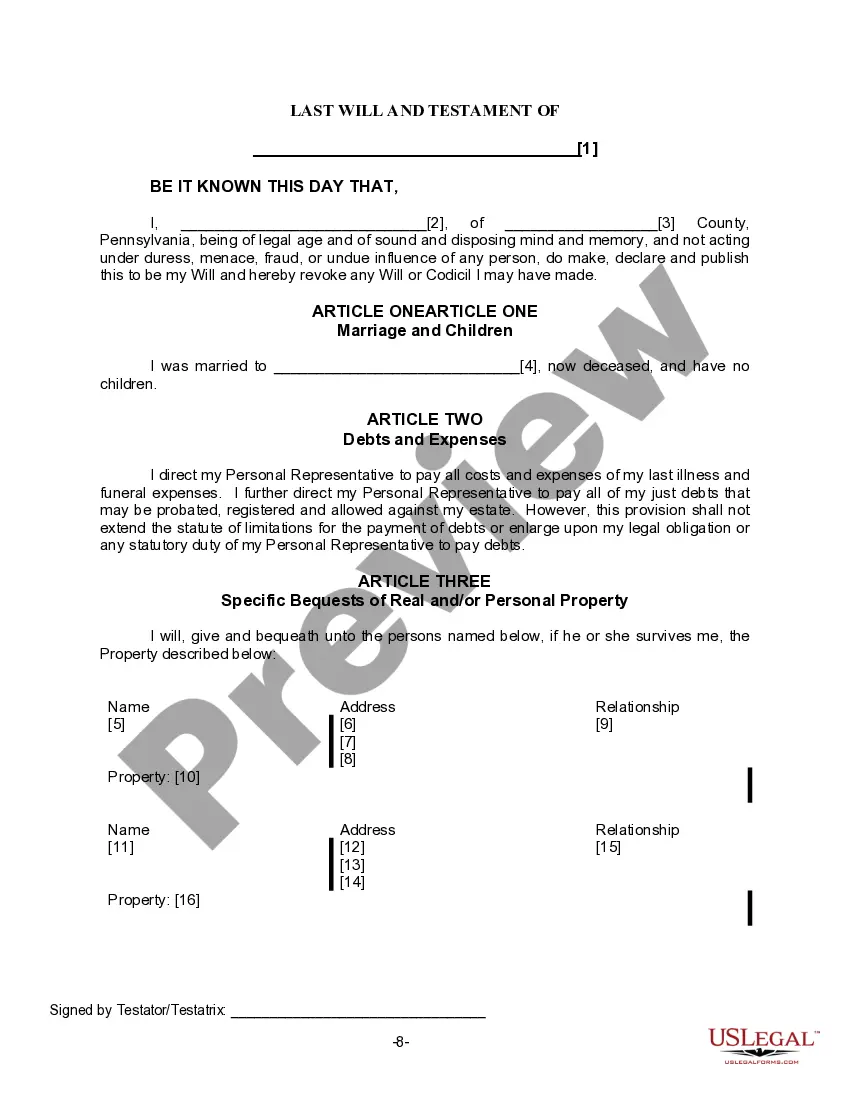
The Last Will for a Widow or Widower with No Children is a legal document that outlines how a personâs assets and property should be distributed after their death, specifically tailored for individuals who are widowed and do not have children. This form allows the testator to appoint an executor, specify beneficiaries, and make provisions for their estate. It is important to note that this will is tailored for those who have no children and provides a straightforward way to ensure that the wishes of the testator are respected regarding their property distribution.
Key parts of this document
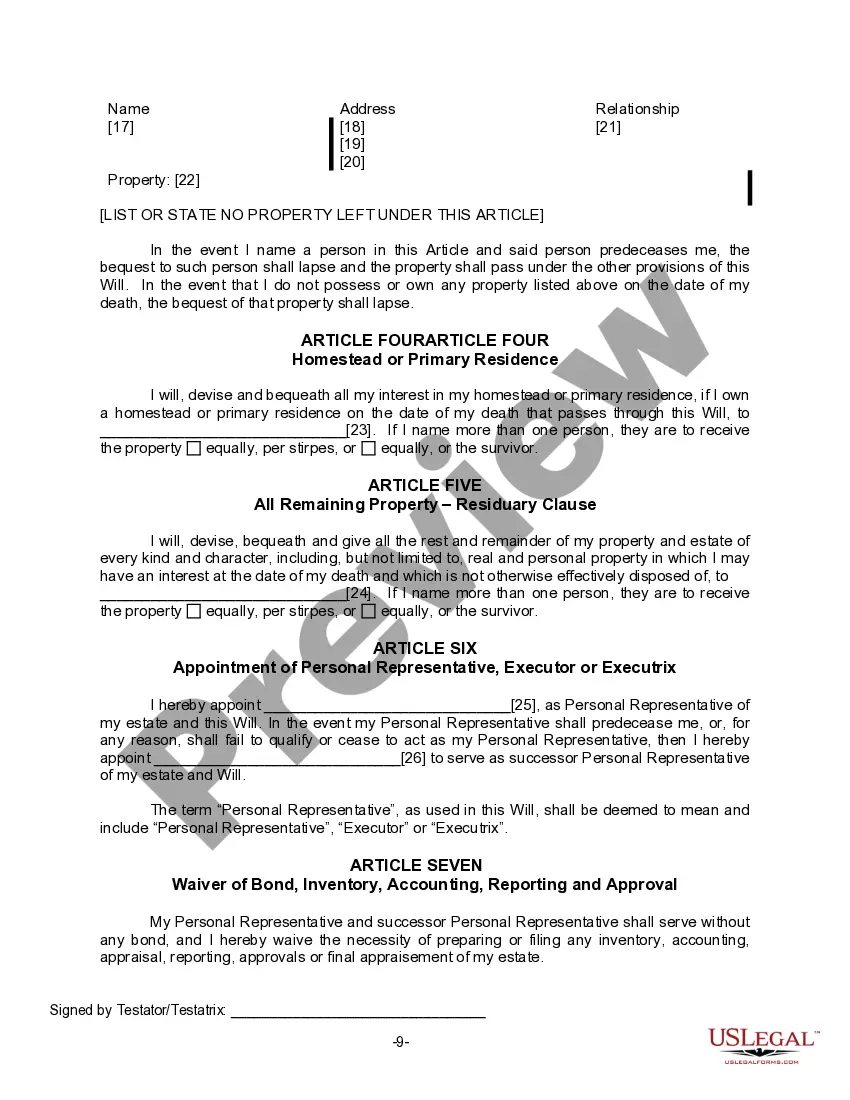
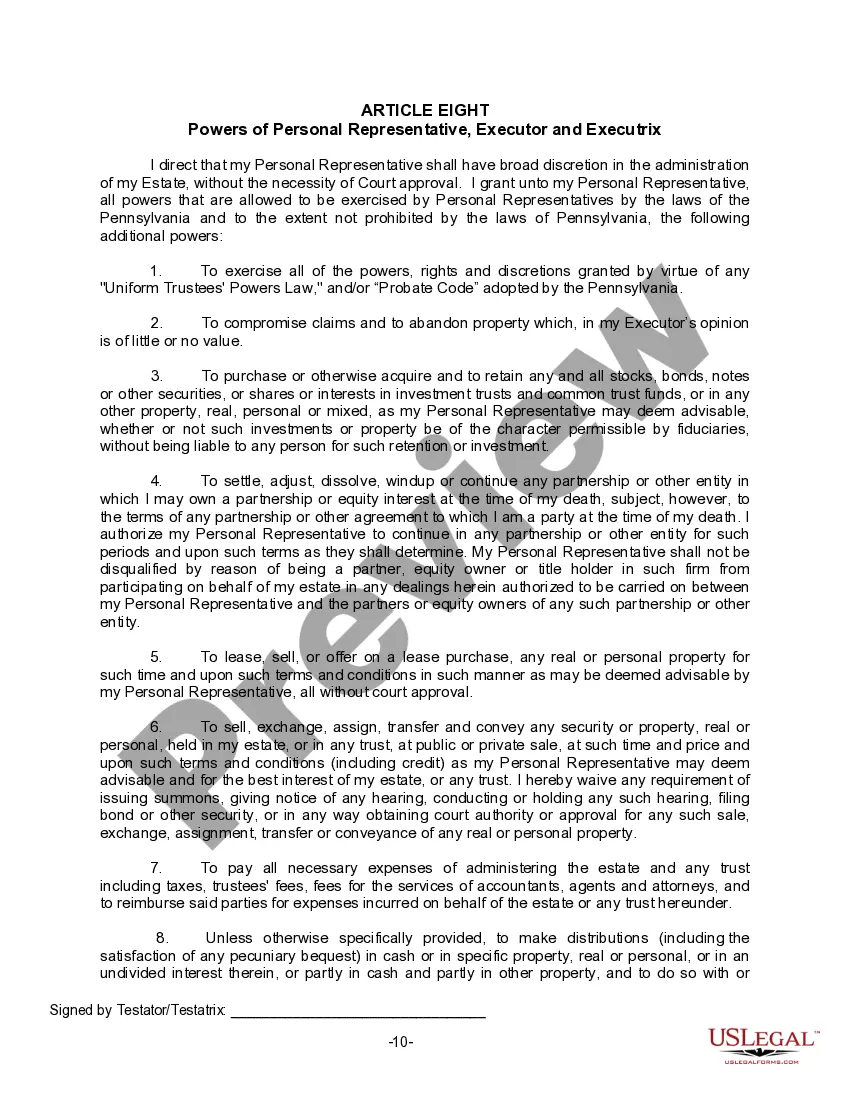
- Appointment of a personal representative (executor) to manage the estate.
- Specification of beneficiaries who will receive property and assets.
- Provisions for homestead or primary residence distribution.
- Instructions for the payment of debts and funeral expenses.
- Options for waiving requirements for bonds, inventories, and accountings.
- Self-proving affidavit to streamline the probate process.



When to use this document
This form is necessary for a widow or widower who wishes to clarify the distribution of their property after death, ensuring their assets go to the designated beneficiaries. It should be used when there are specific wishes regarding asset distribution and when it is important to appoint a trusted person as executor to handle the estate. This will is especially relevant for individuals who have lost their spouse, have no surviving children, and wish to avoid complications in the probate process.
Who this form is for
- Individuals who are widows or widowers and do not have children.
- Persons looking to ensure their estate is distributed according to their wishes.
- Those who want to appoint a personal representative for their estate.
- People who have specific assets or property they want to bequeath to particular individuals.
- Individuals wanting to simplify the probate process with a self-proving affidavit.
Completing this form step by step
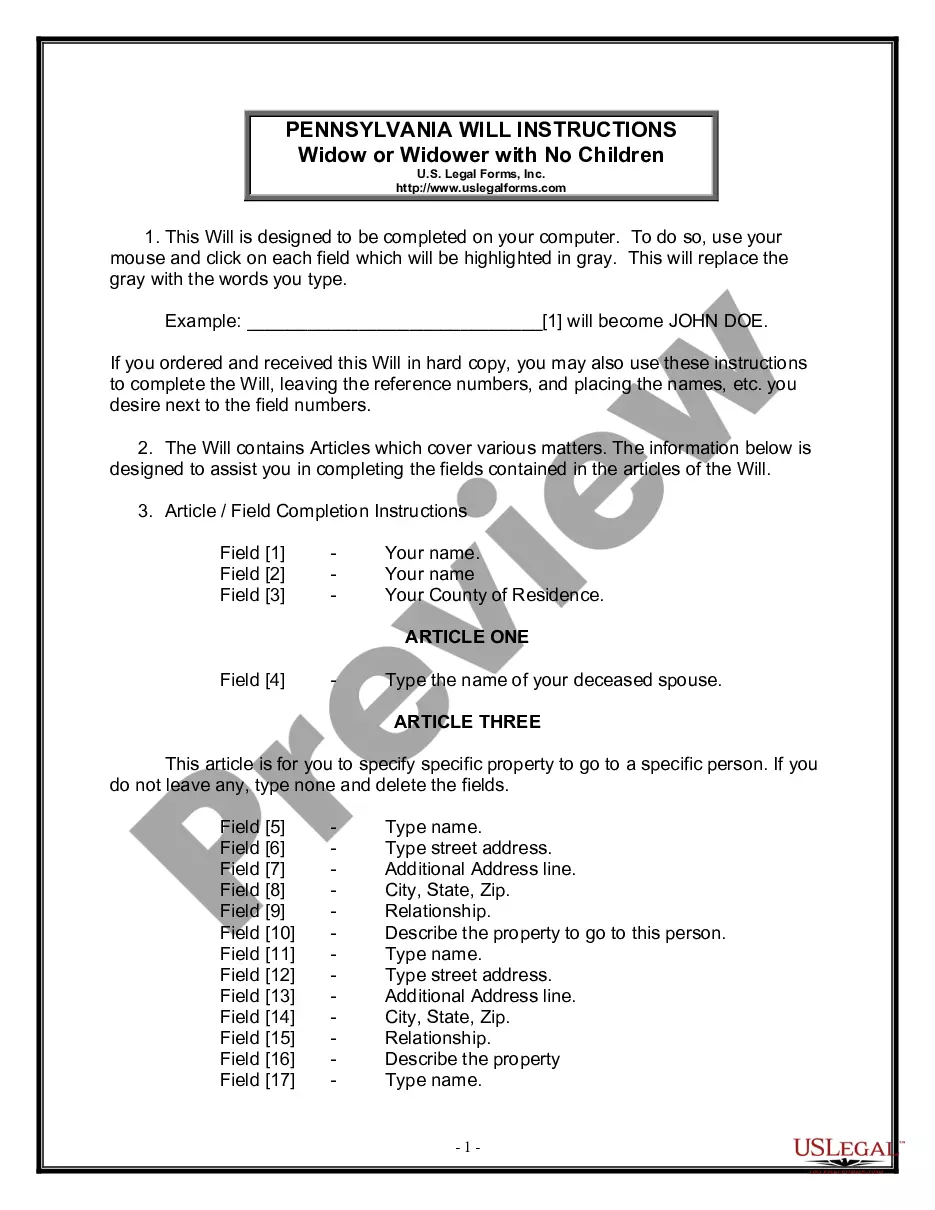
- Enter your full legal name and county of residence at the beginning of the will.
- Specify the name of your deceased spouse in the designated field.
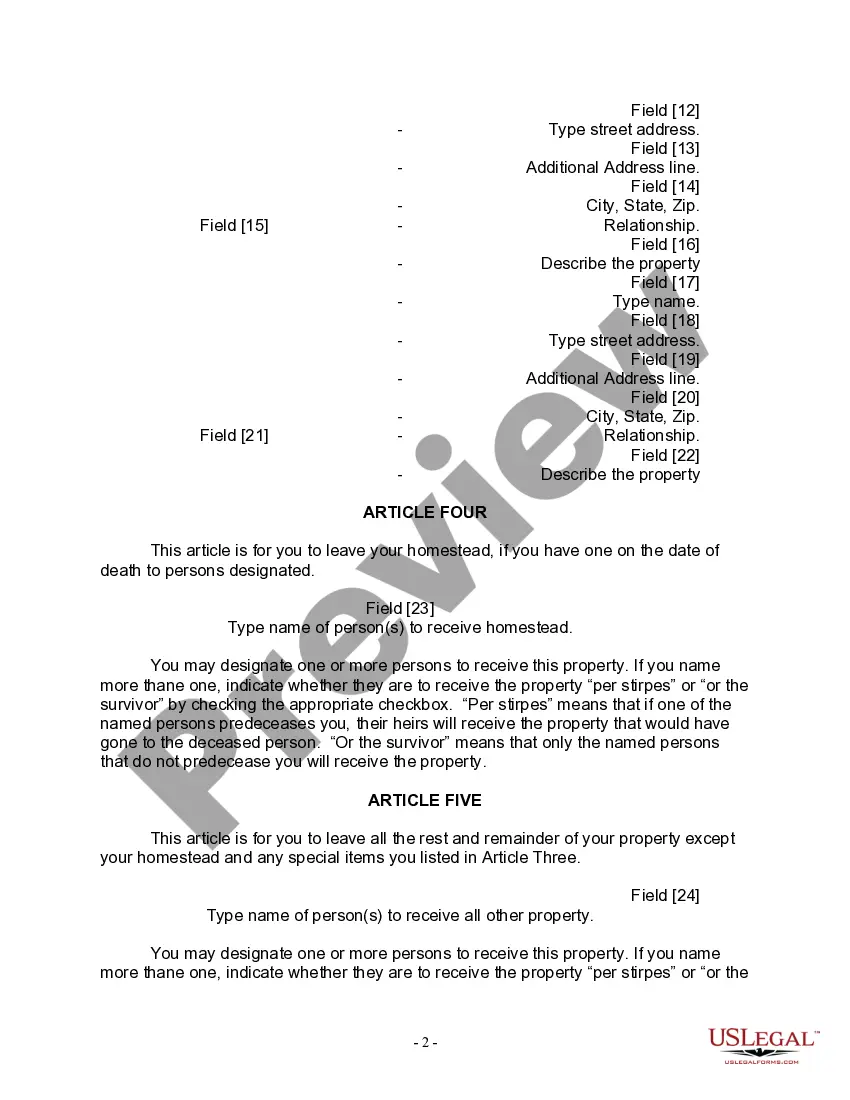
- Provide names and addresses of any beneficiaries who will receive specific property.
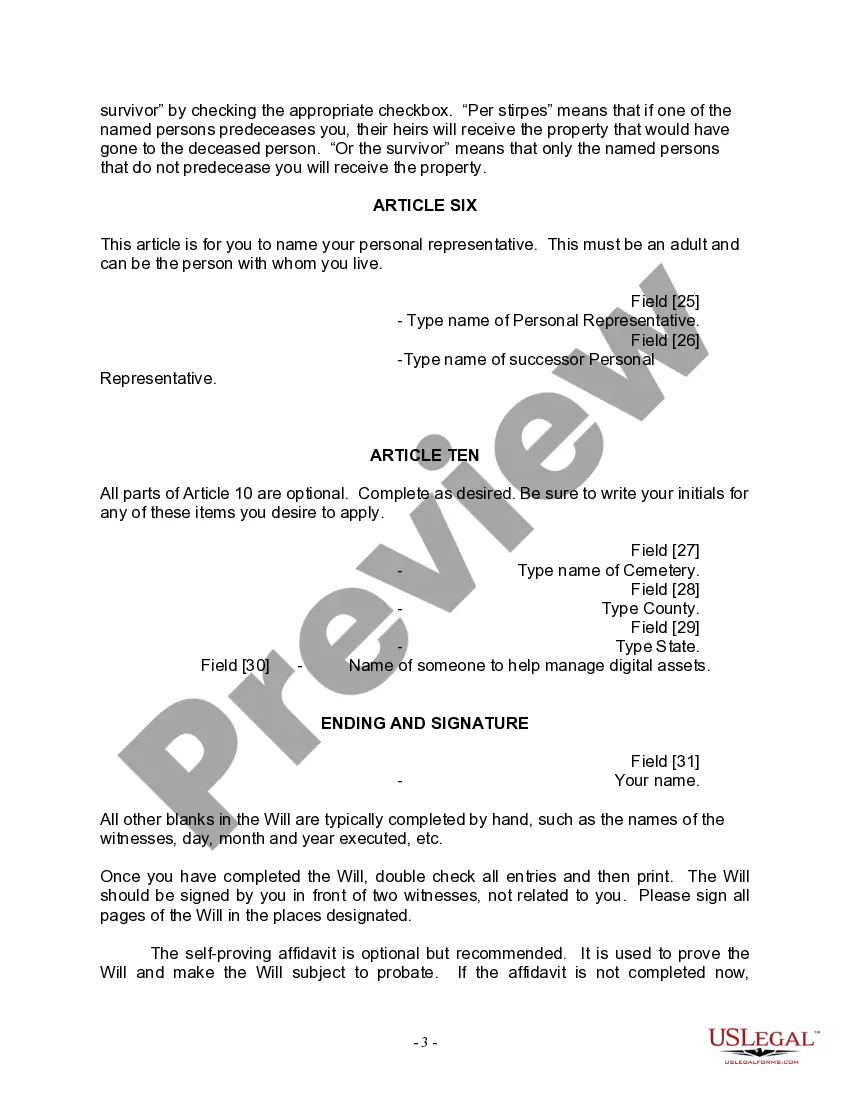
- Designate a personal representative and a successor representative for your estate.
- Sign the will in the presence of two witnesses and ensure they also sign.
- If using a self-proving affidavit, have it notarized to expedite the probate process.
Is notarization required?
Yes, this form must be notarized to be legally valid, particularly if a self-proving affidavit is included. Notarization ensures that the will can be admitted to probate without further evidence of execution, simplifying the probate process. US Legal Forms offers integrated online notarization services that are available 24/7, allowing for a secure and convenient experience.
Get your form ready online
Our built-in tools help you complete, sign, share, and store your documents in one place.
Make edits, fill in missing information, and update formatting in US Legal Forms—just like you would in MS Word.
Download a copy, print it, send it by email, or mail it via USPS—whatever works best for your next step.
Sign and collect signatures with our SignNow integration. Send to multiple recipients, set reminders, and more. Go Premium to unlock E-Sign.
If this form requires notarization, complete it online through a secure video call—no need to meet a notary in person or wait for an appointment.
We protect your documents and personal data by following strict security and privacy standards.

Make edits, fill in missing information, and update formatting in US Legal Forms—just like you would in MS Word.

Download a copy, print it, send it by email, or mail it via USPS—whatever works best for your next step.

Sign and collect signatures with our SignNow integration. Send to multiple recipients, set reminders, and more. Go Premium to unlock E-Sign.

If this form requires notarization, complete it online through a secure video call—no need to meet a notary in person or wait for an appointment.

We protect your documents and personal data by following strict security and privacy standards.
Typical mistakes to avoid
- Failing to sign the will in front of the required number of witnesses.
- Not properly identifying beneficiaries or property to avoid confusion later.
- Forgetting to date the will, which can lead to legal complications.
- Neglecting to keep a copy of the will in a safe place for future reference.
- Overcomplicating the will with unnecessary conditions or language.
Advantages of online completion
- Convenient access to legal document templates drafted by licensed attorneys.
- Editable formats allow personalization to match individual needs.
- Immediate download capability saves time and simplifies the process.
- Structured guidance ensures compliance with legal standards.
- Secure online storage options available for important legal documents.
Summary of main points
- The Last Will for a Widow or Widower with No Children focuses on asset distribution in a straightforward manner.
- Ensure you follow state-specific requirements for legal signing and witnessing.
- Consider consulting with a legal professional if you have complexities in your estate.
Looking for another form?


Form popularity
FAQ
No. You can make your own will in Pennsylvania, using Nolo's do-it-yourself will software or online will programs. However, you may want to consult a lawyer in some situations. For example, if you think that your will might be contested or if you want to disinherit your spouse, you should talk with an attorney.
A qualified widow or widower is a tax filing status that allows a surviving spouse to use the married filing jointly tax rates on an individual return for up to two years following the death of the spouse.
Qualifying widow/widower filing status applies to surviving spouses with dependents. This allows the surviving spouse to file taxes jointly with the deceased spouse. The qualifying widow/widower status applies the standard deduction for a married couple filing jointly.
If you are the widow or widower of a person who worked long enough under Social Security, you can: Receive full benefits at full retirement age for survivors or reduced benefits as early as age 60.
You qualified for married filing jointly with your spouse for the year he or she died. You didn't remarry before the close of the tax year in which your spouse died. You have a child, stepchild, or adopted child you claim as your dependent. You paid more than half the cost of maintaining your home.