Mississippi Sample Temporary Order
About this form
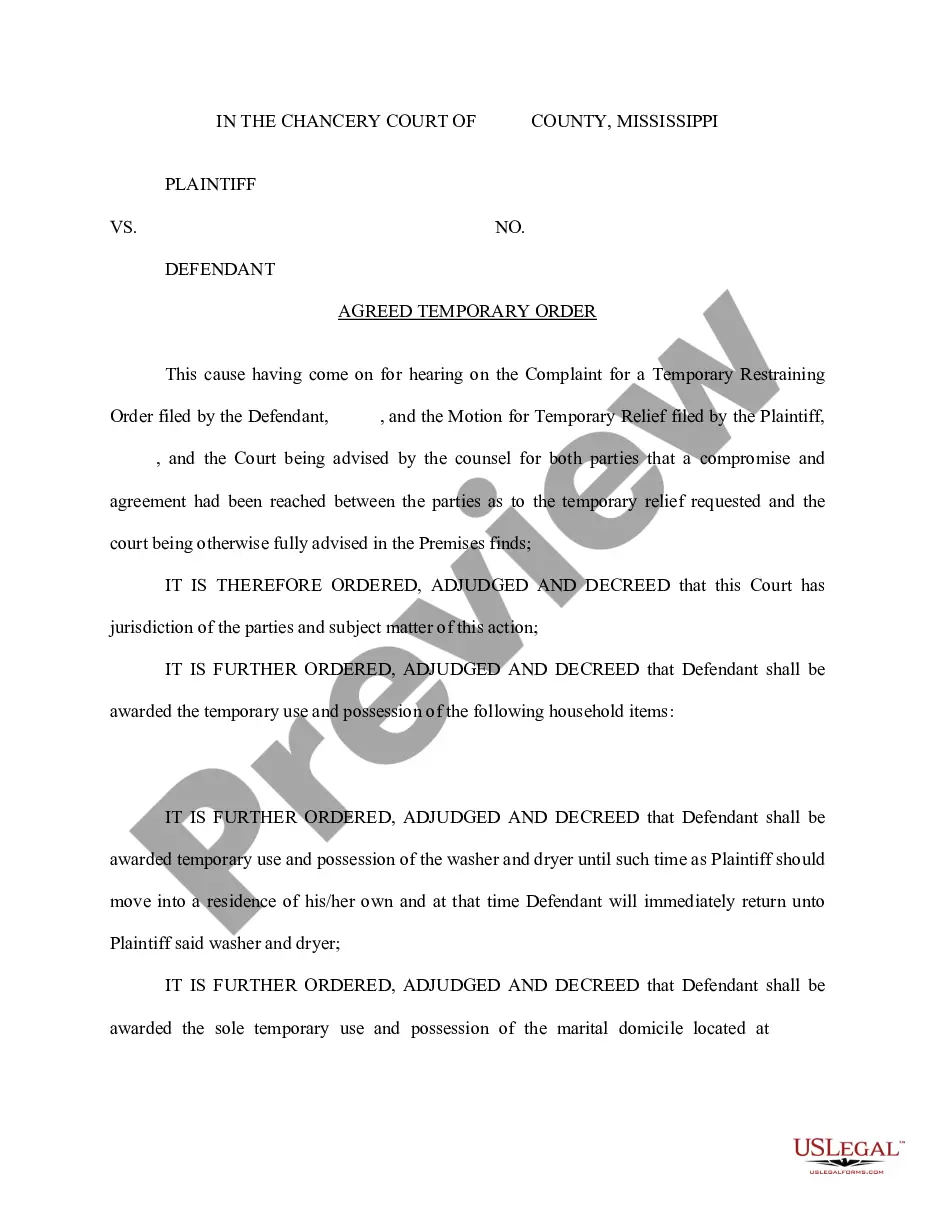
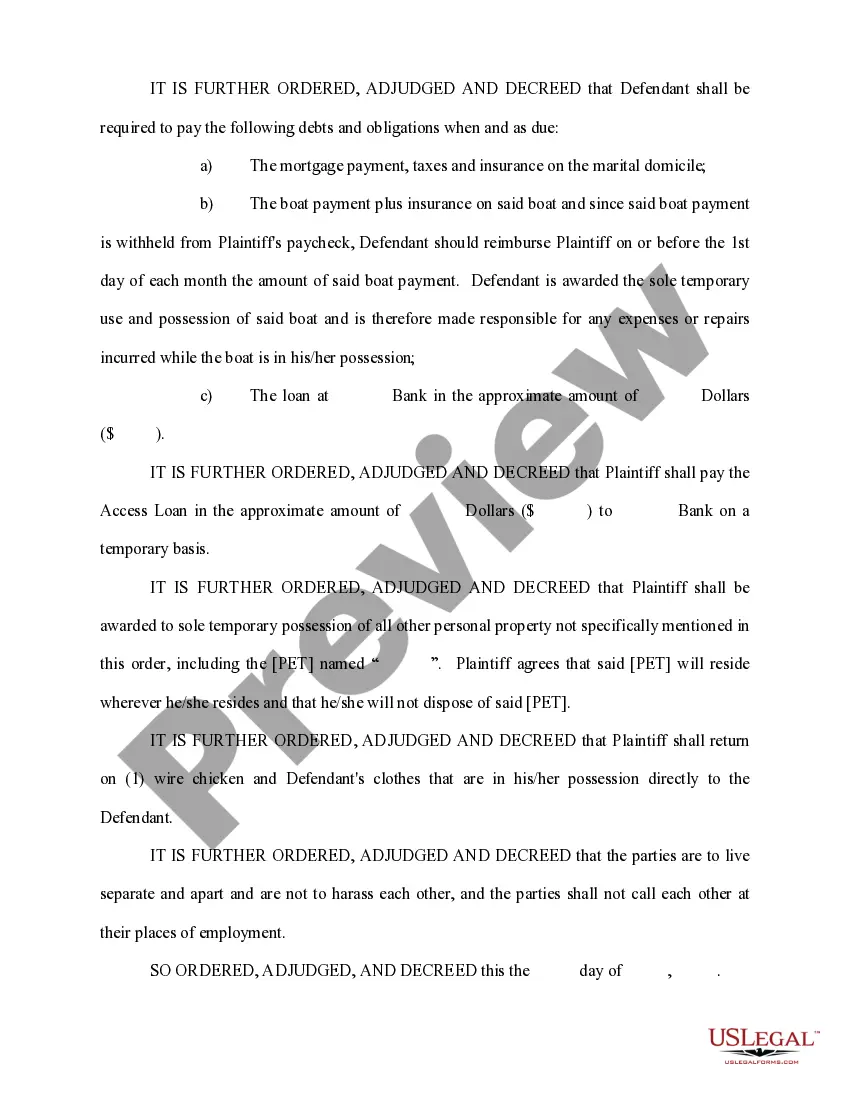
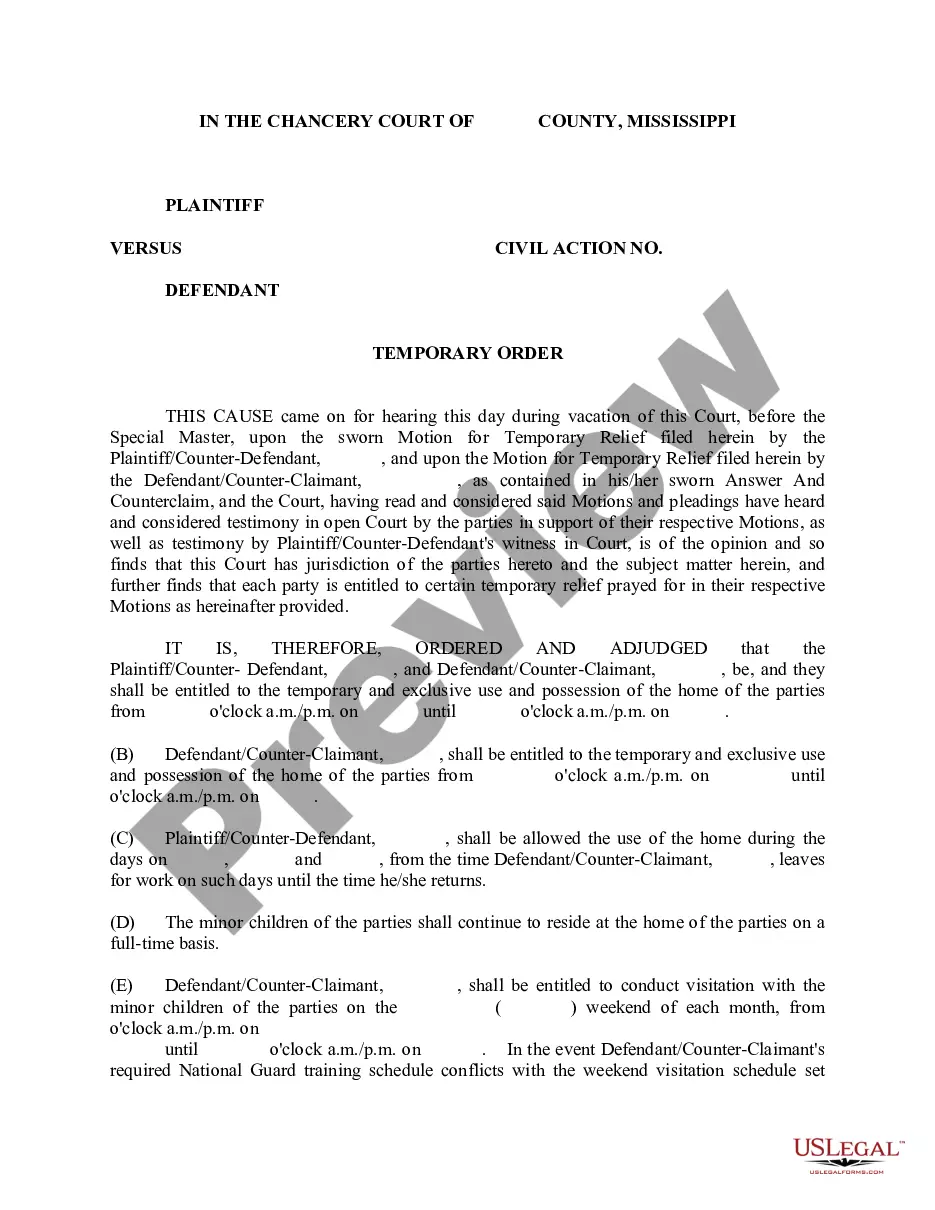
The Sample Temporary Order is a legal document used during divorce proceedings. This form outlines the temporary use of specific assets and responsibilities for the parties involved until a final divorce judgment is reached. Unlike a permanent order, which settles the division of property and responsibilities, this temporary order is crucial for establishing immediate arrangements and alleviating disputes during the divorce process.
What’s included in this form
- Jurisdiction statement confirming the court's authority over the parties involved.
- Designated assets awarded for temporary use, specifying items like household goods or vehicles.
- Obligations for debt payments, including mortgages and insurance responsibilities.
- Requirements for separation and conduct between parties during this interim period.

When this form is needed
This form should be used when a couple has filed for divorce and needs immediate arrangements regarding the use of shared property, debt obligations, and living conditions. It is particularly useful in situations where disputes arise over properties or responsibilities, ensuring that both parties have clear guidelines until the case is finalized.
Who should use this form
- Individuals currently undergoing divorce proceedings.
- Parties who need a clear agreement on temporary property use and debt responsibilities.
- Couples seeking to minimize conflict during divorce by establishing temporary conditions.
Steps to complete this form
- Identify the parties involved in the divorce.
- Specify the assets awarded for temporary use, including details on possession and responsibilities.
- Outline the obligations for paying debts during the temporary period.
- Record the agreed-upon terms of separation and any restrictions on communication.
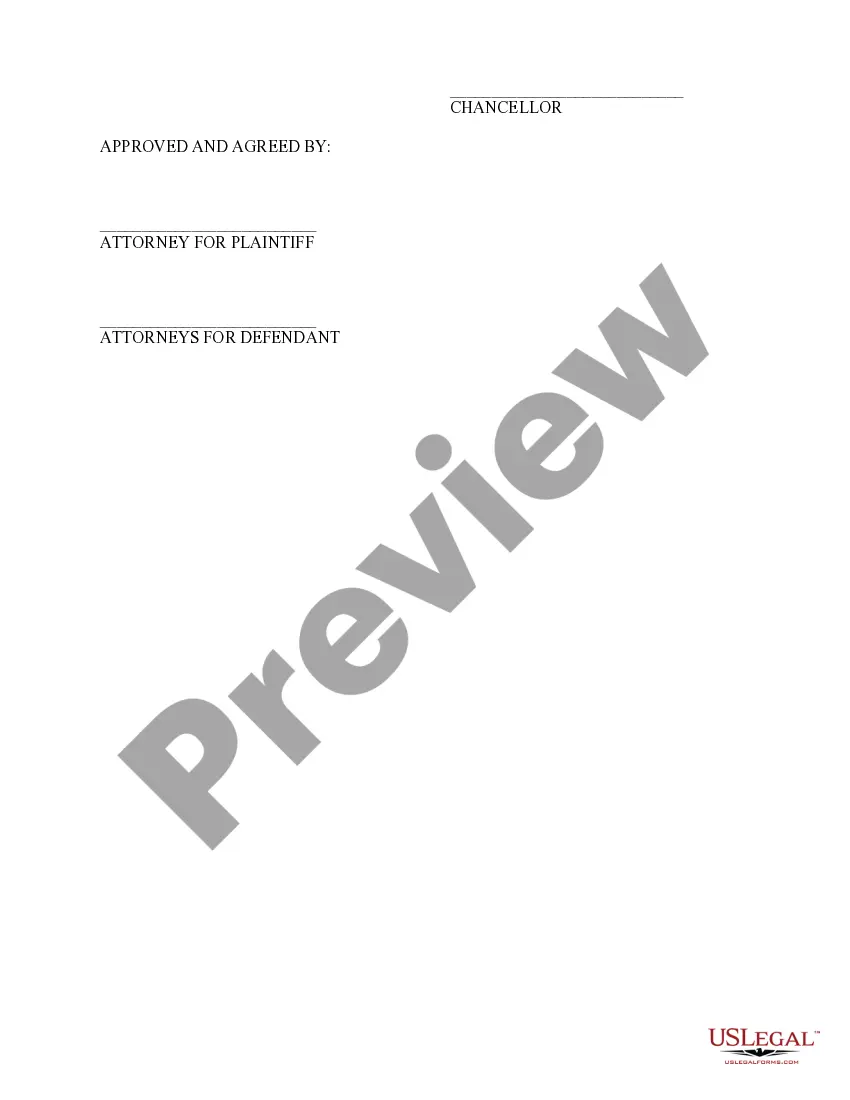
- Sign and date the order to validate it.
Is notarization required?
This form does not typically require notarization to be legally valid. However, some jurisdictions or document types may still require it. US Legal Forms provides secure online notarization powered by Notarize, available 24/7 for added convenience.
Get your form ready online
Our built-in tools help you complete, sign, share, and store your documents in one place.
Make edits, fill in missing information, and update formatting in US Legal Forms—just like you would in MS Word.
Download a copy, print it, send it by email, or mail it via USPS—whatever works best for your next step.
Sign and collect signatures with our SignNow integration. Send to multiple recipients, set reminders, and more. Go Premium to unlock E-Sign.
If this form requires notarization, complete it online through a secure video call—no need to meet a notary in person or wait for an appointment.
We protect your documents and personal data by following strict security and privacy standards.

Make edits, fill in missing information, and update formatting in US Legal Forms—just like you would in MS Word.

Download a copy, print it, send it by email, or mail it via USPS—whatever works best for your next step.

Sign and collect signatures with our SignNow integration. Send to multiple recipients, set reminders, and more. Go Premium to unlock E-Sign.

If this form requires notarization, complete it online through a secure video call—no need to meet a notary in person or wait for an appointment.

We protect your documents and personal data by following strict security and privacy standards.
Mistakes to watch out for
- Failing to specify the particular assets and debts clearly.
- Neglecting to include separation terms that could lead to misunderstandings.
- Not properly signing and dating the form, which can affect its validity.
- Overlooking state-specific requirements that may apply to the form.
Advantages of online completion
- Convenient access to downloadable templates drafted by licensed attorneys.
- Editable formats allow you to customize the document to fit your specific situation.
- Quick retrieval saves time and reduces stress during the divorce process.
- Reliable legal language ensures compliance with relevant laws and regulations.
Legal use & context
- This form is enforceable in court as long as it is completed correctly and filed in the appropriate jurisdiction.
- In certain states, additional documentation may be required to support the order.
- Temporary orders are typically subject to review and may be modified if circumstances change.
Looking for another form?

Form popularity
FAQ
The focus of a temporary orders hearing is usually the status quo and how best to maintain it. The Judge wants to maintain the estate while making sure the bills get paid. The temporary order must also say when each parent will see the children and whether temporary child support will be paid.
What Is Temporary Relief? After a case is filed, but before it is resolved, sometimes it is necessary to ask the court for an award of temporary relief. This usually happens when the parties have a dispute about payment of ongoing bills, support, or issues involving children.
If a family court lawsuit is administratively dismissed, all temporary orders become void and any outstanding obligations under the temporary order also become void. If there is a prior final order between the parties, that final order regains its effect (to the extent a temporary order in the new action modified it).
What Are Temporary Divorce Orders? Temporary family law orders provide a way for couples to address issues before a formal divorce settlement is agreed upon. Issues that can be addressed include temporary child custody, spousal support, health insurance, possession of the marital home, and more.
Issues: In most states, parties can ask for temporary orders as to child support, parenting time schedules, decision making for the children, use and possession of property, including the marital residence or other properties, use and possession of cars, payment of expenses (including attorney fees) and debt, as well
Write a detailed history about your marital relationship, which should include dates and facts that support your case. Do not forget to pick the pictures, videos and other visual aids that you will present before the court as evidence.
Typically, a temporary orders hearing will be handled in one of two ways, either by calling witnesses (including the parties) to the stand and asking them questions aimed at eliciting direct testimony from them (referred to as an evidentiary hearing) or by your attorney offering summaries of what witnesses would say,